
Laminated Architectural Glass Market Report 2026
Global Outlook – By Product Type (Tempered Laminated Glass, Polyvinyl Butyral (PVB) Laminated Glass, Ethylene Vinyl Acetate (EVA) Laminated Glass, Acoustic Laminated Glass, Solar Control Laminated Glass), By Technology (Standard Laminating Technology, Low-Emission Coating Technology, High-Performance Laminating Technology, Smart Glass Technology), By Distribution Channel (Direct Sales, Online Retail, Distributors And Wholesalers, Project-Based Sales), By Application (Civil Architecture, Special Architecture), By End-Use Industry (Architectural, Automotive, Aerospace, Marine, Furniture) – Market Size, Trends, Strategies, and Forecast to 2030
Laminated Architectural Glass Market Overview
• Laminated Architectural Glass market size has reached to $15.29 billion in 2025 • Expected to grow to $21.73 billion in 2030 at a compound annual growth rate (CAGR) of 7.2% • Growth Driver: Surge in Building Materials Fueling the Growth of the Laminated Architectural Glass Market due to Expanded Construction Activity • Market Trend: Eastman Launches Low-Carbon PVB Interlayer To Advance Sustainable Laminated Architectural Glass Solutions • North America was the largest region and fastest growing region.What Is Covered Under Laminated Architectural Glass Market?
Laminated architectural glass is a specially engineered safety glass composed of two or more glass layers bonded together with a durable interlayer such as polyvinyl butyral (PVB) or ethylene-vinyl acetate (EVA), designed to hold the glass fragments in place if it breaks. This type of glass is extensively used in architectural applications, as it not only improves safety and security but also provides excellent sound insulation and UV protection, making it suitable for use in building facades, skylights, railings, and interior partitions. The main types of products in laminated architectural glass are tempered laminated glass, polyvinyl butyral (PVB) laminated glass, ethylene vinyl acetate (EVA) laminated glass, acoustic laminated glass, and solar control laminated glass. Tempered laminated glass is a safety glass made by combining tempered glass layers with an interlayer, typically PVB or EVA. It incorporates various technologies, including standard laminating technology, low-emission coating technology, high-performance laminating technology, and smart glass technology, and is distributed through direct sales, online retail, distributors and wholesalers, and project-based sales. The various applications involved are civil architecture and special architecture, serving a range of end users, such as architectural, automotive, aerospace, marine, and furniture.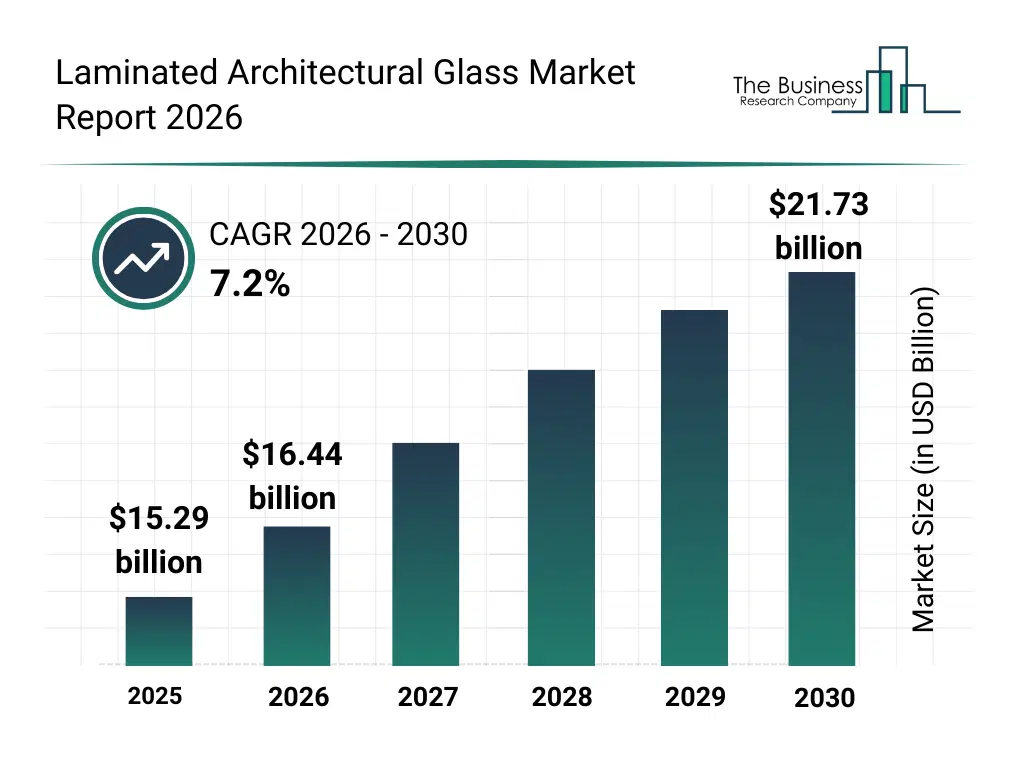
What Is The Laminated Architectural Glass Market Size and Share 2026?
The laminated architectural glass market size has grown strongly in recent years. It will grow from $15.29 billion in 2025 to $16.44 billion in 2026 at a compound annual growth rate (CAGR) of 7.5%. The growth in the historic period can be attributed to rising adoption of safety glass in construction, increasing use of bullet-resistant and acoustic panels, growing demand for solar control glazing, expansion of curved laminated glass applications, adoption of switchable privacy glass.What Is The Laminated Architectural Glass Market Growth Forecast?
The laminated architectural glass market size is expected to see strong growth in the next few years. It will grow to $21.73 billion in 2030 at a compound annual growth rate (CAGR) of 7.2%. The growth in the forecast period can be attributed to increasing integration of smart and energy-efficient laminated glass, expansion of decorative and high-performance glazing, rising use of sustainable interlayers, development of IoT-enabled glass solutions, growth in custom architectural glass designs. Major trends in the forecast period include development of smart laminated glass technologies, adoption of AI-based safety and performance monitoring, integration of IOT-enabled glass panels, expansion of sustainable laminated glass materials, deployment of high-performance laminating processes.
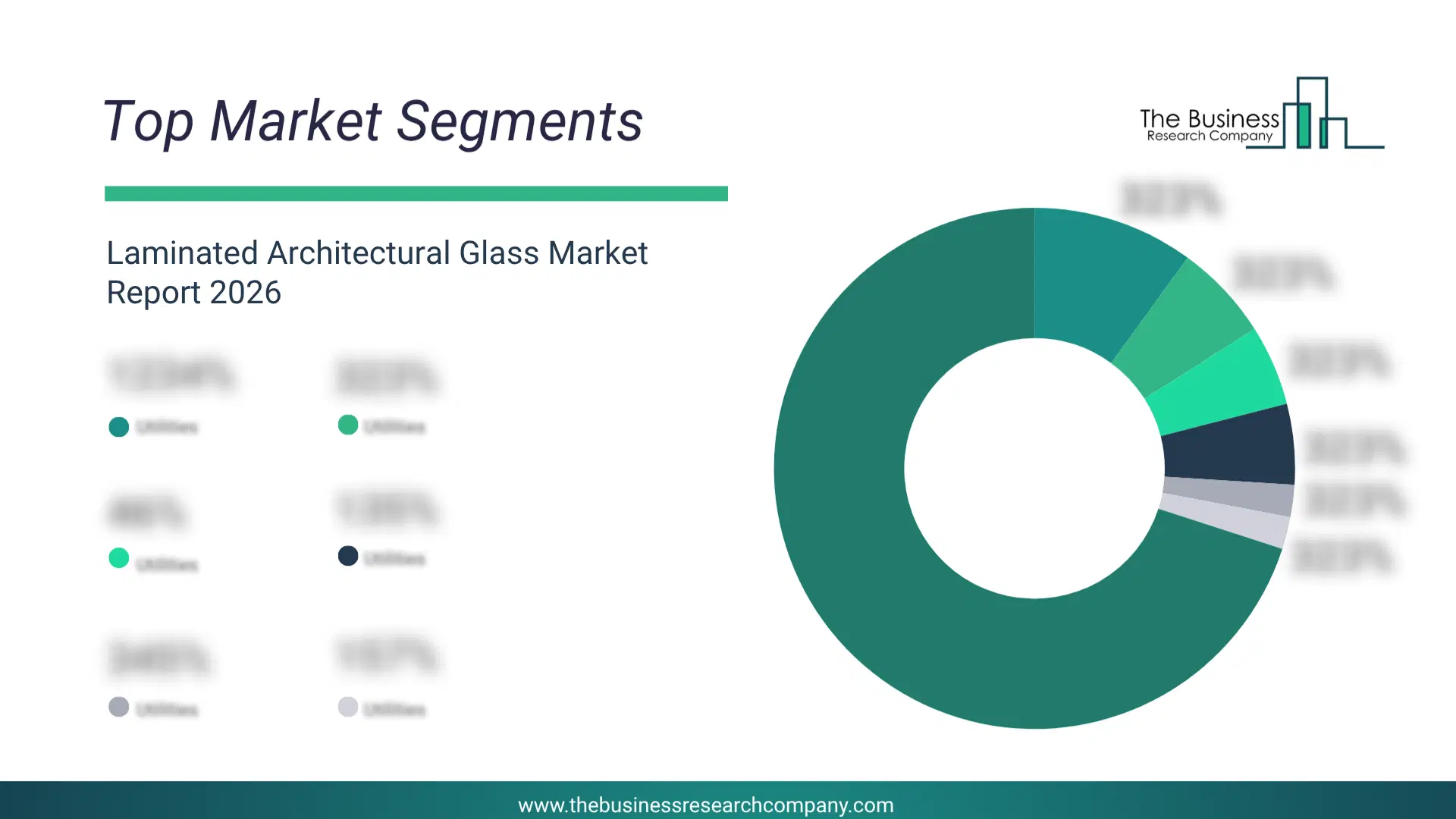
Global Laminated Architectural Glass Market Segmentation
1) By Product Type: Tempered Laminated Glass, Polyvinyl Butyral (PVB) Laminated Glass, Ethylene Vinyl Acetate (EVA) Laminated Glass, Acoustic Laminated Glass, Solar Control Laminated Glass 2) By Technology: Standard Laminating Technology, Low-Emission Coating Technology, High-Performance Laminating Technology, Smart Glass Technology 3) By Distribution Channel: Direct Sales, Online Retail, Distributors And Wholesalers, Project-Based Sales 4) By Application: Civil Architecture, Special Architecture 5) By End-Use Industry: Architectural, Automotive, Aerospace, Marine, Furniture Subsegments: 1) By Tempered Laminated Glass: Clear Tempered Laminated Glass, Tinted Tempered Laminated Glass, Reflective Tempered Laminated Glass, Low-Iron Tempered Laminated Glass 2) By Polyvinyl Butyral (PVB) Laminated Glass: Standard PVB Laminated Glass, UV-Filtering PVB Laminated Glass, Colored PVB Laminated Glass, High-Performance Safety PVB Laminated Glass 3) By Ethylene Vinyl Acetate (EVA) Laminated Glass: Clear EVA Laminated Glass, Decorative EVA Laminated Glass, UV Resistant EVA Laminated Glass, High Transparency EVA Laminated Glass 4) By Acoustic Laminated Glass: Single Layer Acoustic Glass, Multi-Layer Acoustic Glass, Acoustic Glass With Thermal Insulation, Acoustic Glass With Decorative Interlayers 5) By Solar Control Laminated Glass: Low-E Solar Control Laminated Glass, Spectrally Selective Solar Control Glass, Reflective Solar Control Glass, Tinted Solar Control GlassWhat Is The Driver Of The Laminated Architectural Glass Market?
The rising demand for building materials is expected to propel the growth of the laminated architectural glass market going forward. Building materials refer to the range of physical products used in the construction of residential, commercial, and infrastructure projects. Building materials demand is increasing due to rapid growth in construction and infrastructure development projects. Laminated architectural glass enhances building materials by improving safety, energy efficiency, and aesthetic appeal in modern construction. For instance, in October 2025, according to the Department for Business and Trade, a UK-based government department, construction materials increased by £111 million ($146 million) in Quarter 2 2025 compared to Quarter 1 2025, from £2,147 million ($ 2,826 million) to £2,258 million ($ 2,972 million), a 5.2% rise. Therefore, a demand surge in building materials is expected to drive the growth of the Laminated Architectural Glass industry.Key Players In The Global Laminated Architectural Glass Market
Major companies operating in the laminated architectural glass market are Compagnie de Saint-Gobain S.A., AGC Inc., Türkiye Sise ve Cam Fabrikalari A.S., Fuyao Glass Industry Group Co. Ltd., Nippon Sheet Glass Co. Ltd., Guardian Industries Holdings LLC, Xinyi Glass Holdings Limited, Cardinal Glass Industries Inc., China Southern Glass Holding Co. Ltd., Central Glass Co. Ltd., Trulite Glass & Aluminum Solutions LLC, Jinjing Group Co. Ltd., Schott AG, Viracon Inc., Asahi India Glass Limited, PGP Glass Private Limited, Glasswerks LA Inc., HPG International Inc., Vitro S.A.B. de C.V., Luoyang Glass Company Limited, McGrory Glass Inc., Vitrum Glass Group Inc., Luoyang North Glass Technology Co. Ltd.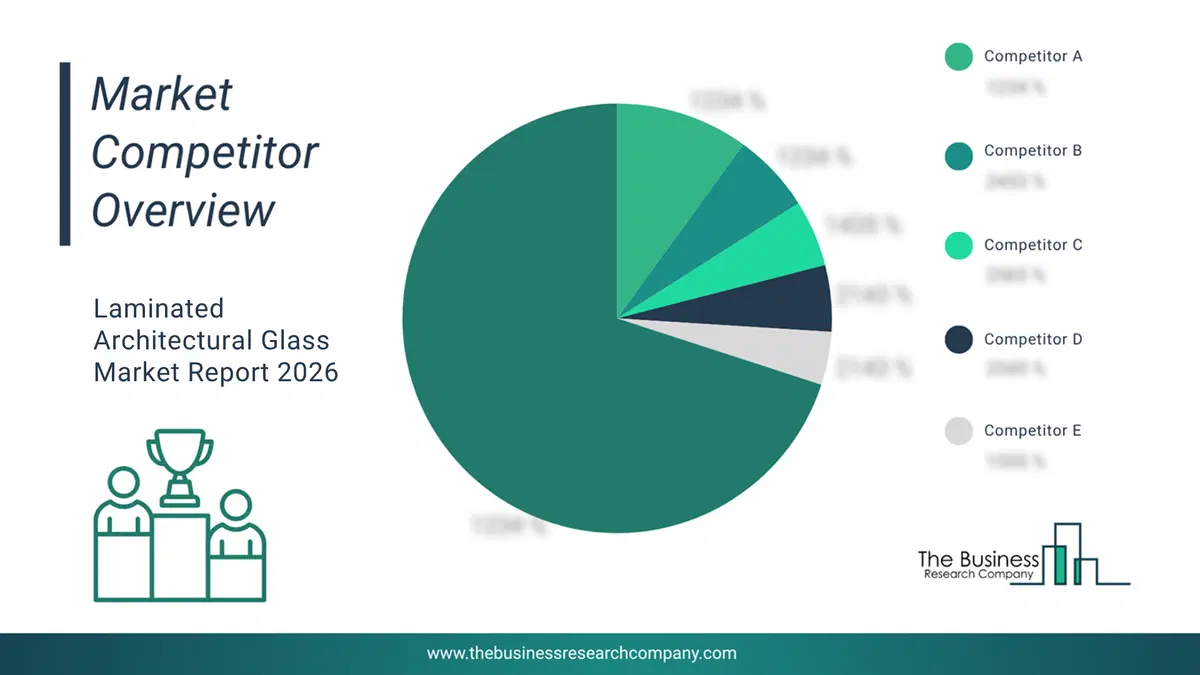
This chart is for illustrative purposes; the full report includes a detailed competitor analysis and comprehensive overview of the top 10 companies in the market.
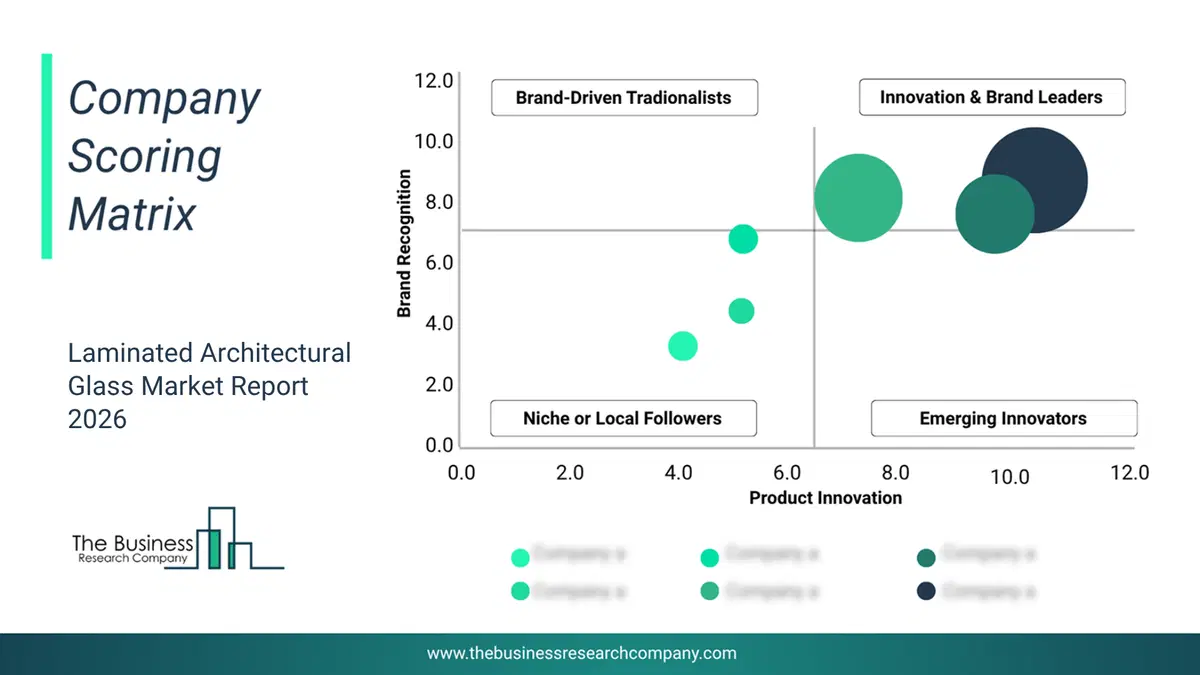
This chart maps companies by product innovation and brand strength, with bubble size indicating relative revenue, helping identify market leaders, challengers, and niche players. This is an illustrative chart; the full report provides a complete and accurate competitive analysis.
Global Laminated Architectural Glass Market Trends and Insights
Major companies operating in the laminated architectural glass market are focusing on developing innovative solutions, such as low-carbon PVB interlayer laminated glasses, to reduce the environmental footprint of building materials while meeting sustainability regulations. Low-carbon PVB interlayer laminated glass is a sustainable glazing solution that uses a PVB interlayer made with reduced carbon emissions, offering the same safety and performance benefits while minimizing environmental impact. For instance, in October 2024, Eastman Chemical Company, a US-based chemical industry company, launched Saflex LiteCarbon Clear, a new-generation, low-carbon PVB interlayer for laminated glass. This innovative product significantly reduces the embodied carbon of laminated glazing by using recycled content, helping architects and builders meet stringent environmental standards. It maintains the same clarity, durability, and safety benefits as traditional interlayers while supporting LEED and other green building certifications. Saflex LiteCarbon Clear is ideal for facades, windows, and overhead glazing where transparency and environmental impact are both critical considerations.What Are Latest Mergers And Acquisitions In The Laminated Architectural Glass Market?
In January 2024, AGNORA, a Canada-based company specializing in the fabrication of architectural glass, acquired West Coast Insulated Glass Products for an undisclosed amount. With this acquisition, AGNORA aims to expand its market presence and provide more innovative glass solutions by combining expertise to offer a broader range of products and improved service delivery, making the company a one-stop shop for whole-home solutions. West Coast Insulated Glass Products is a US-based manufacturer of laminated architectural glass products intended for window and door manufacturers.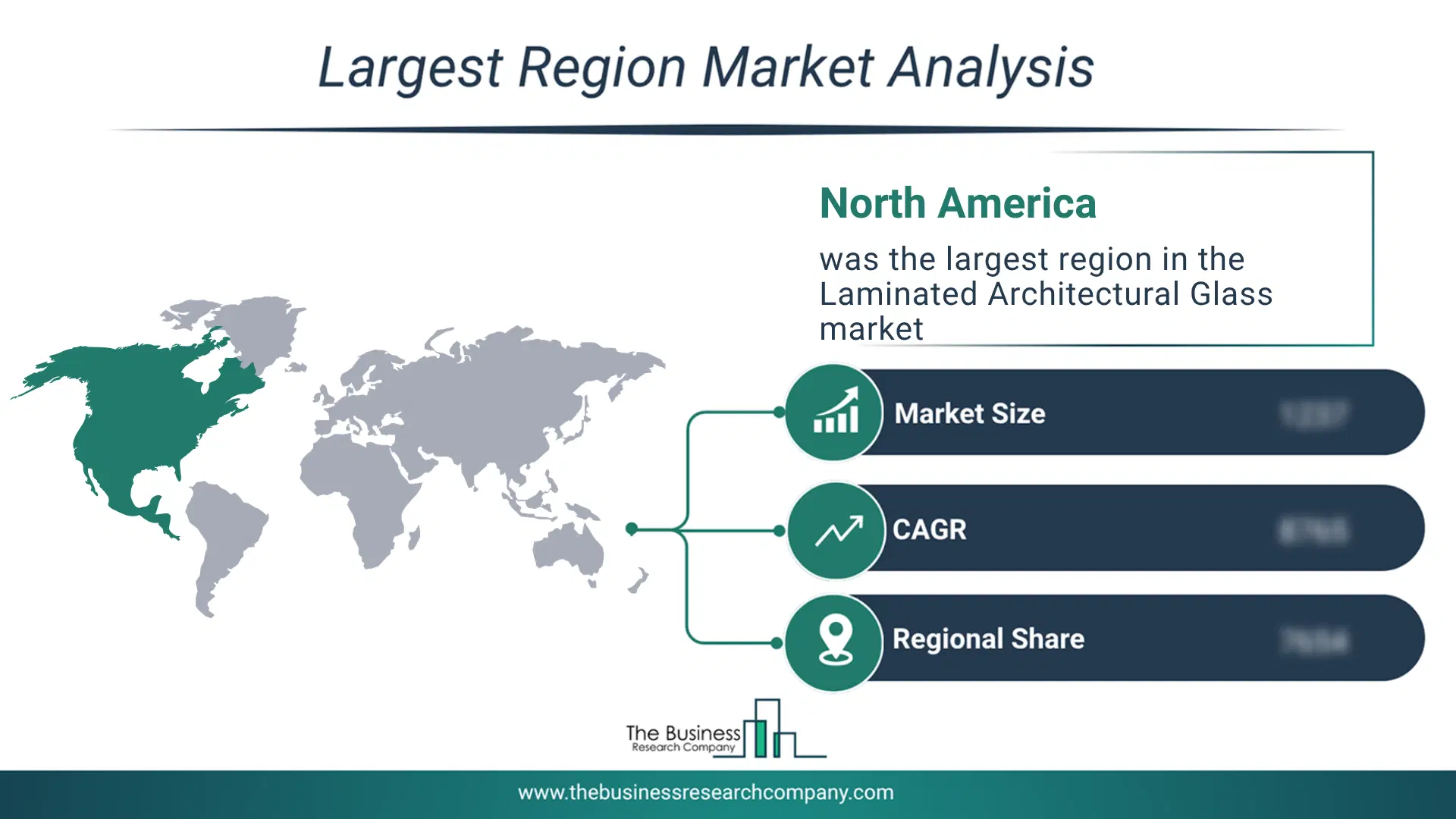
Regional Insights
North America was the largest region in the laminated architectural glass market in 2025. Asia-Pacific is expected to be the fastest-growing region in the forecast period. The regions covered in this market report are Asia-Pacific, South East Asia, Western Europe, Eastern Europe, North America, South America, Middle East, Africa. The countries covered in this market report are Australia, Brazil, China, France, Germany, India, Indonesia, Japan, Taiwan, Russia, South Korea, UK, USA, Canada, Italy, Spain.What Defines the Laminated Architectural Glass Market?
The laminated architectural glass market consists of sales of products including safety glass panels, bullet-resistant glass, soundproof glass, curved laminated glass, switchable privacy glass, and solar control glass. Values in this market are ‘factory gate’ values, that is, the value of goods sold by the manufacturers or creators of the goods, whether to other entities (including downstream manufacturers, wholesalers, distributors, and retailers) or directly to end customers. The value of goods in this market includes related services sold by the creators of the goods.How is Market Value Defined and Measured?
The market value is defined as the revenues that enterprises gain from the sale of goods and/or services within the specified market and geography through sales, grants, or donations in terms of the currency (in USD unless otherwise specified). The revenues for a specified geography are consumption values that are revenues generated by organizations in the specified geography within the market, irrespective of where they are produced. It does not include revenues from resales along the supply chain, either further along the supply chain or as part of other products.
This chart presents market attractiveness based on a quantitative evaluation of growth, competition, strategic alignment, and risk, offering a clear view of opportunity areas for decision-making. This chart is for illustrative purposes; the full report contains the complete analysis.

This chart highlights the Total Addressable Market (TAM) by estimating the maximum revenue opportunity using an assumption-driven approach, supporting strategic planning and opportunity sizing across markets. The chart is illustrative; the full report provides a more comprehensive analysis.
What Key Data and Analysis Are Included in theLaminated Architectural Glass Market Report 2026?
The laminated architectural glass market research report is one of a series of new reports from The Business Research Company that provides market statistics, including industry global market size, regional shares, competitors with the market share, detailed market segments, market trends and opportunities, and any further data you may need to thrive in the laminated architectural glass industry. The market research report delivers a complete perspective of everything you need, with an in-depth analysis of the current and future state of the industry.Laminated Architectural Glass Market Report Forecast Analysis
| Report Attribute | Details |
|---|---|
| Market Size Value In 2026 | $16.44 billion |
| Revenue Forecast In 2030 | $21.73 billion |
| Growth Rate | CAGR of 7.5% from 2026 to 2030 |
| Base Year For Estimation | 2025 |
| Actual Estimates/Historical Data | 2020-2025 |
| Forecast Period | 2026 - 2030 |
| Market Representation | Revenue in USD Billion and CAGR from 2026 to 2030 |
| Segments Covered | Product Type, Technology, Distribution Channel, Application, End-Use Industry |
| Regional Scope | Asia-Pacific, Western Europe, Eastern Europe, North America, South America, Middle East, Africa |
| Country Scope | The countries covered in this market report are Australia, Brazil, China, France, Germany, India, Indonesia, Japan, Taiwan, Russia, South Korea, UK, USA, Canada, Italy, Spain |
| Key Companies Profiled | Compagnie de Saint-Gobain S.A., AGC Inc., Türkiye Sise ve Cam Fabrikalari A.S., Fuyao Glass Industry Group Co. Ltd., Nippon Sheet Glass Co. Ltd., Guardian Industries Holdings LLC, Xinyi Glass Holdings Limited, Cardinal Glass Industries Inc., China Southern Glass Holding Co. Ltd., Central Glass Co. Ltd., Trulite Glass & Aluminum Solutions LLC, Jinjing Group Co. Ltd., Schott AG, Viracon Inc., Asahi India Glass Limited, PGP Glass Private Limited, Glasswerks LA Inc., HPG International Inc., Vitro S.A.B. de C.V., Luoyang Glass Company Limited, McGrory Glass Inc., Vitrum Glass Group Inc., Luoyang North Glass Technology Co. Ltd. |
| Customization Scope | Request for Customization |
| Pricing And Purchase Options | Explore Purchase Options |