
Leasing Market Report 2026
Global Outlook – By Type (Automotive Equipment Leasing, Consumer Goods And General Rental Centers, Machinery Leasing), By Mode (Online, Offline), By Lease Type (Closed-Ended Lease, Option to Buy Lease, Other Lease Types) – Market Size, Trends, Strategies, and Forecast to 2030
Leasing Market Overview
• Leasing market size has reached to $2079.95 billion in 2025 • Expected to grow to $3291.98 billion in 2030 at a compound annual growth rate (CAGR) of 9.7% • Growth Driver: Real Estate Boom Driving Growth In The Leasing Market • Market Trend: Leasys Italia Launches E-Store To Enhance Customer Experience In Vehicle Leasing • Asia-Pacific was the largest region in 2025 and North America is the fastest growing region.Market Gains By 2030 – Top Opportunities By Segment
Market Gain identifies the most promising market opportunities by highlighting the segments or products expected to generate the highest incremental revenue growth over the next five years.
What Is Covered Under Leasing Market?
Leasing is a financial arrangement in which a person, company, or other entity pays to use land, a vehicle or other property for a set period. The cash outflow and payments related to leasing are spread out over several years, hence saving the burden of one-time significant cash payments, which helps a business to maintain a steady cash-flow profile. The main types of leasing are automotive equipment leasing, consumer goods, general rental centers, machinery leasing and lessors of nonfinancial intangible assets. The automotive equipment leasing industry includes businesses that rent or lease vehicles without drivers, such as passenger cars, truck tractors, utility trailers, buses, semi-trailers, trucks, recreational vehicles (RVs, ) and passenger vans. The different modes include online, and offline and involve various lease types such as closed-ended lease, option to buy the lease, sub-vented lease, and others.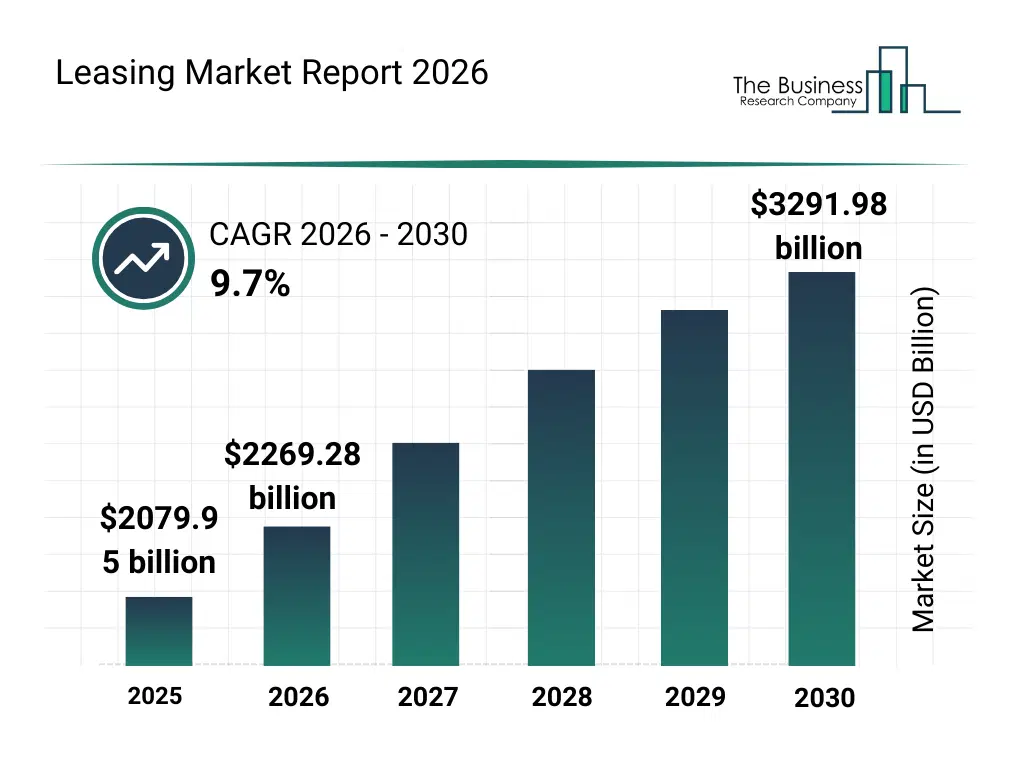
What Is The Leasing Market Size and Share 2026?
The leasing market size has grown strongly in recent years. It will grow from $2079.95 billion in 2025 to $2269.28 billion in 2026 at a compound annual growth rate (CAGR) of 9.1%. The growth in the historic period can be attributed to rising business capital requirements, increasing need for financial flexibility, growing asset cost burden, expansion of commercial operations, rising demand for alternative financing.What Is The Leasing Market Growth Forecast?
The leasing market size is expected to see strong growth in the next few years. It will grow to $3291.98 billion in 2030 at a compound annual growth rate (CAGR) of 9.7%. The growth in the forecast period can be attributed to increasing adoption of digital leasing platforms, rising demand for scalable financing, growing preference for subscription based usage, expanding leasing penetration across sectors, rising awareness of cost optimized leasing. Major trends in the forecast period include increasing preference for flexible financing models, growing adoption of operational cost optimized leasing, rising demand for asset access without ownership, expanding use of technology enabled leasing platforms, increasing emphasis on long term financial risk management.
Global Leasing Market Segmentation
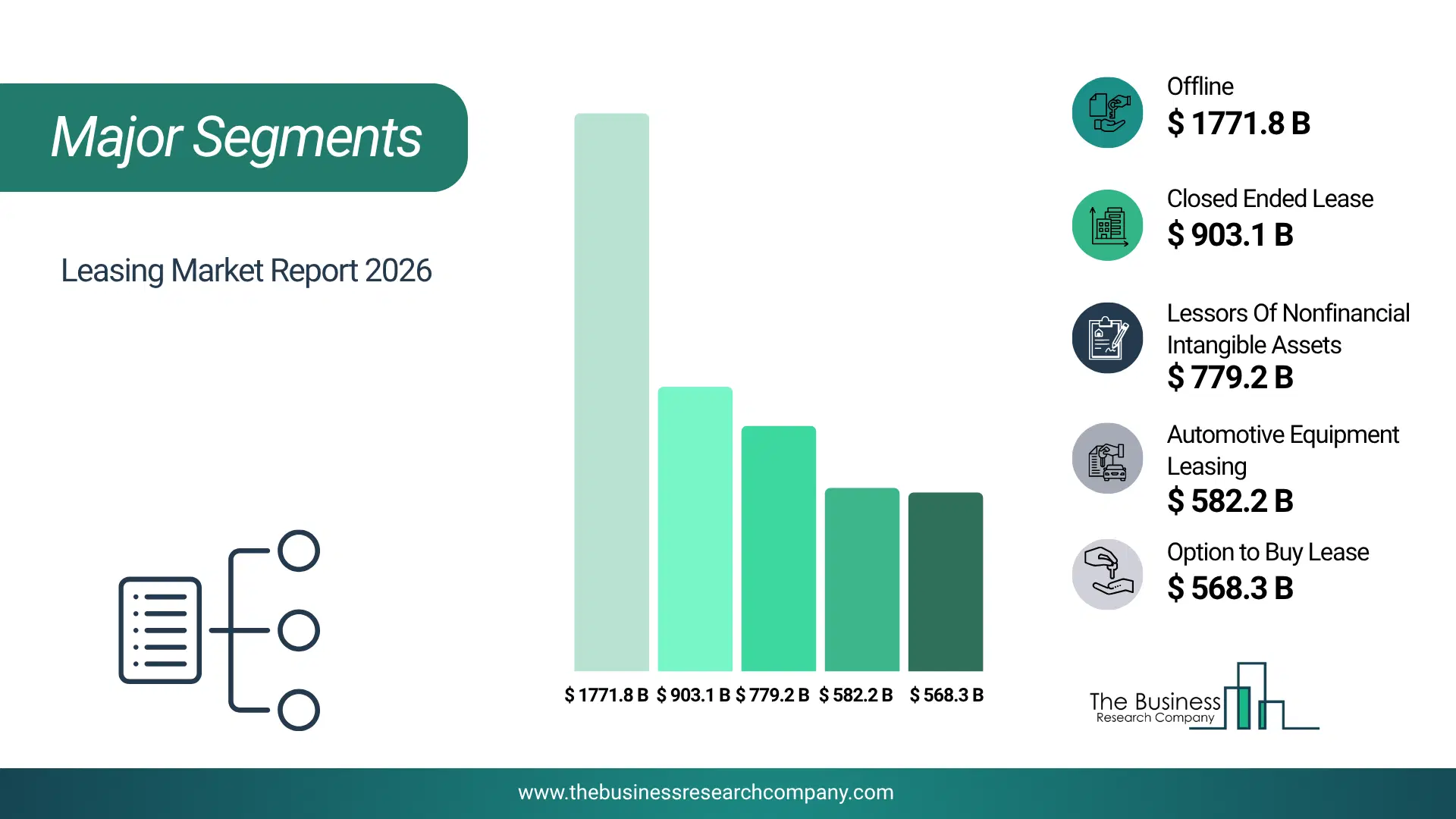
1) By Type: Automotive Equipment Leasing, Consumer Goods And General Rental Centers, Machinery Leasing 2) By Mode: Online, Offline 3) By Lease Type: Closed-Ended Lease, Option to Buy Lease, Other Lease Types Subsegments: 1) By Automotive Equipment Leasing: Passenger Vehicle Leasing, Commercial Vehicle Leasing, Fleet Leasing Services 2) By Consumer Goods And General Rental Centers: Household Appliance Leasing, Consumer Electronics Leasing 3) By Machinery Leasing: Construction Equipment Leasing, Agricultural Machinery Leasing, Industrial Equipment Leasing The top segments in the leasing market will be: • Offline will reach $1771812.86 Million by 2025. • Closed Ended Lease will reach $903113.82 Million by 2025. • Lessors Of Nonfinancial Intangible Assets will reach $779204.16 Million by 2025. • Automotive Equipment Leasing will reach $582230.68 Million by 2025. • Option to Buy Lease will reach $568350.04 Million by 2025.What Is The Driver Of The Leasing Market?
The rising demand for real estate is expected to propel the growth of the leasing market going forward. Real estate refers to immovable property consisting of land, buildings, and any natural resources attached to or found on the land, such as minerals, water, and vegetation. Real estate is rising because increasing urbanization is driving demand for housing and commercial spaces, as more people move to cities and require expanded infrastructure to support growing populations. Leasing real estate properties, whether residential or commercial, can offer several benefits to landlords by providing a consistent source of cash flow, which can help cover mortgage payments, property maintenance costs, and other expenses. For instance, in March 2024, according to the U.S. Census Bureau, a US-based leading source of statistical information about the nation's people, the number of renter-occupied housing units increased from 43.9 million in 2022 to 44.5 million in 2023 (an addition of 514, 000). Therefore, the rising demand for real estate drives the leasing industry.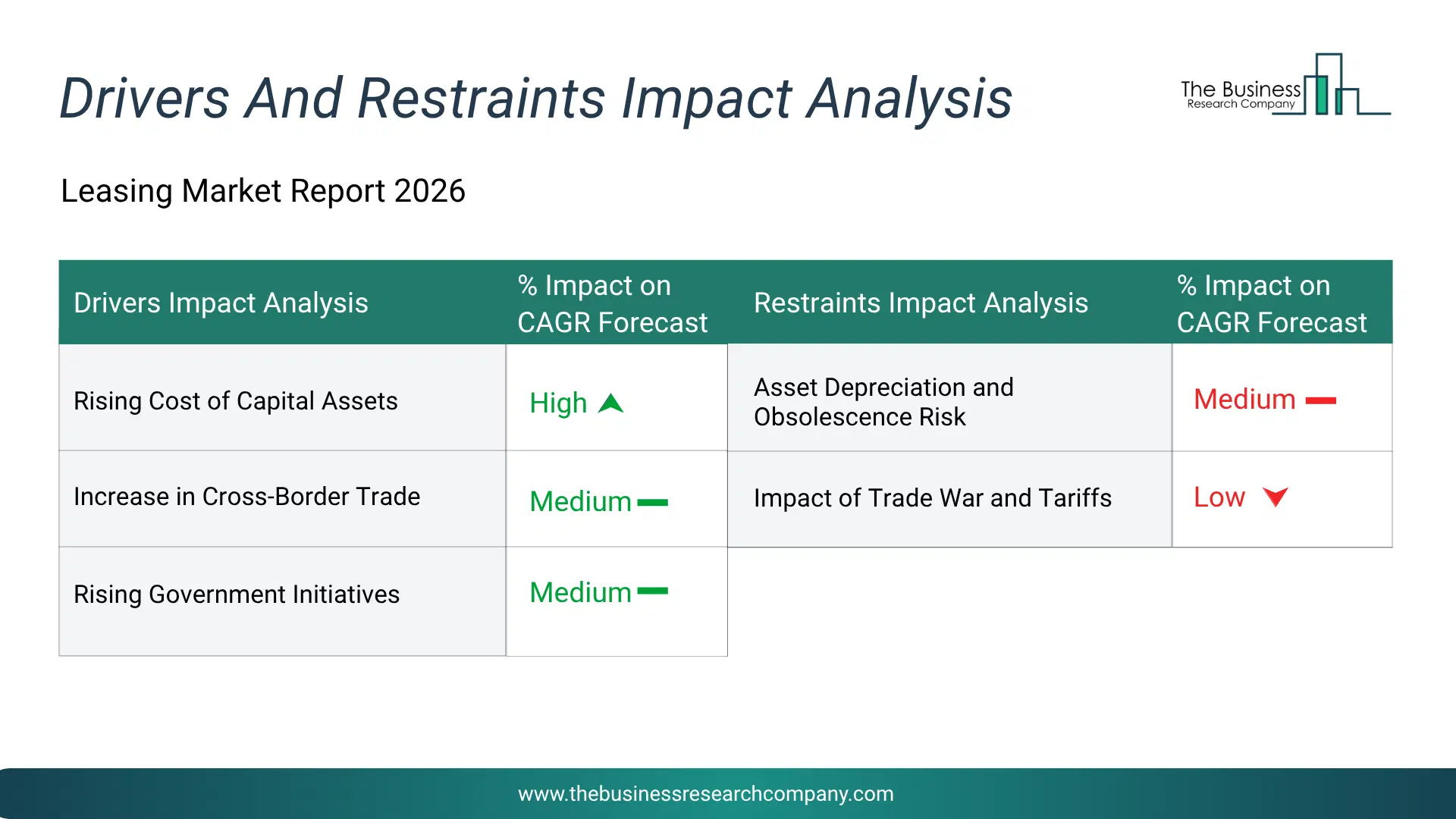
Infographic Chart Showing Key Market Drivers Analysis And Restraints For Leasing Market
The chart presents an impact analysis of key drivers and restraints, quantifying their relative influence on the market's growth rate and helping assess the balance between growth enablers and limiting factors. This chart offers a high-level perspective; the full report contains more detailed insights.
How Will The Drivers Impact Growth In The Global Leasing Market?
• Rising Cost of Capital Assets (High) – The rising cost of capital assets will become a key driver of growth in the leasing market by 2030. The increasing cost of capital assets is driving the growth of the leasing market, as businesses seek alternatives to large upfront investments. When the price of equipment, vehicles, or technology rises, companies, especially small and medium-sized enterprises, often turn to leasing to access essential assets without depleting their working capital. For example, in the construction and healthcare sectors, leasing allows firms to use advanced machinery or medical equipment while spreading payments over time, rather than making substantial one-time purchases. This approach helps businesses maintain operational flexibility and preserve cash flow, which is critical in times of economic uncertainty or inflation. As a result, the rising cost of capital assets is anticipated to contributing to a 2.0% annual growth in the market. • Increase in Cross-Border Trade (Medium) – The increase in cross-border trade will emerge as a major factor driving the expansion of the leasing market by 2030. The rise in cross-border trade is driving the growth of the leasing market, as it enables businesses to access a broader range of assets and financing options across international boundaries. Businesses involved in international trade prefer leasing to manage fluctuating shipment volumes cost-effectively. Leasing offers flexibility and scalability without heavy capital investment in multiple regions. It also helps companies navigate regulatory and operational differences across countries. Consequently, the increase in cross-border trade capabilities is projected to contributing to a 1.5% annual growth in the market. • Rising Government Initiatives (Medium) – The rising government initiatives within digital manufacturing processes will serve as a key growth catalyst for the leasing market by 2030. Rising government initiatives significantly expanded the growth of the leasing market by creating a more favorable regulatory and financial environment for both lessors and lessees. Subsidies, tax benefits and policy support make leasing more accessible for businesses. Public-private partnerships often rely on leased equipment for efficiency and cost control. These initiatives not only lower financial barriers but also provide regulatory clarity, making leasing a more attractive option for businesses and individuals. Therefore, this rising government initiatives across digital manufacturing operations is projected to supporting to a 1.0% annual growth in the market. • Growing Tourism and Hospitality (Low) – The growing tourism and hospitality will become a significant driver contributing to the growth of the leasing market by 2030. The rapid expansion of the tourism and hospitality sector driving the growth of the leasing market, as increased tourist inflows create higher demand for leased assets such as vehicles, hotels and commercial properties. Hotels and resorts often lease furniture, electronics and kitchen appliances to reduce upfront costs. Car rental and transportation services lease vehicles to meet tourist demand efficiently. Seasonal fluctuations in tourism make flexible leasing options more appealing. Consequently, the growing tourism and hospitality strategies is projected to contributing to a 0.5% annual growth in the market.How Will The Restraints Impact Growth In The Global Leasing Market?
• Limited Leasing Awareness and Financial Literacy (Medium) – Limited Leasing Awareness and Financial Literacy will restrict the growth of the Leasing market during the forecast period. Limited awareness of leasing benefits and options among potential customers affects the adoption of leasing solutions. Financial literacy gaps about lease terms, costs, and obligations can deter potential lessees from considering leasing arrangements. Lack of understanding about leasing advantages compared to purchasing limits market penetration and growth. • Asset Depreciation and Obsolescence Risk (Medium) – Asset Depreciation and Obsolescence Risk will restrict the growth of the Leasing market during the forecast period. Leased assets are subject to depreciation and technology obsolescence, creating financial risks for lessors. The risk of asset value decline affects the profitability of leasing operations and may lead to higher lease rates. Depreciation and obsolescence concerns can limit the types of assets available for leasing and affect market growth. • Impact of Trade War and Tariffs (Low) – Impact of Trade War and Tariffs will restrict the growth of the Leasing market during the forecast period. Trade tensions and economic uncertainty can affect business investment and capital spending, reducing demand for leasing services. Reduced business confidence during trade disputes may lead to delayed equipment acquisitions and leasing decisions. Trade barriers may also affect the import of leased equipment, limiting market growth.Key Players In The Global Leasing Market
Major companies operating in the leasing market report are Volkswagen Leasing GmbH, Enterprise Holdings Inc., Daimler, United Rentals Inc., LeasePlan Corporation N.V., Ashtead Group, Deutsche Leasing AG, Tokyo Century, Quippo Infrastructure Limited, GMMCO, Toyota Rent a Car, ORIX Rent a Car, Anji Leasing, China Auto Rental Holdings Inc., EHi Auto Services Co. Ltd., Shouqi Car Rental Co. Ltd., Europcar, Hertz, Avis Budget, BNP Paribas Leasing Solutions, Renault Eurodrive, Sixt, KAMAZ Leasing Company, Volvo Finance Service Vostok, VTB Leasing, ALD Automotive, Wells Fargo Financial Equipment Leasing, Hitachi Capital America Corp, TCF Equipment Finance, AerCap Holdings N.V., Ryder, National Leasing, Localiza, Movida, Safra Leasing S.A., BB Leasing, Leasing Bolívar S.A., Budget, Barloworld South Africa (Pty) Ltd, Bidvest Car Rental (Pty) Ltd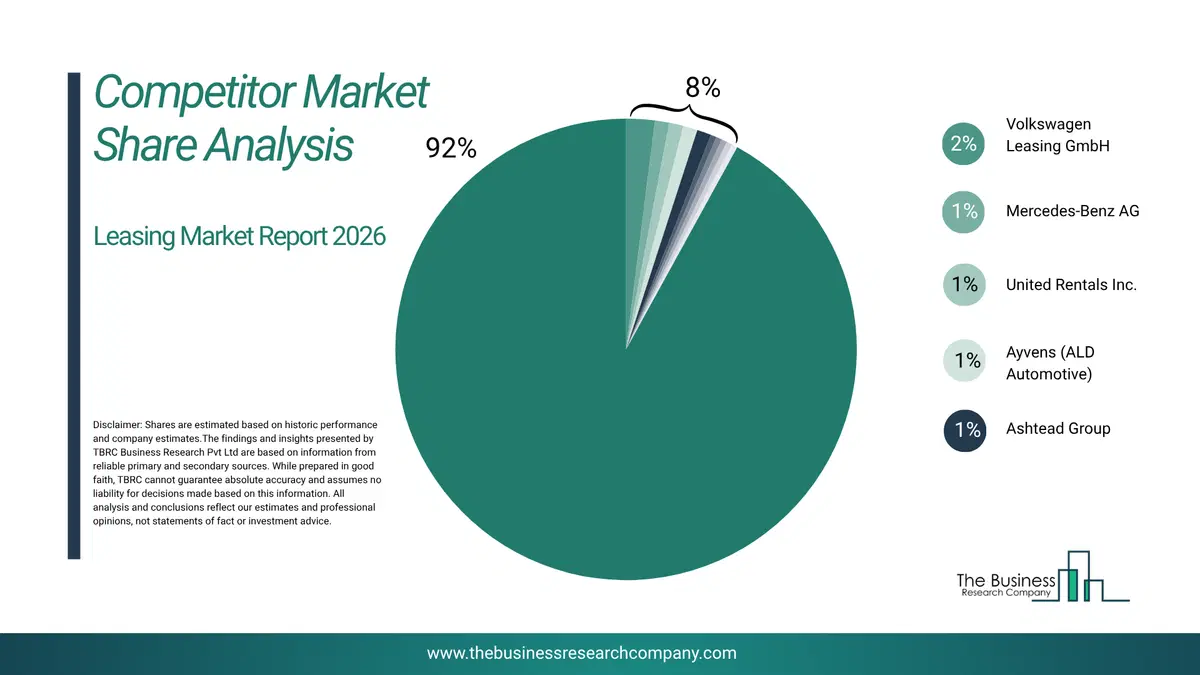
This chart is for illustrative purposes; the full report includes a detailed competitor analysis and comprehensive overview of the top 10 companies in the market.
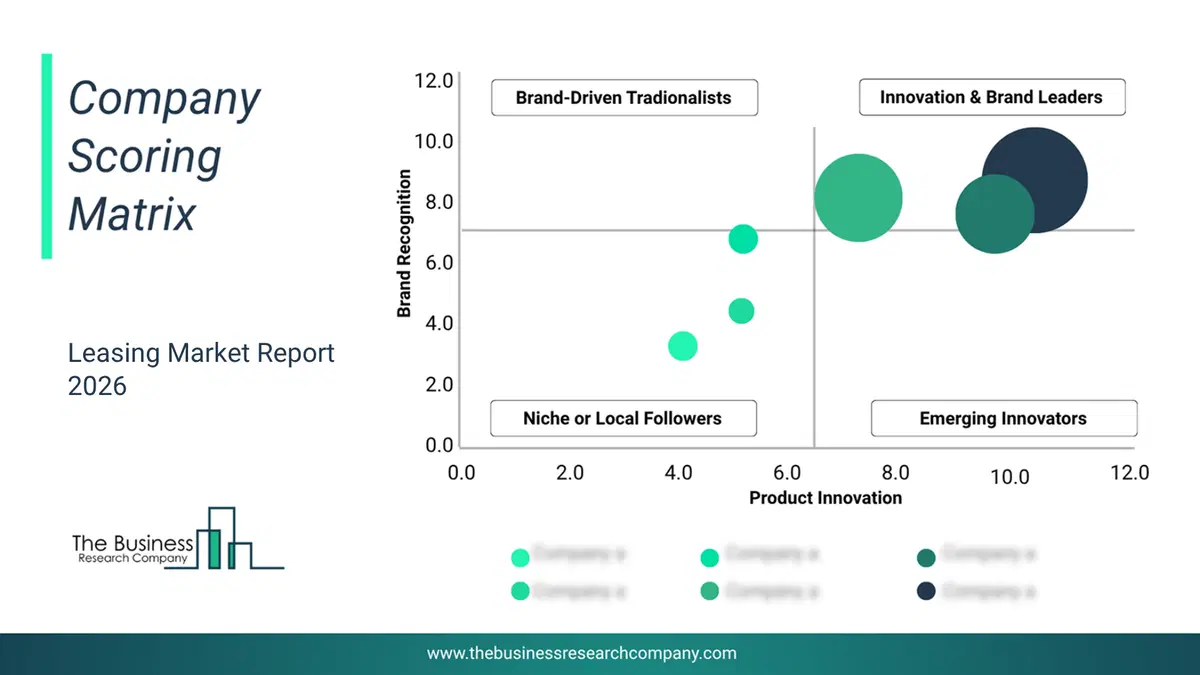
This chart maps companies by product innovation and brand strength, with bubble size indicating relative revenue, helping identify market leaders, challengers, and niche players. This is an illustrative chart; the full report provides a complete and accurate competitive analysis.
Global Leasing Market Trends and Insights
Major companies operating in the leasing market are focusing on technologies, such as e-commerce platforms, to enhance customer experience, streamline operations, and promote sustainable mobility solutions. E-commerce platforms are online software solutions that facilitate buying and selling goods or services over the Internet, enabling businesses to create and manage their online stores. For instance, in October 2024, Leasys Italia S.p.A., an Italy-based mobility and leasing company, launched the Leasys e-Store. The e-store is designed to facilitate easy sign-ups for customers interested in personal contract hire (PCH) and other leasing options. It aims to streamline the process of selecting and managing vehicle leases online.What Are Latest Mergers And Acquisitions In The Leasing Market?
In September 2024, Apollo Global Management Inc., a US-based global alternative asset manager offering private equity, real asset, and credit investment solutions, acquired Beequip B.V. from NIBC Bank N.V. for an undisclosed amount. With this purchase, Apollo wants to speed up the growth of its European equipment finance platform by increasing financing and leasing options for heavy equipment, which will help it grow its asset-backed finance business and reach more small and medium-sized customers in the heavy-equipment industry. Beequip B.V. is a Netherlands-based specialist in equipment leasing, providing financing and leasing solutions for new and used heavy machinery across sectors such as transport, cranes, containers, and maritime equipment.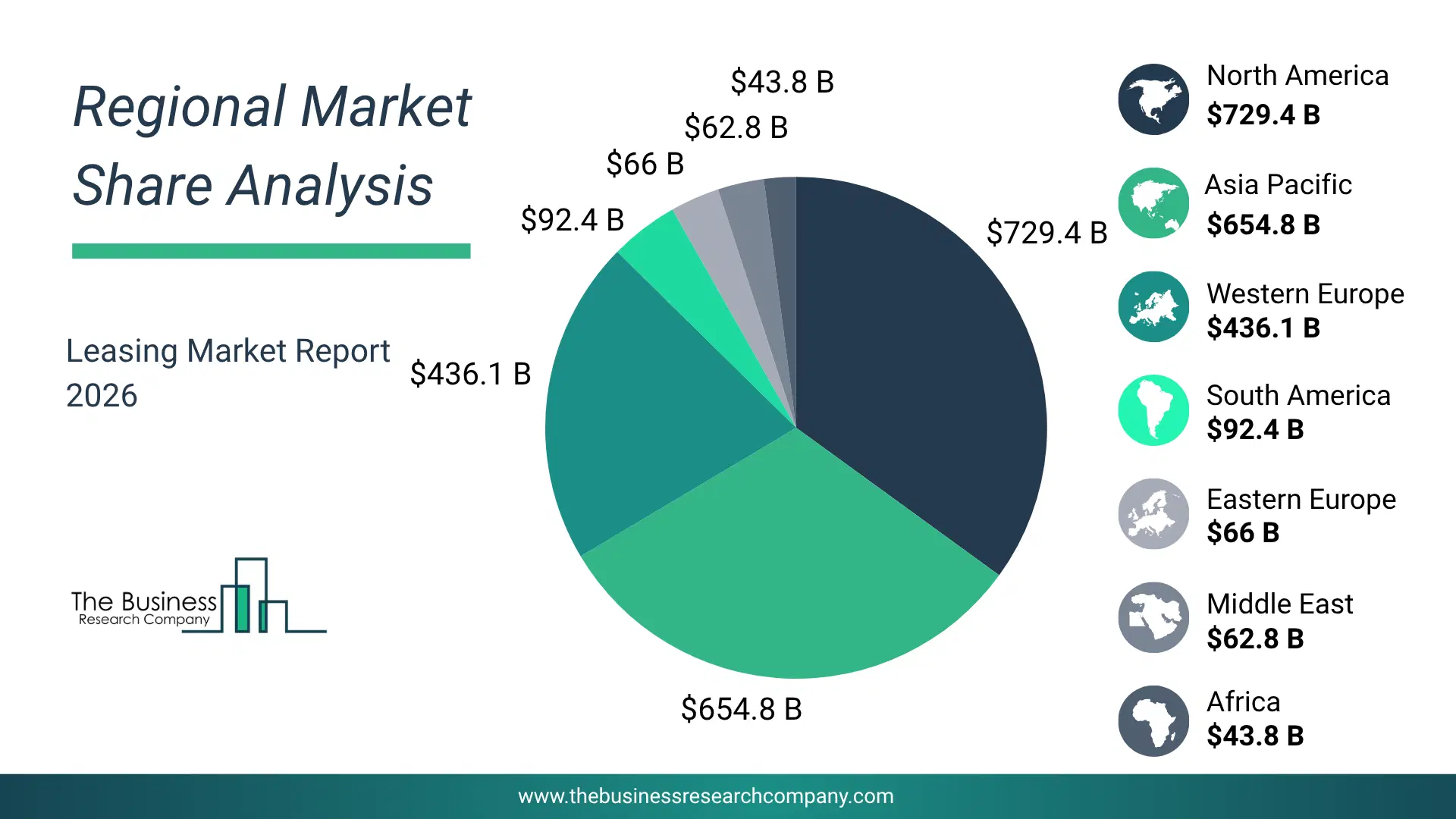
Regional Outlook
Asia-Pacific was the largest region in the leasing market in 2025. North America was the second-largest region in leasing market. The regions covered in this market report are Asia-Pacific, South East Asia, Western Europe, Eastern Europe, North America, South America, Middle East, Africa. The countries covered in this market report are China, India, Japan, Australia, Indonesia, South Korea, Bangladesh, Thailand, Vietnam, Malaysia, Singapore, Philippines, Hong Kong, Taiwan, New Zealand, UK, Germany, France, Italy, Spain, Austria, Belgium, Denmark, Finland, Ireland, Netherlands, Norway, Portugal, Sweden, Switzerland, Russia, Czech Republic, Poland, Romania, Ukraine, USA, Canada, Mexico, Brazil, Chile, Argentina, Colombia, Peru, Saudi Arabia, Israel, Iran, Turkey, UAE, Egypt, Nigeria, South Africa.What Defines the Leasing Market?
The leasing market consists of revenues earned by entities that are engaged in providing variety of tangible goods leasing services such as passenger car rental, consumer goods rental, general rental, heavy construction machinery rental. This market does not include house leasing. The market value includes the value of related goods sold by the service provider or included within the service offering. Only goods and services traded between entities or sold to end consumers are included.How is Market Value Defined and Measured?
The market value is defined as the revenues that enterprises gain from the sale of goods and/or services within the specified market and geography through sales, grants, or donations in terms of the currency (in USD unless otherwise specified). The revenues for a specified geography are consumption values that are revenues generated by organizations in the specified geography within the market, irrespective of where they are produced. It does not include revenues from resales along the supply chain, either further along the supply chain or as part of other products.
This chart presents market attractiveness based on a quantitative evaluation of growth, competition, strategic alignment, and risk, offering a clear view of opportunity areas for decision-making. This chart is for illustrative purposes; the full report contains the complete analysis.

This chart highlights the Total Addressable Market (TAM) by estimating the maximum revenue opportunity using an assumption-driven approach, supporting strategic planning and opportunity sizing across markets. The chart is illustrative; the full report provides a more comprehensive analysis.
What Key Data and Analysis Are Included in the Leasing Market Report 2026?
The leasing market research report is one of a series of new reports from The Business Research Company that provides market statistics, including industry global market size, regional shares, competitors with the market share, detailed market segments, market trends and opportunities, and any further data you may need to thrive in the leasing industry. The market research report delivers a complete perspective of everything you need, with an in-depth analysis of the current and future state of the industry.Leasing Market Report Forecast Analysis
| Report Attribute | Details |
|---|---|
| Market Size Value In 2026 | $2269.28 billion |
| Revenue Forecast In 2030 | $3291.98 billion |
| Growth Rate | CAGR of 9.1% from 2026 to 2030 |
| Base Year For Estimation | 2025 |
| Actual Estimates/Historical Data | 2020-2025 |
| Forecast Period | 2026 - 2030 |
| Market Representation | Revenue in USD Billion and CAGR from 2026 to 2030 |
| Segments Covered | Type, Mode, Lease Type |
| Regional Scope | Asia-Pacific, Western Europe, Eastern Europe, North America, South America, Middle East, Africa |
| Country Scope | The countries covered in the report are Australia, Brazil, China, France, Germany, India, Indonesia, Japan, Taiwan, Russia, South Korea, UK, USA, Canada, Italy, Spain. |
| Key Companies Profiled | Volkswagen Leasing GmbH, Enterprise Holdings Inc., Daimler, United Rentals Inc., LeasePlan Corporation N.V., Ashtead Group, Deutsche Leasing AG, Tokyo Century, Quippo Infrastructure Limited, GMMCO, Toyota Rent a Car, ORIX Rent a Car, Anji Leasing, China Auto Rental Holdings Inc., EHi Auto Services Co. Ltd., Shouqi Car Rental Co. Ltd., Europcar, Hertz, Avis Budget, BNP Paribas Leasing Solutions, Renault Eurodrive, Sixt, KAMAZ Leasing Company, Volvo Finance Service Vostok, VTB Leasing, ALD Automotive, Wells Fargo Financial Equipment Leasing, Hitachi Capital America Corp, TCF Equipment Finance, AerCap Holdings N.V., Ryder, National Leasing, Localiza, Movida, Safra Leasing S.A., BB Leasing, Leasing Bolívar S.A., Budget, Barloworld South Africa (Pty) Ltd, Bidvest Car Rental (Pty) Ltd |
| Customization Scope | Request for Customization |
| Pricing And Purchase Options | Explore Purchase Options |