
Luxury Furniture Market Report 2026
Global Outlook – By Type (Tables, Chairs, Sofas And Lounges, Kitchen, Beds, Other Types), By Material (Wood, Metal, Glass, Leather), By Distribution Channel (Online, Offline), By End User (Residential, Commercial) – Market Size, Trends, Strategies, and Forecast to 2030
Luxury Furniture Market Overview
• Luxury Furniture market size has reached to $26.89 billion in 2025 • Expected to grow to $37.03 billion in 2030 at a compound annual growth rate (CAGR) of 6.7% • Growth Driver: Wooden Elegance Is Fueling The Surge In The Luxury Furniture Market • Market Trend: Emergence Of Sustainable Luxury Furniture Through A Focus On Advanced Recycled Materials In The Market • Asia-Pacific was the largest region and fastest growing region.Market Gains By 2030 – Top Opportunities By Segment
Market Gain identifies the most promising market opportunities by highlighting the segments or products expected to generate the highest incremental revenue growth over the next five years.
What Is Covered Under Luxury Furniture Market?
Luxury furniture refers to expensive and rare furniture created and constructed using materials of the highest quality, excellent craftsmanship, and attention to detail. It conveys a feeling of openness and the illusion of an opulent existence. The main types of luxury furniture are tables, chairs, sofas and lounges, kitchens, lighting, interior accessories, beds, and others. Tables are pieces of furniture having a horizontal flat surface supported by legs, pedestals, or other structural components. Several types of materials are used, such as wood, metal, plastic, glass, leather, and others. These are sold through online and offline distribution channels to various end-users, including residential and commercial.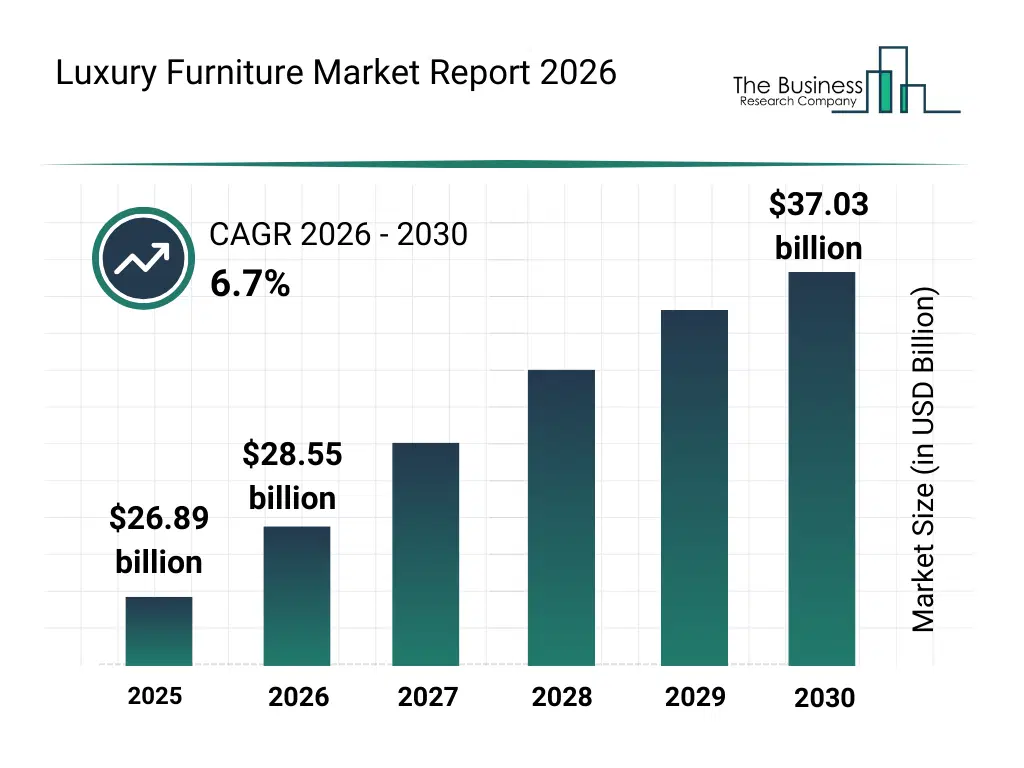
What Is The Luxury Furniture Market Size and Share 2026?
The luxury furniture market size has grown strongly in recent years. It will grow from $26.89 billion in 2025 to $28.55 billion in 2026 at a compound annual growth rate (CAGR) of 6.2%. The growth in the historic period can be attributed to growth in high-net-worth population, expansion of luxury residential projects, rising demand for premium interior design, strong offline luxury retail presence, availability of skilled craftsmanship.What Is The Luxury Furniture Market Growth Forecast?
The luxury furniture market size is expected to see strong growth in the next few years. It will grow to $37.03 billion in 2030 at a compound annual growth rate (CAGR) of 6.7%. The growth in the forecast period can be attributed to increasing demand for personalized luxury interiors, rising online luxury furniture penetration, growing focus on eco-luxury materials, expansion of hospitality and commercial luxury spaces, increasing influence of interior design trends. Major trends in the forecast period include increasing demand for custom-made luxury furniture, rising preference for sustainable premium materials, growing adoption of omnichannel luxury retail, expansion of bespoke craftsmanship offerings, enhanced focus on aesthetic personalization.
Global Luxury Furniture Market Segmentation
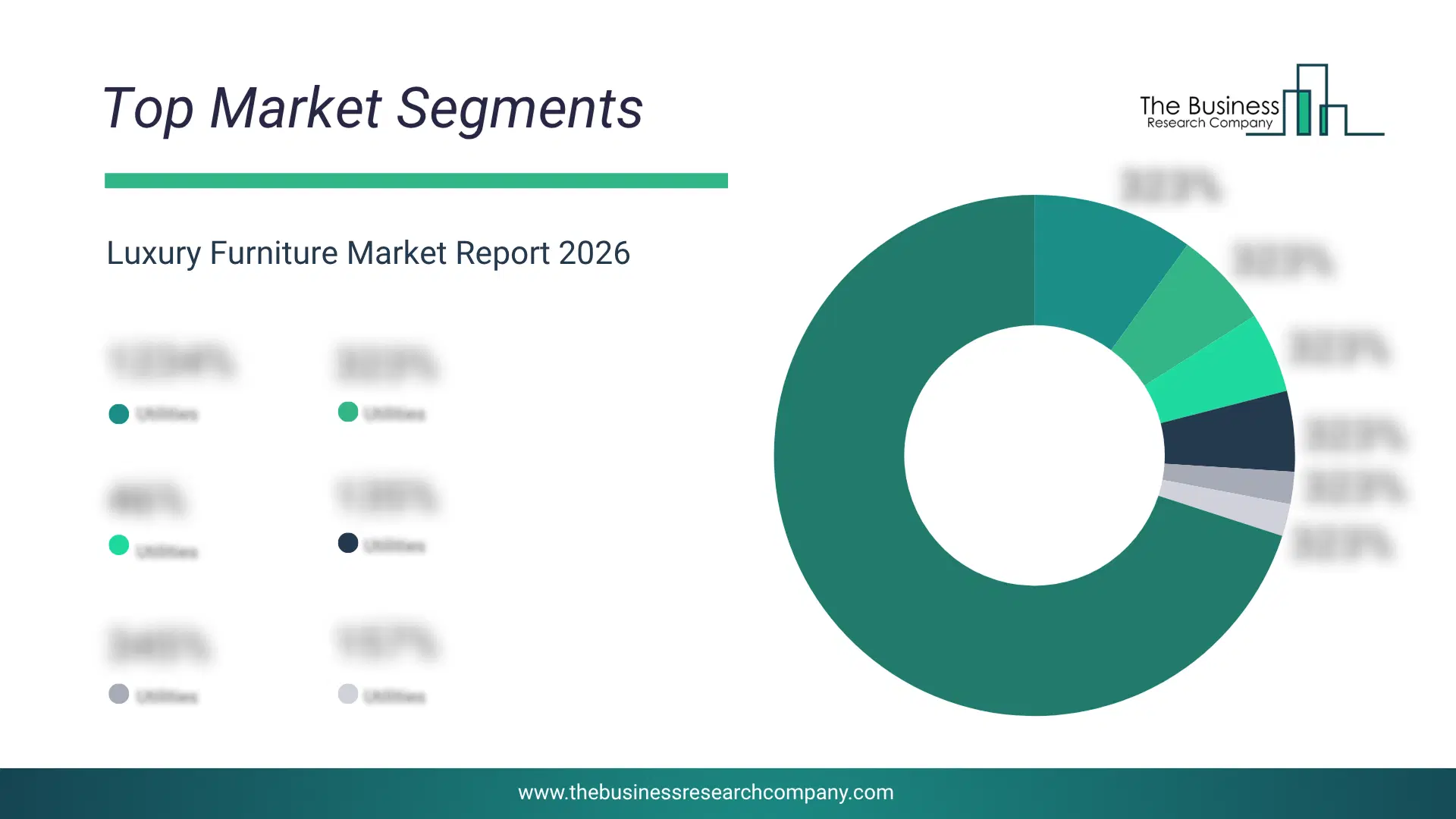
1) By Type: Tables, Chairs, Sofas And Lounges, Kitchen, Beds, Other Types 2) By Material: Wood, Metal, Glass, Leather 3) By Distribution Channel: Online, Offline 4) By End User: Residential, Commercial Subsegments: 1) By Tables: Dining Tables, Coffee Tables, Side Tables, Console Tables 2) By Chairs: Dining Chairs, Lounge Chairs, Office Chairs, Accent Chairs 3) By Sofas And Lounges: Sectional Sofas, Recliners, Sofa Beds, Loveseats 4) By Kitchen: Kitchen Islands, Bar Stools, Cabinets And Storage Solutions 5) By Beds: King And Queen Beds, Canopy Beds, Platform Beds, Bedside Tables 6) By Other Types: Outdoor Furniture, Custom-Made Furniture, Furniture For Commercial Spaces The top segments in the luxury furniture market will be: • Safas And Lounges will reach $7.63 Billion by 2030. • Kitchen will reach $7.29 Billion by 2030. • Chairs will reach $6.92 Billion by 2030. • Tables will reach $6.01 Billion by 2030. • Beds will reach $5.33 Billion by 2030.What Is The Driver Of The Luxury Furniture Market?
The increasing use of wood is expected to propel the growth of the luxury furniture market going forward. Wood is a natural substance made from tree roots, stems, and branches. Wood is rising in demand due to its growing use as a sustainable and renewable building material, offering durability and eco-friendly alternatives to synthetic construction materials. Wood is a preferred material in making luxury furniture as it offers natural aesthetic appeal, versatility, durability and longevity, craftsmanship, customization possibilities, enhanced resale value, natural insulation, and easy maintenance. For instance, in June 2024, according to the National Resource Institute Finland, a Finland-based research institute under the Ministry of Agriculture and Forestry, Finland consumed 75.4 million cubic metres of roundwood in 2023, with 61.2 million cubic metres processed by the forest industry. Domestic roundwood accounted for 57.8 million cubic metres, and imported roundwood contributed 3.3 million cubic metres. Therefore, the increasing use of wood is driving the growth of the luxury furniture industry.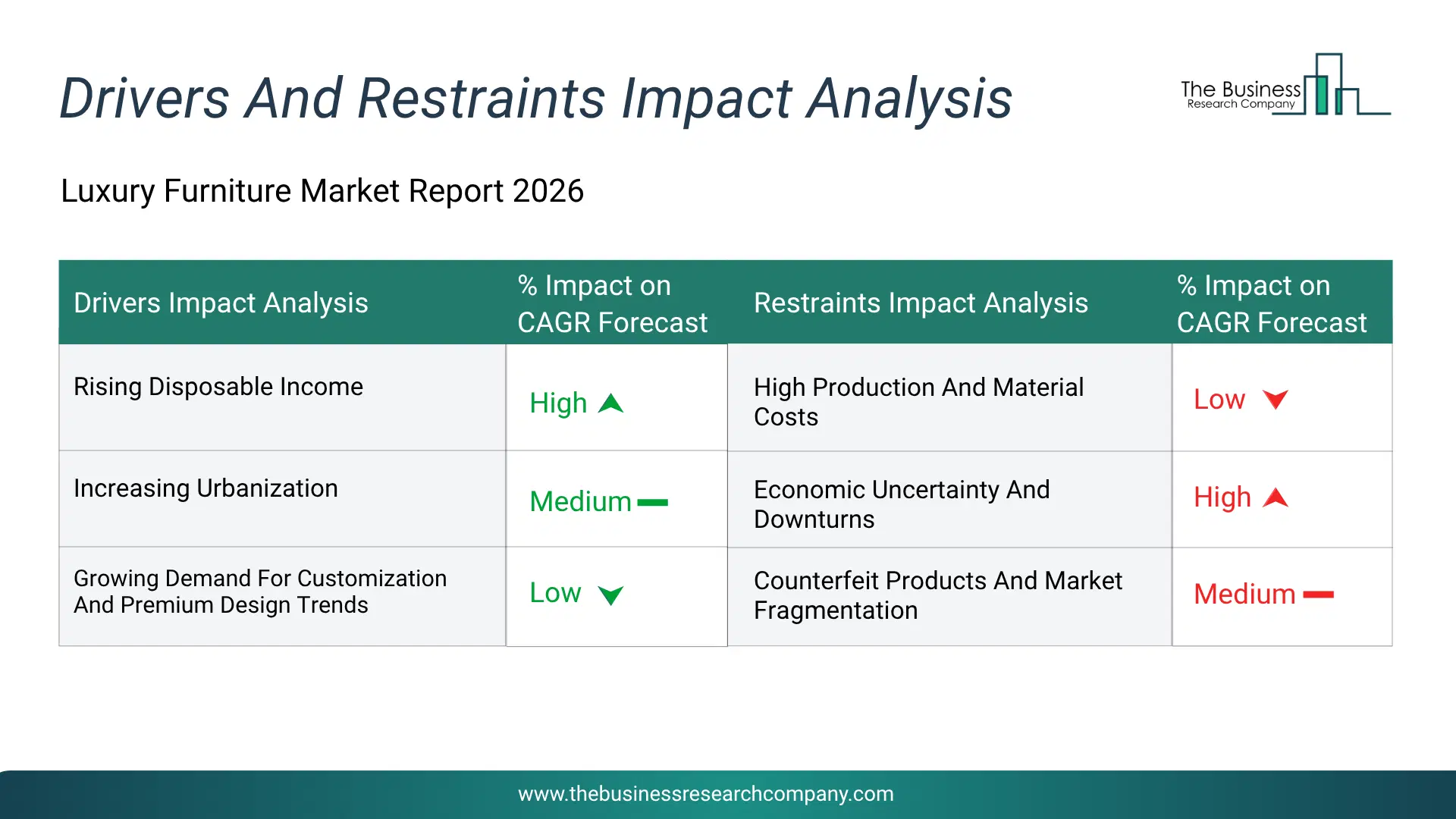
Infographic Chart Showing Key Market Drivers Analysis And Restraints For Luxury Furniture Market
The chart presents an impact analysis of key drivers and restraints, quantifying their relative influence on the market's growth rate and helping assess the balance between growth enablers and limiting factors. This chart offers a high-level perspective; the full report contains more detailed insights.
How Will The Drivers Impact Growth In The Global Luxury Furniture Market?
• Rising Disposable Income (High) – During the forecast period, the rising disposable income is expected to become a key growth driver for the luxury furniture market by 2030. Increasing earnings among high-net-worth individuals and affluent middle-class consumers are enabling greater spending on premium home furnishings and designer interiors. Consumers are shifting toward high-quality, statement furniture pieces that reflect status, exclusivity, and refined taste. This trend is particularly evident in emerging economies where wealth creation is accelerating rapidly. Manufacturers are capitalizing on this demand by expanding their premium product portfolios and enhancing brand positioning. • Increasing Urbanization (Medium) – During the forecast period, the increasing urbanization is expected to emerge as a major factor driving the expansion of the luxury furniture market by 2030. Rapid urban development is leading to the growth of modern housing, luxury apartments, and premium commercial spaces that require sophisticated interior furnishings. Urban consumers are increasingly prioritizing space optimization, aesthetics, and functionality, thereby driving demand for high-end furniture solutions. The expansion of metropolitan areas is also fostering demand for designer showrooms and curated retail experiences. • Growing Demand For Customization And Premium Design Trends (Low) – During the forecast period, the growing demand for customization and premium design trends is expected to act as a key growth catalyst for the luxury furniture market by 2030. Consumers are increasingly seeking personalized furniture that aligns with their individual preferences, lifestyle requirements, and interior themes. This is driving demand for bespoke designs, exclusive collections, and limited-edition pieces crafted with superior materials and finishes. Designers and manufacturers are focusing on innovation, craftsmanship, and differentiation to meet evolving consumer expectations.How Will The Restraints Impact Growth In The Global Luxury Furniture Market?
• High Production And Material Costs (High) – During the forecast period, high Production And Material Costs act as a major restraint for the luxury furniture market because producing upscale furnishings requires rare and premium raw materials such as exotic woods, full‑grain leather, and specialty metals, which are expensive and fluctuate in price. These elevated input costs directly increase final product prices, making luxury furniture less affordable for a wider consumer base and limiting market penetration. The reliance on skilled craftsmanship and long production lead times also contributes to elevated manufacturing expenses, reducing profit margins for companies and making scaling difficult. High production costs can deter potential buyers who seek functional or mid‑tier alternatives, especially during economic uncertainty. Moreover, managing quality while controlling costs is an ongoing balancing act for manufacturers that can delay innovation and expansion into new markets. This barrier is especially impactful in regions where income levels are moderate, restricting the appeal of luxury segments. Overall, these high costs narrow the customer base to primarily affluent consumers, thereby restraining broader industry growth. • Economic Uncertainty And Downturns (Medium) – During the forecast period, economic Uncertainty And Downturns significantly restrain the luxury furniture market because purchases of high‑value, non‑essential goods are highly sensitive to economic conditions and consumer confidence. During periods of recession, inflation, or financial instability, households and businesses cut back on discretionary spending, deferring or reducing purchases of luxury furnishings to preserve budgets. This volatility in consumer demand can lead to slower revenue growth and increased inventory accumulation for luxury brands. Economic uncertainty also impacts real estate and construction activities, which are closely linked to luxury furniture demand for upscale interior projects; slowdowns in these sectors further dampen market expansion. Additionally, shifting macroeconomic conditions can alter investment strategies for businesses, prompting them to prioritize cost control over premium acquisitions. Manufacturers and retailers may reduce production and marketing expenditures during downturns, limiting innovation and market visibility. Ultimately, economic instability creates unpredictable demand cycles, making long‑term planning difficult for industry players. • Counterfeit Products And Market Fragmentation (Low) – During the forecast period, counterfeit Products And Market Fragmentation are significant restraints that erode brand trust and hinder growth in the luxury furniture market, as imitation goods mimicking designer aesthetics flood global markets and online platforms. These counterfeit items undercut authentic luxury brands by offering similar styles at much lower prices, which can mislead consumers and damage the perceived value of original products. As a result, genuine luxury manufacturers may experience reduced sales, diluted brand equity, and increased spending on anti‑counterfeiting measures such as digital tagging and traceability systems. Additionally, market fragmentation due to numerous local and unregulated players weakens pricing consistency and makes it difficult for established brands to enforce quality standards across regions. Intellectual property protection is often weak in emerging markets, making it harder to combat replicas effectively. Online marketplaces further complicate authenticity verification, increasing customer hesitation to invest in high‑end furniture. Together, these factors reduce overall market profitability and slow growth for legitimate luxury furniture producers.Key Players In The Global Luxury Furniture Market
Major companies operating in the luxury furniture market are B B Italia, Poltrona Frau, Minotti, Cassina, Molteni C, Baxter, Flexform, Giorgetti, Roche Bobois, Boca do Lobo, Brabbu, Koket, Turri, Valderamobili, Duresta Upholstery, Christopher Guy, Jonathan Adler, Essential Home, Nella Vetrina, Armani Casa, Eichholtz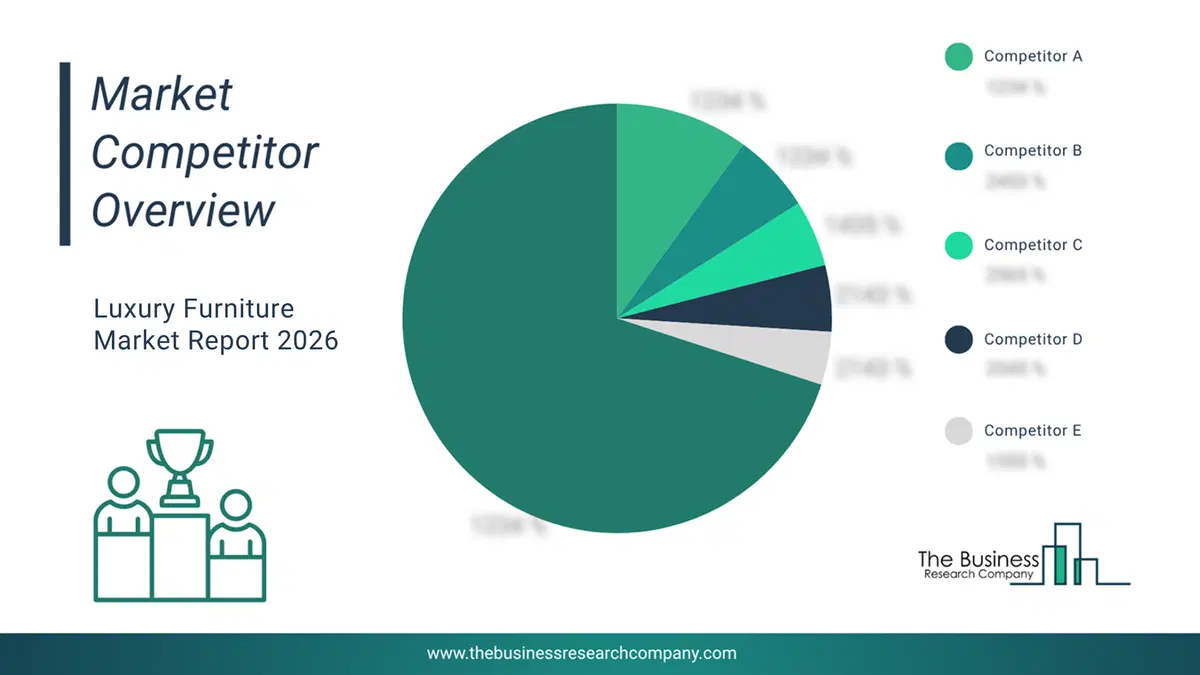
This chart is for illustrative purposes; the full report includes a detailed competitor analysis and comprehensive overview of the top 10 companies in the market.
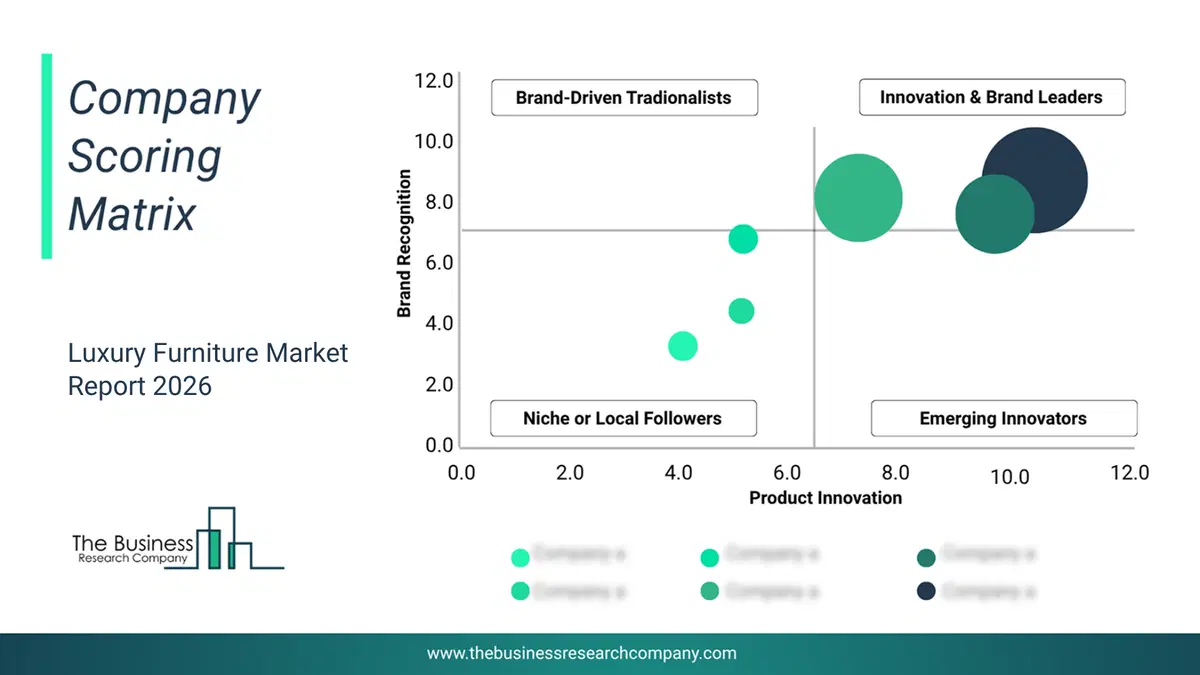
This chart maps companies by product innovation and brand strength, with bubble size indicating relative revenue, helping identify market leaders, challengers, and niche players. This is an illustrative chart; the full report provides a complete and accurate competitive analysis.
Global Luxury Furniture Market Trends and Insights
Major companies operating in the luxury furniture market are focusing on leveraging innovative solutions such as advanced recycled materials to create sustainable luxury furniture, enhance product appeal, and maintain their market leadership. Advanced recycled materials refer to high-quality, repurposed raw materials that are processed and engineered to meet luxury standards while minimizing environmental impact, enabling brands to combine aesthetics, durability, and eco-consciousness. For instance, in March 2023, House of Ecologie, a US-based sustainable furniture and home goods brand, developed a line of luxury capsule furniture that is environmentally friendly and made using innovative recycled materials. The collaboration will include various classic, handcrafted items to enhance the contemporary, functional house, guided by Ecogensus' dedication to emphasizing the welfare of people and the environment.What Are Latest Mergers And Acquisitions In The Luxury Furniture Market?
In April 2023, Cassina S.p.A., an Italy-based furniture manufacturing company, acquired Zanotta SpA for an undisclosed amount. With this acquisition, Cassina will strengthen its product line and search for fresh ideas to ensure the brand has adequate operational freedom to continue its artistic path. Zanotta SpA is an Italy-based furniture manufacturing company operating in the high-end segment.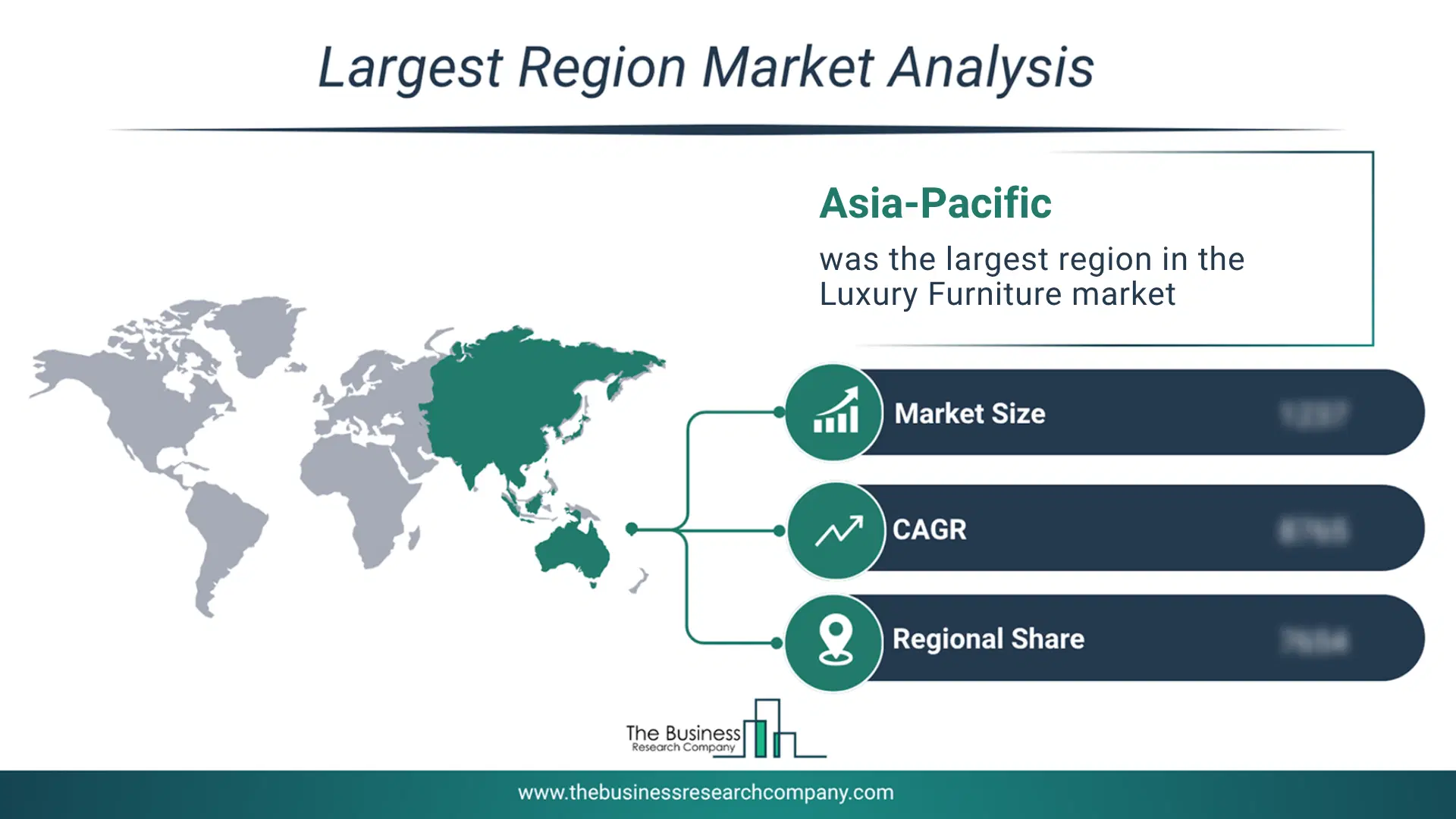
Regional Outlook
Asia-Pacific was the largest region in the luxury furniture market in 2025 and is expected to be the fastest-growing region in the forecast period. The regions covered in this market report are Asia-Pacific, South East Asia, Western Europe, Eastern Europe, North America, South America, Middle East, Africa. The countries covered in this market report are Australia, Brazil, China, France, Germany, India, Indonesia, Japan, Taiwan, Russia, South Korea, UK, USA, Canada, Italy, Spain.What Defines the Luxury Furniture Market?
The luxury furniture market consists of sales of dining sets, bedroom furniture, cabinets, bookcases, armchairs, and coffee tables. Values in this market are ‘factory gate’ values, that is the value of goods sold by the manufacturers or creators of the goods, whether to other entities (including downstream manufacturers, wholesalers, distributors and retailers) or directly to end customers. The value of goods in this market includes related services sold by the creators of the goods.How is Market Value Defined and Measured?
The market value is defined as the revenues that enterprises gain from the sale of goods and/or services within the specified market and geography through sales, grants, or donations in terms of the currency (in USD unless otherwise specified). The revenues for a specified geography are consumption values that are revenues generated by organizations in the specified geography within the market, irrespective of where they are produced. It does not include revenues from resales along the supply chain, either further along the supply chain or as part of other products.
This chart presents market attractiveness based on a quantitative evaluation of growth, competition, strategic alignment, and risk, offering a clear view of opportunity areas for decision-making. This chart is for illustrative purposes; the full report contains the complete analysis.

This chart highlights the Total Addressable Market (TAM) by estimating the maximum revenue opportunity using an assumption-driven approach, supporting strategic planning and opportunity sizing across markets. The chart is illustrative; the full report provides a more comprehensive analysis.
What Key Data and Analysis Are Included in the Luxury Furniture Market Report 2026?
The luxury furniture market research report is one of a series of new reports from The Business Research Company that provides market statistics, including Market Report 2026?global market size, regional shares, competitors with the market share, detailed market segments, market trends and opportunities, and any further data you may need to thrive in the luxury furniture Market Report 2026? The market research report delivers a complete perspective of everything you need, with an in-depth analysis of the current and future state of the Market Report 2026?Luxury Furniture Market Report Forecast Analysis
| Report Attribute | Details |
|---|---|
| Market Size Value In 2026 | $28.55 billion |
| Revenue Forecast In 2030 | $37.03 billion |
| Growth Rate | CAGR of 6.2% from 2026 to 2030 |
| Base Year For Estimation | 2025 |
| Actual Estimates/Historical Data | 2020-2025 |
| Forecast Period | 2026 - 2030 |
| Market Representation | Revenue in USD Billion and CAGR from 2026 to 2030 |
| Segments Covered | Type, Material, Distribution Channel, End User |
| Regional Scope | Asia-Pacific, Western Europe, Eastern Europe, North America, South America, Middle East, Africa |
| Country Scope | The countries covered in the report are Australia, Brazil, China, France, Germany, India, Indonesia, Japan, Taiwan, Russia, South Korea, UK, USA, Canada, Italy, Spain. |
| Key Companies Profiled | B B Italia, Poltrona Frau, Minotti, Cassina, Molteni C, Baxter, Flexform, Giorgetti, Roche Bobois, Boca do Lobo, Brabbu, Koket, Turri, Valderamobili, Duresta Upholstery, Christopher Guy, Jonathan Adler, Essential Home, Nella Vetrina, Armani Casa, Eichholtz |
| Customization Scope | Request for Customization |
| Pricing And Purchase Options | Explore Purchase Options |