
Marine Scrubber Systems Market Report 2026
Global Outlook – By Technology (Wet Technology, Dry Technology), By Fuel (Marine Diesel Oil (MDO), Marine Gasoil (MGO), Hybrid, Other Fuels), By Application (Commercial, Offshore, Navy, Other Applications) – Market Size, Trends, Strategies, and Forecast to 2030
Marine Scrubber Systems Market Overview
• Marine Scrubber Systems market size has reached to $7.03 billion in 2025 • Expected to grow to $13.29 billion in 2030 at a compound annual growth rate (CAGR) of 13.7% • Growth Driver: Increased Maritime Vessel Demand Boosts Marine Scrubber Systems Market • Market Trend: Wärtsilä Leads Maritime Emissions Control with Innovative CCS-Ready Scrubber Systems • North America was the largest region in 2025 and Asia-Pacific is the fastest growing region.What Is Covered Under Marine Scrubber Systems Market?
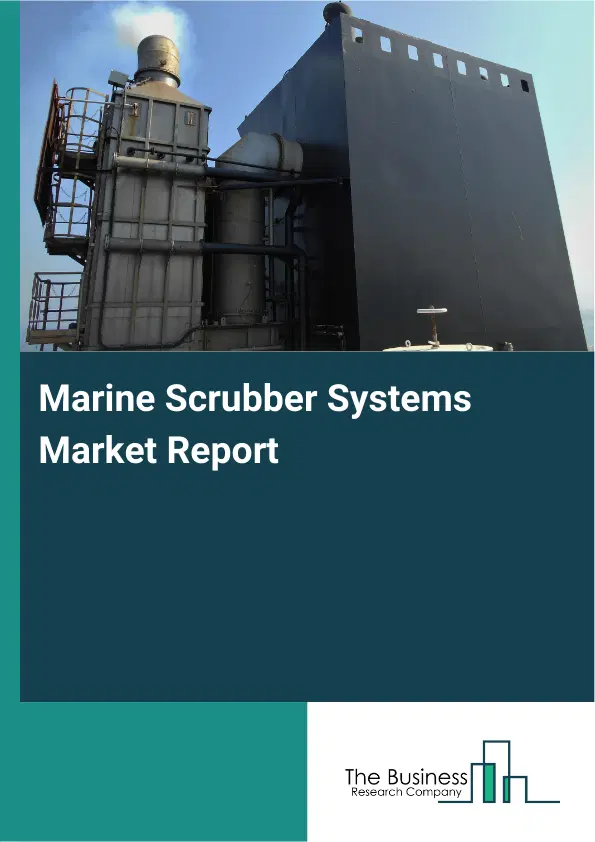
Marine scrubber systems refer to exhaust gas cleaning systems, or scrubbers, used in ships and other marine vessels to reduce air pollution emissions generated by the combustion of fuels such as heavy fuel oil. These systems are primarily designed to remove harmful pollutants, especially sulfur dioxide (SO2), from the exhaust gases before they are released into the atmosphere. The main types of marine scrubber systems are wet technology and dry technology. Wet technology is a type of technology used in marine scrubber systems that involve the use of a liquid, such as seawater or a chemical solution, to remove pollutants from the exhaust gases of marine vessels. They are powered by various fuels such as marine diesel oil (MDO), marine gasoil (MGO), hybrid, and others that are used in commercial, offshore, recreational, navy, and others.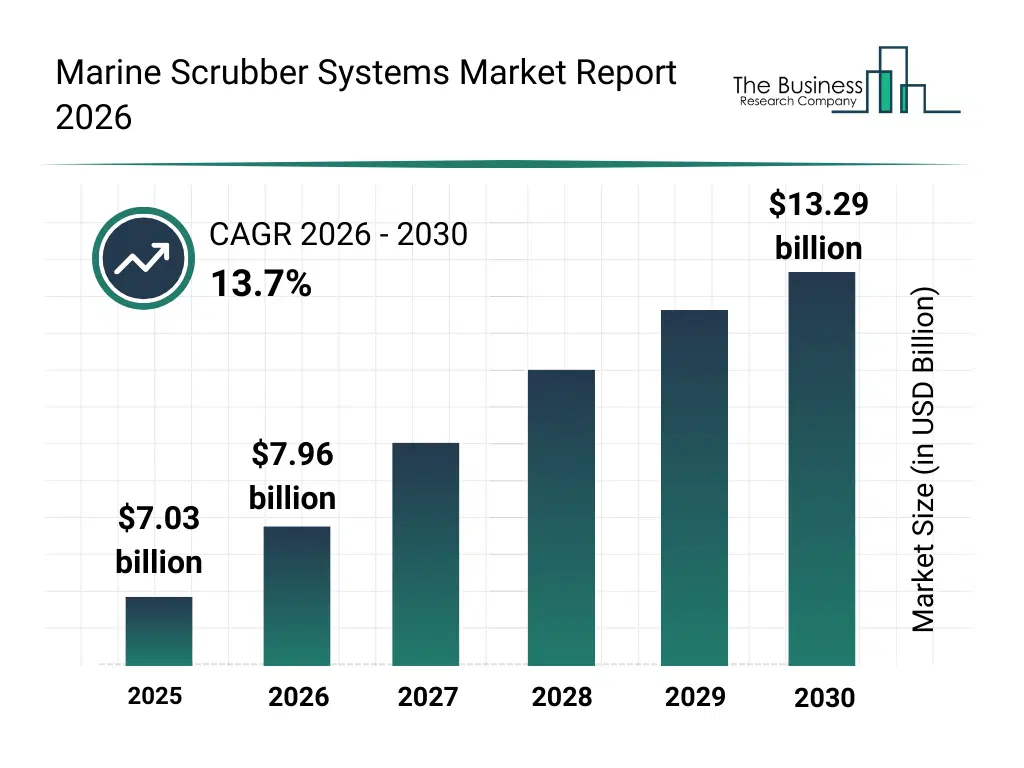
What Is The Marine Scrubber Systems Market Size and Share 2026?
The marine scrubber systems market size has grown rapidly in recent years. It will grow from $7.03 billion in 2025 to $7.96 billion in 2026 at a compound annual growth rate (CAGR) of 13.2%. The growth in the historic period can be attributed to sulfur emission regulations, use of heavy fuel oil, retrofit demand in existing fleets, port emission controls, shipping compliance costs.What Is The Marine Scrubber Systems Market Growth Forecast?
The marine scrubber systems market size is expected to see rapid growth in the next few years. It will grow to $13.29 billion in 2030 at a compound annual growth rate (CAGR) of 13.7%. The growth in the forecast period can be attributed to stricter emission caps, expansion of global shipping, adoption of smart exhaust systems, fuel flexibility demand, environmental compliance investments. Major trends in the forecast period include growing installation of exhaust gas cleaning systems, shift toward hybrid scrubber designs, demand for imo compliance solutions, expansion of retrofit projects, adoption of digital emission monitoring.Tariff Impact On Marine Scrubber Systems Market
Tariffs are impacting the marine scrubber systems market by increasing the cost of imported pumps, fans, corrosion-resistant steel structures, sensors, and control systems. Commercial shipping and offshore vessels in North America and Europe are most affected due to reliance on imported scrubber technologies, while Asia-Pacific suppliers face export pricing pressure. These tariffs are raising installation costs and delaying retrofit schedules. However, they are also encouraging local fabrication, regional sourcing of structural components, and innovation in compact and energy-efficient scrubber designs.
Global Marine Scrubber Systems Market Segmentation
1) By Technology: Wet Technology, Dry Technology 2) By Fuel: Marine Diesel Oil (MDO), Marine Gasoil (MGO), Hybrid, Other Fuels 3) By Application: Commercial, Offshore, Navy, Other Applications Subsegments: 1) By Wet Technology: Open Loop, Closed Loop, Hybrid 2) By Dry Technology: Dry Scrubbers, Other Dry TechnologiesWhat Are The Drivers Of The Marine Scrubber Systems Market?
Increased demand for maritime vessels is expected to propel the growth of the marine scrubber systems market going forward. Maritime vessels refer to ships or watercraft designed for use in maritime or oceanic environments. The increasing demand for maritime vessels fuels the need for scrubber systems that are used to reduce air pollution emissions, particularly sulfur dioxide (SO₂), resulting from the combustion of fuels such as heavy fuel oil. For instance, in October 2024, according to the United Nations Conference on Trade and Development (UNCTAD), a Switzerland-based permanent intergovernmental body of the United Nations, global maritime trade, which encompasses maritime vessels, achieved a notable growth of 2.4%, reaching 12.3 billion tons in 2023, recovering strongly from the decline in 2022. The sector is anticipated to expand by 2% in 2024 and sustain an average annual growth of 2.4% through 2029. Therefore, increased demand for maritime vessels is driving the growth of the marine scrubber systems industry. Increasing seaborne trade is expected to propel the growth of the marine scrubber systems market going forward. Seaborne trade refers to the transportation of goods or commodities by sea, typically between different countries or regions. Seaborne trade involves a massive fleet of ships that consume vast quantities of fuel. With the implementation of stricter sulfur emission regulations, the shipping industry has had to explore various emission control strategies to reduce sulfur oxide (SOx) emissions from vessel exhaust. For instance, in October 2024, according to the United Nations Conference on Trade and Development (UNCTAD), a Switzerland-based permanent intergovernmental body of the United Nations, global maritime trade volume grew by 2.4% in 2023, reaching 12.3 billion tons. Therefore, increasing seaborne trade is driving the growth of the marine scrubber systems industry.Key Players In The Global Marine Scrubber Systems Market
Major companies operating in the marine scrubber systems market are Wärtsilä Oyj Abp, Alfa Laval AB, Clean Marine AS, CR Ocean Engineering, Fuji Electric Co. Ltd., KwangSung Co. Ltd., Langh Tech Oy Ab, VDL AEC Maritime B.V., Hamon Research Cottrell Inc., Belco Technologies Corporation, Verantis Corporation, Pacific Green Technologies Inc., Damen Shipyards Group N.V., PureteQ A/S, Ecospray Technologies S.r.l., Mitsubishi Heavy Industries Ltd., Clyde Bergemann Limited, Ocean Saver, Valmet Oyj, Andritz AG, GEA Group, Nederman MikroPul LLC, Babcock & Wilcox, Saacke GmbH, Belzona International Ltd., Italmar Group
This chart is for illustrative purposes; the full report includes a detailed competitor analysis and comprehensive overview of the top 10 companies in the market.
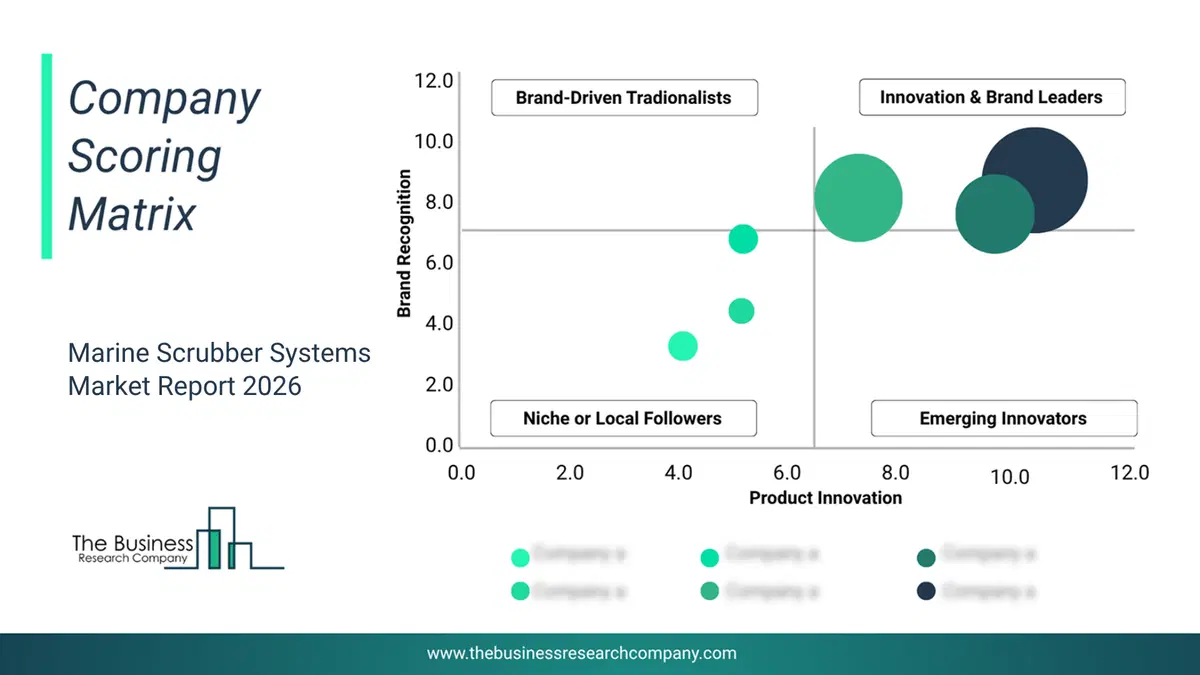
This chart maps companies by product innovation and brand strength, with bubble size indicating relative revenue, helping identify market leaders, challengers, and niche players. This is an illustrative chart; the full report provides a complete and accurate competitive analysis.
Global Marine Scrubber Systems Market Trends and Insights
Major companies operating in the marine scrubber systems market are focusing on developing innovative solutions, such as carbon capture and storage (CCS)-ready scrubber systems, to meet the rising demand for advanced emission-control technologies, regulatory compliance, and future-proofing against tightening environmental standards. CCS-ready scrubber systems are upgraded exhaust-gas cleaning units designed to remove sulfur oxides (SOx) while incorporating structural and functional provisions that allow seamless integration of future onboard carbon-capture modules, offering a significant advantage over traditional SOx-only scrubbers. For instance, in March 2023, Wärtsilä, a Finland-based industrial machinery manufacturing company, launched its CCS-Ready Scrubber Systems, an innovative solution introduced after 2022. These systems are engineered with modular architectures, optimized gas-handling pathways, and integration points for future CO₂-capture equipment. They comply with current IMO SOx regulations while preparing vessels for forthcoming greenhouse gas (GHG) reduction mandates. By enabling dual functionality SOx abatement today and CCS compatibility tomorrow the technology reduces long-term retrofitting costs, enhances operational efficiency, and supports container ships, tankers, and bulk carriers in meeting evolving maritime environmental standards.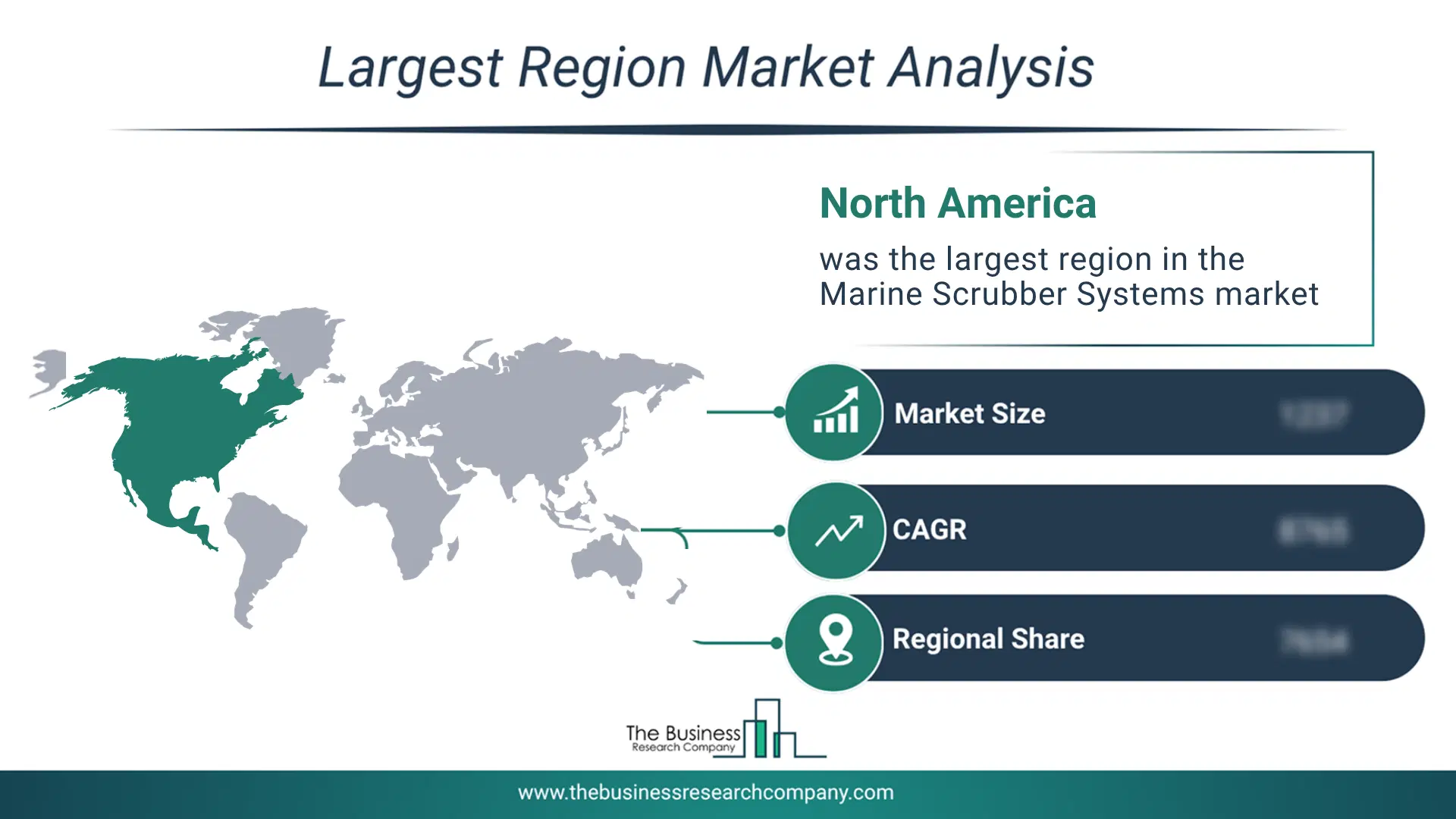
Regional Outlook
North America was the largest region in the global marine scrubber systems market in 2025.Asia-Pacific is expected to be the fastest-growing region in the global marine scrubber systems market during the forecast period. The regions covered in this market report are Asia-Pacific, South East Asia, Western Europe, Eastern Europe, North America, South America, Middle East, Africa The countries covered in this market report are Australia, Brazil, China, France, Germany, India, Indonesia, Japan, Taiwan, Russia, South Korea, UK, USA, Canada, Italy, Spain.What Defines the Marine Scrubber Systems Market?
The marine scrubber systems market consists of sales of open-loop scrubbers, closed-loop scrubbers, and hybrid scrubbers. Values in this market are ‘factory gate’ values, that is, the value of goods sold by the manufacturers or creators of the goods, whether to other entities (including downstream manufacturers, wholesalers, distributors, and retailers) or directly to end customers. The value of goods in this market includes related services sold by the creators of the goods.How is Market Value Defined and Measured?
The market value is defined as the revenues that enterprises gain from the sale of goods and/or services within the specified market and geography through sales, grants, or donations in terms of the currency (in USD unless otherwise specified). The revenues for a specified geography are consumption values that are revenues generated by organizations in the specified geography within the market, irrespective of where they are produced. It does not include revenues from resales along the supply chain, either further along the supply chain or as part of other products.
This chart presents market attractiveness based on a quantitative evaluation of growth, competition, strategic alignment, and risk, offering a clear view of opportunity areas for decision-making. This chart is for illustrative purposes; the full report contains the complete analysis.

This chart highlights the Total Addressable Market (TAM) by estimating the maximum revenue opportunity using an assumption-driven approach, supporting strategic planning and opportunity sizing across markets. The chart is illustrative; the full report provides a more comprehensive analysis.
What Key Data and Analysis Are Included in the Marine Scrubber Systems Market Report 2026?
The marine scrubber systems market research report is one of a series of new reports from The Business Research Company that provides market statistics, including industry global market size, regional shares, competitors with the market share, detailed market segments, market trends and opportunities, and any further data you may need to thrive in the marine scrubber systems industry. The market research report delivers a complete perspective of everything you need, with an in-depth analysis of the current and future state of the industry.Marine Scrubber Systems Market Report Forecast Analysis
| Report Attribute | Details |
|---|---|
| Market Size Value In 2026 | $7.96 billion |
| Revenue Forecast In 2030 | $13.29 billion |
| Growth Rate | CAGR of 13.7% from 2026 to 2030 |
| Base Year For Estimation | 2025 |
| Actual Estimates/Historical Data | 2020-2025 |
| Forecast Period | 2026 - 2030 |
| Market Representation | Revenue in USD Billion and CAGR from 2026 to 2030 |
| Segments Covered | Technology, Fuel, Application |
| Regional Scope | Asia-Pacific, Western Europe, Eastern Europe, North America, South America, Middle East, Africa |
| Key Companies Profiled | Wärtsilä Oyj Abp, Alfa Laval AB, Clean Marine AS, CR Ocean Engineering, Fuji Electric Co. Ltd., KwangSung Co. Ltd., Langh Tech Oy Ab, VDL AEC Maritime B.V., Hamon Research Cottrell Inc., Belco Technologies Corporation, Verantis Corporation, Pacific Green Technologies Inc., Damen Shipyards Group N.V., PureteQ A/S, Ecospray Technologies S.r.l., Mitsubishi Heavy Industries Ltd., Clyde Bergemann Limited, Ocean Saver, Valmet Oyj, Andritz AG, GEA Group, Nederman MikroPul LLC, Babcock & Wilcox, Saacke GmbH, Belzona International Ltd., Italmar Group |
| Customization Scope | Request for Customization |
| Pricing And Purchase Options | Explore Purchase Options |