
Meats Disinfection Processing Market Report 2026
Global Outlook – By Disinfection Method (Chemical Disinfection, Chlorine-based Disinfectants, Peracetic Acid, Hydrogen Peroxide, Quateary Ammonium Compounds, Physical Disinfection, Heat Treatment, Ultraviolet (UV) Light, Ozone Disinfection), By Type of Meat (Red Meat, Bovine (Beef), Porcine (Pork), Sheep (Lamb Or Mutton), Poultry, Chicken, Turkey, Duck, Other Types), By End-User (Food Processing Industries, Meat Packers, Meat Distributors, Retail Outlets, Supermarkets, Specialty Stores, Food Service Establishments, Restaurants, Hotels) – Market Size, Trends, Strategies, and Forecast to 2030
Meats Disinfection Processing Market Overview
• Meats Disinfection Processing market size has reached to $2.42 billion in 2025 • Expected to grow to $3.35 billion in 2030 at a compound annual growth rate (CAGR) of 6.7% • Growth Driver: Rising Incidents Of Foodborne Illnesses Fueling The Growth Of The Market Due To Increasing Contamination Risks And Need For Enhanced Food Safety • Market Trend: Innovative Processing Technologies Drive Safety And Shelf Life In Meat Disinfection • North America was the largest region in 2025 and Asia-Pacific is the fastest growing region.What Is Covered Under Meats Disinfection Processing Market?
Meats disinfection processing refers to the application of physical, chemical, or biological methods to eliminate or reduce harmful microorganisms such as bacteria, viruses, and fungi on meat surfaces during processing. The primary purpose is to ensure food safety, extend shelf life, and maintain quality by preventing contamination and spoilage. The main disinfection methods of meats disinfection processing are chemical, chlorine-based disinfectants, peracetic acid, hydrogen peroxide, quaternary ammonium compounds, physical methods, heat treatment, ultraviolet (UV) light, and ozone disinfection. Chemical disinfection refers to using chemical agents to eliminate or reduce harmful microorganisms on meat surfaces. It is a primary method in meat disinfection processing to ensure microbial safety. It is used for several types of meats, including red meat, bovine (beef), porcine (pork), sheep (lamb or mutton), poultry, chicken, turkey, duck, and others, while the key end-users of these processes include food processing industries, meat packers, meat distributors, retail outlets, supermarkets, specialty stores, food service establishments, restaurants, and hotels.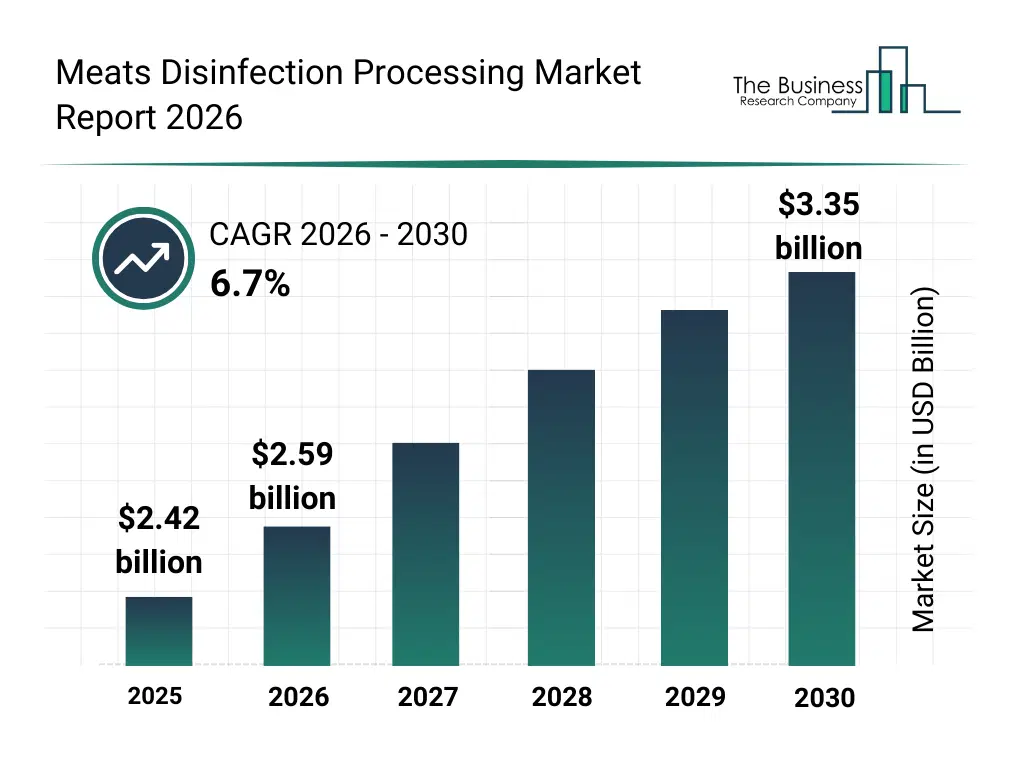
What Is The Meats Disinfection Processing Market Size and Share 2026?
The meats disinfection processing market size has grown strongly in recent years. It will grow from $2.42 billion in 2025 to $2.59 billion in 2026 at a compound annual growth rate (CAGR) of 7.0%. The growth in the historic period can be attributed to stricter food safety regulations, growth in industrial meat processing facilities, rising demand for packaged meat products, increased adoption of chemical disinfectants, expansion of cold chain infrastructure.What Is The Meats Disinfection Processing Market Growth Forecast?
The meats disinfection processing market size is expected to see strong growth in the next few years. It will grow to $3.35 billion in 2030 at a compound annual growth rate (CAGR) of 6.7%. The growth in the forecast period can be attributed to increasing demand for pathogen-free meat products, rising investments in advanced disinfection technologies, expansion of automation in meat processing plants, growing regulatory scrutiny on food safety, increasing adoption of sustainable sanitation solutions. Major trends in the forecast period include increasing adoption of non-thermal disinfection technologies, rising use of chemical-free meat processing methods, growing integration of automated sanitation systems, expansion of shelf-life extension solutions, enhanced focus on food safety compliance.
Global Meats Disinfection Processing Market Segmentation
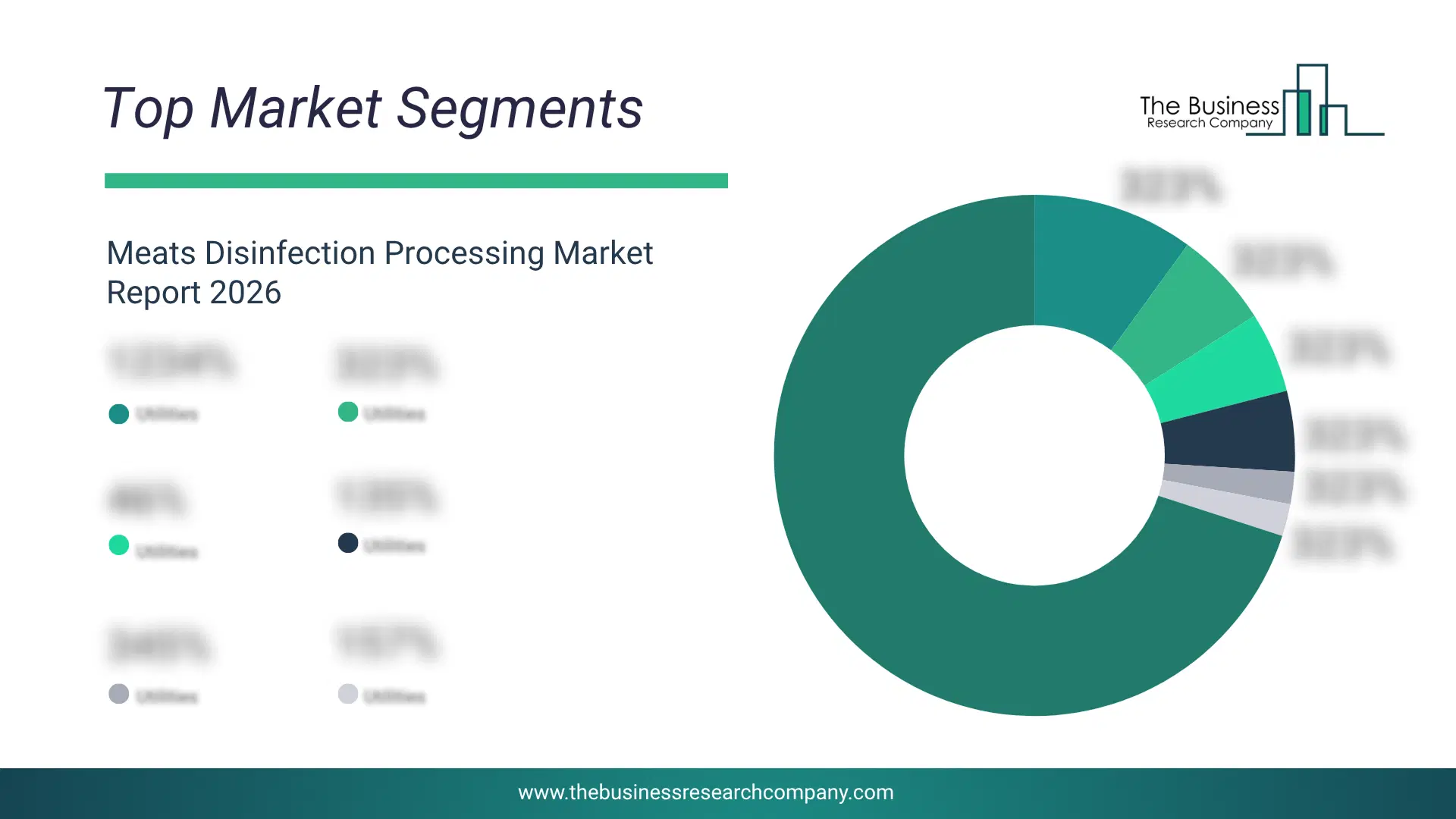
1) By Disinfection Method: Chemical Disinfection, Chlorine-based Disinfectants, Peracetic Acid, Hydrogen Peroxide, Quateary Ammonium Compounds, Physical Disinfection, Heat Treatment, Ultraviolet (UV) Light, Ozone Disinfection 2) By Type of Meat: Red Meat, Bovine (Beef), Porcine (Pork), Sheep (Lamb Or Mutton), Poultry, Chicken, Turkey, Duck, Other Types 3) By End-User: Food Processing Industries, Meat Packers, Meat Distributors, Retail Outlets, Supermarkets, Specialty Stores, Food Service Establishments, Restaurants, Hotels Subsegments: 1) By Chemical Disinfection: Surface Spraying, Immersion Treatment, Fogging, Chemical Coatings 2) By Chlorine-based Disinfectants: Sodium Hypochlorite, Calcium Hypochlorite, Chlorine Dioxide, Hypochlorous Acid 3) By Peracetic Acid: Ready-to-Use PAA Solutions, Concentrated PAA for Dilution, Blends with Hydrogen Peroxide 4) By Hydrogen Peroxide: Liquid Hydrogen Peroxide, Vaporized Hydrogen Peroxide (VHP), Stabilized Hydrogen Peroxide 5) By Quaternary Ammonium Compounds: Benzalkonium Chloride, Didecyldimethylammonium Chloride, Alkyl Dimethyl Benzyl Ammonium Chloride 6) By Physical Disinfection: Mechanical Cleaning + Disinfection, Surface Scraping + Hot Water, Air Filtration + UV or Ozone 7) By Heat Treatment: Steam Pasteurization, Hot Water Rinse, Dry Heat Exposure 8) By Ultraviolet (UV) Light: Low-Pressure UV Systems, Medium-Pressure UV Systems, Pulsed UV Light 9) By Ozone Disinfection: Aqueous Ozone, Gaseous Ozone, Ozone Combined with UV or AirWhat Is The Driver Of The Meats Disinfection Processing Market?
The rising incidents of foodborne illnesses are expected to propel the growth of the meats disinfection processing market going forward. Foodborne illnesses are diseases caused by consuming food or drinks contaminated with harmful bacteria, viruses, parasites, toxins, or chemicals. The increasing foodborne illnesses are due to inadequate hygiene and sanitation during meat processing, as this allows harmful pathogens to survive and contaminate meat products. Meat disinfection processing helps reduce foodborne illnesses by eliminating harmful pathogens during production, enhancing overall food safety. It supports public health by ensuring cleaner meat products and minimizing the risk of contamination. For instance, in February 2025, according to the US Public Interest Research Group (PIRG) Education Fund, a US-based non-profit organization, a total of 1,392 Americans became ill in 2024 after consuming contaminated food, up from 1,118 cases in 2023. Additionally, the number of hospitalizations rose from 230 to 487, and deaths increased from 8 to 19. Therefore, the rising incidents of foodborne illnesses are driving the growth of the meats disinfection processing industry.Key Players In The Global Meats Disinfection Processing Market
Major companies operating in the meats disinfection processing market are Evonik Industries AG, Solvay S.A., Ecolab Inc., Bühler Group, Alfred Kärcher SE & Co. KG, Stepan Company, Marel, Neogen Corporation, STOCKMEIER Group, Sani Marc Group Inc., Schröter Technologie GmbH & Co. KG, Madison Chemical Co., BioSafe Systems LLC, Faraday Ozone Products Pvt Ltd, Absolute Systems Inc., Intralytix Inc., Sanitech Corp., Wayne Chemical Inc., Ozo Technology Pvt Ltd., R1 Sanitation.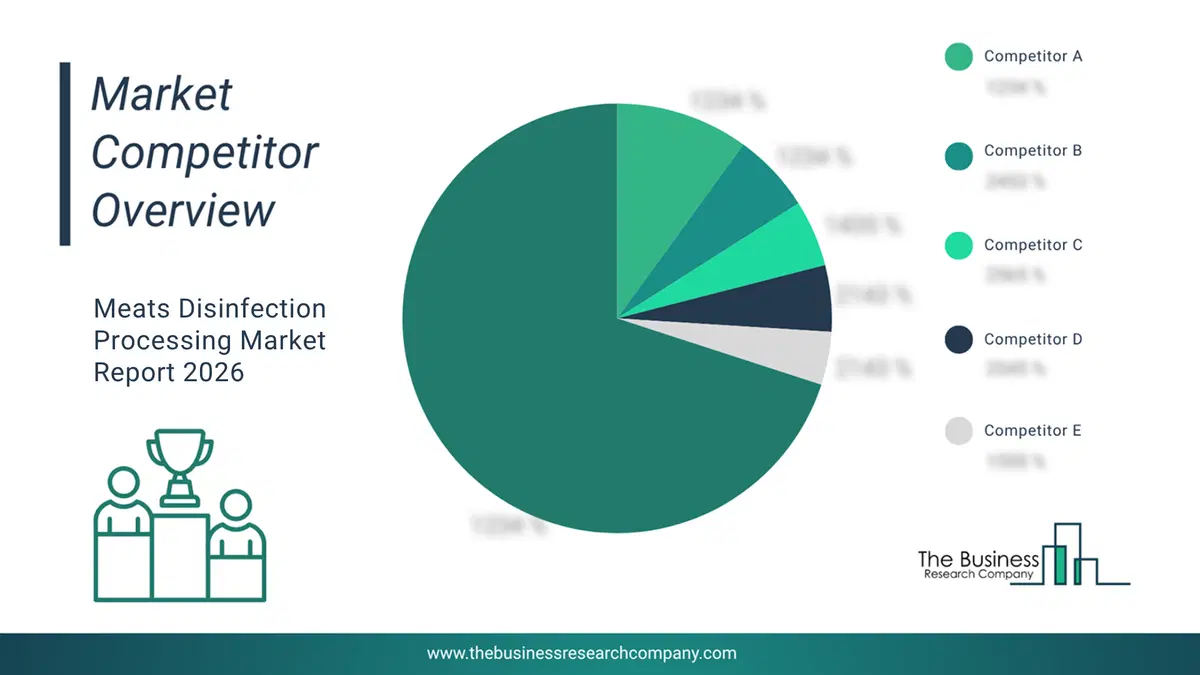
This chart is for illustrative purposes; the full report includes a detailed competitor analysis and comprehensive overview of the top 10 companies in the market.
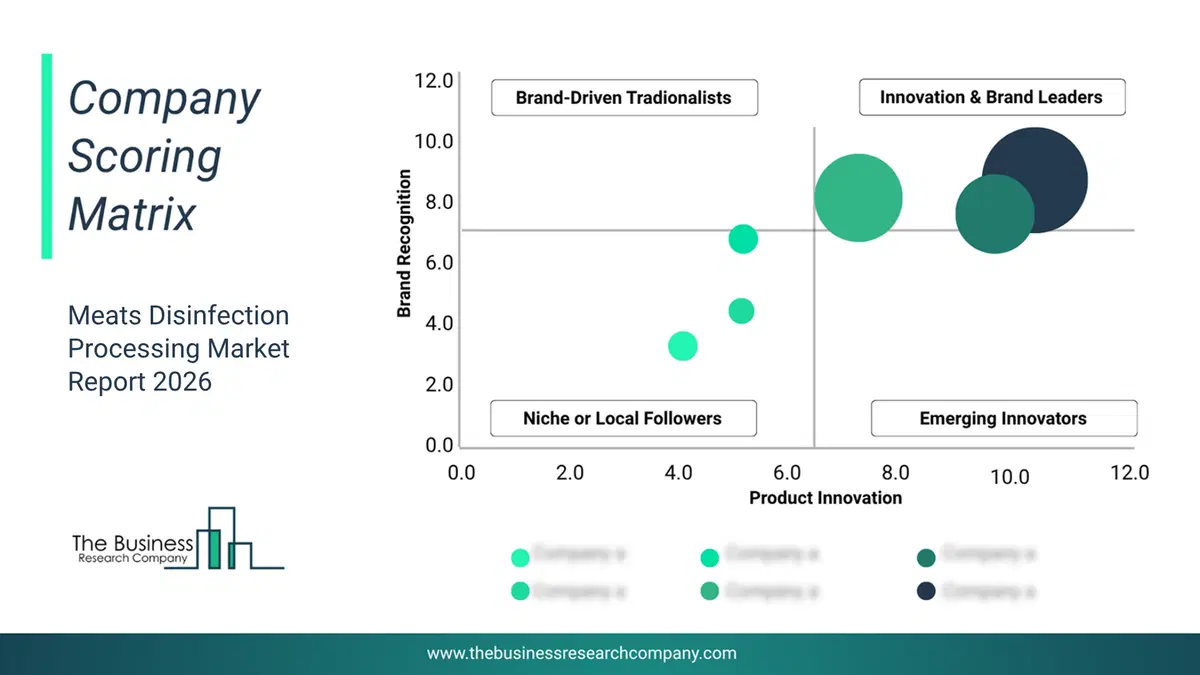
This chart maps companies by product innovation and brand strength, with bubble size indicating relative revenue, helping identify market leaders, challengers, and niche players. This is an illustrative chart; the full report provides a complete and accurate competitive analysis.
Global Meats Disinfection Processing Market Trends and Insights
Major companies operating in the meats disinfection processing market are focusing on developing technologically advanced solutions, such as food and nutrition processing technology, to enhance product safety, improve shelf life, and ensure compliance with stringent food safety regulations. Food and nutrition processing technology refers to the methods and systems used to transform raw ingredients into safe, nutritious, and high-quality food products while preserving or enhancing their nutritional value, safety, and shelf life. For instance, in April 2025, Stampede Culinary Partners, a US-based food manufacturing company, launched a low-temperature processing (LTP) technology for fully cooked meat and meals to enhance pasteurization outcomes without compromising product quality. It extends shelf life and ensures food safety by reducing microbial activity and preserving sensory qualities such as color, flavor, and texture.What Are Latest Mergers And Acquisitions In The Meats Disinfection Processing Market?
In July 2023, Solenis LLC, a U.S.-based specialty-chemicals manufacturing company, acquired Diversey Holdings, Ltd. for US$ 4.6 billion. With this acquisition, Solenis LLC aimed to broaden its global footprint and expand its product portfolio, enabling a “one-stop shop” offering for water treatment and hygiene/cleaning solutions, thereby strengthening its scale, geographic reach and ability to serve water-intensive industries along with hygiene/cleaning markets. Diversey Holdings, Ltd. is a U.S.-based manufacturing/technology company that specializes in providing hygiene, infection-prevention, and cleaning solutions including sanitation chemicals, dispensing systems, and cleaning equipment for institutional, commercial, and industrial customers.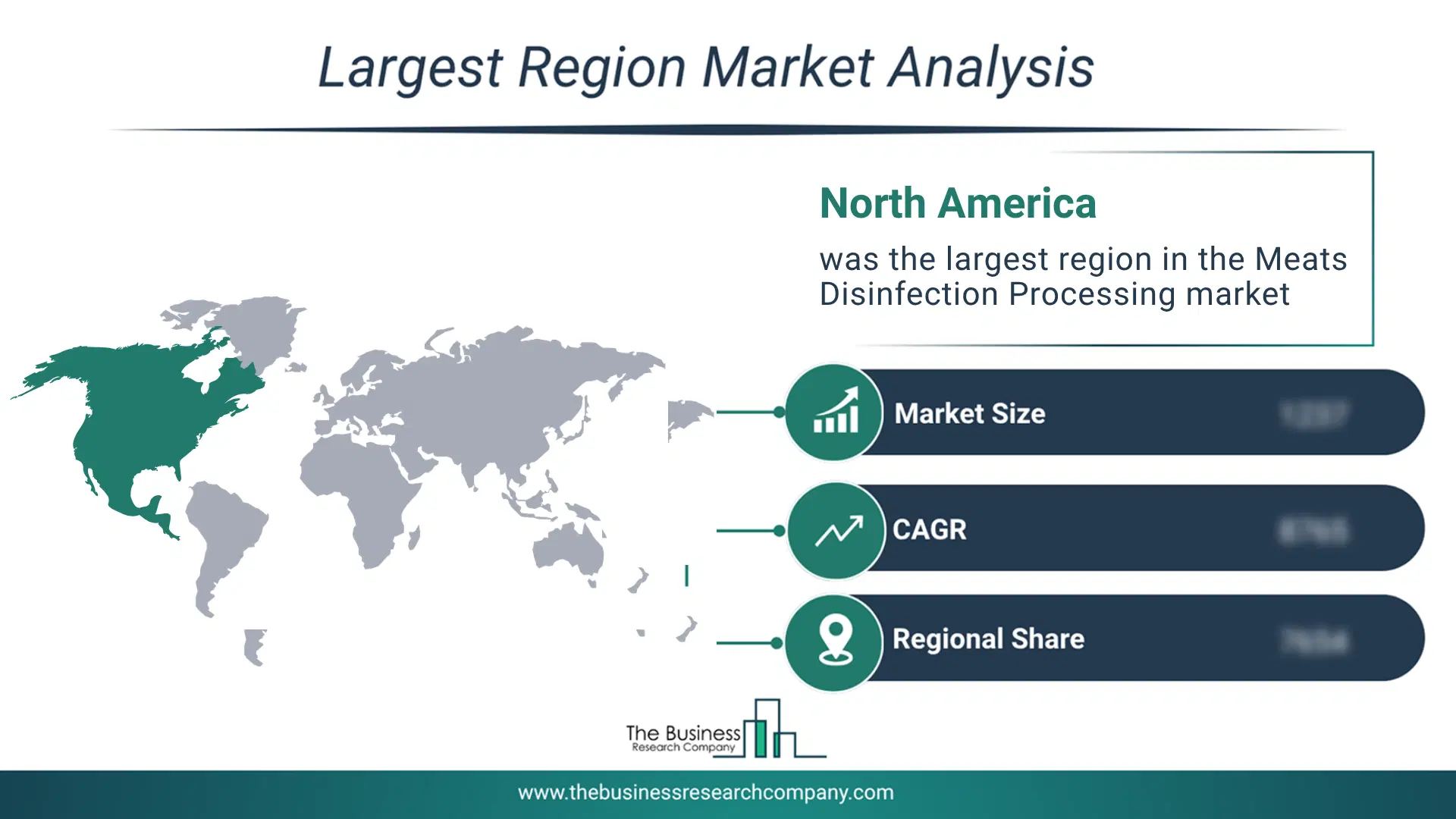
Regional Outlook
North America was the largest region in the meats disinfection processing market in 2025. Asia-Pacific is expected to be the fastest-growing region in the forecast period. The regions covered in this market report are Asia-Pacific, South East Asia, Western Europe, Eastern Europe, North America, South America, Middle East and Africa. The countries covered in this market report are Australia, Brazil, China, France, Germany, India, Indonesia, Japan, Taiwan, Russia, South Korea, UK, USA, Italy, Spain, CanadaWhat Defines the Meats Disinfection Processing Market?
The meats disinfection processing market consists of sales of organic acid sprays, electrolyzed water, disinfection equipment, chemical sanitizers, and hot water rinses. Values in this market are ‘factory gate’ values, that is, the value of goods sold by the manufacturers or creators of the goods, whether to other entities (including downstream manufacturers, wholesalers, distributors, and retailers) or directly to end customers. The value of goods in this market includes related services sold by the creators of the goods.How is Market Value Defined and Measured?
The market value is defined as the revenues that enterprises gain from the sale of goods and/or services within the specified market and geography through sales, grants, or donations in terms of the currency (in USD unless otherwise specified). The revenues for a specified geography are consumption values that are revenues generated by organizations in the specified geography within the market, irrespective of where they are produced. It does not include revenues from resales along the supply chain, either further along the supply chain or as part of other products.
This chart presents market attractiveness based on a quantitative evaluation of growth, competition, strategic alignment, and risk, offering a clear view of opportunity areas for decision-making. This chart is for illustrative purposes; the full report contains the complete analysis.

This chart highlights the Total Addressable Market (TAM) by estimating the maximum revenue opportunity using an assumption-driven approach, supporting strategic planning and opportunity sizing across markets. The chart is illustrative; the full report provides a more comprehensive analysis.
What Key Data and Analysis Are Included in the Meats Disinfection Processing Market Report 2026?
The meats disinfection processing market research report is one of a series of new reports from The Business Research Company that provides market statistics, including industry global market size, regional shares, competitors with the market share, detailed market segments, market trends and opportunities, and any further data you may need to thrive in the meats disinfection processing industry. The market research report delivers a complete perspective of everything you need, with an in-depth analysis of the current and future state of the industry.Meats Disinfection Processing Market Report Forecast Analysis
| Report Attribute | Details |
|---|---|
| Market Size Value In 2026 | $2.59 billion |
| Revenue Forecast In 2030 | $3.35 billion |
| Growth Rate | CAGR of 7.0% from 2026 to 2030 |
| Base Year For Estimation | 2025 |
| Actual Estimates/Historical Data | 2020-2025 |
| Forecast Period | 2026 - 2030 |
| Market Representation | Revenue in USD Billion and CAGR from 2026 to 2030 |
| Segments Covered | Disinfection Method, Type of Meat, End-User |
| Regional Scope | Asia-Pacific, Western Europe, Eastern Europe, North America, South America, Middle East, Africa |
| Country Scope | The countries covered in the report are Australia, Brazil, China, France, Germany, India, Indonesia, Japan, Taiwan, Russia, South Korea, UK, USA, Canada, Italy, Spain. |
| Key Companies Profiled | Evonik Industries AG, Solvay S.A., Ecolab Inc., Bühler Group, Alfred Kärcher SE & Co. KG, Stepan Company, Marel, Neogen Corporation, STOCKMEIER Group, Sani Marc Group Inc., Schröter Technologie GmbH & Co. KG, Madison Chemical Co., BioSafe Systems LLC, Faraday Ozone Products Pvt Ltd, Absolute Systems Inc., Intralytix Inc., Sanitech Corp., Wayne Chemical Inc., Ozo Technology Pvt Ltd., R1 Sanitation. |
| Customization Scope | Request for Customization |
| Pricing And Purchase Options | Explore Purchase Options |