
Microbiology Diagnostic Devices And Equipment Market Report 2026
Global Outlook – By Type (Laboratory Instruments, Microbiology Analyzers, Reagents And Consumables), By Reagents (Pathogen-Specific Kits, General Reagents), By End-User (Diagnostic Laboratories, Hospitals, Other End-Users) – Market Size, Trends, Strategies, and Forecast to 2030
Microbiology Diagnostic Devices And Equipment Market Overview
• Microbiology Diagnostic Devices And Equipment market size has reached to $6.43 billion in 2025 • Expected to grow to $11.53 billion in 2030 at a compound annual growth rate (CAGR) of 11.4% • Growth Driver: The Surging Prevalence Of Chronic Diseases As A Catalyst For Growth In The Microbiology Diagnostic Devices And Equipment Market • Market Trend: Innovative Third-Generation Total Lab Automation Systems In Microbiology Diagnostics • North America was the largest region in 2025 and Asia-Pacific is the fastest growing region.What Is Covered Under Microbiology Diagnostic Devices And Equipment Market?
Microbiology diagnostics devices and equipment are a broad category covering all kinds of items used in microbiology laboratories and used to diagnose infectious diseases by examining pathogens. These devices and equipment included microscopes, slides, test tubes, Petri dishes, growth media (liquid and solid), inoculation loops, pipettes, and tips, incubators, autoclaves, and laminar flow hoods. Some pieces of equipment are permanent, like microscopes and hoods, while others are not, like pipette tips. The main types of microbiology diagnostic devices and equipment are laboratory instruments, microbiology analyzers, and reagents and consumables. Laboratory instruments are types of instruments such as incubators, gram stainers, bacterial colony counters, petri dish fillers, and automated culture systems that are needed for operations in the laboratories. The reagents are pathogen-specific kits, and general reagents used in various end-users such as diagnostic laboratories, hospitals, and others.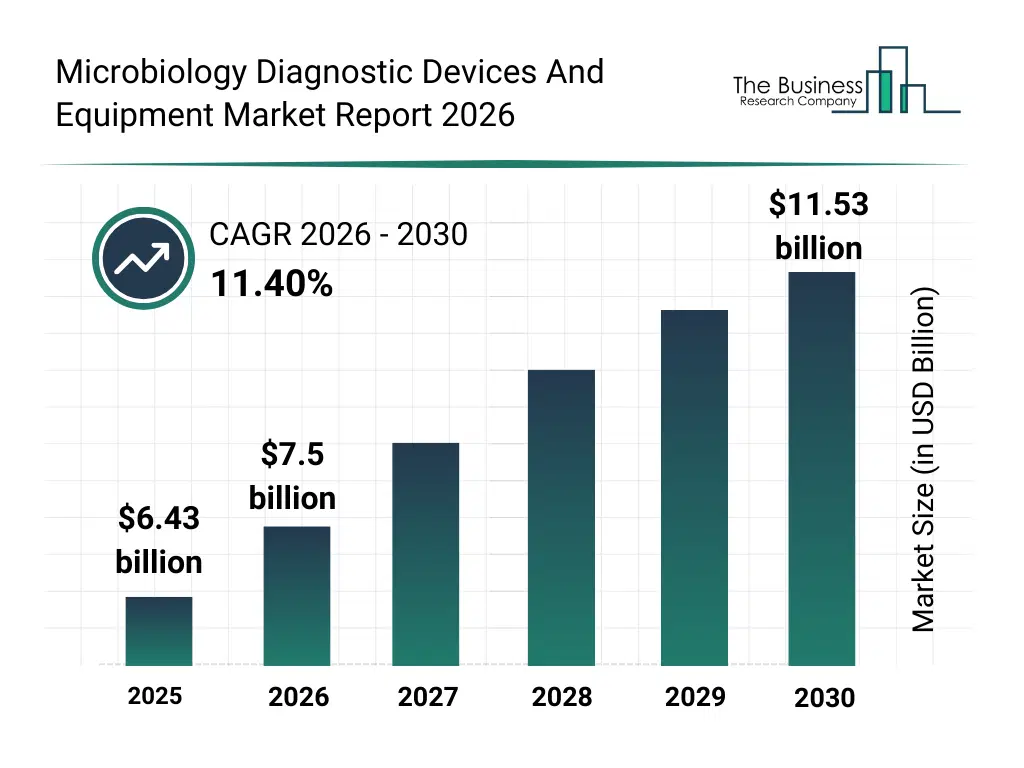
What Is The Microbiology Diagnostic Devices And Equipment Market Size and Share 2026?
The microbiology diagnostic devices and equipment market size has grown rapidly in recent years. It will grow from $6.43 billion in 2025 to $7.5 billion in 2026 at a compound annual growth rate (CAGR) of 16.6%. The growth in the historic period can be attributed to expansion of diagnostic laboratory infrastructure, rising incidence of infectious diseases, increased hospital-based testing volumes, improvements in laboratory automation technologies, wider availability of microbiology consumables.What Is The Microbiology Diagnostic Devices And Equipment Market Growth Forecast?
The microbiology diagnostic devices and equipment market size is expected to see rapid growth in the next few years. It will grow to $11.53 billion in 2030 at a compound annual growth rate (CAGR) of 11.4%. The growth in the forecast period can be attributed to increasing demand for rapid diagnostic testing, rising investments in laboratory automation, expansion of molecular and microbiology integration, growing focus on antimicrobial resistance detection, increasing adoption of point-of-care microbiology solutions. Major trends in the forecast period include increasing adoption of automated microbiology analyzers, rising demand for rapid pathogen detection solutions, growing use of high-throughput laboratory instruments, expansion of advanced culture and identification techniques, enhanced focus on laboratory workflow automation.
Global Microbiology Diagnostic Devices And Equipment Market Segmentation
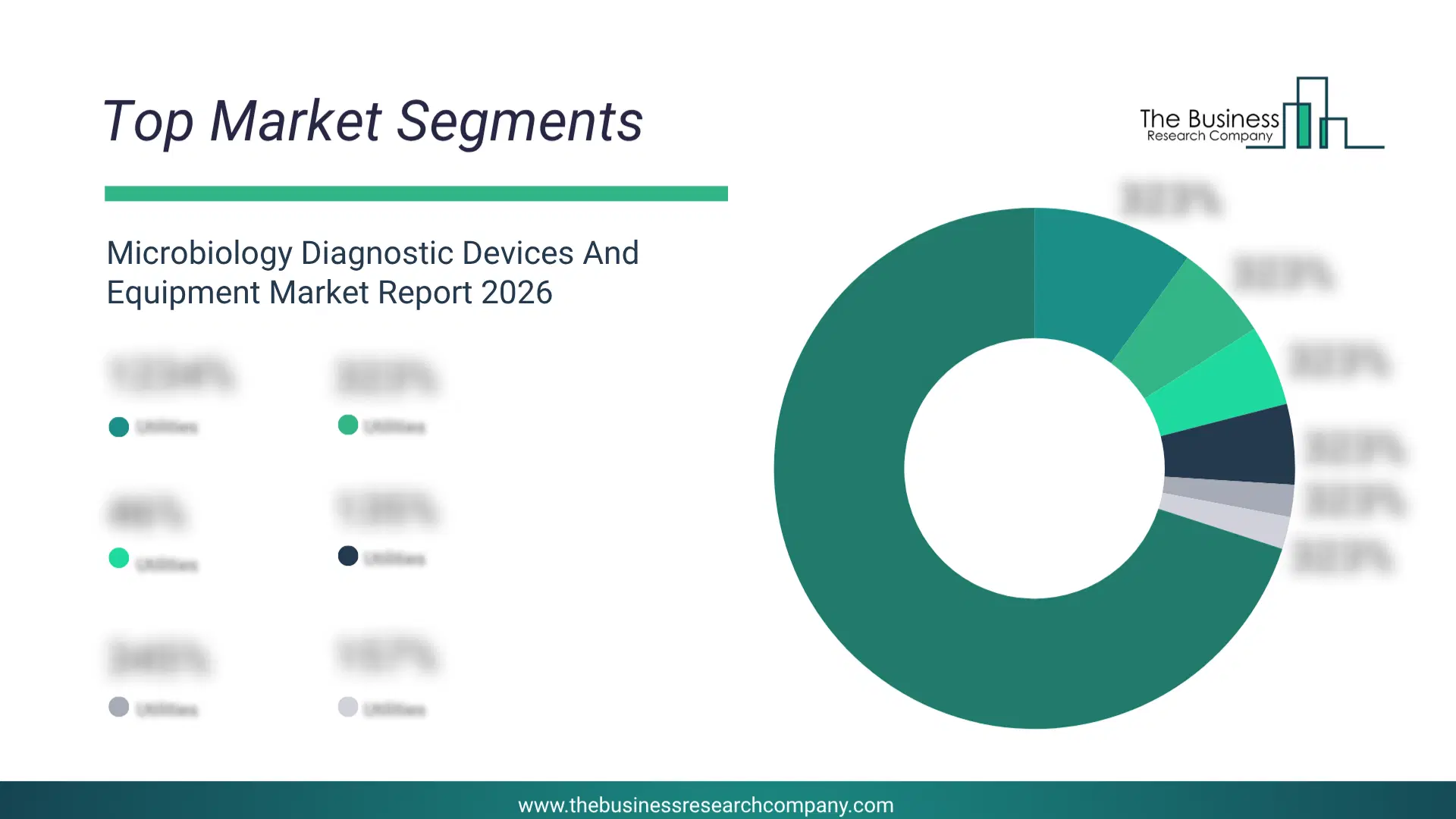
1) By Type: Laboratory Instruments, Microbiology Analyzers, Reagents And Consumables 2) By Reagents: Pathogen-Specific Kits, General Reagents 3) By End-User: Diagnostic Laboratories, Hospitals, Other End-Users Subsegments: 1) By Laboratory Instruments: Incubators, Autoclaves And Sterilizers, Refrigerators And Freezers, Centrifuges, Microscopes 2) By Microbiology Analyzers: Automated Microbiology Analyzers, Polymerase Chain Reaction (PCR) Analyzers, Mass Spectrometers, Immunoassay Analyzers, Flow Cytometers 3) By Reagents And Consumables: Culture Media, Stains And Dyes, Reagent Kits, Sample Collection Devices, Test Strips And Kits For Specific PathogensWhat Is The Driver Of The Microbiology Diagnostic Devices And Equipment Market?
The rising prevalence of noncommunicable diseases (NCDs) is expected to propel the growth of the microbiology diagnostic devices and equipment market going forward. NCDs are medical conditions that are not transmitted directly from one person to another and include illnesses such as cardiovascular disease, cancer, chronic respiratory disease, and diabetes. The increasing burden of NCDs is associated with complications that often require laboratory-based microbiological testing to detect infections and monitor patient health. For instance, in February 2024, according to the World Health Organization, a Switzerland-based intergovernmental organization, by 2050, over 35 million new cancer cases were projected, representing a 77% increase compared to the estimated 20 million cases in 2022. Therefore, the rising prevalence of noncommunicable diseases is driving the growth of the microbiology diagnostic devices and equipment industry.Key Players In The Global Microbiology Diagnostic Devices And Equipment Market
Major companies operating in the microbiology diagnostic devices and equipment market are Danaher, Abbott Laboratories, Thermo Fisher Scientific, Becton Dickinson and Company, Biomerieux, Bio-Rad Laboratories Inc., Roche, Bruker Corporation, Merck KGaA, Siemens Healthcare, Beckman Coulter Inc., Ortho Clinical Diagnostics, Sysmex Corporation, Siemens Healthineers, TestLine Clinical Diagnostics s.r.o., Cepheid, Hologic, Meridian Bioscience, Qiagen N.V., Immunodiagnostic Systems Holdings PLC, Mesa Biotech Inc., PerkinElmer Inc., Neogen Corporation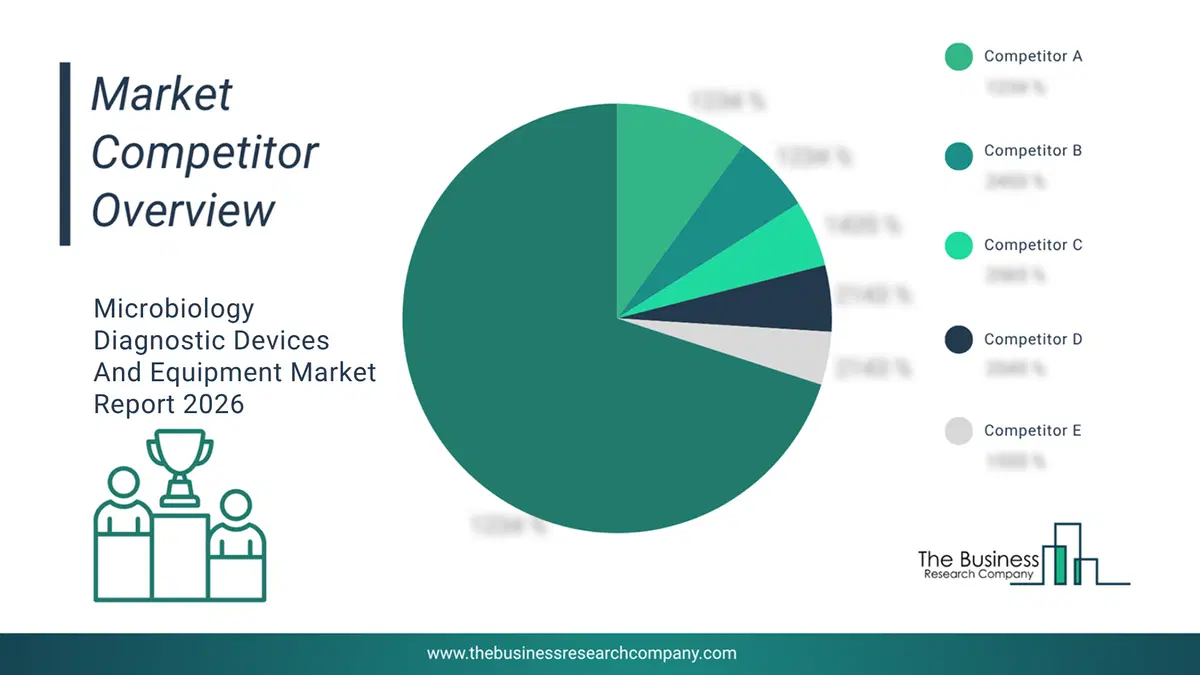
This chart is for illustrative purposes; the full report includes a detailed competitor analysis and comprehensive overview of the top 10 companies in the market.
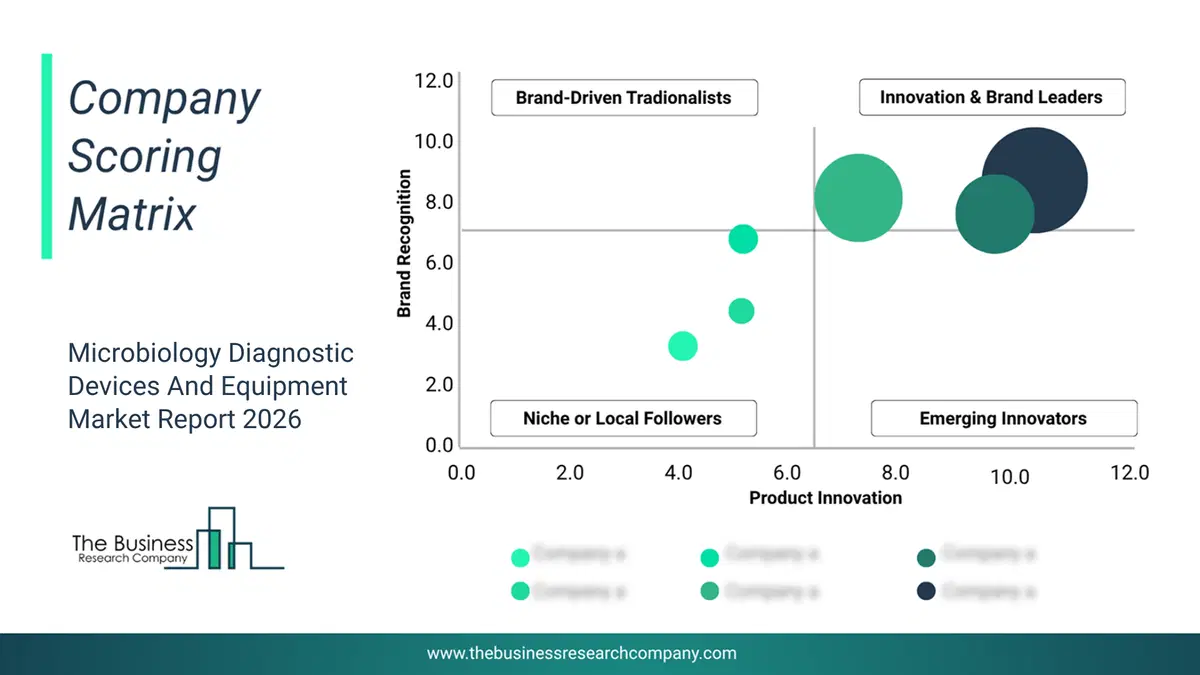
This chart maps companies by product innovation and brand strength, with bubble size indicating relative revenue, helping identify market leaders, challengers, and niche players. This is an illustrative chart; the full report provides a complete and accurate competitive analysis.
Global Microbiology Diagnostic Devices And Equipment Market Trends and Insights
Major companies operating in the microbiology diagnostic devices and equipment market are developing innovative systems, such as third-generation total lab automation (TLA) systems, to improve the efficiency and accuracy of laboratory testing and reduce the cost of laboratory testing. The third-generation total lab automation (TLA) systems are the most advanced type of TLA system available today. They are designed to automate a wide range of laboratory tasks, from specimen processing and plating to incubation, imaging, and culture reading. For instance, in January 2023, Becton, Dickinson, and Company (BD), a US-based medical device company, launched third-generation total lab automation (TLA) systems. It is a modular system that can be customized to automate a variety of tasks in a microbiology laboratory. It features a modular design, incorporates a robotic track system, offers advanced informatics solutions, and integrates artificial intelligence (AI). Moreover, it is a valuable tool for laboratories that are looking to improve their efficiency, reduce costs, and deliver better patient care.What Are Latest Mergers And Acquisitions In The Microbiology Diagnostic Devices And Equipment Market?
In May 2024, bioMérieux, a France-based manufacturer of microbiology and molecular diagnostic systems, entered into a partnership with Pfizer Inc. and the Malawi Ministry of Health to enhance infectious disease management in Malawi. Through this collaboration, bioMérieux aims to bolster the country’s diagnostic, surveillance, and antimicrobial stewardship capabilities by leveraging its expertise in microbiology diagnostic devices and equipment. The initiative is designed to expand testing capacity and support national efforts to combat antimicrobial resistance (AMR). The Malawi Ministry of Health is a Malawi-based central government body, and Pfizer Inc. is a US-based company specializing in innovative medicines and vaccines.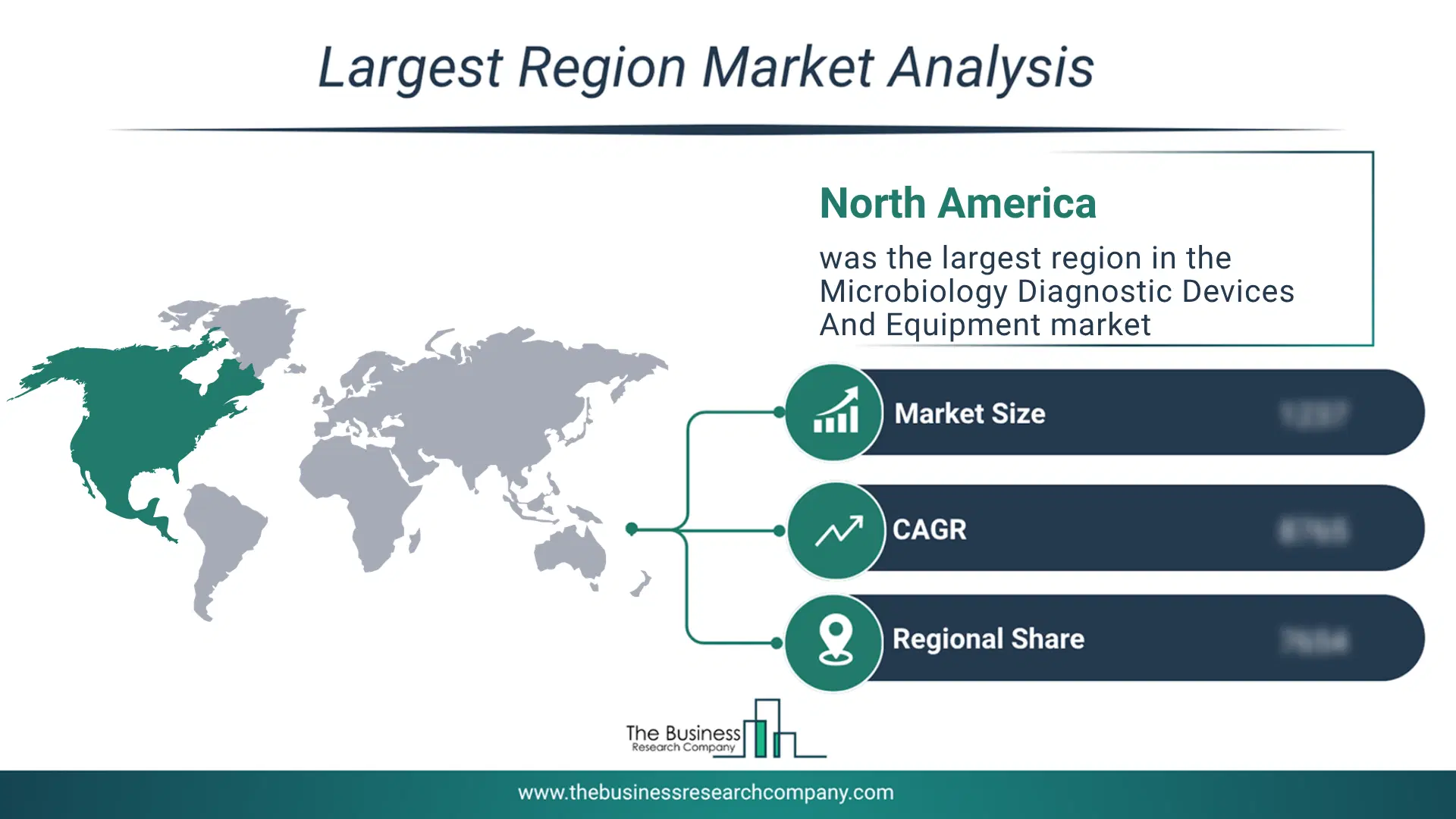
Regional Outlook
North America was the largest region in the microbiology diagnostics devices and equipment market in 2025. Asia-Pacific was the second largest region in the global microbiology diagnostic devices and equipment market. The regions covered in this market report are Asia-Pacific, South East Asia, Western Europe, Eastern Europe, North America, South America, Middle East, Africa. The countries covered in this market report are Australia, Brazil, China, France, Germany, India, Indonesia, Japan, Taiwan, Russia, South Korea, UK, USA, Canada, Italy, SpainWhat Defines the Microbiology Diagnostic Devices And Equipment Market?
The microbiology diagnostic devices and equipment consists of sales of instruments such as incubators, autoclave sterilizers, anaerobic culture systems, blood culture systems, gram strainers, microscopes, mass spectrometers, molecular diagnostic instruments, reagents pathogen-specific kits, and general reagents for microbiology diagnostic. Values in this market are factory gate values, that is the value of goods sold by the manufacturers or creators of the goods, whether to other entities (including downstream manufacturers, wholesalers, distributors, and retailers) or directly to end customers.How is Market Value Defined and Measured?
The market value is defined as the revenues that enterprises gain from the sale of goods and/or services within the specified market and geography through sales, grants, or donations in terms of the currency (in USD unless otherwise specified). The revenues for a specified geography are consumption values that are revenues generated by organizations in the specified geography within the market, irrespective of where they are produced. It does not include revenues from resales along the supply chain, either further along the supply chain or as part of other products.
This chart presents market attractiveness based on a quantitative evaluation of growth, competition, strategic alignment, and risk, offering a clear view of opportunity areas for decision-making. This chart is for illustrative purposes; the full report contains the complete analysis.

This chart highlights the Total Addressable Market (TAM) by estimating the maximum revenue opportunity using an assumption-driven approach, supporting strategic planning and opportunity sizing across markets. The chart is illustrative; the full report provides a more comprehensive analysis.
What Key Data and Analysis Are Included in the Microbiology Diagnostic Devices And Equipment Market Report 2026?
The microbiology diagnostic devices and equipment market research report is one of a series of new reports from The Business Research Company that provides market statistics, including industry global market size, regional shares, competitors with the market share, detailed market segments, market trends and opportunities, and any further data you may need to thrive in the microbiology diagnostic devices and equipment industry. The market research report delivers a complete perspective of everything you need, with an in-depth analysis of the current and future state of the industry.Microbiology Diagnostic Devices And Equipment Market Report Forecast Analysis
| Report Attribute | Details |
|---|---|
| Market Size Value In 2026 | $7.5 billion |
| Revenue Forecast In 2030 | $11.53 billion |
| Growth Rate | CAGR of 11.4% from 2026 to 2030 |
| Base Year For Estimation | 2025 |
| Actual Estimates/Historical Data | 2020-2025 |
| Forecast Period | 2026 - 2030 |
| Market Representation | Revenue in USD Billion and CAGR from 2026 to 2030 |
| Segments Covered | Type, Reagents, End-User |
| Regional Scope | Asia-Pacific, Western Europe, Eastern Europe, North America, South America, Middle East, Africa |
| Country Scope | The countries covered in the report are Australia, Brazil, China, France, Germany, India, Indonesia, Japan, Taiwan, Russia, South Korea, UK, USA, Canada, Italy, Spain. |
| Key Companies Profiled | Danaher, Abbott Laboratories, Thermo Fisher Scientific, Becton Dickinson and Company, Biomerieux, Bio-Rad Laboratories Inc., Roche, Bruker Corporation, Merck KGaA, Siemens Healthcare, Beckman Coulter Inc., Ortho Clinical Diagnostics, Sysmex Corporation, Siemens Healthineers, TestLine Clinical Diagnostics s.r.o., Cepheid, Hologic, Meridian Bioscience, Qiagen N.V., Immunodiagnostic Systems Holdings PLC, Mesa Biotech Inc., PerkinElmer Inc., Neogen Corporation |
| Customization Scope | Request for Customization |
| Pricing And Purchase Options | Explore Purchase Options |