
NIR And Raman Spectroscopy Market Report 2026
Global Outlook – By Product Type (Benchtop Spectrometers, Portable Or Handheld Spectrometers, Microscopy Systems, Probes And Accessories), By Technology (Near-Infrared (NIR) Spectroscopy, Raman Spectroscopy), By Application (Pharmaceutical Applications, Biotechnology And Biopharmaceutical Applications, Food And Beverage Testing, Environment Testing, Academic Research, Other Applications) – Market Size, Trends, Strategies, and Forecast to 2030
NIR And Raman Spectroscopy Market Overview
• NIR And Raman Spectroscopy market size has reached to $2.05 billion in 2025 • Expected to grow to $4.08 billion in 2030 at a compound annual growth rate (CAGR) of 14.7% • Growth Driver: Rising Pharmaceutical R&D Spending Fueling The Growth Of The Market Due To Demand For Advanced Analytical Techniques • Market Trend: innovation In Dual-Laser, Single-Detector Design Enables Broader Spectral Coverage And Enhanced Precision • Asia-Pacific was the largest region and fastest growing region.What Is Covered Under NIR And Raman Spectroscopy Market?
Near-infrared (NIR) and raman spectroscopy are powerful analytical techniques used to identify and analyze chemical substances by probing molecular vibrations-NIR through light absorption and Raman through light scattering. NIR is especially useful for analyzing samples with water or polar bonds, while raman provides sharp, detailed spectra that are excellent for distinguishing specific molecular structures and are not affected by water. The main product types in NIR and raman spectroscopy are benchtop spectrometers, portable or handheld spectrometers, microscopy systems, and probes and accessories. Benchtop spectrometers are analytical instruments designed for precise measurement of light absorption, transmission, or emission, typically used in laboratory settings for various scientific analyses. It is categorized by technology into near-infrared (NIR) spectroscopy and raman spectroscopy, and it is widely used in applications such as pharmaceutical applications, biotechnology and biopharmaceutical applications, food and beverage testing, environmental testing, academic research, and others.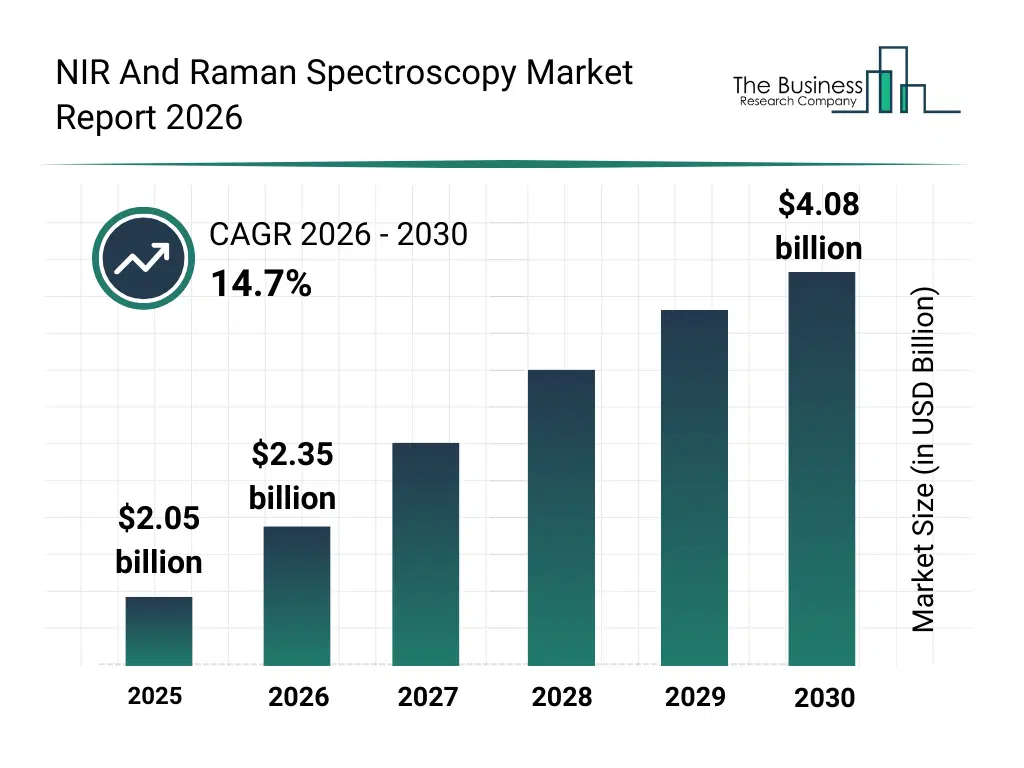
What Is The NIR And Raman Spectroscopy Market Size and Share 2026?
The nir and raman spectroscopy market size has grown rapidly in recent years. It will grow from $2.05 billion in 2025 to $2.35 billion in 2026 at a compound annual growth rate (CAGR) of 15.1%. The growth in the historic period can be attributed to growth of pharmaceutical manufacturing, expansion of academic research, demand for rapid chemical analysis, development of analytical instrumentation, food safety testing requirements.What Is The NIR And Raman Spectroscopy Market Growth Forecast?
The nir and raman spectroscopy market size is expected to see rapid growth in the next few years. It will grow to $4.08 billion in 2030 at a compound annual growth rate (CAGR) of 14.7%. The growth in the forecast period can be attributed to miniaturization of spectroscopy systems, growth of in line process monitoring, rising biotechnology research, stricter quality compliance standards, expansion of handheld analytical tools. Major trends in the forecast period include growing adoption of portable spectroscopy devices, increasing use in pharmaceutical quality control, rising demand for non destructive testing techniques, expansion of spectroscopy in food and beverage analysis, integration of advanced software and chemometrics.Tariff Impact On NIR And Raman Spectroscopy Market
Tariffs have increased costs of imported optical components, lasers, and detectors used in NIR and Raman spectroscopy systems. These cost impacts are most visible in pharmaceutical, biotechnology, and academic research applications, especially in Asia Pacific. Benchtop and microscopy based systems are the most affected. At the same time, tariffs are supporting local assembly and component sourcing strategies.
Global NIR And Raman Spectroscopy Market Segmentation
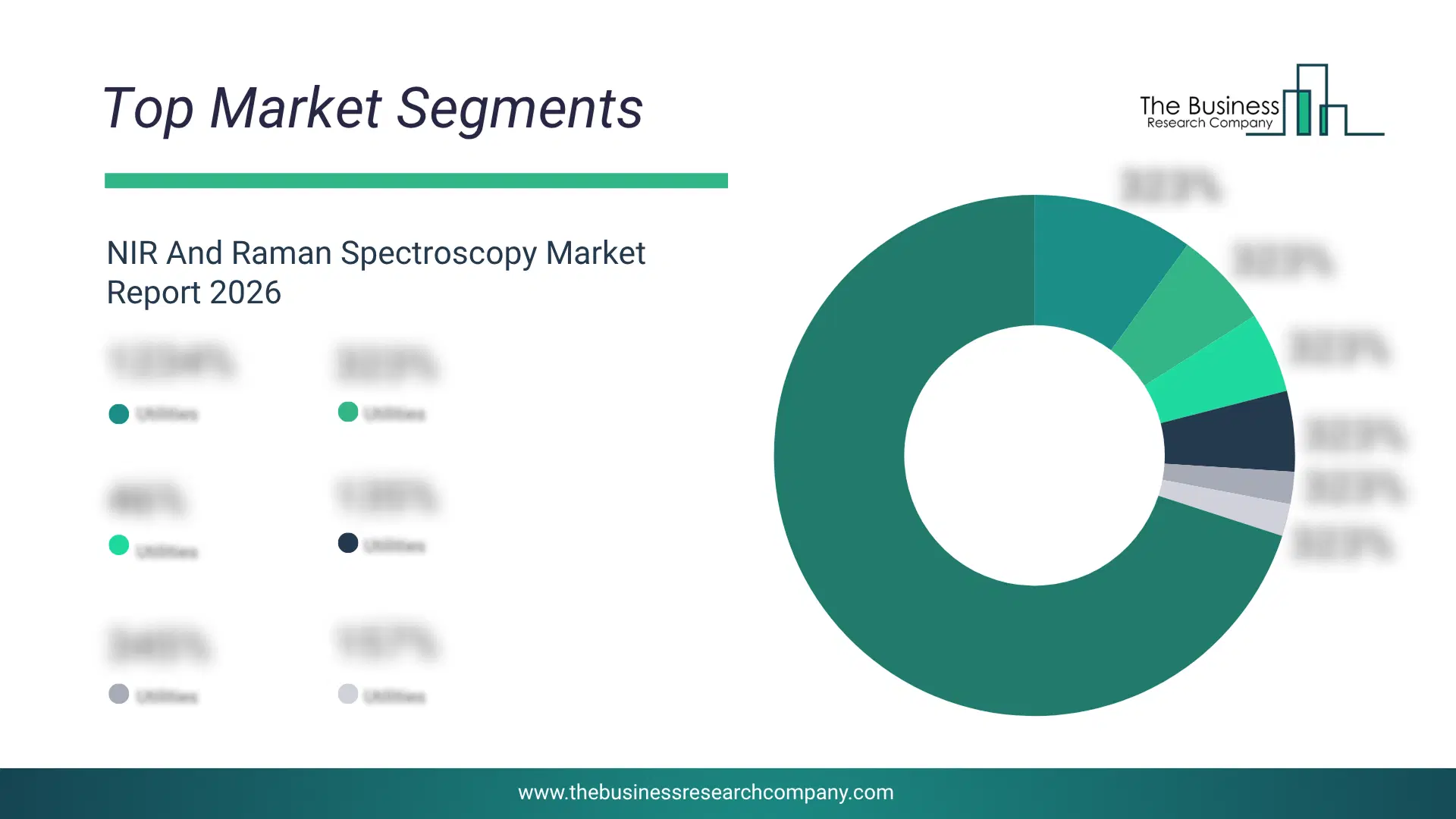
1) By Product Type: Benchtop Spectrometers, Portable Or Handheld Spectrometers, Microscopy Systems, Probes And Accessories 2) By Technology: Near-Infrared (NIR) Spectroscopy, Raman Spectroscopy 3) By Application: Pharmaceutical Applications, Biotechnology And Biopharmaceutical Applications, Food And Beverage Testing, Environment Testing, Academic Research, Other Applications Subsegments: 1) By Benchtop Spectrometers: Single-Channel Spectrometers, Multi-Channel Spectrometers 2) By Portable or Handheld Spectrometer: NIR Handheld Spectrometers, Raman Handheld Spectrometers 3) By Microscopy Systems: Confocal Microscopy Systems, Near-Field Microscopy Systems 4) By Probes and Accessories: Raman Probes, NIR Probes, Optical Fiber Probes, Sample Holders And Cuvettes, Calibration AccessoriesWhat Is The Driver Of The NIR And Raman Spectroscopy Market?
The increasing pharmaceutical R&D spending is expected to propel the growth of the NIR and raman spectroscopy market going forward. Pharmaceutical R&D refers to the process of discovering, developing, and testing new drugs to ensure their safety, efficacy, and quality before they are approved for market use. Pharmaceutical R&D spending is increasing due to the rising demand for innovative therapies that can effectively treat complex and chronic diseases, driving companies to invest more in developing novel drugs and personalized medicines. Pharmaceutical R&D drives the use of NIR and Raman spectroscopy by requiring fast, accurate, and non-destructive analytical techniques for drug development, formulation, and quality control throughout the research and testing phases. For instance, in December 2024, according to the Office for National Statistics, a UK-based government agency, in 2023, UK businesses invested $64.73 billion (£50.0 billion) in research and development (R&D), reflecting a $1.83 billion (£1.4 billion) or 2.9% increase compared to 2022. Therefore, the increasing pharmaceutical R&D spending is driving the growth of the NIR and raman spectroscopy industry.Key Players In The Global NIR And Raman Spectroscopy Market
Major companies operating in the nir and raman spectroscopy market are Thermo Fisher Scientific Inc., Danaher Corporation, ABB Ltd., Merck KGaA, Agilent Technologies Inc., PerkinElmer Inc., Shimadzu Corporation, Bruker Corporation, Horiba Ltd., Renishaw plc, Metrohm AG, JASCO Corporation, Spectral Sciences Inc., Tornado Spectral Systems Inc., BaySpec Inc., Cubert GmbH, Photothermal Spectroscopy Corp., Pendar Technologies LLC, Photon etc. Inc., TimeGate Instruments Ltd.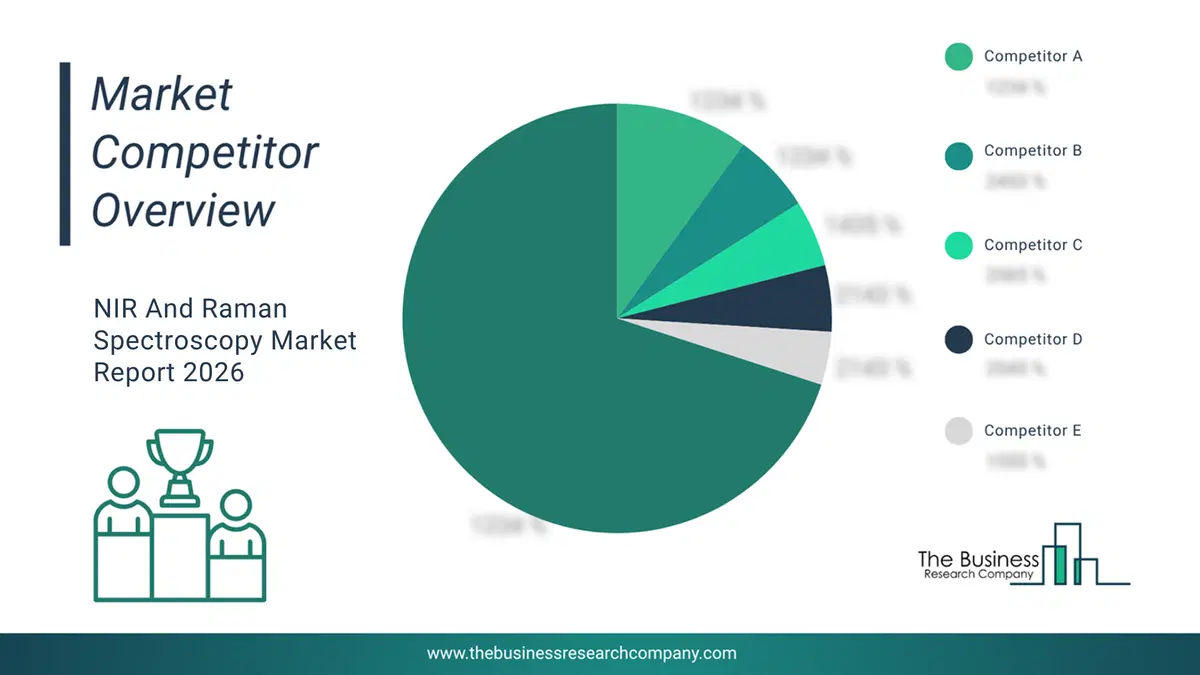
This chart is for illustrative purposes; the full report includes a detailed competitor analysis and comprehensive overview of the top 10 companies in the market.
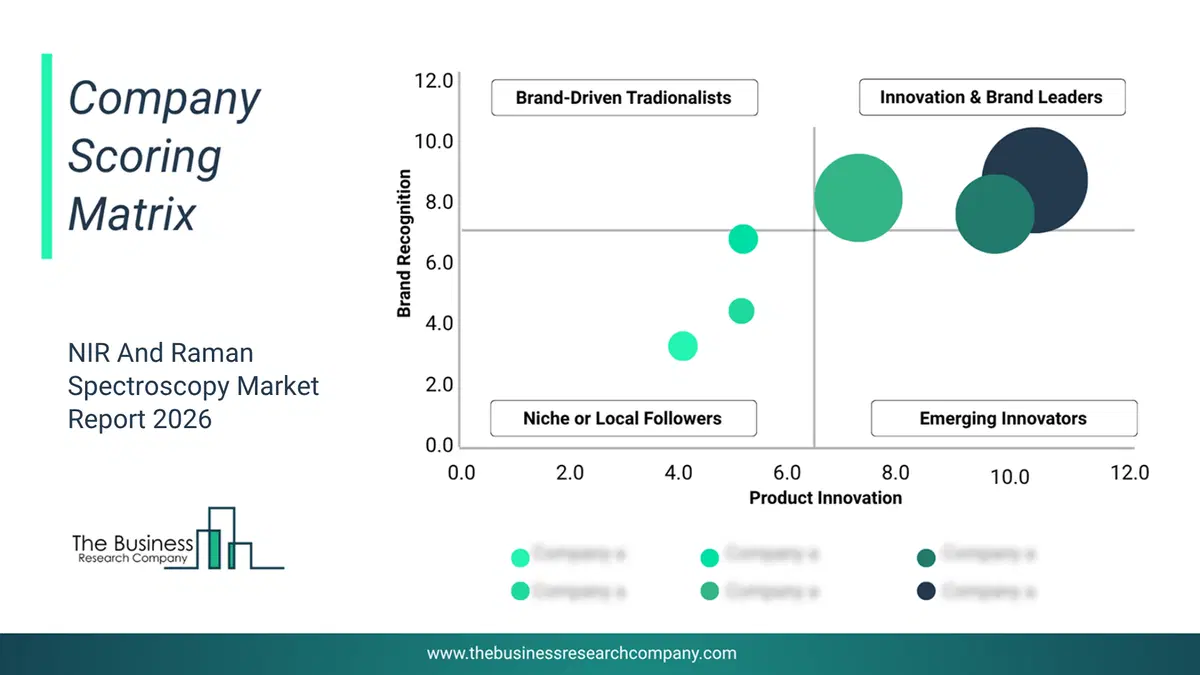
This chart maps companies by product innovation and brand strength, with bubble size indicating relative revenue, helping identify market leaders, challengers, and niche players. This is an illustrative chart; the full report provides a complete and accurate competitive analysis.
Global NIR And Raman Spectroscopy Market Trends and Insights
Major companies operating in the NIR and Raman spectroscopy market are focusing on leveraging innovative technologies such as dual-laser systems with a single detector to expand spectral coverage, enhance measurement precision, and strengthen laboratory quality control. A dual-laser system with a single detector is a spectroscopy setup that combines two excitation lasers into one detection path, allowing the instrument to capture a wider range of molecular vibrations in a single measurement, which improves spectral coverage, measurement precision, and overall analytical accuracy. For instance, in October 2025, Metrohm AG, a Switzerland-based company specializing in analytical instruments and laboratory solutions, launched the i-Raman NxG. This next-generation Raman spectrometer enhances quality control with faster measurements, improved sensitivity, and flexible sampling for liquids, solids, gels, pills, and powders, and is paired with SpecSuite software for method development and FDA 21 CFR Part 11 compliance.What Are Latest Mergers And Acquisitions In The NIR And Raman Spectroscopy Market?
In June 2023, Thermo Fisher Scientific Inc., a US-based biotechnology company, acquired MarqMetrix, Inc. for an undisclosed amount. With this acquisition, Thermo Fisher Scientific aims to enhance its portfolio of analytical solutions by integrating MarqMetrix’s Raman-based in-line process analytical technology, enabling more precise and real-time measurement and control of critical manufacturing parameters across industries such as biopharmaceuticals, pharmaceuticals, chemicals, and oil and gas. MarqMetrix Inc., is a US-based developer of optical measurement systems that provides NIR- and raman-based spectroscopy solutions for in-line measurement in various industries.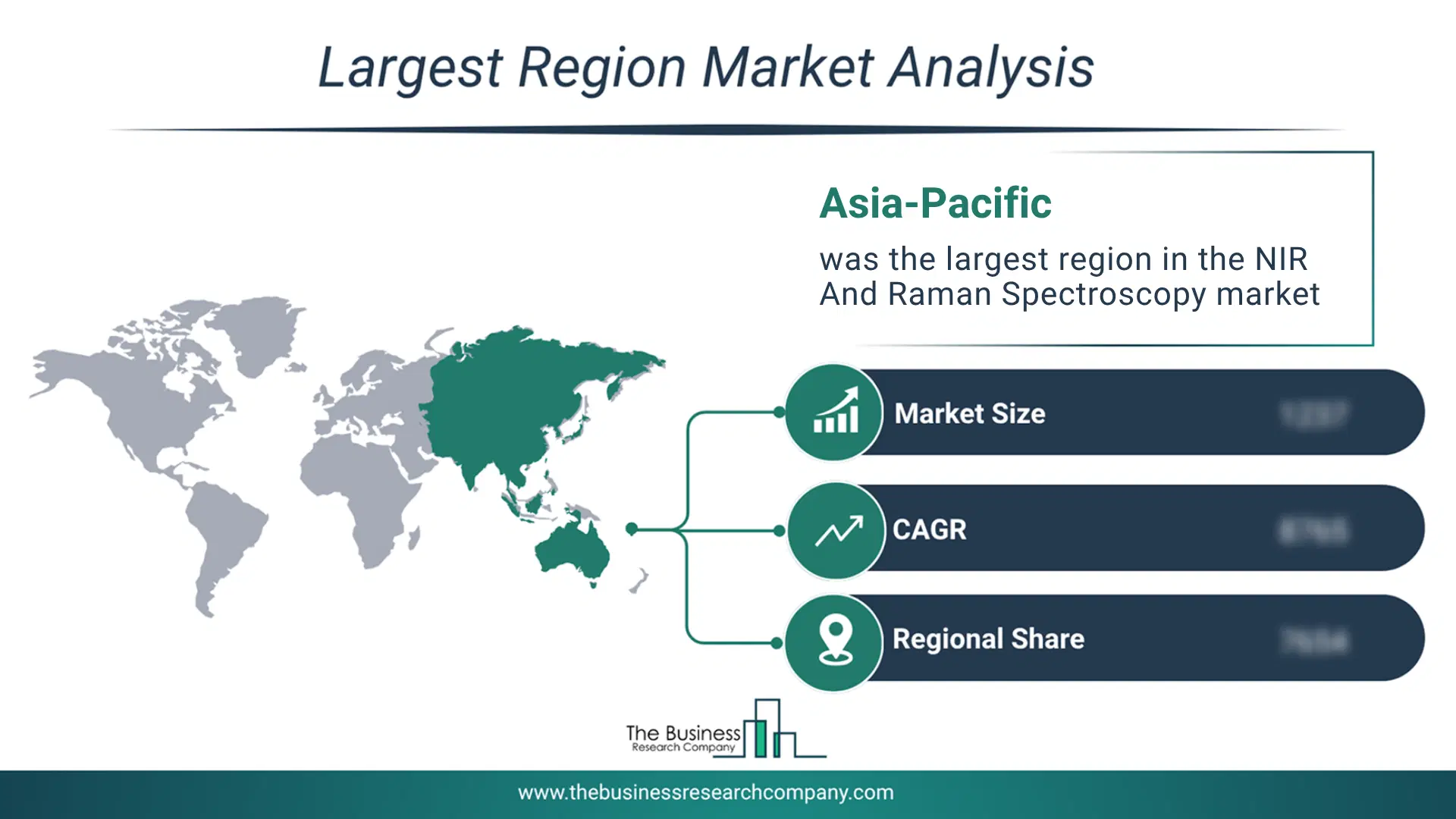
Regional Outlook
Asia-Pacific was the largest region in the NIR and raman spectroscopy market in 2025. Asia-Pacific is expected to be the fastest-growing region in the forecast period. The regions covered in this market report are Asia-Pacific, South East Asia, Western Europe, Eastern Europe, North America, South America, Middle East, Africa The countries covered in this market report are Australia, Brazil, China, France, Germany, India, Indonesia, Japan, Taiwan, Russia, South Korea, UK, USA, Canada, Italy, Spain.What Defines the NIR And Raman Spectroscopy Market?
The NIR and raman spectroscopy market consists of revenues earned by entities by providing services such as transmission NIR spectroscopy, reflectance NIR spectroscopy, diffuse reflectance NIR, and transflectance NIR. The market value includes the value of related goods sold by the service provider or included within the service offering. The NIR and raman spectroscopy market includes sales of tungsten-halogen lamps, transmission cells, integrating spheres, and thermoelectric or liquid nitrogen cooling. Values in this market are ‘factory gate’ values, that is, the value of goods sold by the manufacturers or creators of the goods, whether to other entities (including downstream manufacturers, wholesalers, distributors, and retailers) or directly to end customers. The value of goods in this market includes related services sold by the creators of the goods.How is Market Value Defined and Measured?
The market value is defined as the revenues that enterprises gain from the sale of goods and/or services within the specified market and geography through sales, grants, or donations in terms of the currency (in USD unless otherwise specified). The revenues for a specified geography are consumption values that are revenues generated by organizations in the specified geography within the market, irrespective of where they are produced. It does not include revenues from resales along the supply chain, either further along the supply chain or as part of other products.
This chart presents market attractiveness based on a quantitative evaluation of growth, competition, strategic alignment, and risk, offering a clear view of opportunity areas for decision-making. This chart is for illustrative purposes; the full report contains the complete analysis.

This chart highlights the Total Addressable Market (TAM) by estimating the maximum revenue opportunity using an assumption-driven approach, supporting strategic planning and opportunity sizing across markets. The chart is illustrative; the full report provides a more comprehensive analysis.
What Key Data and Analysis Are Included in the NIR And Raman Spectroscopy Market Report 2026?
The nir and raman spectroscopy market research report is one of a series of new reports from The Business Research Company that provides market statistics, including industry global market size, regional shares, competitors with the market share, detailed market segments, market trends and opportunities, and any further data you may need to thrive in the nir and raman spectroscopy industry. The market research report delivers a complete perspective of everything you need, with an in-depth analysis of the current and future state of the industry.NIR And Raman Spectroscopy Market Report Forecast Analysis
| Report Attribute | Details |
|---|---|
| Market Size Value In 2026 | $2.35 billion |
| Revenue Forecast In 2030 | $4.08 billion |
| Growth Rate | CAGR of 14.7% from 2026 to 2030 |
| Base Year For Estimation | 2025 |
| Actual Estimates/Historical Data | 2020-2025 |
| Forecast Period | 2026 - 2030 |
| Market Representation | Revenue in USD Billion and CAGR from 2026 to 2030 |
| Segments Covered | Product Type, Technology, Application |
| Regional Scope | Asia-Pacific, Western Europe, Eastern Europe, North America, South America, Middle East, Africa |
| Key Companies Profiled | Thermo Fisher Scientific Inc., Danaher Corporation, ABB Ltd., Merck KGaA, Agilent Technologies Inc., PerkinElmer Inc., Shimadzu Corporation, Bruker Corporation, Horiba Ltd., Renishaw plc, Metrohm AG, JASCO Corporation, Spectral Sciences Inc., Tornado Spectral Systems Inc., BaySpec Inc., Cubert GmbH, Photothermal Spectroscopy Corp., Pendar Technologies LLC, Photon etc. Inc., TimeGate Instruments Ltd. |
| Customization Scope | Request for Customization |
| Pricing And Purchase Options | Explore Purchase Options |