
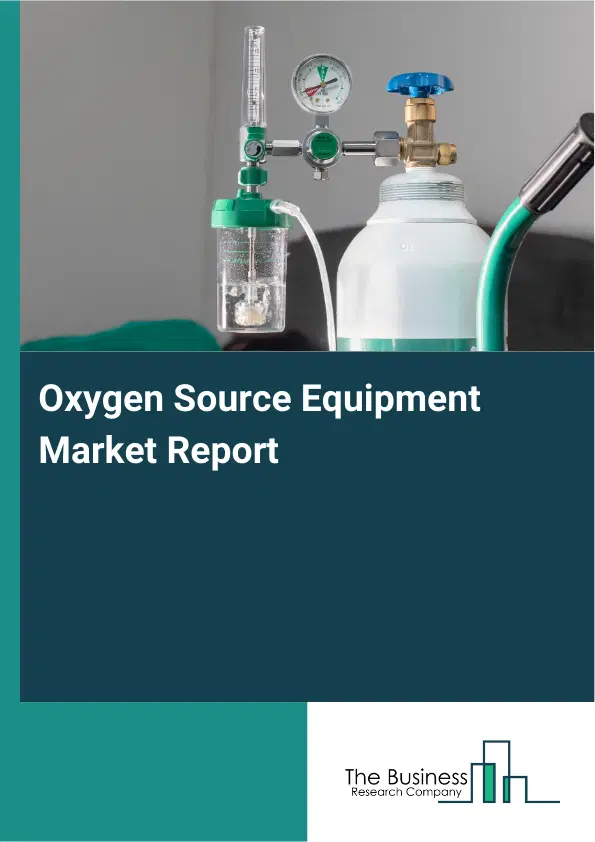
Oxygen Source Equipment Market Report 2026
Global Outlook – By Product Type (Oxygen Cylinders, Oxygen Concentrators, Liquid Oxygen Equipment, Oxygen Systems For Industrial Use, Portable Oxygen Systems), By Delivery Mode (Gas Delivery Systems, Cryogenic Liquid Delivery Systems, Portable Delivery Systems, Pipeline Delivery Systems, Bulk Oxygen Supply Systems), By Application (Hospital, Clinic, Other Applications), By End-User (Healthcare And Medical, Aerospace And Aviation, Industrial Manufacturing, Water Treatment Plants, Energy And Power Generation) – Market Size, Trends, Strategies, and Forecast to 2030
Oxygen Source Equipment Market Overview
• Oxygen Source Equipment market size has reached to $3.97 billion in 2025 • Expected to grow to $6.46 billion in 2030 at a compound annual growth rate (CAGR) of 10.2% • Growth Driver: Rising Prevalence Of Respiratory Diseases Fueling The Market Growth Due To Air Pollution And Environmental Exposure • Market Trend: Innovative Oxygen Concentrators Enhancing Patient Mobility With Advanced Oxygen Solutions • North America was the largest region in 2025 and Asia-Pacific is the fastest growing region.What Is Covered Under Oxygen Source Equipment Market?
Oxygen source equipment refers to a broad category of medical and industrial devices that are designed to produce, concentrate, store, or deliver oxygen in a controlled and efficient manner to meet the specific needs of patients requiring respiratory support, industrial processes that depend on high oxygen purity, or environments where maintaining adequate oxygen levels is essential for safety, health, or operational efficiency. These devices include various delivery systems that ensure a reliable and accessible supply of oxygen across various settings and applications. The main product types of oxygen source equipment are oxygen cylinders, oxygen concentrators, liquid oxygen equipment, oxygen systems for industrial use, and portable oxygen systems. Oxygen cylinders are high-pressure containers used to store and transport compressed medical-grade oxygen for therapeutic or emergency use. The delivery modes include gas delivery systems, cryogenic liquid delivery systems, portable delivery systems, pipeline delivery systems, and bulk oxygen supply systems. These products are used in various applications, including hospitals, clinics, and other settings. The key end-users are healthcare and medical, aerospace and aviation, industrial manufacturing, water treatment plants, and the energy and power generation sectors.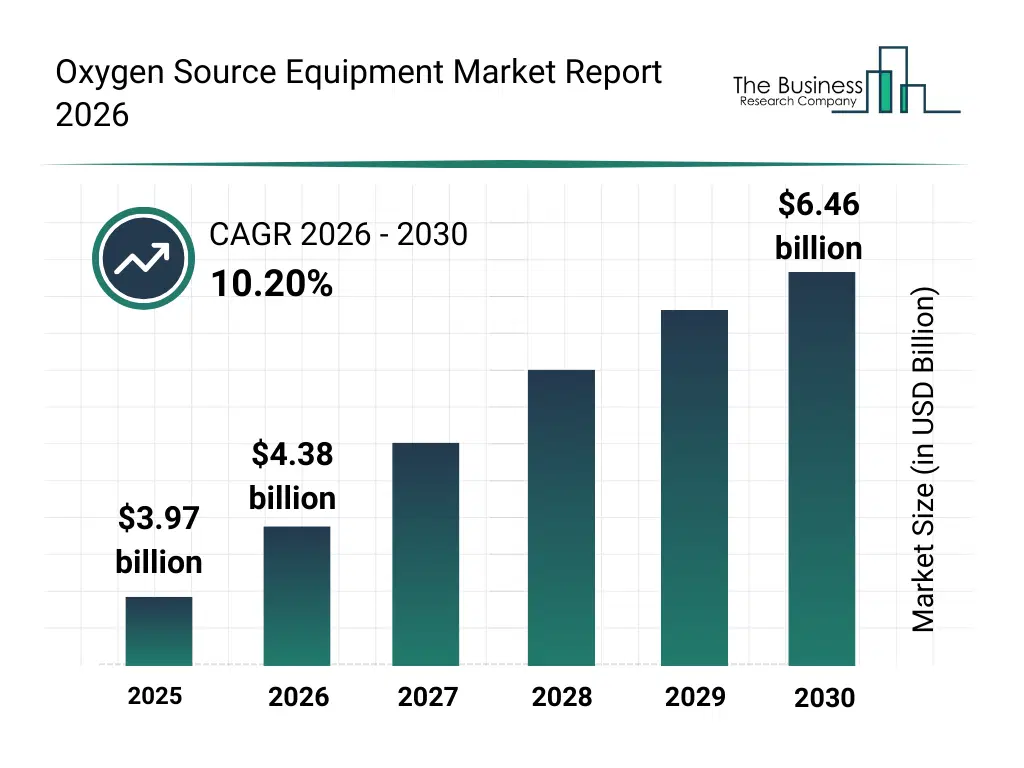
What Is The Oxygen Source Equipment Market Size and Share 2026?
The oxygen source equipment market size has grown rapidly in recent years. It will grow from $3.97 billion in 2025 to $4.38 billion in 2026 at a compound annual growth rate (CAGR) of 10.3%. The growth in the historic period can be attributed to increasing prevalence of respiratory disorders, expansion of hospital infrastructure, growth in industrial manufacturing activities, rising demand for medical oxygen in critical care, government investments in healthcare facilities.What Is The Oxygen Source Equipment Market Growth Forecast?
The oxygen source equipment market size is expected to see rapid growth in the next few years. It will grow to $6.46 billion in 2030 at a compound annual growth rate (CAGR) of 10.2%. The growth in the forecast period can be attributed to aging population with chronic respiratory conditions, growth of home healthcare services, rising adoption of portable oxygen concentrators, expansion of industrial oxygen applications, technological advancements in oxygen generation systems. Major trends in the forecast period include rising adoption of home-based oxygen therapy, growing demand for portable and lightweight oxygen systems, expansion of on-site oxygen generation systems, increasing use of oxygen equipment in emergency and disaster care, technological advancements in oxygen storage and delivery safety.
Global Oxygen Source Equipment Market Segmentation
1) By Product Type: Oxygen Cylinders, Oxygen Concentrators, Liquid Oxygen Equipment, Oxygen Systems For Industrial Use, Portable Oxygen Systems 2) By Delivery Mode: Gas Delivery Systems, Cryogenic Liquid Delivery Systems, Portable Delivery Systems, Pipeline Delivery Systems, Bulk Oxygen Supply Systems 3) By Application: Hospital, Clinic, Other Applications 4) By End-User: Healthcare And Medical, Aerospace And Aviation, Industrial Manufacturing, Water Treatment Plants, Energy And Power Generation Subsegments: 1) By Oxygen Cylinders: Steel Oxygen Cylinders, Aluminum Oxygen Cylinders, Composite Oxygen Cylinders, High-Pressure Oxygen Cylinders, Low-Pressure Oxygen Cylinders 2) By Oxygen Concentrators: Portable Oxygen Concentrators, Stationary Oxygen Concentrators, Continuous Flow Concentrators, Pulse Dose Concentrators 3) By Liquid Oxygen Equipment: Portable Liquid Oxygen Units, Home-Based Reservoir Systems, Hospital-Based Bulk Liquid Oxygen Systems, Mobile Cryogenic Containers 4) By Oxygen Systems For Industrial Use: Pressure Swing Adsorption (PSA) Oxygen Plants, Vacuum Pressure Swing Adsorption (VPSA) Plants, Cryogenic Air Separation Units (ASUs), Membrane-Based Oxygen Generators 5) By Portable Oxygen Systems: Wearable Oxygen Devices, Lightweight Cylindrical Kits, Portable Oxygen Concentrator Kits, Backpack Oxygen Delivery SystemsWhat Is The Driver Of The Oxygen Source Equipment Market?
The increasing prevalence of respiratory diseases is expected to propel the growth of the oxygen source equipment market going forward. Respiratory diseases refer to medical conditions that affect the lungs and other parts of the respiratory system, making breathing difficult. The rising prevalence of respiratory diseases is primarily due to increasing air pollution and exposure to environmental toxins which damage lung tissue, reduce respiratory function, and trigger or exacerbate conditions such as asthma, chronic obstructive pulmonary disease (COPD), and lung cancer. Oxygen source equipment is used in respiratory diseases to deliver supplemental oxygen, helping maintain adequate blood oxygen levels when the lungs are unable to do so effectively. For instance, in February 2024, according to the UK Health Security Agency, a UK-based government agency, in 2023, England recorded a 10.7% year-over-year increase in tuberculosis (TB) cases, with reported cases rising from 4,380 in 2022 to 4,850. Therefore, the increasing prevalence of respiratory diseases is driving the growth of the oxygen source equipment industry.Key Players In The Global Oxygen Source Equipment Market
Major companies operating in the oxygen source equipment market are Air Liquide Healthcare, Koninklijke Philips N.V., GCE Healthcare, Teijin Limited, ResMed Inc., Fisher & Paykel Healthcare, Invacare Corporation, Contec Medical Systems, Inogen Inc., Drive DeVilbiss Healthcare, CAIRE Inc., Precision Medical Inc., OxyGo LLC, O2 Concepts LLC, Longfian Scitech Co. Ltd., Nidek Medical Products, Besco Medical Limited, Scaleo Medical SAS, Oxus Inc., Linde Healthcare, Taiyo Nippon Sanso Corporation, Messer Group
This chart is for illustrative purposes; the full report includes a detailed competitor analysis and comprehensive overview of the top 10 companies in the market.
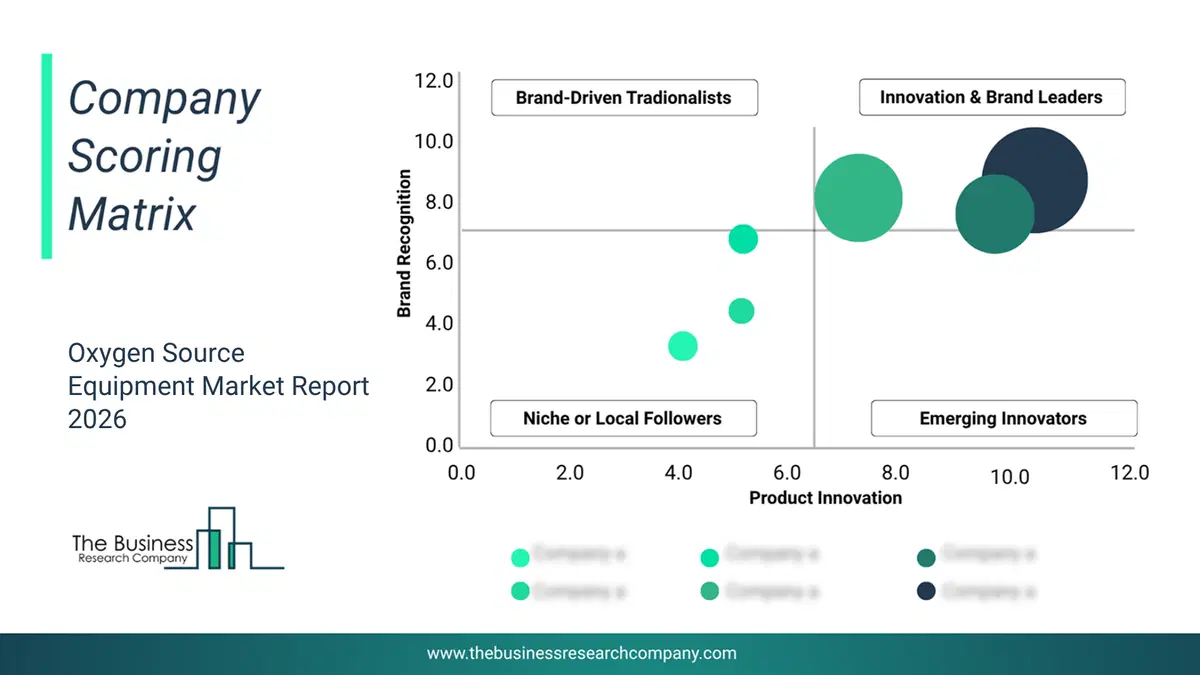
This chart maps companies by product innovation and brand strength, with bubble size indicating relative revenue, helping identify market leaders, challengers, and niche players. This is an illustrative chart; the full report provides a complete and accurate competitive analysis.
Global Oxygen Source Equipment Market Trends and Insights
Major companies operating in the oxygen source equipment market are focusing on innovative products such as portable oxygen concentrators to enhance patient mobility, improve quality of life, and meet the growing demand for home-based and travel-friendly respiratory care solutions. A portable oxygen concentrator is a compact medical device that extracts and delivers concentrated oxygen from ambient air, allowing patients with respiratory conditions to receive oxygen therapy while on the move. For instance, in October 2024, Inogen, a U.S.-based medical technology company, launched the Rove 4, a lightweight portable oxygen concentrator weighing under 3 lbs. It offers four flow settings, delivering up to 840 ml/min of medical-grade oxygen, and features three battery configurations providing up to 5 hours and 45 minutes of operation. The device is designed to support patient mobility and daily activities.What Are Latest Mergers And Acquisitions In The Oxygen Source Equipment Market?
In July 2025, ESAB Corporation, a US-based manufacturing and technology company, acquired Aktiv Technologies Pvt. Ltd. for an undisclosed amount. With this acquisition, ESAB Corporation sought to expand and strengthen its global medical gas control portfolio and manufacturing capabilities, particularly to deepen its presence in the fast-growing Indian healthcare market. Aktiv Technologies Pvt. Ltd. is an India-based manufacturing company that specializes in designing and manufacturing medical and industrial gas control equipment and central gas systems for hospitals and healthcare providers.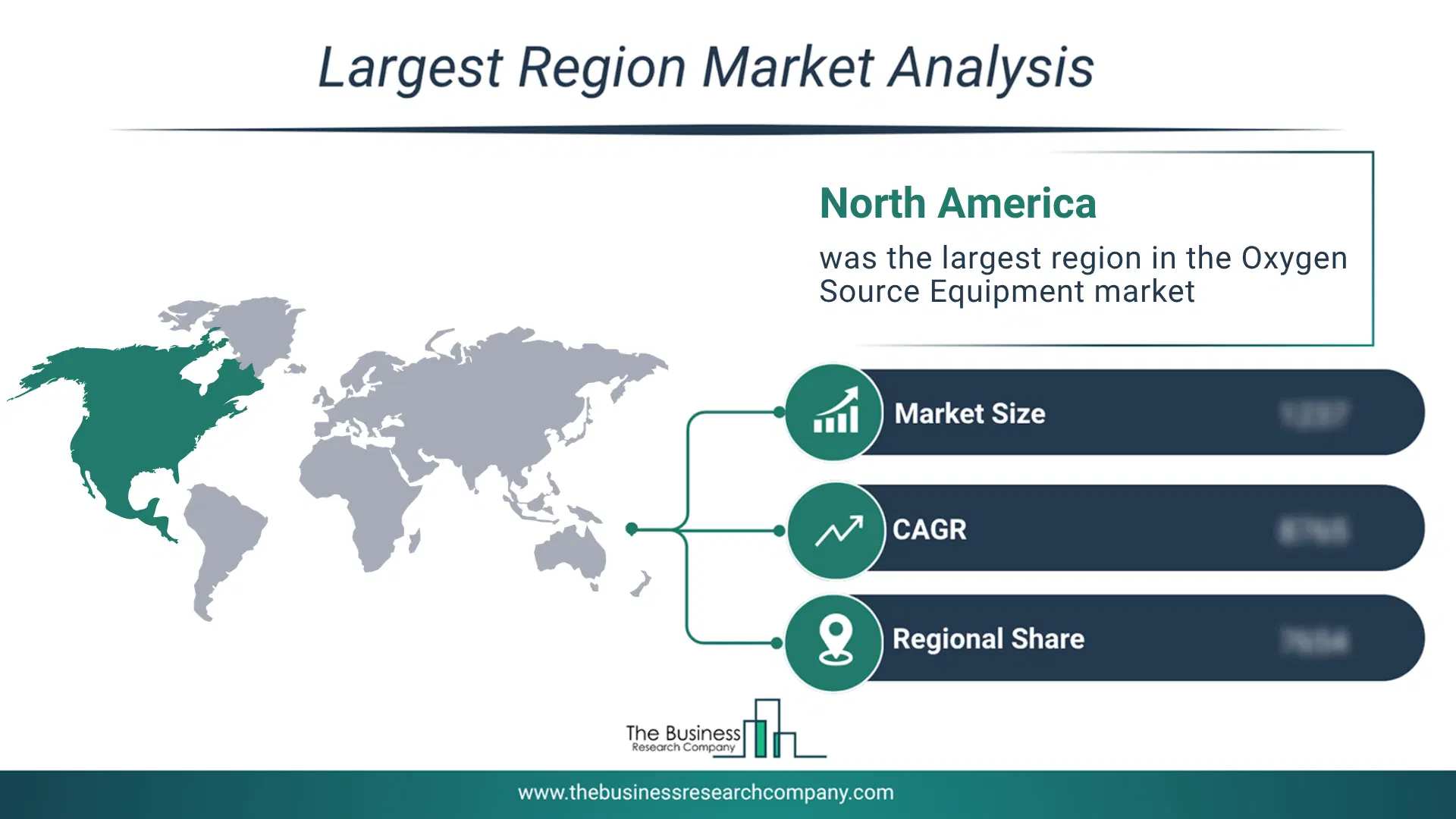
Regional Outlook
North America was the largest region in the oxygen source equipment market in 2025. Asia-Pacific is expected to be the fastest-growing region in the forecast period. The regions covered in this market report are Asia-Pacific, South East Asia, Western Europe, Eastern Europe, North America, South America, Middle East, Africa. The countries covered in this market report are Australia, Brazil, China, France, Germany, India, Indonesia, Japan, Taiwan, Russia, South Korea, UK, USA, Canada, Italy, SpainWhat Defines the Oxygen Source Equipment Market?
The oxygen source equipment market consists of sales of oxygen generators, regulators and valves, oxygen tubing, oxygen masks, and cannulas. Values in this market are ‘factory gate’ values, that is, the value of goods sold by the manufacturers or creators of the goods, whether to other entities (including downstream manufacturers, wholesalers, distributors, and retailers) or directly to end customers. The value of goods in this market includes related services sold by the creators of the goods.How is Market Value Defined and Measured?
The market value is defined as the revenues that enterprises gain from the sale of goods and/or services within the specified market and geography through sales, grants, or donations in terms of the currency (in USD unless otherwise specified). The revenues for a specified geography are consumption values that are revenues generated by organizations in the specified geography within the market, irrespective of where they are produced. It does not include revenues from resales along the supply chain, either further along the supply chain or as part of other products.
This chart presents market attractiveness based on a quantitative evaluation of growth, competition, strategic alignment, and risk, offering a clear view of opportunity areas for decision-making. This chart is for illustrative purposes; the full report contains the complete analysis.

This chart highlights the Total Addressable Market (TAM) by estimating the maximum revenue opportunity using an assumption-driven approach, supporting strategic planning and opportunity sizing across markets. The chart is illustrative; the full report provides a more comprehensive analysis.
What Key Data and Analysis Are Included in the Oxygen Source Equipment Market Report 2026?
The oxygen source equipment market research report is one of a series of new reports from The Business Research Company that provides market statistics, including industry global market size, regional shares, competitors with the market share, detailed market segments, market trends and opportunities, and any further data you may need to thrive in the oxygen source equipment industry. The market research report delivers a complete perspective of everything you need, with an in-depth analysis of the current and future state of the industry.Oxygen Source Equipment Market Report Forecast Analysis
| Report Attribute | Details |
|---|---|
| Market Size Value In 2026 | $4.38 billion |
| Revenue Forecast In 2030 | $6.46 billion |
| Growth Rate | CAGR of 10.2% from 2026 to 2030 |
| Base Year For Estimation | 2025 |
| Actual Estimates/Historical Data | 2020-2025 |
| Forecast Period | 2026 - 2030 |
| Market Representation | Revenue in USD Billion and CAGR from 2026 to 2030 |
| Segments Covered | Product Type, Delivery Mode, Application, End-User |
| Regional Scope | Asia-Pacific, Western Europe, Eastern Europe, North America, South America, Middle East, Africa |
| Country Scope | The countries covered in the report are Australia, Brazil, China, France, Germany, India, Indonesia, Japan, Taiwan, Russia, South Korea, UK, USA, Canada, Italy, Spain. |
| Key Companies Profiled | Air Liquide Healthcare, Koninklijke Philips N.V., GCE Healthcare, Teijin Limited, ResMed Inc., Fisher & Paykel Healthcare, Invacare Corporation, Contec Medical Systems, Inogen Inc., Drive DeVilbiss Healthcare, CAIRE Inc., Precision Medical Inc., OxyGo LLC, O2 Concepts LLC, Longfian Scitech Co. Ltd., Nidek Medical Products, Besco Medical Limited, Scaleo Medical SAS, Oxus Inc., Linde Healthcare, Taiyo Nippon Sanso Corporation, Messer Group |
| Customization Scope | Request for Customization |
| Pricing And Purchase Options | Explore Purchase Options |