

Peptide Antibiotics Market Report 2026
Global Outlook – By Type (Ribosomal Synthesized Peptide Antibiotics, Non-Ribosomal Synthesized Peptide Antibiotics), By Drugs (Daptomycin, Dalbavancin, Telavancin, Other Drugs), By Disease Outlook (Skin Infection, HABP Or VABP, Blood Stream Infection, Other Diseases), By Distribution Channel (Hospitals, Homecare, Specialty Clinics, Other Distribution Channels) – Market Size, Trends, Strategies, and Forecast to 2030
Peptide Antibiotics Market Overview
• Peptide Antibiotics market size has reached to $5.77 billion in 2025 • Expected to grow to $9.04 billion in 2030 at a compound annual growth rate (CAGR) of 9.3% • Growth Driver: Rising Prevalence Of Infectious Diseases Fuels Peptide Antibiotics Market • Market Trend: Generic Versions To Provide An Affordable Alternative To Patients • North America was the largest region in 2025.What Is Covered Under Peptide Antibiotics Market?
Peptide antibiotics refer to antibiotics made up of peptides the physical rupture of cell membranes underpins the antibacterial activity. The peptide antibiotics are used to permeate bacterial membranes, collect within bacteria, and then interfere with bacterial functioning. The main types of peptide antibiotics are ribosomal synthesized peptide antibiotics and non-ribosomal synthesized peptide antibiotics. The ribosomal synthesized peptide antibiotics destroy or modify the drug, change the drug target, decrease or raise drug uptake, and substitute a different metabolic step as the medication's target. Ribosomal synthesized peptide antibiotics refer to antimicrobial peptides generated by ribosomes and produced by practically all species, from bacteria to plants and animals. The various drugs under peptide antibiotics are daptomycin, dalbavancin, telavancin, and other drugs used to treat several diseases such as skin infection, HABP/VABP, blood stream infection, and other diseases. The peptide antibiotics are used and distributed through hospitals, homecare, specialty clinics, and other distribution channels.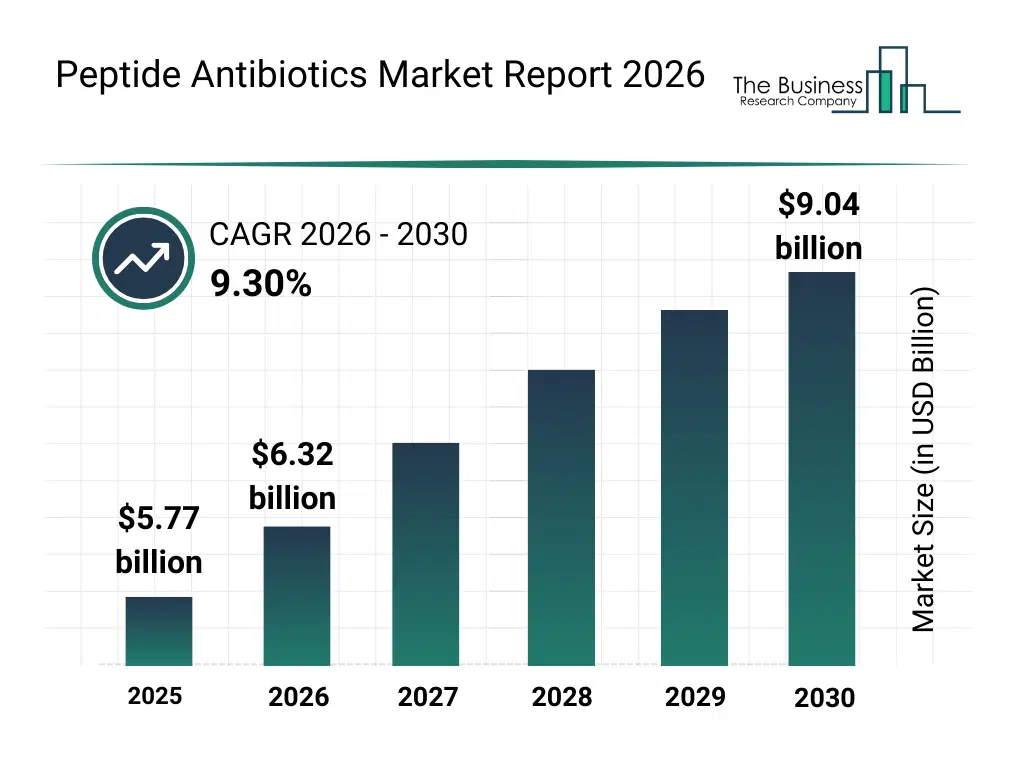
What Is The Peptide Antibiotics Market Size and Share 2026?
The peptide antibiotics market size has grown strongly in recent years. It will grow from $5.77 billion in 2025 to $6.32 billion in 2026 at a compound annual growth rate (CAGR) of 9.6%. The growth in the historic period can be attributed to rise of antibiotic-resistant bacterial strains, increased hospital-acquired infection rates, advancements in peptide synthesis technologies, growing clinical research in infectious diseases, government funding for antibiotic R&D.What Is The Peptide Antibiotics Market Growth Forecast?
The peptide antibiotics market size is expected to see strong growth in the next few years. It will grow to $9.04 billion in 2030 at a compound annual growth rate (CAGR) of 9.3%. The growth in the forecast period can be attributed to rising prevalence of multi-drug resistant infections, expansion of global healthcare infrastructure, technological advancements in peptide delivery systems, increasing collaborations with cdmоs, rising awareness and adoption of precision medicine approaches. Major trends in the forecast period include rising demand for multi-drug resistant (mdr) infection solutions, expansion of peptide antibiotics in hospital-acquired infections, growth of contract manufacturing and cdmo collaborations, increasing adoption of personalized and targeted antibiotic therapies, focus on peptide antibiotics with reduced toxicity and side effects.
Global Peptide Antibiotics Market Segmentation
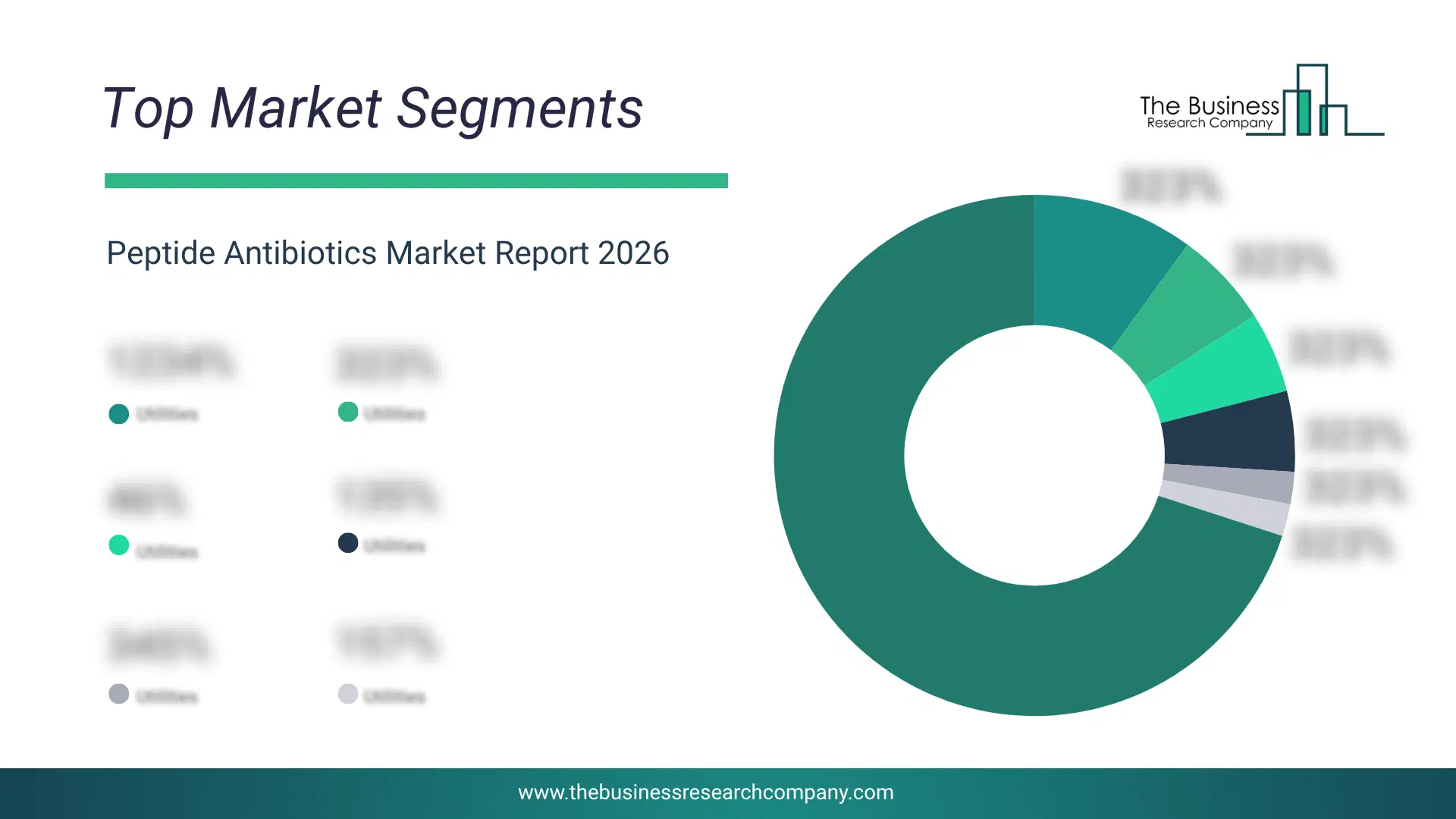
1) By Type: Ribosomal Synthesized Peptide Antibiotics, Non-Ribosomal Synthesized Peptide Antibiotics 2) By Drugs: Daptomycin, Dalbavancin, Telavancin, Other Drugs 3) By Disease Outlook: Skin Infection, HABP Or VABP, Blood Stream Infection, Other Diseases 4) By Distribution Channel: Hospitals, Homecare, Specialty Clinics, Other Distribution Channels Subsegments: 1) By Ribosomal Synthesized Peptide Antibiotics: Aminoglycosides, Macrolides, Tetracyclines, Lincosamides 2) By Non-Ribosomal Synthesized Peptide Antibiotics: Bacitracins, Vancomycin, Polymyxins, Cyclic LipopeptidesWhat Are The Drivers Of The Peptide Antibiotics Market?
The increase in the prevalence of various infectious diseases is expected to propel the growth of the peptide antibiotics market. Infectious diseases are illnesses caused by harmful microorganisms such as bacteria, fungi, parasites, and others. The major reasons for the rise in infectious diseases are rapid urbanization, climate change, increasing risk of disease emergence, and others, which have increased the demand for peptide antibiotics. Peptide antibiotics physically rupture the cell membranes and underpin the antibacterial activity. For instance, in May 2024, according to the World Health Organization, a Switzerland-based intergovernmental organization, in the America region, dengue cases had already surpassed seven million by April 2024, which is much higher than the 4.6 million cases reported in all of 2023. Therefore, the increase in the incidence of infectious is driving the peptide antibiotics industry growth. An increase in the incidence of chronic diseases is expected to drive the peptide antibiotics market. Chronic diseases are illnesses that last a year or longer, demand ongoing medical attention, and limit daily activities. Chronic diseases are on the rise as a result of increased tobacco use, poor nutrition, physical inactivity, excessive alcohol consumption, and other factors. Peptide antibiotics are used to treat chronic diseases by administering the drug in the target area. For instance, in February 2024, according to the World Health Organization, a Switzerland-based intergovernmental organization, by 2050, over 35 million new cancer cases were projected, representing a 77% increase compared to the estimated 20 million cases in 2022. Therefore, the increasing prevalence of chronic conditions is fueling the growth of the peptide antibiotics industry.Key Players In The Global Peptide Antibiotics Market
Major companies operating in the peptide antibiotics market are Eli Lilly and Company, GlaxoSmithKline plc, Novartis AG, Pfizer Inc., Merck & Co. Inc., AbbVie Inc., Sandoz International GmbH, Xellia APS, Johnson & Johnson Inc., AstraZeneca PLC, Bayer AG, Bristol-Myers Squibb Company, Lupin Pharmaceuticals Inc., Sun Pharmaceutical Industries Ltd., Teva Pharmaceutical Industries Ltd., Torrent Pharmaceuticals Ltd., Wockhardt Ltd., Zydus Lifesciences Limited, Alkem Laboratories Limited, Allecra Therapeutics GmbH, Basilea Pharmaceutica Ltd.
This chart is for illustrative purposes; the full report includes a detailed competitor analysis and comprehensive overview of the top 10 companies in the market.
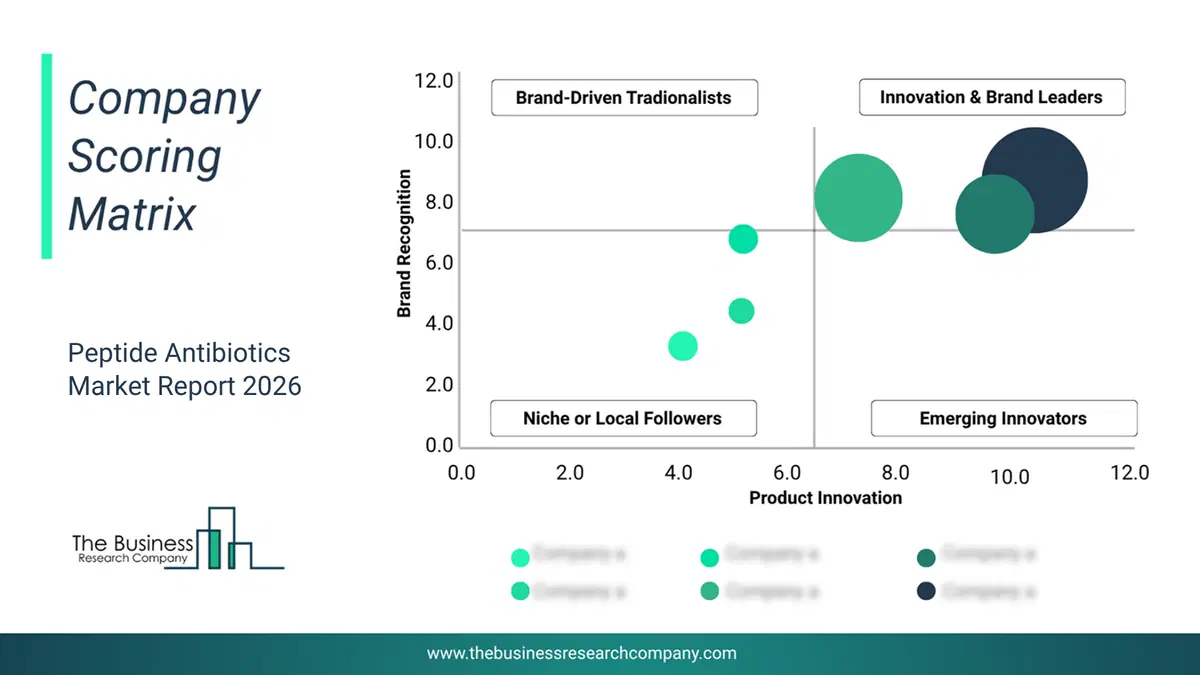
This chart maps companies by product innovation and brand strength, with bubble size indicating relative revenue, helping identify market leaders, challengers, and niche players. This is an illustrative chart; the full report provides a complete and accurate competitive analysis.
Global Peptide Antibiotics Market Trends and Insights
Major companies operating in the peptide antibiotics market are launching generic versions to provide an affordable alternative to patients. Generic versions of peptide antibiotics are cost-effective, off-patent alternatives to brand-name peptide-based antibiotics, used to treat various bacterial infections. For instance, in July 2023, Camber Pharmaceuticals, a US-based pharmaceutical company, expanded its portfolio with the launch of a generic version of Daptomycin for Injection. Daptomycin for Injection is a kind of peptide antibiotic. It is a cyclic lipopeptide antibiotic that is synthesized by a non-ribosomal machinery. The generic version is available in both 350 mg and 500 mg strengths and is prescribed for the treatment of complicated skin and skin structure infections (cSSSI) in adult patients and pediatric patients aged 1 to 17 years.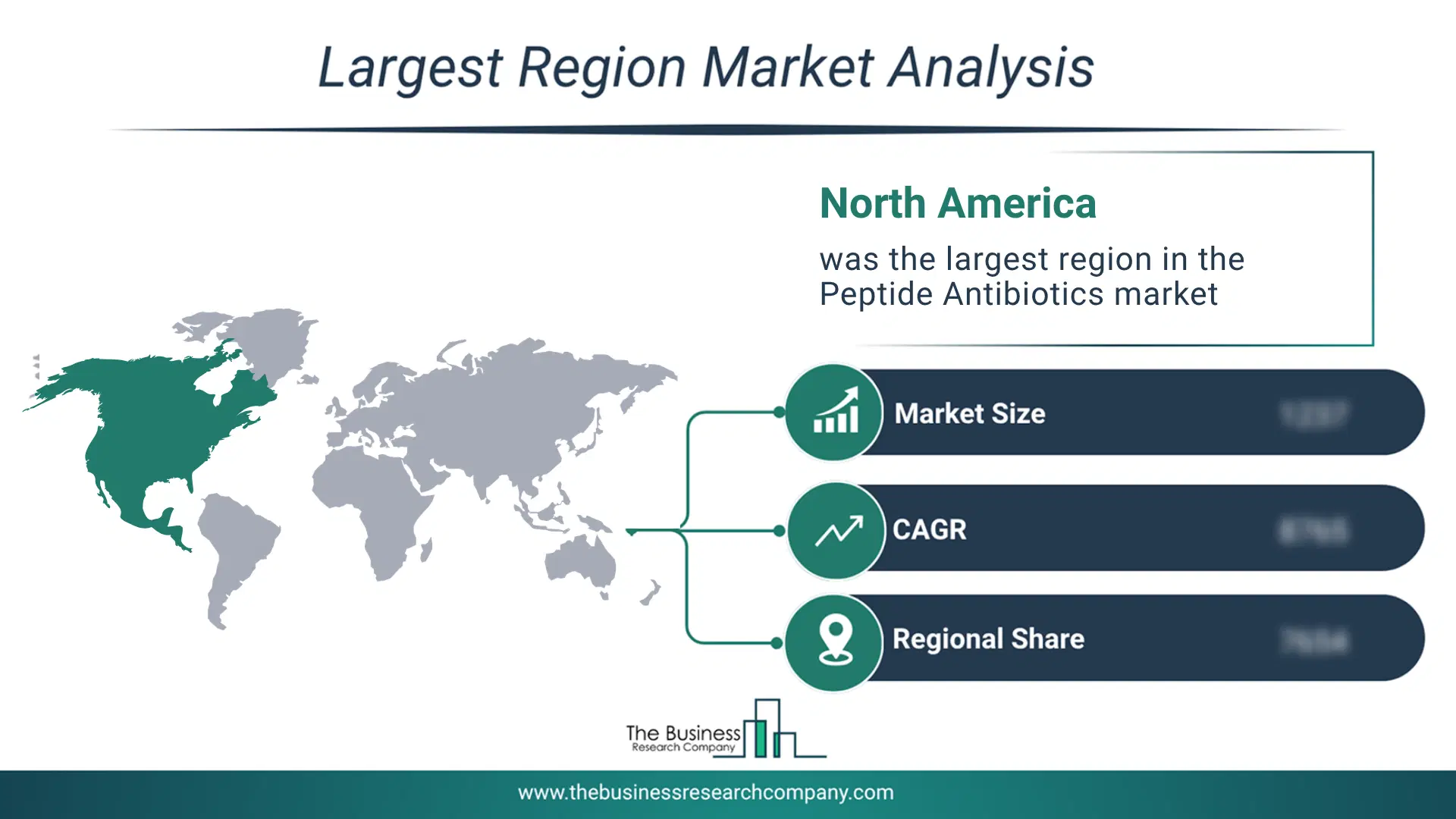
Regional Insights
North America was the largest region in the peptide antibiotics market in 2025. The regions covered in this market report are Asia-Pacific, South East Asia, Western Europe, Eastern Europe, North America, South America, Middle East, Africa. The countries covered in this market report are Australia, Brazil, China, France, Germany, India, Indonesia, Japan, Taiwan, Russia, South Korea, UK, USA, Canada, Italy, Spain.What Defines the Peptide Antibiotics Market?
The peptide antibiotics market consists of sales of oral, intravenous, intramuscular and topical peptide antibiotics. Values in this market are ‘factory gate’ values, that is the value of goods sold by the manufacturers or creators of the goods, whether to other entities (including downstream manufacturers, wholesalers, distributors and retailers) or directly to end customers. The value of goods in this market includes related services sold by the creators of the goods.How is Market Value Defined and Measured?
The market value is defined as the revenues that enterprises gain from the sale of goods and/or services within the specified market and geography through sales, grants, or donations in terms of the currency (in USD unless otherwise specified). The revenues for a specified geography are consumption values that are revenues generated by organizations in the specified geography within the market, irrespective of where they are produced. It does not include revenues from resales along the supply chain, either further along the supply chain or as part of other products.
This chart presents market attractiveness based on a quantitative evaluation of growth, competition, strategic alignment, and risk, offering a clear view of opportunity areas for decision-making. This chart is for illustrative purposes; the full report contains the complete analysis.

This chart highlights the Total Addressable Market (TAM) by estimating the maximum revenue opportunity using an assumption-driven approach, supporting strategic planning and opportunity sizing across markets. The chart is illustrative; the full report provides a more comprehensive analysis.
What Key Data and Analysis Are Included in the Peptide Antibiotics Market Report 2026?
The peptide antibiotics market research report is one of a series of new reports from The Business Research Company that provides market statistics, including industry global market size, regional shares, competitors with the market share, detailed market segments, market trends and opportunities, and any further data you may need to thrive in the peptide antibiotics industry. The market research report delivers a complete perspective of everything you need, with an in-depth analysis of the current and future state of the industry.Peptide Antibiotics Market Report Forecast Analysis
| Report Attribute | Details |
|---|---|
| Market Size Value In 2026 | $6.32 billion |
| Revenue Forecast In 2030 | $9.04 billion |
| Growth Rate | CAGR of 9.6% from 2026 to 2030 |
| Base Year For Estimation | 2025 |
| Actual Estimates/Historical Data | 2020-2025 |
| Forecast Period | 2026 - 2030 |
| Market Representation | Revenue in USD Billion and CAGR from 2026 to 2030 |
| Segments Covered | Type, Drugs, Disease Outlook, Distribution Channel |
| Regional Scope | Asia-Pacific, Western Europe, Eastern Europe, North America, South America, Middle East, Africa |
| Country Scope | The countries covered in the report are Australia, Brazil, China, France, Germany, India, Indonesia, Japan, Taiwan, Russia, South Korea, UK, USA, Canada, Italy, Spain. |
| Key Companies Profiled | Eli Lilly and Company, GlaxoSmithKline plc, Novartis AG, Pfizer Inc., Merck & Co. Inc., AbbVie Inc., Sandoz International GmbH, Xellia APS, Johnson & Johnson Inc., AstraZeneca PLC, Bayer AG, Bristol-Myers Squibb Company, Lupin Pharmaceuticals Inc., Sun Pharmaceutical Industries Ltd., Teva Pharmaceutical Industries Ltd., Torrent Pharmaceuticals Ltd., Wockhardt Ltd., Zydus Lifesciences Limited, Alkem Laboratories Limited, Allecra Therapeutics GmbH, Basilea Pharmaceutica Ltd. |
| Customization Scope | Request for Customization |
| Pricing And Purchase Options | Explore Purchase Options |