
Plastics In Electronics Market Report 2026
Global Outlook – By Product Type ( Thermoplastics, Thermosets, Engineering Plastics, Conductive Plastics, Other Product Types), By Application ( Consumer Electronics, Automotive Electronics, Industrial Electronics, Medical Devices, Other Applications), By End-Use Industry ( Consumer Goods, Automotive, Healthcare, Industrial, Other End-Use Industries) – Market Size, Trends, Strategies, and Forecast to 2035
Plastics In Electronics Market Overview
• Plastics In Electronics market size has reached to $59.75 billion in 2025 • Expected to grow to $98.08 billion in 2030 at a compound annual growth rate (CAGR) of 10.4% • Growth Driver: Rising Adoption Of Electric Vehicles Driving The Market Due To Increased Demand For Lightweight And Efficient EV Components • Market Trend: Innovations In Polymer Technology Reducing Carbon Footprint In Electronics • Asia-Pacific was the largest region in 2025.Market Gains By 2030 – Top Opportunities By Segment
Market Gain identifies the most promising market opportunities by highlighting the segments or products expected to generate the highest incremental revenue growth over the next five years.
What Is Covered Under Plastics In Electronics Market?
Plastics in electronics refers to the use of specialized polymer materials in the manufacturing of electronic components and devices. These plastics provide insulation, structural support, thermal management, and protection against mechanical and environmental stresses. They are essential for applications ranging from casings and connectors to flexible circuits and high-performance electronic assemblies. The main product types of plastics in electronics include thermoplastics, thermosets, engineering plastics, conductive plastics, and others. Thermoplastics refer to versatile polymer materials that can be molded and remolded for use in electronic components, offering properties such as insulation, durability, and lightweight construction. These plastics are applied across consumer electronics, automotive electronics, industrial electronics, medical devices, and others, serving end-use industries including consumer goods, automotive, healthcare, industrial, and others.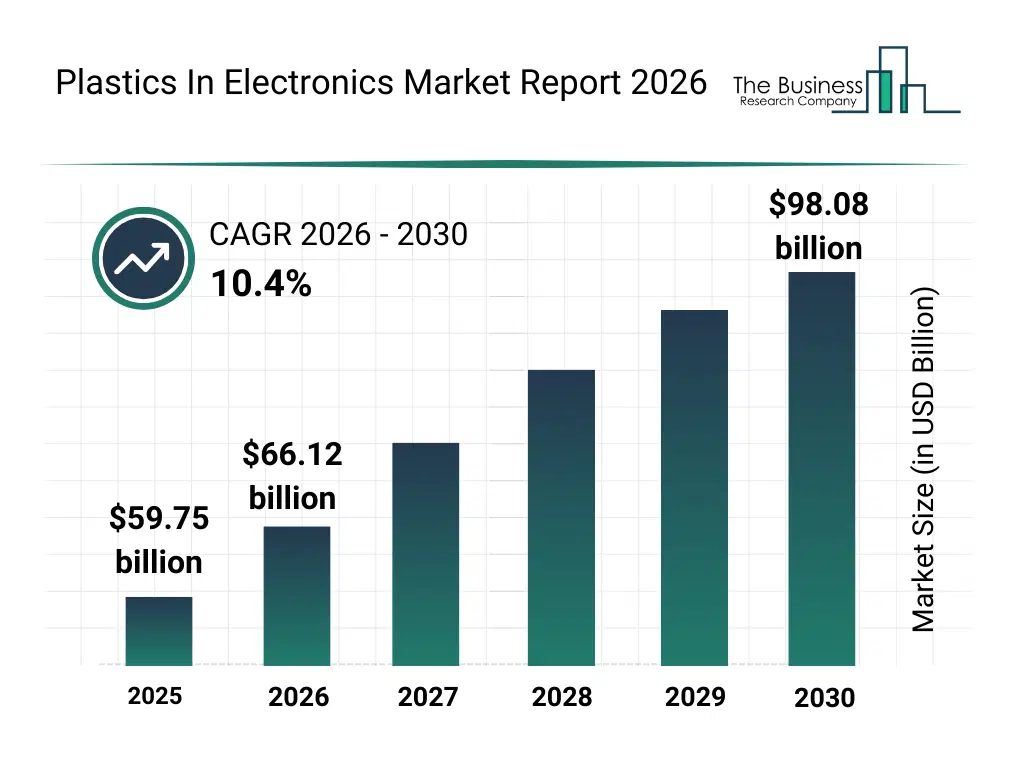
What Is The Plastics In Electronics Market Size 2026 And Growth Rate?
The plastics in electronics market size has grown rapidly in recent years. It will grow from $59.75 billion in 2025 to $66.12 billion in 2026 at a compound annual growth rate (CAGR) of 10.6%. The growth in the historic period can be attributed to rising consumer electronics demand, adoption of plastic casings in automotive electronics, need for electrical insulation in devices, growth of industrial electronics, cost advantages of plastics over metals.What Is The Plastics In Electronics Market Growth Forecast?
The plastics in electronics market size is expected to see rapid growth in the next few years. It will grow to $98.08 billion in 2030 at a compound annual growth rate (CAGR) of 10.4%. The growth in the forecast period can be attributed to increasing demand for sustainable materials, growth in electric vehicles and transportation electrification, advancement in high-performance polymers, miniaturization of electronic devices, integration of plastics in flexible and wearable electronics. Major trends in the forecast period include advanced polymer insulation, high-performance plastic casings, flexible circuit materials, thermal management plastics, eco-friendly electronics plastics.
Global Plastics In Electronics Market Segmentation
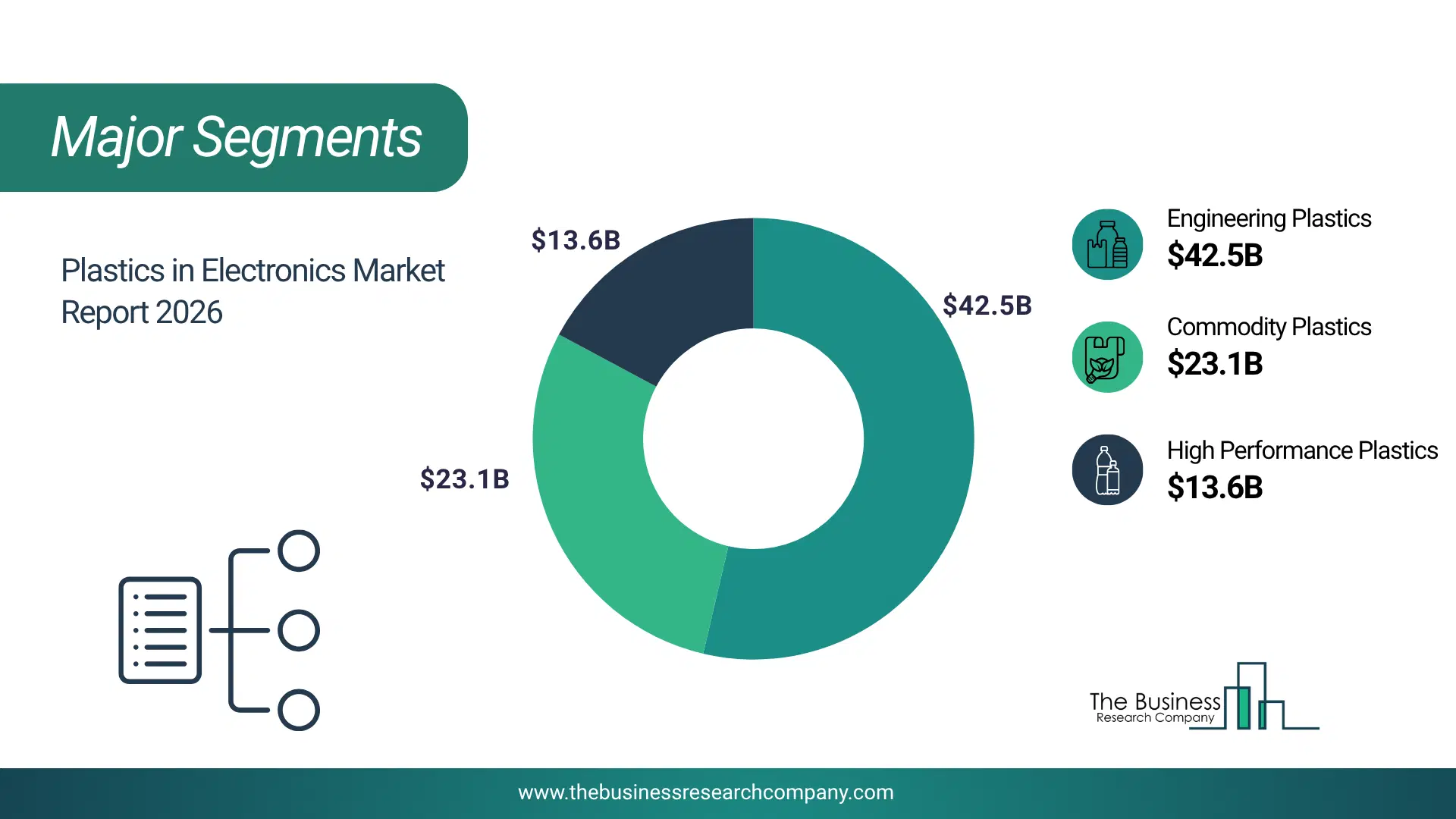
1) By Product Type: Thermoplastics, Thermosets, Engineering Plastics, Conductive Plastics, Other Product Types 2) By Application: Consumer Electronics, Automotive Electronics, Industrial Electronics, Medical Devices, Other Applications 3) By End-Use Industry: Consumer Goods, Automotive, Healthcare, Industrial, Other End-Use Industries Subsegments: 1) By Thermoplastics: Polycarbonate (PC), Polyethylene (PE), Polypropylene (PP), Polystyrene (PS), Acrylonitrile Butadiene Styrene (ABS), Polyamide (PA), Polyethylene Terephthalate (PET) 2) By Thermosets: Epoxy Resin, Phenolic Resin, Melamine Formaldehyde (MF), Urea Formaldehyde (UF), Polyurethane (PU) 3) By Engineering Plastics: Polyoxymethylene (POM), Polyetheretherketone (PEEK), Polyphenylene Sulfide (PPS), Polyamide-Imide (PAI), Polybutylene Terephthalate (PBT) 4) By Conductive Plastics: Carbon-Filled Plastics, Metal-Filled Plastics, Polymer Composites, Graphene-Based Plastics 5) By Other Product Types: Liquid Crystal Polymers (LCP), Silicones, Thermoplastic Elastomers (TPE), Acrylics The top segments in the plastics in electronics market will be: • Thermoplastics will reach $41612.7 Million by 2025. • Consumer Electronics will reach $19225 Million by 2025. • Thermosets will reach $18141.6 Million by 2025. • Automotive Electronics will reach $17119.5 Million by 2025. • Other Applications will reach $9257.2 Million by 2025.What Is The Driver Of The Plastics In Electronics Market?
The increasing adoption of electric vehicles (EVs) is expected to propel the growth of the plastics in electronics market going forward. Electric vehicles (EVs) refer to vehicles that are powered wholly or partially by electric motors using energy stored in batteries, rather than relying solely on internal combustion engines. The adoption of electric vehicles (EVs) is rising primarily due to increasing environmental concerns and government incentives promoting low-emission transportation. Plastics in electric vehicles (EVs) are used for lightweight structural components, battery casings, insulation, connectors, and interior parts to improve efficiency, safety, and overall vehicle performance. For instance, in 2023, according to the International Energy Agency (IEA), a France-based intergovernmental organization, approximately 14 million new electric vehicles (EVs) were registered globally, elevating the total EV stock on roads to 40 million units. This represents a year-over-year increase of 3.5 million vehicles, or 35% growth, with electric cars capturing roughly 18% of total global car sales, up from 14% in 2022. Therefore, the increasing adoption of electric vehicles (EVs) is driving the growth of the plastics in electronics industry.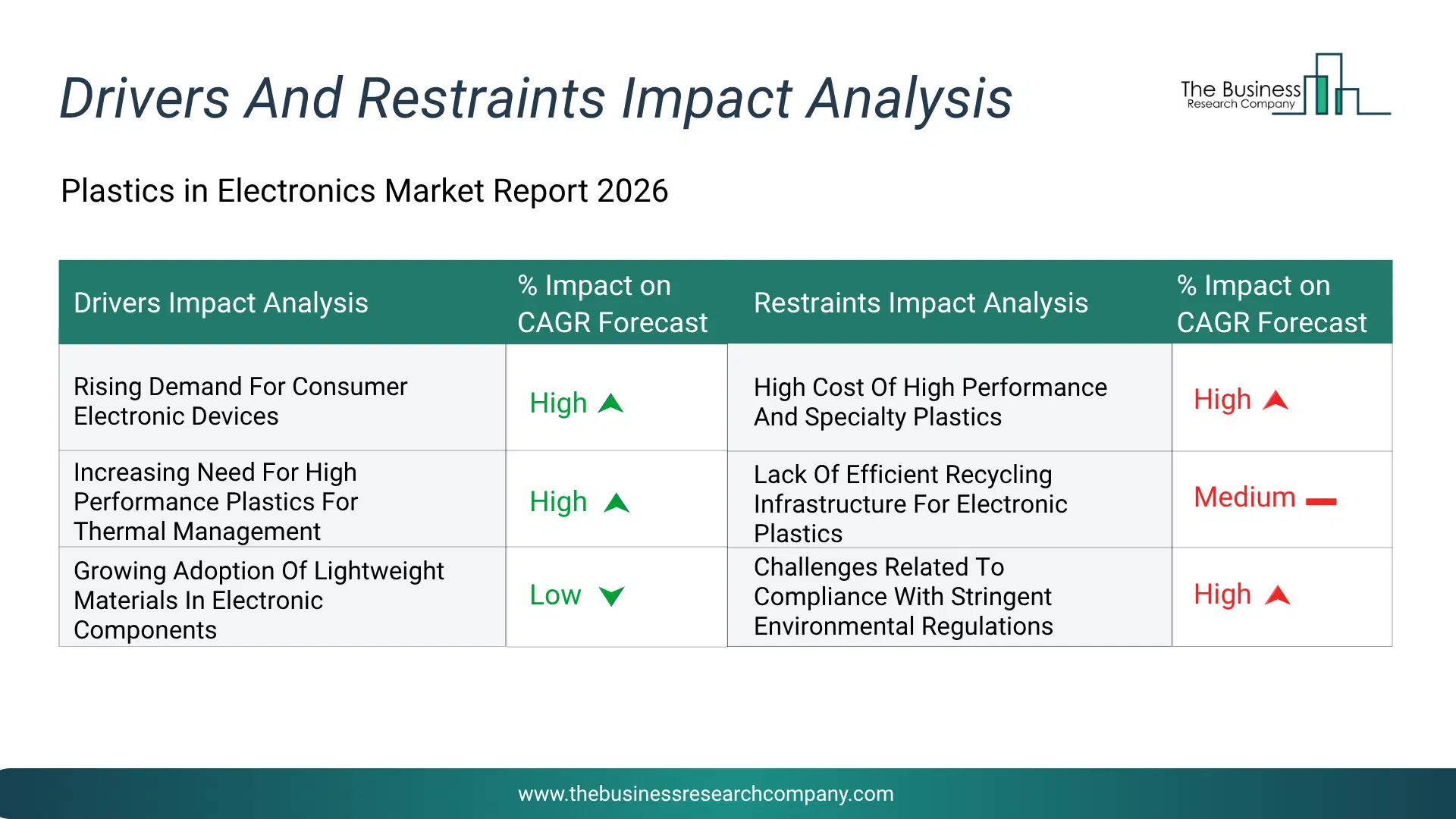
Infographic Chart Showing Key Market Drivers Analysis And Restraints For Plastics In Electronics Market
The chart presents an impact analysis of key drivers and restraints, quantifying their relative influence on the market's growth rate and helping assess the balance between growth enablers and limiting factors. This chart offers a high-level perspective; the full report contains more detailed insights.
How Will The Drivers Impact Growth In The Global Plastics In Electronics Market?
• Increasing Adoption Of Smart Homes, IoT Devices, And Connected Devices (Medium) – The increasing adoption of smart homes, IoT devices, and connected devices will become a key driver of growth in the plastics in electronics market by 2030. As connected devices such as smart thermostats, wearables, security systems, and voice assistants proliferate, manufacturers are under pressure to produce compact, energy-efficient, and aesthetically appealing products at scale. Advanced engineering plastics, such as polycarbonate, ABS, and high-performance thermoplastics offer critical advantages including electrical insulation, heat resistance, impact strength, and ease of mass production through injection molding. Additionally, the integration of sensors, wireless modules, and embedded systems requires materials that can accommodate complex geometries while maintaining structural integrity and signal transparency. As a result, the increasing adoption of smart homes, IoT devices, and connected devices is anticipated to contributing to a 1.3% annual growth in the market. • Increasing Demand For Flame-Retardant And Heat-Resistant Plastics (Medium) – The increasing demand for flame-retardant and heat-resistant plastics will emerge as a major factor driving the expansion of the plastics in electronics market by 2030. Modern electronic devices ranging from smartphones and laptops to power electronics and EV components generate substantial heat due to compact designs and increased functionality, necessitating materials that can withstand elevated temperatures without degrading performance or posing fire risks. Flame-retardant polymers, such as modified polycarbonate, polyamides, and specialty thermoplastics, help manufacturers comply with stringent fire safety regulations and certifications, thereby reducing liability and enhancing product reliability. Additionally, as electronics become more integrated into critical applications such as smart infrastructure and industrial systems, the need for materials that ensure long-term thermal stability and prevent ignition hazards becomes even more pronounced. Consequently, the increasing demand for flame-retardant and heat-resistant plastics is projected to contributing to a 1.0% annual growth in the market. • Lightweight Material Preference In Electronics Manufacturing (Low) – The lightweight material preference in electronics manufacturing will serve as a key growth catalyst for the plastics in electronics market by 2030. With increasing consumer demand for slimmer laptops, smartphones, and portable devices, reducing product weight has become a critical design objective, directly influencing user experience and device mobility. Engineering plastics such as polycarbonate, ABS, and polypropylene offer a high strength-to-weight ratio, enabling manufacturers to replace heavier materials like metals without compromising durability or structural integrity. Additionally, lighter components contribute to improved energy efficiency, particularly in battery-powered devices, by reducing overall power consumption and enhancing device performance. From a manufacturing perspective, plastics support design flexibility, allowing for complex geometries and part integration, which reduces assembly requirements and lowers production costs. Therefore, this lightweight material preference in electronics manufacturing is projected to supporting to a 0.8% annual growth in the market. • Increasing Penetration Of Wearable Electronics And Compact Devices (Low) – The increasing penetration of wearable electronics and compact devices will become a significant driver contributing to the growth of the plastics in electronics market by 2030. Wearables such as fitness trackers, smartwatches, and wireless earbuds require compact, ergonomically designed enclosures that can withstand continuous use, exposure to sweat, and mechanical stress, while maintaining aesthetic appeal. Advanced engineering plastics, such as thermoplastic polyurethanes, polycarbonates, and ABS, enable manufacturers to achieve ultra-thin, complex form factors and integrate multiple functionalities without compromising structural integrity. Moreover, plastics support efficient mass production through injection molding, allowing for cost-effective scalability in a fast-growing consumer segment. From a performance standpoint, these materials provide essential characteristics such as impact resistance, chemical stability, and electrical insulation, which are critical for ensuring product longevity and user safety. Consequently, the increasing penetration of wearable electronics and compact devices is projected to contributing to a 0.5% annual growth in the market.How Will The Restraints Impact Growth In The Global Plastics In Electronics Market?
• Growing E-Waste Management Challenges (Medium) – Growing e-waste management challenges is expected to restrain market growth during the forecast period. It creates operational, financial, regulatory, or commercial challenges that can increase costs, delay projects, reduce investments, or discourage purchasing decisions depending on the market. These challenges can reduce product adoption, affect business confidence, and limit the ability of companies to expand efficiently across key regions. This can disrupt long-term growth strategies and reduce the ability of companies to capitalize on emerging market opportunities. • Rising Costs Of Recycled And Bio-Based Plastics (Medium) – During the forecast period, rising costs of recycled and bio-based plastics is likely to limit market expansion. It creates operational, financial, regulatory, or commercial challenges that can increase costs, delay projects, reduce investments, or discourage purchasing decisions depending on the market. These challenges can reduce product adoption, affect business confidence, and limit the ability of companies to expand efficiently across key regions. As a result, organizations may postpone purchasing decisions, limiting demand across both established and emerging markets. • Impact Of Trade War And Tariff (Low) – The market is expected to face challenges due to impact of trade war and tariff over the forecast period. It creates operational, financial, regulatory, or commercial challenges that can increase costs, delay projects, reduce investments, or discourage purchasing decisions depending on the market. These challenges can reduce product adoption, affect business confidence, and limit the ability of companies to expand efficiently across key regions. This may reduce production efficiency, extend project timelines, and create challenges in meeting evolving customer requirements.Key Players In The Global Plastics In Electronics Market
Major companies operating in the plastics in electronics market are Sinopec Group, BASF SE, Dow Inc., LG Chem, LyondellBasell Industries N.V., SABIC, Mitsubishi Chemical Corporation, Asahi Kasei Corporation, Sumitomo Chemical Co., Ltd., Toray Industries, Inc., Covestro AG, DuPont de Nemours, Inc., Celanese Corporation, Eastman Chemical Company, Teijin Limited, Formosa Plastics Corporation, PolyOne Corporation (now Avient Corporation), INEOS Group, Evonik Industries AG, Chi Mei Corporation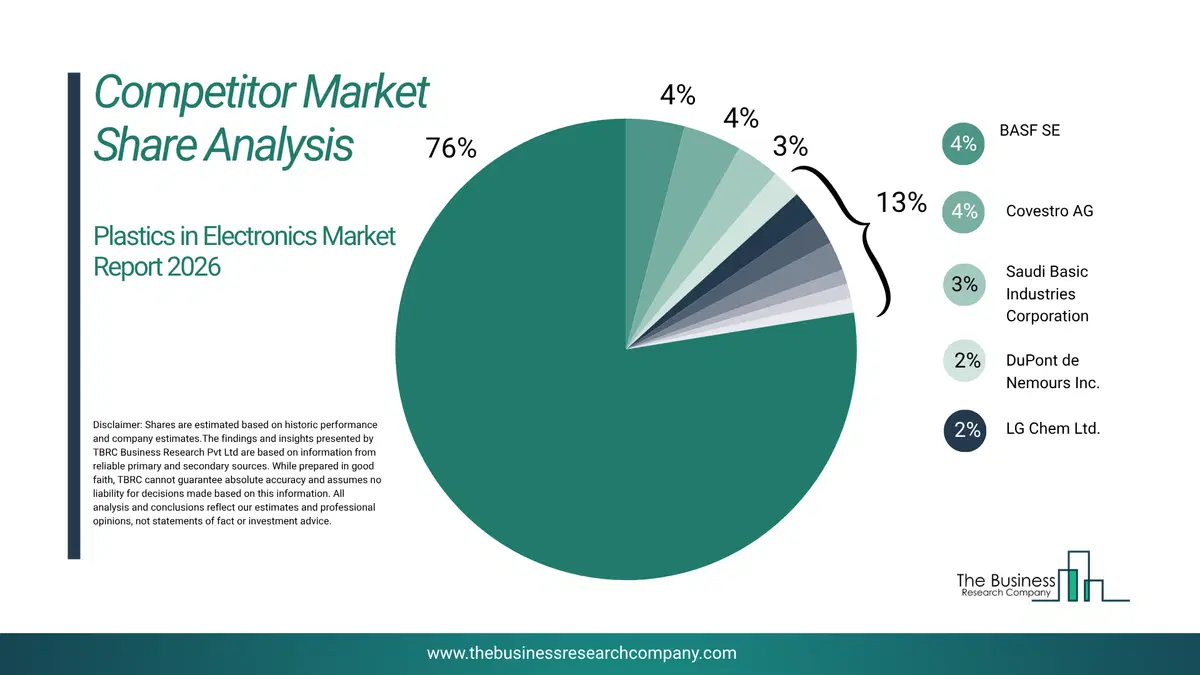
This chart is for illustrative purposes; the full report includes a detailed competitor analysis and comprehensive overview of the top 10 companies in the market.
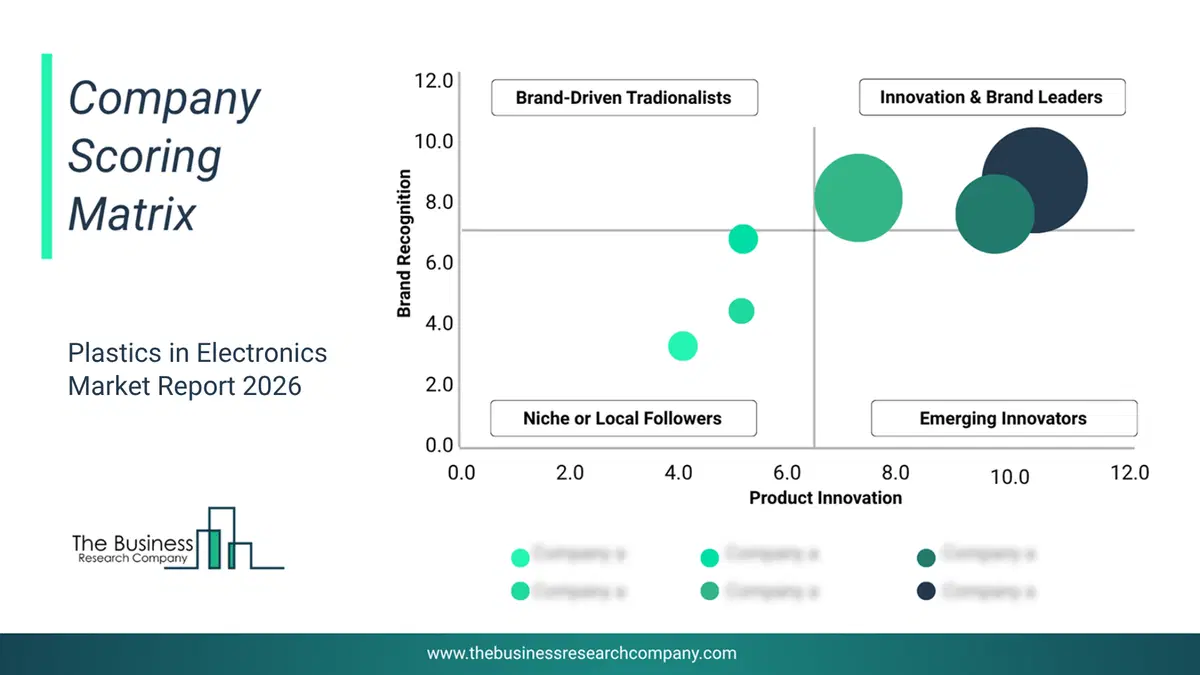
This chart maps companies by product innovation and brand strength, with bubble size indicating relative revenue, helping identify market leaders, challengers, and niche players. This is an illustrative chart; the full report provides a complete and accurate competitive analysis.
Global Plastics In Electronics Market Trends and Insights
Major companies operating in the plastics in electronics market are increasingly focusing on innovations in polymer technology, including the development of bio-based and high-performance plastics, to enhance sustainability and reduce reliance on fossil fuels. Bio-based plastics, derived wholly or partially from renewable sources such as plants or cellulose, provide an environmentally friendly alternative without compromising structural integrity, thermal stability, or electrical insulation. For instance, in March 2024, Skullcandy Inc., a US-based lifestyle audio brand, introduced its EcoBuds True Wireless Earbuds, integrating 65% certified recycled plastics and achieving a 50% lower carbon footprint compared to conventional designs. This illustrates how electronics manufacturers are adopting advanced polymers to balance performance, durability, and sustainability. Such innovations in polymer engineering are expected to drive broader adoption of plastics in electronics, particularly in consumer devices, automotive electronics, and other high-performance applications.What Are Latest Mergers And Acquisitions In The Plastics In Electronics Market?
In July 2025, KDI Precision Manufacturing, a US-based manufacturing company, acquired Envision Plastics and Design, LLC for an undisclosed amount. With this acquisition, KDI Precision Manufacturing aims to expand its plastics manufacturing capabilities and broaden its customer base by integrating advanced plastic enclosure solutions for electronics. Envision Plastics and Design, LLC is a US-based manufacturing company that specializes in providing custom plastic enclosures and components for electronic and industrial applications.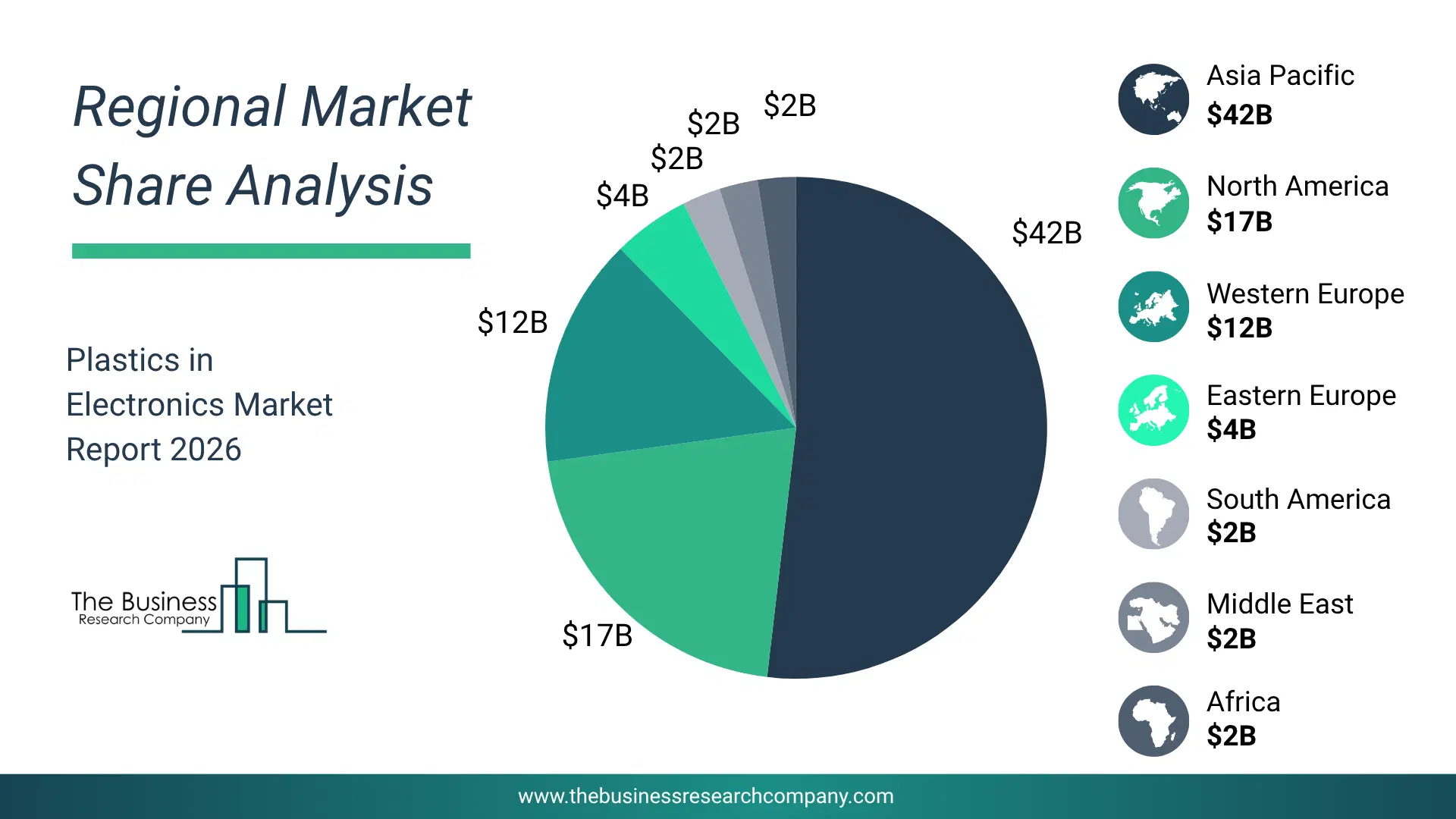
Regional Outlook
Asia-Pacific was the largest region in the plastics in electronics market in 2025. The regions covered in this market report are Asia-Pacific, South East Asia, Western Europe, Eastern Europe, North America, South America, Middle East, Africa. The countries covered in this market report are Australia, Brazil, China, France, Germany, India, Indonesia, Japan, Taiwan, Russia, South Korea, UK, USA, Canada, Italy, Spain.What Defines the Plastics In Electronics Market?
The plastics in electronics market consists of sales of polymer composites, flame-retardant materials, high-performance insulation materials, flexible printed circuit substrates, and encapsulation resins. Values in this market are ‘factory gate’ values, that is, the value of goods sold by the manufacturers or creators of the goods, whether to other entities (including downstream manufacturers, wholesalers, distributors, and retailers) or directly to end customers. The value of goods in this market includes related services sold by the creators of the goods.How is Market Value Defined and Measured?
The market value is defined as the revenues that enterprises gain from the sale of goods and/or services within the specified market and geography through sales, grants, or donations in terms of the currency (in USD unless otherwise specified). The revenues for a specified geography are consumption values that are revenues generated by organizations in the specified geography within the market, irrespective of where they are produced. It does not include revenues from resales along the supply chain, either further along the supply chain or as part of other products.
This chart presents market attractiveness based on a quantitative evaluation of growth, competition, strategic alignment, and risk, offering a clear view of opportunity areas for decision-making. This chart is for illustrative purposes; the full report contains the complete analysis.

This chart highlights the Total Addressable Market (TAM) by estimating the maximum revenue opportunity using an assumption-driven approach, supporting strategic planning and opportunity sizing across markets. The chart is illustrative; the full report provides a more comprehensive analysis.
What Key Data and Analysis Are Included in the Plastics In Electronics Market Report 2026?
The plastics in electronics market research report is one of a series of new reports from The Business Research Company that provides market statistics, including industry global market size, regional shares, competitors with the market share, detailed market segments, market trends and opportunities, and any further data you may need to thrive in the plastics in electronics industry. The market research report delivers a complete perspective of everything you need, with an in-depth analysis of the current and future state of the industry.Plastics In Electronics Market Report 2026 Market Report Forecast Analysis
| Report Attribute | Details |
|---|---|
| Market Size Value In 2026 | $66.12 billion |
| Revenue Forecast In 2035 | $98.08 billion |
| Growth Rate | CAGR of 10.6% from 2026 to 2035 |
| Base Year For Estimation | 2025 |
| Actual Estimates/Historical Data | 2020-2025 |
| Forecast Period | 2026 - 2030 - 2035 |
| Market Representation | Revenue in USD Billion and CAGR from 2026 to 2035 |
| Segments Covered | Product Type, Application, End-Use Industry |
| Regional Scope | Asia-Pacific, Western Europe, Eastern Europe, North America, South America, Middle East, Africa |
| Country Scope | The countries covered in the report are Australia, Brazil, China, France, Germany, India, ... |
| Key Companies Profiled | Sinopec Group, BASF SE, Dow Inc., LG Chem, LyondellBasell Industries N.V., SABIC, Mitsubishi Chemical Corporation, Asahi Kasei Corporation, Sumitomo Chemical Co., Ltd., Toray Industries, Inc., Covestro AG, DuPont de Nemours, Inc., Celanese Corporation, Eastman Chemical Company, Teijin Limited, Formosa Plastics Corporation, PolyOne Corporation (now Avient Corporation), INEOS Group, Evonik Industries AG, Chi Mei Corporation |
| Customization Scope | Request for Customization |
| Pricing And Purchase Options | Explore Purchase Options |