
Polycarbonate Market Report 2026
Global Outlook – By Type (Foil, Strips, Sheets, Film, Plates, Tubes, Other Types), By Processing Technology (Injection Molding, Extrusion), By Grade (General Purpose Grade, Flame Retardant Grade, PC Alloyed Grade, Medical Grade, Food Grade, Other Grades), By Application (Transportation, Electrical And Electronics, Construction, Packaging, Consumer Goods, Optical Media, Medical Devices, Other Applications) – Market Size, Trends, Strategies, and Forecast to 2030
Polycarbonate Market Overview
• Polycarbonate market size has reached to $24.08 billion in 2025 • Expected to grow to $31.61 billion in 2030 at a compound annual growth rate (CAGR) of 5.7% • Growth Driver: Growing Demand For Electric Vehicles Accelerates Polycarbonate Market Growth • Market Trend: Essentium Inc. Sets New Standards With Essentium Altitude In Polycarbonate Market • Asia-Pacific was the largest region in 2025 and Asia-Pacific is the fastest growing region.Market Gains By 2030 – Top Opportunities By Segment
Market Gain identifies the most promising market opportunities by highlighting the segments or products expected to generate the highest incremental revenue growth over the next five years.
What Is Covered Under Polycarbonate Market?
Polycarbonate is a transparent thermoplastic polymer with carbonate functional groups. It is known for its exceptional strength and impact resistance. It is derived from bisphenol A (BPA) and phosgene and is a lightweight and durable alternative to glass due to its high clarity and shatter-resistant properties. The main types of polycarbonate are foil, strips, sheets, film, plates, tubes, fibers, and others. The general-purpose grade of polycarbonate is a standard formulation that offers a balance of properties and provides good impact resistance, transparency, and dimensional stability, making it versatile for various industries. The several types of processing technology involved are injection molding and extrusion. Several types of grades are involved, such as general purpose grade, flame retardant grade, PC alloyed grade, medical grade, food grade, and others, which are used in various applications, including transportation, electrical and electronics, construction, packaging, consumer goods, optical media, medical devices, and others.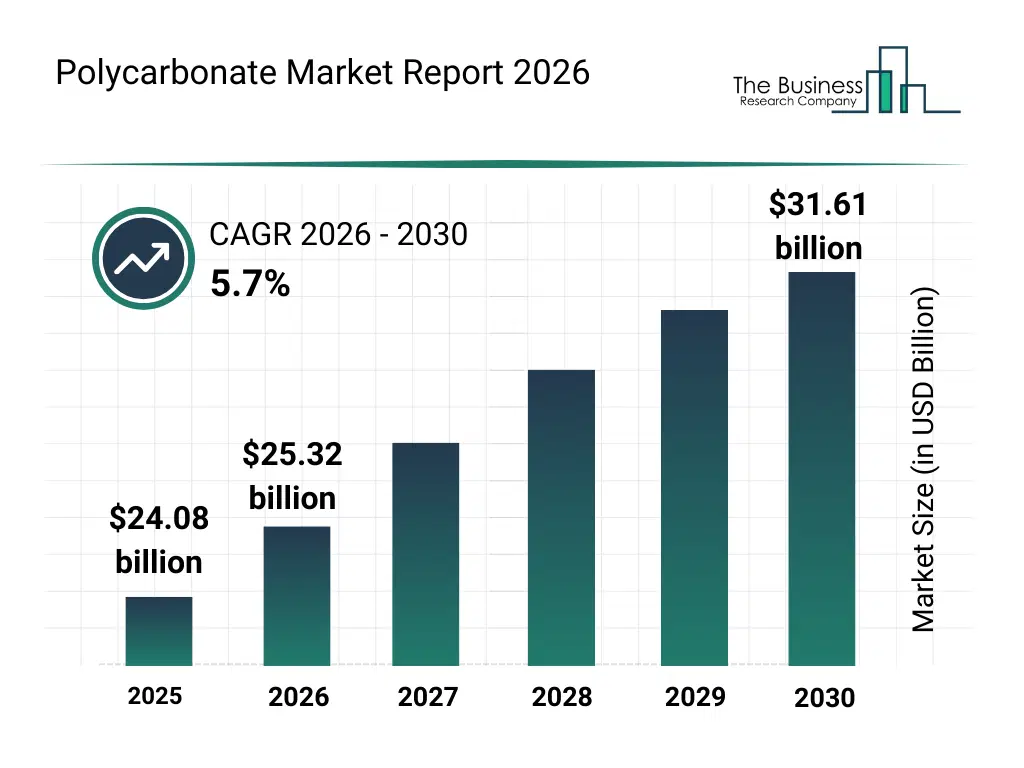
What Is The Polycarbonate Market Size and Share 2026?
The polycarbonate market size has grown strongly in recent years. It will grow from $24.08 billion in 2025 to $25.32 billion in 2026 at a compound annual growth rate (CAGR) of 5.1%. The growth in the historic period can be attributed to growth of construction and infrastructure projects, rising demand for durable plastic materials, expansion of electronics manufacturing, increasing use of polycarbonate in glazing applications, availability of injection molding technologies.What Is The Polycarbonate Market Growth Forecast?
The polycarbonate market size is expected to see strong growth in the next few years. It will grow to $31.61 billion in 2030 at a compound annual growth rate (CAGR) of 5.7%. The growth in the forecast period can be attributed to increasing adoption of electric vehicles, rising demand for sustainable building materials, expansion of high-performance plastic applications, growing focus on circular plastics economy, increasing investments in advanced polymer processing. Major trends in the forecast period include increasing use of lightweight and impact-resistant materials, rising adoption in automotive and transportation applications, growing demand for transparent engineering plastics, expansion of flame-retardant polycarbonate grades, enhanced focus on recyclable plastic solutions.
Global Polycarbonate Market Segmentation
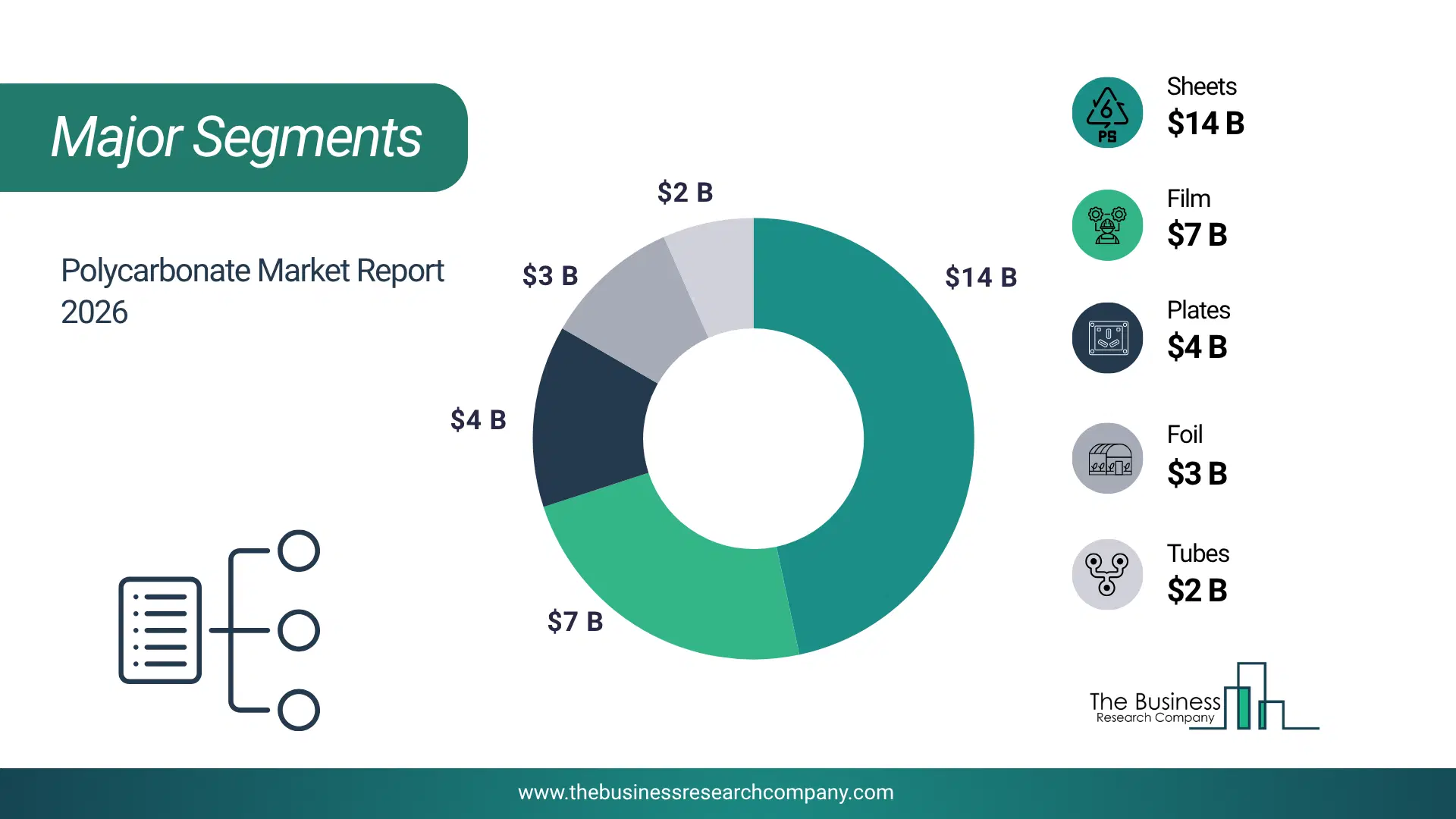
1) By Type: Foil, Strips, Sheets, Film, Plates, Tubes, Other Types 2) By Processing Technology: Injection Molding, Extrusion 3) By Grade: General Purpose Grade, Flame Retardant Grade, PC Alloyed Grade, Medical Grade, Food Grade, Other Grades 4) By Application: Transportation, Electrical And Electronics, Construction, Packaging, Consumer Goods, Optical Media, Medical Devices, Other Applications Subsegments: 1) By Foil: Transparent Polycarbonate Foil, Opaque Polycarbonate Foil 2) By Strips: UV-Resistant Strips, High-Impact Strips 3) By Sheets: Multiwall Sheets, Solid Sheets, Corrugated Sheets 4) By Film: Optical Grade Film, Electrical Grade Film, Flame-Retardant Film 5) By Plates: Extruded Plates, Cast Plates 6) By Tubes: Hollow Tubes, Solid Tubes 7) By Other Types: Polycarbonate Blends, Custom Polycarbonate Shapes The top segments in the polycarbonate market will be: • Sheets will reach $13.96 Billion by 2030. • Film will reach $6.55 Billion by 2030. • Plates will reach $3.77 Billion by 2030. • Foil will reach $2.62 Billion by 2030. • Tubes will reach $2 Billion by 2030.What Is The Driver Of The Polycarbonate Market?
The rising demand for electric vehicles is expected to boost the growth of the polycarbonate market going forward. An electric vehicle (EV) is powered by one or more electric motors using electrical energy stored in rechargeable batteries or another energy storage device. Polycarbonate is commonly used in electric vehicles due to its lightweight, high-impact resistance, and optical clarity, providing enhanced safety, improved energy efficiency, and design flexibility. For instance, in April 2024, according to International Energy Agency, a France-based autonomous intergovernmental organisation, in 2023, global electric car registrations surged to nearly 14 million, marking a 35% increase from 2022 and bringing the total electric vehicles on the road to 40 million, a significant rise from just 5% market penetration five years earlier. Therefore, rising demand for electric vehicles is driving the growth of the polycarbonate industry.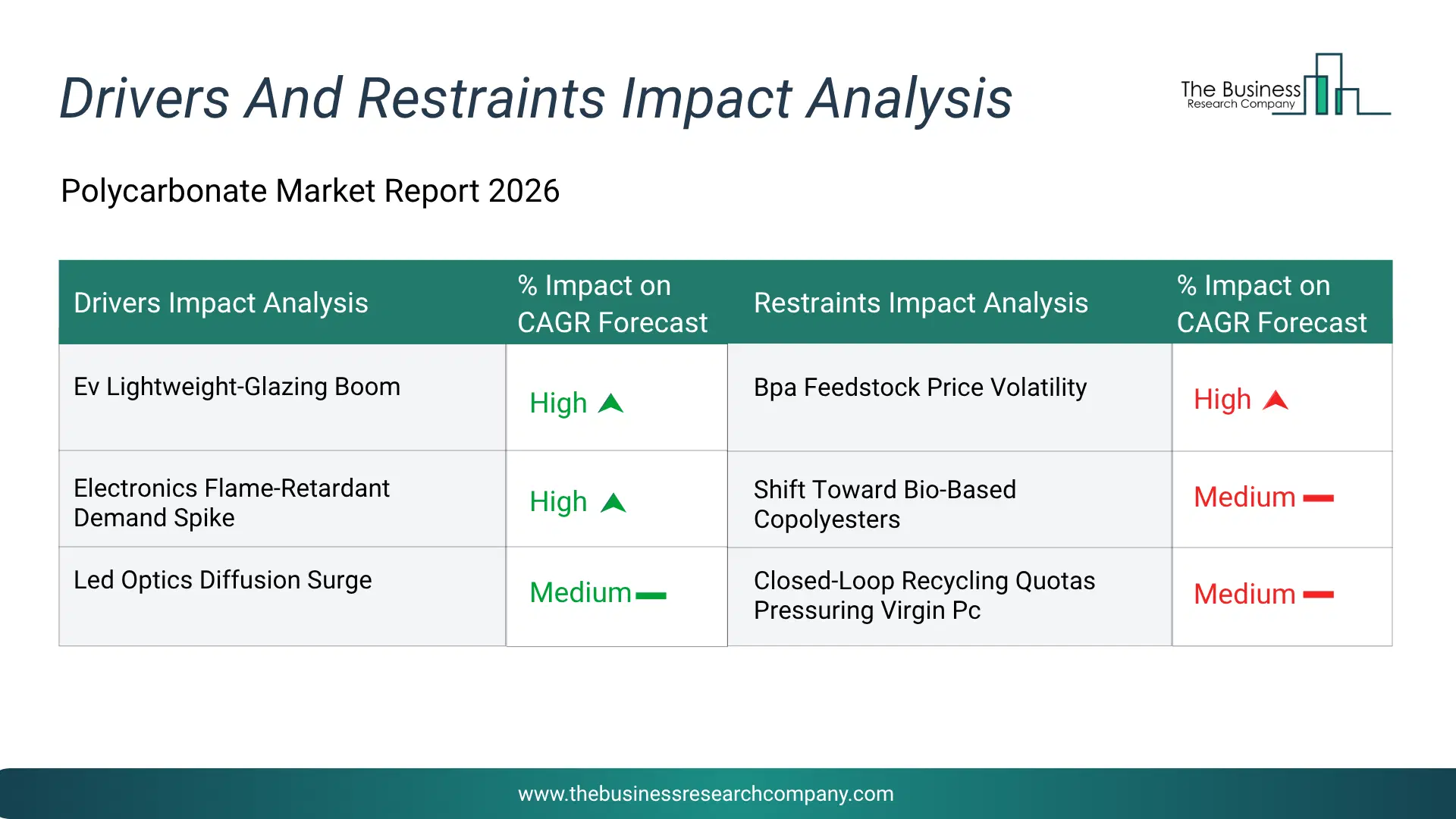
Infographic Chart Showing Key Market Drivers Analysis And Restraints For Polycarbonate Market
The chart presents an impact analysis of key drivers and restraints, quantifying their relative influence on the market's growth rate and helping assess the balance between growth enablers and limiting factors. This chart offers a high-level perspective; the full report contains more detailed insights.
How Will The Drivers Impact Growth In The Global Polycarbonate Market?
• Ev Lightweight-Glazing Boom (High) – During the forecast period, the EV lightweight-glazing boom is expected to become a key growth driver for the polycarbonate market by 2030. Electric vehicle manufacturers are increasingly replacing conventional glass with polycarbonate glazing materials to reduce vehicle weight and improve battery efficiency. Polycarbonate offers excellent impact resistance, optical clarity, and design flexibility, making it suitable for panoramic roofs, side windows, and rear glazing applications. The material also supports complex shapes and advanced styling requirements that align with modern EV designs. This growing preference for lightweight glazing solutions is strengthening demand across the automotive sector. • Electronics Flame-Retardant Demand Spike (High) – During the forecast period, the electronics flame-retardant demand spike is expected to emerge as a major factor driving the expansion of the polycarbonate market by 2030. Increasing production of consumer electronics, communication devices, and electrical equipment is creating strong demand for flame-retardant polycarbonate grades that meet stringent safety requirements. Manufacturers are utilizing these materials in device housings, connectors, circuit protection components, and electrical enclosures due to their durability and thermal stability. Growing emphasis on product safety standards and miniaturized electronic designs is further accelerating adoption. • Led Optics Diffusion Surge (Medium) – During the forecast period, the LED optics diffusion surge is expected to act as a key growth catalyst for the polycarbonate market by 2030. The expanding deployment of LED lighting systems in residential, commercial, industrial, and automotive applications is increasing demand for polycarbonate optical components. The material provides high light transmission, dimensional stability, and excellent molding capabilities required for lenses, diffusers, and lighting covers. Manufacturers are also leveraging polycarbonate to improve energy efficiency and lighting performance in next-generation illumination systems. As LED adoption continues to expand globally, consumption of optical-grade polycarbonate is expected to increase steadily.How Will The Restraints Impact Growth In The Global Polycarbonate Market?
• Bpa Feedstock Price Volatility (High) – During the forecast period, the market faces significant challenges due to fluctuations in the price of bisphenol a (bpa), a key raw material used in polycarbonate production. These price variations are often influenced by changes in crude oil prices, supply chain disruptions, and geopolitical factors. Manufacturers struggle to maintain stable production costs, which directly impacts profit margins. Sudden increases in bpa prices can lead to higher product costs, reducing competitiveness in price-sensitive markets. Additionally, long-term contracts become difficult to manage due to unpredictable cost structures. This volatility creates uncertainty for both producers and end-users. Companies may delay investments or expansion plans due to unstable raw material pricing. As a result, bpa feedstock price volatility acts as a major restraint on market growth. • Shift Toward Bio-Based Copolyesters (High) – During the forecast period, the increasing focus on sustainability is driving a shift toward bio-based copolyesters as alternatives to traditional polycarbonate materials. These eco-friendly materials offer advantages such as reduced environmental impact and improved recyclability. Governments and organizations are promoting greener alternatives through regulations and incentives. As consumers become more environmentally conscious, demand for sustainable materials continues to rise. Bio-based copolyesters are gaining traction in applications where environmental performance is prioritized. This shift reduces the reliance on polycarbonate in certain segments. Manufacturers are also investing in alternative materials to meet sustainability goals. Consequently, the transition toward bio-based copolyesters acts as a restraint on the market. • Closed-Loop Recycling Quotas Pressuring Virgin Pc (Medium) – During the forecast period, the increasing regulatory pressure to adopt circular economy practices is impacting the demand for virgin polycarbonate (pc). Governments are implementing strict recycling quotas that encourage the use of recycled materials over newly produced plastics. This reduces the need for virgin polycarbonate in various applications. Companies are required to integrate recycled content into their products, which shifts demand away from traditional production. Compliance with these regulations can be costly and operationally challenging. Additionally, advancements in recycling technologies are making recycled materials more viable and competitive. This transition affects the overall demand dynamics in the market. Therefore, closed-loop recycling quotas act as a significant restraint on virgin pc demand.Key Players In The Global Polycarbonate Market
Major companies operating in the polycarbonate market are Covestro AG, SABIC, Teijin Limited, Mitsubishi Chemical Group, LG Chem, Chi Mei Corporation, Idemitsu Kosan, Trinseo, Formosa Chemicals, Asahi Kasei, Lotte Chemical, Samyang Corporation, Toray Industries, Kaneka Corporation, Saudi Kayan, INEOS Styrolution, RTP Company, Sumitomo Chemical, Wanhua Chemical Group, Sinopec Group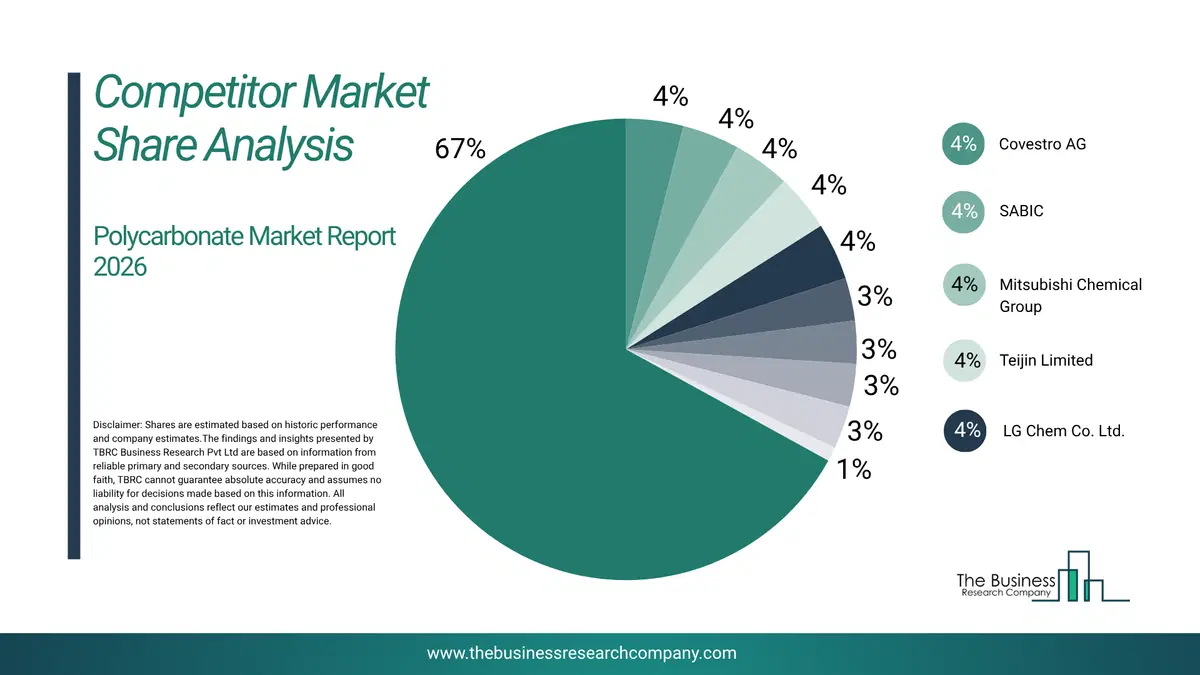
This chart is for illustrative purposes; the full report includes a detailed competitor analysis and comprehensive overview of the top 10 companies in the market.
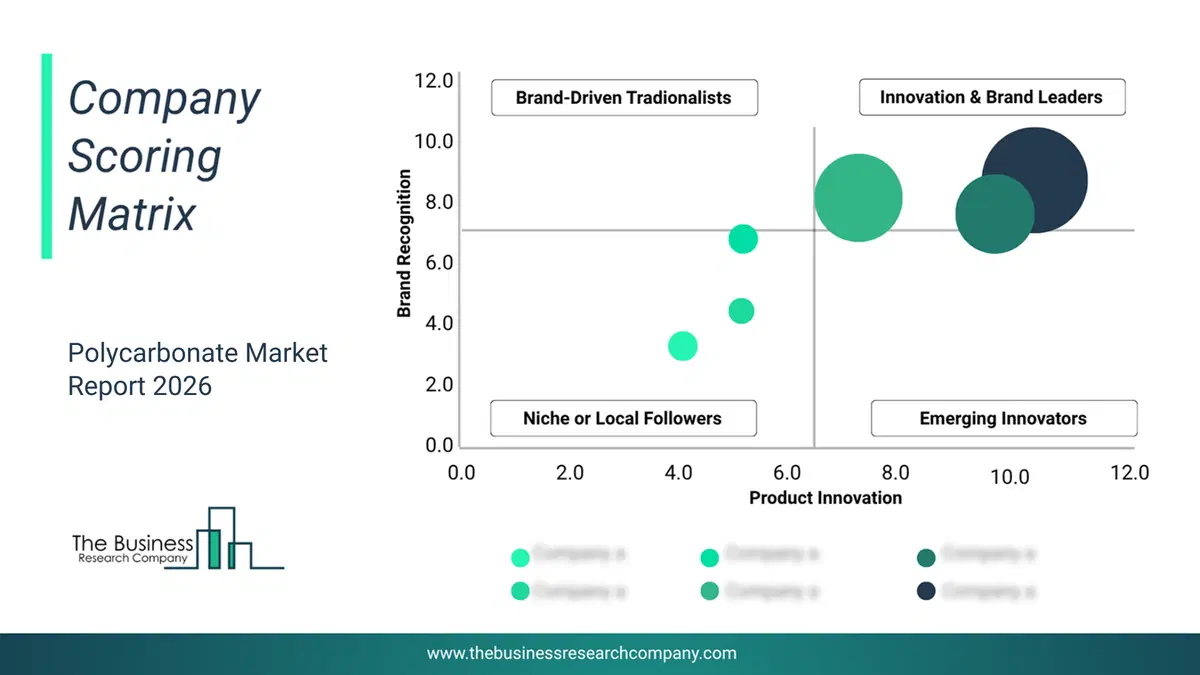
This chart maps companies by product innovation and brand strength, with bubble size indicating relative revenue, helping identify market leaders, challengers, and niche players. This is an illustrative chart; the full report provides a complete and accurate competitive analysis.
Global Polycarbonate Market Trends and Insights
Major companies operating in the polycarbonate market are focusing on developing innovative products such as high-performance polycarbonate materials designed to withstand extreme cold temperatures for advanced applications. High-performance polycarbonate materials designed to withstand extreme cold temperatures are engineered to resist freezing conditions, UV exposure, and fire, enabling manufacturers to produce durable parts efficiently while reducing waste and simplifying the supply chain. For instance, in May 2023, Essentium Inc., a US-based chemical manufacturing company, launched Essentium Altitude, the first polycarbonate material to withstand extreme cold temperatures. Up to -60°C. Because of this, business players have a unique opportunity to quickly make parts that can resist freezing temperatures when needed, saving money, cutting waste, and simplifying the supply chain at the pace of relevance. It is the most recent innovative material that greatly increases the use of 3D printing for outdoor and high-altitude applications. Essentium Altitude, designed to survive extreme cold, UV rays, and fires, establishes a new benchmark for high-performance components in the aerospace, automotive, cold storage, maintenance, and construction sectors.What Are Latest Mergers And Acquisitions In The Polycarbonate Market?
In June 2023, ROHM Co., Ltd., a Germany-based manufacturer of PMMA products, acquired the Functional Forms business unit from Saudi Basic Industries Corporation (SABIC) for an undisclosed amount. With this acquisition, ROHM aims to become a global leader in high-quality transparent films and sheets, consolidating its market position in the polycarbonate sector and enhancing its product offerings, allowing for improved technical expertise and a broader customer base in fast-growing markets such as automotive and construction. Saudi Basic Industries Corporation (SABIC) is a Saudi Arabia-based chemical manufacturing company engaged in the development of polycarbonate sheets and films.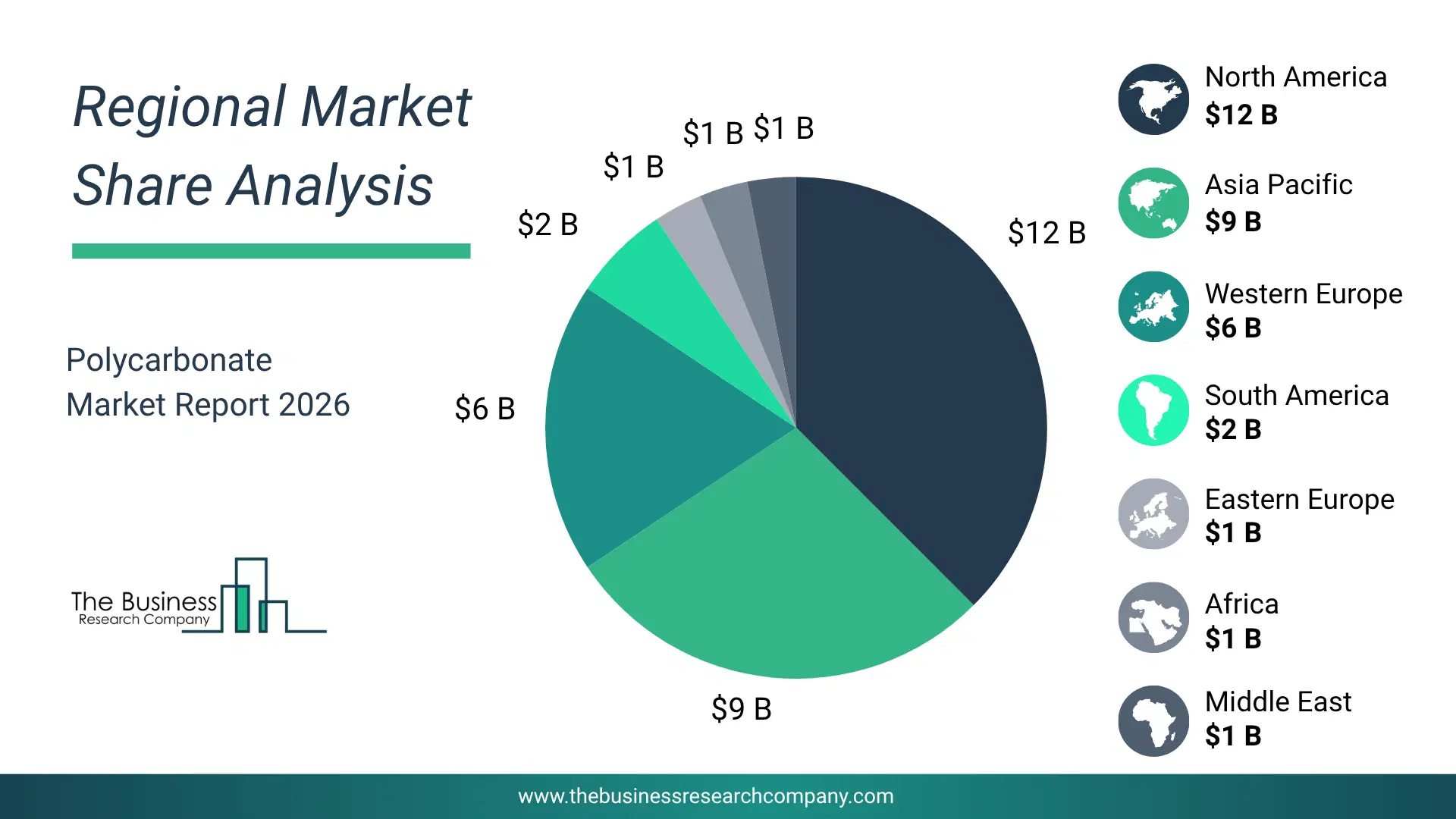
Regional Insights
Asia-Pacific was the largest region in the polycarbonate market in 2025. North America is expected to be the fastest-growing region in the forecast period. The regions covered in this market report are Asia-Pacific, South East Asia, Western Europe, Eastern Europe, North America, South America, Middle East, Africa The countries covered in this market report are Australia, Brazil, China, France, Germany, India, Indonesia, Japan, Taiwan, Russia, South Korea, UK, USA, Canada, Italy, SpainWhat Defines the Polycarbonate Market?
The polycarbonate market consists of sales of clear polycarbonate, abrasion-resistant polycarbonate, mirrored polycarbonate, anti-static polycarbonate, and more. Values in this market are ‘factory gate’ values, that is the value of goods sold by the manufacturers or creators of the goods, whether to other entities (including downstream manufacturers, wholesalers, distributors and retailers) or directly to end customers. The value of goods in this market includes related services sold by the creators of the goods.How is Market Value Defined and Measured?
The market value is defined as the revenues that enterprises gain from the sale of goods and/or services within the specified market and geography through sales, grants, or donations in terms of the currency (in USD unless otherwise specified). The revenues for a specified geography are consumption values that are revenues generated by organizations in the specified geography within the market, irrespective of where they are produced. It does not include revenues from resales along the supply chain, either further along the supply chain or as part of other products.
This chart presents market attractiveness based on a quantitative evaluation of growth, competition, strategic alignment, and risk, offering a clear view of opportunity areas for decision-making. This chart is for illustrative purposes; the full report contains the complete analysis.

This chart highlights the Total Addressable Market (TAM) by estimating the maximum revenue opportunity using an assumption-driven approach, supporting strategic planning and opportunity sizing across markets. The chart is illustrative; the full report provides a more comprehensive analysis.
What Key Data and Analysis Are Included in the Polycarbonate Market Report 2026?
The polycarbonate market research report is one of a series of new reports from The Business Research Company that provides market statistics, including industry global market size, regional shares, competitors with the market share, detailed market segments, market trends and opportunities, and any further data you may need to thrive in the polycarbonate industry. The market research report delivers a complete perspective of everything you need, with an in-depth analysis of the current and future state of the industry.Polycarbonate Market Report Forecast Analysis
| Report Attribute | Details |
|---|---|
| Market Size Value In 2026 | $25.32 billion |
| Revenue Forecast In 2030 | $31.61 billion |
| Growth Rate | CAGR of 5.1% from 2026 to 2030 |
| Base Year For Estimation | 2025 |
| Actual Estimates/Historical Data | 2020-2025 |
| Forecast Period | 2026 - 2030 |
| Market Representation | Revenue in USD Billion and CAGR from 2026 to 2030 |
| Segments Covered | Type, Processing Technology, Grade, Application |
| Regional Scope | Asia-Pacific, Western Europe, Eastern Europe, North America, South America, Middle East, Africa |
| Country Scope | The countries covered in the report are Australia, Brazil, China, France, Germany, India, Indonesia, Japan, Taiwan, Russia, South Korea, UK, USA, Canada, Italy, Spain. |
| Key Companies Profiled | Covestro AG, SABIC, Teijin Limited, Mitsubishi Chemical Group, LG Chem, Chi Mei Corporation, Idemitsu Kosan, Trinseo, Formosa Chemicals, Asahi Kasei, Lotte Chemical, Samyang Corporation, Toray Industries, Kaneka Corporation, Saudi Kayan, INEOS Styrolution, RTP Company, Sumitomo Chemical, Wanhua Chemical Group, Sinopec Group |
| Customization Scope | Request for Customization |
| Pricing And Purchase Options | Explore Purchase Options |