
Pre-Engineered Buildings Market Report 2026
Global Outlook – By Structure (Single-story, Multi-story), By Products (Walls, Columns and Beams, Roofs and Floors), By Application (Warehouses and industrial, Commercial, Infrastructure, Other Applications) – Market Size, Trends, Strategies, and Forecast to 2030
Pre-Engineered Buildings Market Overview
• Pre-Engineered Buildings market size has reached to $20.05 billion in 2025 • Expected to grow to $29.9 billion in 2030 at a compound annual growth rate (CAGR) of 8.3% • Growth Driver: Infrastructure Development Investments Propel Pre-Engineered Building Market Growth • Market Trend: Strategic Investments Strengthening The Pre-Engineered Building Sector • Asia-Pacific was the largest region and fastest growing region.Market Gains By 2030 – Top Opportunities By Segment
Market Gain identifies the most promising market opportunities by highlighting the segments or products expected to generate the highest incremental revenue growth over the next five years.
What Is Covered Under Pre-Engineered Buildings Market?
Pre-engineered buildings refer to a metal structure with a factory-made structural frame containing a standard roof and wall support, assembled on site. Built-up parts are produced to exact sizes at the factory, then brought to the construction site and welded together. Pre-Engineered Buildings are extensively used for factories, community halls, parked sheds, Commercial showrooms, cold storage, stadiums, railway platforms, airports and others. They are also used in warehouses as they take less construction time and are cost-effective. The main structures of pre-engineered buildings are of single-story and multi-story. Single-story refers to prefabricated steel buildings which have only one floor or level. The products used in pre-engineered buildings are walls, columns and beams, roofs and floors. The pre-engineered buildings are used in warehouses, commercial industries and various infrastructures.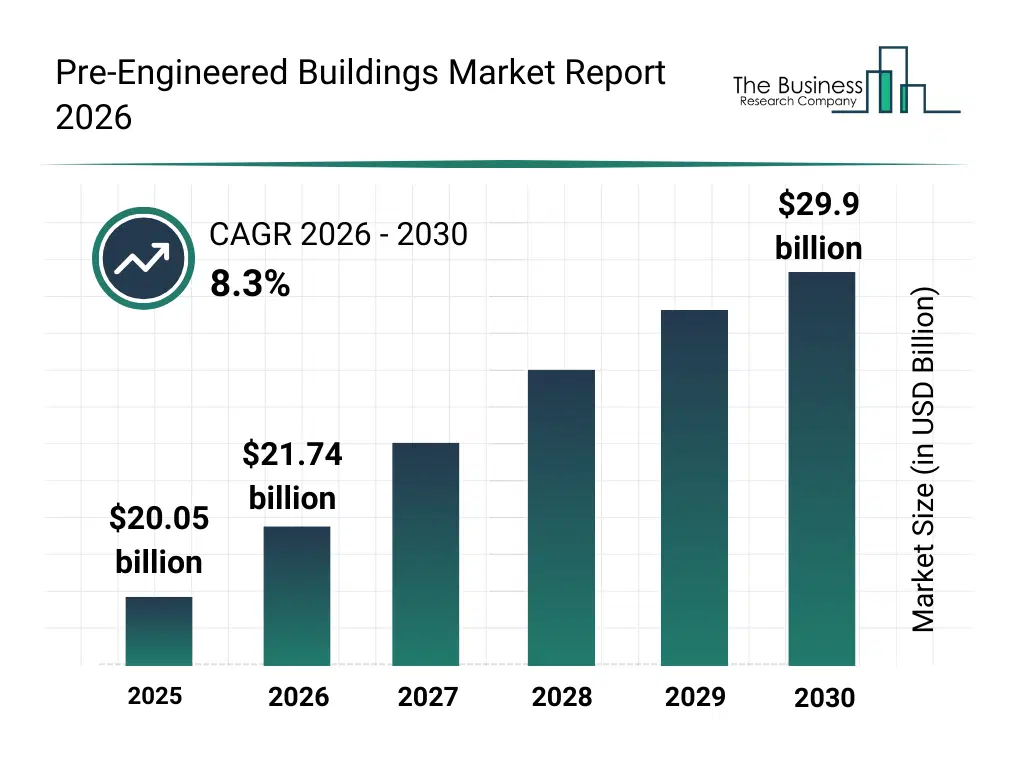
What Is The Pre-Engineered Buildings Market Size and Share 2026?
The pre-engineered buildings market size has grown strongly in recent years. It will grow from $20.05 billion in 2025 to $21.74 billion in 2026 at a compound annual growth rate (CAGR) of 8.4%. The growth in the historic period can be attributed to increasing industrial expansion fueling warehouse development, early adoption of steel-based prefabricated structures, rising need for faster and low-cost construction, growing use of single-story peb systems, expansion of logistics and storage facilities.What Is The Pre-Engineered Buildings Market Growth Forecast?
The pre-engineered buildings market size is expected to see strong growth in the next few years. It will grow to $29.9 billion in 2030 at a compound annual growth rate (CAGR) of 8.3%. The growth in the forecast period can be attributed to rising demand for multi-story peb structures, advancements in lightweight and high-strength steel engineering, growth in infrastructure and commercial development, expanding cold storage and logistics capacity needs, increasing adoption of sustainable prefabricated building solutions. Major trends in the forecast period include increasing use of pre-engineered buildings for warehouses and industrial facilities, growing adoption of cost-effective and faster construction solutions, rising demand for multi-story pre-engineered structures in commercial and institutional projects, expansion of cold storage, logistics, and manufacturing sector driving peb deployment, advancements in steel frame, roof, and wall panel engineering.
Global Pre-Engineered Buildings Market Segmentation
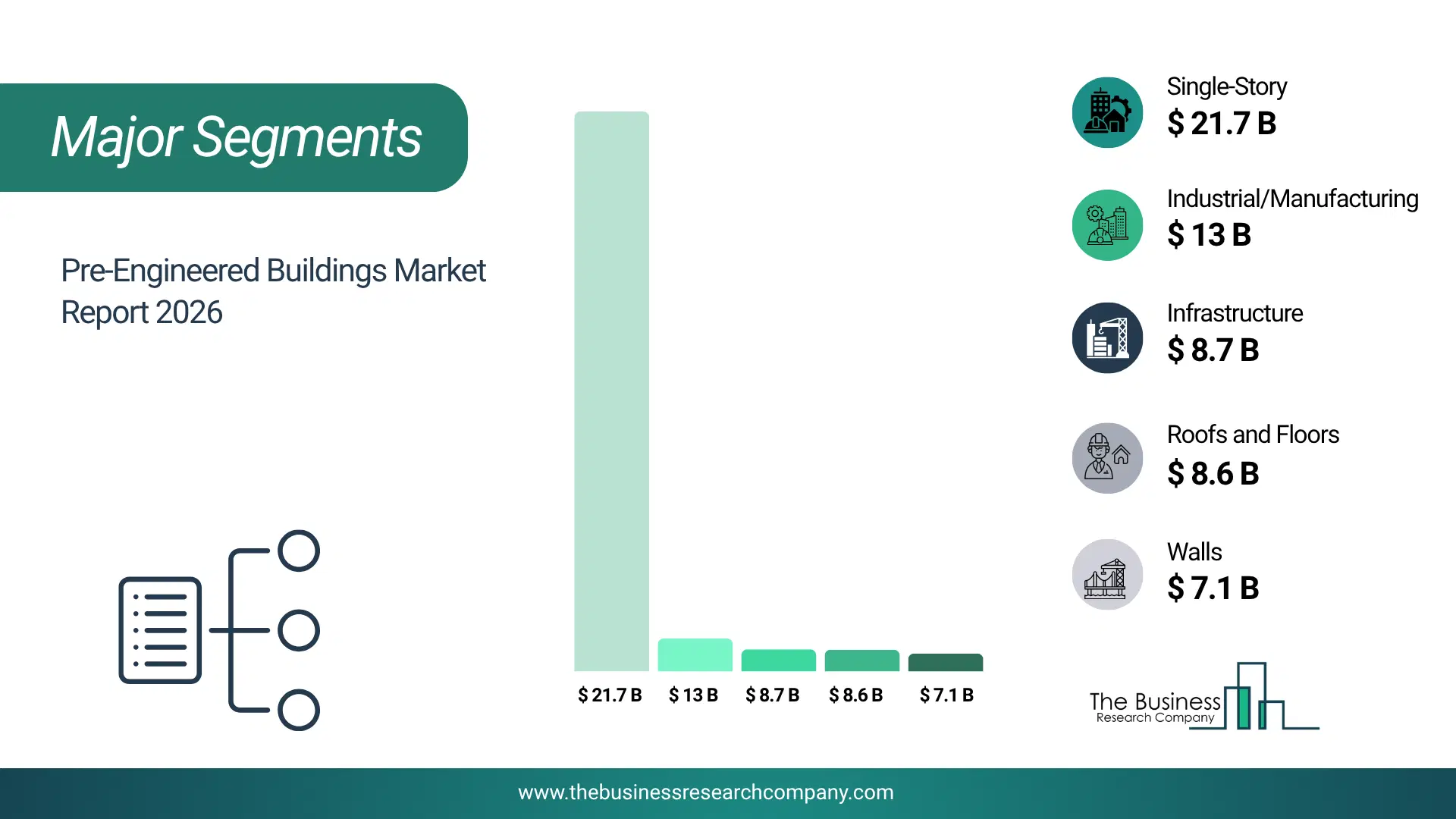
1) By Structure: Single-story, Multi-story 2) By Products: Walls, Columns and Beams, Roofs and Floors 3) By Application: Warehouses and industrial, Commercial, Infrastructure, Other Applications Subsegments: 1) By Single-story: Industrial Buildings, Warehouses, Retail Spaces, Agricultural Buildings 2) By Multi-story: Commercial Offices, Residential Complexes, Institutional Buildings The top segments in the pre-engineered buildings market will be: • Single-Story will reach $21774.83 Million by 2025. • Industrial/Manufacturing will reach $13039.26 Million by 2025. • Infrastructure will reach $8735.57 Million by 2025. • Roofs and Floors will reach $8633.23 Million by 2025. • Walls will reach $7179.3 Million by 2025.What Is The Driver Of The Pre-Engineered Buildings Market?
The rising investments in infrastructure development are expected to propel the growth of the pre-engineered building market. Infrastructure development refers to the process of planning, designing, financing, constructing, and maintaining physical and organizational structures and facilities that are essential for the functioning of a society or economy. Increased investments in infrastructure, commonly associated with urbanization projects and the modernization of existing structures, highlight the integral role of smart elevators in meeting the vertical mobility needs of modern urban spaces and renovated buildings. Pre-engineered buildings are used in infrastructure to provide rapid, cost-effective, and customizable solutions for various applications such as warehouses, distribution centers, commercial facilities, and transportation hubs, enhancing construction efficiency and flexibility. For instance, in July 2025, according to the Office for National Statistics, a UK-based government department, total investment in the infrastructure sector reached £20.3 billion ($23.64 billion) in 2024, marking a 16.9% increase compared to 2023. Therefore, rising investments in infrastructure development will drive the growth of the pre-engineered building industry.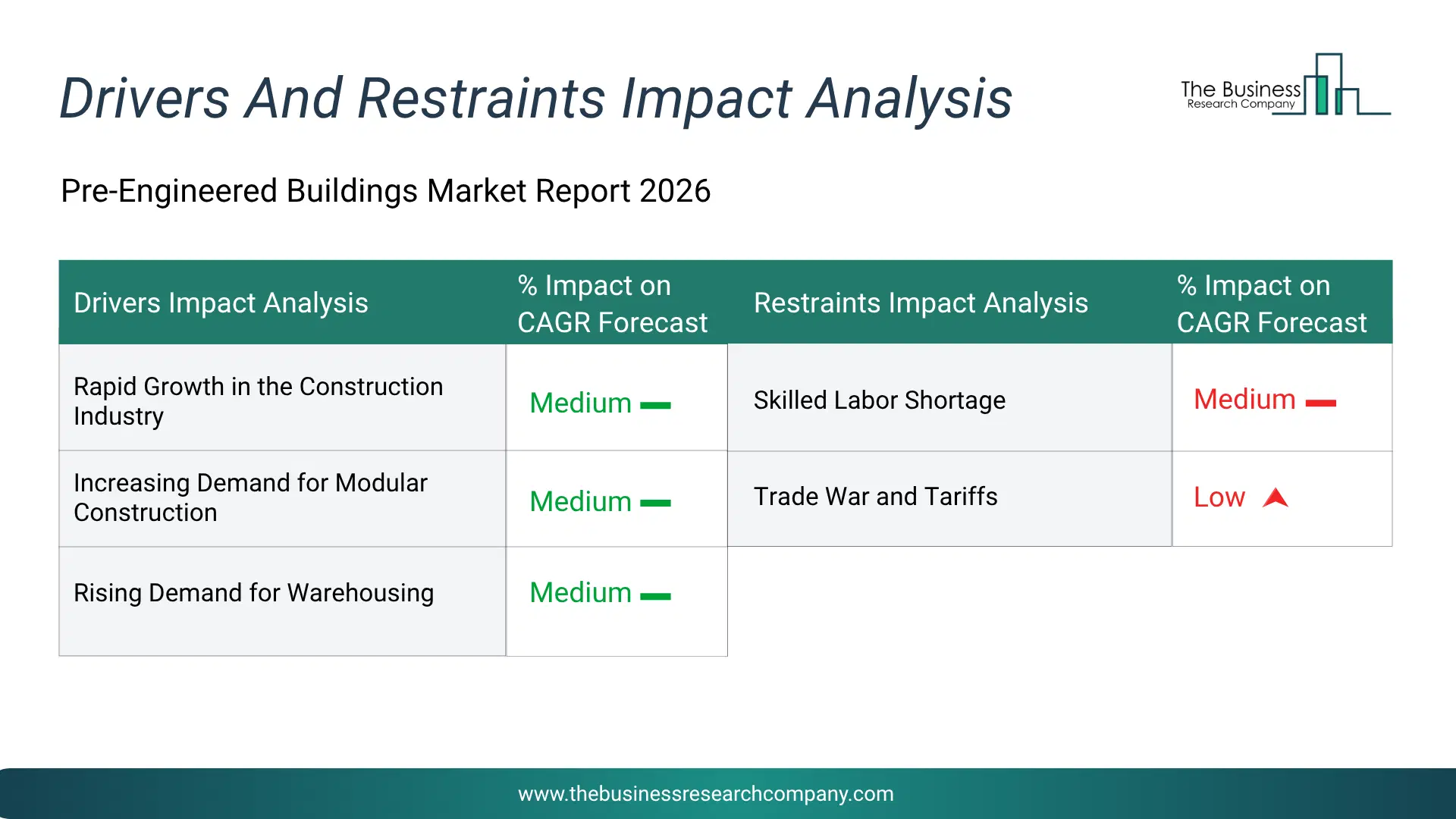
Infographic Chart Showing Key Market Drivers Analysis And Restraints For Pre-Engineered Buildings Market
The chart presents an impact analysis of key drivers and restraints, quantifying their relative influence on the market's growth rate and helping assess the balance between growth enablers and limiting factors. This chart offers a high-level perspective; the full report contains more detailed insights.
How Will The Drivers Impact Growth In The Global Pre-Engineered Buildings Market?
• Rapid Growth in the Construction Industry (Medium) – The rapid growth in the construction industry will become a key driver of growth in the pre-engineered buildings market by 2030. As the demand increases for construction solutions that are cost-effective, time-efficient, and environmentally sustainable, PEB systems present clear benefits such as quicker project completion, reduced labor needs, and enhanced design flexibility. Accelerated infrastructure development—especially in emerging economies—is further fueling the adoption of pre-engineered structures across industrial, commercial, and logistics sectors. Moreover, the rising popularity of modular and prefabricated construction techniques is strengthening market momentum, positioning PEBs as a smart choice for developers focused on efficiency, scalability, and long-term value. As a result, the rapid growth in the construction industry is anticipated to contributing to a 1.8% annual growth in the market. • Increasing Demand for Modular Construction (Medium) – The increasing demand for modular construction will emerge as a major factor driving the expansion of the pre-engineered buildings market by 2030. As developers and businesses prioritize construction solutions that are faster, more cost-efficient, and environmentally sustainable, PEBs emerge as a compelling option due to their factory-fabricated components and rapid on-site assembly. Modular construction techniques complement the core advantages of PEBs—such as shorter build times, enhanced quality control, and reduced labour dependency. This shift toward streamlined and efficient construction practices across industrial, commercial, and infrastructure sectors is expected to accelerate the adoption of pre-engineered buildings, fueling market growth in the coming years. Thus, the growing preference for modular construction will play a crucial role in advancing the PEB market. Consequently, the accelerating increasing demand for modular construction will capabilities is projected to contributing to a 1.3% annual growth in the market. • Rising Demand for Warehousing (Medium) – The rising demand for warehousing processes will serve as a key growth catalyst for the pre-engineered buildings market by 2030, As sectors like e-commerce, retail, and logistics continue to expand, there is a growing need for storage facilities that are efficient, cost-effective, and quick to construct. Pre-engineered buildings meet these requirements by offering faster construction timelines, reduced costs, and adaptable designs, making them well-suited for modern warehousing needs. Businesses are increasingly turning to PEBs to rapidly scale operations and accommodate rising inventory demands. This shift is expected to accelerate market adoption, as companies focus on speed, scalability, and operational efficiency in their infrastructure investments. Therefore, this rising demand for warehousing operations is projected to supporting to a 1.0% annual growth in the market. • Rising Demand for Green Buildings (Low) – The rising demand for green buildings will become a significant driver contributing to the growth of the pre-engineered buildings market by 2030 As sustainability and energy efficiency become top priorities for businesses and governments, PEBs stand out as a viable solution thanks to their eco-friendly construction practices, minimal material waste, and energy-efficient designs. These buildings are well-suited to meet green building standards and certifications, making them a popular choice among environmentally conscious developers. Moreover, the advantages of faster construction and cost efficiency further enhance their suitability for sustainable building projects. As a result, the increasing focus on green construction is set to propel the growth of the Consequently, the rising demand for green buildings strategies is projected to contributing to a 0.5% annual growth in the market.How Will The Restraints Impact Growth In The Global Pre-Engineered Buildings Market?
• Design Limitations for Complex Structures (Medium) – Design Limitations for Complex Structures will restrict the growth of the Pre-Engineered Buildings market during the forecast period. Pre-engineered buildings have design limitations compared to conventional construction for complex architectural and structural requirements. The lack of flexibility in design can limit applications in high-end and custom projects. Design constraints may restrict market growth in certain segments requiring aesthetic and functional complexity. • Skilled Labor Shortage (Medium) – Skilled Labor Shortage will restrict the growth of the Pre-Engineered Buildings market during the forecast period. Pre-engineered building erection requires skilled labor with specialized training in steel erection and assembly techniques. The shortage of qualified construction workers in many regions affects project timelines and quality. Labor shortages can lead to increased costs and reduced competitiveness of pre-engineered solutions. • Trade War and Tariffs (Low) – Trade War and Tariffs will restrict the growth of the Pre-Engineered Buildings market during the forecast period. Pre-engineered building components rely on steel and other materials subject to import tariffs and trade restrictions. Trade barriers can increase material costs and affect project economics. Trade tensions may also impact construction activity and infrastructure investment, affecting market demand.Key Players In The Global Pre-Engineered Buildings Market
Major companies operating in the pre-engineered buildings market are Jindal Buildsys Limited, Lloyd Insulations (India) Limited, Interarch Building Products Pvt. Ltd., Tiger Steel Engineering (I) Pvt. Ltd. (TSEIL), BlueScope Steel Limited, Modular Engineering Co., Enerpan Building Systems Ltd., Johnson Bros. Roll Forming Co., Flexospan Steel Buildings Inc., Panel Built Inc., DENIOS Inc., Easi-Set Buildings, Vistamation Inc., Rhino Steel Building Systems Inc., Butler Buildings, Armstrong Metal Building Manufacturers, Duro Steel Buildings, Future Buildings, Worldwide Steel Buildings, Kirby Building Systems, Nucor Building Systems, American Buildings Company, Varco Pruden Buildings, Chief Buildings, Star Building Systems, Ceco Building Systems, Metallic Building Company, Rigid Global Buildings, Olympia Steel Buildings, Heritage Building Systems, Behlen Building Systems, Steel Building Garages, SteelMaster Buildings, General Steel Buildings, Mueller Inc.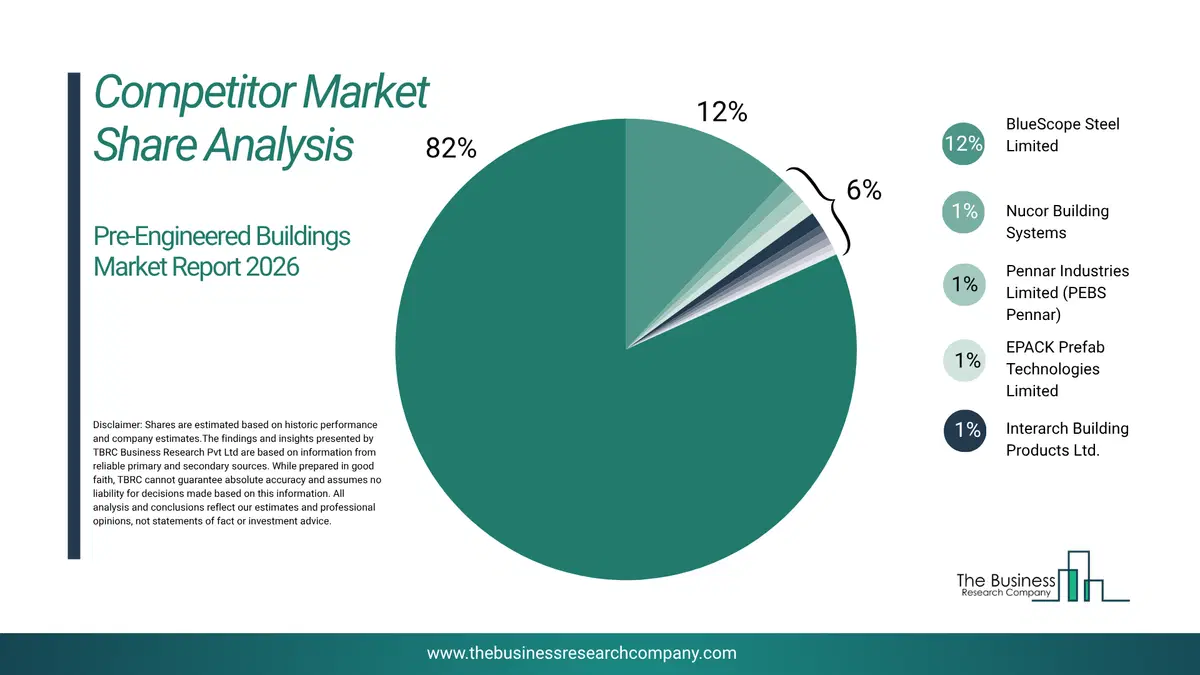
This chart is for illustrative purposes; the full report includes a detailed competitor analysis and comprehensive overview of the top 10 companies in the market.
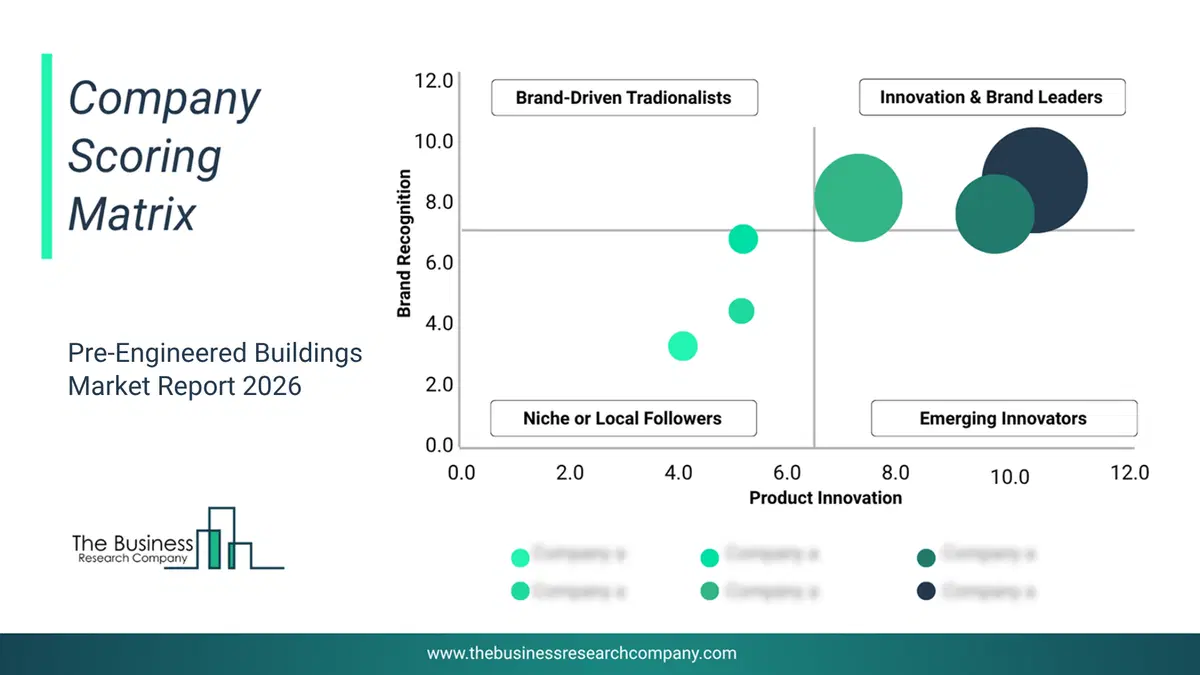
This chart maps companies by product innovation and brand strength, with bubble size indicating relative revenue, helping identify market leaders, challengers, and niche players. This is an illustrative chart; the full report provides a complete and accurate competitive analysis.
Global Pre-Engineered Buildings Market Trends and Insights
Major companies operating in the pre-engineered building market are adopting strategic investments, such as pre-engineered building (PEB) manufacturing plants, to enhance production capacity and meet the increasing demand for customizable and cost-effective construction solutions across various sectors. A Pre-engineered building (PEB) manufacturing plant is a facility specifically designed to produce pre-engineered building components, using advanced manufacturing processes to ensure precision, efficiency, and quality in construction projects. For instance, in July 2024, Pennar Industries, an India-based manufacturer specializing in engineering and infrastructure solutions, was poised to establish a 16-acre pre-engineered building (PEB) manufacturing plant in Raebareli, Uttar Pradesh, featuring a built-up area of 12,000 square meters and a production capacity of 36,000 metric tons per annum. Scheduled to be operational by Q2 2024, this facility will reduce transportation costs and enhance customer service in East and North India, with a focus on growth areas such as metal buildings, tubes, and industrial components.What Are Latest Mergers And Acquisitions In The Pre-Engineered Buildings Market?
In June 2023, Ambassador Supply, LLC, a US-based provider of building materials, construction solutions, and investment services for the building industry, acquired Straight Line Metal Buildings, LLC for an undisclosed amount. With this acquisition, Ambassador Supply, LLC aims to expand its presence in the pre-engineered metal building (PEMB) sector, strengthen its product offerings, and enhance its capabilities in delivering customizable steel structures. Straight Line Metal Buildings, LLC is a US-based company that manufactures and installs pre-engineered metal buildings.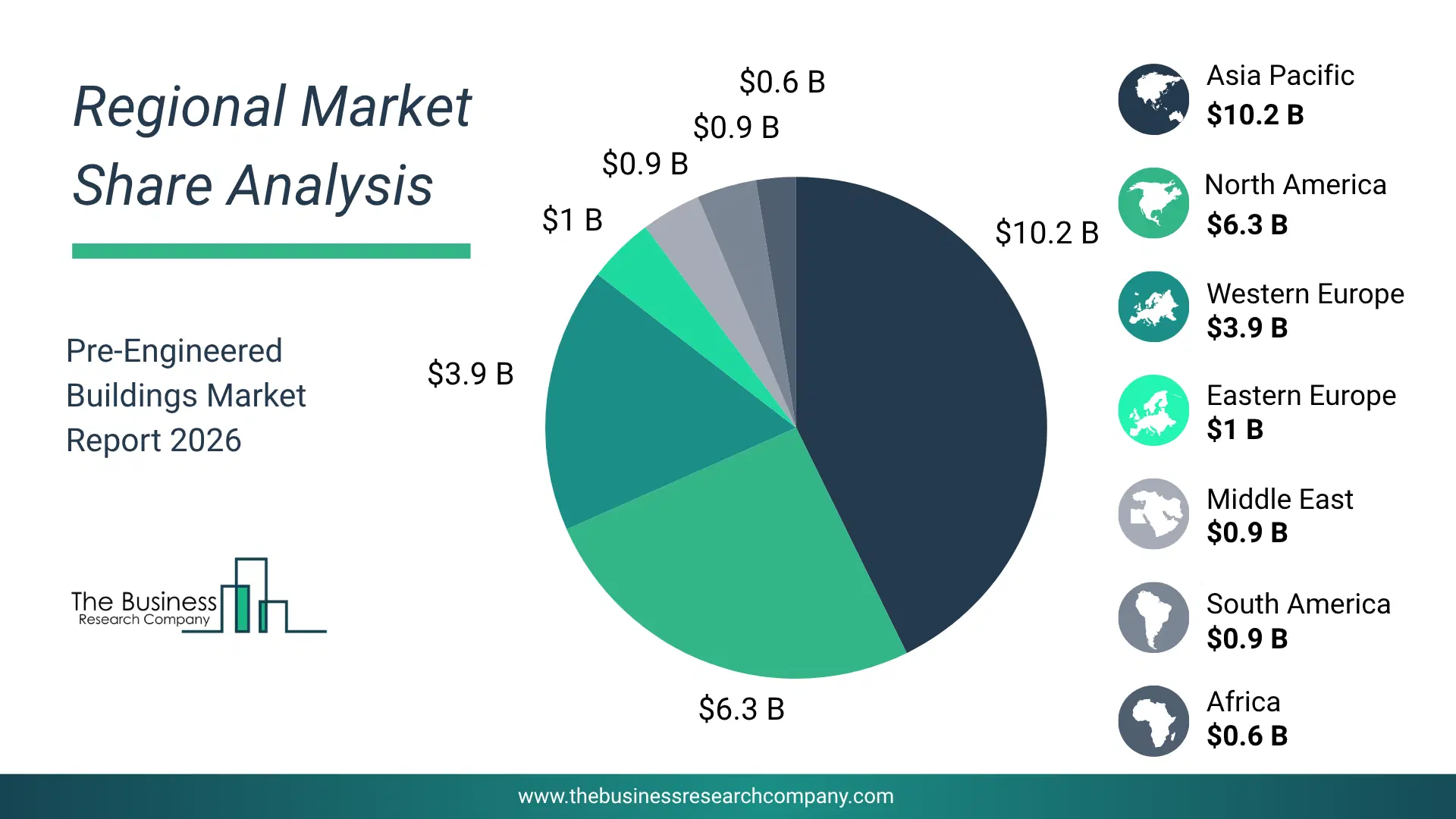
Regional Insights
Asia-Pacific was the largest region in the pre-engineered buildings market in 2025. Asia-Pacific is expected to be the fastest-growing region in the forecast period. The regions covered in this market report are Asia-Pacific, South East Asia, Western Europe, Eastern Europe, North America, South America, Middle East, Africa. The countries covered in this market report are Australia, Brazil, China, France, Germany, India, Indonesia, Japan, Taiwan, Russia, South Korea, UK, USA, Canada, Italy, Spain.What Defines the Pre-Engineered Buildings Market?
The pre-engineered buildings market consists of sales of frames, systems and other components for building structures. Values in this market are ‘factory gate’ values, that is the value of goods sold by the manufacturers or creators of the goods, whether to other entities (including downstream manufacturers, wholesalers, distributors and retailers) or directly to end customers. The value of goods in this market includes related services sold by the creators of the goods.How is Market Value Defined and Measured?
The market value is defined as the revenues that enterprises gain from the sale of goods and/or services within the specified market and geography through sales, grants, or donations in terms of the currency (in USD unless otherwise specified). The revenues for a specified geography are consumption values that are revenues generated by organizations in the specified geography within the market, irrespective of where they are produced. It does not include revenues from resales along the supply chain, either further along the supply chain or as part of other products.
This chart presents market attractiveness based on a quantitative evaluation of growth, competition, strategic alignment, and risk, offering a clear view of opportunity areas for decision-making. This chart is for illustrative purposes; the full report contains the complete analysis.

This chart highlights the Total Addressable Market (TAM) by estimating the maximum revenue opportunity using an assumption-driven approach, supporting strategic planning and opportunity sizing across markets. The chart is illustrative; the full report provides a more comprehensive analysis.
What Key Data and Analysis Are Included in thePre-Engineered Buildings Market Report 2026?
The pre-engineered buildings market research report is one of a series of new reports from The Business Research Company that provides market statistics, including industry global market size, regional shares, competitors with the market share, detailed market segments, market trends and opportunities, and any further data you may need to thrive in the pre-engineered buildings industry. The market research report delivers a complete perspective of everything you need, with an in-depth analysis of the current and future state of the industry.Pre-Engineered Buildings Market Report Forecast Analysis
| Report Attribute | Details |
|---|---|
| Market Size Value In 2026 | $21.74 billion |
| Revenue Forecast In 2030 | $29.9 billion |
| Growth Rate | CAGR of 8.4% from 2026 to 2030 |
| Base Year For Estimation | 2025 |
| Actual Estimates/Historical Data | 2020-2025 |
| Forecast Period | 2026 - 2030 |
| Market Representation | Revenue in USD Billion and CAGR from 2026 to 2030 |
| Segments Covered | Structure, Products, Application |
| Regional Scope | Asia-Pacific, Western Europe, Eastern Europe, North America, South America, Middle East, Africa |
| Country Scope | The countries covered in the report are Australia, Brazil, China, France, Germany, India, Indonesia, Japan, Taiwan, Russia, South Korea, UK, USA, Canada, Italy, Spain. |
| Key Companies Profiled | Jindal Buildsys Limited, Lloyd Insulations (India) Limited, Interarch Building Products Pvt. Ltd., Tiger Steel Engineering (I) Pvt. Ltd. (TSEIL), BlueScope Steel Limited, Modular Engineering Co., Enerpan Building Systems Ltd., Johnson Bros. Roll Forming Co., Flexospan Steel Buildings Inc., Panel Built Inc., DENIOS Inc., Easi-Set Buildings, Vistamation Inc., Rhino Steel Building Systems Inc., Butler Buildings, Armstrong Metal Building Manufacturers, Duro Steel Buildings, Future Buildings, Worldwide Steel Buildings, Kirby Building Systems, Nucor Building Systems, American Buildings Company, Varco Pruden Buildings, Chief Buildings, Star Building Systems, Ceco Building Systems, Metallic Building Company, Rigid Global Buildings, Olympia Steel Buildings, Heritage Building Systems, Behlen Building Systems, Steel Building Garages, SteelMaster Buildings, General Steel Buildings, Mueller Inc. |
| Customization Scope | Request for Customization |
| Pricing And Purchase Options | Explore Purchase Options |