
Prefabricated Riser Modules Market Report 2026
Global Outlook – By Product Type (Steel Riser Modules, Concrete Riser Modules, Composite Riser Modules, Other Product Type), By Distribution Channel (Direct Sales, Distributors, Online Sales, Other Distribution Channel), By Application (Residential Buildings, Commercial Buildings, Industrial Facilities, Infrastructure, Other Application), By End-User (Construction Companies, Contractors, Developers, Other End-User) – Market Size, Trends, Strategies, and Forecast to 2030
Prefabricated Riser Modules Market Overview
• Prefabricated Riser Modules market size has reached to $3.83 billion in 2025 • Expected to grow to $5.86 billion in 2030 at a compound annual growth rate (CAGR) of 8.8% • Growth Driver: Increasing Construction Activities Fueling The Growth Of The Market Due To Rising Urban Development • Market Trend: • North America was the largest region in 2025 and Asia-Pacific is the fastest growing region.What Is Covered Under Prefabricated Riser Modules Market?
Prefabricated riser modules are pre-engineered vertical service assemblies that integrate mechanical, electrical and plumbing systems into a single factory-built unit for installation in multistory buildings. They are designed to streamline the routing of utilities through riser shafts by providing a coordinated, tested and ready-to-install solution. These modules help enhance construction efficiency by reducing onsite labour, minimizing installation errors and supporting faster project timelines. The main product types in prefabricated riser modules include steel riser modules, concrete riser modules, composite riser modules, and others. Steel riser modules are widely used due to their high load-bearing capacity, dimensional accuracy, and suitability for rapid vertical service integration in multi-story buildings. These modules are distributed through direct sales, distributors, online sales, and others and are applied across residential buildings, commercial buildings, industrial facilities, infrastructure, and others, serving end-users such as construction companies, contractors, developers, and others.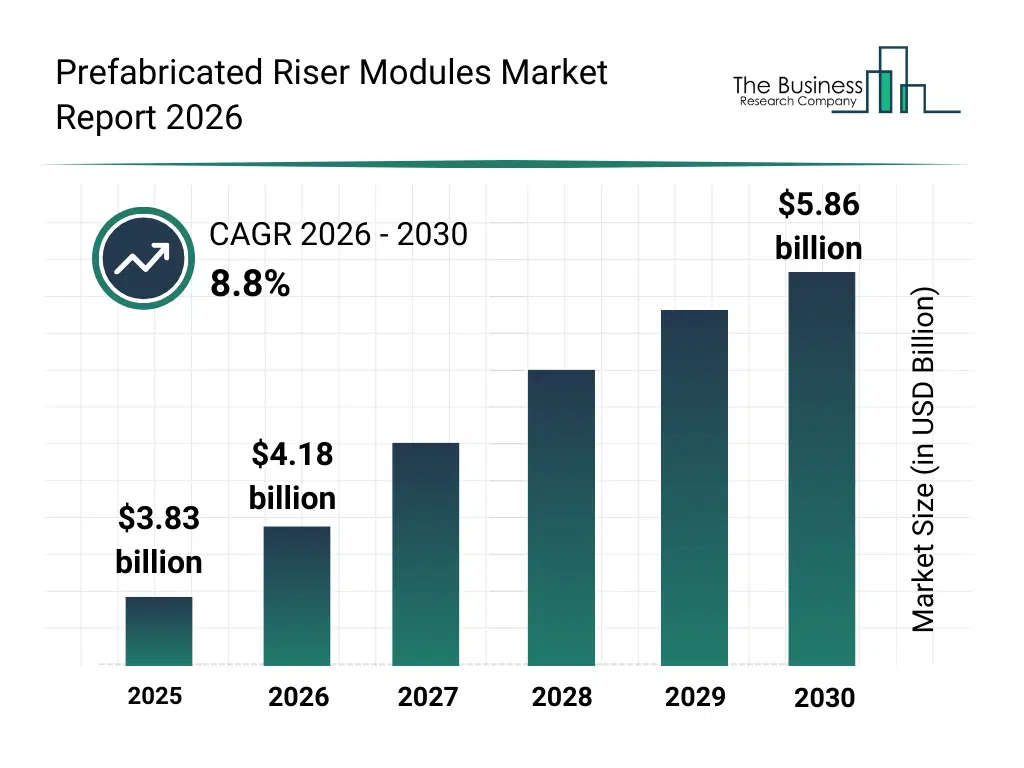
What Is The Prefabricated Riser Modules Market Size and Share 2026?
The prefabricated riser modules market size has grown strongly in recent years. It will grow from $3.83 billion in 2025 to $4.18 billion in 2026 at a compound annual growth rate (CAGR) of 9.1%. The growth in the historic period can be attributed to rising demand for faster project delivery, growing adoption of modular construction principles, increasing focus on construction site safety, rising costs of skilled on-site labor, increasing stringency of building regulations.What Is The Prefabricated Riser Modules Market Growth Forecast?
The prefabricated riser modules market size is expected to see strong growth in the next few years. It will grow to $5.86 billion in 2030 at a compound annual growth rate (CAGR) of 8.8%. The growth in the forecast period can be attributed to escalating global skilled labor shortages, expansion into data center and healthcare construction, rising demand for sustainable and low-waste building methods, growing complexity of building mep systems, increasing investment in urban vertical infrastructure. Major trends in the forecast period include integration of IoT and smart building sensors within modules, adoption of generative AI for module design optimization, development of lightweight composite and advanced materials, advancement of digital twin technology for lifecycle management, innovation in plug-and-play standardized connection systems.
Global Prefabricated Riser Modules Market Segmentation
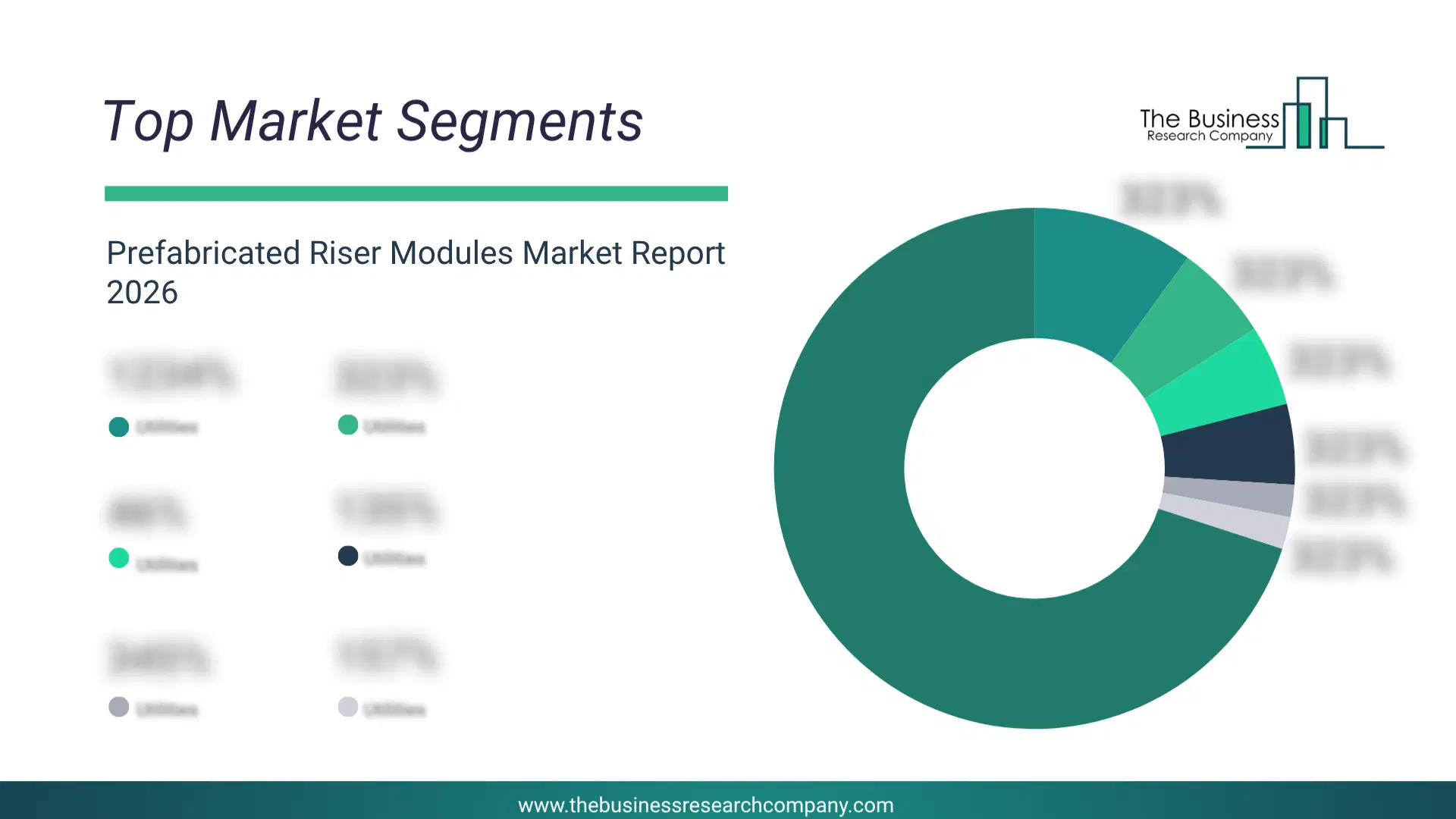
1) By Product Type: Steel Riser Modules, Concrete Riser Modules, Composite Riser Modules, Other Product Type 2) By Distribution Channel: Direct Sales, Distributors, Online Sales, Other Distribution Channel 3) By Application: Residential Buildings, Commercial Buildings, Industrial Facilities, Infrastructure, Other Application 4) By End-User: Construction Companies, Contractors, Developers, Other End-User Subsegments: 1) By Steel Riser Modules: Hot Rolled Steel Modules, Cold Formed Steel Modules, Galvanized Steel Modules, Stainless Steel Modules 2) By Concrete Riser Modules: Precast Concrete Modules, Reinforced Concrete Modules, Lightweight Concrete Modules, High Strength Concrete Modules 3) By Composite Riser Modules: Fiber Reinforced Polymer Modules, Glass Fiber Composite Modules, Carbon Fiber Composite Modules, Hybrid Composite Modules 4) By Other Product Type: Modular Plastic Riser Modules, Aluminum Riser Modules, Hybrid Material Riser Modules, Customized Riser ModulesWhat Are The Drivers Of The Prefabricated Riser Modules Market?
The increasing construction activities are expected to propel the growth of the prefabricated riser modules market going forward. Construction activities refer to the processes involved in building, repairing, or altering structures such as buildings, roads, bridges, and other infrastructure. The rising construction activities are due to urbanization, as increasing population concentration in cities creates a higher demand for residential, commercial, and infrastructure development. Prefabricated riser modules enhance construction activities by enabling faster and more efficient installation of mechanical, electrical, and plumbing systems. They reduce on-site labor, improve quality consistency, and accelerate project timelines. For instance, in April 2025, according to the United States Census Bureau, a US-based government agency, construction spending reached $2,156,495 million in 2024, an increase from $2,023,662 million in 2023. Therefore, the increasing construction activities are driving the growth of the prefabricated riser modules industry. The increasing infrastructure investment is expected to propel the growth of the prefabricated riser modules market going forward. Infrastructure investments refer to funding spent on building and maintaining essential systems such as roads, bridges, power, water, and communication networks to support economic and social development. The increasing infrastructure investments are due to urbanization and population growth, as growing populations in urban areas strain existing infrastructure, necessitating new development and upgrades. Rising infrastructure investment supports prefabricated riser modules by increasing demand for faster, standardized, and cost-efficient building solutions in large-scale projects. It drives wider adoption, reduces construction timelines, and improves overall project efficiency. For instance, in July 2024, according to the Office for National Statistics, a UK-based government department, total general government investment in infrastructure reached $17.25 billion (£13.8 billion) in 2023, marking a 3.9% increase from 2022. Therefore, the increasing infrastructure investment is driving the growth of the prefabricated riser modules industry. The rising labor shortages are expected to propel the growth of the prefabricated riser modules market going forward. Labor shortages refer to a lack of available workers with the necessary skills to fill job vacancies; they occur when labor demand exceeds supply. The increase in labor shortages is due to an aging population, as more workers retire, reducing the available workforce and creating gaps in key industries. Prefabricated riser modules address labor shortages by minimizing on-site assembly work, making installation faster and less reliant on skilled labor. They improve construction productivity, reduce errors, and help maintain project schedules despite workforce constraints. For instance, in October 2025, according to the Parliament of the United Kingdom, a UK-based supreme legislative body, the UK’s unemployment rate stood at 4.8%, with approximately 1.74 million people aged 16 and over unemployed, an increase of about 297,000 compared to the previous year. Therefore, the rising labor shortages are driving the growth of the prefabricated riser modules industry.Key Players In The Global Prefabricated Riser Modules Market
Major companies operating in the prefabricated riser modules market are Hitachi Ltd., Thyssenkrupp AG, Mitsubishi Electric Corporation, Skanska AB, Otis Elevator Company, Bouygues Construction, Schindler Group, KONE Corporation, WSP Global Inc., Lendlease Group, Laing O’Rourke, Arup Group, Mace Group, Hyundai Elevator Co. Ltd., Fujitec Co. Ltd., Alimak Group AB, Orona Group, Stannah Lifts Holdings Ltd., Cibes Lift Group, CIMC Modular Building Systems, Sigma Elevator Company, Modular Riser Systems Ltd., Toshiba Elevator and Building Systems Corporation, Avanti Wind Systems, Johnson Lifts Pvt. Ltd.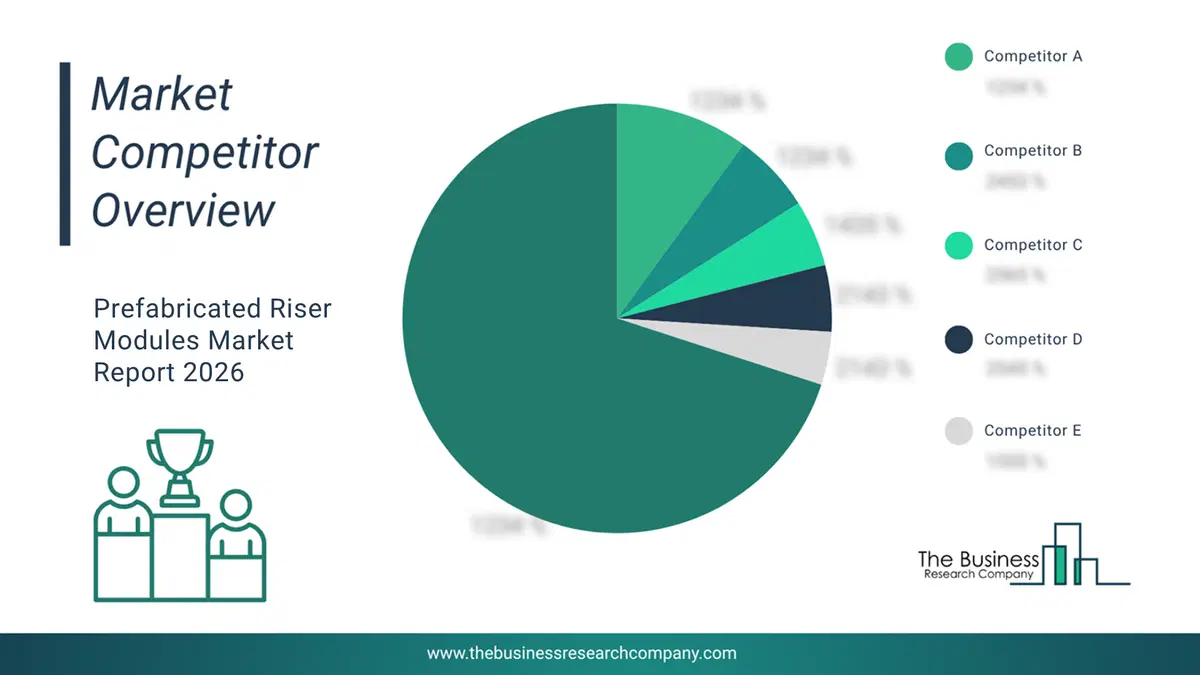
This chart is for illustrative purposes; the full report includes a detailed competitor analysis and comprehensive overview of the top 10 companies in the market.
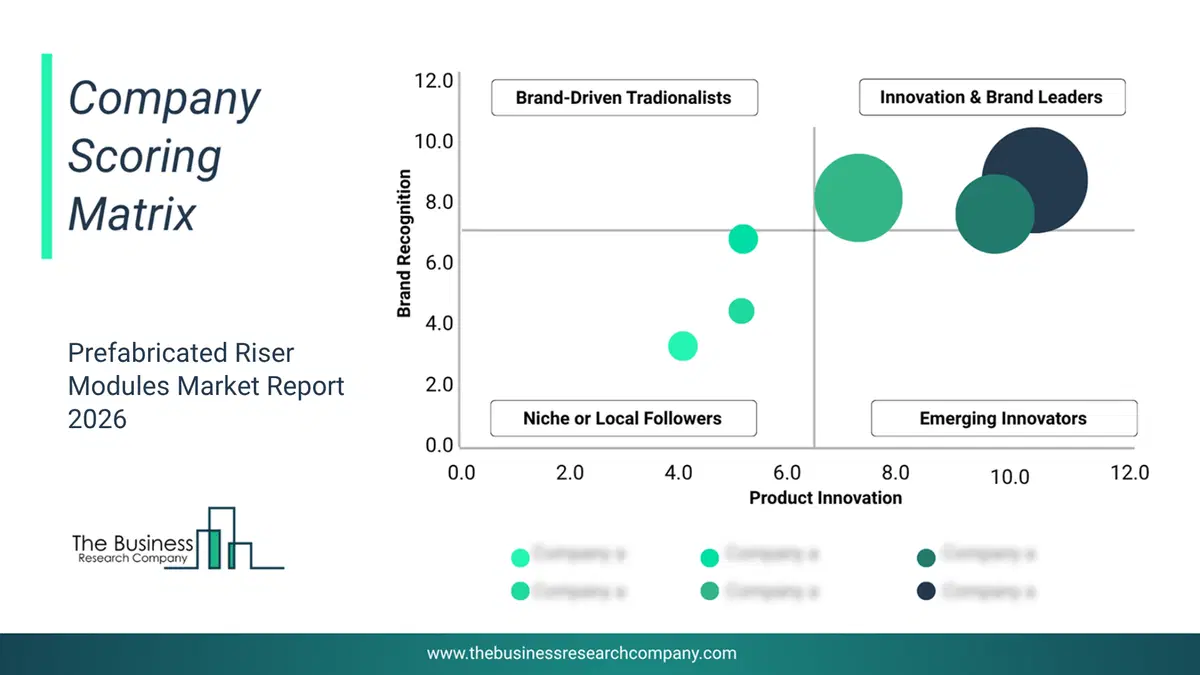
This chart maps companies by product innovation and brand strength, with bubble size indicating relative revenue, helping identify market leaders, challengers, and niche players. This is an illustrative chart; the full report provides a complete and accurate competitive analysis.
Regional Insights
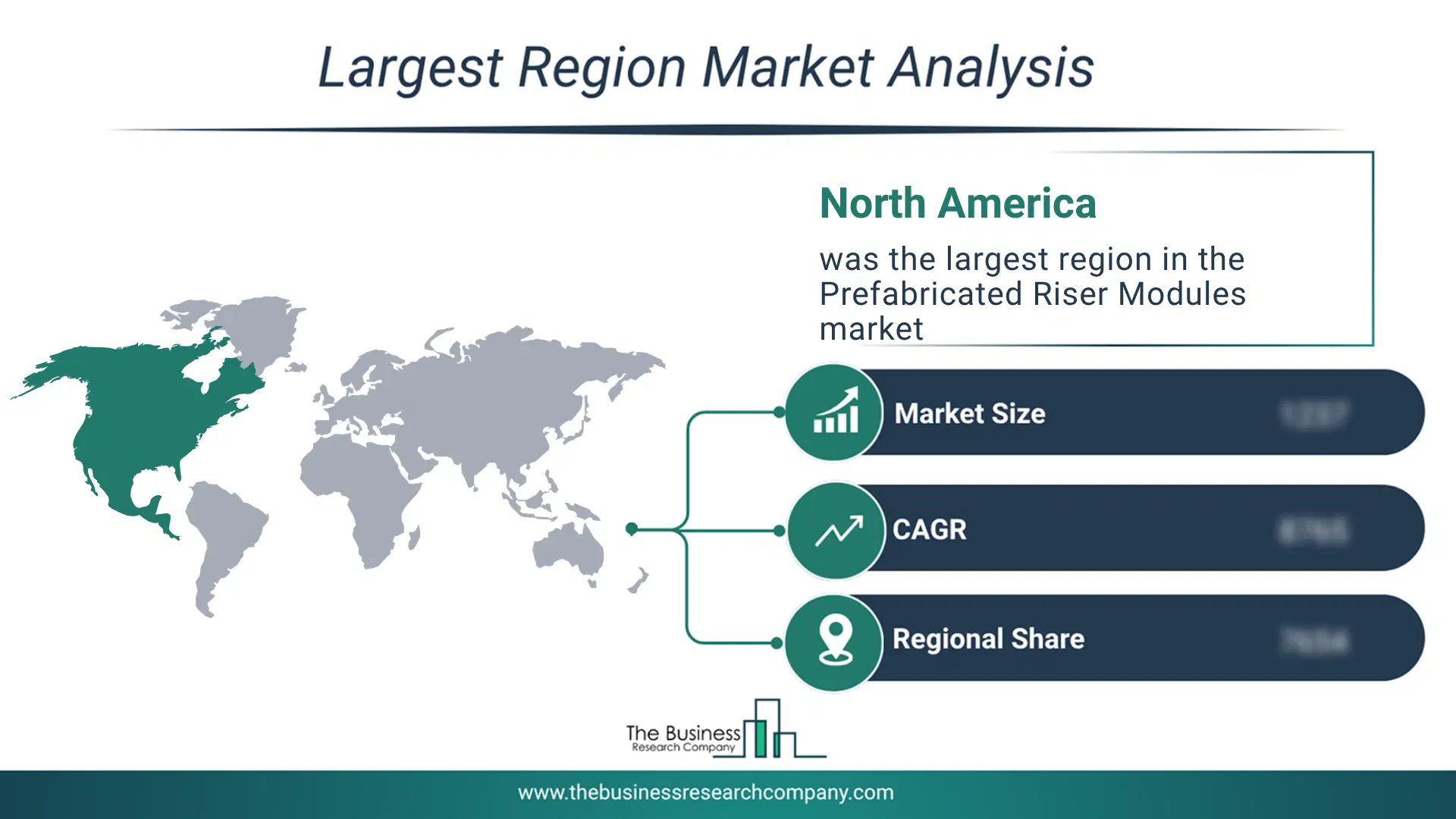
North America was the largest region in the prefabricated riser modules market in 2025. Asia-Pacific is expected to be the fastest-growing region in the forecast period. The regions covered in this market report are Asia-Pacific, South East Asia, Western Europe, Eastern Europe, North America, South America, Middle East, Africa. The countries covered in this market report are Australia, Brazil, China, France, Germany, India, Indonesia, Japan, Taiwan, Russia, South Korea, UK, USA, Canada, Italy, Spain.What Defines the Prefabricated Riser Modules Market?
The prefabricated riser modules market consists of sales of cable riser modules, plumbing riser modules, mechanical riser modules, electrical riser modules, and preassembled pipe stacks. Values in this market are “factory gate” values, meaning the worth of goods sold by the manufacturers or creators of the modules, whether to other entities such as downstream manufacturers, wholesalers, distributors, and retailers, or directly to purchasers. The value of goods in this market also includes related services provided by the creators of the modules.How is Market Value Defined and Measured?
The market value is defined as the revenues that enterprises gain from the sale of goods and/or services within the specified market and geography through sales, grants, or donations in terms of the currency (in USD unless otherwise specified). The revenues for a specified geography are consumption values that are revenues generated by organizations in the specified geography within the market, irrespective of where they are produced. It does not include revenues from resales along the supply chain, either further along the supply chain or as part of other products.
This chart presents market attractiveness based on a quantitative evaluation of growth, competition, strategic alignment, and risk, offering a clear view of opportunity areas for decision-making. This chart is for illustrative purposes; the full report contains the complete analysis.

This chart highlights the Total Addressable Market (TAM) by estimating the maximum revenue opportunity using an assumption-driven approach, supporting strategic planning and opportunity sizing across markets. The chart is illustrative; the full report provides a more comprehensive analysis.
What Key Data and Analysis Are Included in the Prefabricated Riser Modules Market Report 2026?
The prefabricated riser modules market research report is one of a series of new reports from The Business Research Company that provides market statistics, including industry global market size, regional shares, competitors with the market share, detailed market segments, market trends and opportunities, and any further data you may need to thrive in the prefabricated riser modules industry. The market research report delivers a complete perspective of everything you need, with an in-depth analysis of the current and future state of the industry.Prefabricated Riser Modules Market Report Forecast Analysis
| Report Attribute | Details |
|---|---|
| Market Size Value In 2026 | $4.18 billion |
| Revenue Forecast In 2030 | $5.86 billion |
| Growth Rate | CAGR of 9.1% from 2026 to 2030 |
| Base Year For Estimation | 2025 |
| Actual Estimates/Historical Data | 2020-2025 |
| Forecast Period | 2026 - 2030 |
| Market Representation | Revenue in USD Billion and CAGR from 2026 to 2030 |
| Segments Covered | Product Type, Distribution Channel, Application, End-User |
| Regional Scope | Asia-Pacific, Western Europe, Eastern Europe, North America, South America, Middle East, Africa |
| Country Scope | The countries covered in this market report are Australia, Brazil, China, France, Germany, India, Indonesia, Japan, Taiwan, Russia, South Korea, UK, USA, Canada, Italy, Spain |
| Key Companies Profiled | Hitachi Ltd., Thyssenkrupp AG, Mitsubishi Electric Corporation, Skanska AB, Otis Elevator Company, Bouygues Construction, Schindler Group, KONE Corporation, WSP Global Inc., Lendlease Group, Laing O’Rourke, Arup Group, Mace Group, Hyundai Elevator Co. Ltd., Fujitec Co. Ltd., Alimak Group AB, Orona Group, Stannah Lifts Holdings Ltd., Cibes Lift Group, CIMC Modular Building Systems, Sigma Elevator Company, Modular Riser Systems Ltd., Toshiba Elevator and Building Systems Corporation, Avanti Wind Systems, Johnson Lifts Pvt. Ltd. |
| Customization Scope | Request for Customization |
| Pricing And Purchase Options | Explore Purchase Options |