
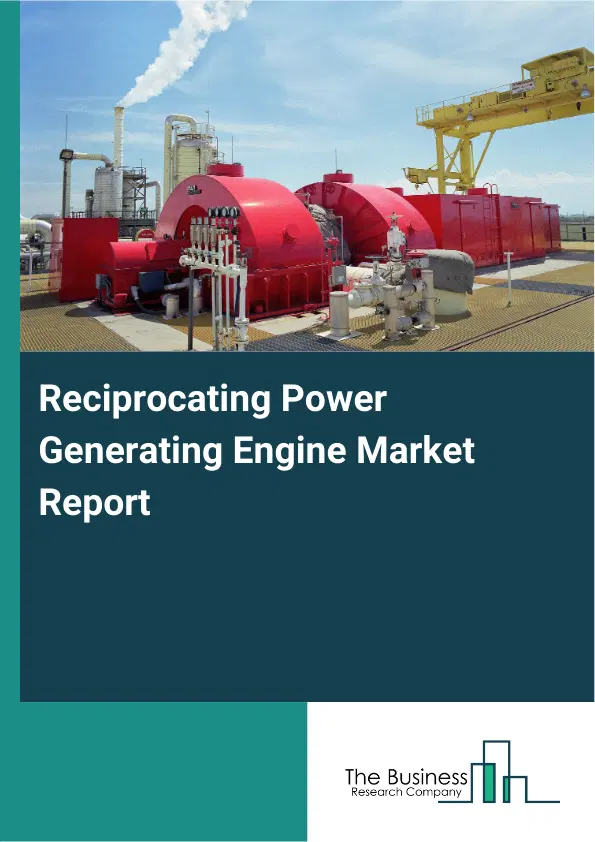
Reciprocating Power Generating Engine Market Report 2026
Global Outlook – By Fuel ( Gas-Fired, Diesel-Fired, Duel Fuel, Other Fuel), By Rated Power ( Below 2MW, 2MW-5MW, Above 5MW), By Application ( Industrial, CHP, Energy and Utility, Landfill and Biogas, Other Applications) – Market Size, Trends, Strategies, and Forecast to 2030
Reciprocating Power Generating Engine Market Overview
• Reciprocating Power Generating Engine market size has reached to $52.64 billion in 2025 • Expected to grow to $54.68 billion in 2030 at a compound annual growth rate (CAGR) of 0.7% • Growth Driver: Rising Electricity Demand Fuels Growth Of Reciprocating Power Generating Engine Market • Market Trend: Innovative Product Launches Driving Advancements in the Reciprocating Power Generation Engine Market • North America was the largest region in 2025 and Asia-Pacific is the fastest growing region.Market Gains By 2030 – Top Opportunities By Segment
Market Gain identifies the most promising market opportunities by highlighting the segments or products expected to generate the highest incremental revenue growth over the next five years.
What Is Covered Under Reciprocating Power Generating Engine Market?
The reciprocating power generation engines are defined as heat-generating engines that use one or more pistons that help in converting pressure into rotary motion. These engines use the expansion of gases to generate power. The main types of fuel for reciprocating power generating engines are gas-fired, diesel-fired, dual fuel, and others. The gas-fired reciprocating power generating engines are used as fuel in the engines for the ignition of the fire. Gas-fired ignition engines’ efficiency is low when compared with diesel-fired because of their very low compression rates, and they require low first cost and provide significant heat recovery potential. The various reciprocating power generating engines by rated power are below 2MW, 2MW–5MW, and above 5MW. The various reciprocating power generating engine applications are: industrial, CHP, energy and utility, landfill and biogas, and others.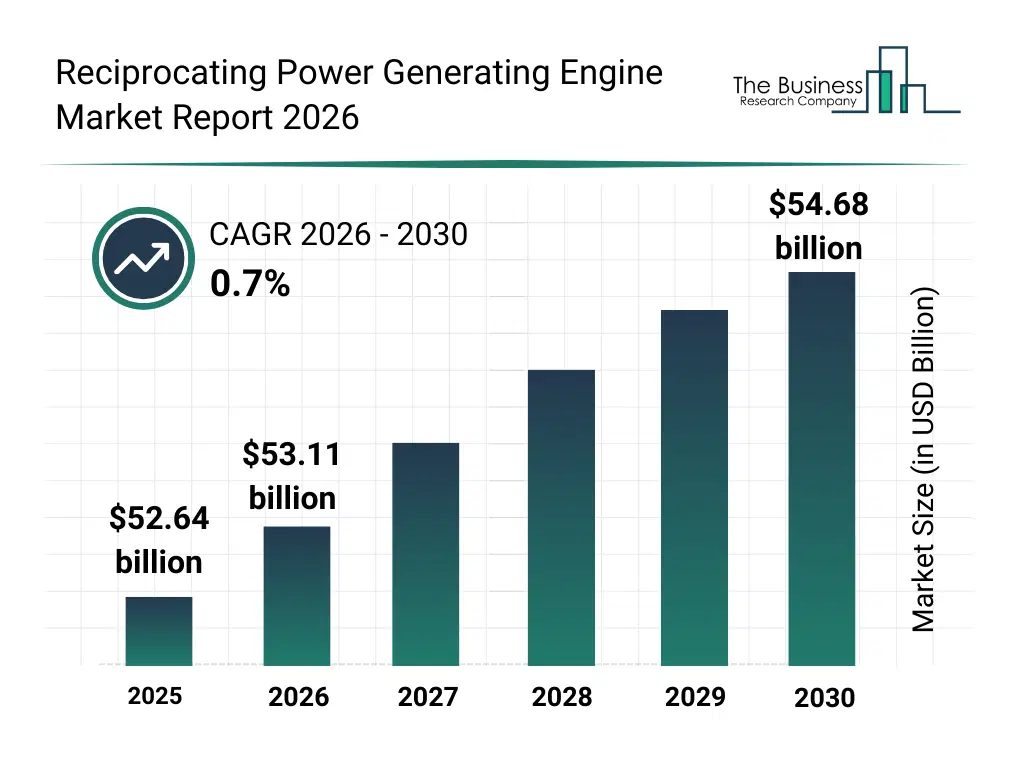
What Is The Reciprocating Power Generating Engine Market Size 2026 And Growth Rate?
The reciprocating power generating engine market size has grown marginally in recent years. It will grow from $52.64 billion in 2025 to $53.11 billion in 2026 at a compound annual growth rate (CAGR) of 0.9%. The growth in the historic period can be attributed to early reliance on diesel-fired engines, increased demand for industrial backup power, rising use of reciprocating engines in chp systems, adoption in landfill and biogas applications, growth in utility-based distributed power generation.What Is The Reciprocating Power Generating Engine Market Growth Forecast?
The reciprocating power generating engine market size is expected to see marginal growth in the next few years. It will grow to $54.68 billion in 2030 at a compound annual growth rate (CAGR) of 0.7%. The growth in the forecast period can be attributed to increasing demand for gas-fired low-emission engines, expansion of renewable-integrated power systems, growth in distributed energy adoption, development of hybrid reciprocating engine solutions, rising need for high-efficiency modular power units. Major trends in the forecast period include adoption of low-emission reciprocating engine technologies, advancement of intelligent engine control platforms, integration of AI-assisted performance optimization, deployment of IoT-enabled engine monitoring, expansion of digital predictive maintenance systems.
Global Reciprocating Power Generating Engine Market Segmentation
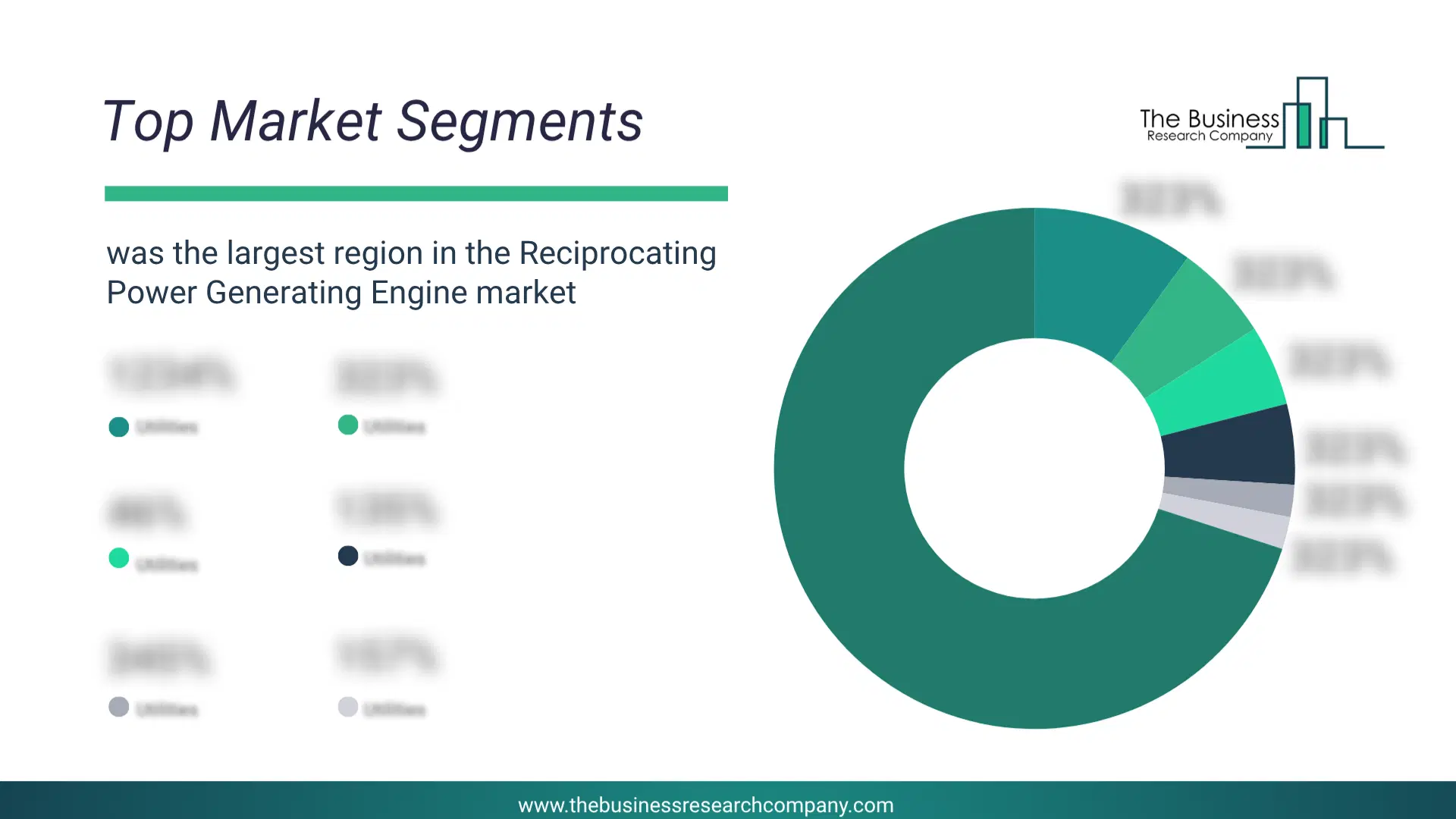
1) By Fuel: Gas-Fired, Diesel-Fired, Duel Fuel, Other Fuel 2) By Rated Power: Below 2MW, 2MW-5MW, Above 5MW 3) By Application: Industrial, CHP, Energy and Utility, Landfill and Biogas, Other Applications Subsegments: 1) By Gas-fired: Natural Gas, Biogas, Other Gas Types 2) By Diesel-fired: Standard Diesel, Bio-Diesel, Ultra-Low Sulfur Diesel (ULSD) 3) By Dual fuel: Gas Or Diesel Combination, Biogas Or Diesel Combination 4) By Other Fuel: Heavy Fuel Oil (HFO), Renewable Fuels, Waste Oil The top segments in the reciprocating power generating engine market will be: • Diesel-Fired will reach $42.72 Billion by 2030. • Gas-Fired will reach $18.17 Billion by 2030. • Duel Fuel will reach $2.63 Billion by 2030. • Other Fuel will reach $1.45 Billion by 2030.What Is The Driver Of The Reciprocating Power Generating Engine Market?
The increase in electricity demand across commercial and industrial sectors is significantly contributing to the growth of the reciprocating power-generating engine market. Electricity is the power that is used in the commercial and industrial sectors for lighting in manufacturing and other industries. The increase in the usage of electricity due to the increase in the expansion of cogeneration plants and private consumption, as well as a rise in small industries, is the major driving force for the growth of this market. For instance, in July 2024, according to the International Energy Agency, a France-based government organization for energy, global electricity demand is expected to increase by approximately 4% in 2024, up from 2.5% in 2023. Therefore, the increase in electricity demand across commercial and industrial sectors is expected to create opportunities for various players involved in the reciprocating power-generating engines market.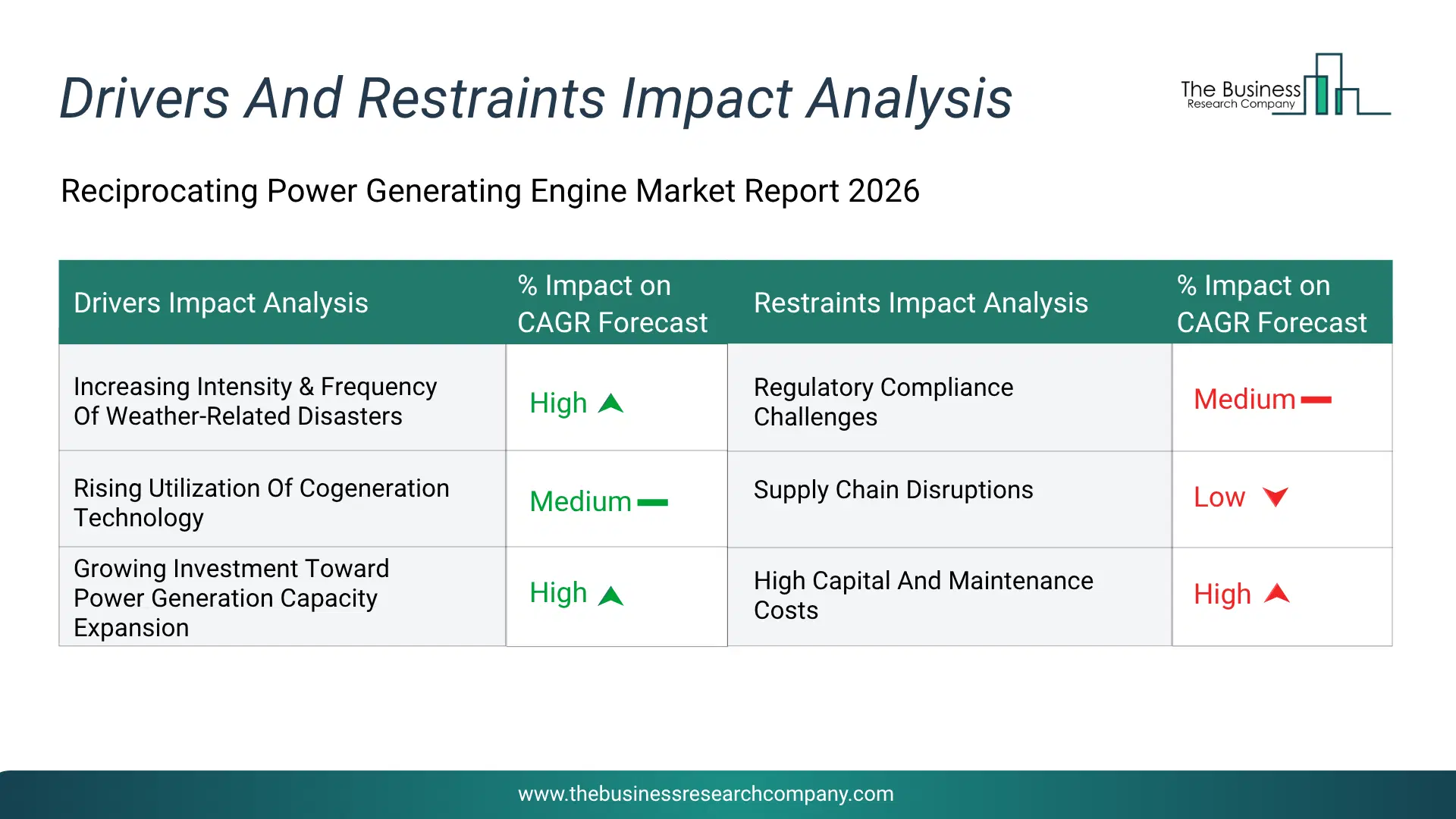
Infographic Chart Showing Key Market Drivers Analysis And Restraints For Reciprocating Power Generating Engine Market
The chart presents an impact analysis of key drivers and restraints, quantifying their relative influence on the market's growth rate and helping assess the balance between growth enablers and limiting factors. This chart offers a high-level perspective; the full report contains more detailed insights.
How Will The Drivers Impact Growth In The Global Reciprocating Power Generating Engine Market?
• Increasing Intensity & Frequency Of Weather-Related Disasters (High) – During the forecast period, the increasing intensity & frequency of weather-related disasters is expected to become a key growth driver for the reciprocating power generating engine market by 2030. Increasing intensity and frequency of weather-related disasters is a major driver for the reciprocating power generating engine market because extreme weather events often disrupt electricity transmission and distribution networks. During hurricanes, floods, wildfires, and storms, reliable backup power becomes essential for hospitals, emergency services, data centers, and industrial facilities. Reciprocating engines can be deployed quickly and provide dependable power during grid outages, making them a preferred emergency power solution. Governments and businesses are increasingly investing in resilient energy infrastructure to minimize operational disruptions caused by natural disasters. These engines also support rapid restoration of critical services in affected regions. Their ability to operate independently of the main grid enhances energy security during emergencies. • Rising Utilization Of Cogeneration Technology (Medium) – During the forecast period, the rising utilization of cogeneration technology is expected to emerge as a major factor driving the expansion of the reciprocating power generating engine market by 2030. Rising utilization of cogeneration technology is accelerating demand for reciprocating power generating engines across industrial and commercial sectors. Cogeneration systems simultaneously produce electricity and useful heat from a single fuel source, significantly improving overall energy efficiency. Reciprocating engines are widely used in combined heat and power (CHP) applications because of their high efficiency, operational flexibility, and reliable performance. Industries seeking to lower energy costs and reduce fuel consumption increasingly adopt these systems to improve productivity. The technology also supports sustainability objectives by minimizing energy waste and lowering emissions compared to separate power and heat generation. Growing emphasis on efficient energy management further encourages deployment of engine-based cogeneration facilities. • Growing Investment Toward Power Generation Capacity Expansion (High) – During the forecast period, the growing investment toward power generation capacity expansion is expected to act as a key growth catalyst for the reciprocating power generating engine market by 2030. Growing investment toward power generation capacity expansion is a key factor driving the reciprocating power generating engine market. Rising electricity demand from industrialization, urban development, and digital infrastructure requires additional power generation resources. Reciprocating engines offer a cost-effective and scalable solution for adding generation capacity in both developed and emerging economies. Their relatively short installation timelines allow utilities and independent power producers to respond quickly to increasing energy requirements. These engines are particularly valuable in regions where grid infrastructure is limited or where rapid capacity additions are needed. Investments in new power plants, microgrids, and decentralized generation projects further strengthen market demand.How Will The Restraints Impact Growth In The Global Reciprocating Power Generating Engine Market?
• Regulatory Compliance Challenges (High) – During the forecast period, the regulatory compliance challenges act as a significant restraint on the reciprocating power generating engine market because manufacturers and operators must adhere to increasingly stringent environmental and emission standards. Governments across many regions are implementing regulations that limit nitrogen oxides, particulate matter, and greenhouse gas emissions from power generation equipment. Meeting these requirements often necessitates advanced emission-control technologies, increasing production and operational costs. Compliance procedures can also lengthen project approval timelines and create additional administrative burdens for power plant developers. Smaller companies may face difficulties in investing in the required technological upgrades and certification processes. Frequent regulatory updates further increase uncertainty and planning complexity for market participants. As a result, strict compliance obligations can slow the deployment of reciprocating power generating engines and restrain overall market growth. • Supply Chain Disruptions (Medium) – During the forecast period, the supply chain disruptions restrain the reciprocating power generating engine market by affecting the availability of critical components, raw materials, and manufacturing equipment. Global logistics challenges, transportation delays, geopolitical tensions, and shortages of essential materials can interrupt production schedules and increase lead times. Engine manufacturers often rely on complex international supply networks, making them vulnerable to disruptions at multiple stages of the value chain. Delays in component procurement can postpone project completion and increase overall installation costs for customers. Supply constraints may also lead to price volatility, reducing profitability and creating budget uncertainties for developers. In addition, prolonged disruptions can limit the ability of suppliers to meet growing market demand efficiently. Consequently, supply chain instability remains a key factor that can hinder the expansion of the reciprocating power generating engine market. • High Capital And Maintenance Costs (High) – During the forecast period, the high capital and maintenance costs act as a significant restraint on the reciprocating power generating engine market because the installation and long-term operation of these systems require substantial financial investment. Initial expenditures for engine procurement, site preparation, auxiliary equipment, and installation can be considerable, particularly for large-scale power generation projects. In addition, regular maintenance, periodic overhauls, and replacement of critical engine components increase lifecycle costs. Operators must also allocate resources for skilled technicians and specialized servicing to ensure reliable performance. These ongoing expenses can discourage investments, especially among small utilities and industrial users with limited budgets. The high total cost of ownership reduces the economic attractiveness of reciprocating power generating engines in certain applications. As a result, elevated capital and maintenance costs can restrain the growth of the reciprocating power generating engine market.Key Players In The Global Reciprocating Power Generating Engine Market
Major companies operating in the reciprocating power generating engine market are Rolls-Royce, MAN Energy Solutions, Kohler, Kirloskar Oil Engines, Kawasaki Heavy Industries, Deere & Company, Briggs & Stratton, Caterpillar, Cummins, Deutz, Escorts Kubota, Siemens Energy, Wärtsilä, Yanmar, General Electric, Motorenfabrik Hatz, Perkins Engines, MTU Onsite Energy, Doosan Engine, HD HyundAI Heavy Industries, INNIO Jenbacher, Liebherr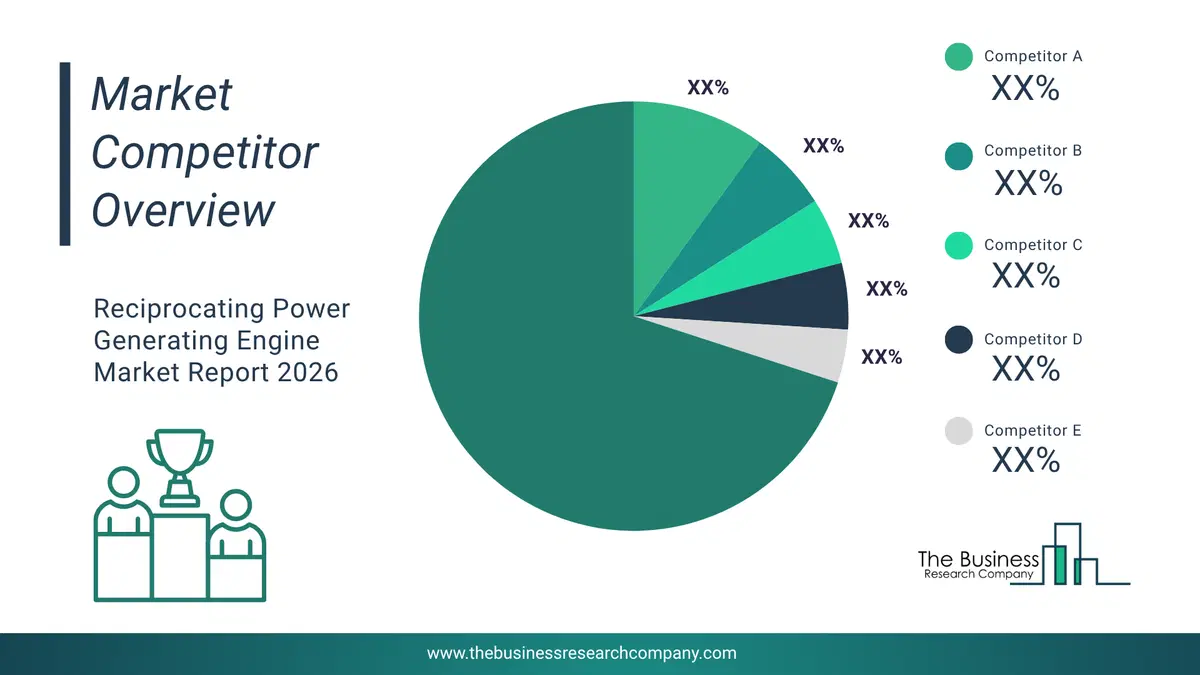
This chart is for illustrative purposes; the full report includes a detailed competitor analysis and comprehensive overview of the top 10 companies in the market.
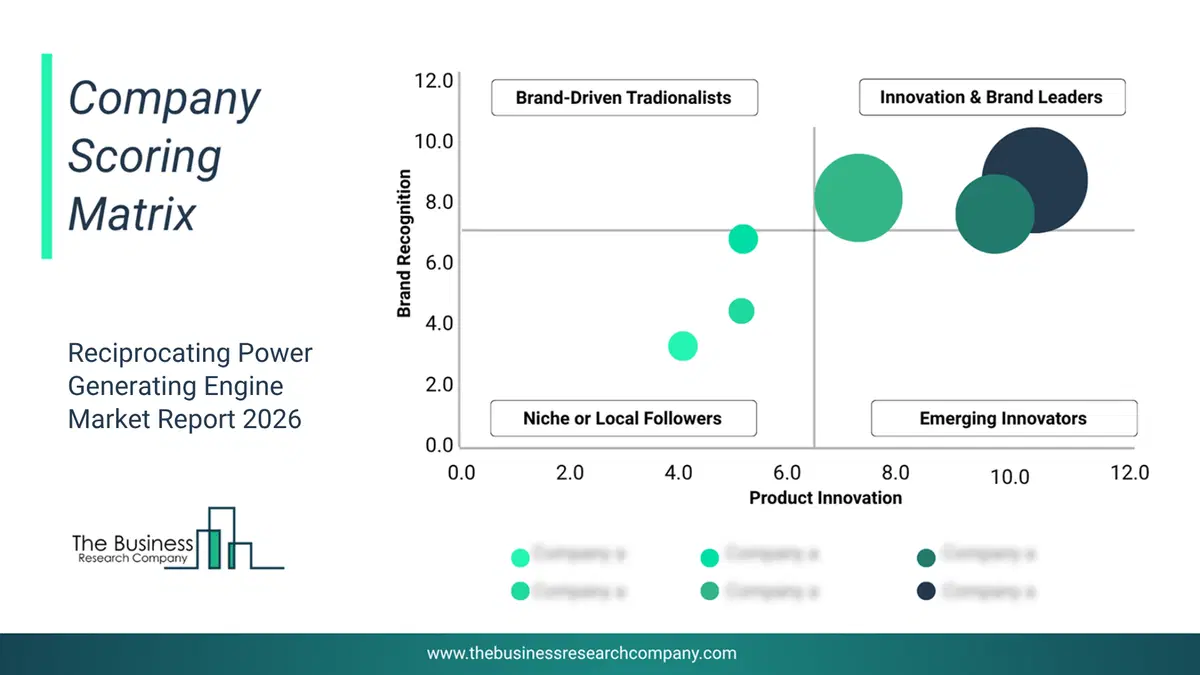
This chart maps companies by product innovation and brand strength, with bubble size indicating relative revenue, helping identify market leaders, challengers, and niche players. This is an illustrative chart; the full report provides a complete and accurate competitive analysis.
Global Reciprocating Power Generating Engine Market Trends and Insights
Major companies operating in the reciprocating power generation engine market are developing innovative products to provide efficient and environmentally friendly electricity generation solutions for a wide range of applications, from residential to industrial. For instance, in September 2023, Kirloskar Oil Engines Ltd., an India-based engineering company in the power generation equipment industry, introduced its CPCB IV+ Compliant Gensets Flexi-Fuel and OptiPrime Range, which feature (1) multi-fuel capability (diesel, natural gas, and biogas) for greater flexibility, (2) IoT-enabled real-time monitoring and analytics for remote diagnostics, and (3) hybrid patented technology designed to optimize load efficiency and reduce fuel consumption.What Are Latest Mergers And Acquisitions In The Reciprocating Power Generating Engine Market?
In June 2024, DEUTZ AG, a Germany-based provider of diesel and gas reciprocating engines, drive systems, and related services, acquired Blue Star Power Systems, Inc. for an undisclosed amount. With this acquisition, DEUTZ aims to expand its presence in the decentralized energy generation market and strengthen its portfolio of reciprocating engine-based power solutions in North America. Blue Star Power Systems, Inc. is a U.S.-based manufacturer of diesel and gaseous generator sets ranging from 20 kWe to 2,000 kWe, offering customized power generation systems for industrial and commercial applications.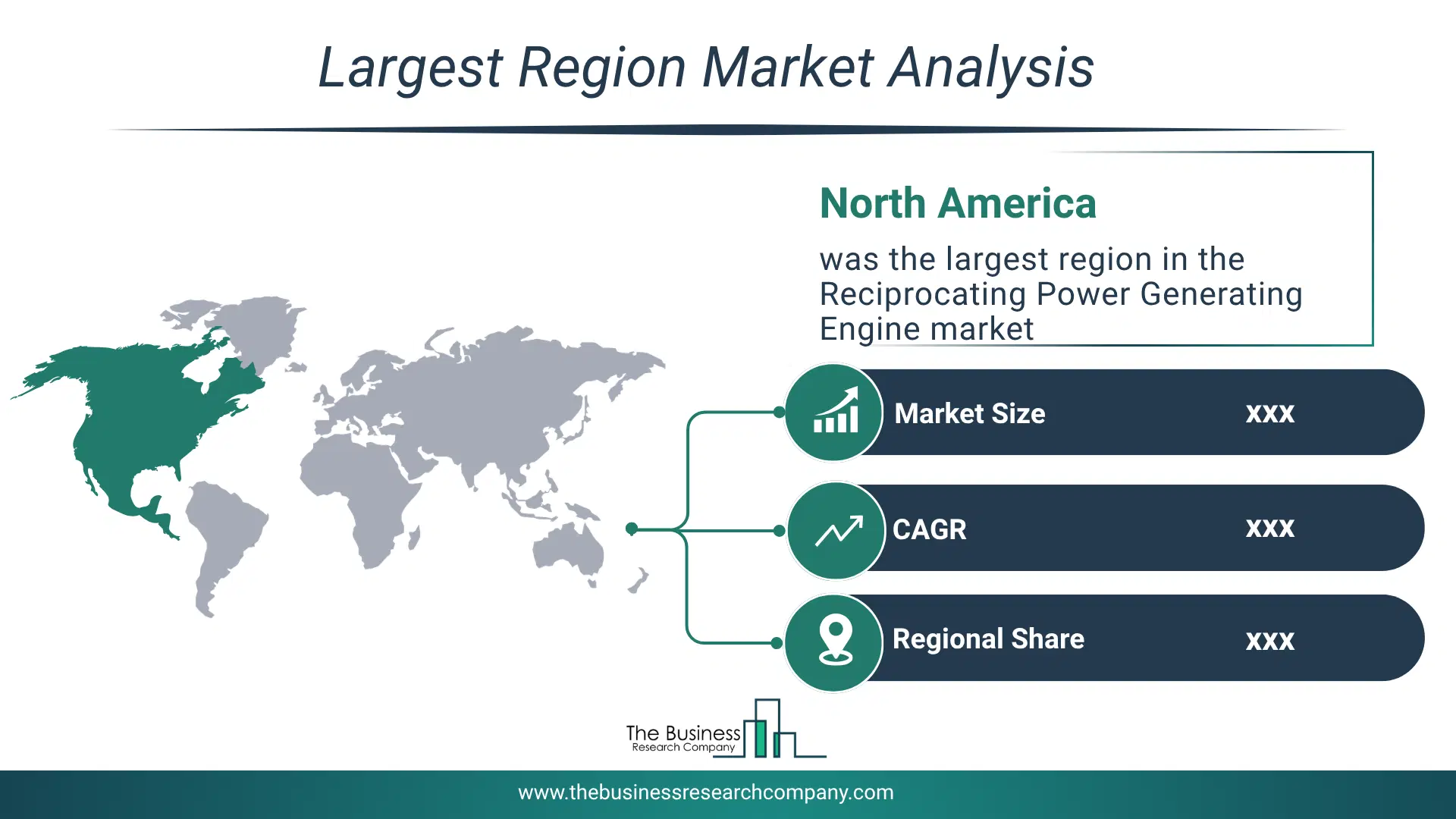
Regional Outlook
North America was the largest region in the reciprocating power generation engine market in 2025. Asia-Pacific is expected to be the fastest-growing region in the reciprocating power generation engine market share during the forecast period. The regions covered in this market report are Asia-Pacific, South East Asia, Western Europe, Eastern Europe, North America, South America, Middle East, Africa. The countries covered in this market report are Australia, Brazil, China, France, Germany, India, Indonesia, Japan, Taiwan, Russia, South Korea, UK, USA, Canada, Italy, Spain.What Defines the Reciprocating Power Generating Engine Market?
The reciprocating power generation engines market consists of sales of crankshaft, exhaust camshaft, intake camshaft, piston. Values in this market are ‘factory gate’ values, that is the value of goods sold by the manufacturers or creators of the goods, whether to other entities (including downstream manufacturers, wholesalers, distributors and retailers) or directly to end customers. The value of goods in this market includes related services sold by the creators of the goods.How is Market Value Defined and Measured?
The market value is defined as the revenues that enterprises gain from the sale of goods and/or services within the specified market and geography through sales, grants, or donations in terms of the currency (in USD unless otherwise specified). The revenues for a specified geography are consumption values that are revenues generated by organizations in the specified geography within the market, irrespective of where they are produced. It does not include revenues from resales along the supply chain, either further along the supply chain or as part of other products.
This chart presents market attractiveness based on a quantitative evaluation of growth, competition, strategic alignment, and risk, offering a clear view of opportunity areas for decision-making. This chart is for illustrative purposes; the full report contains the complete analysis.

This chart highlights the Total Addressable Market (TAM) by estimating the maximum revenue opportunity using an assumption-driven approach, supporting strategic planning and opportunity sizing across markets. The chart is illustrative; the full report provides a more comprehensive analysis.
What Key Data and Analysis Are Included in the Reciprocating Power Generating Engine Market Report 2026?
The reciprocating power generating engine market research report is one of a series of new reports from The Business Research Company that provides market statistics, including industry global market size, regional shares, competitors with the market share, detailed market segments, market trends and opportunities, and any further data you may need to thrive in the reciprocating power generating engine industry. The market research report delivers a complete perspective of everything you need, with an in-depth analysis of the current and future state of the industry.Reciprocating Power Generating Engine Market Report 2026 Market Report Forecast Analysis
| Report Attribute | Details |
|---|---|
| Market Size Value In 2026 | $53.11 billion |
| Revenue Forecast In 2030 | $54.68 billion |
| Growth Rate | CAGR of 0.9% from 2026 to 2030 |
| Base Year For Estimation | 2025 |
| Actual Estimates/Historical Data | 2020-2025 |
| Forecast Period | 2026 - 2030 |
| Market Representation | Revenue in USD Billion and CAGR from 2026 to 2030 |
| Segments Covered | Fuel, Rated Power, Application |
| Regional Scope | Asia-Pacific, Western Europe, Eastern Europe, North America, South America, Middle East, Africa |
| Country Scope | The countries covered in the report are Australia, Brazil, China, France, Germany, India, ... |
| Key Companies Profiled | Rolls-Royce, MAN Energy Solutions, Kohler, Kirloskar Oil Engines, Kawasaki Heavy Industries, Deere & Company, Briggs & Stratton, Caterpillar, Cummins, Deutz, Escorts Kubota, Siemens Energy, Wärtsilä, Yanmar, General Electric, Motorenfabrik Hatz, Perkins Engines, MTU Onsite Energy, Doosan Engine, HD HyundAI Heavy Industries, INNIO Jenbacher, Liebherr |
| Customization Scope | Request for Customization |
| Pricing And Purchase Options | Explore Purchase Options |