
Refrigerated Warehousing And Storage Market Report 2026
Global Outlook – By Type (Cold Storage; Frozen Storage ), By Ownership (Private Warehouses; Public Warehouses; Bonded Warehouses), By Application (Fruits And Vegetables; Bakery And Confectionery; Milk And Dairy Products; Meat; Seafood; Beverages; Other Applications) – Market Size, Trends, Strategies, and Forecast to 2030
Refrigerated Warehousing And Storage Market Overview
• Refrigerated Warehousing And Storage market size has reached to $176.36 billion in 2025 • Expected to grow to $266.95 billion in 2030 at a compound annual growth rate (CAGR) of 8.8% • Growth Driver: Driving Growth Of Refrigerated Warehousing And Storage Market • Market Trend: Energy-Efficient Thermal Management Innovations In Cold Storage Operations • Asia-Pacific was the largest region in 2025 and North America is the fastest growing region.Market Gains By 2030 – Top Opportunities By Segment
Market Gain identifies the most promising market opportunities by highlighting the segments or products expected to generate the highest incremental revenue growth over the next five years.
What Is Covered Under Refrigerated Warehousing And Storage Market?
Refrigerated warehousing and storage refer to a type of cold storage facility that provides services such as blast freezing, tempering, and modified atmosphere storage that are used to store products that must be kept at specific temperatures to stay fresh, such as foods, medicines, and biological samples in research laboratories to improve the integrity of the product, maintain the shelf life of drugs, and reduce contamination among the products. The main types in the refrigerated warehousing and storage market are cold storage and frozen storage. Cold storage refers to the storage (as of food) in a cold place for preservation. The market is also segmented by ownership into private warehouses, public warehouses, and bonded warehouses and by application into fruits and vegetables, bakery and confectionery, milk and dairy products, meat, seafood, beverages, and others.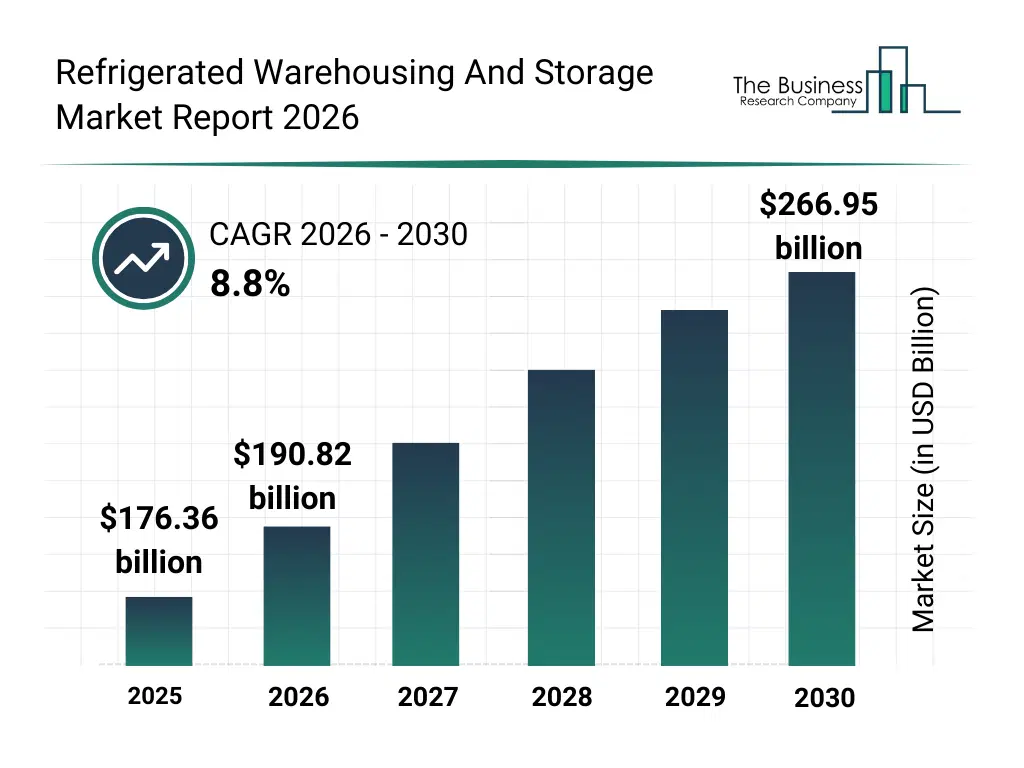
What Is The Refrigerated Warehousing And Storage Market Size and Share 2026?
The refrigerated warehousing and storage market size has grown strongly in recent years. It will grow from $176.36 billion in 2025 to $190.82 billion in 2026 at a compound annual growth rate (CAGR) of 8.2%. The growth in the historic period can be attributed to expansion of frozen food consumption, growth of organized food retail, increasing pharmaceutical cold chain requirements, rising use of refrigerated containers, development of large-scale cold storage infrastructure.What Is The Refrigerated Warehousing And Storage Market Growth Forecast?
The refrigerated warehousing and storage market size is expected to see strong growth in the next few years. It will grow to $266.95 billion in 2030 at a compound annual growth rate (CAGR) of 8.8%. The growth in the forecast period can be attributed to increasing biologics and vaccine storage demand, rising investments in smart cold warehouses, expansion of cold chain logistics in emerging markets, growing emphasis on carbon-efficient refrigeration, increasing adoption of automated material handling in cold storage. Major trends in the forecast period include increasing adoption of energy-efficient refrigeration systems, growing deployment of iot-enabled temperature monitoring, expansion of automated cold storage facilities, rising demand for pharmaceutical-grade cold storage, enhanced focus on food safety compliance.
Global Refrigerated Warehousing And Storage Market Segmentation
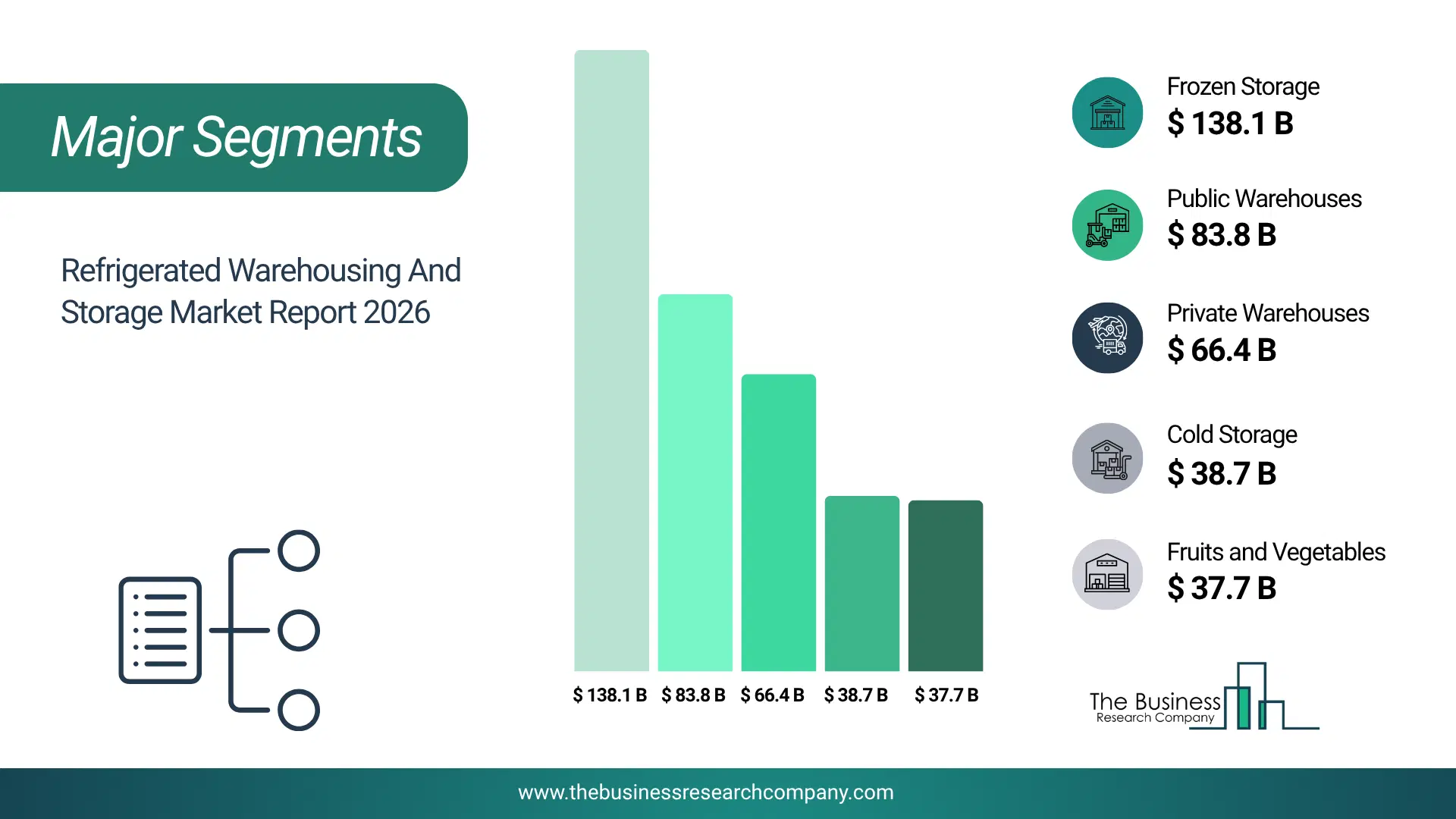
1) By Type: Cold Storage, Frozen Storage 2) By Ownership: Private Warehouses, Public Warehouses, Bonded Warehouses 3) By Application: Fruits And Vegetables, Bakery And Confectionery, Milk And Dairy Products, Meat, Seafood, Beverages, Other Applications Subsegments: 1) By Cold Storage: Refrigerated Containers, Blast Chillers, Bulk Cold Rooms 2) By Frozen Storage: Deep Freezers, Walk-In Freezers, Freezer Warehousing Facilities The top segments in the refrigerated warehousing and storage market will be: • Frozen Storage will reach $138195.94 Million by 2025. • Public Warehouses will reach $83870.03 Million by 2025. • Private Warehouses will reach $66419.68 Million by 2025. • Cold Storage will reach $38773.97 Million by 2025. • Fruits and Vegetables will reach $37753.94 Million by 2025.What Is The Driver Of The Refrigerated Warehousing And Storage Market?
The growth of refrigerated warehouses is expected to propel the growth of the refrigerated warehousing and storage market. A refrigerated warehouse refers to a building or facility that uses mechanical refrigeration to maintain a specific temperature range for storing goods. Refrigerated warehouses are used in refrigerated warehousing and storage to provide a controlled temperature environment for storing temperature-sensitive products. For instance, in January 2024, according to the United States Department of Agriculture, a US-based federal executive department, public warehouse refrigerated storage capacity totaled 2.51 billion gross cubic feet in 2023, accounting for 68% of the total storage. Therefore, the growth of refrigerated warehouses drives the growth of the refrigerated warehousing and storage industry.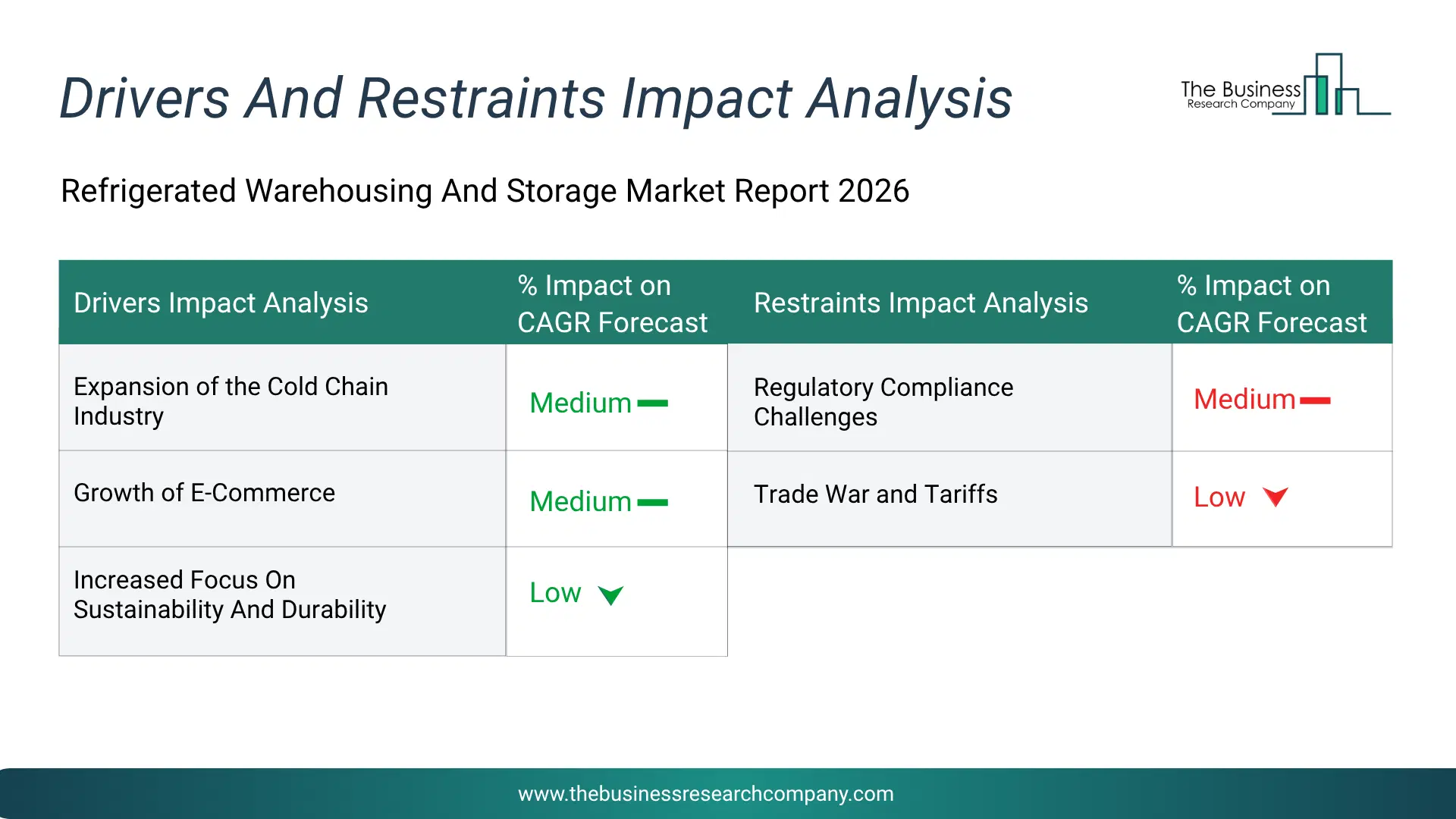
Infographic Chart Showing Key Market Drivers Analysis And Restraints For Refrigerated Warehousing And Storage Market
The chart presents an impact analysis of key drivers and restraints, quantifying their relative influence on the market's growth rate and helping assess the balance between growth enablers and limiting factors. This chart offers a high-level perspective; the full report contains more detailed insights.
How Will The Drivers Impact Growth In The Global Refrigerated Warehousing And Storage Market?
• Expansion of the Cold Chain Industry (Medium) – The expansion of cold chain industry will become a significant driver contributing to the growth of the refrigerated warehousing and storage market by 2030. As demand rises for temperature-sensitive products such as pharmaceuticals, biologics, frozen foods and perishable goods, businesses increasingly require efficient cold storage solutions to maintain product quality and regulatory compliance. This is leading to greater investment in refrigerated infrastructure, advanced monitoring systems and energy-efficient technologies. The cold chain’s role in supporting global trade, e-commerce and food security further strengthens the need for reliable storage and transportation. As a result, warehousing providers are scaling operations to meet these evolving supply chain requirements. Consequently, the expansion of cold chain industry is projected to contributing to a 0.5% annual growth in the market. • Growth of E-Commerce (Medium) – The growth of e-commerce will become a key driver of growth in the refrigerated warehousing and storage market by 2030. As online shopping for perishable goods such as fresh food, pharmaceuticals and frozen items continues to rise, the demand for efficient and reliable cold storage solutions is increasing. E-commerce companies require temperature-controlled warehousing and timely delivery to maintain product quality and meet customer expectations. This has led to greater investment in refrigerated logistics infrastructure, including last-mile cold chain solutions. Consequently, the growing need to support temperature-sensitive e-commerce operations is set to fuel demand for advanced refrigerated storage facilities. As a result, the growth of e-commerce is anticipated to contributing to a 1.5% annual growth in the market. • Increased Focus On Sustainability And Durability (Low) – The increased focus on sustainability and durability will serve as a key growth catalyst for the refrigerated warehousing and storage market by 2030. As global demand for perishable food products such as fruits, vegetables, dairy and meat increases, exporters require reliable temperature-controlled logistics to maintain product quality and extend shelf life during transit. This growing need for cold chain infrastructure is prompting investments in advanced refrigerated storage facilities. Additionally, government initiatives supporting export-oriented agriculture and international trade agreements are further boosting export volumes, thereby increasing demand for efficient cold storage solutions. As a result, refrigerated warehousing is becoming a critical component of the global agricultural supply chain. Therefore, this increased focus on sustainability and durability is projected to supporting to a 0.8% annual growth in the market. • Government Initiatives (Low) – The government initiatives will emerge as a major factor driving the expansion of the refrigerated warehousing and storage market by 2030. Various policies and funding programs aimed at improving cold chain infrastructure, ensuring food safety and supporting pharmaceutical logistics are driving demand for temperature-controlled storage solutions. Investments in rural cold storage facilities, tax incentives and public-private partnerships are encouraging companies to expand capacity and modernize operations. Additionally, stricter regulations around perishable goods handling and increasing focus on reducing food waste are prompting greater reliance on advanced refrigerated storage. These efforts collectively create a favorable environment for market expansion and technological innovation in the sector. Consequently, the government initiatives is projected to contributing to a 1.0% annual growth in the market.How Will The Restraints Impact Growth In The Global Refrigerated Warehousing And Storage Market?
• Limited Infrastructure (Medium) – Limited Infrastructure will restrict the growth of the Refrigerated Warehousing And Storage market during the forecast period. Refrigerated warehousing requires specialized infrastructure including temperature-controlled facilities and cold chain logistics networks. The lack of adequate cold storage infrastructure in many regions limits market reach and service availability. Infrastructure gaps particularly affect developing economies and remote areas, constraining market expansion. • Regulatory Compliance Challenges (Low) – Regulatory Compliance Challenges will restrict the growth of the Refrigerated Warehousing And Storage market during the forecast period. Refrigerated warehousing operations must comply with food safety, temperature monitoring, and storage regulations. Compliance with varying regulatory standards adds to operational complexity and costs. Regulatory changes can affect facility operations and require investment in compliance measures, impacting market growth. • Trade War and Tariffs (Low) – Trade War and Tariffs will restrict the growth of the Refrigerated Warehousing And Storage market during the forecast period. Trade disputes affect agricultural exports and cold chain logistics demand. Tariffs on agricultural products can reduce export volumes and affect warehousing requirements. Trade barriers may impact international cold chain operations and investment in refrigerated facilities.Key Players In The Global Refrigerated Warehousing And Storage Market
Major companies operating in the refrigerated warehousing and storage market are AmeriCold Logistics, Nichirei Corporation, Lineage Logistics Holdings LLC, Henningsen Cold Storage Co., Burris Logistics, Toyo Suisan Kaisha Ltd., Agro Merchants North America Holdings LLC, Nippon Suisan Kaisha Ltd., Snowman Logistics Ltd., Lineage Logistics, Americold Reality Trust Inc., United States Cold Storage Inc., NewCold Cooperatief U.A., Nichirei Logistics Group Inc., Emergent Cold LatAm Management LLC, Interstate Warehousing Inc., Frialsa Frigorificos S.A. De C.V., Constellation Cold Logistics, Superfrio Logistica Frigorificada, FreezPak Logistics, Conestoga Cold Storage Limited, Congebec Logistics Inc., METCOLD Supply Network Management Limited, RLS Logistics, Friozem Armazens Frigorificos Ltda., Magnavale Ltd., Confederation Freezers, Trenton Cold Storage Inc., Nor-Am Cold Storage, Burris Logistics, Agri-Norcold A/S, Vertical Cold Storage, ColdPoint Logistics, Hanson Logistics Ltd., Cloverleaf Cold Storage Co., Henningsen Cold Storage Co., Gruppo Marconi Logistica Integrata, Zero Mountain Inc.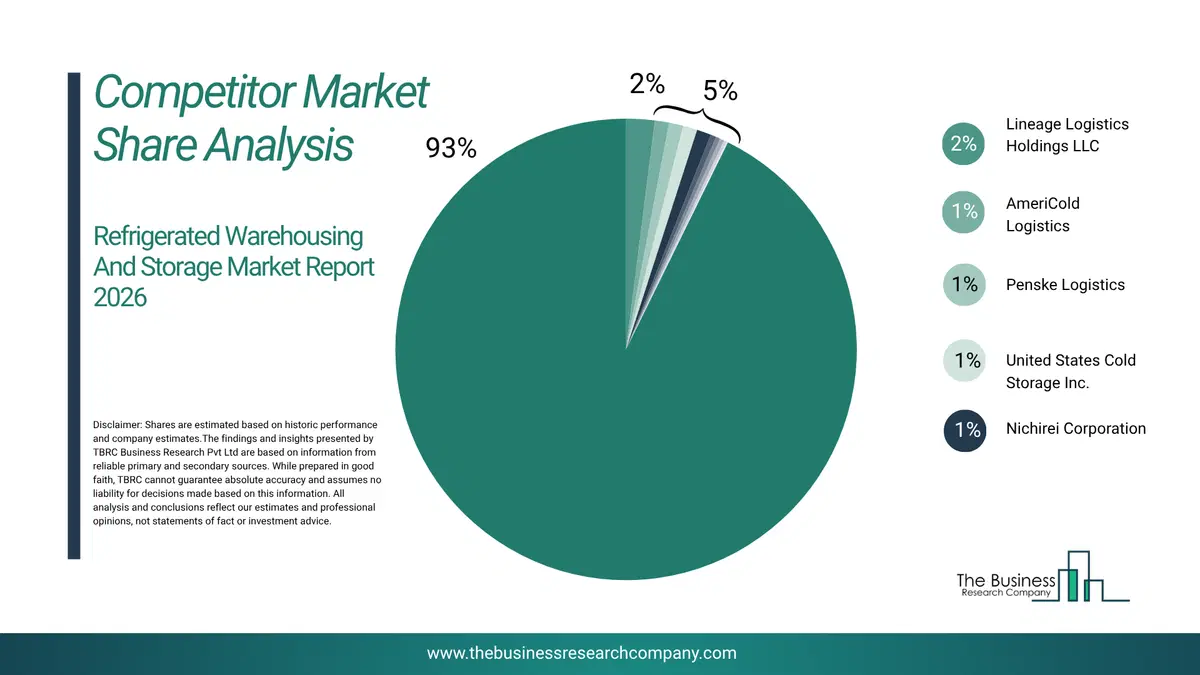
This chart is for illustrative purposes; the full report includes a detailed competitor analysis and comprehensive overview of the top 10 companies in the market.
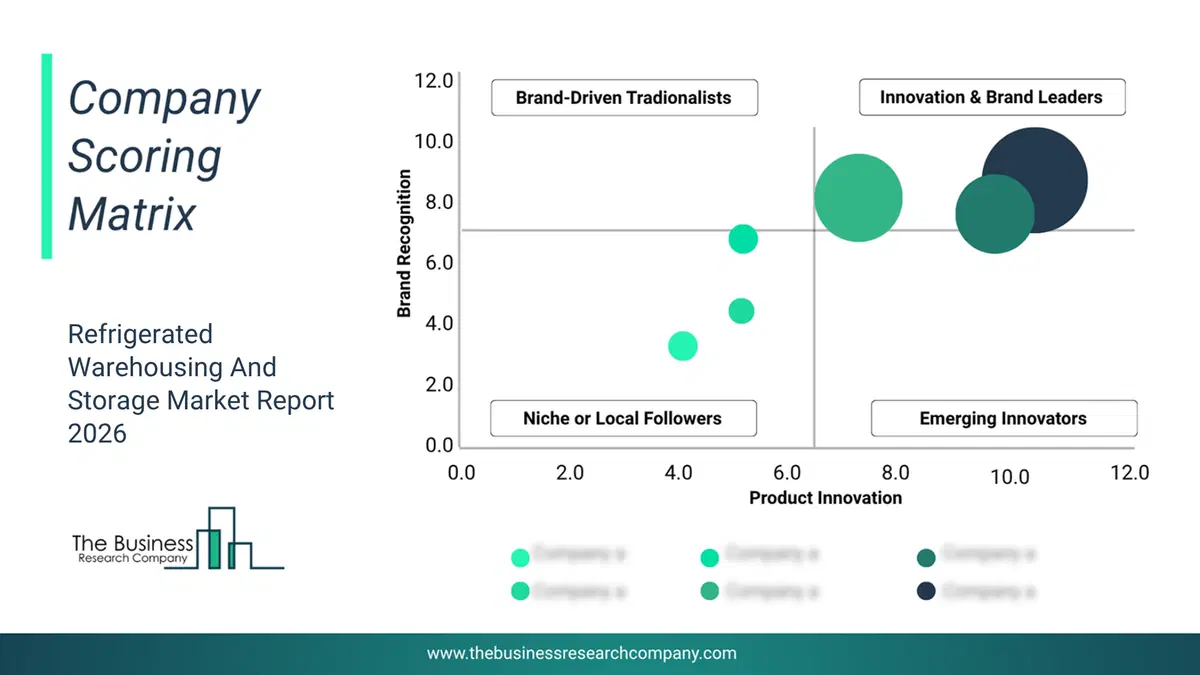
This chart maps companies by product innovation and brand strength, with bubble size indicating relative revenue, helping identify market leaders, challengers, and niche players. This is an illustrative chart; the full report provides a complete and accurate competitive analysis.
Global Refrigerated Warehousing And Storage Market Trends and Insights
Major companies operating in the refrigerated warehousing and storage market are focusing on developing energy-efficient cooling solutions such as phase change material based thermal energy storage systems to enhance operational efficiency and reduce power consumption. Phase change material based thermal energy storage systems are advanced cooling solutions that store and release thermal energy by changing physical state, helping maintain stable temperatures in cold storage facilities while reducing peak electricity demand and refrigeration load. For instance, in April 2025, SCG Chemicals Public Company Limited, a Thailand-based chemical and polymer solutions provider, launched CHILLOX, an energy-saving solution designed for cold storage warehouses to improve cooling efficiency and operational reliability, featuring phase change material based thermal energy storage, temperature stabilization during peak electricity demand, and backup cooling support during power disruptions. CHILLOX improves energy efficiency, lowers operating costs, and supports sustainable refrigerated warehousing operations.What Are Latest Mergers And Acquisitions In The Refrigerated Warehousing And Storage Market?
In April 2025, Vertical Cold Storage, a US‑based provider of temperature‑controlled warehousing, distribution, and cold chain logistics solutions, acquired Arctic Logistics for an undisclosed amount. With this acquisition, Vertical Cold Storage aims to strengthen its national cold chain footprint, enhance its cross‑border trade capabilities near the U.S.–Canada border, and better serve frozen and perishable food producers and buyers in the Midwest and beyond. Arctic Logistics is a US‑based provider of temperature‑controlled warehousing and logistics services, operating a 140,000‑square‑foot facility in Canton, Michigan, equipped with blast freezing, case picking, kitting, cross‑docking, and import/export services.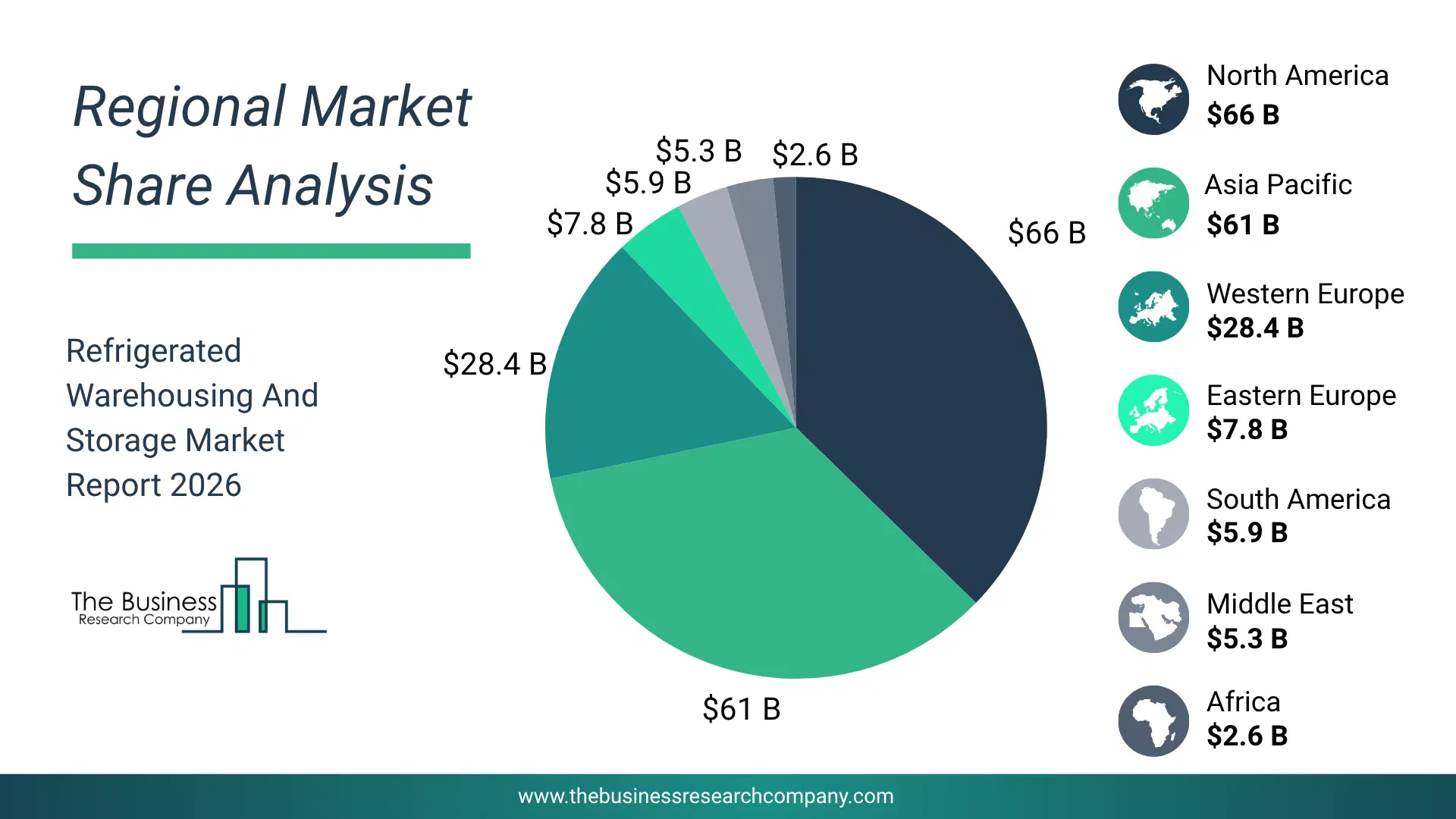
Regional Outlook
Asia-Pacific was the largest region in the refrigerated warehousing and storage market in 2025. North America was the second largest region in the refrigerated warehousing and storage market. The regions covered in this market report are Asia-Pacific, South East Asia, Western Europe, Eastern Europe, North America, South America, Middle East, Africa. The countries covered in this market report are China; India; Japan; Australia; Indonesia; South Korea; Bangladesh; Thailand; Vietnam; Malaysia; Singapore; Philippines; Hong Kong; Taiwan; New Zealand; UK; Germany; France; Italy; Spain; Austria; Belgium; Denmark; Finland; Ireland; Netherlands; Norway; Portugal; Sweden; Switzerland; Russia; Czech Republic; Poland; Romania; Ukraine; USA; Canada; Mexico; Brazil; Chile; Argentina; Colombia; Peru; Saudi Arabia; Israel; Iran; Turkey; UAE; Egypt; Nigeria; South Africa.What Defines the Refrigerated Warehousing And Storage Market?
The refrigerated warehouse and storage market includes revenue earned by entities by providing refrigeration services to keep produce (often food) at an ideal temperature, prevent rotting, extend its life span, and minimize microbial contamination growth. The market value includes the value of related goods sold by the service provider or included within the service offering. Only goods and services traded between entities or sold to end consumers are included.How is Market Value Defined and Measured?
The market value is defined as the revenues that enterprises gain from the sale of goods and/or services within the specified market and geography through sales, grants, or donations in terms of the currency (in USD unless otherwise specified). The revenues for a specified geography are consumption values that are revenues generated by organizations in the specified geography within the market, irrespective of where they are produced. It does not include revenues from resales along the supply chain, either further along the supply chain or as part of other products.
This chart presents market attractiveness based on a quantitative evaluation of growth, competition, strategic alignment, and risk, offering a clear view of opportunity areas for decision-making. This chart is for illustrative purposes; the full report contains the complete analysis.

This chart highlights the Total Addressable Market (TAM) by estimating the maximum revenue opportunity using an assumption-driven approach, supporting strategic planning and opportunity sizing across markets. The chart is illustrative; the full report provides a more comprehensive analysis.
What Key Data and Analysis Are Included in the Refrigerated Warehousing And Storage Market Report 2026?
The refrigerated warehousing and storage market research report is one of a series of new reports from The Business Research Company that provides market statistics, including Market Report 2026?global market size, regional shares, competitors with the market share, detailed market segments, market trends and opportunities, and any further data you may need to thrive in the refrigerated warehousing and storage Market Report 2026? The market research report delivers a complete perspective of everything you need, with an in-depth analysis of the current and future state of the Market Report 2026?Refrigerated Warehousing And Storage Market Report Forecast Analysis
| Report Attribute | Details |
|---|---|
| Market Size Value In 2026 | $190.82 billion |
| Revenue Forecast In 2030 | $266.95 billion |
| Growth Rate | CAGR of 8.2% from 2026 to 2030 |
| Base Year For Estimation | 2025 |
| Actual Estimates/Historical Data | 2020-2025 |
| Forecast Period | 2026 - 2030 |
| Market Representation | Revenue in USD Billion and CAGR from 2026 to 2030 |
| Segments Covered | Type, Ownership, Application |
| Regional Scope | Asia-Pacific, Western Europe, Eastern Europe, North America, South America, Middle East, Africa |
| Country Scope | The countries covered in the report are Australia, Brazil, China, France, Germany, India, Indonesia, Japan, Taiwan, Russia, South Korea, UK, USA, Canada, Italy, Spain. |
| Key Companies Profiled | AmeriCold Logistics, Nichirei Corporation, Lineage Logistics Holdings LLC, Henningsen Cold Storage Co., Burris Logistics, Toyo Suisan Kaisha Ltd., Agro Merchants North America Holdings LLC, Nippon Suisan Kaisha Ltd., Snowman Logistics Ltd., Lineage Logistics, Americold Reality Trust Inc., United States Cold Storage Inc., NewCold Cooperatief U.A., Nichirei Logistics Group Inc., Emergent Cold LatAm Management LLC, Interstate Warehousing Inc., Frialsa Frigorificos S.A. De C.V., Constellation Cold Logistics, Superfrio Logistica Frigorificada, FreezPak Logistics, Conestoga Cold Storage Limited, Congebec Logistics Inc., METCOLD Supply Network Management Limited, RLS Logistics, Friozem Armazens Frigorificos Ltda., Magnavale Ltd., Confederation Freezers, Trenton Cold Storage Inc., Nor-Am Cold Storage, Burris Logistics, Agri-Norcold A/S, Vertical Cold Storage, ColdPoint Logistics, Hanson Logistics Ltd., Cloverleaf Cold Storage Co., Henningsen Cold Storage Co., Gruppo Marconi Logistica Integrata, Zero Mountain Inc. |
| Customization Scope | Request for Customization |
| Pricing And Purchase Options | Explore Purchase Options |