

Rolling Stock Market Report 2026
Global Outlook – By Product (Locomotive, Rapid Transit Vehicle, Wagon), By Locomotive Technology (Diesel Locomotive, Electric Locomotive, Electro-Diesel Locomotive), By Component (Pantograph, Axle, Wheelset, Traction Motor, Auxiliary Power System, Other Components), By End User (Passenger Transit, Cargo Train) – Market Size, Trends, Strategies, and Forecast to 2030
Rolling Stock Market Overview
• Rolling Stock market size has reached to $64.82 billion in 2025 • Expected to grow to $92.21 billion in 2030 at a compound annual growth rate (CAGR) of 7.3% • Growth Driver: Meeting The Demand For Energy-Efficient Transport Systems • Market Trend: Advancements In Diesel-Battery-Electric Hybrid Locomotives For Sustainable Railway Transportation • Asia-Pacific was the largest region and fastest growing region.Market Gains By 2030 – Top Opportunities By Segment
Market Gain identifies the most promising market opportunities by highlighting the segments or products expected to generate the highest incremental revenue growth over the next five years.
What Is Covered Under Rolling Stock Market?
The rolling stock refers to wheeled vehicles owned and used by a railroad or motor carrier used to maximize passenger capacity, enhance safety and security, and improve the bottom line. The main types of products in the rolling stock market are locomotives, rapid transit vehicles, and wagons. The locomotive rolling stock by entities is driven by diesel oil, or electricity as fuel it is an internal combustion engine where it burns heavy diesel oil and generates energy from that for the movement of the engine or it helps for the locomotion. The different locomotive technologies include conventional locomotive, turbocharge locomotive, and maglev and involve several components such as pantograph, axle, wheelset, traction motor, auxiliary power system, and others. The various end-users include passenger transit and cargo trains.
What Is The Rolling Stock Market Size and Share 2026?
The rolling stock market size has grown strongly in recent years. It will grow from $64.82 billion in 2025 to $69.5 billion in 2026 at a compound annual growth rate (CAGR) of 7.2%. The growth in the historic period can be attributed to expansion of railway infrastructure, growth of urban transit systems, modernization of aging rail fleets, rising demand for passenger mobility, availability of advanced rail technologies.What Is The Rolling Stock Market Growth Forecast?
The rolling stock market size is expected to see strong growth in the next few years. It will grow to $92.21 billion in 2030 at a compound annual growth rate (CAGR) of 7.3%. The growth in the forecast period can be attributed to increasing investments in sustainable rail transport, rising demand for energy-efficient locomotives, expansion of smart rail systems, growing adoption of predictive onboard systems, increasing cross-border rail connectivity. Major trends in the forecast period include increasing electrification of rail vehicles, rising adoption of smart rolling stock components, expansion of high-speed rail networks, growing use of lightweight materials, enhanced focus on passenger safety and comfort.
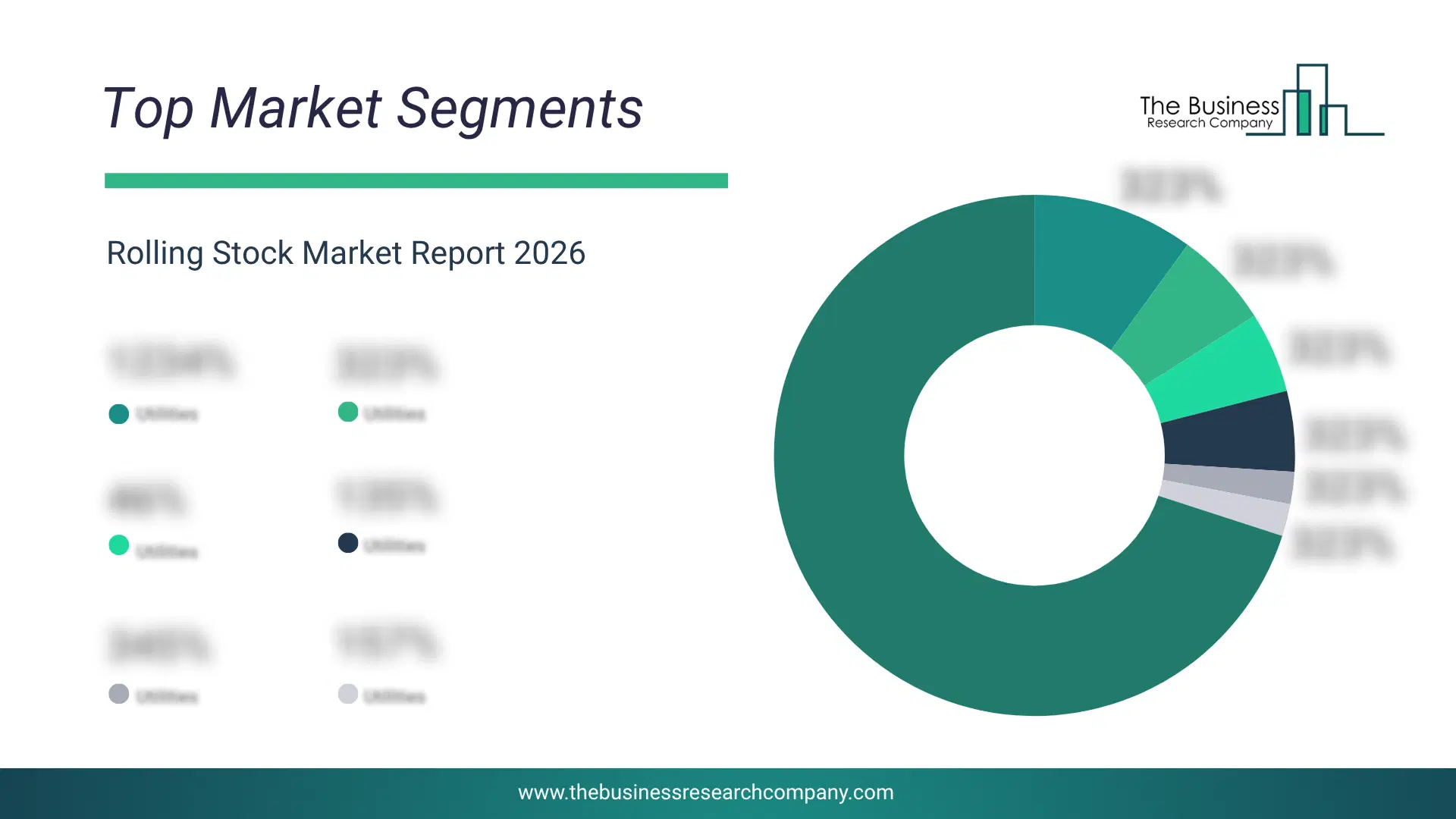
Global Rolling Stock Market Segmentation
1) By Product: Locomotive, Rapid Transit Vehicle, Wagon 2) By Locomotive Technology: Diesel Locomotive, Electric Locomotive, Electro-Diesel Locomotive 3) By Component: Pantograph, Axle, Wheelset, Traction Motor, Auxiliary Power System, Other Components 4) By End User: Passenger Transit, Cargo Train Subsegments: 1) By Locomotive: Diesel Locomotive, Electric Locomotive, Hybrid Locomotive 2) By Rapid Transit Vehicle: Light Rail Vehicle (LRV), Metro Or Heavy Rail, Monorail 3) By Wagon: Freight Wagon, Tank Wagon, Hopper Wagon, Flat Wagon The top segments in the rolling stock market will be: • Rapid Transit Vehicle will reach $40 Billion by 2030. • Wagon will reach $33 Billion by 2030. • Locomotive will reach $18 Billion by 2030.What Is The Driver Of The Rolling Stock Market?
The demand for energy-efficient transport systems is expected to propel the growth of the rolling stock market going forward. Efficient transportation systems allow people and products to move while saving time, money, and energy. Rolling stocks are used in trains and help to reduce energy consumption; as a result, rising demand for energy-efficient transportation systems drives up demand for rolling stocks. For instance, in December 2024, according to Eurostat, a Luxembourg-based statistical office of the European Union, in 2023, renewable energy accounted for 10.8% of the transport sector’s energy consumption in the EU, up from 9.6% in 2022. Therefore, the demand for energy-efficient transport systems is driving the growth of the rolling stock industry.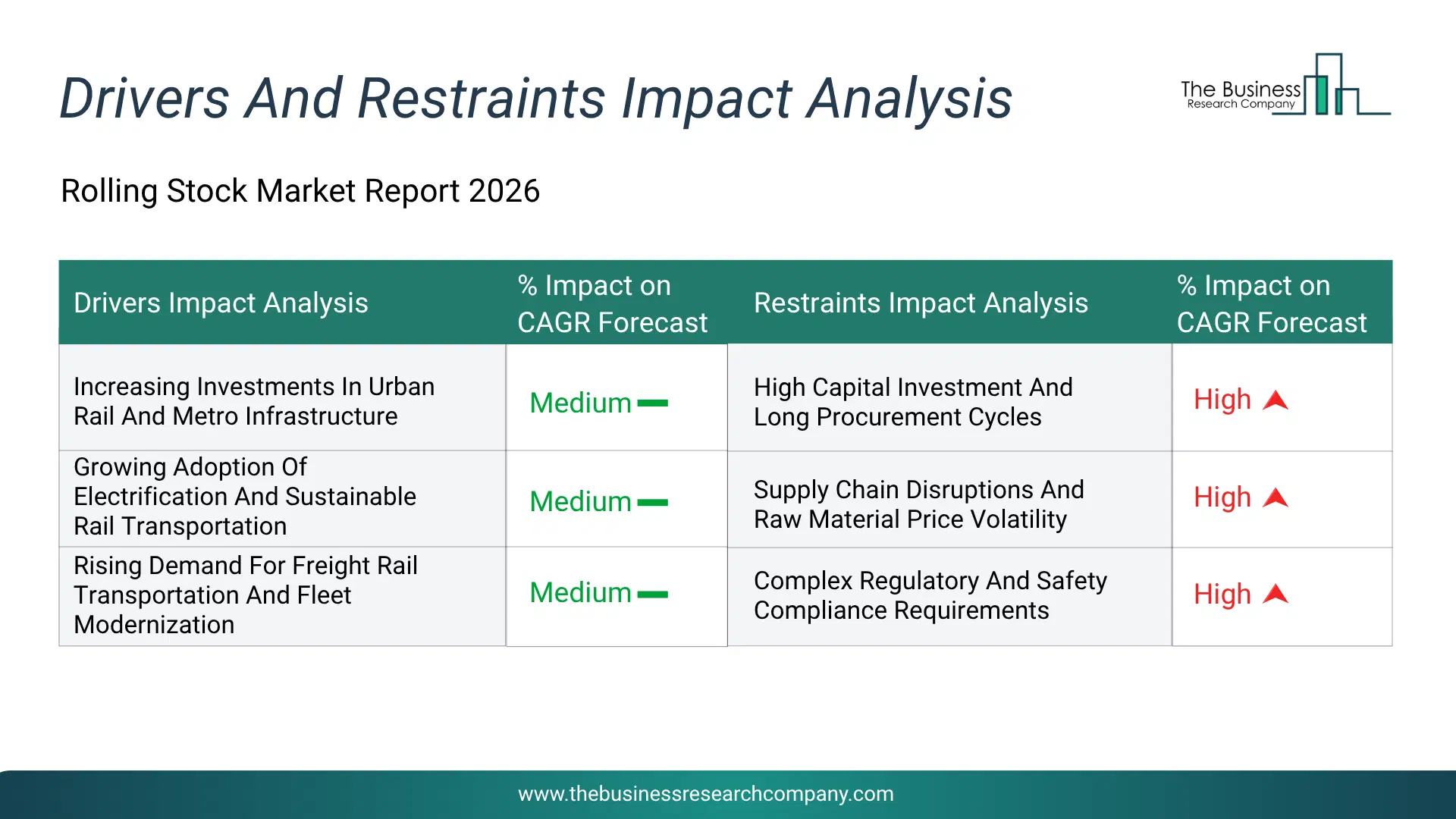
Infographic Chart Showing Key Market Drivers Analysis And Restraints For Rolling Stock Market
The chart presents an impact analysis of key drivers and restraints, quantifying their relative influence on the market's growth rate and helping assess the balance between growth enablers and limiting factors. This chart offers a high-level perspective; the full report contains more detailed insights.
How Will The Drivers Impact Growth In The Global Rolling Stock Market?
• Increasing Investments In Urban Rail And Metro Infrastructure (Medium) – During the forecast period, the increasing investments in urban rail and metro infrastructure are expected to emerge as a major factor driving the expansion of the rolling stock market by 2030. governments are investing heavily in metro rail systems, suburban rail networks, high-speed rail corridors, and light rail transit projects to improve urban mobility, reduce traffic congestion, and accommodate growing populations. these infrastructure developments require the procurement of modern locomotives, passenger coaches, metro cars, and maintenance vehicles while also supporting the replacement of aging rail fleets. • Growing Adoption Of Electrification And Sustainable Rail Transportation (Medium) – During the forecast period, the growing adoption of electrification and sustainable rail transportation is expected to emerge as a major factor driving the expansion of the rolling stock market by 2030. railway operators are increasingly replacing diesel-powered fleets with electric, battery-powered, hybrid, and hydrogen-powered trains to reduce emissions and improve energy efficiency. advancements in regenerative braking, lightweight materials, and energy-efficient propulsion systems are further enhancing operational performance while supporting environmental sustainability goals. • Rising Demand For Freight Rail Transportation And Fleet Modernization (Medium) – During the forecast period, the rising demand for freight rail transportation and fleet modernization is expected to act as a key growth catalyst for the rolling stock market by 2030. expanding movement of bulk commodities, agricultural products, automobiles, chemicals, and intermodal cargo is encouraging railway operators to invest in advanced wagons and locomotives equipped with predictive maintenance technologies, IoT-based monitoring, automation, and enhanced safety systems. continuous modernization of freight fleets is improving operational efficiency while strengthening long-term demand for new rolling stock.How Will The Restraints Impact Growth In The Global Rolling Stock Market?
• High Capital Investment And Long Procurement Cycles (Medium) – During the forecast period, high Capital Investment And Long Procurement Cycles remain a significant challenge for the rolling stock market because the development, manufacturing, and deployment of locomotives, passenger coaches, metro trains, and freight wagons require substantial financial resources. Railway projects involve not only vehicle procurement but also investments in rail tracks, signaling systems, depots, electrification infrastructure, and maintenance facilities. In addition, procurement is often managed through government tenders, which involve lengthy planning, financing approvals, technical evaluations, and regulatory compliance processes before contracts are awarded. These long project timelines delay revenue generation for manufacturers and limit the speed at which new rolling stock can enter the market, particularly in developing countries facing budget constraints and financing challenges. • Supply Chain Disruptions And Raw Material Price Volatility (Medium) – During the forecast period, supply Chain Disruptions And Raw Material Price Volatility negatively affect the rolling stock market by increasing production costs and delaying manufacturing schedules. Rolling stock manufacturing depends heavily on steel, aluminum, copper, semiconductors, traction motors, braking systems, and other specialized components sourced through global supply chains. Disruptions caused by geopolitical tensions, trade restrictions, logistics bottlenecks, labor shortages, or shortages of electronic components can delay vehicle production and project deliveries. At the same time, fluctuations in the prices of metals and industrial materials increase manufacturing expenses, reduce profit margins, and force manufacturers to renegotiate contracts or postpone deliveries. These uncertainties make long-term project planning more difficult and can slow investment in new railway projects. • Complex Regulatory And Safety Compliance Requirements (Medium) – During the forecast period, complex Regulatory And Safety Compliance Requirements act as a major restraint because rolling stock manufacturers must comply with stringent national and international regulations governing passenger safety, operational reliability, interoperability, environmental performance, cybersecurity, and technical standards before rail vehicles can be deployed commercially. Every new locomotive, metro train, or passenger coach undergoes extensive testing, certification, and validation procedures that often require significant time and financial investment. Regulatory standards also differ across countries and regions, requiring manufacturers to customize vehicle designs for individual markets, increasing engineering complexity and production costs. These lengthy certification processes delay product launches, extend procurement timelines, and create additional barriers for manufacturers seeking to expand into international railway markets.Key Players In The Global Rolling Stock Market
Major companies operating in the rolling stock market report include Alstom Holdings SA, Bombardier Inc., Construcciones y Auxiliar de Ferrocarriles SA, CRRC Corporation Ltd., GE Transportation, Hitachi Ltd., Hyundai Rotem Company, Kawasaki Heavy Industries Ltd., Siemens AG, Stadler Rail AG, Transmash Holding, Electro-Motive Diesel Ltd., Skoda Transportation AS, Talgo SA, Trinity Industries Inc., Wabtec Corporation, Ansaldo STS, PESA Bydgoszcz SA, Newag SA, MAPNA Group, Nippon Sharyo Ltd., Caterpillar, IHI Corporation, Tatravagonka A. S., Texmaco Rail & Engineering Ltd., Alna Sharyo Co. Ltd., Pesa Group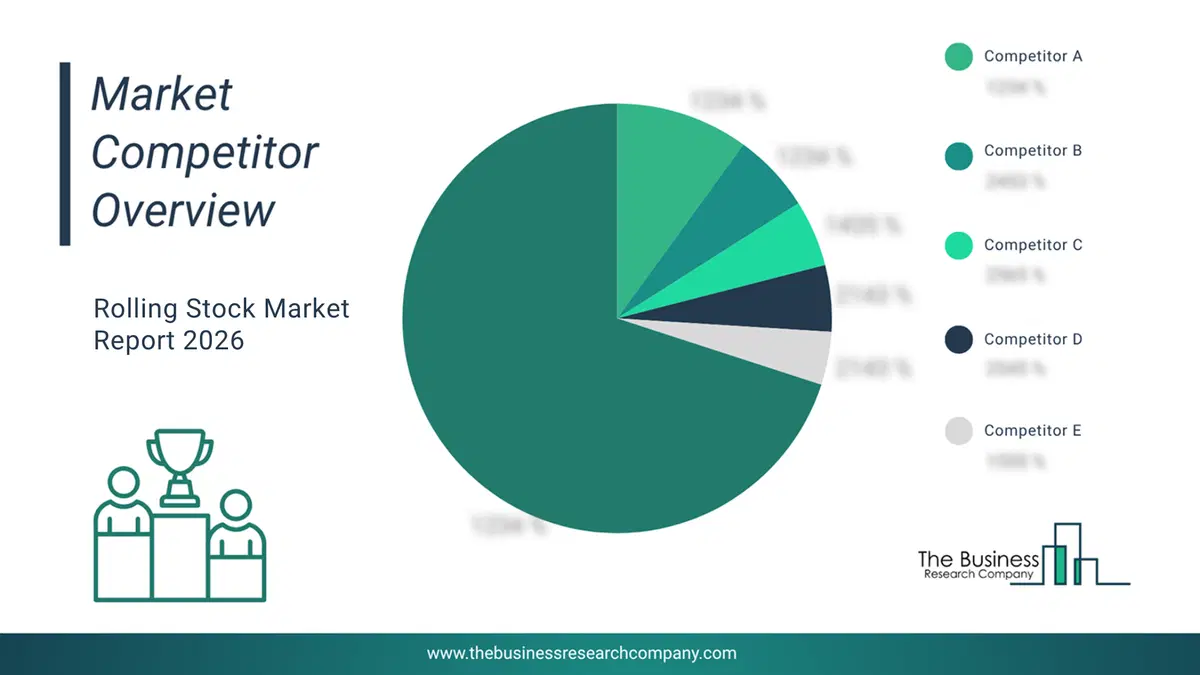
This chart is for illustrative purposes; the full report includes a detailed competitor analysis and comprehensive overview of the top 10 companies in the market.
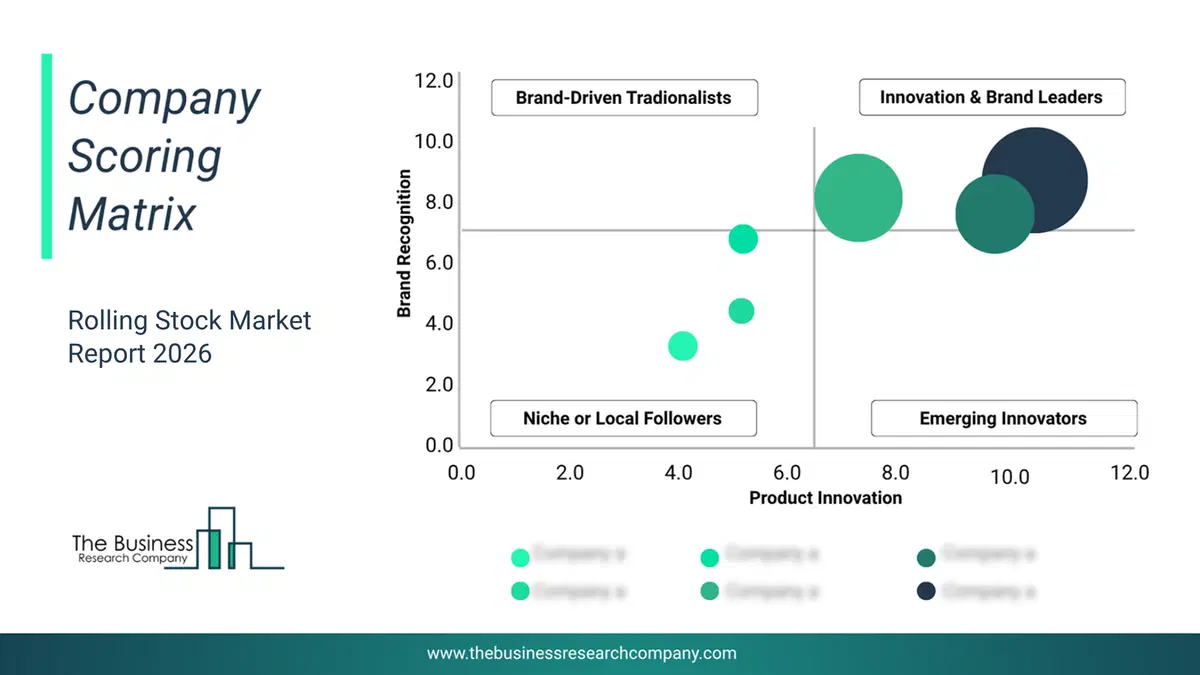
This chart maps companies by product innovation and brand strength, with bubble size indicating relative revenue, helping identify market leaders, challengers, and niche players. This is an illustrative chart; the full report provides a complete and accurate competitive analysis.
Global Rolling Stock Market Trends and Insights
Major companies in the rolling stock market are focused on developing advanced diesel-battery-electric hybrid locomotives to meet demands for sustainable transportation solutions. Diesel-battery-electric hybrid locomotives are railway vehicles that combine a traditional diesel engine with electric battery power, allowing for more efficient energy use and reduced emissions. The diesel engine supports long hauls and high-power demands, while the battery provides energy for short distances and regenerative braking in low-emission zones. For instance, in October 2023, Progress Rail, a US-based transit corporation, introduced the EMD GT38H. It features a Caterpillar 3512 diesel engine paired with a generator and a lithium-ion battery bank, providing a starting tractive effort of 495 kN and a continuous tractive effort of 402 kN. With a maximum speed of 60 km/h and a battery capacity of 550 kWh, they are capable of regenerative and external battery charging. Rumo estimates up to 45% fuel savings and significant reductions in particulate matter, NOx emissions, and noise. These locomotives are designed for challenging terrains, making them suitable for Rumo's narrow-gauge South Network.What Are Latest Mergers And Acquisitions In The Rolling Stock Market?
In March 2024, Jupiter Wagons Limited, an India-based Railway company acquired Bonatrans India Private Limited for Rs 271 Crore ($ 0.032 Billion). The acquisition positions Jupiter Wagons as the first rolling stock manufacturer in India to have its wheel plant by reducing reliance on imports and enhancing supply chain efficiency. This acquisition will facilitate Bonatrans' growth in the Indian freight transportation market and solidify Jupiter Wagons' leadership in wagon manufacturing. Bonatrans India Private Limited is an India-based manufacturer of manufacturer of rolling stock wheelsets.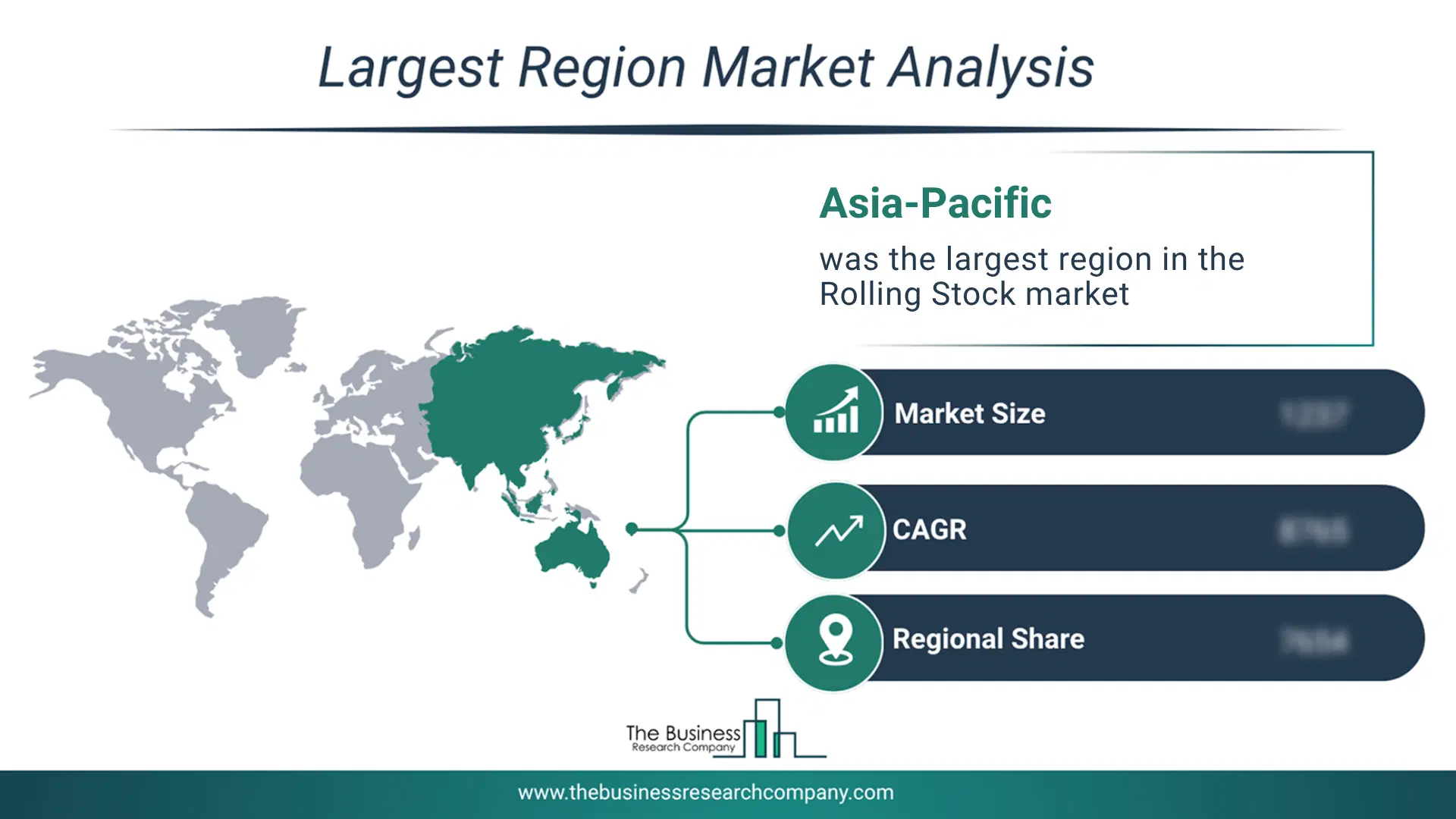
Regional Outlook
Asia-Pacific was the largest region in the rolling stock market in 2025. Asia-Pacific is expected to be the fastest growing region in the forecast period. The regions covered in this market report include Asia-Pacific, South East Asia, Western Europe, Eastern Europe, North America, South America, Middle East, Africa. The countries covered in this market report include Australia, Brazil, China, France, Germany, India, Indonesia, Japan, Taiwan, Russia, South Korea, UK, USA, Canada, Italy, SpainWhat Defines the Rolling Stock Market?
The rolling stock market consists of sales of powered locomotives, unpowered freight wagons, and passenger coaches. Values in this market are ‘factory gate’ values, that is the value of goods sold by the manufacturers or creators of the goods, whether to other entities (including downstream manufacturers, wholesalers, distributors and retailers) or directly to end customers. The value of goods in this market includes related services sold by the creators of the goods.How is Market Value Defined and Measured?
The market value is defined as the revenues that enterprises gain from the sale of goods and/or services within the specified market and geography through sales, grants, or donations in terms of the currency (in USD unless otherwise specified). The revenues for a specified geography are consumption values that are revenues generated by organizations in the specified geography within the market, irrespective of where they are produced. It does not include revenues from resales along the supply chain, either further along the supply chain or as part of other products.
This chart presents market attractiveness based on a quantitative evaluation of growth, competition, strategic alignment, and risk, offering a clear view of opportunity areas for decision-making. This chart is for illustrative purposes; the full report contains the complete analysis.

This chart highlights the Total Addressable Market (TAM) by estimating the maximum revenue opportunity using an assumption-driven approach, supporting strategic planning and opportunity sizing across markets. The chart is illustrative; the full report provides a more comprehensive analysis.
What Key Data and Analysis Are Included in the Rolling Stock Market Report 2026?
The rolling stock market research report is one of a series of new reports from The Business Research Company that provides market statistics, including industry global market size, regional shares, competitors with the market share, detailed market segments, market trends and opportunities, and any further data you may need to thrive in the rolling stock industry. The market research report delivers a complete perspective of everything you need, with an in-depth analysis of the current and future state of the industry.Rolling Stock Market Report Forecast Analysis
| Report Attribute | Details |
|---|---|
| Market Size Value In 2026 | $69.5 billion |
| Revenue Forecast In 2030 | $92.21 billion |
| Growth Rate | CAGR of 7.3% from 2026 to 2030 |
| Base Year For Estimation | 2025 |
| Actual Estimates/Historical Data | 2020-2025 |
| Forecast Period | 2026 - 2030 |
| Market Representation | Revenue in USD Billion and CAGR from 2026 to 2030 |
| Segments Covered | Product, Locomotive Technology, Component, End User |
| Regional Scope | Asia-Pacific, Western Europe, Eastern Europe, North America, South America, Middle East, Africa |
| Country Scope | The countries covered in the report are Australia, Brazil, China, France, Germany, India, Indonesia, Japan, Taiwan, Russia, South Korea, UK, USA, Canada, Italy, Spain. |
| Key Companies Profiled | Alstom Holdings SA, Bombardier Inc., Construcciones y Auxiliar de Ferrocarriles SA, CRRC Corporation Ltd., GE Transportation, Hitachi Ltd., Hyundai Rotem Company, Kawasaki Heavy Industries Ltd., Siemens AG, Stadler Rail AG, Transmash Holding, Electro-Motive Diesel Ltd., Skoda Transportation AS, Talgo SA, Trinity Industries Inc., Wabtec Corporation, Ansaldo STS, PESA Bydgoszcz SA, Newag SA, MAPNA Group, Nippon Sharyo Ltd., Caterpillar, IHI Corporation, Tatravagonka A. S., Texmaco Rail & Engineering Ltd., Alna Sharyo Co. Ltd., Pesa Group |
| Customization Scope | Request for Customization |
| Pricing And Purchase Options | Explore Purchase Options |