

Sports Management Software Market Report 2026
Global Outlook – By Sports Type (Individual Sports, Team Sports), By Deployment (On-Premise, Cloud), By Application (Team Management, Event Management and Scheduling, Training Management, Marketing Management, Scouting Insights, Performance Insights, Payment Solutions, Recruiting), By End User (Coaches, Clubs, Leagues, Sports Association) – Market Size, Trends, Strategies, and Forecast to 2030
Sports Management Software Market Overview
• Sports Management Software market size has reached to $9.25 billion in 2025 • Expected to grow to $15.32 billion in 2030 at a compound annual growth rate (CAGR) of 10.6% • Growth Driver: Growth In Entertainment And Sports Occupations Driving The Growth Of The Market Due To Rising Demand For Live Events And Digital Content • Market Trend: AI-Powered Advancements Driving Innovation In Sports Management Software • North America was the largest region in 2025 and Asia-Pacific is the fastest growing region.Market Gains By 2030 – Top Opportunities By Segment
Market Gain identifies the most promising market opportunities by highlighting the segments or products expected to generate the highest incremental revenue growth over the next five years.
What Is Covered Under Sports Management Software Market?
Sports management software is a digital tool designed to help sports organizations, teams, and facilities manage their operations. It includes features for scheduling events, tracking performance, managing memberships, handling finances, communicating with players and staff, streamlining administrative tasks, and enhancing overall efficiency in sports management. The main types of sports in sports management software are individual sports and team sports. Individual sports involve athletes competing alone rather than as part of a team. The software can be deployed on different platforms, such as on-premise and cloud-based solutions. It is used for various applications, including team management, event management and scheduling, training management, marketing management, scouting insights, performance analytics, payment solutions, and recruiting. The key end users include coaches, clubs, leagues, and sports associations.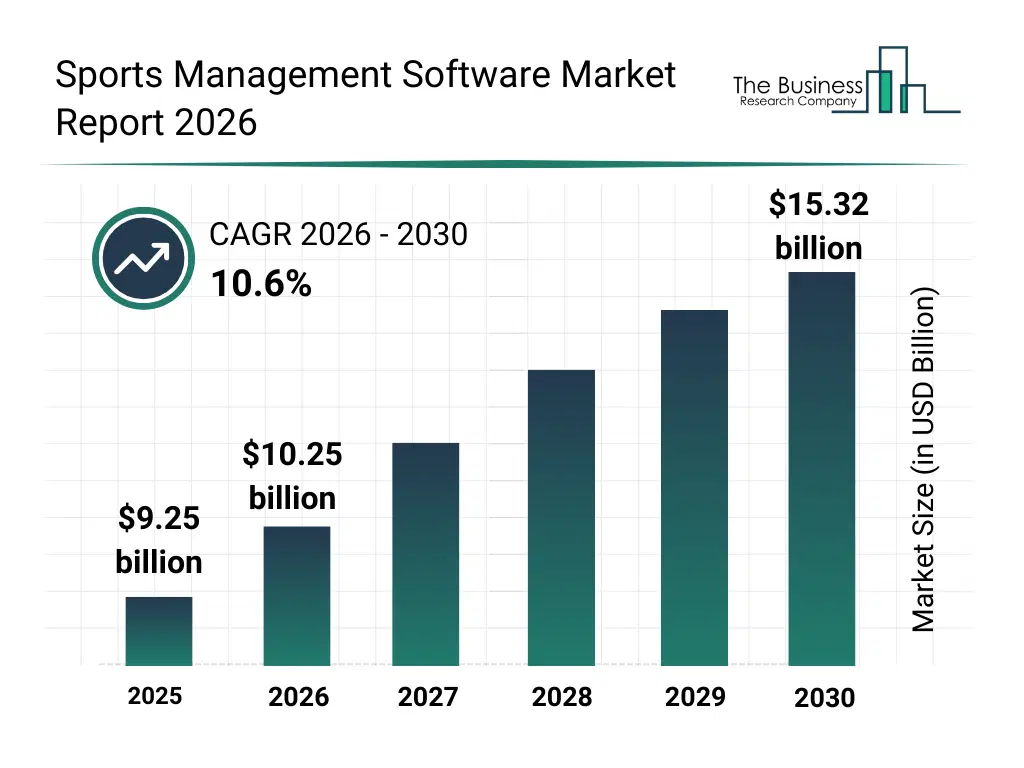
What Is The Sports Management Software Market Size and Share 2026?
The sports management software market size has grown rapidly in recent years. It will grow from $9.25 billion in 2025 to $10.25 billion in 2026 at a compound annual growth rate (CAGR) of 10.8%. The growth in the historic period can be attributed to digitization of sports administration, growth of organized sports leagues, early adoption of management software, increasing complexity of sports operations, need for centralized data management.What Is The Sports Management Software Market Growth Forecast?
The sports management software market size is expected to see rapid growth in the next few years. It will grow to $15.32 billion in 2030 at a compound annual growth rate (CAGR) of 10.6%. The growth in the forecast period can be attributed to AI based performance analytics adoption, growth of youth and amateur sports programs, expansion of cloud deployment models, rising demand for remote team management, integration with wearable sports technologies. Major trends in the forecast period include cloud based sports operations platforms, data driven athlete performance tracking, integrated event and scheduling management, digital membership and fan engagement tools, automated financial and payment management.
Global Sports Management Software Market Segmentation
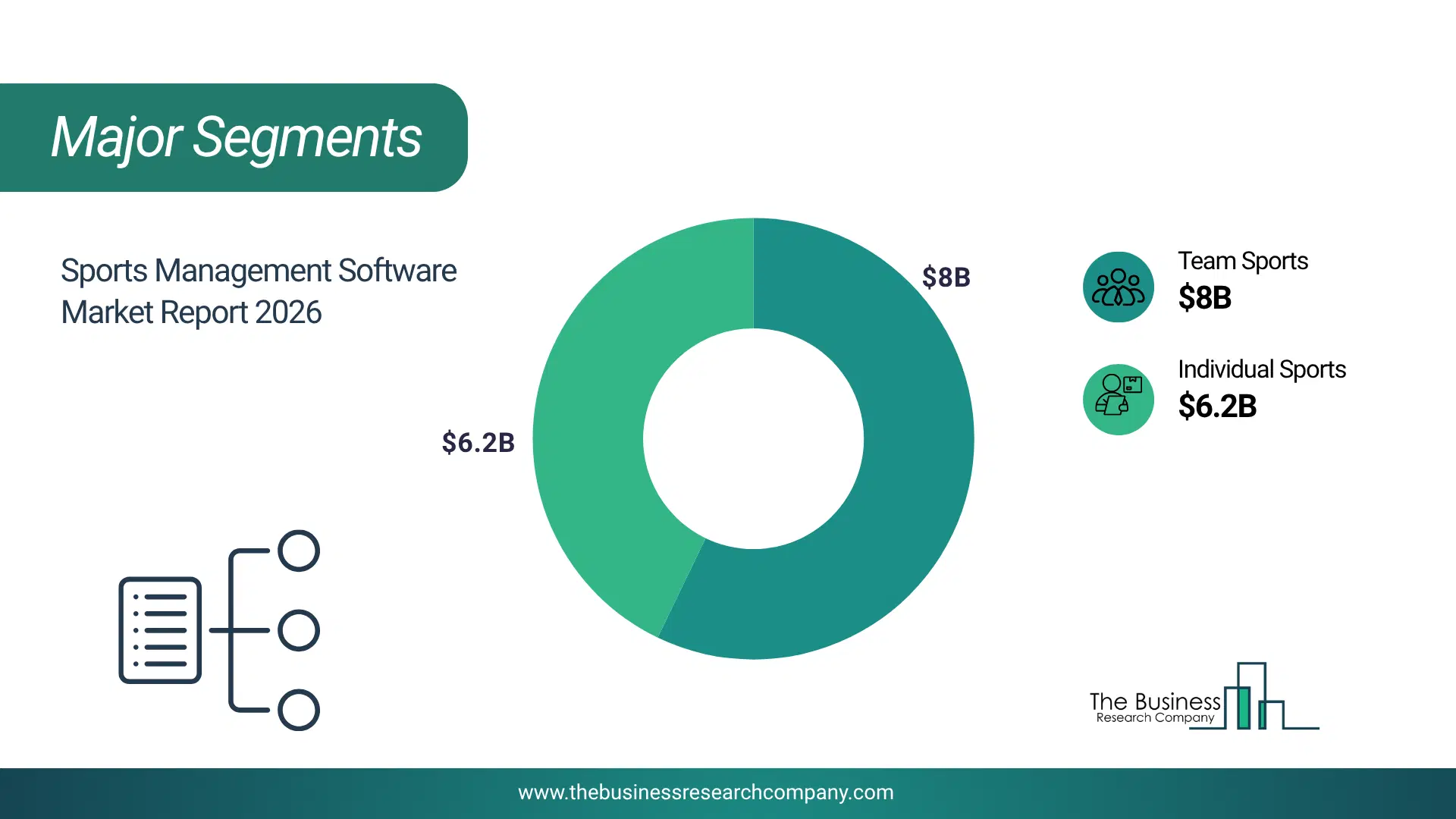
1) By Sports Type: Individual Sports, Team Sports 2) By Deployment: On-Premise, Cloud 3) By Application: Team Management, Event Management and Scheduling, Training Management, Marketing Management, Scouting Insights, Performance Insights, Payment Solutions, Recruiting 4) By End User: Coaches, Clubs, Leagues, Sports Association Subsegments: 1) By Individual Sports: Tennis, Golf, Athletics, Swimming, Boxing, Martial Arts, Cycling, Skiing, Horse Racing, Other Individual Sports 2) By Team Sports: Football (Soccer), Basketball, Baseball, Rugby, Cricket, Ice Hockey, Volleyball, Handball, American Football, Lacrosse, Other Team Sports The top segments in the sports management software market will be: • Team Sports will reach $8 billion by 2030. • Individual Sports will reach $6.13 billion by 2030.What Is The Driver Of The Sports Management Software Market?
The increasing number of entertainment and sports occupations is expected to propel the growth of the sports management software market going forward. Entertainment and sports occupations involve careers in performing arts, media, and athletic activities, where individuals create, produce, or participate in events for audiences. Entertainment and sports occupations are increasing due to the growing demand for live events and digital content, which creates more opportunities for performers, athletes, and related professionals. Sports management software supports entertainment and sports occupations by streamlining event planning, athlete scheduling, and performance tracking, allowing professionals to focus on training and audience engagement. For instance, in August 2025, according to the U.S. Bureau of Labor Statistics (BLS), a US-based government agency, overall employment in entertainment and sports occupations is expected to grow at a rate similar to the average for all occupations from 2024 to 2034, with approximately 99,700 job openings projected annually. Therefore, the increasing number of entertainment and sports occupations is driving the growth of the sports management software industry.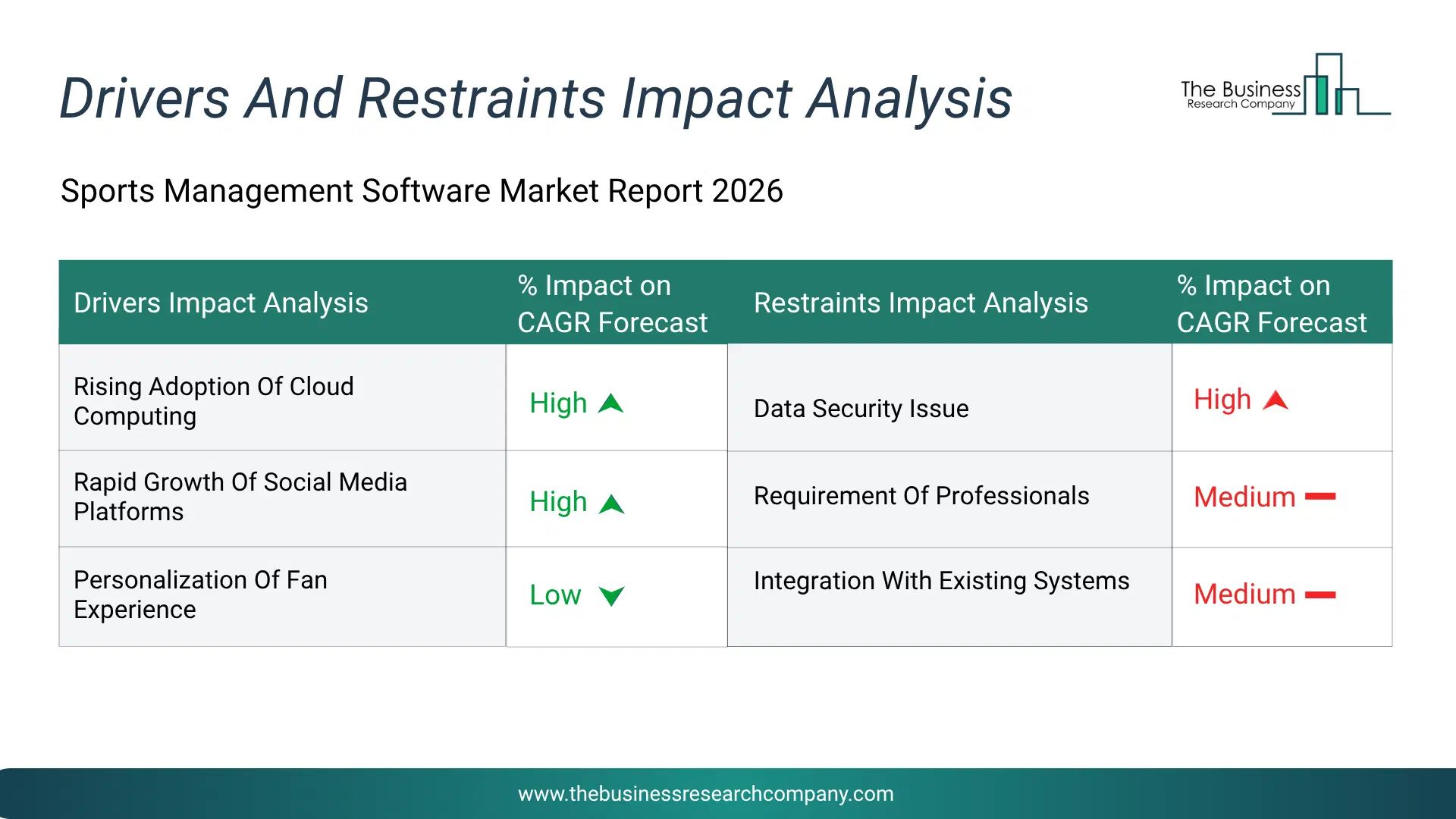
Infographic Chart Showing Key Market Drivers Analysis And Restraints For Sports Management Software Market
The chart presents an impact analysis of key drivers and restraints, quantifying their relative influence on the market's growth rate and helping assess the balance between growth enablers and limiting factors. This chart offers a high-level perspective; the full report contains more detailed insights.
How Will The Drivers Impact Growth In The Global Sports Management Software Market?
• Rising Adoption Of Cloud Computing (High) – During the forecast period, the rising adoption of cloud computing is expected to become a key growth driver for the sports management software market by 2030. Sports organizations are increasingly shifting from legacy on -premise systems to cloud -based platforms to enable real -time access, scalability, and cost efficiency. Cloud solutions support seamless scheduling, communication, data storage, and remote access across multiple devices and locations, making them ideal for leagues, clubs, and training academies. Additionally, cloud infrastructure allows easy integration with analytics tools, payment gateways, and third -party applications, enhancing overall platform functionality. • Rapid Growth Of Social Media Platforms (High) – During the forecast period, the rapid growth of social media platforms is expected to emerge as a major factor driving the expansion of the sports management software market by 2030. Sports organizations are leveraging social media to engage fans, promote events, and build brand identity, creating a strong need for integrated marketing and communication tools within management platforms. Software solutions increasingly include features for content scheduling, audience analytics, and multi-channel communication to streamline digital engagement strategies. The growing importance of real-time updates, live interactions, and fan-driven content is further accelerating demand for social media integration within sports software ecosystems. • Personalization Of Fan Experience (Low) – During the forecast period, the personalization of fan experience is expected to act as a key growth catalyst for the sports management software market by 2030. Organizations are increasingly utilizing data analytics and ai-driven insights to deliver tailored content, targeted promotions, and customized engagement experiences to fans. Personalized notifications, ticketing offers, performance insights, and interactive features enhance fan satisfaction and loyalty while driving revenue opportunities for clubs and leagues. As competition intensifies across sports entertainment, the ability to offer unique and engaging fan experiences is becoming a critical differentiator.How Will The Restraints Impact Growth In The Global Sports Management Software Market?
• Data Security Issue (High) – During the forecast period, the data security issue acts as a restraint for the sports management software market because these platforms store and process large volumes of sensitive information, including athlete performance data, financial records, membership details, and communication records. Concerns about unauthorized access, data breaches, and cyberattacks make sports organizations cautious about adopting digital management systems, especially cloud-based platforms. Smaller clubs and sports facilities may lack strong cybersecurity infrastructure, increasing the perceived risk of data exposure. As a result, organizations may delay or limit the implementation of sports management software until adequate security measures and compliance standards are ensured. • Requirement Of Professionals (Medium) – During the forecast period, the requirement of professionals acts as a restraint for the sports management software market because the effective implementation and management of these platforms often require skilled professionals with technical and analytical expertise. Sports organizations need trained personnel to manage software configuration, handle data analysis, maintain system updates, and ensure smooth integration with existing operations. Many small clubs and local sports facilities may lack access to such specialized staff, making adoption more difficult. Additionally, hiring or training professionals can increase operational costs, which may discourage some organizations from fully implementing advanced sports management software solutions. • Integration With Existing Systems (Medium) – During the forecast period, the integration with existing systems acts as a restraint for the sports management software market because many sports organizations already use multiple legacy systems for ticketing, finance, membership databases, or performance tracking. Integrating new sports management software with these existing platforms can be complex and time-consuming, often requiring additional customization and technical expertise. Compatibility issues between different software systems may lead to data inconsistencies or operational disruptions during implementation. As a result, organizations may hesitate to adopt new solutions if integration challenges increase costs or slow down their administrative processes.Key Players In The Global Sports Management Software Market
Major companies operating in the sports management software market are Microsoft Corporation, International Business Machines Corporation, SAP SE, Daktronics Inc., SportsEngine Inc., Stack Sports, TeamSnap Inc., Jersey Watch, LeagueApps Inc., EZFacility Inc., Sports Connect, Sportlyzer LLC, Crossbar Inc, GameDay Inc., SportLoMo, TeamSideline.com, SportEasy SAS, OctopusPro, SquadFusion Inc., SportsPlus, iSportz Inc.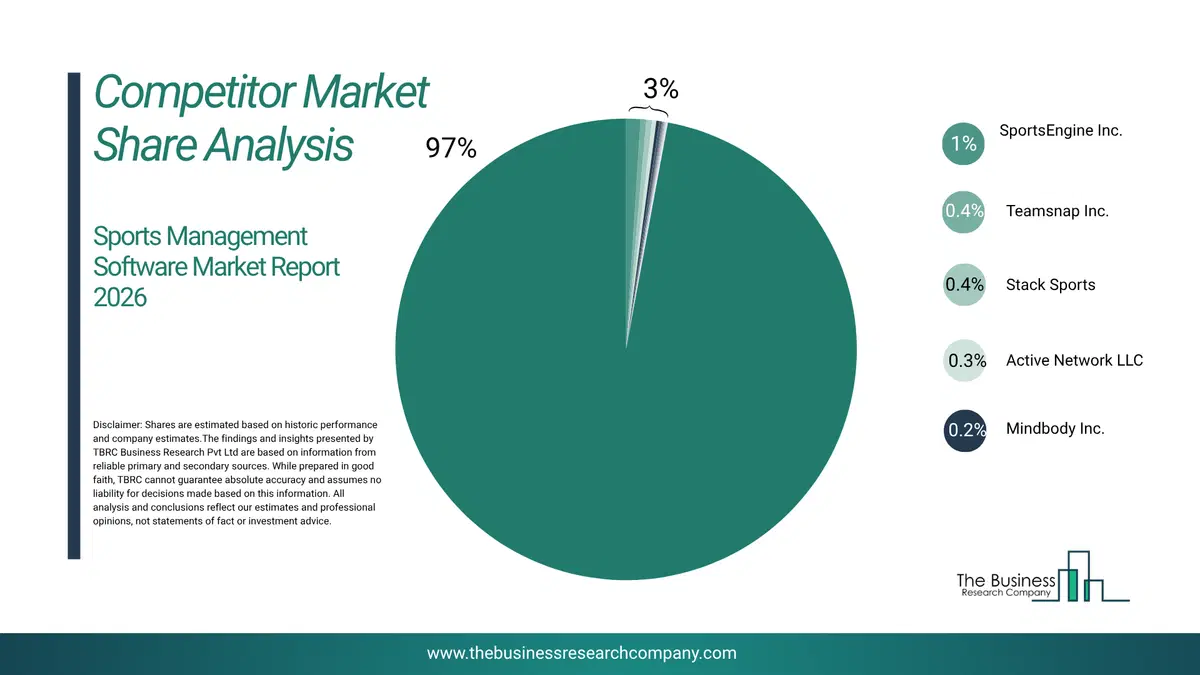
This chart is for illustrative purposes; the full report includes a detailed competitor analysis and comprehensive overview of the top 10 companies in the market.
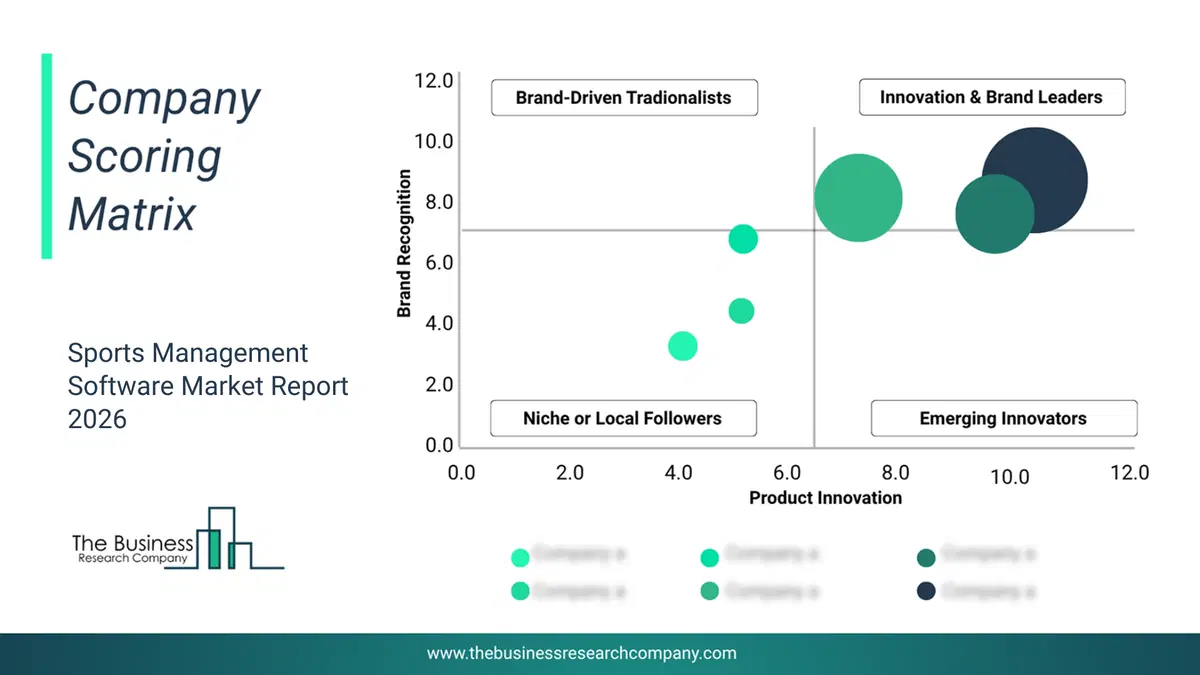
This chart maps companies by product innovation and brand strength, with bubble size indicating relative revenue, helping identify market leaders, challengers, and niche players. This is an illustrative chart; the full report provides a complete and accurate competitive analysis.
Global Sports Management Software Market Trends and Insights
Major companies operating in the sports management software market are focusing on developing innovative advancements, such as AI powered suites for sports and events administration, to enhance operational efficiency, streamline event management, improve athlete performance tracking, and deliver personalized experiences for participants and fans. An AI-powered suite for sports and events administration is a software platform that uses artificial intelligence to streamline event planning, athlete management, and performance tracking. For instance, in August 2025, SPay, Inc., a US-based private technology company, launched GameDay IQ, which aims to streamline sports and event administration by providing AI-powered tools for scheduling, data management, and real-time analytics. The GameDay AI-powered suite includes features such as an AI chatbot for instant support, real-time translation in over 50 languages, and duplicate identification for member data to ensure accuracy and efficiency.What Are Latest Mergers And Acquisitions In The Sports Management Software Market?
In December 2023, TeamSnap, a US-based sports management software company, acquired MOJO Sports for an undisclosed amount. Following this acquisition, TeamSnap aims to drive innovation in youth sports by leveraging technology. MOJO Sports is a US-based youth sports technology and media company focusing on team management tools and multimedia sharing with coaches and athletes.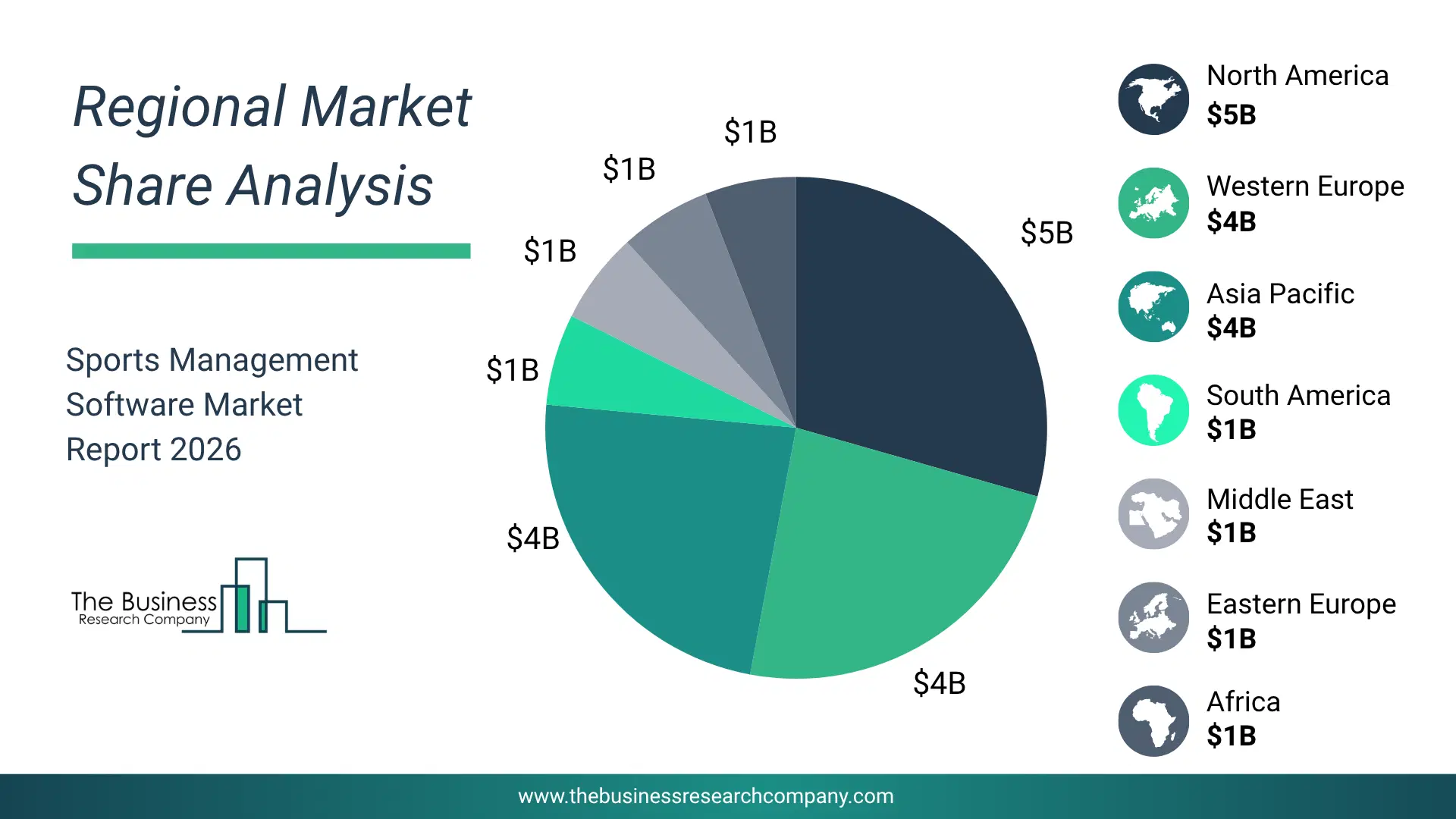
Regional Insights
North America was the largest region in the sports management software market in 2025. Asia-Pacific is expected to be the fastest-growing region in the forecast period. The regions covered in this market report are Asia-Pacific, South East Asia, Western Europe, Eastern Europe, North America, South America, Middle East, Africa. The countries covered in this market report are Australia, Brazil, China, France, Germany, India, Indonesia, Japan, Taiwan, Russia, South Korea, UK, USA, Canada, Italy, Spain.What Defines the Sports Management Software Market?
The sports management software market consist of sales of sports data analytics, fan loyalty programs and engagement apps, mobile apps, and tournament management solutions. Values in this market are ‘factory gate’ values, that is, the value of goods sold by the manufacturers or creators of the goods, whether to other entities (including downstream manufacturers, wholesalers, distributors, and retailers) or directly to end customers. The value of goods in this market includes related services sold by the creators of the goods.How is Market Value Defined and Measured?
The market value is defined as the revenues that enterprises gain from the sale of goods and/or services within the specified market and geography through sales, grants, or donations in terms of the currency (in USD unless otherwise specified). The revenues for a specified geography are consumption values that are revenues generated by organizations in the specified geography within the market, irrespective of where they are produced. It does not include revenues from resales along the supply chain, either further along the supply chain or as part of other products.
This chart presents market attractiveness based on a quantitative evaluation of growth, competition, strategic alignment, and risk, offering a clear view of opportunity areas for decision-making. This chart is for illustrative purposes; the full report contains the complete analysis.

This chart highlights the Total Addressable Market (TAM) by estimating the maximum revenue opportunity using an assumption-driven approach, supporting strategic planning and opportunity sizing across markets. The chart is illustrative; the full report provides a more comprehensive analysis.
What Key Data and Analysis Are Included in the Sports Management Software Market Report 2026?
The sports management software market research report is one of a series of new reports from The Business Research Company that provides market statistics, including industry global market size, regional shares, competitors with the market share, detailed market segments, market trends and opportunities, and any further data you may need to thrive in the sports management software industry. The market research report delivers a complete perspective of everything you need, with an in-depth analysis of the current and future state of the industry.Sports Management Software Market Report Forecast Analysis
| Report Attribute | Details |
|---|---|
| Market Size Value In 2026 | $10.25 billion |
| Revenue Forecast In 2030 | $15.32 billion |
| Growth Rate | CAGR of 10.6% from 2026 to 2030 |
| Base Year For Estimation | 2025 |
| Actual Estimates/Historical Data | 2020-2025 |
| Forecast Period | 2026 - 2030 |
| Market Representation | Revenue in USD Billion and CAGR from 2026 to 2030 |
| Segments Covered | Sports Type, Deployment, Application, End User |
| Regional Scope | Asia-Pacific, Western Europe, Eastern Europe, North America, South America, Middle East, Africa |
| Country Scope | The countries covered in the report are Australia, Brazil, China, France, Germany, India, ... |
| Key Companies Profiled | Microsoft Corporation, International Business Machines Corporation, SAP SE, Daktronics Inc., SportsEngine Inc., Stack Sports, TeamSnap Inc., Jersey Watch, LeagueApps Inc., EZFacility Inc., Sports Connect, Sportlyzer LLC, Crossbar Inc, GameDay Inc., SportLoMo, TeamSideline.com, SportEasy SAS, OctopusPro, SquadFusion Inc., SportsPlus, iSportz Inc. |
| Customization Scope | Request for Customization |
| Pricing And Purchase Options | Explore Purchase Options |