

Structural Heart Imaging Market Report 2026
Global Outlook – By Procedure Type (Transcatheter Aortic Valve Implantation (TAVI), Transcatheter Mitral Valve Replacement (TMVR), Transcatheter Tricuspid Valve Replacement (TTVR), Left Atrial Appendage Closure (LAAC), Patent Foramen Ovale (PFO) Closure), By Imaging Modality (Transesophageal Echocardiography (TEE), Intravascular Ultrasound (IVUS), Fluoroscopy, Cardiac Magnetic Resonance Imaging (CMRI), Computed Tomography (CT)), By Vendor Type (Original Equipment Manufacturers (OEMs), Third-Party Vendors), By Applications (Diagnosis, Surgery), By End-User (Hospitals, Specialty Clinics, Cardiac Centers, Diagnostic Centers, Ambulatory Surgical Centers, Catheterization Laboratories, Other End-Users) – Market Size, Trends, Strategies, and Forecast to 2030
Structural Heart Imaging Market Overview
• Structural Heart Imaging market size has reached to $17.09 billion in 2025 • Expected to grow to $27.02 billion in 2030 at a compound annual growth rate (CAGR) of 9.6% • Growth Driver: Rising Prevalence Of Cardiovascular Diseases Fueling The Growth Of The Market Due To Increasing Diagnostic And Treatment Needs • Market Trend: Advanced Imaging Solutions Enhancing Real-Time Cardiac Diagnostics • North America was the largest region in 2025 and Asia-Pacific is the fastest growing region.What Is Covered Under Structural Heart Imaging Market?
Structural heart imaging is a type of medical imaging used to take clear, detailed pictures of the heart’s structure, including its valves, walls, and chambers. It helps doctors find and understand problems like valve defects or holes in the heart. This imaging is often used for pre-procedural planning, real-time guidance during interventions and post-treatment evaluation. The main types of procedures in the structural heart imaging market are transcatheter aortic valve implantation (TAVI), transcatheter mitral valve replacement (TMVR), transcatheter tricuspid valve replacement (TTVR), left atrial appendage closure (LAAC) and patent foramen ovale (PFO) closure. Transcatheter aortic valve implantation (TAVI) refers to a minimally invasive procedure used to replace a narrowed aortic valve (aortic stenosis) without the need for open-heart surgery. The imaging modalities include transesophageal echocardiography (TEE), intravascular ultrasound (IVUS), fluoroscopy, cardiac magnetic resonance imaging (CMRI), and computed tomography (CT). Vendors are categorized into original equipment manufacturers (OEMs) and third-party providers. Applications encompass diagnosis and surgical procedures, while end-users include hospitals, specialty clinics, cardiac centers, diagnostic centers, ambulatory surgical centers, catheterization laboratories, and other healthcare facilities.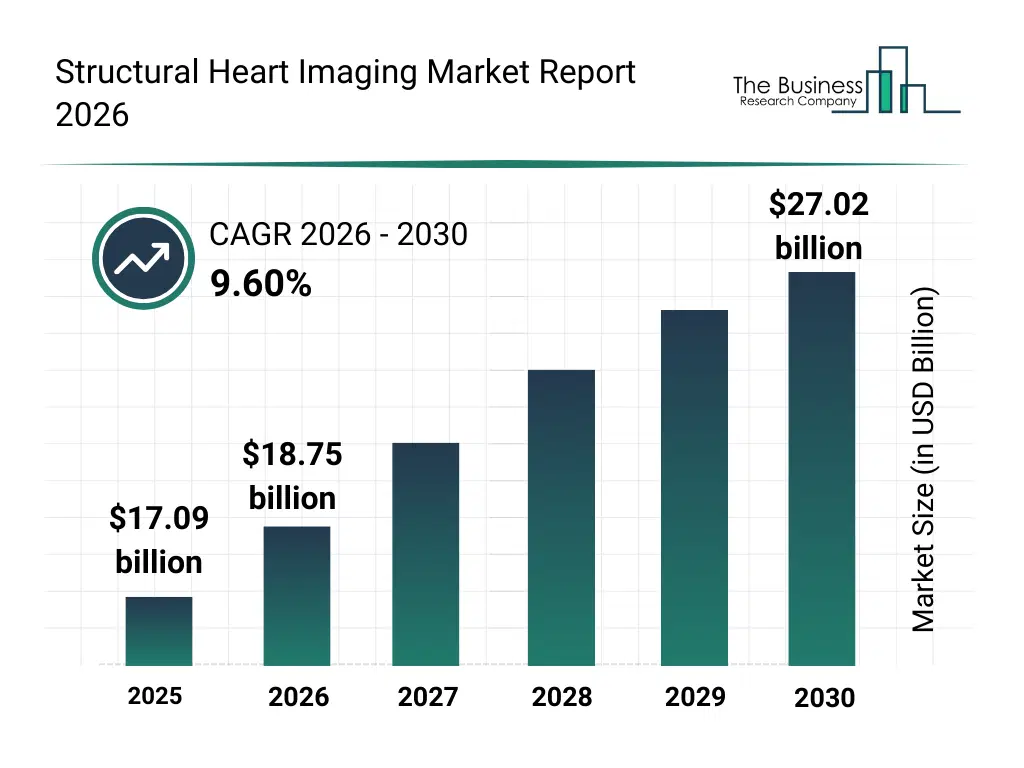
What Is The Structural Heart Imaging Market Size and Share 2026?
The structural heart imaging market size has grown strongly in recent years. It will grow from $17.09 billion in 2025 to $18.75 billion in 2026 at a compound annual growth rate (CAGR) of 9.7%. The growth in the historic period can be attributed to increasing prevalence of structural heart diseases, expansion of transcatheter cardiac procedures, advancements in echocardiography and CT imaging, growing use of imaging in interventional cardiology, rising adoption of catheter-based therapies.What Is The Structural Heart Imaging Market Growth Forecast?
The structural heart imaging market size is expected to see strong growth in the next few years. It will grow to $27.02 billion in 2030 at a compound annual growth rate (CAGR) of 9.6%. The growth in the forecast period can be attributed to increasing demand for minimally invasive cardiac interventions, growing investments in smart cardiac imaging platforms, expansion of ai-assisted diagnostic imaging, rising use of imaging for complex valve procedures, increasing focus on procedural outcome optimization. Major trends in the forecast period include increasing adoption of real-time image-guided cardiac interventions, rising use of advanced multimodality imaging systems, growing integration of ai-based image analysis, expansion of 3D and 4d cardiac visualization technologies, enhanced focus on pre-procedural planning accuracy.
Global Structural Heart Imaging Market Segmentation
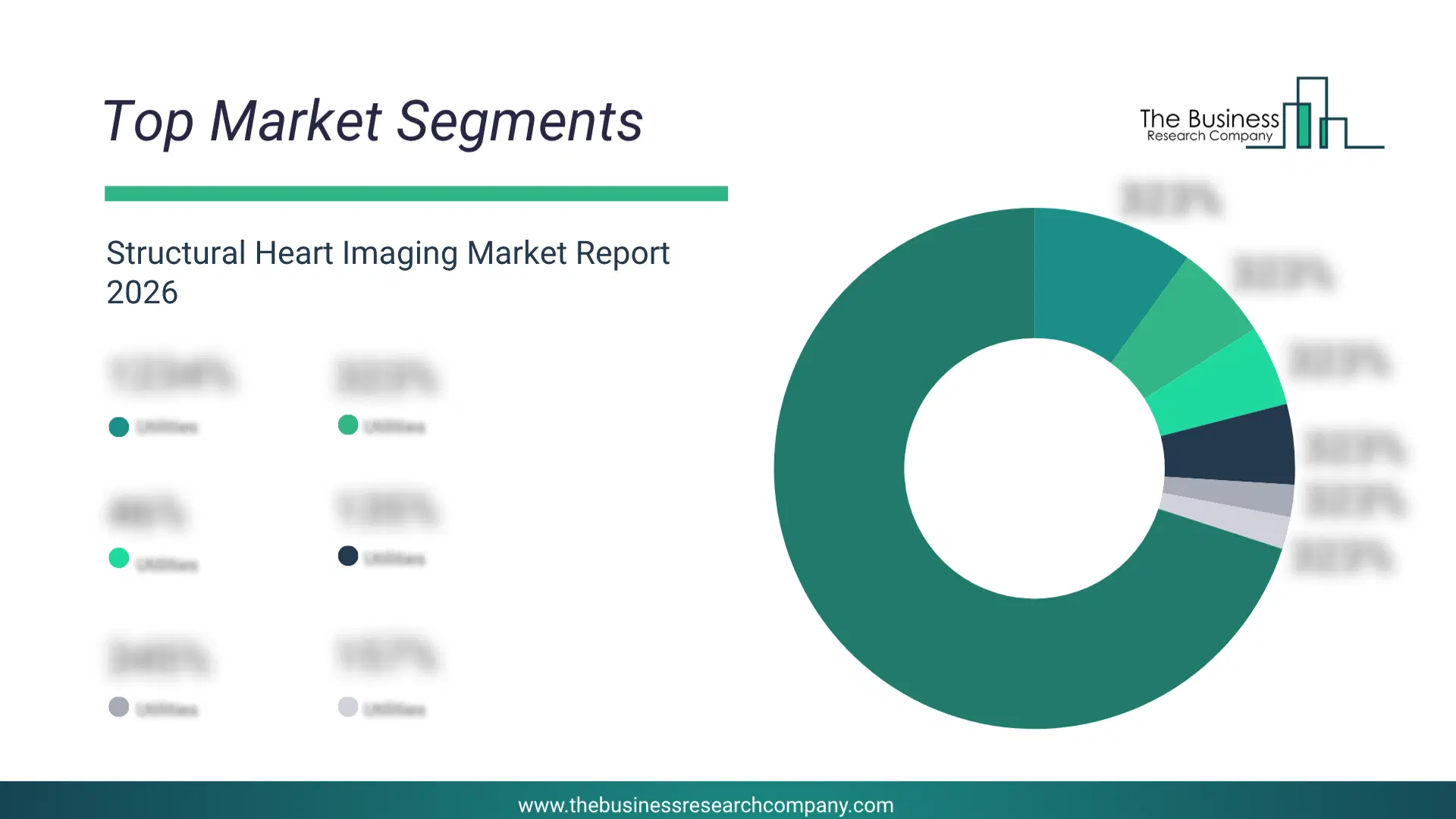
1) By Procedure Type: Transcatheter Aortic Valve Implantation (TAVI), Transcatheter Mitral Valve Replacement (TMVR), Transcatheter Tricuspid Valve Replacement (TTVR), Left Atrial Appendage Closure (LAAC), Patent Foramen Ovale (PFO) Closure 2) By Imaging Modality: Transesophageal Echocardiography (TEE), Intravascular Ultrasound (IVUS), Fluoroscopy, Cardiac Magnetic Resonance Imaging (CMRI), Computed Tomography (CT) 3) By Vendor Type: Original Equipment Manufacturers (OEMs), Third-Party Vendors 4) By Applications: Diagnosis, Surgery 5) By End-User: Hospitals, Specialty Clinics, Cardiac Centers, Diagnostic Centers, Ambulatory Surgical Centers, Catheterization Laboratories, Other End-Users Subsegments: 1) By Transcatheter Aortic Valve Implantation (TAVI): Balloon-Expandable Valves, Self-Expanding Valves 2) By Transcatheter Mitral Valve Replacement (TMVR): Mechanical Valves, Bioprosthetic Valves 3) By Transcatheter Tricuspid Valve Replacement (TTVR): Catheter-Based Approaches, Percutaneous Annuloplasty 4) By Left Atrial Appendage Closure (LAAC): Endocardial Closure Devices, Epicardial Closure Devices 5) By Patent Foramen Ovale (PFO) Closure: Occluder Devices, Suture-Based DevicesWhat Is The Driver Of The Structural Heart Imaging Market?
The rising prevalence of cardiovascular diseases is expected to propel the structural heart imaging market going forward. Cardiovascular diseases are a group of disorders affecting the heart and blood vessels, including conditions like heart attacks, strokes, and hypertension. The prevalence of cardiovascular diseases is increasing due to unhealthy lifestyles, including poor diet, physical inactivity, and smoking, which contribute to obesity, hypertension, and diabetes. Structural heart imaging enhances cardiovascular disease management by providing detailed and accurate diagnostic images, making it ideal for detecting heart valve issues and congenital defects. It improves treatment outcomes by enabling early intervention and precise guidance for procedures. For instance, in January 2024, according to the American Heart Association, a US-based non-profit organization, the age-adjusted death rate from cardiovascular disease increased to 233.3 per 100,000 in 2024, up 4.0% from 224.4 per 100,000 in 2023. Therefore, the rising prevalence of cardiovascular diseases is driving the growth of the structural heart imaging industry.Key Players In The Global Structural Heart Imaging Market
Major companies operating in the structural heart imaging market are Hitachi Medical Corporation, Abbott Laboratories, Medtronic plc, Siemens Healthineers, Fujifilm Holdings Corporation, GE Healthcare, Koninklijke Philips N.V., Boston Scientific Corporation, Edwards Lifesciences, Shimadzu Corporation, Esaote SpA, Canon Medical Systems Corporation, Circle Cardiovascular Imaging Inc., Pie Medical Imaging B.V., Arineta Ltd, Samsung Medison, United Imaging Healthcare, Bracco Imaging S.p.A., Siemens Medical Solutions USA Inc., Toshiba Medical Systems Corporation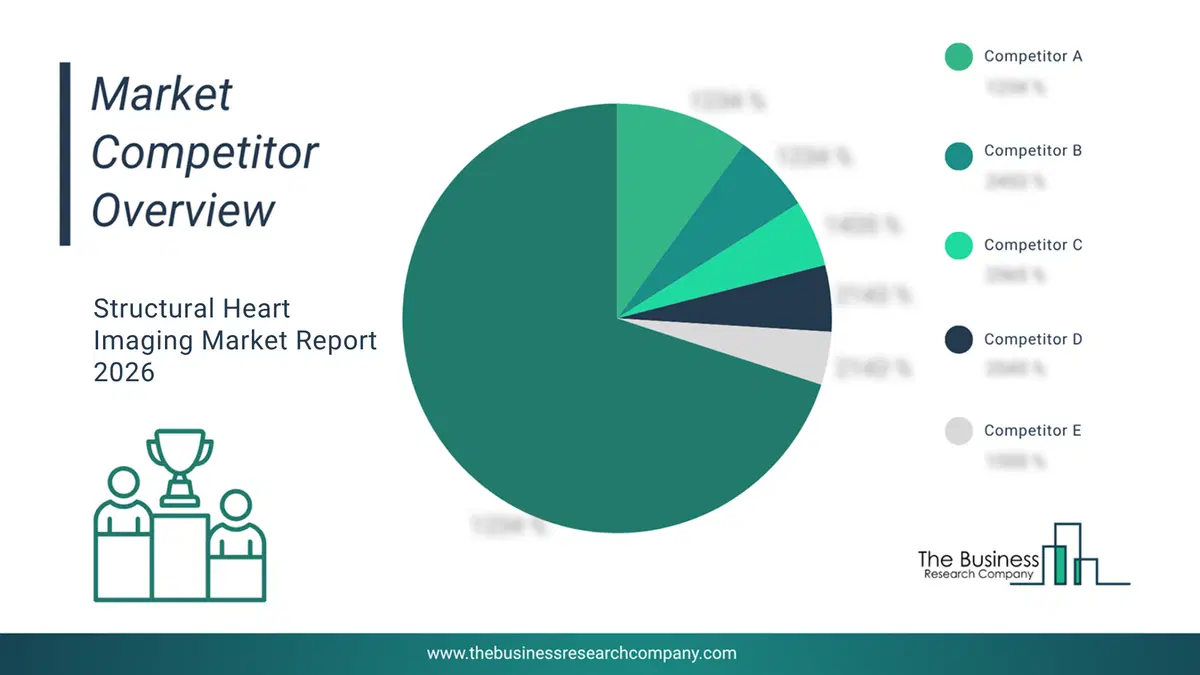
This chart is for illustrative purposes; the full report includes a detailed competitor analysis and comprehensive overview of the top 10 companies in the market.
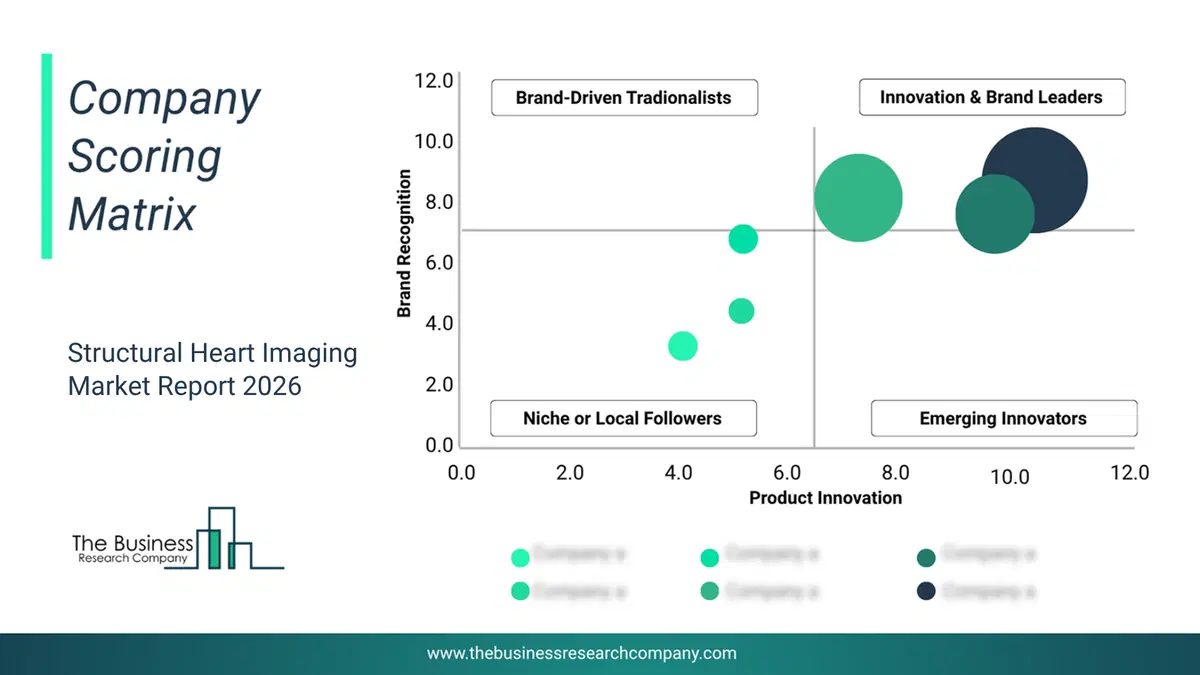
This chart maps companies by product innovation and brand strength, with bubble size indicating relative revenue, helping identify market leaders, challengers, and niche players. This is an illustrative chart; the full report provides a complete and accurate competitive analysis.
Global Structural Heart Imaging Market Trends and Insights
Major companies operating in the structural heart imaging market are focusing on developing advancements in technology, such as artificial intelligence (AI)-driven ultrasound systems. Artificial intelligence (AI)-driven ultrasound systems are advanced imaging technologies that integrate artificial intelligence to enhance image quality, automate measurements and assist in accurate, real-time diagnostic decision-making. For instance, in October 2023, GE HealthCare Technologies Inc., a US-based medical technology and diagnostics company, launched artificial intelligence (AI)-powered Venue Family point-of-care ultrasound systems with a caption guidance feature. Artificial intelligence (AI)-powered Venue Family point-of-care ultrasound systems enhance Structural Heart Imaging by automating cardiac assessments, optimizing image quality, and providing real-time Doppler analysis. Their portability enables rapid diagnosis, accurate evaluation of valvular and structural heart conditions in critical care and procedural settings.What Are Latest Mergers And Acquisitions In The Structural Heart Imaging Market?
In February 2025, Medtronic plc, an Ireland-based medical device company providing cardiac and vascular solutions, partnered with Koninklijke Philips N.V., to advance cardiac computed tomography (CT), magnetic resonance imaging (MRI), and interventional imaging. With this partnership, the companies aim to upskill over 300 clinicians in India on advanced structural heart imaging techniques to enhance diagnostic accuracy and improve procedural outcomes in treating structural heart diseases. Koninklijke Philips N.V. is a Netherlands-based provider of comprehensive structural heart imaging technologies, including echocardiography, cardiac CT, MRI, and interventional imaging solutions.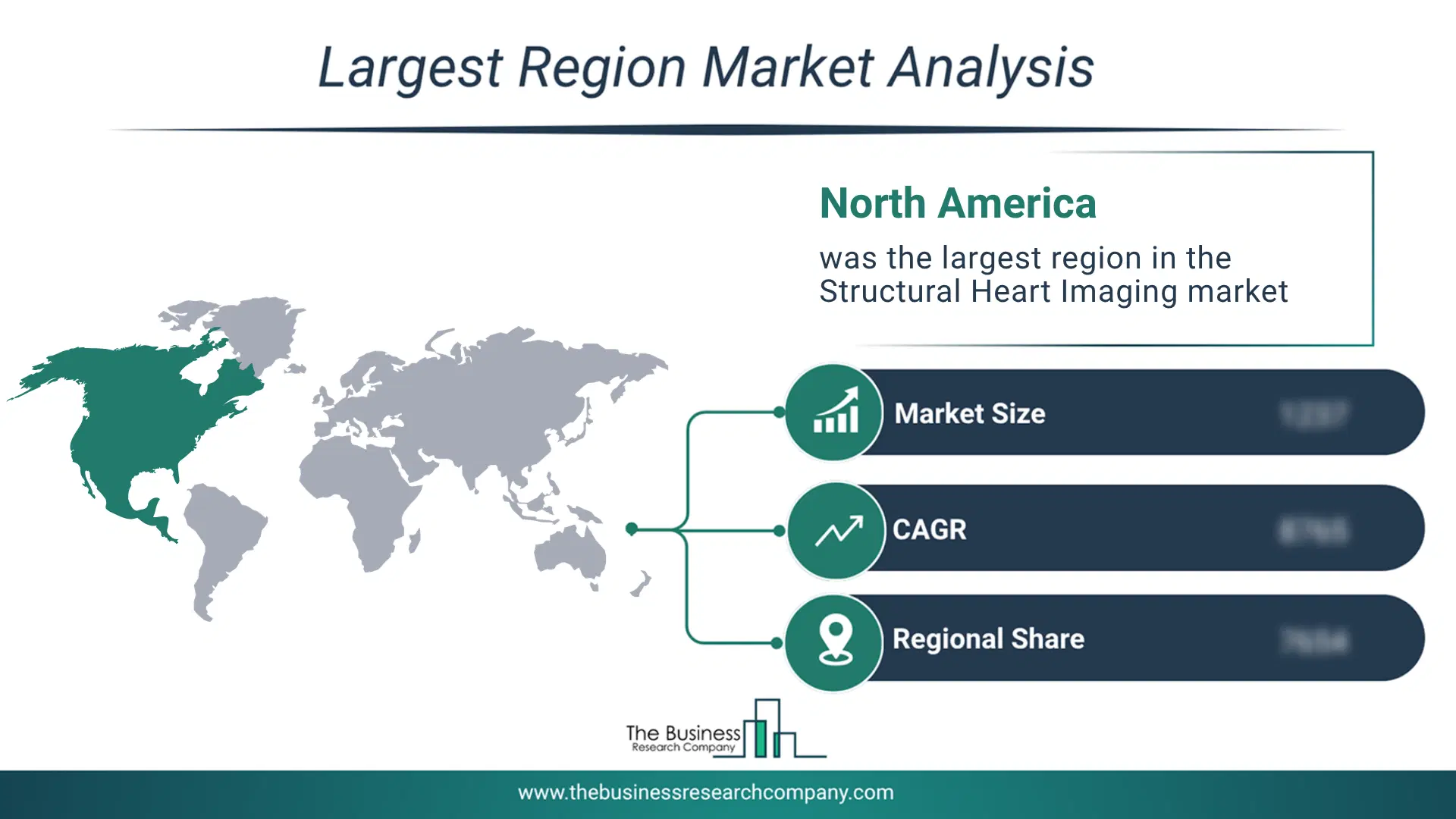
Regional Outlook
North America was the largest region in the structural heart imaging market in 2025. Asia-Pacific is expected to be the fastest-growing region in the forecast period. The regions covered in this market report are Asia-Pacific, South East Asia, Western Europe, Eastern Europe, North America, South America, Middle East, Africa. The countries covered in this market report are Australia, Brazil, China, France, Germany, India, Indonesia, Japan, Taiwan, Russia, South Korea, UK, USA, Canada, Italy, SpainWhat Defines the Structural Heart Imaging Market?
The structural heart imaging market consists of revenues earned by entities by providing services such as fusion imaging, three-dimensional (3D) and four-dimensional (4D) imaging solutions, artificial intelligence (AI)-enabled cardiac imaging analysis and hybrid or intraoperative imaging for minimally invasive heart procedures. The market value includes the value of related goods sold by the service provider or included within the service offering. The structural heart imaging market also includes sales of photoacoustic imaging (PAI), augmented reality (AR) and virtual reality (VR)-integrated imaging, image-guided intervention tools and endoscopic cardiac imaging. Values in this market are ‘factory gate’ values, that is the value of goods sold by the manufacturers or creators of the goods, whether to other entities (including downstream manufacturers, wholesalers, distributors and retailers) or directly to end customers. The value of goods in this market includes related services sold by the creators of the goods.How is Market Value Defined and Measured?
The market value is defined as the revenues that enterprises gain from the sale of goods and/or services within the specified market and geography through sales, grants, or donations in terms of the currency (in USD unless otherwise specified). The revenues for a specified geography are consumption values that are revenues generated by organizations in the specified geography within the market, irrespective of where they are produced. It does not include revenues from resales along the supply chain, either further along the supply chain or as part of other products.
This chart presents market attractiveness based on a quantitative evaluation of growth, competition, strategic alignment, and risk, offering a clear view of opportunity areas for decision-making. This chart is for illustrative purposes; the full report contains the complete analysis.

This chart highlights the Total Addressable Market (TAM) by estimating the maximum revenue opportunity using an assumption-driven approach, supporting strategic planning and opportunity sizing across markets. The chart is illustrative; the full report provides a more comprehensive analysis.
What Key Data and Analysis Are Included in the Structural Heart Imaging Market Report 2026?
The structural heart imaging market research report is one of a series of new reports from The Business Research Company that provides market statistics, including industry global market size, regional shares, competitors with the market share, detailed market segments, market trends and opportunities, and any further data you may need to thrive in the structural heart imaging industry. The market research report delivers a complete perspective of everything you need, with an in-depth analysis of the current and future state of the industry.Structural Heart Imaging Market Report Forecast Analysis
| Report Attribute | Details |
|---|---|
| Market Size Value In 2026 | $18.75 billion |
| Revenue Forecast In 2030 | $27.02 billion |
| Growth Rate | CAGR of 9.6% from 2026 to 2030 |
| Base Year For Estimation | 2025 |
| Actual Estimates/Historical Data | 2020-2025 |
| Forecast Period | 2026 - 2030 |
| Market Representation | Revenue in USD Billion and CAGR from 2026 to 2030 |
| Segments Covered | Procedure Type, Imaging Modality, Vendor Type, Applications, End-User |
| Regional Scope | Asia-Pacific, Western Europe, Eastern Europe, North America, South America, Middle East, Africa |
| Country Scope | The countries covered in the report are Australia, Brazil, China, France, Germany, India, Indonesia, Japan, Taiwan, Russia, South Korea, UK, USA, Canada, Italy, Spain. |
| Key Companies Profiled | Hitachi Medical Corporation, Abbott Laboratories, Medtronic plc, Siemens Healthineers, Fujifilm Holdings Corporation, GE Healthcare, Koninklijke Philips N.V., Boston Scientific Corporation, Edwards Lifesciences, Shimadzu Corporation, Esaote SpA, Canon Medical Systems Corporation, Circle Cardiovascular Imaging Inc., Pie Medical Imaging B.V., Arineta Ltd, Samsung Medison, United Imaging Healthcare, Bracco Imaging S.p.A., Siemens Medical Solutions USA Inc., Toshiba Medical Systems Corporation |
| Customization Scope | Request for Customization |
| Pricing And Purchase Options | Explore Purchase Options |