
Syngas And Derivatives Market Report 2026
Global Outlook – By Type (Partial Oxidation, Steam Reforming, Biomass Gasification, Other Types), By Feedstock (Coal, Natural Gas, Petroleum, Biomass Or Waste, Other Feedstocks), By Gasifier (Fixed Bed, Entrained Flow, Fluidized Bed), By Application (Chemicals, Power Generation, Liquid Fuels, Gaseous Fuels, Other Applications), By End-User (Industrial, Residential, Commercial) – Market Size, Trends, Strategies, and Forecast to 2030
Syngas And Derivatives Market Overview
• Syngas And Derivatives market size has reached to $258.1 billion in 2025 • Expected to grow to $385.3 billion in 2030 at a compound annual growth rate (CAGR) of 8.5% • Growth Driver: Expansion Of The Chemical Industry Fuels Growth In Syngas And Derivatives Market • Market Trend: Advancements In Low-Carbon Syngas Conversion Technologies To Enhance Efficiency And Sustainable Fuel Production • Asia-Pacific was the largest region and fastest growing region.What Is Covered Under Syngas And Derivatives Market?
Synthesis gas and derivatives refer to a valuable flammable gas mixture that contains hydrogen and carbon monoxide and is produced from various feedstocks. It is a building block for multiple chemicals, such as ammonia, methanol, oxo chemicals and hydrogen. The main types of syngas and derivatives are produced by partial oxidation, steam reforming, biomass gasification and others. Partial oxidation refers to the chemical reaction that takes place when a mixture of a hydrocarbon feedstock and a small amount of pure oxygen (O2) are combined to create a syngas stream and this process is used for the production of hydrogen. These technologies are used to produce syngas and derivatives derived from feedstocks including coal, natural gas, petroleum, biomass, waste and others in fixed bed, entrained flow and fluidized bed gasifiers. These syngas and derivatives are used in applications such as chemicals, power generation, liquid fuels, gaseous fuels and others by end-users such as industrial, residential and commercial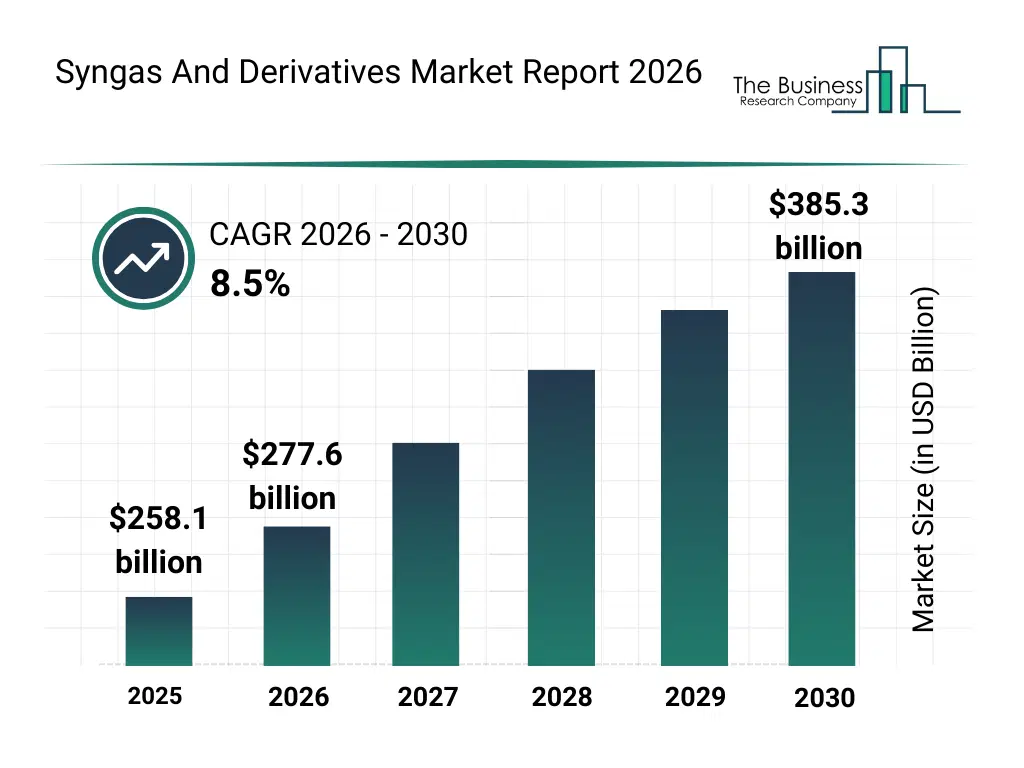
What Is The Syngas And Derivatives Market Size and Share 2026?
The syngas and derivatives market size has grown strongly in recent years. It will grow from $258.1 billion in 2025 to $277.6 billion in 2026 at a compound annual growth rate (CAGR) of 7.6%. The growth in the historic period can be attributed to chemical industry expansion, ammonia and methanol demand, coal gasification adoption, industrial fuel requirements, refinery integration.What Is The Syngas And Derivatives Market Growth Forecast?
The syngas and derivatives market size is expected to see strong growth in the next few years. It will grow to $385.3 billion in 2030 at a compound annual growth rate (CAGR) of 8.5%. The growth in the forecast period can be attributed to hydrogen economy development, low-carbon fuel initiatives, synthetic fuel demand, circular carbon utilization, industrial decarbonization targets. Major trends in the forecast period include low-carbon hydrogen production, integration with carbon capture systems, feedstock diversification strategies, process efficiency optimization, expansion of chemical derivatives.
Global Syngas And Derivatives Market Segmentation
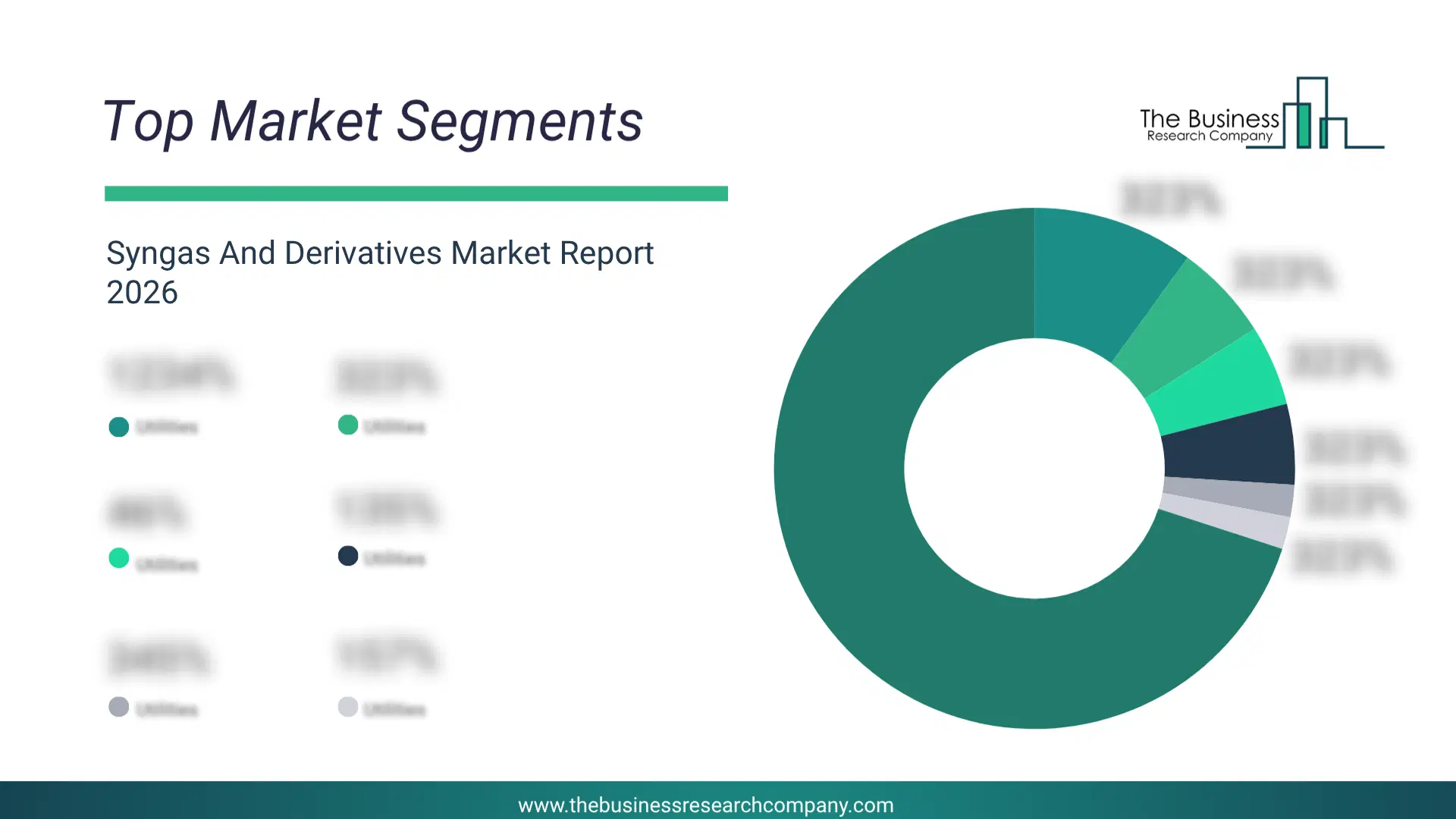
1) By Type: Partial Oxidation, Steam Reforming, Biomass Gasification, Other Types 2) By Feedstock: Coal, Natural Gas, Petroleum, Biomass Or Waste, Other Feedstocks 3) By Gasifier: Fixed Bed, Entrained Flow, Fluidized Bed 4) By Application: Chemicals, Power Generation, Liquid Fuels, Gaseous Fuels, Other Applications 5) By End-User: Industrial, Residential, Commercial Subsegments: 1) By Partial Oxidation: Oil Partial Oxidation, Coal Partial Oxidation, Natural Gas Partial Oxidation 2) By Steam Reforming: Methane Reforming, Naphtha Reforming 3) By Biomass Gasification: Wood Biomass Gasification, Agricultural Residues Gasification, Municipal Solid Waste Gasification 4) By Other Types: Autothermal Reforming, Plasma Gasification, Dry ReformingWhat Is The Driver Of The Syngas And Derivatives Market?
The expansion of the chemical industry is expected to propel the growth of the syngas and derivatives markets going forward. The expansion of the chemical industry refers to the growth and innovation in the industry, which includes increased capital investments in newer fields. Syngas and derivatives are essential raw materials for the chemical industry. They are used to produce a wide range of products, including fertilizers, fuels, plastics, and other chemicals, and to expand and diversify. For instance, in 2025, according to the US Bureau of Labor Statistics, a US-based government agency, in 2024, chemical manufacturing producer prices ticked up 0.4 percent. Further, import chemical manufacturing prices advanced 1.1 percent. Therefore, the expansion of the chemical industry is driving the growth of the syngas and derivatives markets.Key Players In The Global Syngas And Derivatives Market
Major companies operating in the syngas and derivatives market are ExxonMobil Corporation, Shell PLC, Total S.A., BP PLC, Chevron Corporation, BASF SE, Siemens AG, General Electric Company, Dow Chemical Company, LyondellBasell Industries N.V., Linde PLC, Air Liquide SA, Mitsubishi Heavy Industries Ltd., Yara International ASA, Johnson Matthey PLC, Sasol Ltd., Air Products and Chemicals Inc., Eastman Chemical Company, Celanese Corporation, TechnipFMC PLC, KBR Inc., Foster Wheeler AG, Chiyoda Corporation, Methanex Corporation, ThyssenKrupp Uhde GmbH, Topsoe A/S, Linc Energy Ltd., Synhelion SA, Advanced Biofuel Solutions Ltd.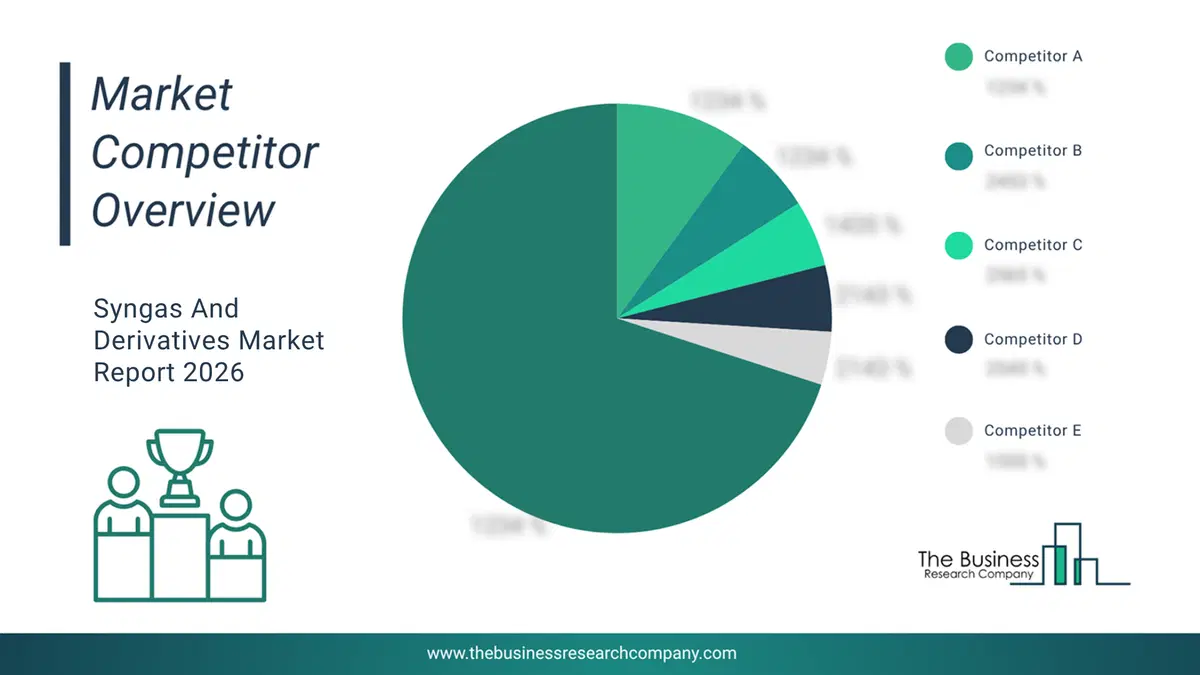
This chart is for illustrative purposes; the full report includes a detailed competitor analysis and comprehensive overview of the top 10 companies in the market.
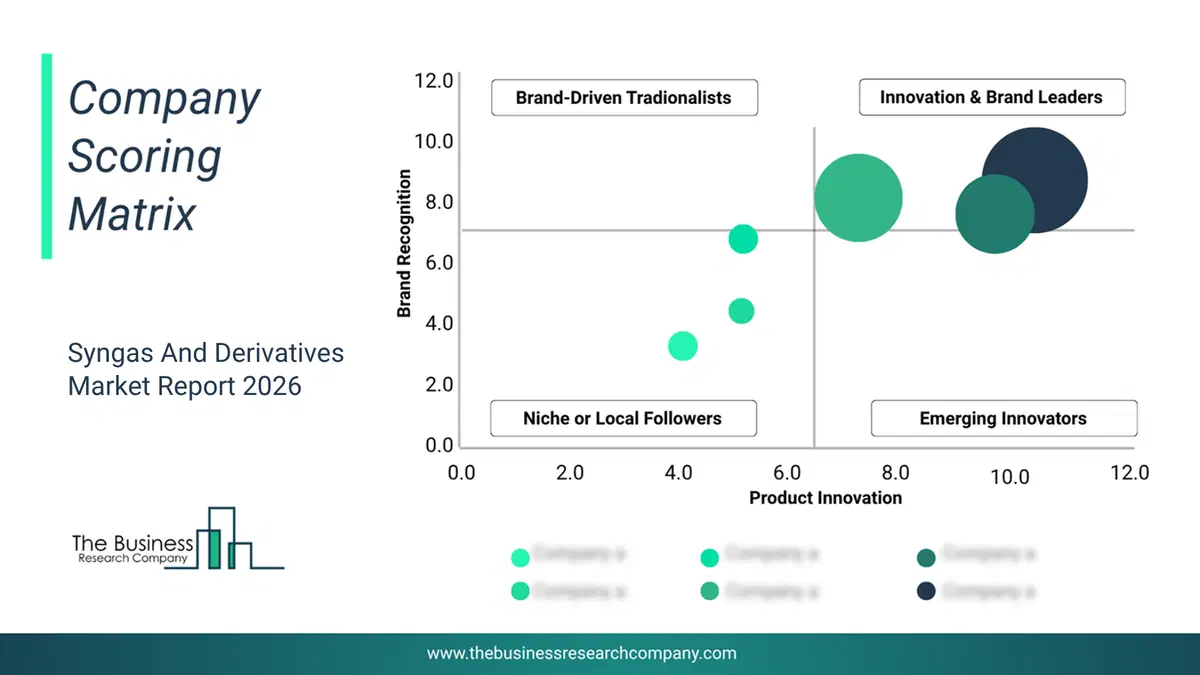
This chart maps companies by product innovation and brand strength, with bubble size indicating relative revenue, helping identify market leaders, challengers, and niche players. This is an illustrative chart; the full report provides a complete and accurate competitive analysis.
Global Syngas And Derivatives Market Trends and Insights
Major companies operating in the syngas and derivatives market are focusing on developing innovative methods such as advanced syngas-to-methanol conversion technologies to enhance carbon efficiency, reduce greenhouse gas emissions, and support the production of low-carbon fuels. Advanced syngas-to-methanol conversion technologies involve catalytic processes that convert synthesis gas derived from biomass or waste feedstocks into high-value methanol while effectively managing impurities and maximising feedstock utilisation. For instance, in May 2025, Johnson Matthey Plc, a UK-based sustainable technologies provider, announced that its methanol synthesis technology and catalysts were selected by SunGas Renewables for a $2 billion biomethanol plant in Rapides Parish, Louisiana. This project marks Johnson Matthey’s first biomethanol licence in the US and is designed to produce more than 500,000 tonnes of biomethanol annually, supporting growing demand from the marine fuel and sustainable aviation fuel sectors while contributing to large-scale decarbonisation and regional job creation.What Are Latest Mergers And Acquisitions In The Syngas And Derivatives Market?
In March 2023, Aether Fuels Pte. Ltd., a US-based next-generation climate technology company, acquired Sustainable Syngas LLC (SSG) for an undisclosed amount. This acquisition combines the engineering prowess of Aether and technological advancements in fuel generation with SSG's experience in creating substantial energy projects. Sustainable Syngas LLC (SSG) is a US-based company developing carbon-neutral, sustainable liquid biofuels.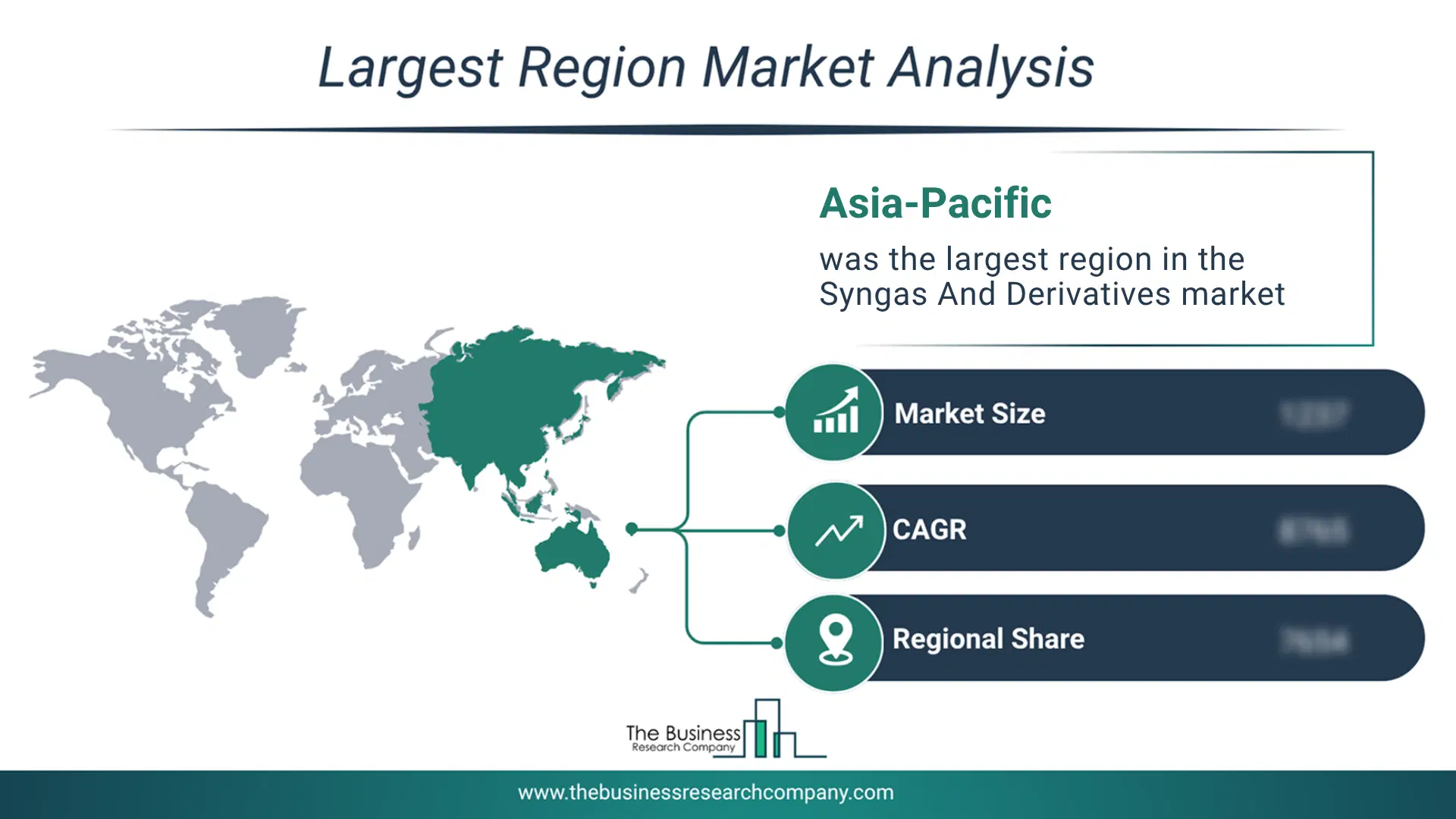
Regional Outlook
Asia-Pacific was the largest region in the syngas and derivatives market in 2025 and it is expected to be the fastest-growing region in the forecast period. The regions covered in this market report are Asia-Pacific, South East Asia, Western Europe, Eastern Europe, North America, South America, Middle East, Africa. The countries covered in this market report are Australia, Brazil, China, France, Germany, India, Indonesia, Japan, Taiwan, Russia, South Korea, UK, USA, Canada, Italy, SpainWhat Defines the Syngas And Derivatives Market?
The syngas and derivatives market consists of sales of ammonia, synthetic fuels, N-butanol and dimethyl ether. Values in this market are ‘factory gate’ values, that is the value of goods sold by the manufacturers or creators of the goods, whether to other entities (including downstream manufacturers, wholesalers, distributors and retailers) or directly to end customers. The value of goods in this market includes related services sold by the creators of the goods.How is Market Value Defined and Measured?
The market value is defined as the revenues that enterprises gain from the sale of goods and/or services within the specified market and geography through sales, grants, or donations in terms of the currency (in USD unless otherwise specified). The revenues for a specified geography are consumption values that are revenues generated by organizations in the specified geography within the market, irrespective of where they are produced. It does not include revenues from resales along the supply chain, either further along the supply chain or as part of other products.
This chart presents market attractiveness based on a quantitative evaluation of growth, competition, strategic alignment, and risk, offering a clear view of opportunity areas for decision-making. This chart is for illustrative purposes; the full report contains the complete analysis.

This chart highlights the Total Addressable Market (TAM) by estimating the maximum revenue opportunity using an assumption-driven approach, supporting strategic planning and opportunity sizing across markets. The chart is illustrative; the full report provides a more comprehensive analysis.
What Key Data and Analysis Are Included in the Syngas And Derivatives Market Report 2026?
The syngas and derivatives market research report is one of a series of new reports from The Business Research Company that provides market statistics, including industry global market size, regional shares, competitors with the market share, detailed market segments, market trends and opportunities, and any further data you may need to thrive in the syngas and derivatives industry. The market research report delivers a complete perspective of everything you need, with an in-depth analysis of the current and future state of the industry.Syngas And Derivatives Market Report Forecast Analysis
| Report Attribute | Details |
|---|---|
| Market Size Value In 2026 | $277.6 billion |
| Revenue Forecast In 2030 | $385.3 billion |
| Growth Rate | CAGR of 8.5% from 2026 to 2030 |
| Base Year For Estimation | 2025 |
| Actual Estimates/Historical Data | 2020-2025 |
| Forecast Period | 2026 - 2030 |
| Market Representation | Revenue in USD Billion and CAGR from 2026 to 2030 |
| Segments Covered | Type, Feedstock, Gasifier, Application, End-User |
| Regional Scope | Asia-Pacific, Western Europe, Eastern Europe, North America, South America, Middle East, Africa |
| Country Scope | The countries covered in the report are Australia, Brazil, China, France, Germany, India, Indonesia, Japan, Taiwan, Russia, South Korea, UK, USA, Canada, Italy, Spain. |
| Key Companies Profiled | ExxonMobil Corporation, Shell PLC, Total S.A., BP PLC, Chevron Corporation, BASF SE, Siemens AG, General Electric Company, Dow Chemical Company, LyondellBasell Industries N.V., Linde PLC, Air Liquide SA, Mitsubishi Heavy Industries Ltd., Yara International ASA, Johnson Matthey PLC, Sasol Ltd., Air Products and Chemicals Inc., Eastman Chemical Company, Celanese Corporation, TechnipFMC PLC, KBR Inc., Foster Wheeler AG, Chiyoda Corporation, Methanex Corporation, ThyssenKrupp Uhde GmbH, Topsoe A/S, Linc Energy Ltd., Synhelion SA, Advanced Biofuel Solutions Ltd. |
| Customization Scope | Request for Customization |
| Pricing And Purchase Options | Explore Purchase Options |