
Synthetic Small Molecule Active Pharmaceutical Ingredients (APIs) Market Report 2026
Global Outlook – By Type (Active Pharmaceutical Ingredients (APIs), Key Starting Materials (KSMs), Intermediates), By Manufacturing Process (Synthetic Processes, Biocatalysis, Continuous Flow Chemistry, Batch Processing), By Manufacturer (In-House, Outsourced), By Application (Cardiovascular Diseases, Oncology, CNS And Neurology, Orthopedic, Endocrinology, Pulmonology, Gastroenterology, Nephrology, Ophthalmology, Other Applications) – Market Size, Trends, Strategies, and Forecast to 2030
Synthetic Small Molecule Active Pharmaceutical Ingredients (APIs) Market Overview
• Synthetic Small Molecule Active Pharmaceutical Ingredients (APIs) market size has reached to $165.52 billion in 2025 • Expected to grow to $224.05 billion in 2030 at a compound annual growth rate (CAGR) of 6.2% • Growth Driver: The Rising Demand For Cost-Effective Generic Drugs Is Driving The Market Due To Affordability And Patent Expirations • Market Trend: Advancing API Development Through Model-Based Process Optimization And Digital Twins • North America was the largest region in 2025 and Asia-Pacific is the fastest growing region.Market Gains By 2030 – Top Opportunities By Segment
Market Gain identifies the most promising market opportunities by highlighting the segments or products expected to generate the highest incremental revenue growth over the next five years.
What Is Covered Under Synthetic Small Molecule Active Pharmaceutical Ingredients (APIs) Market?
A synthetic small molecule active pharmaceutical ingredients (APIs) is a chemically manufactured, low-molecular-weight compound that serves as the primary biologically active component in a pharmaceutical drug, designed to exert a specific therapeutic effect through precise interaction with molecular targets in the body. These ingredients are widely used in the development of orally administered and systemically acting medications due to their stability, scalability, and well-characterized pharmacological profiles. The main types of synthetic small molecule active pharmaceutical ingredients (APIs) are active pharmaceutical ingredients (APIs), key starting materials (KSMs), and intermediates. Active pharmaceutical ingredients (APIs) in synthetic small-molecule APIs refer to the chemically manufactured compounds that produce the intended therapeutic effects in pharmaceutical drugs. These are manufactured by various processes, including synthetic processes, biocatalysis, continuous flow chemistry, and batch processing by manufacturers, such as in-house and outsourced, and used in multiple applications, including cardiovascular diseases, oncology, CNS and neurology, orthopedics, endocrinology, pulmonology, gastroenterology, nephrology, ophthalmology, and others.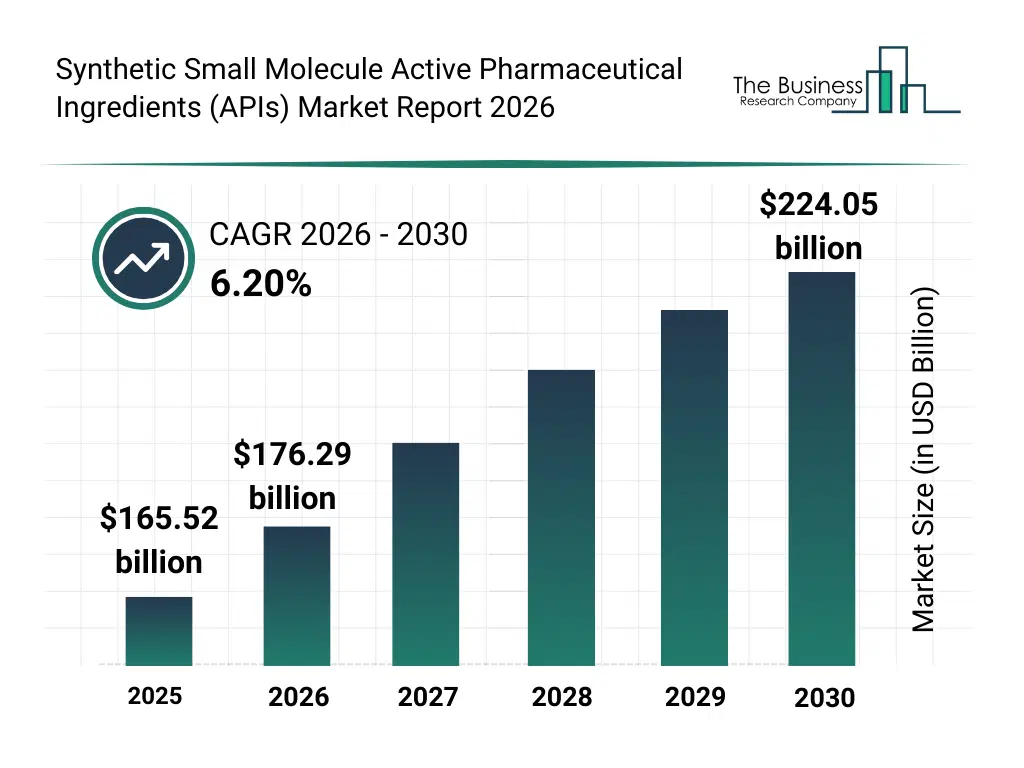
What Is The Synthetic Small Molecule Active Pharmaceutical Ingredients (APIs) Market Size and Share 2026?
The synthetic small molecule active pharmaceutical ingredients (apis) market size has grown strongly in recent years. It will grow from $165.52 billion in 2025 to $176.29 billion in 2026 at a compound annual growth rate (CAGR) of 6.5%. The growth in the historic period can be attributed to growth of oral solid dosage formulations, expansion of generic pharmaceuticals, established chemical synthesis capabilities, cost efficiency of small molecule drugs, increasing prevalence of chronic diseases.What Is The Synthetic Small Molecule Active Pharmaceutical Ingredients (APIs) Market Growth Forecast?
The synthetic small molecule active pharmaceutical ingredients (apis) market size is expected to see strong growth in the next few years. It will grow to $224.05 billion in 2030 at a compound annual growth rate (CAGR) of 6.2%. The growth in the forecast period can be attributed to rising oncology and cns drug pipelines, adoption of advanced manufacturing technologies, growing demand for high-potency apis, expansion of outsourced pharmaceutical manufacturing, increasing regulatory emphasis on supply chain transparency. Major trends in the forecast period include rising demand for synthetic small molecule apis in chronic disease treatments, increased outsourcing of api manufacturing to contract manufacturers, growing adoption of continuous flow chemistry and biocatalysis, expansion of generic drug production and patent expirations, strengthening regulatory focus on api quality and traceability.
Global Synthetic Small Molecule Active Pharmaceutical Ingredients (APIs) Market Segmentation
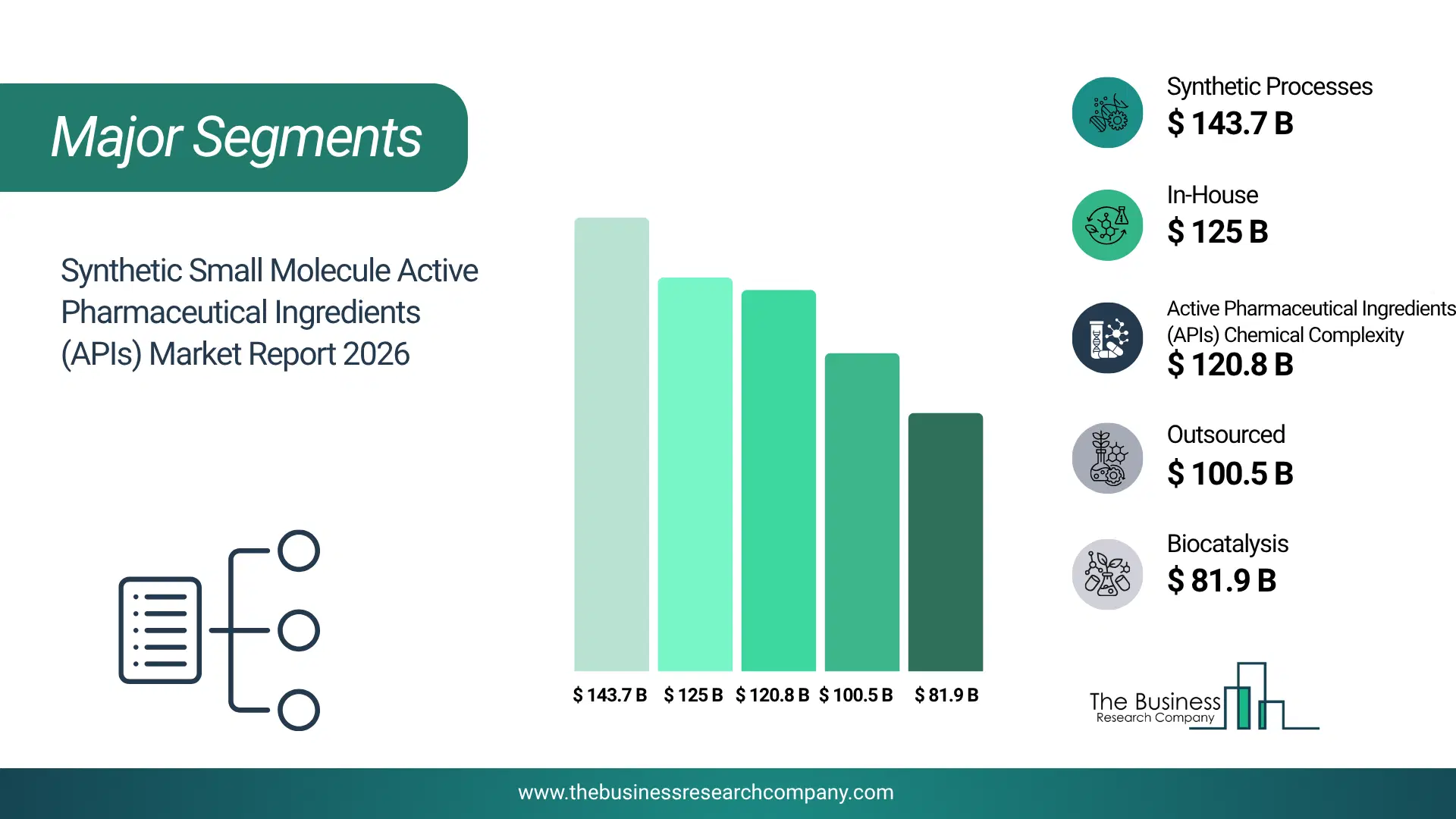
1) By Type: Active Pharmaceutical Ingredients (APIs), Key Starting Materials (KSMs), Intermediates 2) By Manufacturing Process: Synthetic Processes, Biocatalysis, Continuous Flow Chemistry, Batch Processing 3) By Manufacturer: In-House, Outsourced 4) By Application: Cardiovascular Diseases, Oncology, CNS And Neurology, Orthopedic, Endocrinology, Pulmonology, Gastroenterology, Nephrology, Ophthalmology, Other Applications Subsegments: 1) By Active Pharmaceutical Ingredients (APIs): Anti-diabetic APIs, Antihypertensive APIs, Antihistamines, Anticoagulants 2) By Key Starting Materials (KSMs): Benzene Derivatives, Pyridine Derivatives, Heterocyclic Compounds, Halogenated Compounds 3) By Intermediates: Chiral Intermediates, Acylation Intermediates, Alkylation Intermediates, Amination Intermediates The top segments in the synthetic small molecule active pharmaceutical ingredients (apis) market will be: • Synthetic Processes will reach $143697.99 Million by 2030. • In-House will reach $125077.03 Million by 2030. • Active Pharmaceutical Ingredients (APIs) Chemical Complexity will reach $120871.89 Million by 2030. • Outsourced will reach $100563.26 Million by 2030. • Biocatalysis will reach $81942.3 Million by 2030.What Is The Driver Of The Synthetic Small Molecule Active Pharmaceutical Ingredients (APIs) Market?
The rising demand for cost-effective generic drugs is expected to propel the growth of the synthetic small molecule active pharmaceutical ingredients (APIs) market going forward. Cost-effective generic drugs are low-priced medicines that have the same active components and offer equivalent therapeutic effects as branded drugs. Demand for cost-effective generic drugs is increasing due to the growing prevalence of chronic illnesses, which require continuous and budget-friendly treatment solutions. Synthetic small molecule active pharmaceutical ingredient (API) enable cost-effective generic drugs by offering scalable, efficient manufacturing processes that reduce production costs while maintaining therapeutic efficacy. For instance, in September 2024, according to the Association for Accessible Medicines (AAM), a US-based trade association, savings from the use of biosimilars rose by over 30% to $12.4 billion in 2023, while total savings from generics and biosimilars grew by $37 billion, reaching $445 billion from $408 billion in 2022. Therefore, the rising demand for cost-effective generic drugs is driving the growth of the synthetic small molecule active pharmaceutical ingredients (APIs) industry.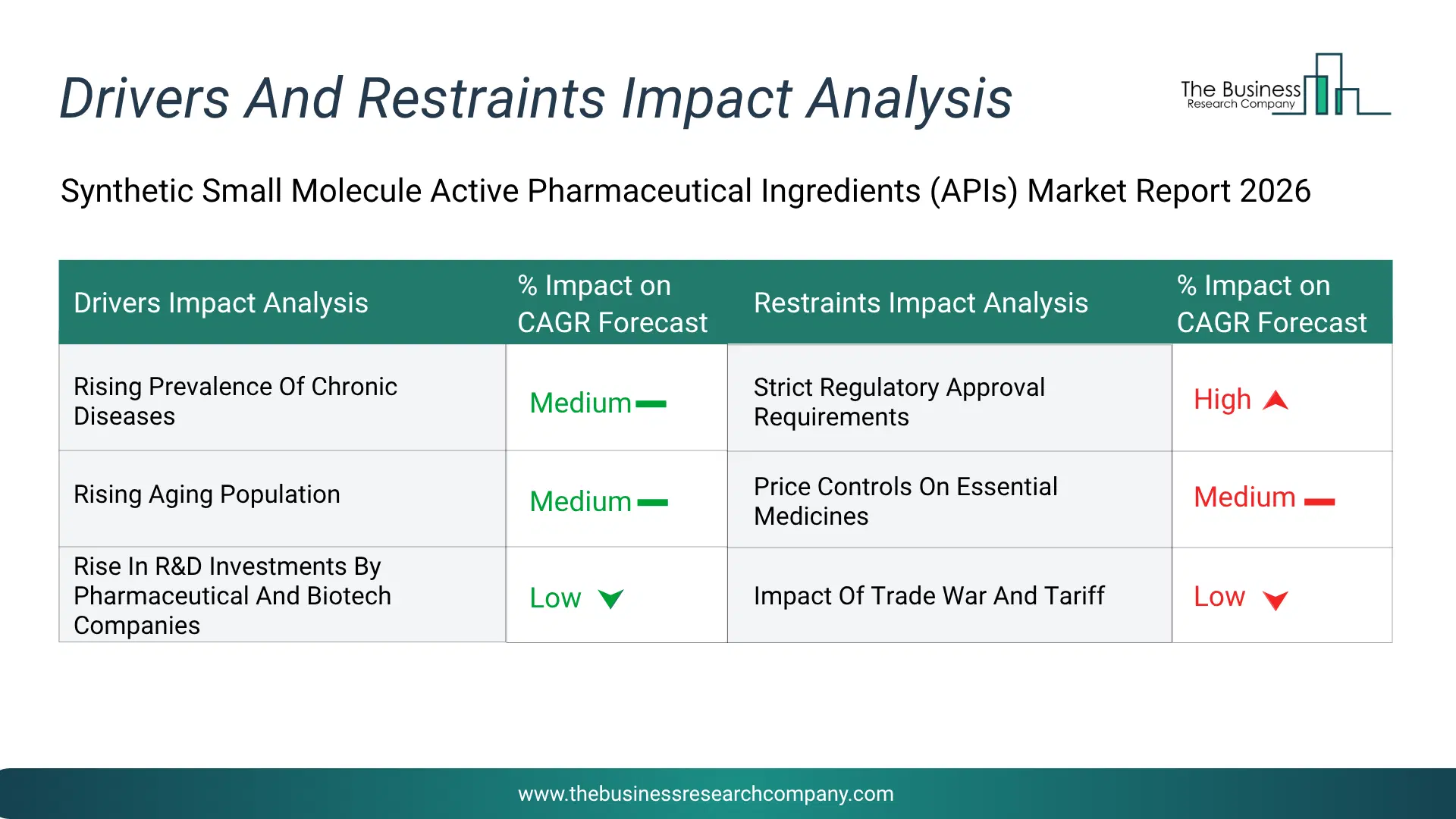
Infographic Chart Showing Key Market Drivers Analysis And Restraints For Synthetic Small Molecule Active Pharmaceutical Ingredients (Apis) Market
The chart presents an impact analysis of key drivers and restraints, quantifying their relative influence on the market's growth rate and helping assess the balance between growth enablers and limiting factors. This chart offers a high-level perspective; the full report contains more detailed insights.
How Will The Drivers Impact Growth In The Global Synthetic Small Molecule Active Pharmaceutical Ingredients (APIs) Market?
• Rising Prevalence Of Chronic Diseases (Medium) – During the forecast period, the rising prevalence of chronic diseases will propel the growth of the synthetic small molecule active pharmaceutical ingredients (APIs) market. As the global burden of chronic conditions such as cardiovascular diseases, diabetes, cancer and chronic respiratory disorders continues to increase across both developed and emerging economies, long-term pharmacological treatment requirements are expected to expand significantly. The growing incidence of these diseases is driving sustained demand for daily and lifelong medications, the majority of which are formulated using synthetic small molecule APIs due to their efficacy, stability and scalability. As healthcare systems increasingly prioritize chronic disease management and continuous drug supply, the need for consistent production of synthetic small molecule APIs is expected to intensify. Therefore, the rising prevalence of chronic diseases will remain a key driver of growth for the synthetic small molecule active pharmaceutical ingredients (APIs) market during the forecast period. The increasing carbon emission reduction target growth contribution during the forecast period in 2025 is 1.7%. • Rising Aging Population (Medium) – During the forecast period, the rising aging population will propel the growth of the synthetic small molecule active pharmaceutical ingredients (APIs) market. As global populations continue to age due to increased life expectancy and declining fertility rates, there will be a corresponding rise in the prevalence of chronic and age-related health conditions such as cardiovascular diseases, diabetes, neurodegenerative disorders and cancer, which are commonly treated with medications formulated using synthetic small molecule APIs. As the aging population expands, health systems are projected to prioritize long-term pharmacological care, increasing prescriptions of existing medicines and supporting development of new targeted therapies, thereby elevating the need for reliable supplies of high-quality synthetic small molecule APIs. Consequently, the rising aging population is anticipated to remain a critical driver of growth in the synthetic small molecule active pharmaceutical ingredients (APIs) market throughout the forecast period. The rising aging population growth contribution during the forecast period in 2025 is 1.0%. • Rise In R&D Investments By Pharmaceutical And Biotech Companies (Low) – During the forecast period, the rise in R&D investments by pharmaceutical and biotech companies will propel the growth of the synthetic small molecule active pharmaceutical ingredients (APIs) market. As pharmaceutical and biotechnology firms increase their allocation of capital toward innovation in drug discovery, process optimization and advanced chemical synthesis, the demand for high-quality, scalable synthetic small molecule APIs is expected to grow significantly. Enhanced R&D spending supports the development of novel therapeutic candidates, improved formulations and more efficient manufacturing processes, all of which rely on robust supplies of active pharmaceutical ingredients. In addition, investment in early-stage chemistry, route scouting and advanced process development is projected to accelerate pipeline progression and shorten time to market for new small molecule drugs, further elevating API requirements. As companies deepen their research portfolios and pursue differentiated chemical entities, the need for reliable, innovative and customizable synthetic small molecule API production will continue to expand. The rise in R&D investments by pharmaceutical and biotech companies growth contribution during the forecast period in 2025 is 0.8%. • Expansion Of Healthcare Infrastructure (Low) – During the forecast period, the expansion of healthcare infrastructure will propel the growth of the synthetic small molecule active pharmaceutical ingredients (APIs) market. As governments and private sector stakeholders continue to invest in the construction and upgrading of hospitals, clinics, diagnostic centers and treatment facilities to improve access to quality care, the overall capacity for pharmaceutical consumption and supply chain integration is expected to increase. Expanded healthcare infrastructure supports broader patient reach, higher treatment uptake and increased utilization of prescription medicines, many of which depend on synthetic small molecule APIs as their core active components. In addition, enhanced pharmaceutical manufacturing capabilities linked to new and upgraded facilities are projected to facilitate scale-up of API production and reduce bottlenecks in drug supply chains. As healthcare systems strengthen physical infrastructure and service delivery networks, the demand for synthetic small molecule APIs to support a growing portfolio of therapeutic areas is anticipated to rise. Therefore, the expansion of healthcare infrastructure will remain a key driver of growth for the synthetic small molecule active pharmaceutical ingredients (APIs) market during the forecast period. The expansion of healthcare infrastructure growth contribution during the forecast period in 2025 is 0.5%.How Will The Restraints Impact Growth In The Global Synthetic Small Molecule Active Pharmaceutical Ingredients (APIs) Market?
• Strict Regulatory Approval Requirements (Medium) – During the forecast period, strict regulatory approval requirements are restricting the growth of the synthetic small molecule active pharmaceutical ingredients (APIs) market. Many API manufacturers and contract development and manufacturing organizations depend on timely regulatory clearances to initiate production, scale commercial supplies and introduce new API variants and increasingly stringent approval criteria can lead to longer review times, higher compliance costs and greater uncertainty in product launches. From a regulatory compliance perspective, enhanced documentation, extensive quality testing and more rigorous safety evaluations make it difficult for API producers to expedite approvals at predictable timelines, particularly when global regulatory agencies harmonize toward higher standards. As a result, many API manufacturers may delay development of new API molecules, defer capacity expansion, or incur additional costs to maintain compliance, thereby restricting the growth of the synthetic small molecule active pharmaceutical ingredients market. Growth affected by the strict regulatory approval requirements during the forecast period in 2025 is -2.0%. • Price Controls On Essential Medicines (Medium) – During the forecast period, price controls on essential medicines are restricting the growth of the synthetic small molecule active pharmaceutical ingredients (APIs) market. Many API manufacturers depend on stable pricing environments to invest in production scale-up, process optimization and supply chain resilience and regulatory limits on the prices of essential drug formulations can compress margins on the APIs that serve as their key inputs. From a value-chain perspective, enforced price caps make it difficult for manufacturers to pass through increases in raw material, labor and compliance costs, particularly when regulatory frameworks mandate affordability over cost recovery. As a result, many API manufacturers may defer capacity expansion, slow investment in advanced synthesis technologies, or exit less profitable product segments, thereby restricting the growth of the synthetic small molecule active pharmaceutical ingredients market. Growth affected by the price controls on essential medicines during the forecast period in 2025 is -1.0%. • Impact Of Trade War And Tariff (Low) – During the forecast period, the impact of trade wars and tariffs is restricting the growth of the synthetic small molecule active pharmaceutical ingredients (APIs) market. Many API manufacturers depend on global supply chains for key raw materials and finished chemical inputs and ongoing or escalating tariffs on imported chemicals and intermediates can elevate input costs, dampen procurement flexibility and disrupt established sourcing arrangements. From a trade-policy perspective, increased tariff barriers make it difficult for API producers to stabilize long-term supply contracts at predictable costs, particularly when major economies engage in reciprocal tariff escalations or impose restrictive import duties on crucial chemical feedstocks. As a result, many API manufacturers may defer capital expenditure on capacity expansion, shift production to higher-cost domestic inputs, or absorb elevated costs, thereby restricting the growth of the synthetic small molecule active pharmaceutical ingredients market. Growth affected by the impact of trade wars and tariffs during the forecast period in 2025 is -0.3%.Key Players In The Global Synthetic Small Molecule Active Pharmaceutical Ingredients (APIs) Market
Major companies operating in the synthetic small molecule active pharmaceutical ingredients (apis) market are Pfizer Inc., Johnson & Johnson, Hoffmann‑La Roche Ltd., Merck & Co. Inc., AbbVie Inc., Sanofi S.A., Bristol-Myers Squibb Company, AstraZeneca plc, Novartis AG, Eli Lilly and Company, Boehringer Ingelheim International GmbH, Teva Pharmaceutical Industries Ltd., Daiichi Sankyo Co. Ltd., Dr. Reddy’s Laboratories Ltd., Curia Inc., Nanjing King‑Friend Biochemical Pharmaceutical Co. Ltd., Accord Healthcare Ltd.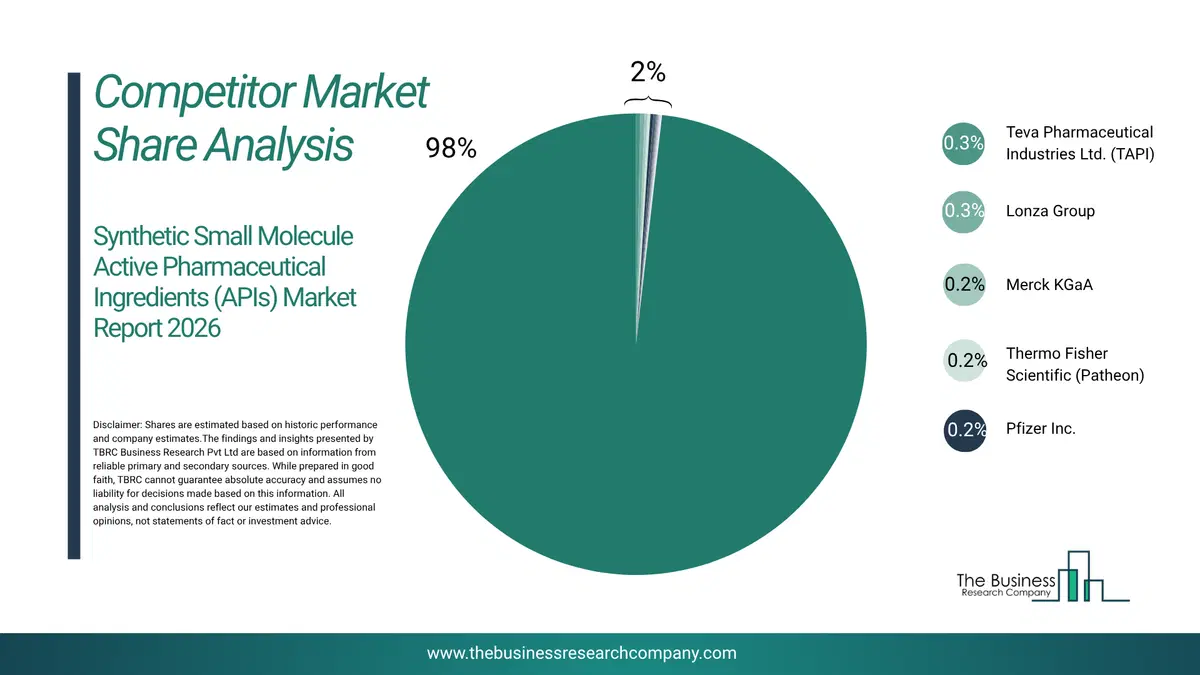
This chart is for illustrative purposes; the full report includes a detailed competitor analysis and comprehensive overview of the top 10 companies in the market.
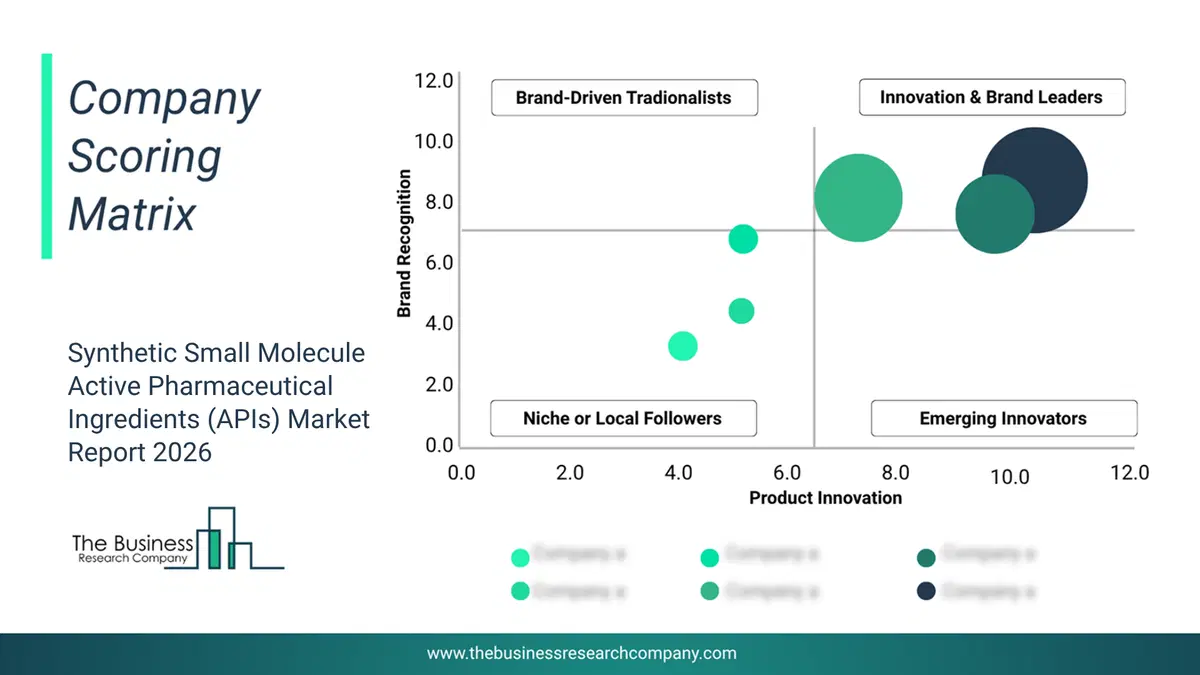
This chart maps companies by product innovation and brand strength, with bubble size indicating relative revenue, helping identify market leaders, challengers, and niche players. This is an illustrative chart; the full report provides a complete and accurate competitive analysis.
Global Synthetic Small Molecule Active Pharmaceutical Ingredients (APIs) Market Trends and Insights
Major companies operating in the synthetic small molecule active pharmaceutical ingredients (APIs) market are focusing on developing advanced solutions, such as model-based process optimization platforms, to accelerate the development and improve the efficiency of API manufacturing processes. A model-based process optimization platform is a digital solution that integrates predictive modeling and experimental design tools to streamline and enhance chemical process development with minimal physical experimentation. For instance, in May 2025, Lonza Group, a Switzerland-based contract development and manufacturing organization (CDMO), launched Design2Optimize, a model-based process optimization platform. The platform utilizes a combination of physicochemical and statistical modeling within an optimization framework to reduce the number of physical experiments required during process development. By creating a digital twin of each process and enabling virtual scenario testing, the platform facilitates faster, more efficient development of complex synthetic pathways for small molecule active pharmaceutical ingredients.What Are Latest Mergers And Acquisitions In The Synthetic Small Molecule Active Pharmaceutical Ingredients (APIs) Market?
In April 2023, PI Health Sciences Limited, an India-based manufacturing company, acquired Archimica S.p.A. for an undisclosed amount. With this acquisition, PI Health Sciences Limited gains access to Archimica’s good manufacturing practice (GMP)-compliant small-molecule active pharmaceutical ingredient (API) manufacturing facility and established regulatory filings, thereby expanding its synthetic small-molecule API capabilities while improving global operational scale and customer reach. Archimica S.p.A. is an Italy-based pharmaceutical company that specializes in providing synthetic small molecule active pharmaceutical ingredients (APIs).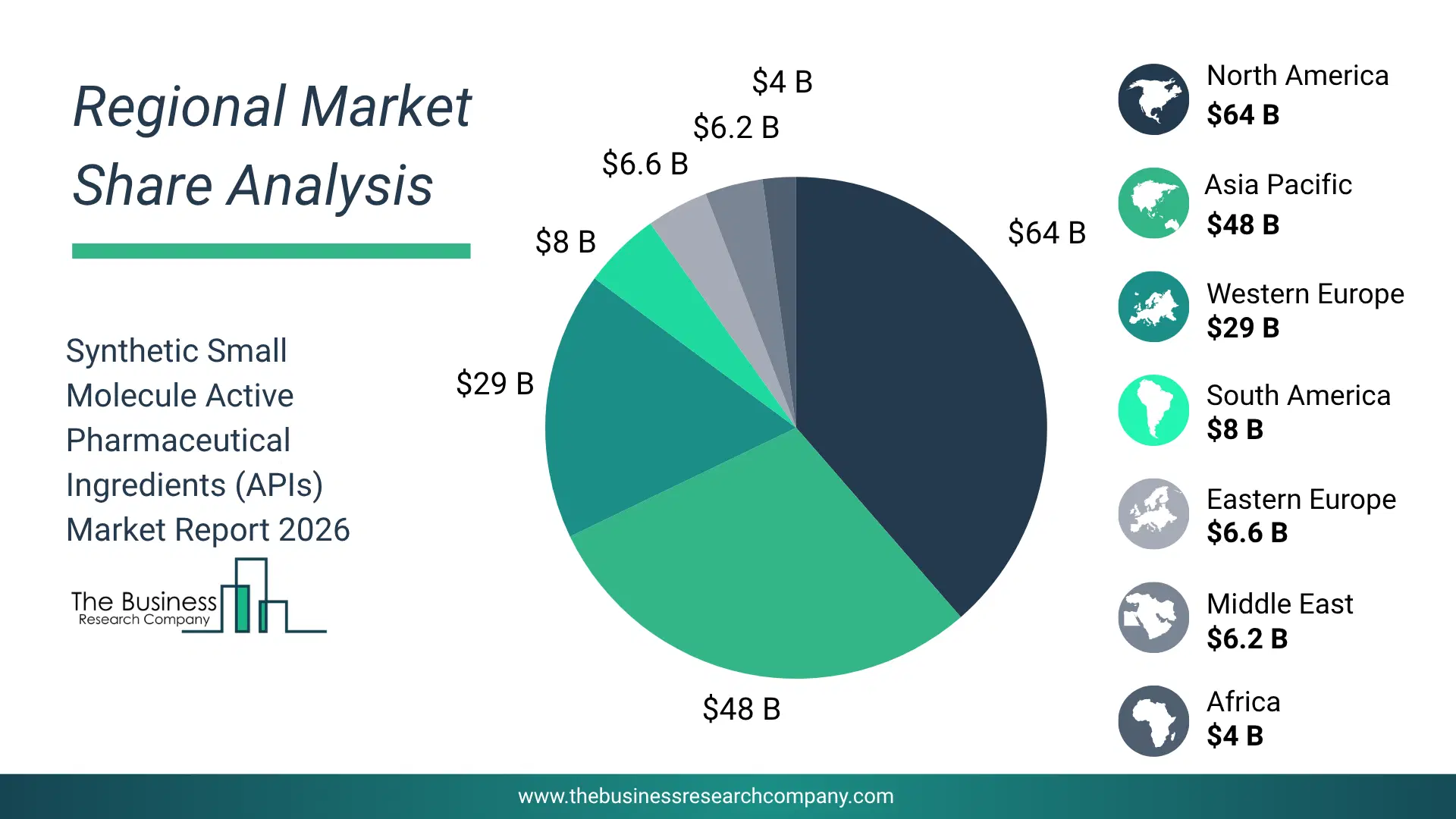
Regional Insights
North America was the largest region in the synthetic small molecule active pharmaceutical ingredients (APIs) market in 2025. Asia-Pacific is expected to be the fastest-growing region in the forecast period. The regions covered in this market report are Asia-Pacific, South East Asia, Western Europe, Eastern Europe, North America, South America, Middle East, Africa. The countries covered in this market report are Australia, Brazil, China, France, Germany, India, Indonesia, Japan, Taiwan, Russia, South Korea, UK, USA, Canada, Italy, Spain.What Defines the Synthetic Small Molecule Active Pharmaceutical Ingredients (APIs) Market?
The synthetic small molecule active pharmaceutical ingredients (APIs) market consists of sales of product such as respiratory APIs, gastrointestinal APIs, dermatological APIs, antimalarial APIs, antifungal APIs, immunosuppressant APIs, and antiprotozoal APIs. Values in this market are ‘factory gate’ values, that is the value of goods sold by the manufacturers or creators of the goods, whether to other entities (including downstream manufacturers, wholesalers, distributors and retailers) or directly to end customers. The value of goods in this market includes related services sold by the creators of the goods.How is Market Value Defined and Measured?
The market value is defined as the revenues that enterprises gain from the sale of goods and/or services within the specified market and geography through sales, grants, or donations in terms of the currency (in USD unless otherwise specified). The revenues for a specified geography are consumption values that are revenues generated by organizations in the specified geography within the market, irrespective of where they are produced. It does not include revenues from resales along the supply chain, either further along the supply chain or as part of other products.
This chart presents market attractiveness based on a quantitative evaluation of growth, competition, strategic alignment, and risk, offering a clear view of opportunity areas for decision-making. This chart is for illustrative purposes; the full report contains the complete analysis.

This chart highlights the Total Addressable Market (TAM) by estimating the maximum revenue opportunity using an assumption-driven approach, supporting strategic planning and opportunity sizing across markets. The chart is illustrative; the full report provides a more comprehensive analysis.
What Key Data and Analysis Are Included in the Synthetic Small Molecule Active Pharmaceutical Ingredients (APIs) Market Report 2026?
The synthetic small molecule active pharmaceutical ingredients (apis) market research report is one of a series of new reports from The Business Research Company that provides market statistics, including industry global market size, regional shares, competitors with the market share, detailed market segments, market trends and opportunities, and any further data you may need to thrive in the synthetic small molecule active pharmaceutical ingredients (apis) industry. The market research report delivers a complete perspective of everything you need, with an in-depth analysis of the current and future state of the industry.Synthetic Small Molecule Active Pharmaceutical Ingredients (APIs) Market Report Forecast Analysis
| Report Attribute | Details |
|---|---|
| Market Size Value In 2026 | $176.29 billion |
| Revenue Forecast In 2030 | $224.05 billion |
| Growth Rate | CAGR of 6.5% from 2026 to 2030 |
| Base Year For Estimation | 2025 |
| Actual Estimates/Historical Data | 2020-2025 |
| Forecast Period | 2026 - 2030 - 2035 |
| Market Representation | Revenue in USD Billion and CAGR from 2026 to 2030 |
| Segments Covered | Type, Manufacturing Process, Manufacturer, Application |
| Regional Scope | Asia-Pacific, Western Europe, Eastern Europe, North America, South America, Middle East, Africa |
| Country Scope | The countries covered in the report are Australia, Brazil, China, France, Germany, India, Indonesia, Japan, Taiwan, Russia, South Korea, UK, USA, Canada, Italy, Spain. |
| Key Companies Profiled | Pfizer Inc., Johnson & Johnson, Hoffmann‑La Roche Ltd., Merck & Co. Inc., AbbVie Inc., Sanofi S.A., Bristol-Myers Squibb Company, AstraZeneca plc, Novartis AG, Eli Lilly and Company, Boehringer Ingelheim International GmbH, Teva Pharmaceutical Industries Ltd., Daiichi Sankyo Co. Ltd., Dr. Reddy’s Laboratories Ltd., Curia Inc., Nanjing King‑Friend Biochemical Pharmaceutical Co. Ltd., Accord Healthcare Ltd. |
| Customization Scope | Request for Customization |
| Pricing And Purchase Options | Explore Purchase Options |