
Third-Generation Sequencing Technology Market Report 2026
Global Outlook – By Technology Type (Single-Molecule Real-Time Sequencing (SMRT), Nanopore Sequencing), By Workflow (Sample Preparation, Sequencing, Data Analysis, Data Interpretation, Data Storage And Management), By Application (Genomics, Transcriptomics, Epigenomics, Metagenomics, Personalized Medicine, Synthetic Biology), By End-User (Academic Institutions, Clinical Laboratories, Pharmaceutical And Biotechnology Companies, Research Organizations, Government And Non-Profit Organizations) – Market Size, Trends, Strategies, and Forecast to 2030
Third-Generation Sequencing Technology Market Overview
• Third-Generation Sequencing Technology market size has reached to $14 billion in 2025 • Expected to grow to $26.71 billion in 2030 at a compound annual growth rate (CAGR) of 13.7% • Growth Driver: Increasing Adoption Of Personalized Medicine Fueling The Growth Of The Market Due To Advancements In Genomics And Tailored Treatments • Market Trend: Development Of Ultra-Rapid And Scalable Sequencing Systems • North America was the largest region in 2025.Market Gains By 2030 – Top Opportunities By Segment
Market Gain identifies the most promising market opportunities by highlighting the segments or products expected to generate the highest incremental revenue growth over the next five years.
What Is Covered Under Third-Generation Sequencing Technology Market?
Third-generation sequencing technology refers to advanced DNA or RNA sequencing methods that read single molecules in real-time, often producing long continuous reads without the need for polymerase chain reaction (PCR) amplification. Its primary purpose is to provide highly accurate, comprehensive genomic and transcriptomic information, enabling the detection of structural variants, epigenetic modifications, and complex regions that are challenging for earlier sequencing methods. The main technology types of third-generation sequencing technology are single-molecule real-time sequencing (SMRT), transcription-mediated amplification (TMA), nanopore sequencing, sequencing by synthesis (SBS), and others. Single-molecule real-time sequencing (SMRT is an advanced technique that tracks DNA synthesis by enzymes in real time, detecting fluorescent signals of each base without the need for template amplification. The different workflow involves sample preparation, sequencing, data analysis, and data storage or management, and is widely used in applications such as genomics, transcriptomics, epigenomics, metagenomics, personalized medicine, and synthetic biology, serving end users such as academic institutions, clinical laboratories, pharmaceutical and biotechnology companies, research organizations, and government and non-profit institutions.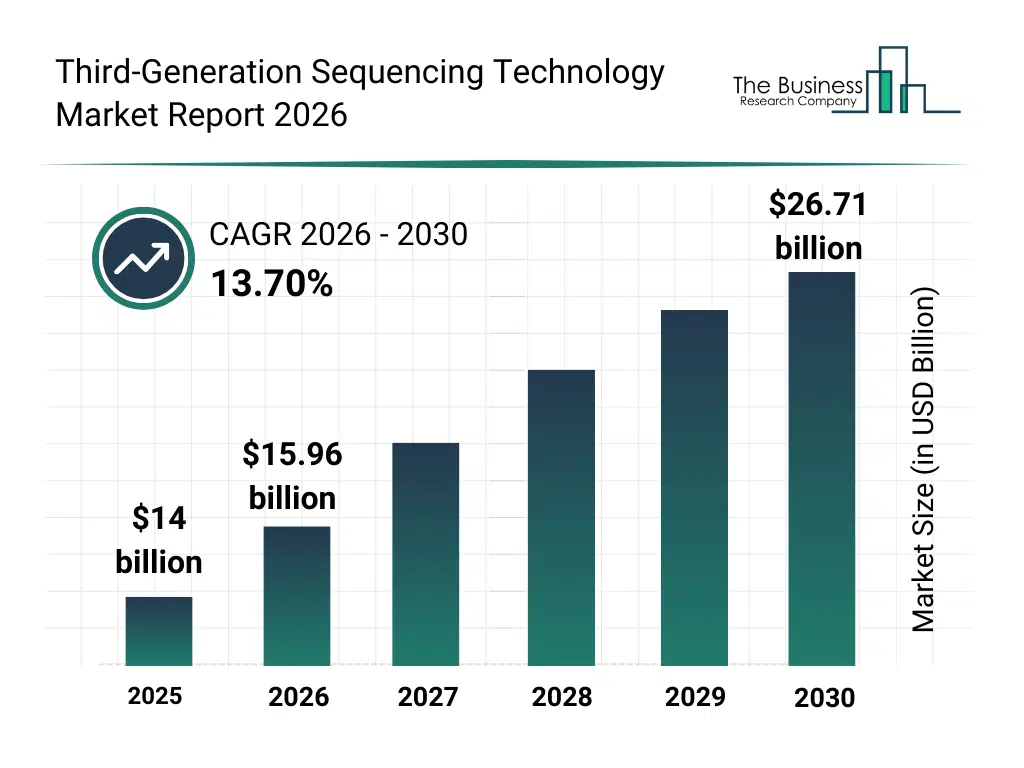
What Is The Third-Generation Sequencing Technology Market Size and Share 2026?
The third-generation sequencing technology market size has grown rapidly in recent years. It will grow from $14 billion in 2025 to $15.96 billion in 2026 at a compound annual growth rate (CAGR) of 14.0%. The growth in the historic period can be attributed to genomics research funding, limitations of short-read sequencing, academic research adoption, rise in rare disease studies, technology innovation.What Is The Third-Generation Sequencing Technology Market Growth Forecast?
The third-generation sequencing technology market size is expected to see rapid growth in the next few years. It will grow to $26.71 billion in 2030 at a compound annual growth rate (CAGR) of 13.7%. The growth in the forecast period can be attributed to precision medicine expansion, clinical diagnostics adoption, reduction in sequencing costs, integration with ai analytics, population genomics initiatives. Major trends in the forecast period include long-read sequencing technologies, real-time dna sequencing, clinical genomics adoption, single-molecule sequencing, portable sequencing platforms.
Global Third-Generation Sequencing Technology Market Segmentation
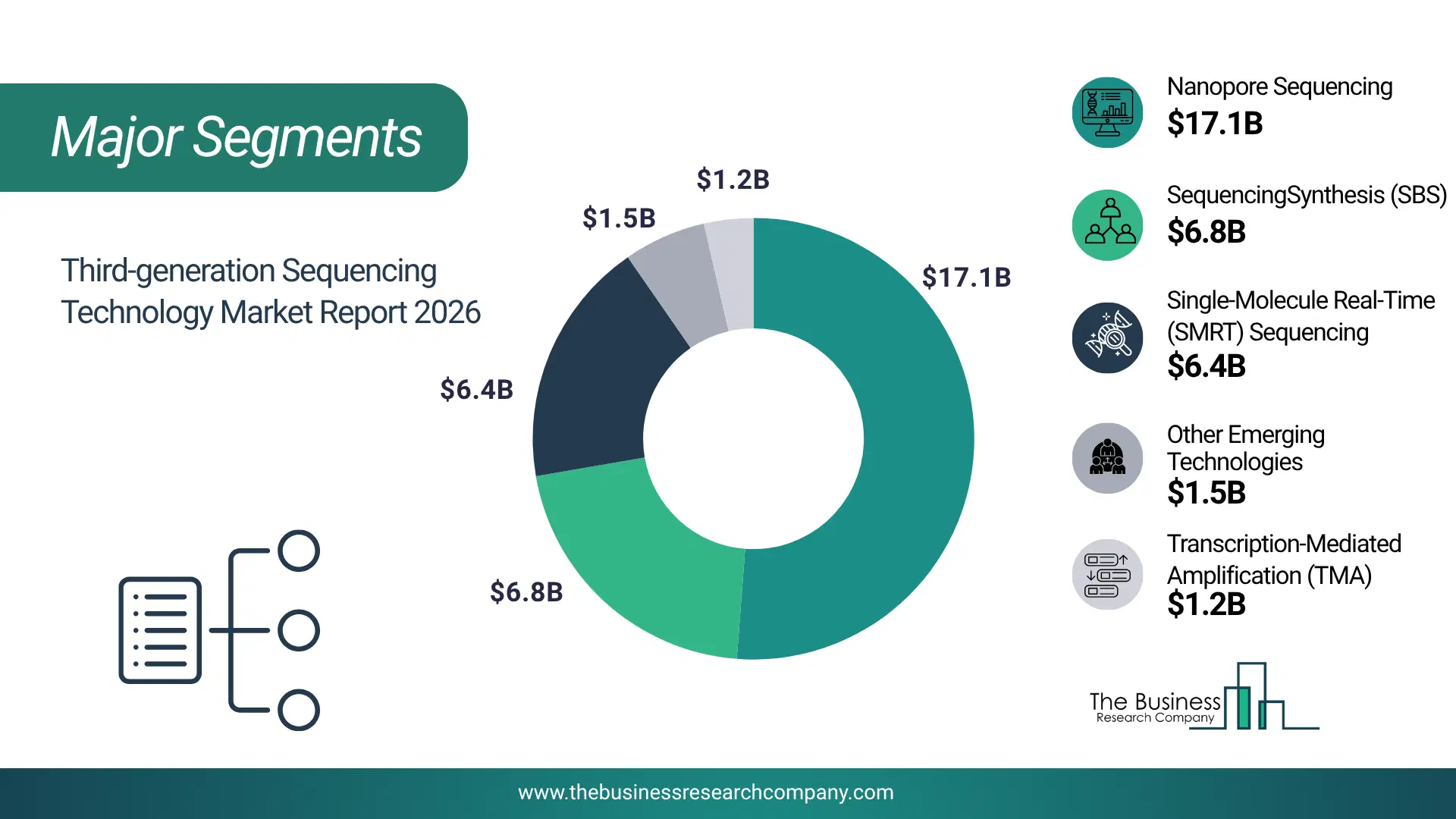
1) By Technology Type: Single-Molecule Real-Time Sequencing (SMRT), Nanopore Sequencing 2) By Workflow: Sample Preparation, Sequencing, Data Analysis, Data Interpretation, Data Storage And Management 3) By Application: Genomics, Transcriptomics, Epigenomics, Metagenomics, Personalized Medicine, Synthetic Biology 4) By End-User: Academic Institutions, Clinical Laboratories, Pharmaceutical And Biotechnology Companies, Research Organizations, Government And Non-Profit Organizations Subsegments: 1) By Single-Molecule Real-Time Sequencing (SMRT): Zero-Mode Waveguides (ZMWs), Circular Consensus Sequencing (CCS), High-Fidelity (HiFi) Reads 2) By Nanopore Sequencing: Portable Nanopore Sequencers, Benchtop Nanopore Sequencers, High-Throughput Nanopore Platforms The top segments in the third-generation sequencing technology market will be: • Nanopore Sequencing will reach $17.06 billion by 2030. • SequencingSynthesis (SBS) will reach $6.76 billion by 2030. • Single-Molecule Real-Time (SMRT) Sequencing will reach $6.31 billion by 2030. • Other Emerging Technologies will reach $1.47 billion by 2030. • Transcription-Mediated Amplification (TMA) will reach $1.17 billion by 2030.What Is The Driver Of The Third-Generation Sequencing Technology Market?
The increasing adoption of personalized medicine is expected to propel the growth of the third-generation sequencing technology market going forward. Personalized medicine refers to a medical approach that tailors treatment and prevention strategies to an individual’s unique genetic makeup, lifestyle, and environment. The increasing adoption of personalized medicine is primarily due to advancements in genomics, which enable precise identification of genetic variations and tailored treatments for individuals. Third-generation sequencing technology enhances personalized medicine by delivering long-read, high-accuracy genomic data, enabling precise identification of genetic variations. It supports tailored treatment strategies by providing comprehensive insights into individual genomes, improving clinical outcomes and advancing precision healthcare. For instance, in February 2024, according to the Personalized Medicine Coalition (PMC), a US-based nonprofit organization, the U.S. Food and Drug Administration (FDA) approved 26 new personalized medicines in 2023, a significant increase from the 12 approved in 2022. Therefore, the increasing adoption of personalized medicine is driving the growth of the third-generation sequencing technology industry.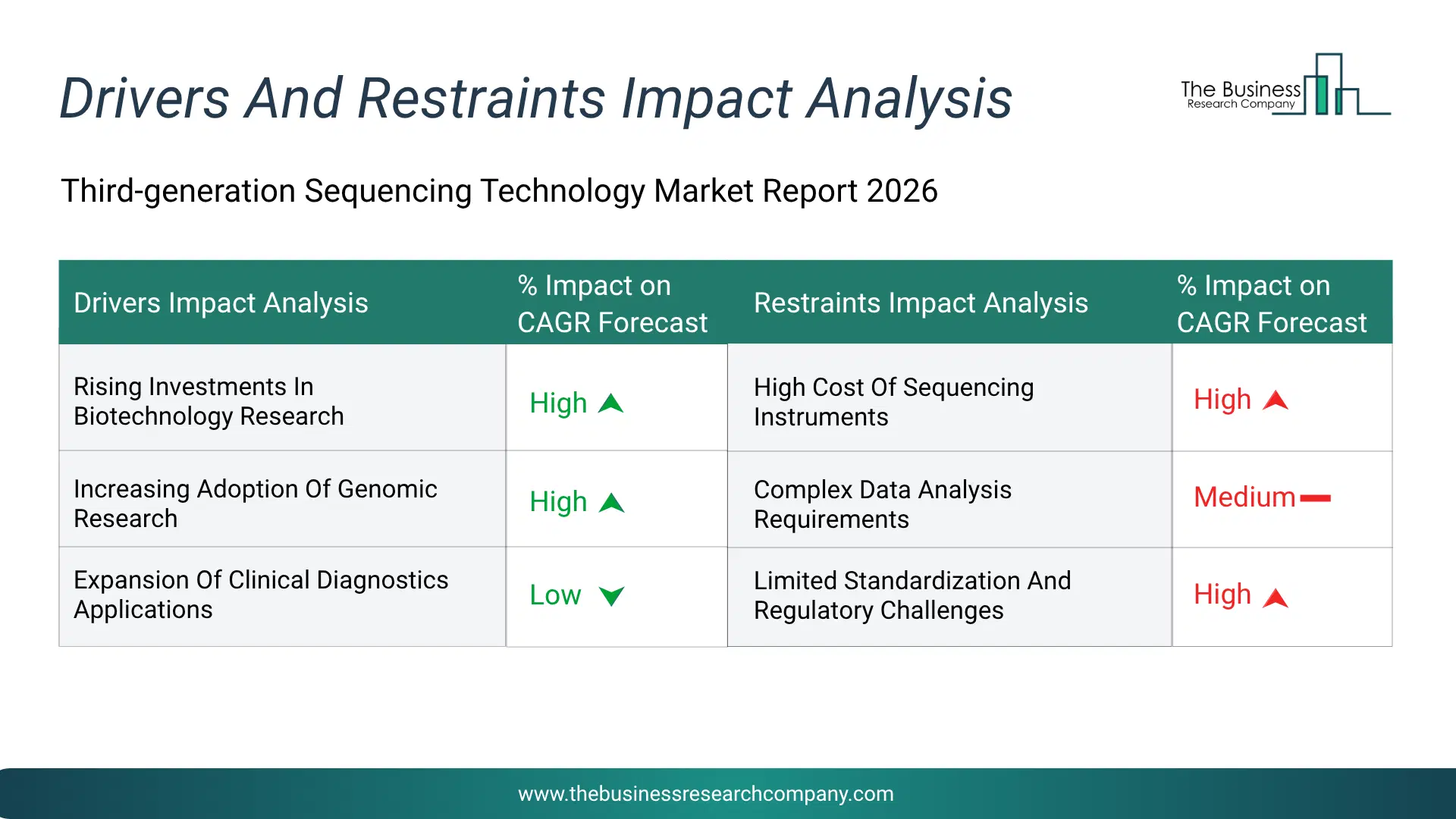
Infographic Chart Showing Key Market Drivers Analysis And Restraints For Third-Generation Sequencing Technology Market
The chart presents an impact analysis of key drivers and restraints, quantifying their relative influence on the market's growth rate and helping assess the balance between growth enablers and limiting factors. This chart offers a high-level perspective; the full report contains more detailed insights.
How Will The Drivers Impact Growth In The Global Third-generation Sequencing Technology Market?
• Rising Investments In Biotechnology Research (High) – During the forecast period, the rising investments in biotechnology research is expected to become a key growth driver for the third-generation sequencing technology market by 2030. Increasing investments in biotechnology research are propelling the expansion of the third-generation sequencing (tgs) technology market by advancing the development and commercialization of sophisticated genomic tools and applications. Enhanced funding from government bodies, private investors, and pharmaceutical companies is supporting large-scale genomics programs and precision medicine initiatives. This financial backing enables wider adoption of high-throughput, highly accurate, and real-time sequencing platforms enabled by tgs technologies. Additionally, stronger investment flows are stimulating innovation in bioinformatics and data analytics, improving sequencing performance, accelerating turnaround times, and driving cost efficiencies across research and clinical settings. • Increasing Adoption Of Genomic Research (High) – During the forecast period, the increasing adoption of genomic research is expected to emerge as a major factor driving the expansion of the third-generation sequencing technology market by 2030. The growing adoption of genomic research is accelerating the expansion of the third-generation sequencing (tgs) technology market by increasing demand for advanced sequencing platforms that provide faster, more accurate, and comprehensive genetic analysis. Modern genomic studies depend on high-throughput sequencing to investigate complex genetic variations, epigenetic modifications, and underlying disease mechanisms. Tgs technologies enable real-time sequencing of long dna reads without the need for amplification, significantly improving data integrity and discovery efficiency. Expanding applications in precision medicine, pharmaceutical research, and agricultural genomics are further strengthening market growth and broadening the technology’s adoption across diverse research domains. • Expansion Of Clinical Diagnostics Applications (Low) – During the forecast period, the expansion of clinical diagnostics applications is expected to act as a key growth catalyst for the third-generation sequencing technology market by 2030. The expansion of clinical diagnostics applications is fueling the growth of the third-generation sequencing (tgs) technology market by enabling faster, more precise, and comprehensive genetic analysis for disease detection and therapeutic decision-making. Tgs facilitates real-time sequencing of long dna or rna molecules, allowing accurate identification of rare mutations, structural variations, and epigenetic modifications. Its capability to analyze complex clinical samples, including tumor tissues and infectious pathogens, strengthens personalized medicine strategies and supports early disease diagnosis. Increasing integration of tgs platforms in clinical laboratories for oncology testing, infectious disease surveillance, and genetic disorder screening is significantly driving market demand.How Will The Restraints Impact Growth In The Global Third-generation Sequencing Technology Market?
• High Cost Of Sequencing Instruments (High) – During the forecast period, the high cost of sequencing instruments is a major restraining factor for the third-generation sequencing technology market. These advanced systems require significant investment in equipment, maintenance, and skilled personnel, making them unaffordable for many small research labs and clinical institutions. The initial setup and operational costs are substantially higher compared to earlier sequencing technologies. Additionally, frequent calibration and consumable expenses further increase the total cost of ownership. As a result, limited adoption in cost-sensitive regions and institutions slows market growth despite the technology’s potential advantages. • Complex Data Analysis Requirements (Medium) – During the forecast period, the complex data analysis requirements act as a restraining factor for the third generation sequencing (tgs) technology market because the massive volume of raw genomic data generated by these platforms requires advanced bioinformatics tools and high computational power for interpretation. Managing and processing this data demand specialized expertise, which increases operational costs and time. Many research institutions and clinical laboratories lack the infrastructure and skilled professionals needed for efficient analysis. Additionally, inconsistent data formats and the complexity of identifying meaningful biological insights hinder large-scale adoption. This makes integration into clinical and research workflows challenging, slowing market growth. • Limited Standardization And Regulatory Challenges (High) – During the forecast period, the limited standardization and regulatory challenges act as a restraining factor for the third generation sequencing technology market because the absence of uniform protocols for sequencing processes, data interpretation, and quality control creates inconsistencies across laboratories and research studies. This lack of standardization makes it difficult to compare results and integrate data into clinical applications. Additionally, evolving regulatory frameworks for genomic testing and personalized medicine increase approval timelines and compliance burdens for manufacturers and healthcare providers. These uncertainties slow down commercialization and limit widespread clinical adoption of third generation sequencing technologies.Key Players In The Global Third-Generation Sequencing Technology Market
Major companies operating in the third-generation sequencing technology market are Oxford Nanopore Technologies, Pacific Biosciences, Quantapore, Ultima Genomics, BGI Genomics, MGI Tech, Complete Genomics, Stratos Genomics, VisiGen Biotechnologies, Helicos Biosciences, Genia Technologies, Electronic Bio Sciences, Quantum Biosystems, Base4 Innovation, Nabsys, Chronix Biomedical, Roche, Nanopore Diagnostics, GenapSys, SomaLogic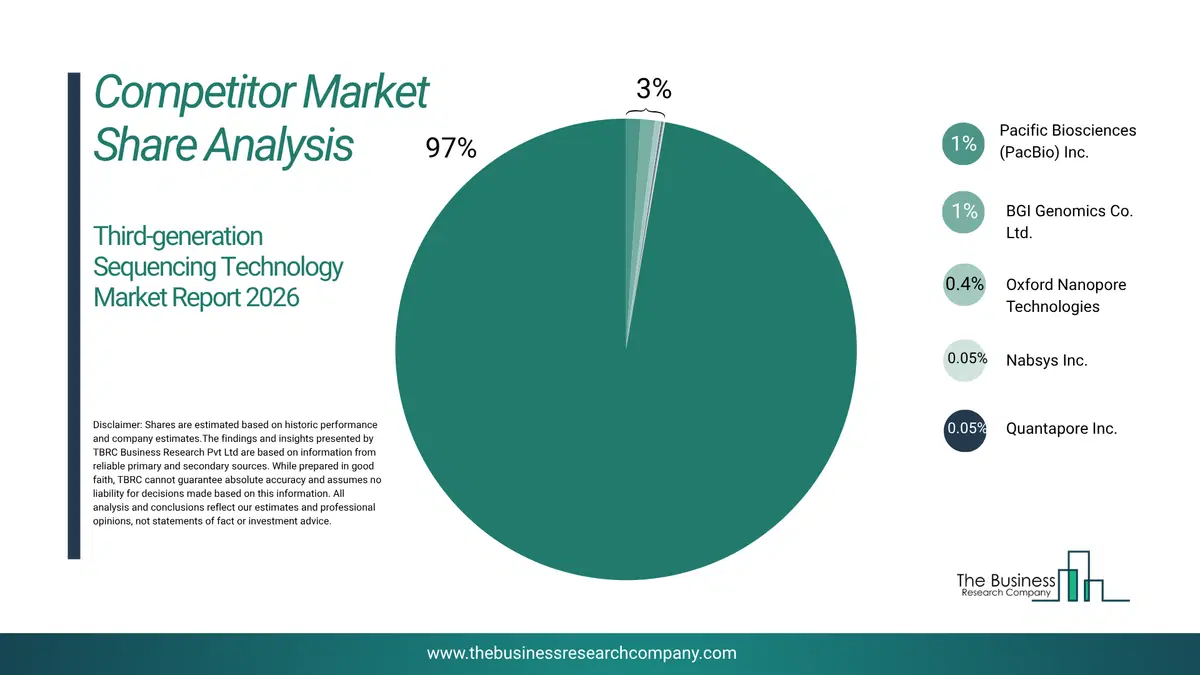
This chart is for illustrative purposes; the full report includes a detailed competitor analysis and comprehensive overview of the top 10 companies in the market.
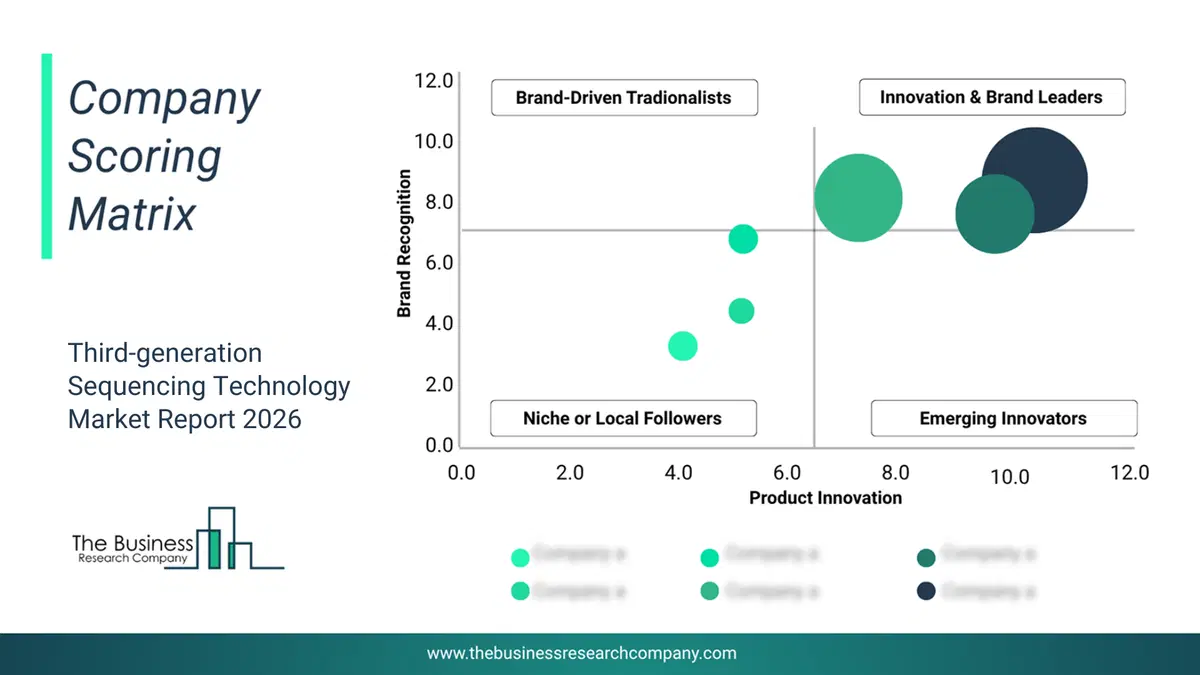
This chart maps companies by product innovation and brand strength, with bubble size indicating relative revenue, helping identify market leaders, challengers, and niche players. This is an illustrative chart; the full report provides a complete and accurate competitive analysis.
Global Third-Generation Sequencing Technology Market Trends and Insights
Major companies operating in the third-generation sequencing technology market are focusing on developing advanced sequencing platforms, such as ultra-rapid and scalable sequencing systems, to boost research efficiency, enhance clinical applicability, and reduce turnaround times and costs. Ultra-rapid and scalable sequencing systems refer to innovative technologies that enable high-throughput, real-time genomic analysis with exceptional speed and accuracy, facilitating comprehensive genomic profiling across diverse applications. For instance, in February 2025, Roche Holding AG, a Switzerland-based pharmaceutical company, launched Sequencing by Expansion (SBX) technology. It is a fully integrated, next-generation sequencing system featuring a patented biochemical process that encodes DNA or RNA sequences into measurable surrogate polymers called Xpandomers, enabling highly accurate single-molecule nanopore sequencing. The SBX platform includes ultra-rapid, scalable sequencing capabilities and automated data analysis, delivering whole-genome sequencing results in hours rather than days without extensive manual intervention.What Are Latest Mergers And Acquisitions In The Third-Generation Sequencing Technology Market?
In August 2023, PacBio, a US-based provider of high-quality and highly accurate sequencing solutions, acquired Apton Biosystems for up to $110 million. With this acquisition, PacBio aims to accelerate the development of a high-throughput short-read sequencing platform by integrating its Sequencing by Binding (SBB) chemistry with Apton’s advanced optics and image processing technology. Apton Biosystems is a US-based company developing a high-throughput short-read sequencer designed to enable the sequencing of billions of DNA clusters on a single flow cell.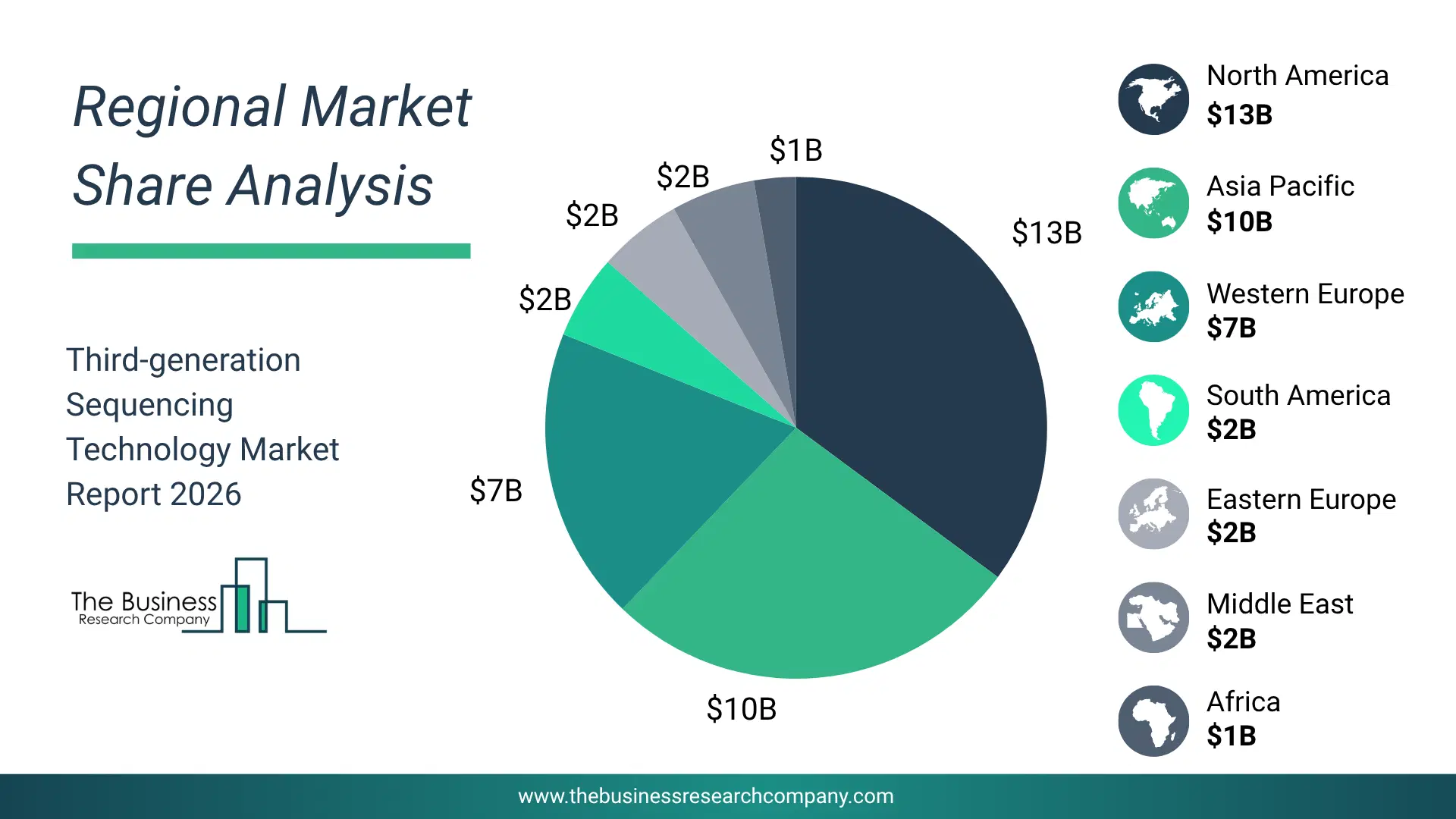
Regional Outlook
North America was the largest region in the third-generation sequencing technology market in 2025. The regions covered in this market report are Asia-Pacific, South East Asia, Western Europe, Eastern Europe, North America, South America, Middle East, Africa. The countries covered in this market report are Australia, Brazil, China, France, Germany, India, Indonesia, Japan, Taiwan, Russia, South Korea, UK, USA, Canada, Italy, SpainWhat Defines the Third-Generation Sequencing Technology Market?
The third-generation sequencing technology market consists of revenues earned by entities by providing services such as whole genome sequencing, transcriptome sequencing, epigenetic analysis, de novo genome assembly, single-cell sequencing, and structural variant detection. The market value includes the value of related goods sold by the service provider or included within the service offering. The third-generation sequencing technology market also includes sales of sequencing instruments, reagents, flow cells, sample preparation kits, nanopore devices, optical mapping systems, microfluidic chips, and sample preparation instruments. Values in this market are ‘factory gate’ values, that is, the value of goods sold by the manufacturers or creators of the goods, whether to other entities (including downstream manufacturers, wholesalers, distributors, and retailers) or directly to end customers. The value of goods in this market includes related services sold by the creators of the goods.How is Market Value Defined and Measured?
The market value is defined as the revenues that enterprises gain from the sale of goods and/or services within the specified market and geography through sales, grants, or donations in terms of the currency (in USD unless otherwise specified). The revenues for a specified geography are consumption values that are revenues generated by organizations in the specified geography within the market, irrespective of where they are produced. It does not include revenues from resales along the supply chain, either further along the supply chain or as part of other products.
This chart presents market attractiveness based on a quantitative evaluation of growth, competition, strategic alignment, and risk, offering a clear view of opportunity areas for decision-making. This chart is for illustrative purposes; the full report contains the complete analysis.

This chart highlights the Total Addressable Market (TAM) by estimating the maximum revenue opportunity using an assumption-driven approach, supporting strategic planning and opportunity sizing across markets. The chart is illustrative; the full report provides a more comprehensive analysis.
What Key Data and Analysis Are Included in the Third-Generation Sequencing Technology Market Report 2026?
The third-generation sequencing technology market research report is one of a series of new reports from The Business Research Company that provides market statistics, including industry global market size, regional shares, competitors with the market share, detailed market segments, market trends and opportunities, and any further data you may need to thrive in the third-generation sequencing technology industry. The market research report delivers a complete perspective of everything you need, with an in-depth analysis of the current and future state of the industry.Third-Generation Sequencing Technology Market Report Forecast Analysis
| Report Attribute | Details |
|---|---|
| Market Size Value In 2026 | $15.96 billion |
| Revenue Forecast In 2030 | $26.71 billion |
| Growth Rate | CAGR of 13.7% from 2026 to 2030 |
| Base Year For Estimation | 2025 |
| Actual Estimates/Historical Data | 2020-2025 |
| Forecast Period | 2026 - 2030 |
| Market Representation | Revenue in USD Billion and CAGR from 2026 to 2030 |
| Segments Covered | Technology Type, Workflow, Application, End-User |
| Regional Scope | Asia-Pacific, Western Europe, Eastern Europe, North America, South America, Middle East, Africa |
| Country Scope | The countries covered in the report are Australia, Brazil, China, France, Germany, India, ... |
| Key Companies Profiled | Oxford Nanopore Technologies, Pacific Biosciences, Quantapore, Ultima Genomics, BGI Genomics, MGI Tech, Complete Genomics, Stratos Genomics, VisiGen Biotechnologies, Helicos Biosciences, Genia Technologies, Electronic Bio Sciences, Quantum Biosystems, Base4 Innovation, Nabsys, Chronix Biomedical, Roche, Nanopore Diagnostics, GenapSys, SomaLogic |
| Customization Scope | Request for Customization |
| Pricing And Purchase Options | Explore Purchase Options |