
Trade Surveillance Systems Market Report 2026
Global Outlook – By Component (Solutions, Services), By Organizational Size (Small And Medium-Sized Enterprises, Large Enterprises), By Deployment Type (On-Premises, Cloud) – Market Size, Trends, Strategies, and Forecast to 2030
Trade Surveillance Systems Market Overview
• Trade Surveillance Systems market size has reached to $2.02 billion in 2025 • Expected to grow to $5.16 billion in 2030 at a compound annual growth rate (CAGR) of 20.5% • Growth Driver: Escalating Financial Fraud Incidences Fueling The Trade Surveillance Systems Market • Market Trend: Innovative User Interfaces Transforms Trade Surveillance Solutions • North America was the largest region in 2025 and Asia-Pacific is the fastest growing region.Market Gains By 2030 – Top Opportunities By Segment
Market Gain identifies the most promising market opportunities by highlighting the segments or products expected to generate the highest incremental revenue growth over the next five years.
What Is Covered Under Trade Surveillance Systems Market?
Trade surveillance systems refer to activities carried out and measures taken by public authorities to ensure that products comply with the applicable union harmonization legislation. By examining all market and trading data, this aids in the tracking of crimes across multiple regions and asset types. The main types of trade surveillance systems market components are solutions and services. Solutions are used for fraud detection and manipulation in trade surveillance systems. Solutions refer to a system that combines people, processes, information, and technology to support a group of business or technical skills that address one or more business challenges. The organization sizes are small, medium-sized enterprises, and large enterprises. The deployment types are on-premises and in the cloud.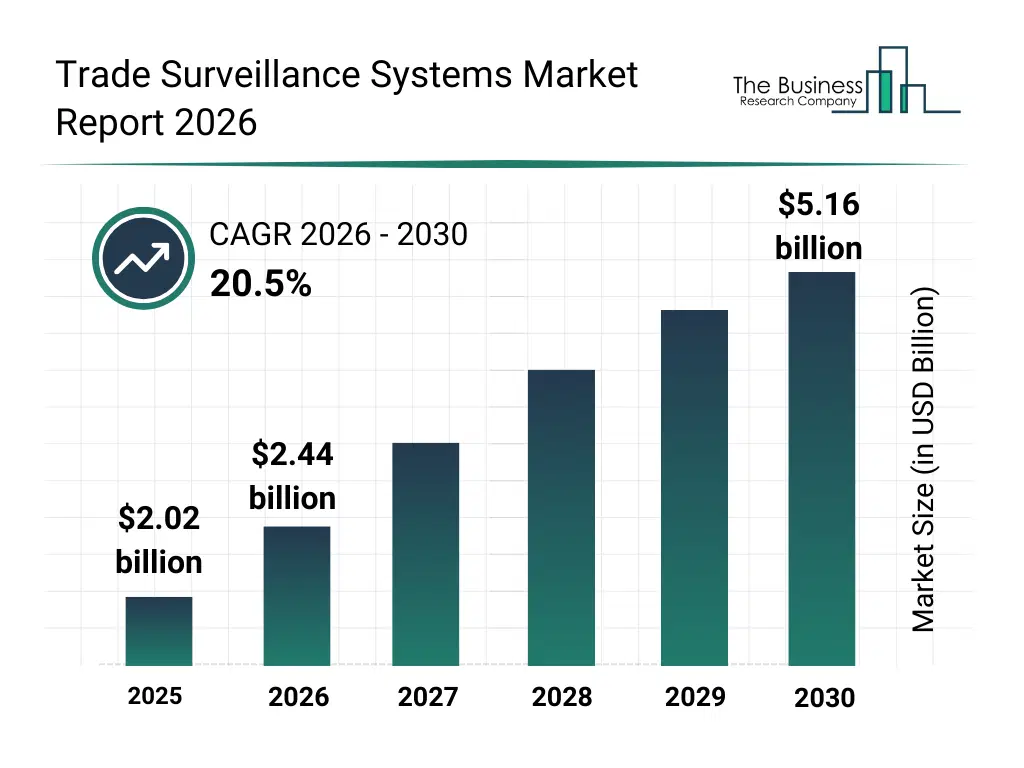
What Is The Trade Surveillance Systems Market Size and Share 2026?
The trade surveillance systems market size has grown exponentially in recent years. It will grow from $2.02 billion in 2025 to $2.44 billion in 2026 at a compound annual growth rate (CAGR) of 20.8%. The growth in the historic period can be attributed to increasing market complexity across asset classes, rising incidents of market manipulation, expansion of electronic trading platforms, growing regulatory oversight requirements, increased availability of high-frequency trading data.What Is The Trade Surveillance Systems Market Growth Forecast?
The trade surveillance systems market size is expected to see exponential growth in the next few years. It will grow to $5.16 billion in 2030 at a compound annual growth rate (CAGR) of 20.5%. The growth in the forecast period can be attributed to increasing adoption of predictive surveillance analytics, rising regulatory technology investments, expansion of cloud-native compliance platforms, growing focus on cross-market risk detection, increasing use of automated alert systems. Major trends in the forecast period include increasing adoption of ai-based trade monitoring platforms, rising use of real-time market surveillance systems, growing integration of cross-asset data analysis, expansion of cloud-deployed surveillance solutions, enhanced focus on regulatory compliance automation.
Global Trade Surveillance Systems Market Segmentation
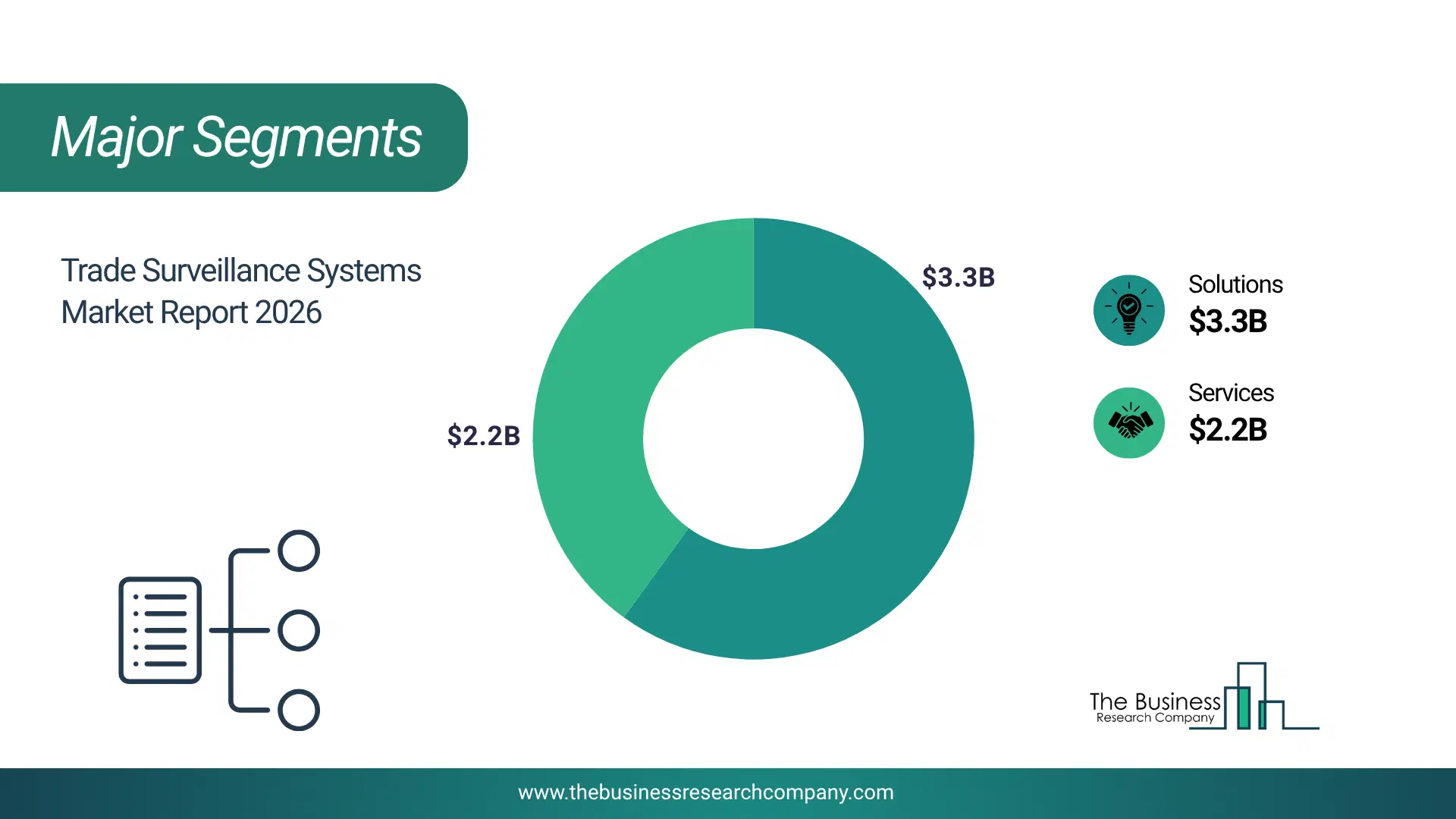
1) By Component: Solutions, Services 2) By Organizational Size: Small And Medium-Sized Enterprises, Large Enterprises 3) By Deployment Type: On-Premises, Cloud Subsegments: 1) By Solutions: Software Solutions, Hardware Solutions, Cloud-Based Solutions 2) By Services: Consulting Services, Integration Services, Support And Maintenance Services, Training Services The top segments in the trade surveillance systems market will be: • Solutions will reach $3.26 billion by 2030. • Services will reach $2.15 billion by 2030.What Is The Driver Of The Trade Surveillance Systems Market?
The increasing instances of financial fraud are expected to propel the growth of the trade surveillance systems market going forward. Financial fraud refers to deceptive activities where individuals or entities manipulate financial information, transactions, or records to gain illicit benefits, cause monetary loss, or mislead stakeholders, often involving actions such as misrepresentation, embezzlement, or falsification of financial data. Trade surveillance solutions play a vital role in the prevention and detection of financial fraud by leveraging technology, data analysis, and compliance monitoring to safeguard the integrity of financial markets and institutions. For instance, in February?2024, according to the Federal Trade Commission (FTC), a US-based government agency, in 2023, consumers reported over $10 billion in fraud losses for the first time, representing a 14% increase compared to losses reported in 2022. Therefore, the increasing instances of financial fraud will drive the trade surveillance systems industry.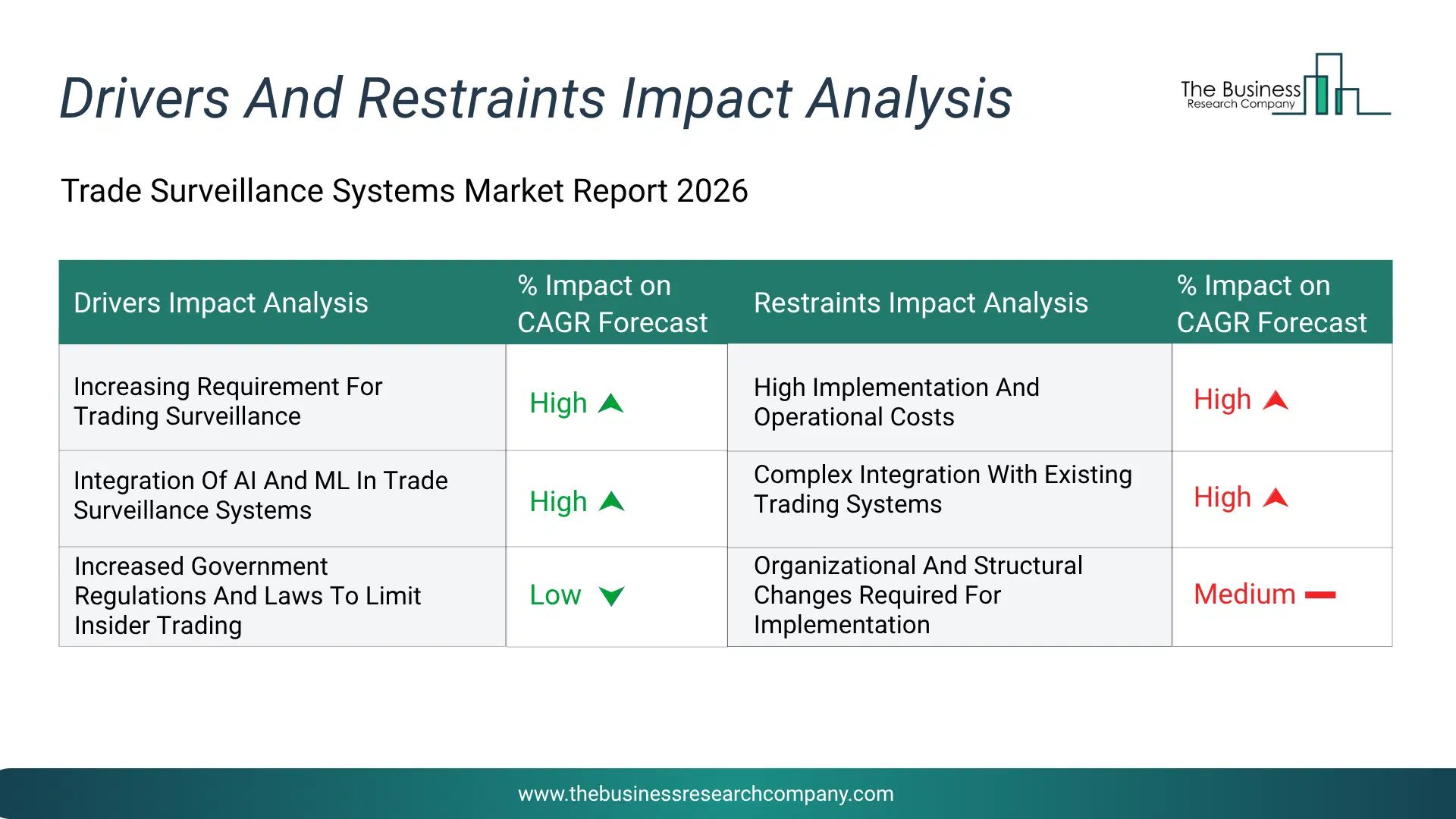
Infographic Chart Showing Key Market Drivers Analysis And Restraints For Trade Surveillance Systems Market
The chart presents an impact analysis of key drivers and restraints, quantifying their relative influence on the market's growth rate and helping assess the balance between growth enablers and limiting factors. This chart offers a high-level perspective; the full report contains more detailed insights.
How Will The Drivers Impact Growth In The Global Trade Surveillance Systems Market?
• Increasing Requirement For Trading Surveillance (High) – During the forecast period, the increasing requirement for trading surveillance is expected to become a key growth driver for the trade surveillance systems market by 2030. Financial institutions and regulatory bodies are seeking stronger monitoring mechanisms to detect suspicious or illegal trading activities. With the rapid expansion of digital trading platforms and complex financial instruments, the volume and speed of transactions have increased significantly. This creates a growing need for advanced surveillance solutions that can analyze large volumes of trading data and identify irregular trading patterns. Trade surveillance systems enable organizations to monitor market behavior, prevent insider trading, and detect potential market manipulation across different asset classes. As demand for transparent and compliant financial markets increases, adoption of these systems is expected to rise. • Integration Of AI And ML In Trade Surveillance Systems (High) – During the forecast period, the integration of ai and ml in trade surveillance systems is expected to emerge as a major factor driving the expansion of the trade surveillance systems market by 2030. Artificial intelligence and machine learning technologies enhance the ability of surveillance platforms to analyze massive volumes of trading data quickly and accurately. These technologies can detect unusual trading patterns, identify potential market manipulation, and flag suspicious activities in real time. Compared to traditional rule-based monitoring systems, ai-driven analytics improve detection accuracy and reduce the need for manual monitoring. Financial institutions are increasingly adopting these advanced technologies to strengthen regulatory compliance and improve risk management capabilities. • Increased Government Regulations And Laws To Limit Insider Trading (Low) – During the forecast period, increased government regulations and laws to limit insider trading are expected to act as a key growth catalyst for the trade surveillance systems market by 2030. Regulatory authorities across global financial markets are strengthening compliance frameworks to ensure transparency and fairness in trading activities. Financial institutions are required to monitor transactions, detect suspicious trading behavior, and maintain accurate records to comply with regulatory standards. Advanced trade surveillance systems help organizations track trading data across multiple platforms and asset classes while identifying irregular patterns that may indicate insider trading or market manipulation. As regulatory oversight continues to expand globally, financial institutions are investing in robust surveillance technologies.How Will The Restraints Impact Growth In The Global Trade Surveillance Systems Market?
• High Implementation And Operational Costs (High) – During the forecast period, the high implementation and operational costs act as a restraint for the trade surveillance systems market because deploying these systems requires substantial investment in advanced software platforms, data analytics tools, and supporting it infrastructure. Financial institutions must also allocate resources for system integration, maintenance, and continuous monitoring to ensure effective surveillance of trading activities. In addition, the need for skilled professionals to manage and analyze surveillance data further increases operational expenses. Smaller institutions may find it difficult to afford these high costs, which can slow adoption. As a result, the significant financial burden associated with implementing and operating trade surveillance systems can limit market growth. • Complex Integration With Existing Trading Systems (High) – During the forecast period, the complex integration with existing trading systems acts as a restraint for the trade surveillance systems market because financial institutions often operate multiple legacy trading platforms and data management systems. Integrating new surveillance solutions with these existing infrastructures can be technically challenging and time-consuming. Differences in data formats, system architectures, and communication protocols may create compatibility issues during implementation. Organizations may also need additional customization and testing to ensure accurate monitoring of trading activities. These complexities can increase deployment time and costs, thereby slowing the adoption of trade surveillance systems. • Organizational And Structural Changes Required For Implementation (Medium) – During the forecast period, the organizational and structural changes required for implementation act as a restraint for the trade surveillance systems market because adopting these solutions often requires significant adjustments within financial institutions. Organizations may need to modify internal workflows, compliance procedures, and monitoring frameworks to effectively integrate surveillance technologies. In addition, employees must be trained to operate new systems and interpret surveillance data, which can require time and resources. These changes may also involve restructuring compliance teams and updating governance policies. As a result, the need for organizational transformation can slow the adoption of trade surveillance systems across institutions.Key Players In The Global Trade Surveillance Systems Market
Major companies operating in the trade surveillance systems market are NICE Ltd.; IPC Systems Inc.; b-next Holding AG; ACA Compliance Group Holdings LLC; Nasdaq Inc.; BAE Systems Applied Intelligence US Corp.; Cinnober Financial Technology AB; Fidelity National Information Services Inc.; Eventus Systems Inc.; OneMarketData LLC; Ancoa Software Ltd.; Broadridge Financial Solutions Inc.; Scila AB; London Stock Exchange Group plc.; Red Deer Systems Ltd.; Solidus Labs Ltd.; TradingHub Technologies Limited; big xyt GmbH; Quod Financial Limited; Itiviti Trading AB.; Thesys Technologies LLC; Corvil Ltd.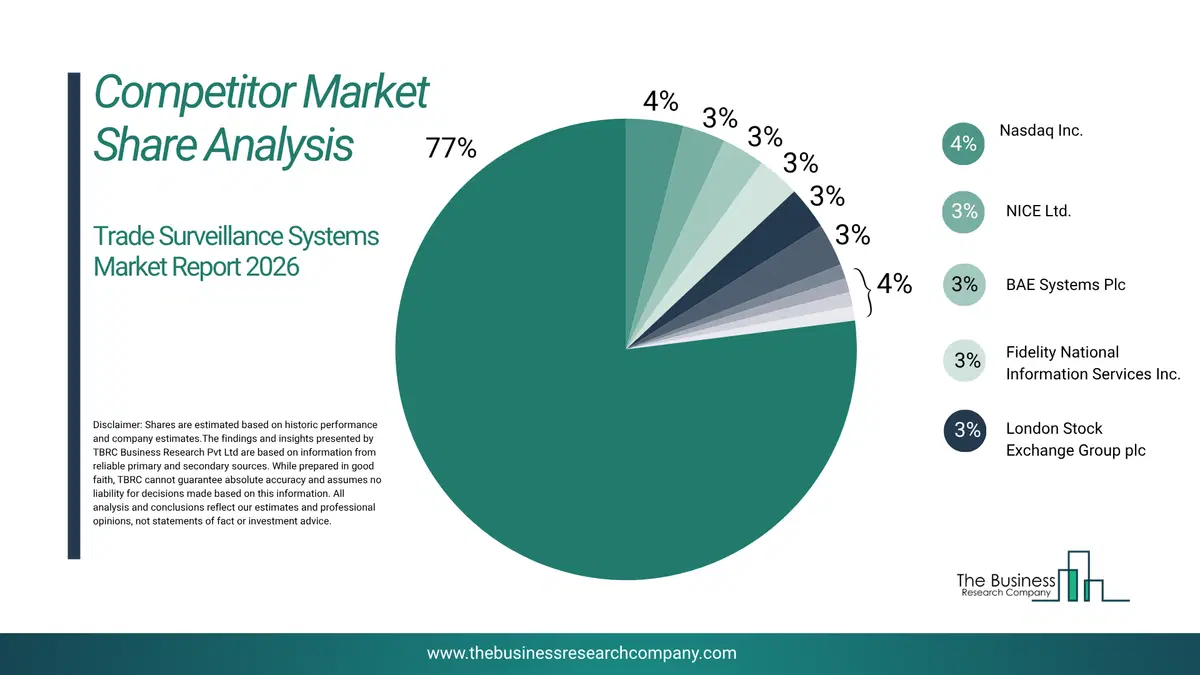
This chart is for illustrative purposes; the full report includes a detailed competitor analysis and comprehensive overview of the top 10 companies in the market.
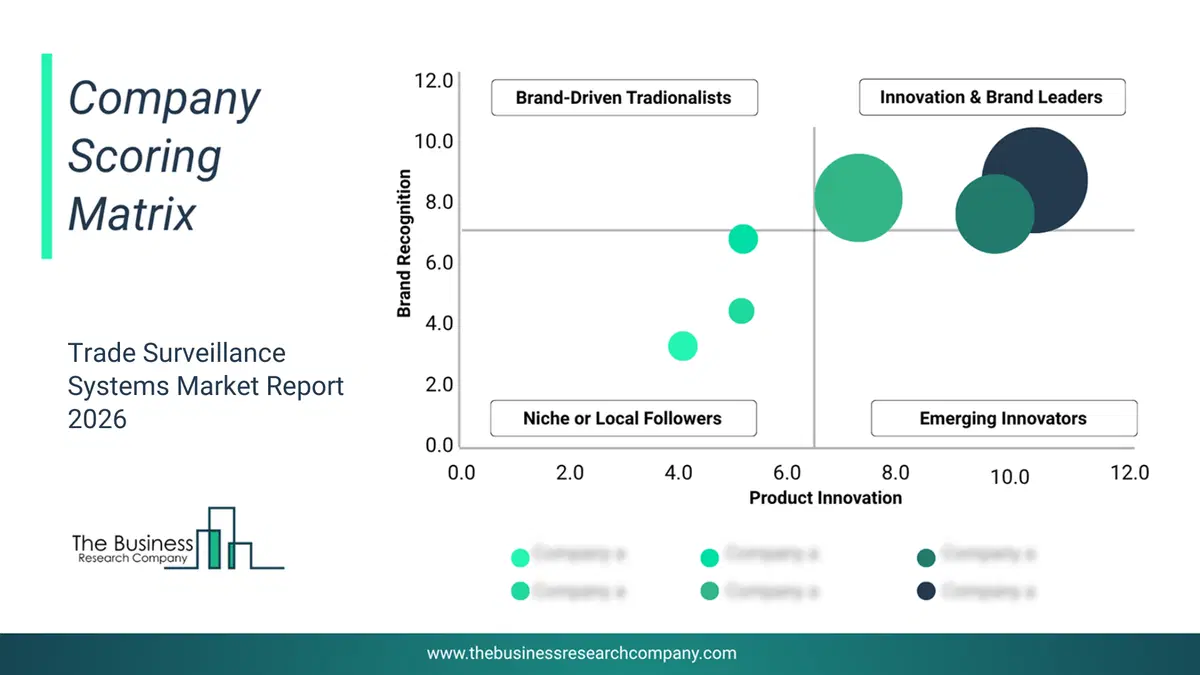
This chart maps companies by product innovation and brand strength, with bubble size indicating relative revenue, helping identify market leaders, challengers, and niche players. This is an illustrative chart; the full report provides a complete and accurate competitive analysis.
Global Trade Surveillance Systems Market Trends and Insights
Major companies operating in the trade surveillance systems market are focused on developing innovative user interfaces with advanced features, such as the next-gen User Interface, to enhance their product offerings across different sectors and expand their customer base. The next-gen User Interface is designed to provide clients with increased flexibility to customize their surveillance program and tailor the interface to meet their distinct requirements and workflows. For instance, in September 2023, Eventus Systems Inc., a US-based trade surveillance software company, launched an upgraded user interface (UI) for its Validus platform. This update aims to enhance the user experience with improved dashboard features, user-friendly investigative tools, and advanced data visualization capabilities for efficient compliance management across different asset sectors. The new UI provides a centralized cockpit for managing alert activities, streamlining investigations, and expediting alert resolutions. Additionally, the system can ingest data from any source in any format, offering a comprehensive view of trading behaviors.What Are Latest Mergers And Acquisitions In The Trade Surveillance Systems Market?
In February 2025, Behavox Ltd., a US-based software company, acquired Mosaic Smart Data Ltd. for an undisclosed amount. Through this acquisition, Behavox Ltd. aims to strengthen its trade surveillance capabilities by integrating Mosaic’s AI-driven transaction analytics platform into its compliance ecosystem. Mosaic Smart Data Ltd. is a UK-based fintech company providing AI-driven analytics solutions for FICC markets, helping financial institutions extract actionable insights from transaction data.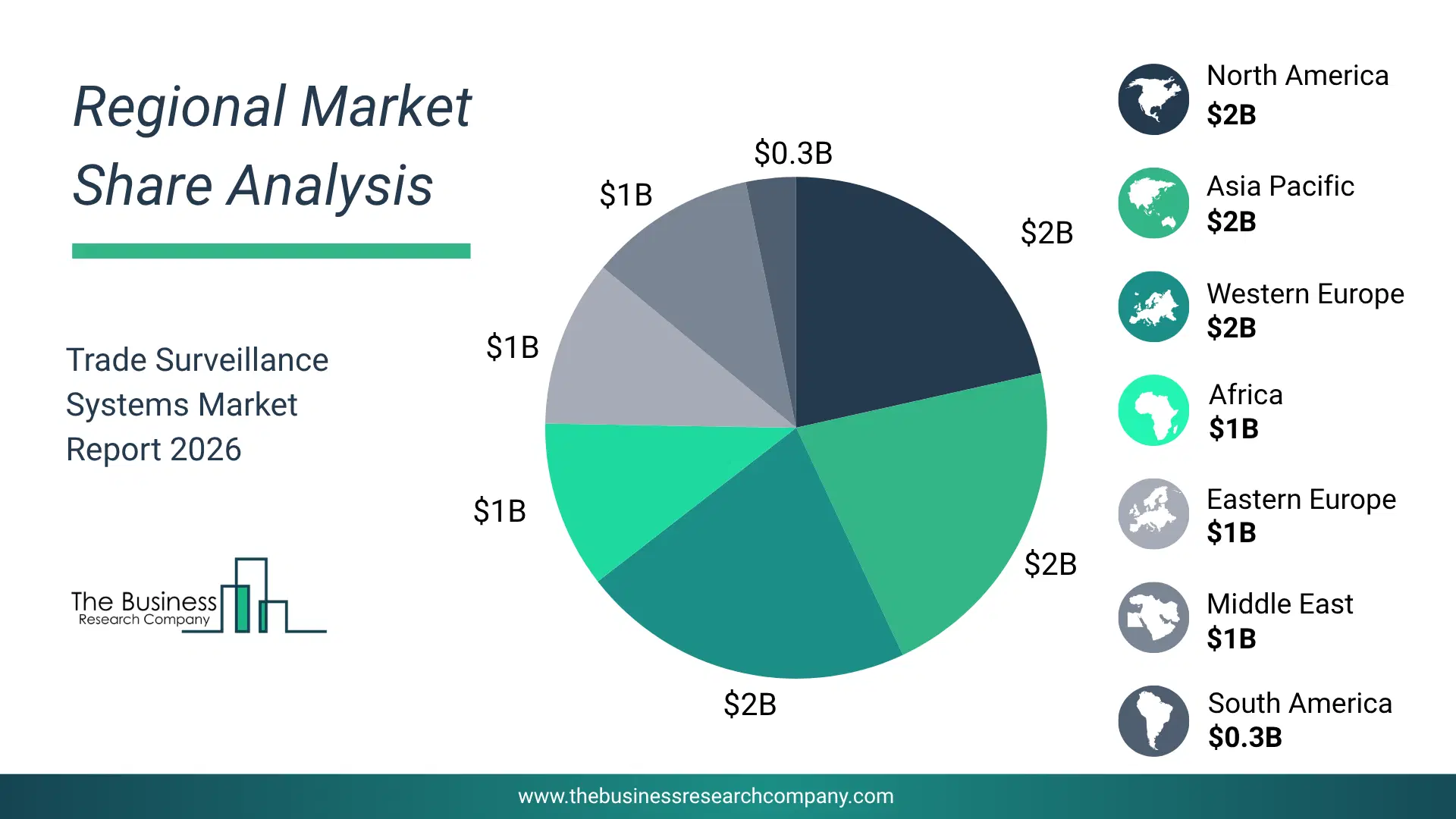
Regional Insights
North America was the largest region in the trade surveillance systems market in 2025. Asia-Pacific is expected to be the fastest-growing region in the forecast period. The regions covered in this market report are Asia-Pacific, South East Asia, Western Europe, Eastern Europe, North America, South America, Middle East, Africa. The countries covered in this market report are Australia, Brazil, China, France, Germany, India, Indonesia, Japan, Taiwan, Russia, South Korea, UK, USA, Canada, Italy, SpainWhat Defines the Trade Surveillance Systems Market?
The trade surveillance systems market consists of revenues earned by entities by providing surveillance and analytics, reporting and monitoring, risk and compliance, and case management solutions, as well as trade surveillance system services. The market value includes the value of related goods sold by the service provider or included within the service offering. Values in this market are ‘factory gate’ values, that is, the value of goods sold by the manufacturers or creators of the goods, whether to other entities (including downstream manufacturers, wholesalers, distributors, and retailers) or directly to end customers. The value of goods in this market includes related services sold by the creators of the goods. Only goods and services traded between entities or sold to end consumers are included.How is Market Value Defined and Measured?
The market value is defined as the revenues that enterprises gain from the sale of goods and/or services within the specified market and geography through sales, grants, or donations in terms of the currency (in USD unless otherwise specified). The revenues for a specified geography are consumption values that are revenues generated by organizations in the specified geography within the market, irrespective of where they are produced. It does not include revenues from resales along the supply chain, either further along the supply chain or as part of other products.
This chart presents market attractiveness based on a quantitative evaluation of growth, competition, strategic alignment, and risk, offering a clear view of opportunity areas for decision-making. This chart is for illustrative purposes; the full report contains the complete analysis.

This chart highlights the Total Addressable Market (TAM) by estimating the maximum revenue opportunity using an assumption-driven approach, supporting strategic planning and opportunity sizing across markets. The chart is illustrative; the full report provides a more comprehensive analysis.
What Key Data and Analysis Are Included in the Trade Surveillance Systems Market Report 2026?
The trade surveillance systems market research report is one of a series of new reports from The Business Research Company that provides market statistics, including industry global market size, regional shares, competitors with the market share, detailed market segments, market trends and opportunities, and any further data you may need to thrive in the trade surveillance systems industry. The market research report delivers a complete perspective of everything you need, with an in-depth analysis of the current and future state of the industry.Trade Surveillance Systems Market Report Forecast Analysis
| Report Attribute | Details |
|---|---|
| Market Size Value In 2026 | $2.44 billion |
| Revenue Forecast In 2030 | $5.16 billion |
| Growth Rate | CAGR of 20.5% from 2026 to 2030 |
| Base Year For Estimation | 2025 |
| Actual Estimates/Historical Data | 2020-2025 |
| Forecast Period | 2026 - 2030 |
| Market Representation | Revenue in USD Billion and CAGR from 2026 to 2030 |
| Segments Covered | Component, Organizational Size, Deployment Type |
| Regional Scope | Asia-Pacific, Western Europe, Eastern Europe, North America, South America, Middle East, Africa |
| Country Scope | The countries covered in the report are Australia, Brazil, China, France, Germany, India, ... |
| Key Companies Profiled | NICE Ltd.; IPC Systems Inc.; b-next Holding AG; ACA Compliance Group Holdings LLC; Nasdaq Inc.; BAE Systems Applied Intelligence US Corp.; Cinnober Financial Technology AB; Fidelity National Information Services Inc.; Eventus Systems Inc.; OneMarketData LLC; Ancoa Software Ltd.; Broadridge Financial Solutions Inc.; Scila AB; London Stock Exchange Group plc.; Red Deer Systems Ltd.; Solidus Labs Ltd.; TradingHub Technologies Limited; big xyt GmbH; Quod Financial Limited; Itiviti Trading AB.; Thesys Technologies LLC; Corvil Ltd. |
| Customization Scope | Request for Customization |
| Pricing And Purchase Options | Explore Purchase Options |