

Widefield Imaging Systems Market Report 2026
Global Outlook – By Component (Instrument, Software), By Modality (Standalone, Portable), By Indication (Diabetic Retinopathy, Retinopathy Of Prematurity, Pediatric Retinal Diseases, Retinal Vein Occlusion, Ocular Oncology, Uveitis, Chorioretinal Disease, Glaucoma, Other Indications), By End-User (Specialty Clinics, Hospitals, Ambulatory Surgical Centers (ASCs)) – Market Size, Trends, Strategies, and Forecast to 2030
Widefield Imaging Systems Market Overview
• Widefield Imaging Systems market size has reached to $1.04 billion in 2025 • Expected to grow to $1.84 billion in 2030 at a compound annual growth rate (CAGR) of 11.9% • Growth Driver: Rising Prevalence Of Eye Disorders Demand For Widefield Imaging Systems • Market Trend: Developments In Spinning Disk Confocal Microscopy Enhance Imaging Capabilities With Advanced Systems • North America was the largest region in 2025 and Europe is the fastest growing region.What Is Covered Under Widefield Imaging Systems Market?
Widefield imaging systems are advanced retinal imaging technologies that capture extensive areas of the retina in a single image. These systems are crucial for diagnosing and managing various ocular and systemic diseases, providing detailed views of the retinal structure beyond the traditional limits of standard imaging techniques. The main components of widefield imaging systems are instruments and software. Instruments are the physical devices used for widefield imaging, such as cameras, lenses, and other hardware components. The various modalities include standalone and portable with various indications such as diabetic retinopathy, retinopathy of prematurity, pediatric retinal diseases, retinal vein occlusion, ocular oncology, uveitis, chorioretinal disease, glaucoma, and others. These are used by various end-users such as specialty clinics, hospitals, and ambulatory surgical centers.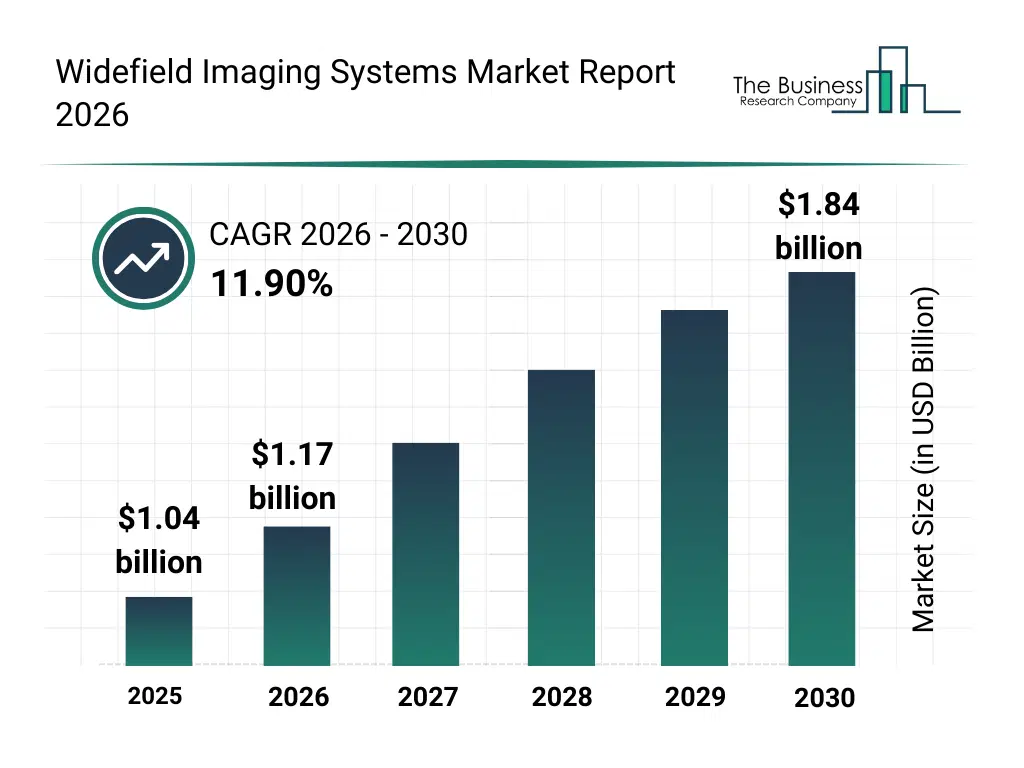
What Is The Widefield Imaging Systems Market Size and Share 2026?
The widefield imaging systems market size has grown rapidly in recent years. It will grow from $1.04 billion in 2025 to $1.17 billion in 2026 at a compound annual growth rate (CAGR) of 12.3%. The growth in the historic period can be attributed to rising prevalence of ocular disorders, advancement in retinal imaging technology, growth in ophthalmology clinics, increasing adoption of non-invasive diagnostics, expansion of eye care services.What Is The Widefield Imaging Systems Market Growth Forecast?
The widefield imaging systems market size is expected to see rapid growth in the next few years. It will grow to $1.84 billion in 2030 at a compound annual growth rate (CAGR) of 11.9%. The growth in the forecast period can be attributed to integration with AI for early disease detection, development of portable and handheld imaging systems, cloud-based image storage and analytics, growth in teleophthalmology, rising geriatric population requiring eye care. Major trends in the forecast period include high-resolution widefield retinal imaging, ai-based diagnostic analytics, non-invasive imaging techniques, portable and compact devices, cloud-connected imaging data platforms.
Global Widefield Imaging Systems Market Segmentation
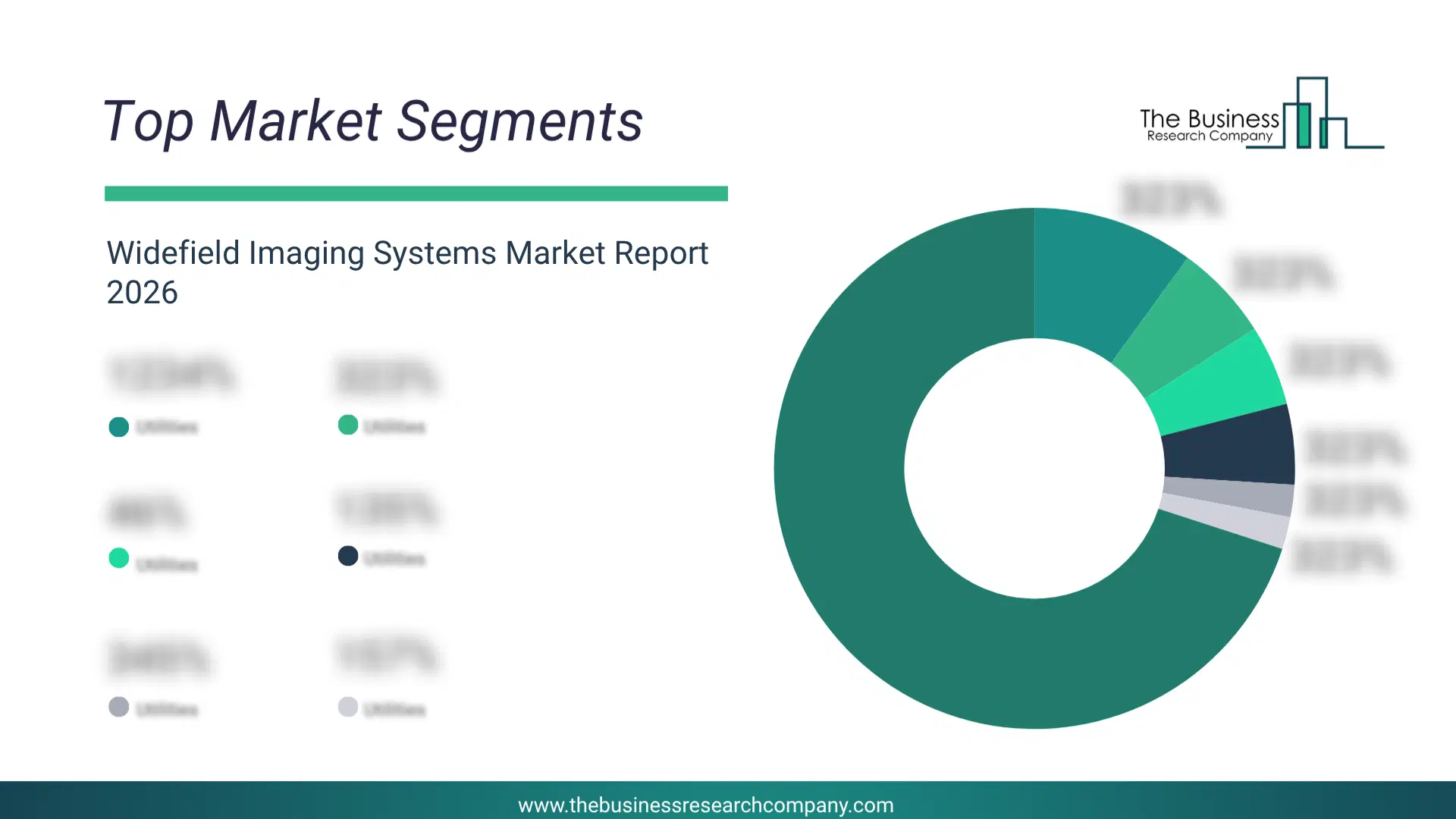
1) By Component: Instrument, Software 2) By Modality: Standalone, Portable 3) By Indication: Diabetic Retinopathy, Retinopathy Of Prematurity, Pediatric Retinal Diseases, Retinal Vein Occlusion, Ocular Oncology, Uveitis, Chorioretinal Disease, Glaucoma, Other Indications 4) By End-User: Specialty Clinics, Hospitals, Ambulatory Surgical Centers (ASCs) Subsegments: 1) By Instrument: Cameras (CCD, CMOS), Microscopes, Lenses, Light Sources, Detectors, Objective Lenses, Filters and Accessories 2) By Software: Image Analysis Software, Image Processing Software, Data Management Software, Visualization Software, 3D Imaging Software, AI-Powered SoftwareWhat Is The Driver Of The Widefield Imaging Systems Market?
The increasing prevalence of eye disorders is expected to propel the growth of the widefield imaging systems market going forward. Eye disorders encompass a wide range of conditions that affect the eyes and vision. The prevalence of eye disorders is increasing due to various factors, including lifestyle changes, environmental influences, and aging populations. Widefield imaging systems offer significant advantages in diagnosing, monitoring, and managing eye disorders, leading to better patient outcomes through more comprehensive retinal imaging and early intervention. For instance, in 2024, according to the National Eye Institute, a US-based government agency, around 1.3 million Americans have vision disorder, and 2.2 million will be blind by 2030. Therefore, the increasing prevalence of eye disorders drives the widefield imaging systems industry.Key Players In The Global Widefield Imaging Systems Market
Major companies operating in the widefield imaging systems market are Thermo Fisher Scientific Inc., Canon Inc., Agilent Technologies Inc., Olympus Corporation, Bruker Corporation, Carl Zeiss AG, Topcon Corporation, Avenova Inc., Leica Microsystems GmbH, Thorlabs Inc., Oxford Instruments PLC, Optos PLC, Nikon Instruments Inc., Heidelberg Engineering GmbH, Forus Health Pvt Ltd., Ocular Instruments Inc., Visunex Medical Systems Inc., Clarity Medical Systems Inc., Epipole Ltd., Nidek Co. Ltd.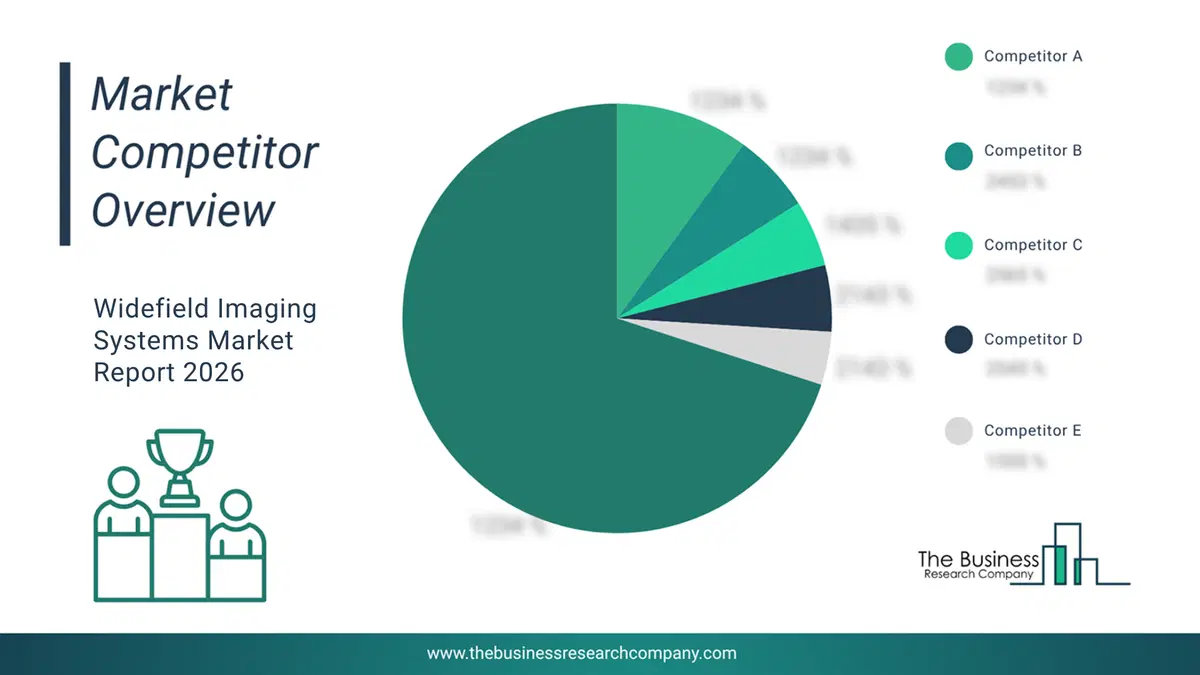
This chart is for illustrative purposes; the full report includes a detailed competitor analysis and comprehensive overview of the top 10 companies in the market.
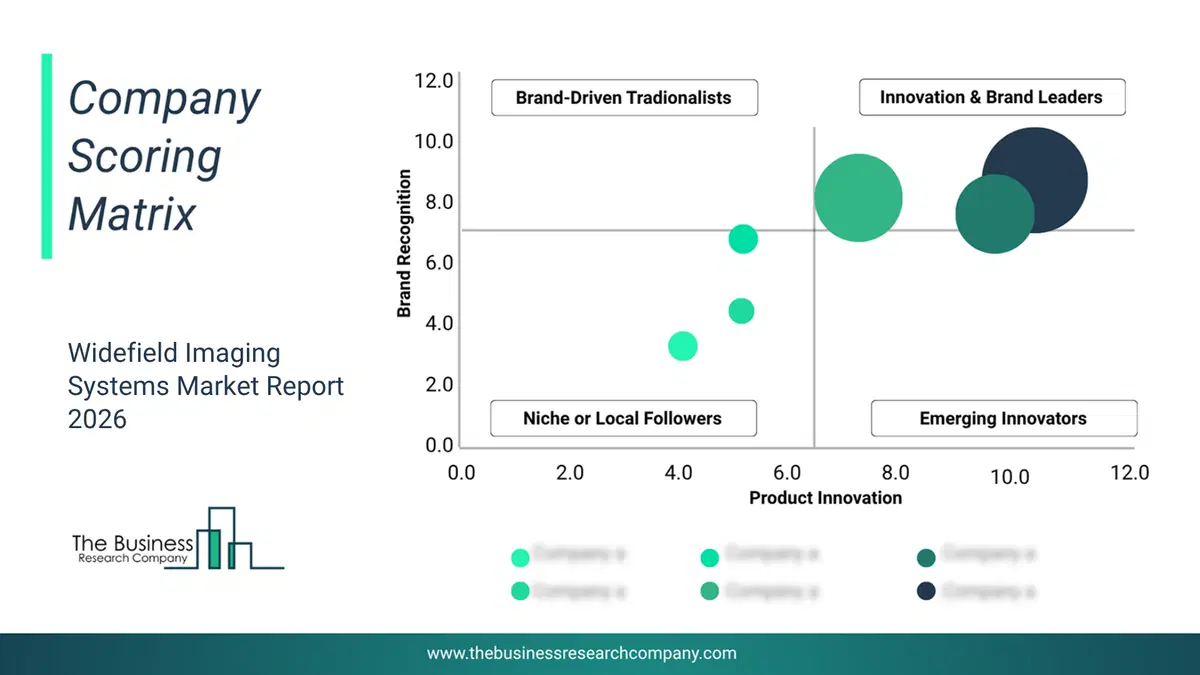
This chart maps companies by product innovation and brand strength, with bubble size indicating relative revenue, helping identify market leaders, challengers, and niche players. This is an illustrative chart; the full report provides a complete and accurate competitive analysis.
Global Widefield Imaging Systems Market Trends and Insights
Major companies operating in the widefield imaging systems market are focused on developing innovative solutions, such as spinning disk confocal microscope systems, to enhance imaging capabilities by offering higher resolution, faster imaging speeds, and improved optical sectioning, which allows for more detailed and accurate analysis of biological samples while maintaining the ability to capture large fields of view. A spinning disk confocal microscope system is an advanced confocal microscope that uses a rapidly rotating disk with multiple pinholes to achieve high-speed, high-resolution imaging of biological samples. For instance, in April 2023, CrestOptics, an Italy-based company that offers medical equipment, launched the CICERO System, an innovative spinning disk confocal microscope system. This system aims to enhance research capabilities by delivering high-quality imaging and analysis tools for cell biology, molecular biology, and pharmacology fields. This versatile all-in-one solution for widefield and spinning disk confocal microscopy allows researchers to conduct a wide range of imaging applications, making high-end fluorescence imaging more accessible to laboratories.What Are Latest Mergers And Acquisitions In The Widefield Imaging Systems Market?
In January 2023, Bruker Corporation, a US-based company that manufactures a wide range of high-performance scientific instruments and analytical solutions, acquired ACQUIFER Imaging GmbH for an undisclosed amount. The acquisition aims to strengthen Bruker's position in the bioimaging market by providing a holistic solution for advanced imaging and big-data management. AQUIFER Imaging GmbH is a Germany-based company that manufactures widefield imaging systems.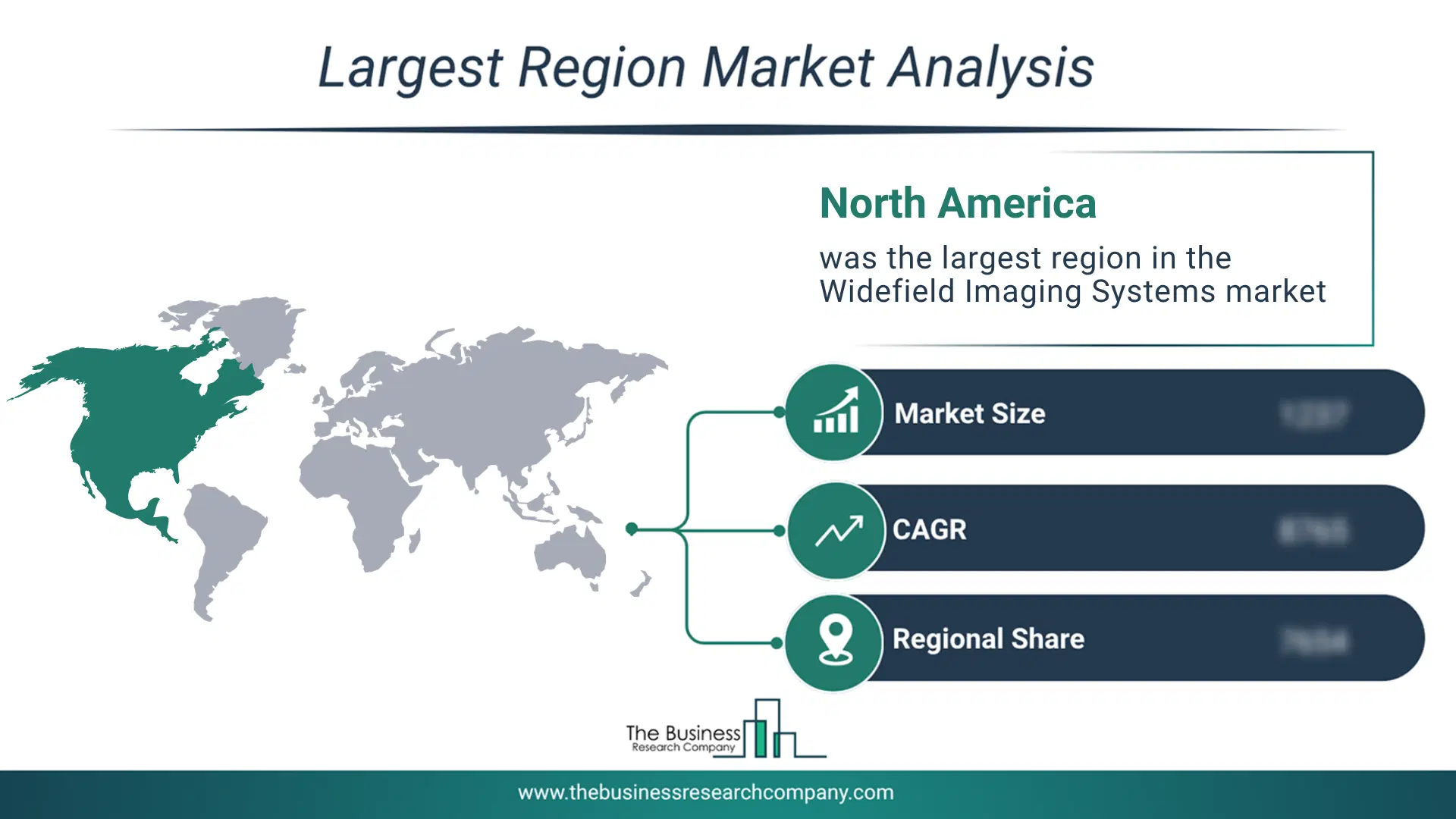
Regional Outlook
North America was the largest region in the widefield imaging systems market in 2025. Europe is expected to be the fastest-growing region in the forecast period. The regions covered in this market report are Asia-Pacific, South East Asia, Western Europe, Eastern Europe, North America, South America, Middle East, Africa. The countries covered in this market report are Australia, Brazil, China, France, Germany, India, Indonesia, Japan, Taiwan, Russia, South Korea, UK, USA, Canada, Italy, SpainWhat Defines the Widefield Imaging Systems Market?
The widefield imaging systems market consists of revenues earned by entities by providing image processing software, deconvolution software, and tiling software. The market value includes the value of related goods sold by the service provider or included within the service offering. The widefield imaging systems market also includes sales of microscopes, sample holders, and autofocus systems. Values in this market are ‘factory gate’ values, that is the value of goods sold by the manufacturers or creators of the goods, whether to other entities (including downstream manufacturers, wholesalers, distributors, and retailers) or directly to end customers. The value of goods in this market includes related services sold by the creators of the goods.How is Market Value Defined and Measured?
The market value is defined as the revenues that enterprises gain from the sale of goods and/or services within the specified market and geography through sales, grants, or donations in terms of the currency (in USD unless otherwise specified). The revenues for a specified geography are consumption values that are revenues generated by organizations in the specified geography within the market, irrespective of where they are produced. It does not include revenues from resales along the supply chain, either further along the supply chain or as part of other products.
This chart presents market attractiveness based on a quantitative evaluation of growth, competition, strategic alignment, and risk, offering a clear view of opportunity areas for decision-making. This chart is for illustrative purposes; the full report contains the complete analysis.

This chart highlights the Total Addressable Market (TAM) by estimating the maximum revenue opportunity using an assumption-driven approach, supporting strategic planning and opportunity sizing across markets. The chart is illustrative; the full report provides a more comprehensive analysis.
What Key Data and Analysis Are Included in the Widefield Imaging Systems Market Report 2026?
The widefield imaging systems market research report is one of a series of new reports from The Business Research Company that provides market statistics, including industry global market size, regional shares, competitors with the market share, detailed market segments, market trends and opportunities, and any further data you may need to thrive in the widefield imaging systems industry. The market research report delivers a complete perspective of everything you need, with an in-depth analysis of the current and future state of the industry.Widefield Imaging Systems Market Report Forecast Analysis
| Report Attribute | Details |
|---|---|
| Market Size Value In 2026 | $1.17 billion |
| Revenue Forecast In 2030 | $1.84 billion |
| Growth Rate | CAGR of 11.9% from 2026 to 2030 |
| Base Year For Estimation | 2025 |
| Actual Estimates/Historical Data | 2020-2025 |
| Forecast Period | 2026 - 2030 |
| Market Representation | Revenue in USD Billion and CAGR from 2026 to 2030 |
| Segments Covered | Component, Modality, Indication, End-User |
| Regional Scope | Asia-Pacific, Western Europe, Eastern Europe, North America, South America, Middle East, Africa |
| Country Scope | The countries covered in the report are Australia, Brazil, China, France, Germany, India, Indonesia, Japan, Taiwan, Russia, South Korea, UK, USA, Canada, Italy, Spain. |
| Key Companies Profiled | Thermo Fisher Scientific Inc., Canon Inc., Agilent Technologies Inc., Olympus Corporation, Bruker Corporation, Carl Zeiss AG, Topcon Corporation, Avenova Inc., Leica Microsystems GmbH, Thorlabs Inc., Oxford Instruments PLC, Optos PLC, Nikon Instruments Inc., Heidelberg Engineering GmbH, Forus Health Pvt Ltd., Ocular Instruments Inc., Visunex Medical Systems Inc., Clarity Medical Systems Inc., Epipole Ltd., Nidek Co. Ltd. |
| Customization Scope | Request for Customization |
| Pricing And Purchase Options | Explore Purchase Options |