

Workplace Wellness Market Report 2026
Global Outlook – By Type (Physical Wellness, Mental Or Emotional Wellness, Financial Wellness, Social Wellness, Spiritual Wellness), By Service Delivery (On-Site, Of-Site, Virtual), By Organization Type (Government Organizations, Private Organizations), By End-user (Small-Size Private Organizations, Mid-Size Private Organizations, Large-Size Private Organizations, Public Sector, Non-Governmental Organization (NGO)) – Market Size, Trends, Strategies, and Forecast to 2030
Workplace Wellness Market Overview
• Workplace Wellness market size has reached to $57.97 billion in 2025 • Expected to grow to $79.37 billion in 2030 at a compound annual growth rate (CAGR) of 6.4% • Growth Driver: Rising Industrialization And Consumer Demand Driving Growth Of The Market Due To The Need For A Healthier, More Productive Workforce • Market Trend: The Role Of Online Telehealth In Enhancing Workplace Productivity • North America was the largest region in 2025 and Asia-Pacific is the fastest growing region.Market Gains By 2030 – Top Opportunities By Segment
Market Gain identifies the most promising market opportunities by highlighting the segments or products expected to generate the highest incremental revenue growth over the next five years.
What Is Covered Under Workplace Wellness Market?
Workplace Wellness involves health promotion programs or policies that encourage positive employee health and behavior. They perform an important role in developing a healthier, more productive workforce by encouraging better lifestyle choices and providing a supportive atmosphere for employee health. The main types of workplace wellness are physical wellness, mental or emotional wellness, financial wellness, social wellness, and spiritual wellness. Physical wellness refers to the ability to maintain a healthy quality of life through regular exercise, proper nutrition, and lifestyle habits that support overall bodily health. The service delivery methods include on-site, off-site, and virtual options. The different types of organizations involved are government organizations and private organizations. The key end-users include small-sized private organizations, mid-sized private organizations, large-sized private organizations, public sector entities, and non-governmental organizations (NGOs).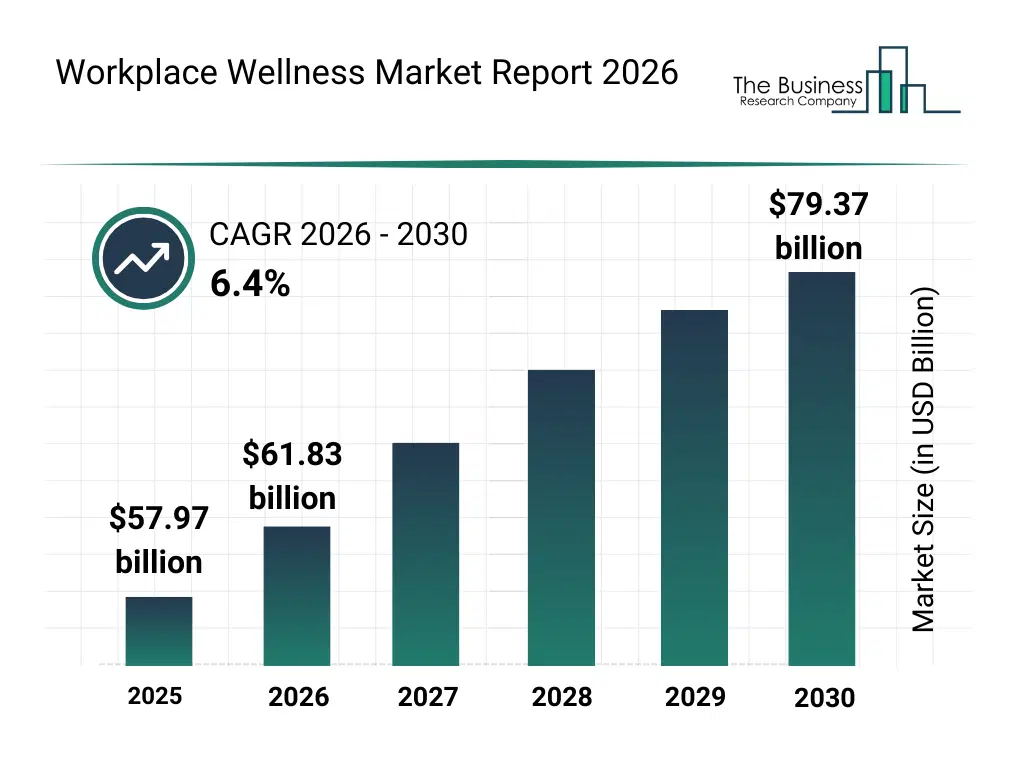
What Is The Workplace Wellness Market Size and Share 2026?
The workplace wellness market size has grown strongly in recent years. It will grow from $57.97 billion in 2025 to $61.83 billion in 2026 at a compound annual growth rate (CAGR) of 6.7%. The growth in the historic period can be attributed to rising workplace stress levels, increased employer focus on productivity and engagement, expansion of corporate health benefits, growing awareness of preventive healthcare, adoption of structured wellness initiatives.What Is The Workplace Wellness Market Growth Forecast?
The workplace wellness market size is expected to see strong growth in the next few years. It will grow to $79.37 billion in 2030 at a compound annual growth rate (CAGR) of 6.4%. The growth in the forecast period can be attributed to growing demand for mental health support at work, rising integration of AI-based wellness tools, expansion of remote and hybrid work models, increasing investment in preventive healthcare programs, growing emphasis on personalized employee wellness. Major trends in the forecast period include expansion of digital mental health programs, growing adoption of virtual wellness platforms, rising focus on holistic employee wellbeing, increased integration of data-driven health assessments, customization of wellness programs by workforce needs.
Global Workplace Wellness Market Segmentation
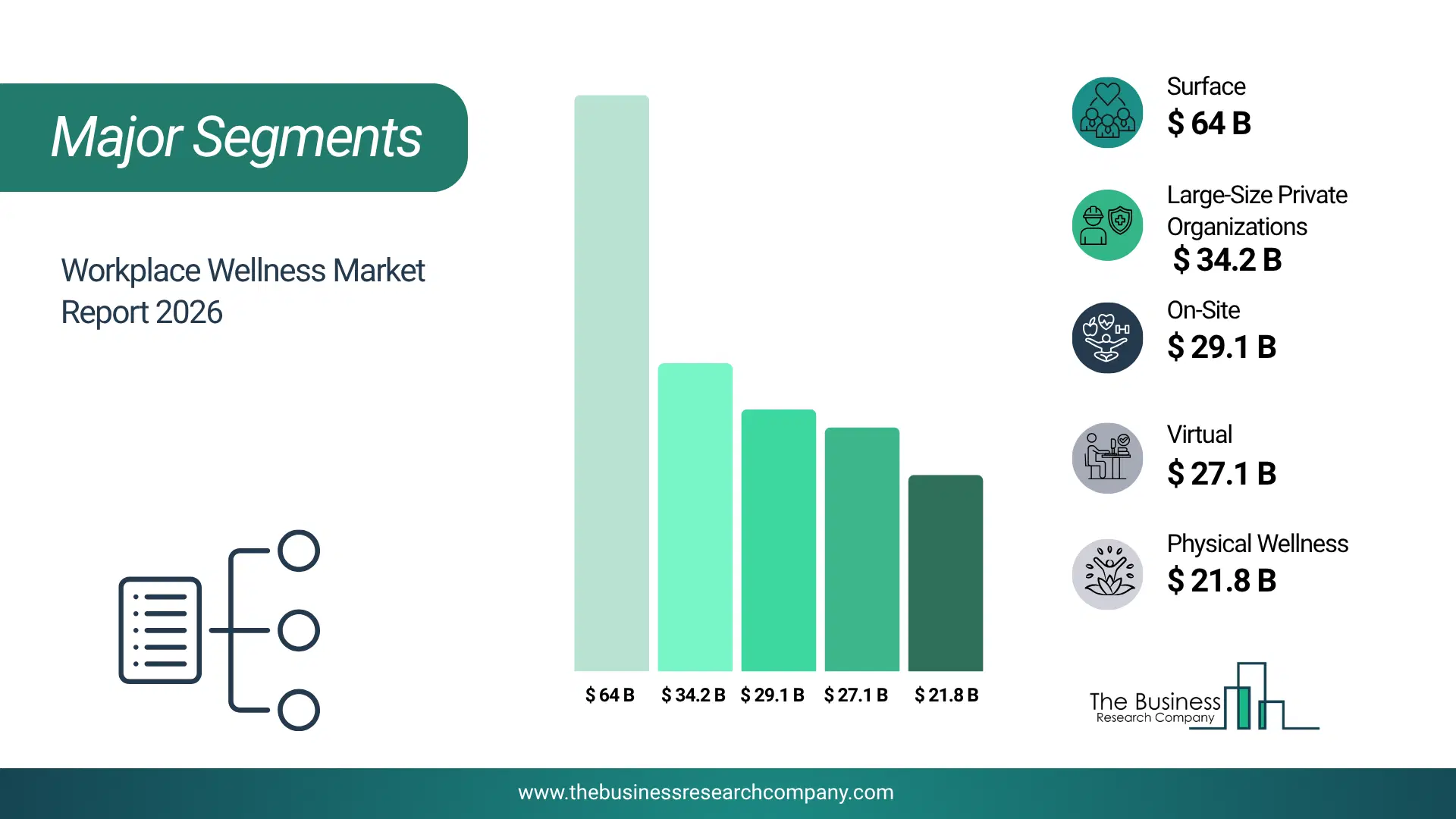
1) By Type: Physical Wellness, Mental Or Emotional Wellness, Financial Wellness, Social Wellness, Spiritual Wellness 2) By Service Delivery: On-Site, Of-Site, Virtual 3) By Organization Type: Government Organizations, Private Organizations 4) By End-user: Small-Size Private Organizations, Mid-Size Private Organizations, Large-Size Private Organizations, Public Sector, Non-Governmental Organization (NGO) Subsegments: 1) By Physical Wellness: Fitness Programs, Nutrition & Weight Management, Smoking Cessation, Preventive Health Screenings, Sleep Management 2) By Mental Or Emotional Wellness: Stress Management Programs, Counseling Services, Mindfulness & Meditation, Resilience Training, Cognitive Behavioral Therapy (CBT) Tools 3) By Financial Wellness: Budgeting & Saving Tools, Retirement Planning, Debt Management Assistance, Financial Literacy Workshops, Employee Financial Counseling 4) By Social Wellness: Team-building Activities, Diversity & Inclusion Programs, Peer Support Groups, Community Volunteering Opportunities, Interpersonal Skills Training 5) By Spiritual Wellness: Mindfulness and Reflection Programs, Purpose and Meaning Workshops, Yoga and Spiritual Retreats, Ethical Leadership Training, Guided Journaling or Meditation Sessions The top segments in the workplace wellness market will be: • Private Organizations will reach $64013.77 Million by 2030. • Large-Size Private Organizations will reach $34268.34 Million by 2030. • On-Site will reach $29178.13 Million by 2030. • Physical Wellness will reach $21799.23 Million by 2030. • Virtual will reach $27189.01 Million by 2030.What Is The Driver Of The Workplace Wellness Market?
The rising industrialization and consumer demands are expected to propel the growth of the workplace wellness market going forward. Industrialization is the process of developing industries in a country or region, where people start using machines and factories to produce goods instead of making them by hand. It usually leads to economic growth and changes in how people live and work. Growing industrialization and rising consumer demand are driven by the increasing need for goods and services, prompting businesses to scale up production through the use of advanced machinery and technology. Workplace wellness supports industrialization and consumer demands by keeping employees healthy, productive, and motivated, which helps businesses meet growing production needs efficiently. For instance, in 2024, according to Trading Economics, a US-based company that provides a variety of economic indicators, Italy's industrial production is projected to trend around 2.00% in 2025 and 1.90% in 2026. Therefore, rising industrialization and consumer demand will drive growth of the workplace wellness industry.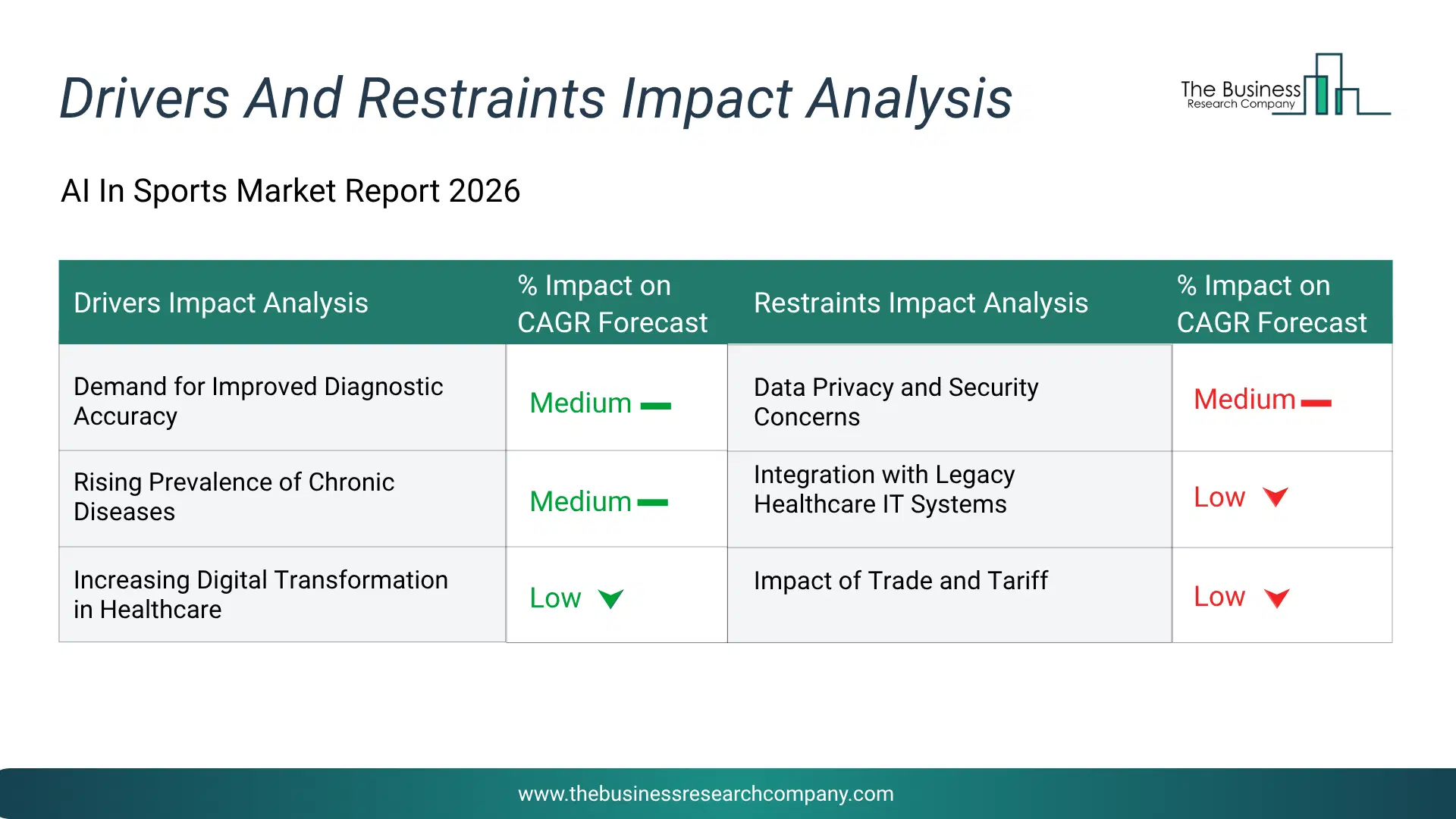
Infographic Chart Showing Key Market Drivers Analysis And Restraints For Workplace Wellness Market
The chart presents an impact analysis of key drivers and restraints, quantifying their relative influence on the market's growth rate and helping assess the balance between growth enablers and limiting factors. This chart offers a high-level perspective; the full report contains more detailed insights.
How Will The Drivers Impact Growth In The Global Workplace Wellness Market?
• Increasing Prevalence Of Mental Health Issues Due To Workload (Medium) – During the forecast period, the increasing prevalence of mental health issues due to workload will propel the growth of the workplace wellness market. as organizations face intensifying work demands, tighter deadlines and elevated performance expectations, employees are expected to experience higher levels of stress, burnout, anxiety and other work-related mental health challenges, driving employers to adopt comprehensive wellness programs that support psychological wellbeing, resilience and stress management. rising workloads are anticipated to increase the need for employer-led mental health initiatives, including counseling support, stress reduction interventions and wellbeing resources designed to mitigate the adverse effects of occupational pressure on workforce performance and engagement. as mental health concerns associated with workload continue to expand in scale and complexity, the requirement for workplace wellness solutions that address stress, burnout and emotional resilience will remain critical to supporting employee health, productivity and organizational competitiveness. as a result, increasing prevalence of mental health issues due to workload is anticipated to contributing to 1.5% annual growth in the market. • Growing Demand For Financial Wellness Programs Within Workplace (Low) – During the forecast period, the growing demand for financial wellness programs within the workplace is expected to drive the growth of the workplace wellness market. as economic uncertainty, inflationary pressures and rising financial stress continue to affect employees’ personal lives, organizations are expected to prioritize comprehensive financial wellness initiatives that support budgeting, debt management, retirement planning and long-term financial confidence as part of broader employee wellbeing strategies. employers increasingly view financial wellness solutions as a strategic benefit that enhances employee engagement, reduces turnover and strengthens overall benefits value, leading to greater investment in tools such as personal financial coaching, online financial education, emergency savings access and other financial support designed to meet diverse workforce needs. as organizations expand their adoption of financial wellness programs to address workforce financial stress and improve employee stability, the requirement for robust workplace wellness solutions that include financial wellbeing components will remain critical to supporting employee productivity, retention and holistic wellbeing. consequently, growing demand for financial wellness programs within the workplace is projected to contributing to a 1.0% annual growth in the market. • Expansion Of Corporate Health Insurance Coverage (Low) – During the forecast period, the expansion of corporate health insurance coverage is expected to drive the growth of the workplace wellness market. as employers broaden health insurance benefits to include more comprehensive preventive care, mental health support, chronic disease management and wellness-oriented services, organizations are expected to increase investment in integrated workplace wellness solutions that complement enhanced coverage and improve overall employee health outcomes. expanded corporate health insurance plans are anticipated to drive greater adoption of employer-sponsored wellness programs, such as health risk assessments, biometric screenings, fitness and chronic condition support and mental health counselling, as employers seek to maximize the value of insurance benefits and reduce long-term healthcare costs through proactive wellbeing interventions. as corporate health insurance coverage continues to expand in scope and sophistication, the requirement for workplace wellness solutions that align with broader healthcare benefits and support holistic employee health will remain critical to promoting healthy workforces, optimizing benefits utilization and strengthening organizational resilience. therefore, expansion of corporate health insurance coverage is projected to contributing to a 0.8% annual growth in the market. • Growing Focus On Diversity, Equity, Inclusion And Belonging (DEIB) (Low) – During the forecast period, the growing focus on diversity, equity, inclusion and belonging (DEIB) will propel the growth of the workplace wellness market. As employers increasingly recognize that inclusive work environments not only support employee engagement but also enhance psychological safety, trust and overall wellbeing, organizations are expected to integrate DEIB initiatives into broader wellness strategies that address cultural, social and emotional dimensions of workforce health. Research and workplace practice underscore that initiatives promoting diversity representation, equitable policies, inclusive leadership practices and a strong sense of belonging contribute to higher employee satisfaction, retention and participation in wellness programs, driving greater organizational demand for comprehensive workplace wellness solutions. As DEIB strategies become increasingly embedded within organizational health agendas, the requirement for workplace wellness solutions that align with these inclusive workplace priorities will remain critical to fostering resilient, engaged and healthy workforce. The growing focus on diversity, equity, inclusion and belonging (DEIB) growth contribution during the forecast period in 2025 is 0.5%.How Will The Restraints Impact Growth In The Global Workplace Wellness Market?
• Employee Skepticism And Trust Deficit (Medium) – During the forecast period, employee skepticism and trust deficit is restricting the growth of the workplace wellness market. As organizational mistrust and concerns about confidentiality of personal health data persist among employees, particularly when participating in employer-sponsored wellness programs, workers may be reluctant to fully engage with wellbeing initiatives, limiting the effectiveness and perceived value of such offerings. From a participation-perspective, when employees question how sensitive health and lifestyle information is collected, used, or shared by employers or third-party wellness providers, lower engagement rates and reduced program utilization can make it difficult for organizations to justify ongoing investments or scale comprehensive workplace wellness solutions. As a result, many employers may delay the roll-out of new wellbeing programs, focus only on minimal compliance-based offerings, or downsize their wellness investments in favor of traditional benefits with clearer employee trust signals, thereby restricting the growth of the workplace wellness market. Growth affected by the employee skepticism and trust deficit during the forecast period in 2025 is -2.0%. • Uncertain Return On Investment (RoI) Measurement (Low) – During the forecast period, uncertain return on investment (ROI) measurement is restricting the growth of the workplace wellness market. Many employers and organizational decision-makers depend on clear, quantifiable outcomes to justify the allocation of resources toward employee wellness programs and persistent challenges in reliably measuring financial and performance impacts can lead to hesitation in scaling or committing long-term investments. From an evaluation perspective, inconsistent measurement methodologies, varying definitions of success metrics and difficulties in linking wellness interventions directly to productivity gains or cost savings make it challenging for companies to demonstrate a compelling business case for comprehensive workplace wellness offerings. As a result, some organizations may postpone the implementation of new wellness initiatives, scale back existing programs or limit budgetary allocation to core benefits with more established ROI profiles, thereby restricting the growth of the workplace wellness market. Growth affected by the uncertain return on investment (ROI) measurement during the forecast period in 2025 is -1.0%. • Impact Of Trade War And Tariff (Low) – During the forecast period, the impact of trade wars and tariffs is restricting the growth of the workplace wellness market. As geopolitical tensions lead to higher import duties on healthcare products, medical devices and wellness-related supplies, employers and wellness service providers may face increased operational costs and procurement uncertainties that strain benefits budgets and slow investment in holistic wellbeing programs. Healthcare systems and organizations that depend on imported wellness technologies and medical equipment may encounter elevated costs for essential inputs, which could reduce employers’ willingness to expand or upgrade wellness offerings under constrained financial conditions. From a supply-chain perspective, sustained tariff-driven cost pressures make it difficult for workplace wellness program providers to secure long-term pricing stability for devices, tools and support services integrated into employee health plans, particularly when global trade conflicts continue to affect international sourcing arrangements and supply-chain resilience. As a result, organization’s may defer the rollout of new wellness initiatives, limit the scope of comprehensive mental and physical wellbeing programs, or seek to offset rising supply costs through reduced benefits offerings, thereby restricting the growth of the workplace wellness market. Growth affected by the impact of trade wars and tariffs during the forecast period in 2025 is -0.2%.Key Players In The Global Workplace Wellness Market
Major companies operating in the workplace wellness market are Optum Inc., Laboratory Corporation of America Holdings (Labcorp), Novant Health Inc., Privia Health Inc., Fitbit Inc., EXOS Inc., Virgin Pulse Inc., ComPsych Corporation, Vitality Group International Inc., MDVIP Inc., Aduro Inc., Limeade Inc., Wellsource Inc., Dash Solutions Inc., Aterian Inc., HealthifyMe Wellness Private Limited, Truworth Health Technologies Pvt. Ltd., Medikeeper Inc., Marino Wellness Inc., SOL Wellness and Healing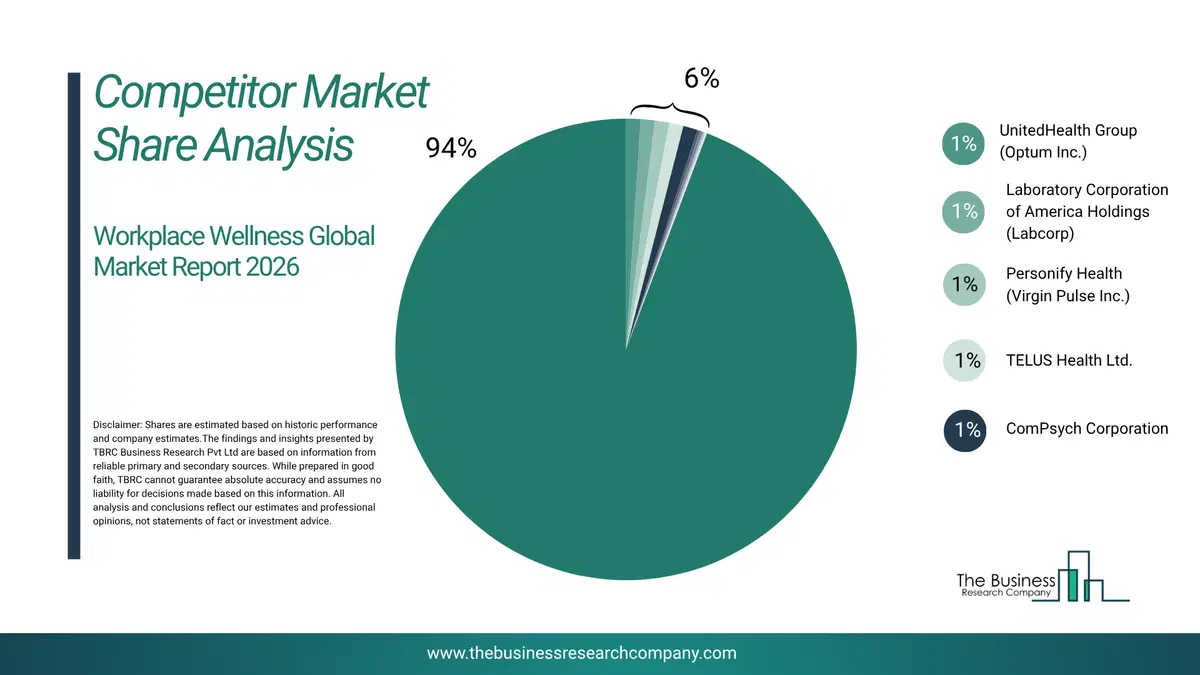
This chart is for illustrative purposes; the full report includes a detailed competitor analysis and comprehensive overview of the top 10 companies in the market.
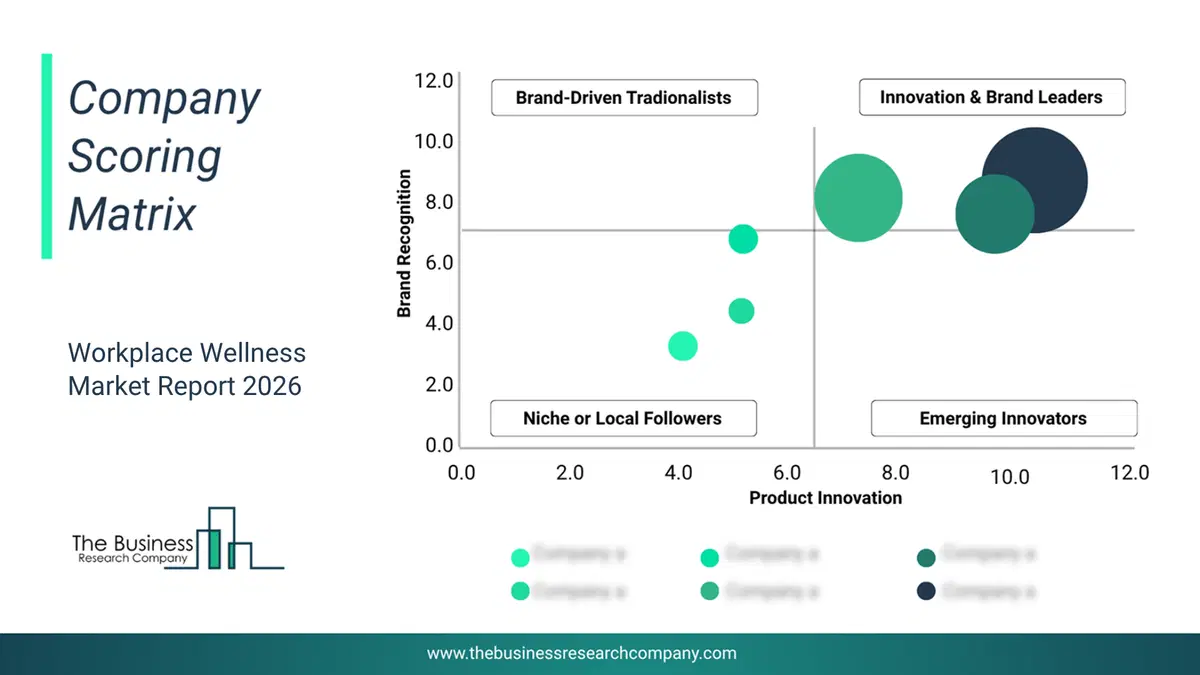
This chart maps companies by product innovation and brand strength, with bubble size indicating relative revenue, helping identify market leaders, challengers, and niche players. This is an illustrative chart; the full report provides a complete and accurate competitive analysis.
Global Workplace Wellness Market Trends and Insights
Major companies operating in the workplace wellness market are adopting innovative solutions such as online telehealth care to enhance employee access to healthcare, reduce absenteeism, and improve overall workplace productivity. Online telehealth care is a digital healthcare service that allows people to consult doctors and receive medical advice remotely using the internet, video calls, or mobile apps. For instance, in November 2024, Ivím Health, a US-based health and wellness company, introduced its innovative corporate wellness program, Ivím at Work, aimed at transforming workplace health through personalized, data-driven solutions. The program addresses rising healthcare costs by enhancing employee productivity and satisfaction with customized wellness strategies that integrate mental, physical, and nutritional care. The key features include GLP-1 medication for weight management, telehealth access, and flexible payment options. In partnership with Xevant for data analytics, Ivím Health ensures measurable results, such as reduced healthcare claims and improved employee health metrics, offering employers both health benefits and financial savings.What Are Latest Mergers And Acquisitions In The Workplace Wellness Market?
In May 2025, TELUS Health Solutions Inc, a Canada-based healthcare technology company, acquired Workplace Options for $425 million. With this acquisition, TELUS Health aims to significantly expand its global employee wellbeing and support services portfolio, strengthen its digital-first health technology capabilities, and broaden its enterprise customer base worldwide. Workplace Options LLC is a US-based healthcare services company that specializes in providing integrated employee wellbeing solutions.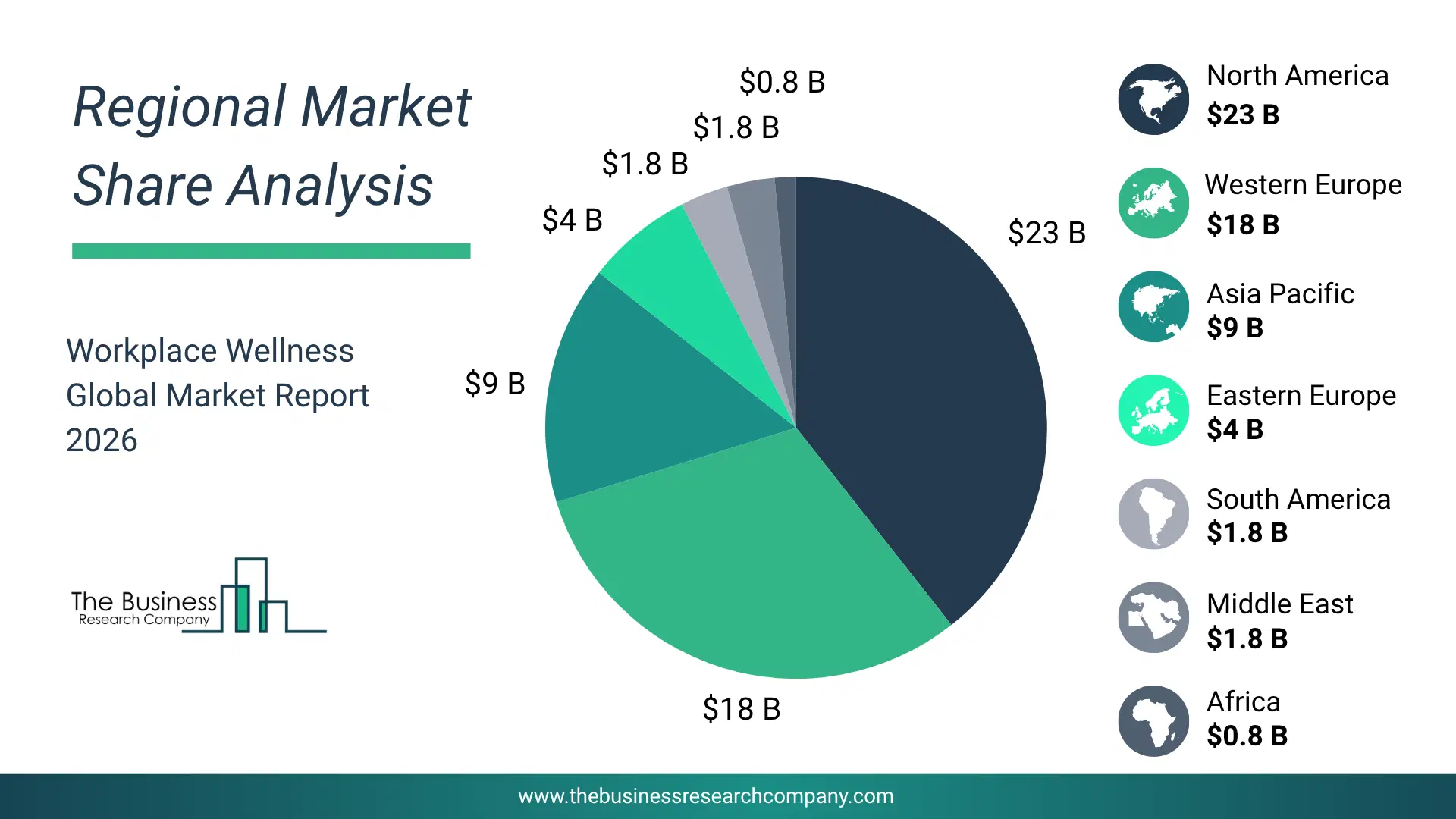
Regional Insights
North America was the largest region in the workplace wellness market in 2025. Asia-Pacific is expected to be the fastest-growing region in the forecast period. The regions covered in this market report are Asia-Pacific, South East Asia, Western Europe, Eastern Europe, North America, South America, Middle East, Africa. The countries covered in this market report are Australia, Brazil, China, France, Germany, India, Indonesia, Japan, Taiwan, Russia, South Korea, UK, USA, Canada, Italy, Spain.What Defines the Workplace Wellness Market?
The workplace wellness market includes revenues earned by entities by providing services such as employee assistance programs, fitness and physical activity programs, health screenings and preventive care, ergonomic assessments, and workplace safety. The market value includes the value of related goods sold by the service provider or included within the service offering. Only goods and services traded between entities or sold to end consumers are included.How is Market Value Defined and Measured?
The market value is defined as the revenues that enterprises gain from the sale of goods and/or services within the specified market and geography through sales, grants, or donations in terms of the currency (in USD unless otherwise specified). The revenues for a specified geography are consumption values that are revenues generated by organizations in the specified geography within the market, irrespective of where they are produced. It does not include revenues from resales along the supply chain, either further along the supply chain or as part of other products.
This chart presents market attractiveness based on a quantitative evaluation of growth, competition, strategic alignment, and risk, offering a clear view of opportunity areas for decision-making. This chart is for illustrative purposes; the full report contains the complete analysis.

This chart highlights the Total Addressable Market (TAM) by estimating the maximum revenue opportunity using an assumption-driven approach, supporting strategic planning and opportunity sizing across markets. The chart is illustrative; the full report provides a more comprehensive analysis.
What Key Data and Analysis Are Included in the Workplace Wellness Market Report 2026?
The workplace wellness market research report is one of a series of new reports from The Business Research Company that provides market statistics, including industry global market size, regional shares, competitors with the market share, detailed market segments, market trends and opportunities, and any further data you may need to thrive in the workplace wellness industry. The market research report delivers a complete perspective of everything you need, with an in-depth analysis of the current and future state of the industry.Workplace Wellness Market Report Forecast Analysis
| Report Attribute | Details |
|---|---|
| Market Size Value In 2026 | $61.83 billion |
| Revenue Forecast In 2030 | $79.37 billion |
| Growth Rate | CAGR of 6.7% from 2026 to 2030 |
| Base Year For Estimation | 2025 |
| Actual Estimates/Historical Data | 2020-2025 |
| Forecast Period | 2026 - 2030 - 2035 |
| Market Representation | Revenue in USD Billion and CAGR from 2026 to 2030 |
| Segments Covered | Type, Service Delivery, Organization Type, End-user |
| Regional Scope | Asia-Pacific, Western Europe, Eastern Europe, North America, South America, Middle East, Africa |
| Country Scope | The countries covered in the report are Australia, Brazil, China, France, Germany, India, Indonesia, Japan, Taiwan, Russia, South Korea, UK, USA, Canada, Italy, Spain. |
| Key Companies Profiled | Optum Inc., Laboratory Corporation of America Holdings (Labcorp), Novant Health Inc., Privia Health Inc., Fitbit Inc., EXOS Inc., Virgin Pulse Inc., ComPsych Corporation, Vitality Group International Inc., MDVIP Inc., Aduro Inc., Limeade Inc., Wellsource Inc., Dash Solutions Inc., Aterian Inc., HealthifyMe Wellness Private Limited, Truworth Health Technologies Pvt. Ltd., Medikeeper Inc., Marino Wellness Inc., SOL Wellness and Healing |
| Customization Scope | Request for Customization |
| Pricing And Purchase Options | Explore Purchase Options |