
Ammonia Market Report 2026
Global Outlook – By Product Type (Anhydrous Ammonia, Aqueous Ammonia), By Form Type (Liquid, Gas), By Application Type (Fertilizers, Chemicals, Refrigeration, Pharmaceutical, Fibers and Plastics, Pulp and Papers, Other Application Types) – Market Size, Trends, Strategies, and Forecast to 2030
Ammonia Market Overview
• Ammonia market size has reached to $85 billion in 2025 • Expected to grow to $119.52 billion in 2030 at a compound annual growth rate (CAGR) of 7% • Growth Driver: Growing Fertilizer Industry Boosts Demand For Ammonia As Essential Nutrient For Plant Growth • Market Trend: Advancements In Biomass-Balanced Ammonia Products For Sustainable Agriculture • Asia-pacific was the largest region in 2025 and Europe is the fastest growing region.Market Gains By 2030 – Top Opportunities By Segment
Market Gain identifies the most promising market opportunities by highlighting the segments or products expected to generate the highest incremental revenue growth over the next five years.
What Is Covered Under Ammonia Market?
Ammonia refers to a colorless gas composed of hydrogen and nitrogen. It is the simplest stable compound and is used to make a variety of commercially relevant compounds. It is also used as a refrigerant gas, for the purification of water supplies, and in the manufacture of plastics, explosives, textiles, pesticides, dyes, and other chemicals. Ammonia is used as fertilizer in the agricultural industry. The main types of products in the ammonia market are anhydrous ammonia and aqueous ammonia. Anhydrous ammonia is composed of a gas substance and does not contain water. It is a cost-effective and commonly used nitrogen fertilizer, simple to implement and easily available to producers. The different forms include liquid, gas, and powder that are used in fertilizers, chemicals, refrigeration, pharmaceuticals, fibers and plastics, pulp and paper, and other applications.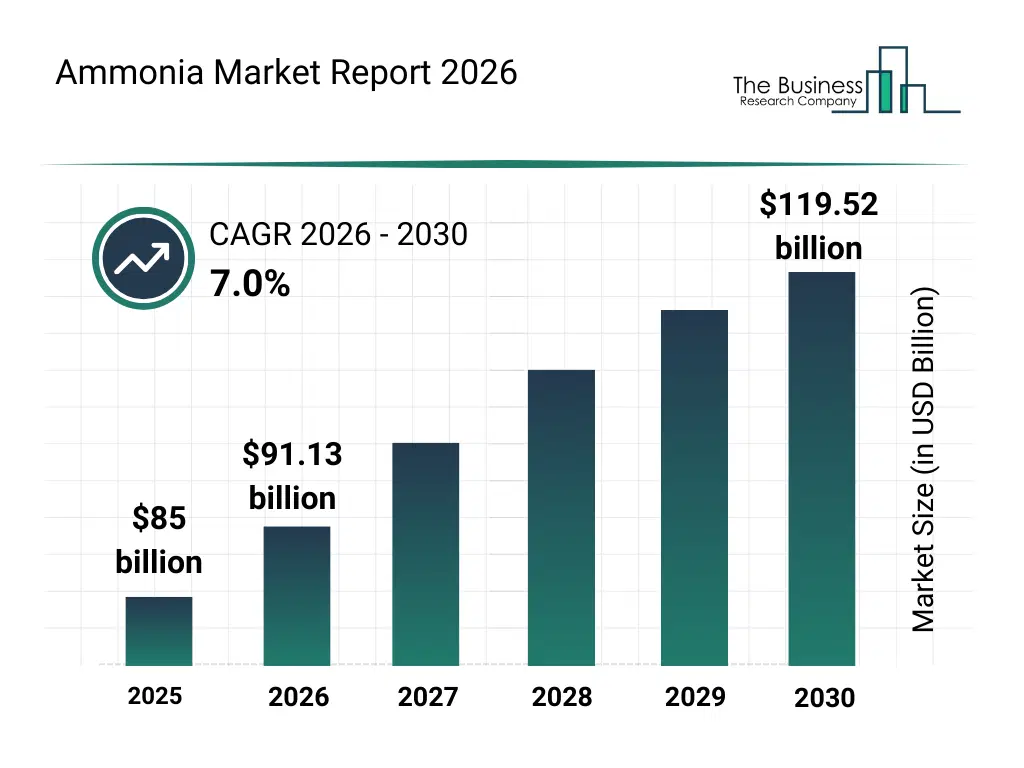
What Is The Ammonia Market Size and Share 2026?
The ammonia market size has grown strongly in recent years. It will grow from $85 billion in 2025 to $91.13 billion in 2026 at a compound annual growth rate (CAGR) of 7.2%. The growth in the historic period can be attributed to expansion of global fertilizer demand, growth of chemical manufacturing industries, increasing use of ammonia in refrigeration, availability of natural gas feedstock, expansion of industrial infrastructure.What Is The Ammonia Market Growth Forecast?
The ammonia market size is expected to see strong growth in the next few years. It will grow to $119.52 billion in 2030 at a compound annual growth rate (CAGR) of 7.0%. The growth in the forecast period can be attributed to increasing investments in green hydrogen integration, rising demand for low-carbon fertilizers, expansion of ammonia-based energy applications, growing focus on sustainable chemical production, increasing adoption in emerging industrial economies. Major trends in the forecast period include increasing adoption of green and blue ammonia production, rising demand from fertilizer manufacturing, growing use in industrial refrigeration systems, expansion of ammonia as an energy carrier, enhanced focus on low-emission production processes.
Global Ammonia Market Segmentation
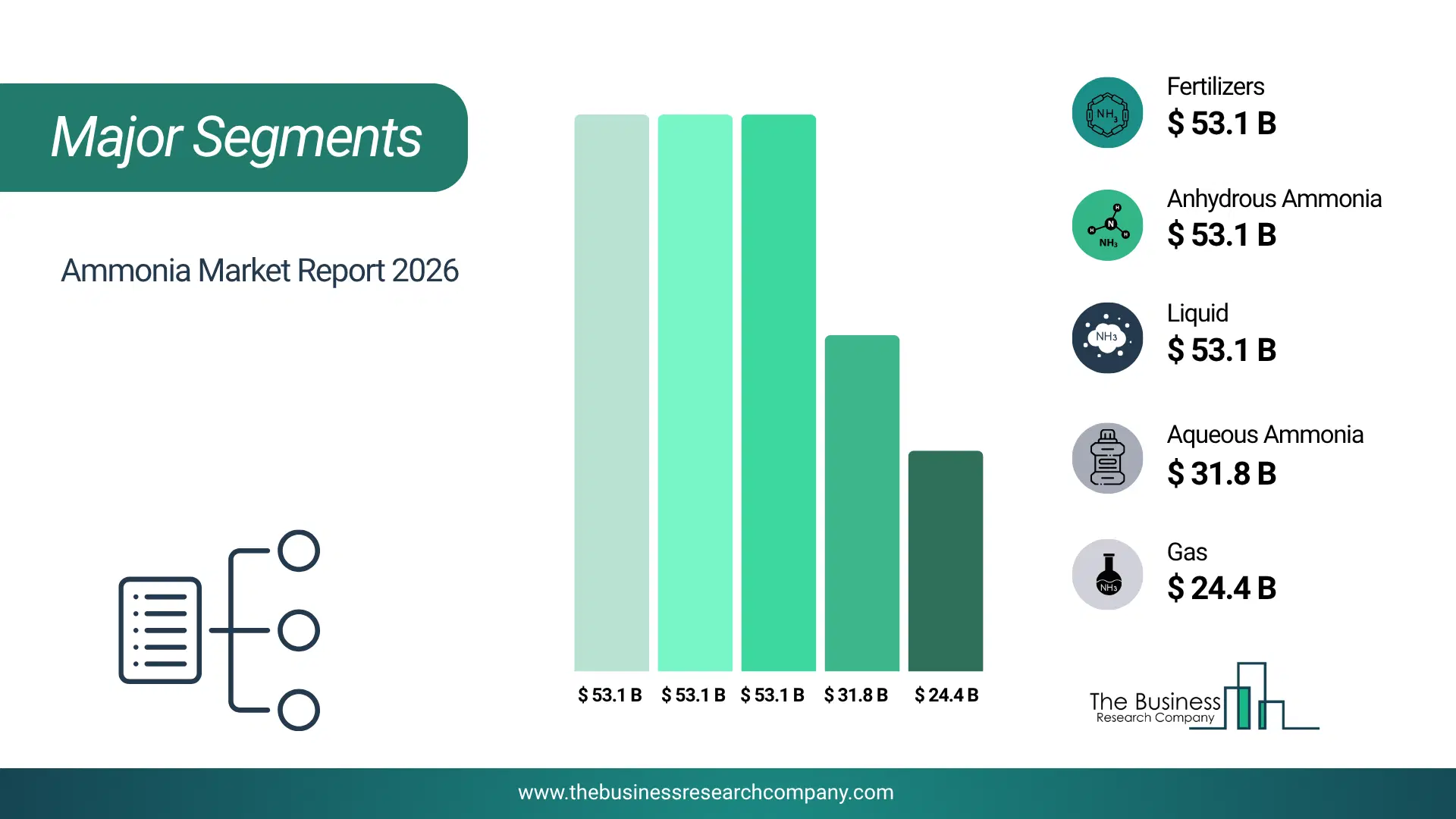
1) By Product Type: Anhydrous Ammonia, Aqueous Ammonia 2) By Form Type: Liquid, Gas 3) By Application Type: Fertilizers, Chemicals, Refrigeration, Pharmaceutical, Fibers and Plastics, Pulp and Papers, Other Application Types Subsegments: 1) By Anhydrous Ammonia: Industrial Grade Anhydrous Ammonia, Agricultural Grade Anhydrous Ammonia 2) By Aqueous Ammonia: Low-Concentration Aqueous Ammonia, High-Concentration Aqueous Ammonia The top segments in the ammonia market will be: • Fertilizers will reach $53138.72 Million by 2025. • Anhydrous Ammonia will reach $53115.43 Million by 2025. • Liquid will reach $53115.2 Million by 2025. • Aqueous Ammonia will reach $31880.78 Million by 2025. • Gas will reach $24460.68 Million by 2025.What Is The Driver Of The Ammonia Market?
The growth of the fertilizer industry is contributing to the growth of the ammonia market. Ammonia is used as ammonium nitrate fertilizer, which releases nitrogen, an essential nutrient for growing plants, including farm crops and lawns. The rapid growth in fertilizer industry is expected to boost utilization of ammonia as it is widely used in manufacturing of fertilizers. For instance, in September 2024, according to The Agricultural Industries Confederation, a UK-based trade association representing the agri-supply industry, in England & Wales, 687 thousand tonnes of nitrogen were used in 2022. up from 692 thousand tonnes of nitrogen in 2023. Therefore, the growth of the fertilizer industry is driving the growth of the ammonia industry.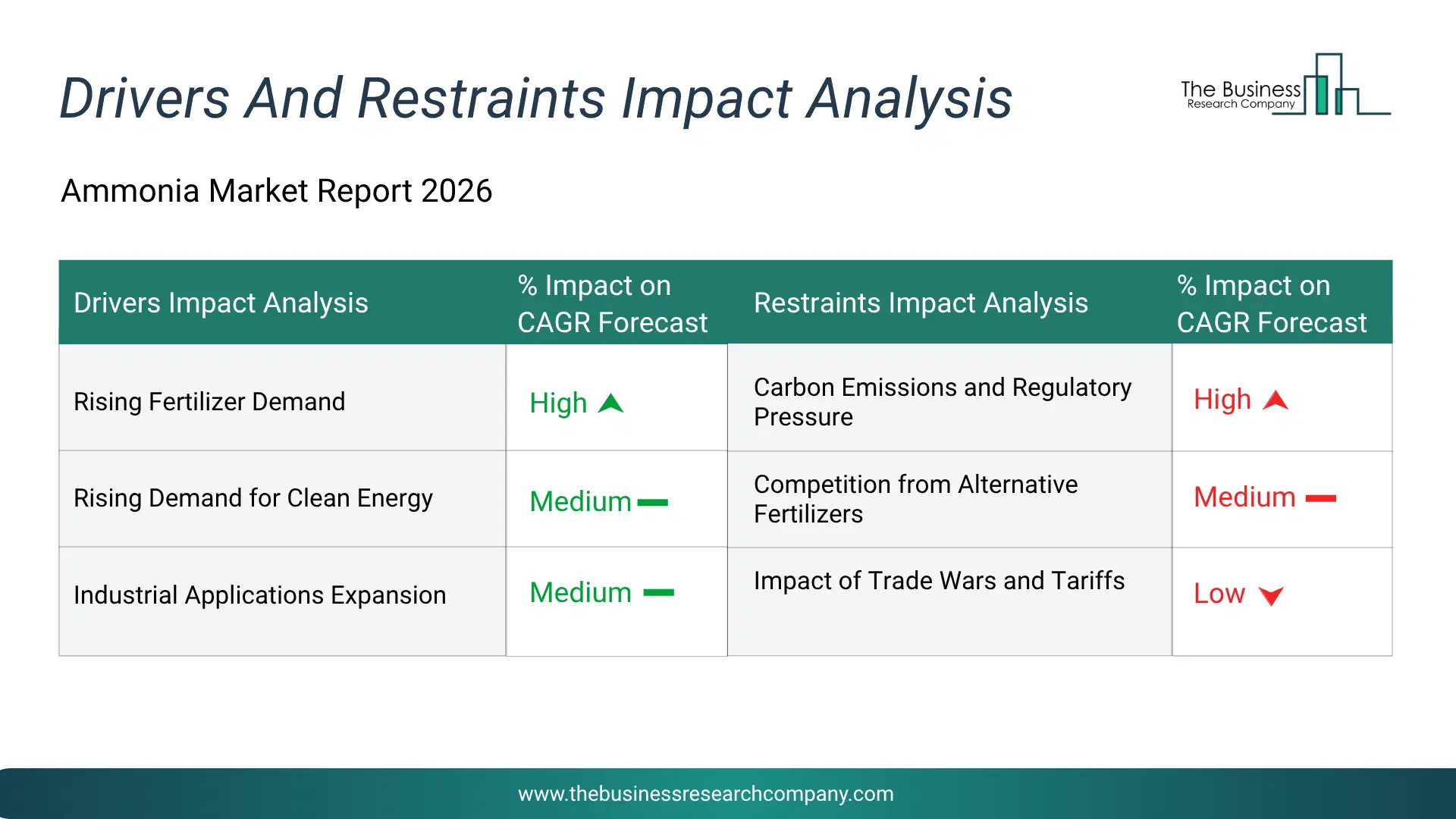
Infographic Chart Showing Key Market Drivers Analysis And Restraints For Ammonia Market
The chart presents an impact analysis of key drivers and restraints, quantifying their relative influence on the market's growth rate and helping assess the balance between growth enablers and limiting factors. This chart offers a high-level perspective; the full report contains more detailed insights.
How Will The Drivers Impact Growth In The Global Ammonia Market?
• Rising Fertilizer Demand (High) – The rising fertilizer demand will become a key driver of growth in the ammonia market by 2030. Ammonia is a critical raw material for nitrogen-based fertilizers, which play a vital role in maintaining crop productivity and ensuring global food security. As agricultural activity intensifies to meet the food requirements of a growing population, the need for fertilizers—such as urea and other ammonia-based products—continues to rise. Additionally, government policies and agribusiness initiatives aimed at improving fertilizer access and distribution are further supporting ammonia adoption in the agricultural sector. As a result, the increasing demand for fertilizers is significantly contributing to the expansion of the ammonia market, especially in regions with high agricultural activity. As a result, the rising fertilizer demand is anticipated to contributing to a 2.0% annual growth in the market. • Rising Demand for Clean Energy (Medium) – The rising demand for clean energy will emerge as a major factor driving the expansion of the market by 2030. As the global energy sector moves toward more sustainable solutions, ammonia is gaining attention for its potential as a clean energy carrier and a crucial element in decarbonizing various industries. This rising interest stems from the global effort to cut greenhouse gas emissions and reduce reliance on fossil fuels. Due to its versatility, ammonia can be used in power generation, transportation, and as a hydrogen carrier—making it well-suited to support the transition to cleaner energy systems. Consequently, the rising demand for clean energy is projected to contributing to a 1.5% annual growth in the market. • Industrial Applications Expansion (Medium) – The industrial applications expansion will serve as a key growth catalyst for the market by 2030. Beyond its traditional role in agriculture, ammonia is gaining traction in emerging sectors such as energy storage, transportation fuels, and various industrial processes. Its potential as a carbon-free energy carrier and a key feedstock in chemical production is fostering innovation in industries like steel, chemicals, and power generation particularly as they pursue decarbonization and improved energy efficiency. Furthermore, as the demand for sustainable alternatives to fossil fuels rises, ammonia’s versatility, scalability, and compatibility with existing infrastructure position it as a compelling option for large-scale industrial use. Therefore, this industrial applications expansion is projected to supporting to a 1.0% annual growth in the market. • Rise in Demand for Energy Storage Applications (Low) – The rise in demand for energy storage applications will become a significant driver contributing to the growth of the market by 2030. Ammonia is gaining recognition as a promising clean energy carrier and a critical element in efforts to decarbonize various industrial sectors. This heightened interest is fuelled by the global push to lower greenhouse gas emissions and reduce dependence on fossil fuels. Due to its adaptable nature, ammonia can be used in power generation, transportation, and as a hydrogen carrier—making it a valuable asset in the transition to cleaner energy systems. As a result, the ammonia market is set to benefit from the growing clean energy sector, spurring innovation and attracting investment in ammonia-based energy technologies. Consequently, the rise in demand for energy storage applications is projected to contributing to a 0.5% annual growth in the market.How Will The Restraints Impact Growth In The Global Ammonia Market?
• Carbon Emissions and Regulatory Pressure (Medium) – Carbon Emissions and Regulatory Pressure will restrict the growth of the Ammonia market during the forecast period. Ammonia production is energy-intensive and generates significant carbon emissions. Increasing regulatory pressure on carbon emissions and environmental impact affects ammonia production economics. Carbon-related regulations can increase production costs and affect the competitiveness of conventional ammonia. • Competition from Alternative Fertilizers (Medium) – Competition from Alternative Fertilizers will restrict the growth of the Ammonia market during the forecast period. Ammonia faces competition from alternative nitrogen fertilizers and nutrient sources. The availability of substitutes and their cost-effectiveness can affect ammonia demand in certain applications. Competition from alternative fertilizers can limit market share and growth potential. • Impact of Trade Wars and Tariffs (Low) – Impact of Trade Wars and Tariffs will restrict the growth of the Ammonia market during the forecast period. Ammonia trade is subject to international tariffs and trade restrictions affecting global supply and pricing. Trade barriers can impact fertilizer availability and affordability in importing regions. Trade tensions may also affect investment in ammonia production capacity and technology.Key Players In The Global Ammonia Market
Major companies operating in the ammonia market are Yara International ASA, BASF SE, CF Industries Holdings Inc., Nutrien Ltd., OCI Nitrogen, EuroChem Group, Koch Fertilizer LLC, Rashtriya Chemicals and Fertilizers Ltd., Qatar Fertiliser Company, Mitsubishi Gas Chemical Co. Inc., Uralchem JSC, Acron Group, Gujarat Narmada Valley Fertilizers & Chemicals Ltd., Agrium Europe S.A., Fauji Fertilizer Company Limited, National Fertilizers Limited, Pupuk Kaltim, Sinochem Group, Evonik Industries AG, Orica Limited, Dyno Nobel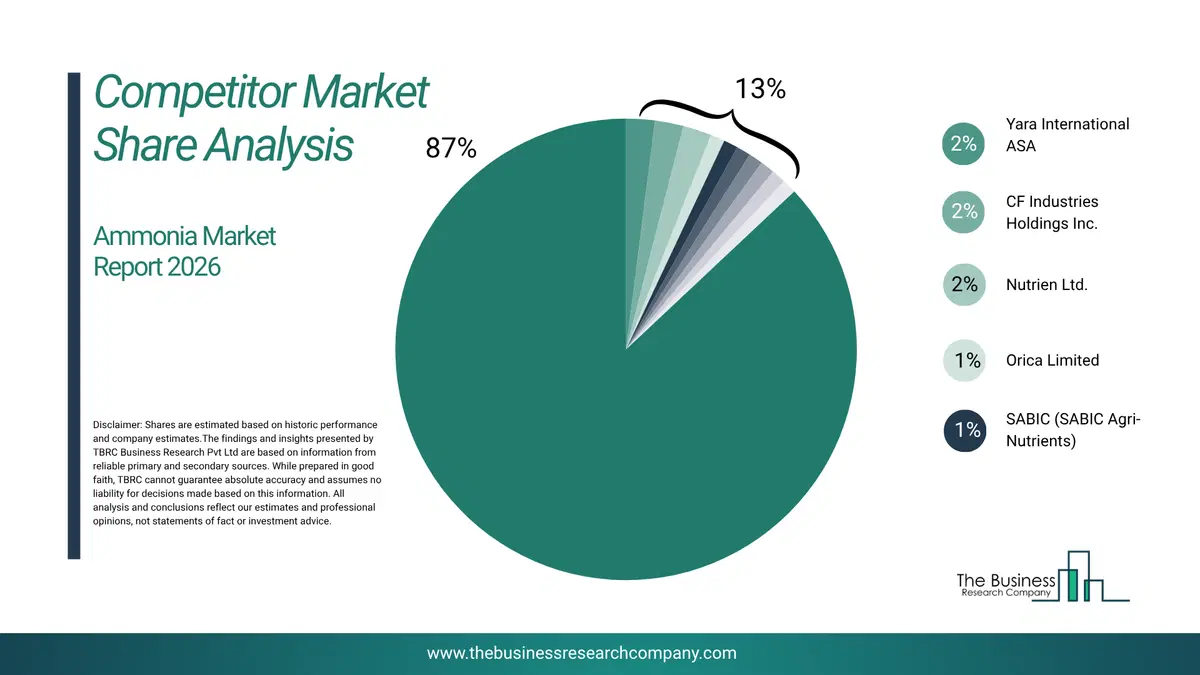
This chart is for illustrative purposes; the full report includes a detailed competitor analysis and comprehensive overview of the top 10 companies in the market.
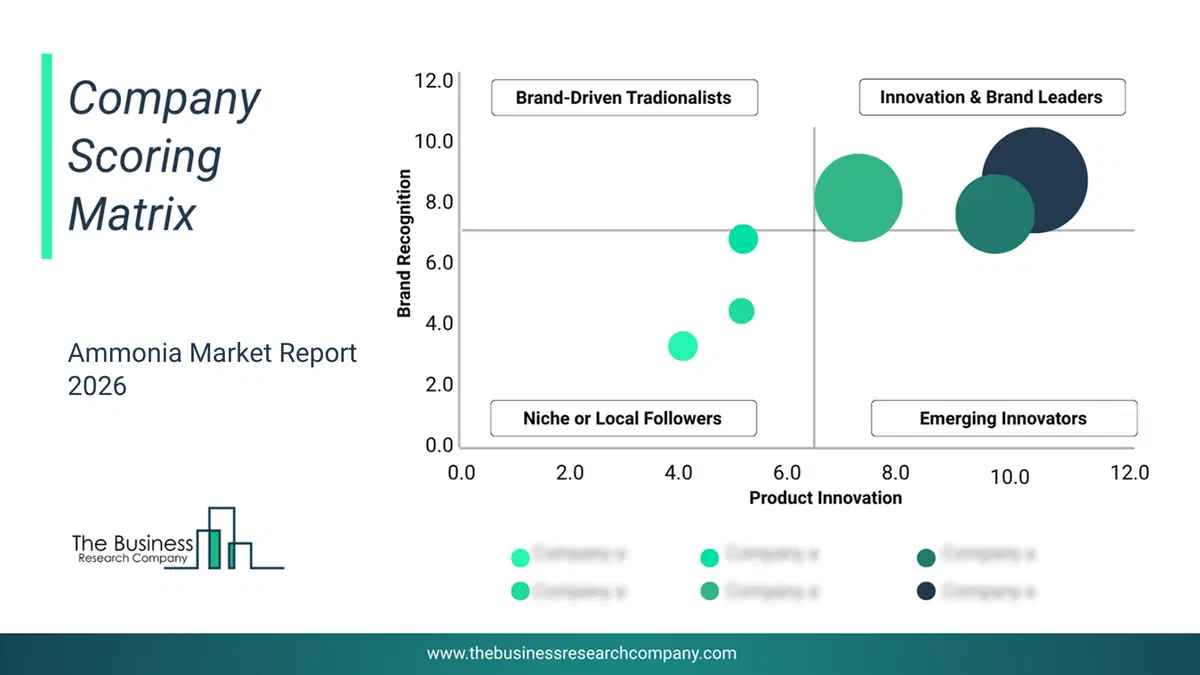
This chart maps companies by product innovation and brand strength, with bubble size indicating relative revenue, helping identify market leaders, challengers, and niche players. This is an illustrative chart; the full report provides a complete and accurate competitive analysis.
Global Ammonia Market Trends and Insights
Major companies operating in the ammonia market are focused on developing advanced biomass-balanced products to meet the growing demand for environmentally friendly agricultural solutions. Biomass-balanced products serve as fertilizers and chemicals, offering a more sustainable option compared to traditional methods. They frequently carry certifications that highlight their eco-friendly attributes, assisting consumers and businesses in making informed decisions that promote a circular economy. For instance, in May 2024, BASF SE, a Germany-based chemical company, launched ammonia anhydrous BMBcert, ammonia solution 24.5% BMBcert, urea powder BMBcert, urea solution 40% BMBcert, and urea solution 45% BMBcert. BASF's Ammonia Anhydrous BMBcert is an ISCC PLUS-certified biomass-balanced product that significantly reduces emissions and supports sustainability efforts. The ammonia solution 24.5% BMBcert offers a lower carbon footprint with its biomass-balanced formulation. Urea Prills BMBcert helps customers minimize scope 3 emissions, while Urea Solutions (40% and 45%) provide effective biomass-balanced options to aid in achieving sustainability goals and reducing overall carbon impact.What Are Latest Mergers And Acquisitions In The Ammonia Market?
In September 2023, EnBW, a German-based energy company, acquired a 10% equity stake in the Skipavika Green Ammonia (SkiGA) ammonia project for an undisclosed amounyt. Through this acquisition, EnBW will have long-term offtake rights on the ammonia produced. The Skipavika Green Ammonia (SkiGA) ammonia project is a Norway-based sustainable and environmentally friendly initiative that aims to produce ammonia using green and renewable resources.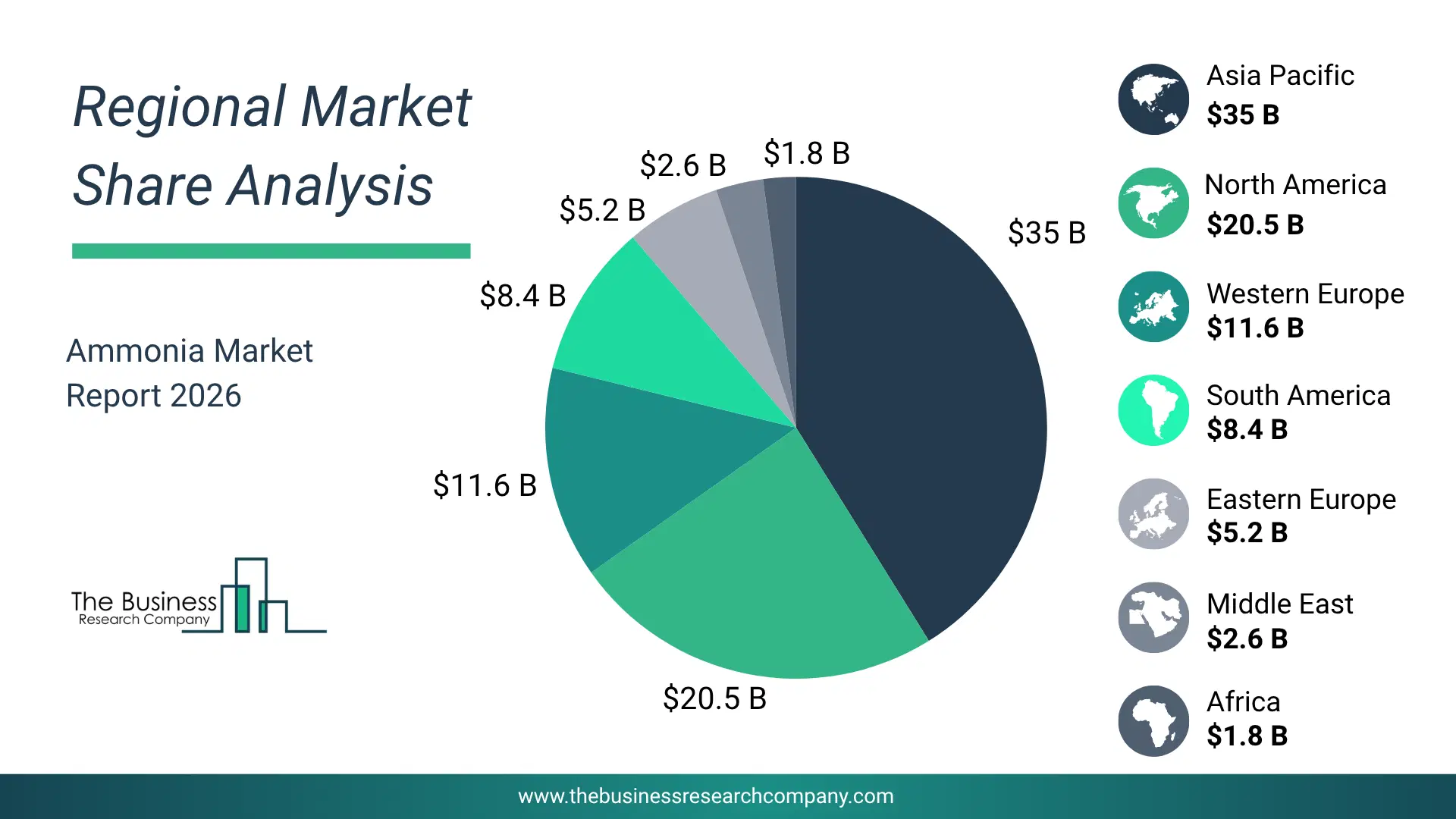
Regional Insights
Asia-pacific was the largest region in the ammonia market in 2025 and is expected to be the fastest-growing region in the forecast period. The regions covered in this market report are Asia-Pacific, South East Asia, Western Europe, Eastern Europe, North America, South America, Middle East, Africa The countries covered in this market report are Australia, Brazil, China, France, Germany, India, Indonesia, Japan, Taiwan, Russia, South Korea, UK, USA, Canada, Italy, SpainWhat Defines the Ammonia Market?
The ammonia market consists of sales of ammonia in the form of liquid, gas and powder. Values in this market are ‘factory gate’ values, that is the value of goods sold by the manufacturers or creators of the goods, whether to other entities (including downstream manufacturers, wholesalers, distributors, and retailers) or directly to end customers. The value of goods in this market includes related services sold by the creators of the goods.How is Market Value Defined and Measured?
The market value is defined as the revenues that enterprises gain from the sale of goods and/or services within the specified market and geography through sales, grants, or donations in terms of the currency (in USD unless otherwise specified). The revenues for a specified geography are consumption values that are revenues generated by organizations in the specified geography within the market, irrespective of where they are produced. It does not include revenues from resales along the supply chain, either further along the supply chain or as part of other products.
This chart presents market attractiveness based on a quantitative evaluation of growth, competition, strategic alignment, and risk, offering a clear view of opportunity areas for decision-making. This chart is for illustrative purposes; the full report contains the complete analysis.

This chart highlights the Total Addressable Market (TAM) by estimating the maximum revenue opportunity using an assumption-driven approach, supporting strategic planning and opportunity sizing across markets. The chart is illustrative; the full report provides a more comprehensive analysis.
What Key Data and Analysis Are Included in the Ammonia Market Report 2026?
The ammonia market research report is one of a series of new reports from The Business Research Company that provides market statistics, including industry global market size, regional shares, competitors with the market share, detailed market segments, market trends and opportunities, and any further data you may need to thrive in the ammonia industry. The market research report delivers a complete perspective of everything you need, with an in-depth analysis of the current and future state of the industry.Ammonia Market Report Forecast Analysis
| Report Attribute | Details |
|---|---|
| Market Size Value In 2026 | $91.13 billion |
| Revenue Forecast In 2030 | $119.52 billion |
| Growth Rate | CAGR of 7.2% from 2026 to 2030 |
| Base Year For Estimation | 2025 |
| Actual Estimates/Historical Data | 2020-2025 |
| Forecast Period | 2026 - 2030 |
| Market Representation | Revenue in USD Billion and CAGR from 2026 to 2030 |
| Segments Covered | Product Type, Form Type, Application Type |
| Regional Scope | Asia-Pacific, Western Europe, Eastern Europe, North America, South America, Middle East, Africa |
| Country Scope | The countries covered in the report are Australia, Brazil, China, France, Germany, India, Indonesia, Japan, Taiwan, Russia, South Korea, UK, USA, Canada, Italy, Spain. |
| Key Companies Profiled | Yara International ASA, BASF SE, CF Industries Holdings Inc., Nutrien Ltd., OCI Nitrogen, EuroChem Group, Koch Fertilizer LLC, Rashtriya Chemicals and Fertilizers Ltd., Qatar Fertiliser Company, Mitsubishi Gas Chemical Co. Inc., Uralchem JSC, Acron Group, Gujarat Narmada Valley Fertilizers & Chemicals Ltd., Agrium Europe S.A., Fauji Fertilizer Company Limited, National Fertilizers Limited, Pupuk Kaltim, Sinochem Group, Evonik Industries AG, Orica Limited, Dyno Nobel |
| Customization Scope | Request for Customization |
| Pricing And Purchase Options | Explore Purchase Options |