
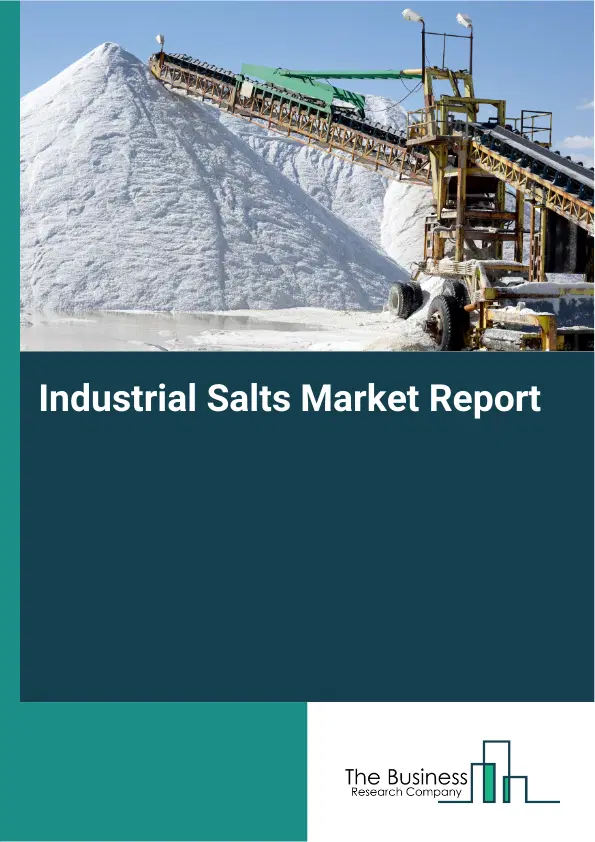
Industrial Salts Market Report 2026
Global Outlook – By Source (Rock Salt, Natural Brine), By Manufacturing Process (Conventional Mining, Solar Evaporation, Vacuum Evaporation), By Application (Agriculture, Chemical Processing, Food Processing, Water Treatment, De-icing, Oil And Gas) – Market Size, Trends, Strategies, and Forecast to 2030
Industrial Salts Market Overview
• Industrial Salts market size has reached to $15.91 billion in 2025 • Expected to grow to $20.62 billion in 2030 at a compound annual growth rate (CAGR) of 5.2% • Growth Driver: Surging Oil And Gas Sector Drives Growth In The Industrial Salts Market • Market Trend: Major Players Join Forces For Industrial Salt Plant Investments • Asia-Pacific was the largest region and fastest growing region.Market Gains By 2030 – Top Opportunities By Segment
Market Gain identifies the most promising market opportunities by highlighting the segments or products expected to generate the highest incremental revenue growth over the next five years.
What Is Covered Under Industrial Salts Market?
Industrial salt is a finely processed, white crystalline granules from natural sources. It is suitable for various applications, including detergents, textile dyeing, resin products, and other chemical processes. The main types of industrial salt sources are rock salt and natural brine. Rock salt refers to halite, which is a kind of salt that forms from the remains of ancient bodies of water in the rocky layers of the Earth's crust. Industrial salt from rock sources is used in a variety of industrial applications, including surface treatment, galvanizing, color enhancement, and other chemical processes. Major manufacturing processes are conventional mining, solar evaporation, and vacuum evaporation. It is used in several applications such as agriculture, chemical processing, food processing, water treatment, de-icing, and oil and gas.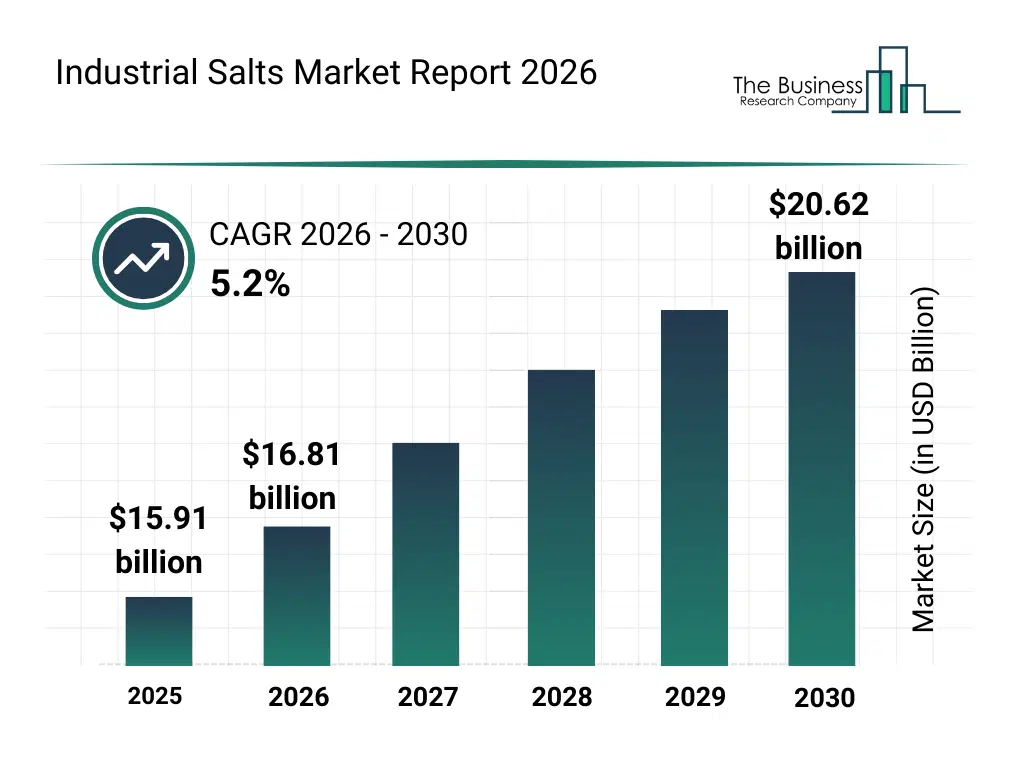
What Is The Industrial Salts Market Size and Share 2026?
The industrial salts market size has grown strongly in recent years. It will grow from $15.91 billion in 2025 to $16.81 billion in 2026 at a compound annual growth rate (CAGR) of 5.7%. The growth in the historic period can be attributed to expansion of chemical manufacturing activities, growth of textile and dyeing industries, rising use of salt in water treatment plants, increased demand from oil and gas drilling, steady consumption in food processing.What Is The Industrial Salts Market Growth Forecast?
The industrial salts market size is expected to see strong growth in the next few years. It will grow to $20.62 billion in 2030 at a compound annual growth rate (CAGR) of 5.2%. The growth in the forecast period can be attributed to increasing investments in sustainable chemical production, rising demand for industrial salt in electric vehicle battery processing, expansion of municipal water treatment infrastructure, growing adoption of vacuum evaporation technologies, increasing focus on supply chain optimization. Major trends in the forecast period include increasing demand for high-purity industrial salt, rising use in chemical processing applications, growing adoption in water treatment processes, expansion of de-icing applications in cold regions, enhanced focus on consistent granule quality.
Global Industrial Salts Market Segmentation
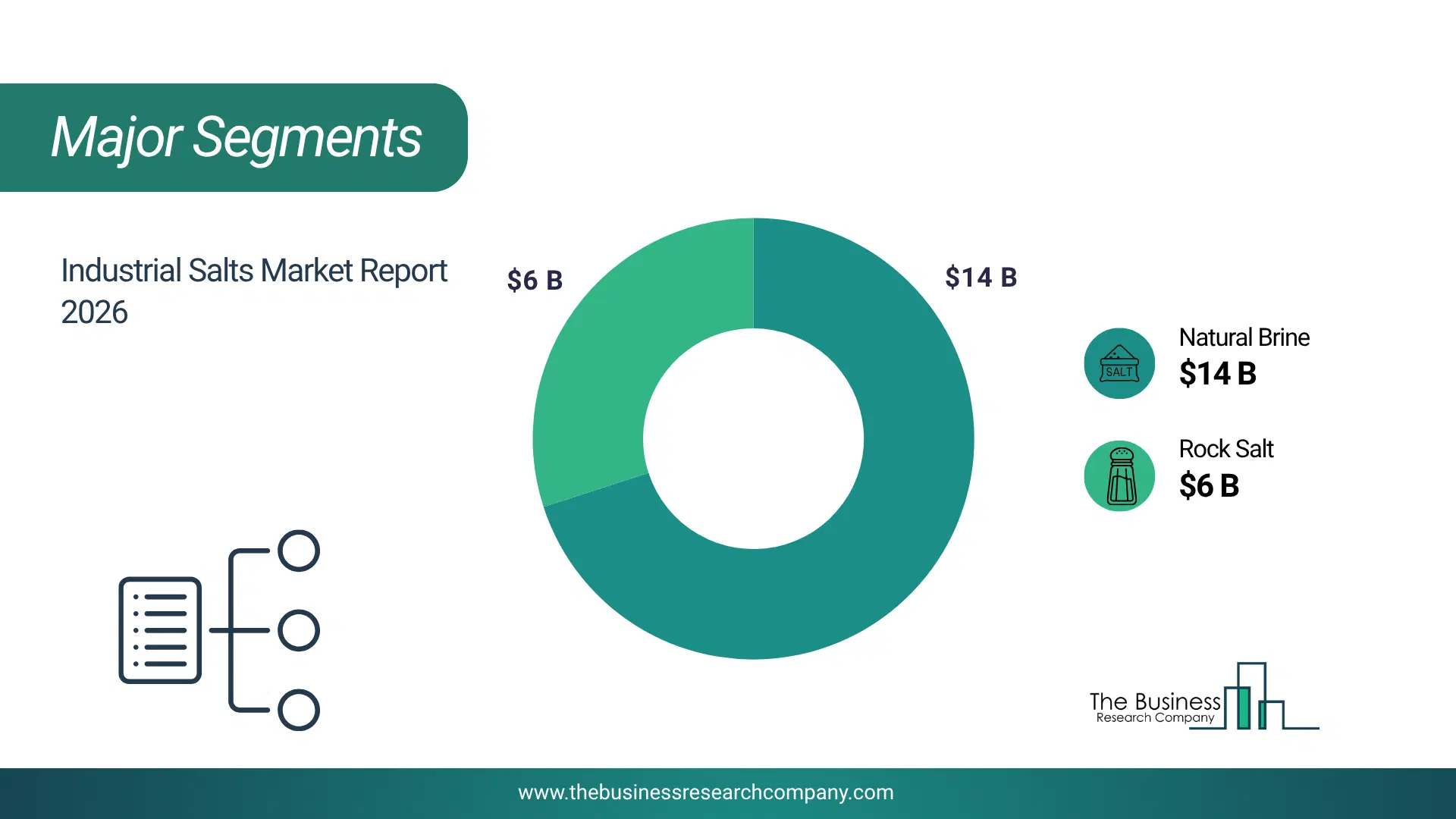
1) By Source: Rock Salt, Natural Brine 2) By Manufacturing Process: Conventional Mining, Solar Evaporation, Vacuum Evaporation 3) By Application: Agriculture, Chemical Processing, Food Processing, Water Treatment, De-icing, Oil And Gas Subsegments: 1) By Rock Salt: Halite, Evaporated Rock Salt, Industrial Grade Rock Salt 2) By Natural Brine: Sea Salt Brine, Spring Water Brine, Salt Lake Brine The top segments in the industrial salts market will be: • Natural Brine will reach $14.01 Billion by 2030. • Rock Salt will reach $6.26 Billion by 2030.What Is The Driver Of The Industrial Salts Market?
The growing oil and gas sector is expected to propel the growth of the industrial salts market going forward. The oil and gas sector, also known as the petroleum industry, encompasses the global processes of exploration, extraction, refining, transportation, and marketing of petroleum products. Industrial salts play a crucial role in the oil and gas sector, with various applications that contribute to the efficiency and safety of operations. Salt is used to increase the density of mud and soil in drilling operations, creating a safer and more efficient drilling rig. It is also used in the refining process to remove water from the finished product, aiding in the production of high-quality petroleum products. For instance, in March 2023, according to the US Energy Information Administration, a US-based federal statistical system for gathering, processing, and disseminating energy data, there was an increase in US crude oil output to 12.4 million b/d in 2023 from the record high of 11.7 million b/d in 2022. Therefore, the growing oil and gas sector is driving the growth of the industrial salts industry.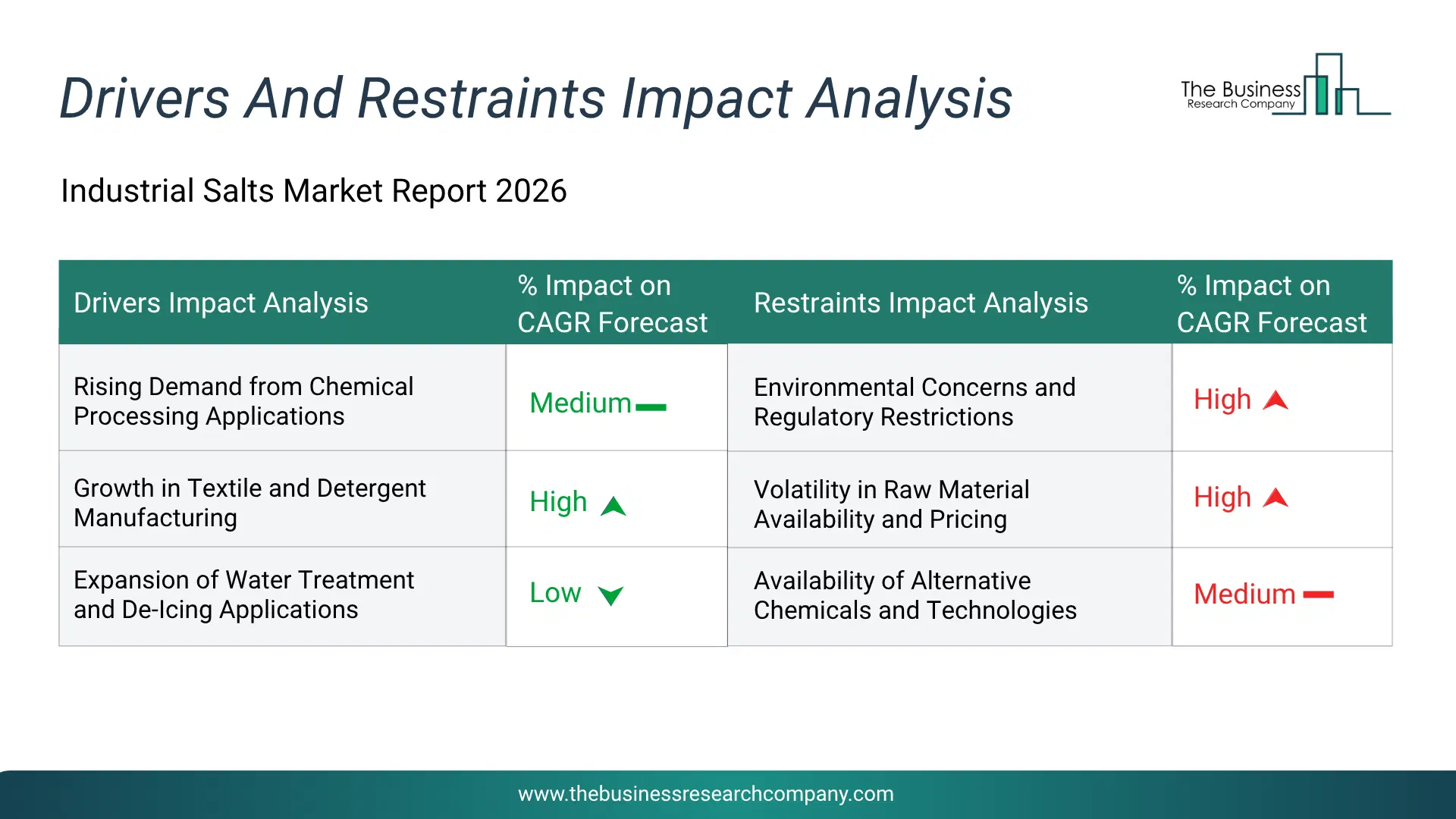
Infographic Chart Showing Key Market Drivers Analysis And Restraints For Industrial Salts Market
The chart presents an impact analysis of key drivers and restraints, quantifying their relative influence on the market's growth rate and helping assess the balance between growth enablers and limiting factors. This chart offers a high-level perspective; the full report contains more detailed insights.
How Will The Drivers Impact Growth In The Global Industrial Salts Market?
• Rising Demand from Chemical Processing Applications (Medium) – During the forecast period, the rising demand from chemical processing applications is expected to become a key growth driver for the industrial salts market by 2030. The increasing utilization of industrial salts such as sodium chloride and potassium derivatives in chemical processing significantly drives demand. These salts act as key raw materials in the production of chlorine, caustic soda, and other intermediates essential for downstream manufacturing. Expanding chemical production capacities, particularly in emerging economies, are strengthening consumption volumes. Additionally, industrial salts are integral in resin manufacturing and water treatment chemicals, further expanding their application base. Continuous industrialization and the growth of specialty chemicals are reinforcing steady procurement of these salts. As production activities scale, the dependency on consistent salt supply increases proportionally. • Growth in Textile and Detergent Manufacturing (High) – During the forecast period, the growth in textile and detergent manufacturing is expected to emerge as a major factor driving the expansion of the industrial salts market by 2030. Industrial salts are widely used in textile dyeing and detergent formulation processes, making these sectors critical demand generators. In textile processing, salts enhance dye absorption and improve color consistency, thereby increasing operational efficiency. Meanwhile, in detergent production, salts are used as fillers and stabilizers to optimize product formulation. The expansion of apparel manufacturing and rising consumer demand for cleaning products are accelerating salt consumption. Emerging economies with strong textile bases are especially contributing to volume growth. • Expansion of Water Treatment and De-Icing Applications (Low) – During the forecast period, the expansion of water treatment and de-icing applications is expected to act as a key growth catalyst for the industrial salts market by 2030. Industrial salts play a crucial role in water softening and purification processes, especially in municipal and industrial water treatment facilities. Their ability to remove hardness and impurities supports their growing adoption amid increasing water scarcity concerns. Additionally, in colder regions, salts are used for de-icing roads and infrastructure, ensuring safety and transportation continuity. The rise in infrastructure development and environmental regulations around water quality are boosting demand. Industrial expansion also necessitates effective wastewater treatment, further driving salt usage. These applications collectively contribute to stable, recurring demand patterns.How Will The Restraints Impact Growth In The Global Industrial Salts Market?
• Environmental Concerns and Regulatory Restrictions (Medium) – During the forecast period, environmental concerns and regulatory restrictions are significantly restricting the growth of the industrial salts market. Increasing focus on soil degradation, water contamination, and ecological impacts of salt usage is leading to stricter regulations, usage limitations, and compliance requirements across key applications. • Volatility in Raw Material Availability and Pricing (High) – During the forecast period, volatility in raw material availability and pricing is significantly restricting the growth of the industrial salts market. Fluctuations in mining output, energy costs, and transportation expenses are creating supply chain instability and increasing production costs, thereby impacting market profitability and long-term planning. • Availability of Alternative Chemicals and Technologies (Low) – During the forecast period, the availability of alternative chemicals and technologies is restricting the growth of the industrial salts market. Substitutes in chemical processing, water treatment, and de-icing applications are gradually replacing traditional salt usage, leading to reduced demand in certain industrial segments.Key Players In The Global Industrial Salts Market
Major companies operating in the industrial salts market are Cargill Incorporated, Mitsui & Co. Ltd., Nouryon Chemicals Holding B.V, Rio Tinto Group, Compass Minerals International Inc., INEOS Group AG, K+S AG, Wacker Chemie AG, Akzo Nobel N.V., Solvay S.A., Dominion Salt Ltd., ICL Group Ltd., Salt Union Ltd., Swiss Saltworks AG, Atisale SpA, Salins Group, Kopalnia Soli Wieliczka SA, Dampier Salt Ltd., Morton Salt Inc., Qinghai Salt Lake Industry Co. Ltd., Henan Huayang Salt Chemical Co. Ltd., Shandong Haihua Group Co. Ltd., Ciech S.A., Tata Chemicals North America Inc., China National Salt Industry Corporation, Tata Chemicals Limited, Salinas Salt Company, San Francisco Salt Company, SaltWorks Inc.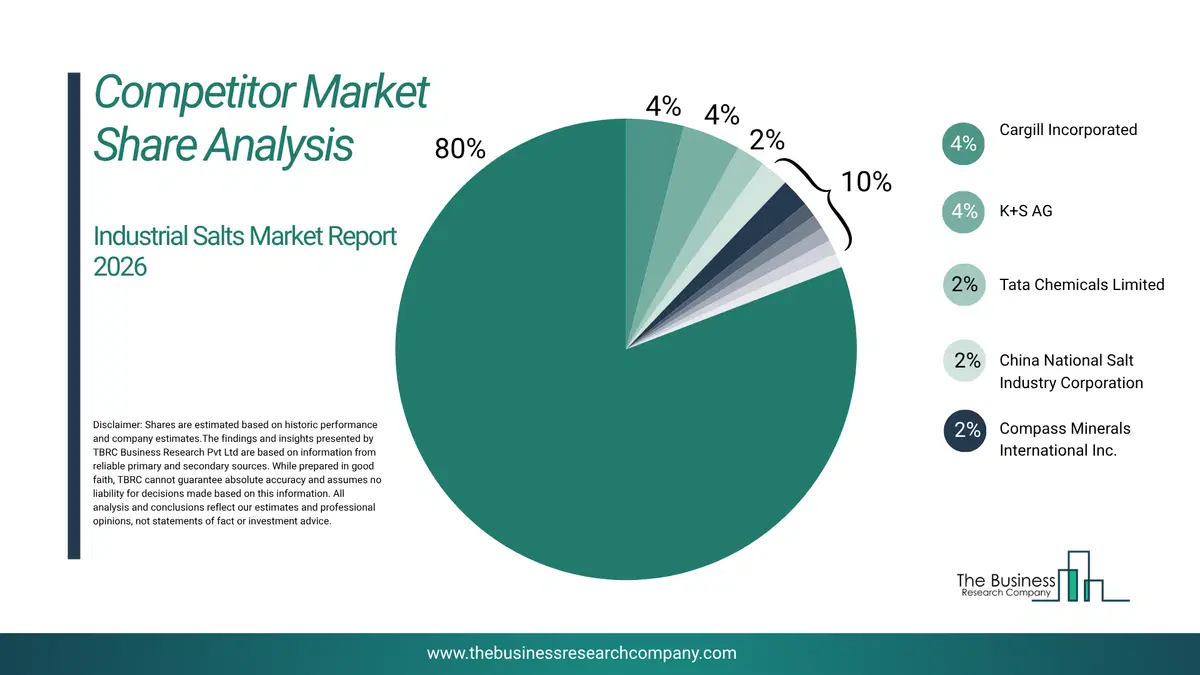
This chart is for illustrative purposes; the full report includes a detailed competitor analysis and comprehensive overview of the top 10 companies in the market.
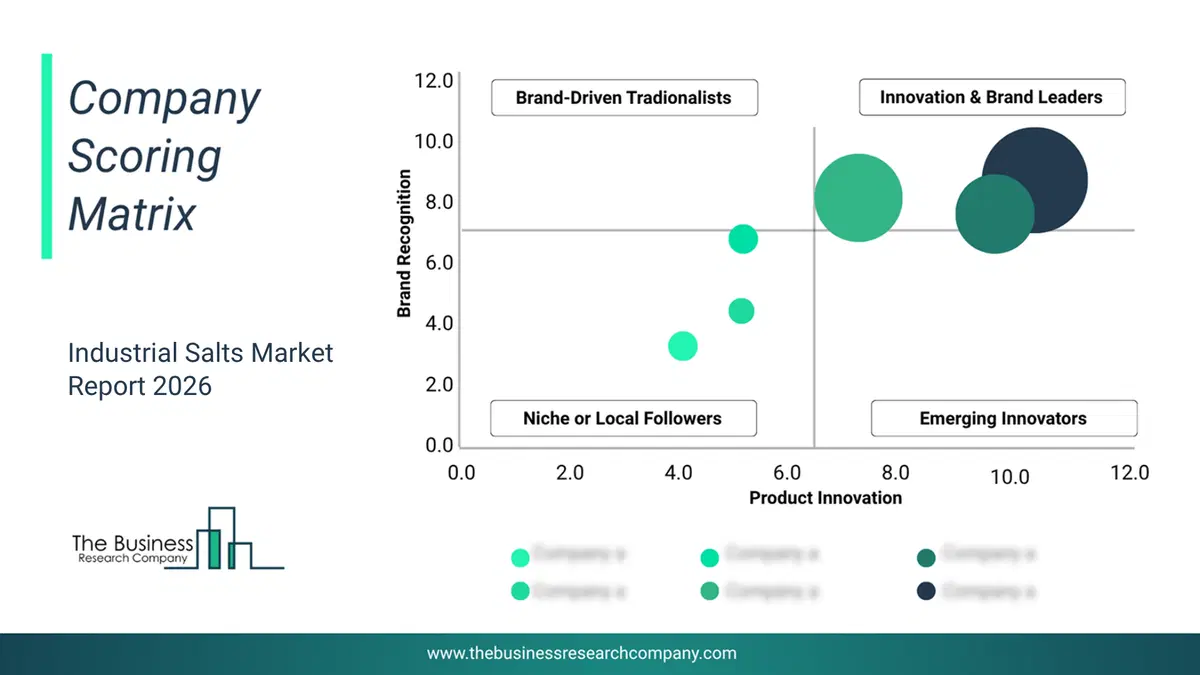
This chart maps companies by product innovation and brand strength, with bubble size indicating relative revenue, helping identify market leaders, challengers, and niche players. This is an illustrative chart; the full report provides a complete and accurate competitive analysis.
Global Industrial Salts Market Trends and Insights
Major companies operating in the industrial salts market are focused on adopting strategic collaborations to gain a competitive edge in the market. These collaborations are intended for industrial salt plant investments that majorly involve partnerships and alliances aimed at enhancing the production, distribution, and utilization of industrial salt. For instance, in August 2023, Pakistan Mineral Development Corporation, a Pakistan-based semi-autonomous corporation, signed a memorandum of understanding (MoU) with Miracle Saltworks Collective Inc., a US-based Himalayan crystal salt company, to establish an export-quality pink rock salt crushing and packaging facility. Through this collaboration, the US firm is expected to invest $200 million in establishing a pink rock salt crushing and packaging facility that will be used only for the export of salt. This non-binding MoU envisages establishing a state-of-the-art pink rock salt crushing and packaging facility for export purposes under the theme of Pink Prosperity.What Are Latest Mergers And Acquisitions In The Industrial Salts Market?
In May 2023, Cargill's salt business, a US-based leader in the salt industry, signed an agreement with CIECH Group, a supplier of evaporated salt products based in Europe. This partnership aims to enhance Cargill's portfolio by extending its range of specialty and evaporated food-salt solutions to food manufacturers across the European market. By collaborating with CIECH Group, Cargill seeks to meet the growing demand for high-quality food-salt products and strengthen its position in the competitive European food manufacturing sector.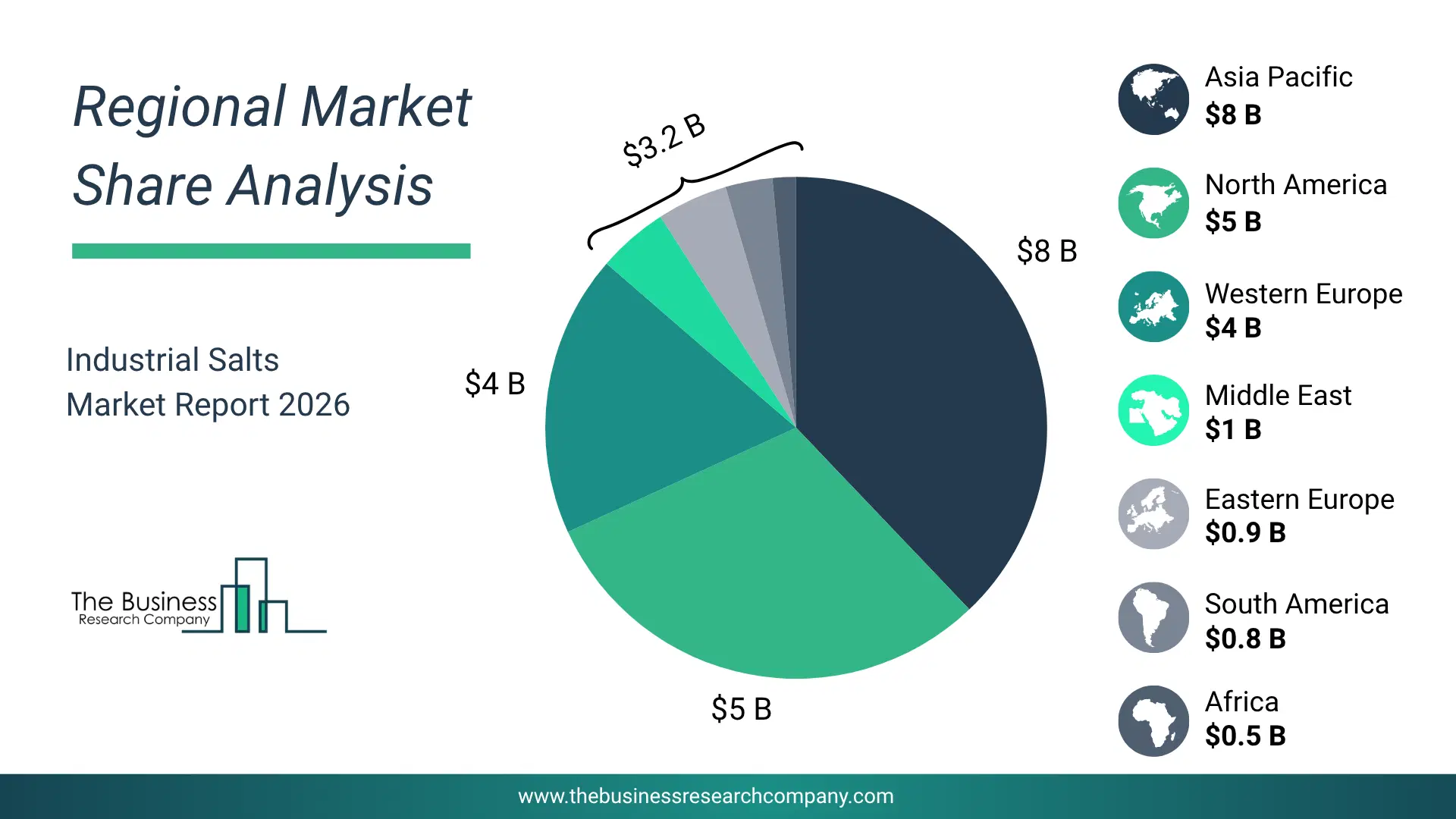
Regional Insights
Asia-Pacific was the largest region in the industrial salts market share in 2025. The regions covered in this market report are Asia-Pacific, South East Asia, Western Europe, Eastern Europe, North America, South America, Middle East, Africa The countries covered in this market report are Australia, Brazil, China, France, Germany, India, Indonesia, Japan, Taiwan, Russia, South Korea, UK, USA, Canada, Italy, SpainWhat Defines the Industrial Salts Market?
The industrial salts market consists of sales of sodium chloride, anhydrous magnesium sulphate, Epsom salt, potassium chloride and potassium sulphate. Values in this market are ‘factory gate’ values, that is the value of goods sold by the manufacturers or creators of the goods, whether to other entities (including downstream manufacturers, wholesalers, distributors and retailers) or directly to end customers. The value of goods in this market includes related services sold by the creators of the goods.How is Market Value Defined and Measured?
The market value is defined as the revenues that enterprises gain from the sale of goods and/or services within the specified market and geography through sales, grants, or donations in terms of the currency (in USD unless otherwise specified). The revenues for a specified geography are consumption values that are revenues generated by organizations in the specified geography within the market, irrespective of where they are produced. It does not include revenues from resales along the supply chain, either further along the supply chain or as part of other products.
This chart presents market attractiveness based on a quantitative evaluation of growth, competition, strategic alignment, and risk, offering a clear view of opportunity areas for decision-making. This chart is for illustrative purposes; the full report contains the complete analysis.

This chart highlights the Total Addressable Market (TAM) by estimating the maximum revenue opportunity using an assumption-driven approach, supporting strategic planning and opportunity sizing across markets. The chart is illustrative; the full report provides a more comprehensive analysis.
What Key Data and Analysis Are Included in the Industrial Salts Market Report 2026?
The industrial salts market research report is one of a series of new reports from The Business Research Company that provides market statistics, including industry global market size, regional shares, competitors with the market share, detailed market segments, market trends and opportunities, and any further data you may need to thrive in the industrial salts industry. The market research report delivers a complete perspective of everything you need, with an in-depth analysis of the current and future state of the industry.Industrial Salts Market Report Forecast Analysis
| Report Attribute | Details |
|---|---|
| Market Size Value In 2026 | $16.81 billion |
| Revenue Forecast In 2030 | $20.62 billion |
| Growth Rate | CAGR of 5.7% from 2026 to 2030 |
| Base Year For Estimation | 2025 |
| Actual Estimates/Historical Data | 2020-2025 |
| Forecast Period | 2026 - 2030 |
| Market Representation | Revenue in USD Billion and CAGR from 2026 to 2030 |
| Segments Covered | Source, Manufacturing Process, Application |
| Regional Scope | Asia-Pacific, Western Europe, Eastern Europe, North America, South America, Middle East, Africa |
| Country Scope | The countries covered in the report are Australia, Brazil, China, France, Germany, India, Indonesia, Japan, Taiwan, Russia, South Korea, UK, USA, Canada, Italy, Spain. |
| Key Companies Profiled | Cargill Incorporated, Mitsui & Co. Ltd., Nouryon Chemicals Holding B.V, Rio Tinto Group, Compass Minerals International Inc., INEOS Group AG, K+S AG, Wacker Chemie AG, Akzo Nobel N.V., Solvay S.A., Dominion Salt Ltd., ICL Group Ltd., Salt Union Ltd., Swiss Saltworks AG, Atisale SpA, Salins Group, Kopalnia Soli Wieliczka SA, Dampier Salt Ltd., Morton Salt Inc., Qinghai Salt Lake Industry Co. Ltd., Henan Huayang Salt Chemical Co. Ltd., Shandong Haihua Group Co. Ltd., Ciech S.A., Tata Chemicals North America Inc., China National Salt Industry Corporation, Tata Chemicals Limited, Salinas Salt Company, San Francisco Salt Company, SaltWorks Inc. |
| Customization Scope | Request for Customization |
| Pricing And Purchase Options | Explore Purchase Options |