
Antinuclear Antibody Test Market Report 2026
Global Outlook – By Product (Assay Kits, Reagent Kits, Software And Services), By Technology (Immunofluorescence Assay, Multiplex Assay, ELISA), By Application (Rheumatoid Arthritis, Systemic Lupus Erythematosus, Other Applications), By End-User (Hospitals, Clinical, Physician Laboratories) - Market Size, Trends, Strategies, and Forecast to 2030
Antinuclear Antibody Test Market Overview
• Antinuclear Antibody Test market size has reached to $1.73 billion in 2025 • Expected to grow to $3.09 billion in 2030 at a compound annual growth rate (CAGR) of 12.2% • Growth Driver: Rising Autoimmune Disease Prevalence Drives Growth In Market • Market Trend: Innovations In Automated Immunofluorescence Technology Enhance Accuracy And Workflow Efficiency In Antinuclear Antibody Testing • North America was the largest region in 2025 and Asia-Pacific is the fastest growing region.What Is Covered Under Antinuclear Antibody Test Market?
An antinuclear antibody (ANA) test is a blood test that detects autoantibodies targeting the body’s own cells, which can be a sign of autoimmune diseases. It is commonly used to diagnose conditions like lupus, rheumatoid arthritis, and other autoimmune disorders. The main types of products in the antinuclear antibody test are assay kits, reagent kits, and software and services. Assay kits are pre-packaged sets of reagents and protocols designed to detect antinuclear antibodies in patient samples. It consists of various technologies, including immunofluorescence assays, multiplex assays, and ELISA, used for various applications such as rheumatoid arthritis, systemic lupus erythematosus, and others. It caters to various end users, such as hospitals, clinical, and physician laboratories.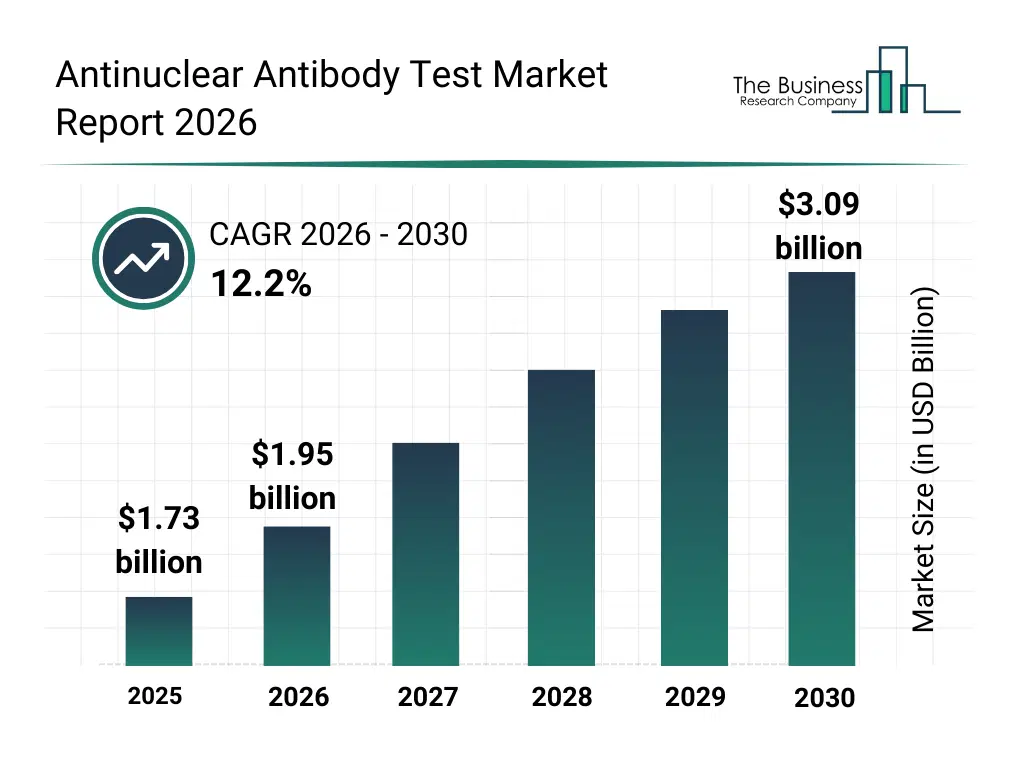
What Is The Antinuclear Antibody Test Market Size and Share 2026?
The antinuclear antibody test market size has grown rapidly in recent years. It will grow from $1.73 billion in 2025 to $1.95 billion in 2026 at a compound annual growth rate (CAGR) of 12.5%. The growth in the historic period can be attributed to increasing prevalence of autoimmune disorders, expansion of clinical laboratory testing services, growing physician reliance on serological diagnostics, availability of immunofluorescence assay technologies, rising patient diagnostic testing volumes.What Is The Antinuclear Antibody Test Market Growth Forecast?
The antinuclear antibody test market size is expected to see rapid growth in the next few years. It will grow to $3.09 billion in 2030 at a compound annual growth rate (CAGR) of 12.2%. The growth in the forecast period can be attributed to increasing adoption of ai-assisted diagnostic interpretation, rising demand for point-of-care autoimmune testing, expansion of integrated laboratory information systems, growing focus on personalized autoimmune diagnostics, increasing investments in advanced assay technologies. Major trends in the forecast period include increasing adoption of multiplex and automated ana testing, rising demand for early autoimmune disease screening, growing use of digital pathology and lims integration, expansion of high-throughput diagnostic platforms, enhanced focus on diagnostic accuracy and standardization.
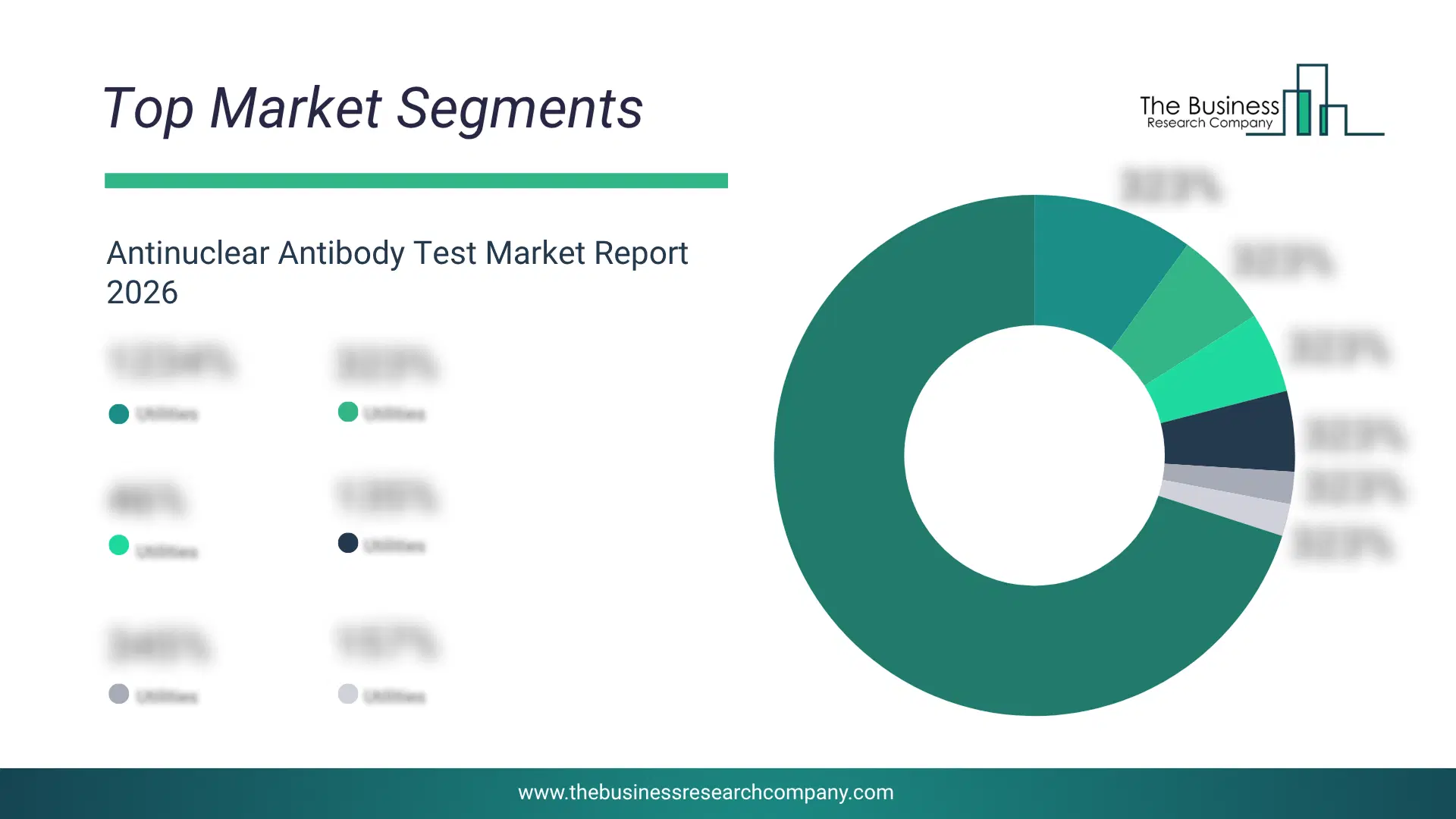
Global Antinuclear Antibody Test Market Segmentation
1) By Product: Assay Kits, Reagent Kits, Software And Services 2) By Technology: Immunofluorescence Assay, Multiplex Assay, ELISA 3) By Application: Rheumatoid Arthritis, Systemic Lupus Erythematosus, Other Applications 4) By End-User: Hospitals, Clinical, Physician Laboratories Subsegments: 1) By Assay Kits: Enzyme-Linked Immunosorbent Assay (ELISA) Kits, Immunofluorescence Assay (IFA) Kits, Western Blot Assay Kits 2) By Reagent Kits: Antigen Reagents, Conjugated Antibodies, Detection Reagents 3) By Software And Services: Data Management Software, Laboratory Information Management Systems (LIMS), Technical Support And Consulting ServicesWhat Are The Drivers Of The Antinuclear Antibody Test Market?
The rising prevalence of autoimmune diseases is expected to propel the growth of the antinuclear antibody test market going forward. Autoimmune diseases are conditions in which the immune system mistakenly attacks the body's own healthy cells and tissues. The rising prevalence of autoimmune diseases is increasing due to factors including genetic predisposition, environmental influences, hormonal changes, and lifestyle factors like diet and stress. The antinuclear antibody test helps in the early detection of autoimmune diseases by identifying the presence of antibodies that target the body's own cells and tissues. For instance, in February 2024, according to Arthritis Australia, an Australia-based charitable not-for-profit organisation advocating for people with arthritis and musculoskeletal conditions, by 2025, approximately 562,378 Australians are expected to be living with rheumatoid arthritis (RA), accounting for 14% of the total arthritis population. Therefore, the rising prevalence of autoimmune diseases is driving the growth of the antinuclear antibody test industry. The increasing adoption of personalized medicine is expected to propel the growth of the antinuclear antibody (ANA) test market going forward. Personalized medicine refers to tailoring medical treatment and diagnostic decisions based on an individual’s genetic, environmental, and lifestyle characteristics, rather than applying a uniform treatment approach. The rise in personalized medicine is driven by the need for more accurate diagnostic tools that support patient stratification, early autoimmune disease detection, and therapy monitoring. ANA tests play a critical role in precision immunology by identifying autoimmune biomarkers essential for guiding targeted treatment pathways. For instance, in February 2024, according to the Personalized Medicine Coalition, 26 new personalized therapies were approved by the U.S. FDA in 2023, including 20 new molecular entities and 6 gene- or cell-based treatments. Therefore, the growing focus on personalized medicine is driving the expansion of the antinuclear antibody test industry.Key Players In The Global Antinuclear Antibody Test Market
Major companies operating in the antinuclear antibody test market are Hoffmann-La Roche Ltd., Thermo Fisher Scientific Inc., Abbott Laboratories, Becton Dickinson and Company, LabCorp, Quest Diagnostics Incorporated, Grifols SA, PerkinElmer Inc., Bio-Rad Laboratories Inc., Werfen SA, DiaSorin SpA, EUROIMMUN AG, Abcam plc, Trinity Biotech plc, Zeus Scientific Inc., ERBA Diagnostics Inc., Quidel Corporation, Antibodies Incorporated, Immuno Concepts Inc., Inova Diagnostics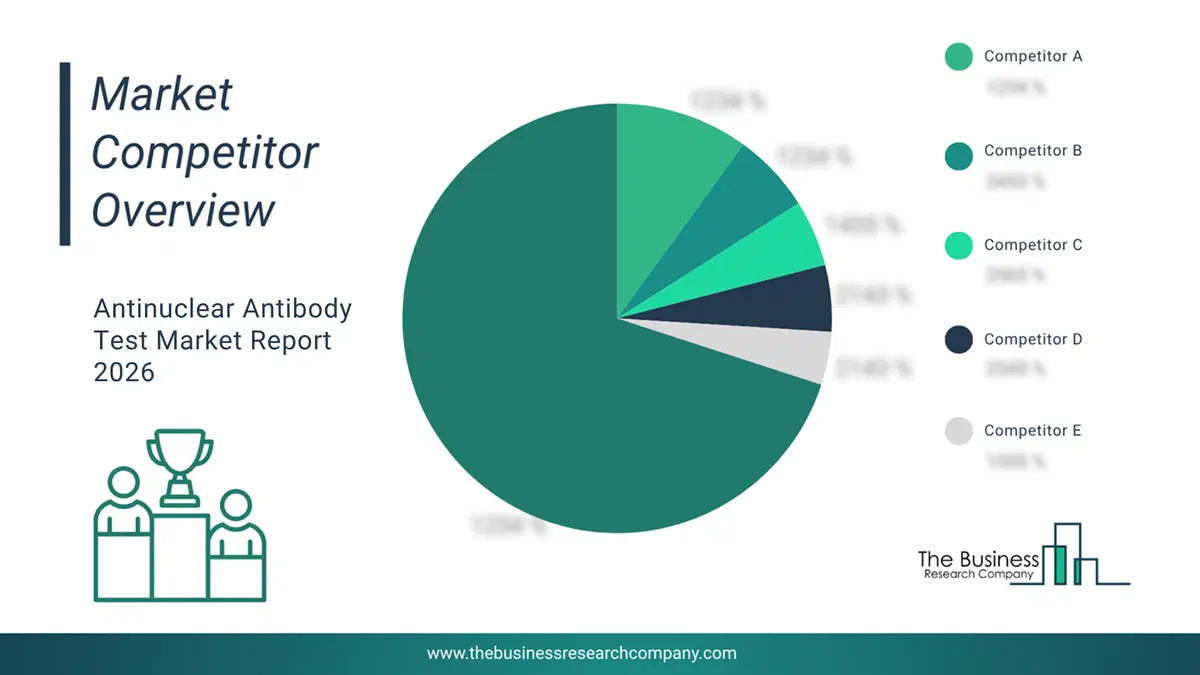
This chart is for illustrative purposes; the full report includes a detailed competitor analysis and comprehensive overview of the top 10 companies in the market.
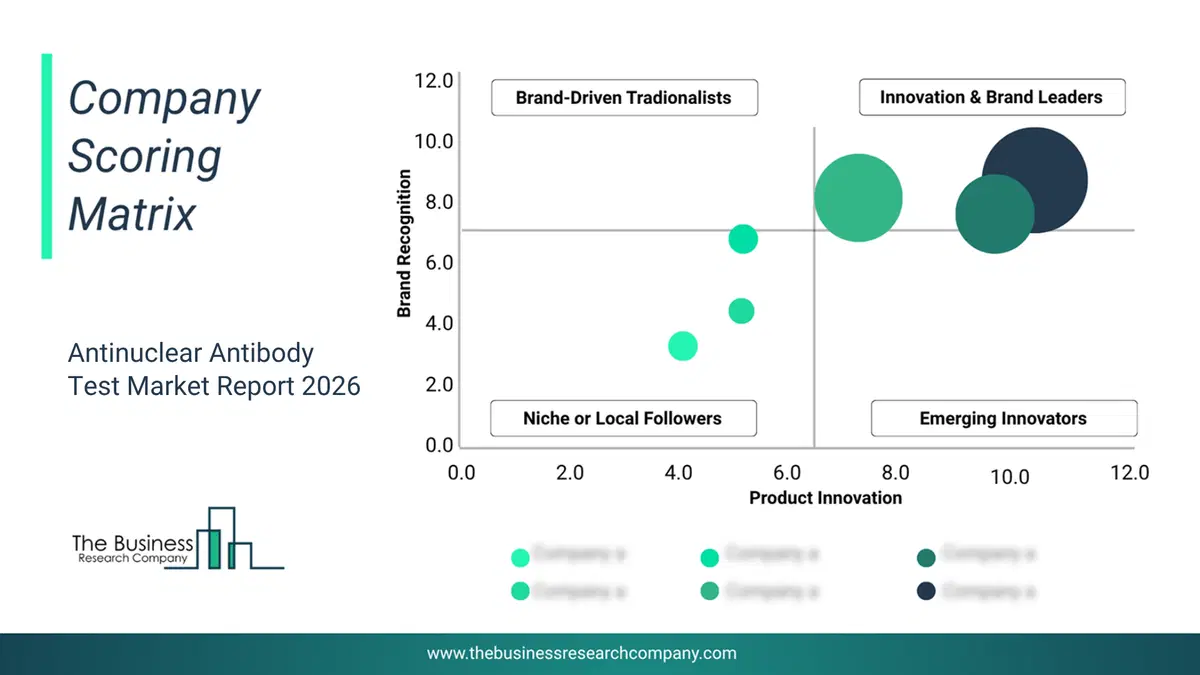
This chart maps companies by product innovation and brand strength, with bubble size indicating relative revenue, helping identify market leaders, challengers, and niche players. This is an illustrative chart; the full report provides a complete and accurate competitive analysis.
Global Antinuclear Antibody Test Market Trends and Insights
Major companies operating in the antinuclear antibody test market are focusing on developing advanced solutions, such as semi-automated image analysis, to enhance diagnostic precision and streamline laboratory workflow. Semi-automated image analysis refers to a technological feature in ANA testing that captures, sorts, and pre-classifies patient specimens based on fluorescence patterns, helping prioritize cases that require detailed review by a trained operator. For instance, in June 2023, Immuno Concepts, a US-based provider of autoimmune diagnostic reagents and instrumentation, launched the Immuno Concepts IgG Anti-nDNA Fluorescent Test System for use with its Image Navigator semi-automated microscope. It is designed to assist laboratory technicians with both qualitative and semi-quantitative detection of anti-double-stranded DNA (dsDNA) IgG antibodies in human serum. The system uses indirect immunofluorescence on a C. luciliae substrate and a fluorescein-conjugated anti-human IgG reagent. The Image Navigator captures images of each specimen, sorts them into “possible negative” and “possible positive” categories with over 97% precision, and presents them for final review, thereby improving reproducibility, reducing hands-on time, and ensuring standardized interpretation across laboratories.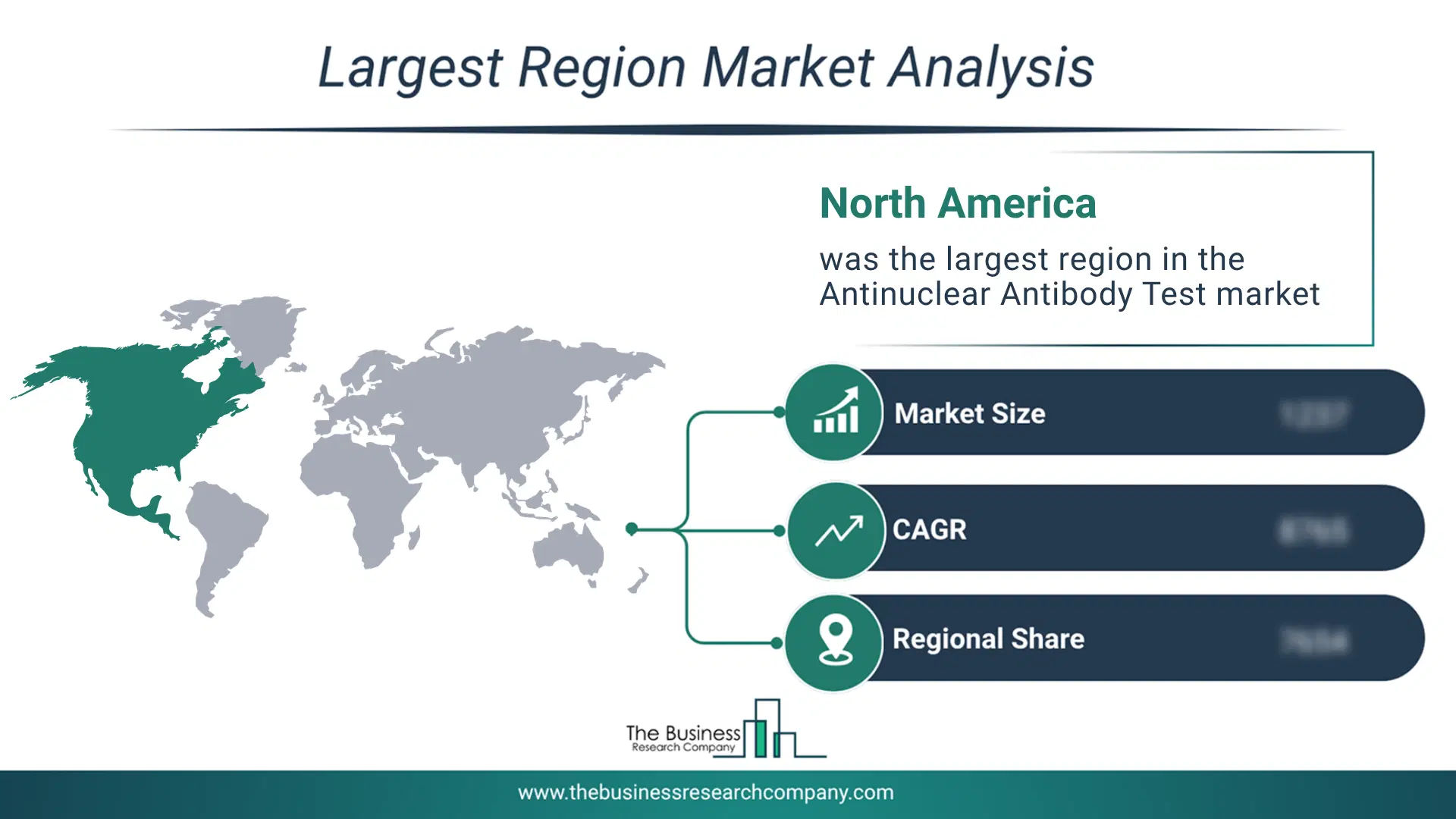
Regional Outlook
North America was the largest region in the antinuclear antibody test market in 2025. Asia-Pacific is expected to be the fastest-growing region in the forecast period. The regions covered in this market report are Asia-Pacific, South East Asia, Western Europe, Eastern Europe, North America, South America, Middle East, Africa. The countries covered in this market report are Australia, Brazil, China, France, Germany, India, Indonesia, Japan, Taiwan, Russia, South Korea, UK, USA, Canada, Italy, Spain.What Defines the Antinuclear Antibody Test Market?
The antinuclear antibody test market consists of revenues earned by entities by providing services such as laboratory testing services, specialized testing services, monitoring disease activity, and screening for systemic lupus erythematosus. The market value includes the value of related goods sold by the service provider or included within the service offering. The antinuclear antibody test market also includes sales of diagnostic equipment and instruments, testing kits, western blot kits and luminex multiplex assays. Values in this market are ‘factory gate’ values, that is, the value of goods sold by the manufacturers or creators of the goods, whether to other entities (including downstream manufacturers, wholesalers, distributors, and retailers) or directly to end customers. The value of goods in this market includes related services sold by the creators of the goods.How is Market Value Defined and Measured?
The market value is defined as the revenues that enterprises gain from the sale of goods and/or services within the specified market and geography through sales, grants, or donations in terms of the currency (in USD unless otherwise specified). The revenues for a specified geography are consumption values that are revenues generated by organizations in the specified geography within the market, irrespective of where they are produced. It does not include revenues from resales along the supply chain, either further along the supply chain or as part of other products.
This chart presents market attractiveness based on a quantitative evaluation of growth, competition, strategic alignment, and risk, offering a clear view of opportunity areas for decision-making. This chart is for illustrative purposes; the full report contains the complete analysis.

This chart highlights the Total Addressable Market (TAM) by estimating the maximum revenue opportunity using an assumption-driven approach, supporting strategic planning and opportunity sizing across markets. The chart is illustrative; the full report provides a more comprehensive analysis.
What Key Data and Analysis Are Included in the Antinuclear Antibody Test Market Report 2026?
The antinuclear antibody test market research report is one of a series of new reports from The Business Research Company that provides market statistics, including industry global market size, regional shares, competitors with the market share, detailed market segments, market trends and opportunities, and any further data you may need to thrive in the antinuclear antibody test industry. The market research report delivers a complete perspective of everything you need, with an in-depth analysis of the current and future state of the industry.Antinuclear Antibody Test Market Report Forecast Analysis
| Report Attribute | Details |
|---|---|
| Market Size Value In 2026 | $1.95 billion |
| Revenue Forecast In 2030 | $3.09 billion |
| Growth Rate | CAGR of 12.2% from 2026 to 2030 |
| Base Year For Estimation | 2025 |
| Actual Estimates/Historical Data | 2020-2025 |
| Forecast Period | 2026 - 2030 |
| Market Representation | Revenue in USD Billion and CAGR from 2026 to 2030 |
| Segments Covered | Product, Technology, Application, End-User |
| Regional Scope | Asia-Pacific, Western Europe, Eastern Europe, North America, South America, Middle East, Africa |
| Country Scope | The countries covered in the report are Australia, Brazil, China, France, Germany, India, Indonesia, Japan, Taiwan, Russia, South Korea, UK, USA, Canada, Italy, Spain |
| Key Companies Profiled | Hoffmann-La Roche Ltd., Thermo Fisher Scientific Inc., Abbott Laboratories, Becton Dickinson and Company, LabCorp, Quest Diagnostics Incorporated, Grifols SA, PerkinElmer Inc., Bio-Rad Laboratories Inc., Werfen SA, DiaSorin SpA, EUROIMMUN AG, Abcam plc, Trinity Biotech plc, Zeus Scientific Inc., ERBA Diagnostics Inc., Quidel Corporation, Antibodies Incorporated, Immuno Concepts Inc., Inova Diagnostics |
| Customization Scope | Request for Customization |
| Pricing And Purchase Options | Explore Purchase Options |