
Aroma Chemicals Market Report 2026
Global Outlook – By Product (Benzenoids, Terpenoids, Musk Chemicals, Other Products), By Source (Natural, Synthetic, Natural-identical), By Application (Food And Beverages, Fine Fragrances, Cosmetics And Toiletries, Soaps And Detergents, Other Applications) – Market Size, Trends, Strategies, and Forecast to 2030
Aroma Chemicals Market Overview
• Aroma Chemicals market size has reached to $6.46 billion in 2025 • Expected to grow to $9.12 billion in 2030 at a compound annual growth rate (CAGR) of 7% • Growth Driver: Rising Consumer Demand Boosts Aroma Chemicals Market In Cosmetics And Personal Care Industry • Market Trend: Key Players Introducing Innovative Aroma Solutions And Sustainable Herbal Aroma Chemical • Asia-Pacific was the largest region and fastest growing region.What Is Covered Under Aroma Chemicals Market?
Aroma chemicals refer to natural or artificial chemical compounds that chemical substances that impart an enticing fragrance and odor. They are frequently very volatile, whose main function is to impart flavor or aroma. Aroma compounds are created in chemical reactors using synthetic starting materials and go through a significant chemical transition. The main types of aroma chemical products are benzenoids, terpenoids, musk chemicals, and others. Benzenoids refer to aromatic compounds with benzene rings as the main structural component. Several types of sources include natural, synthetic, and natural-identical sources which are used for various applications such as food and beverages, fine fragrances, cosmetics and toiletries, soaps and detergents, and others.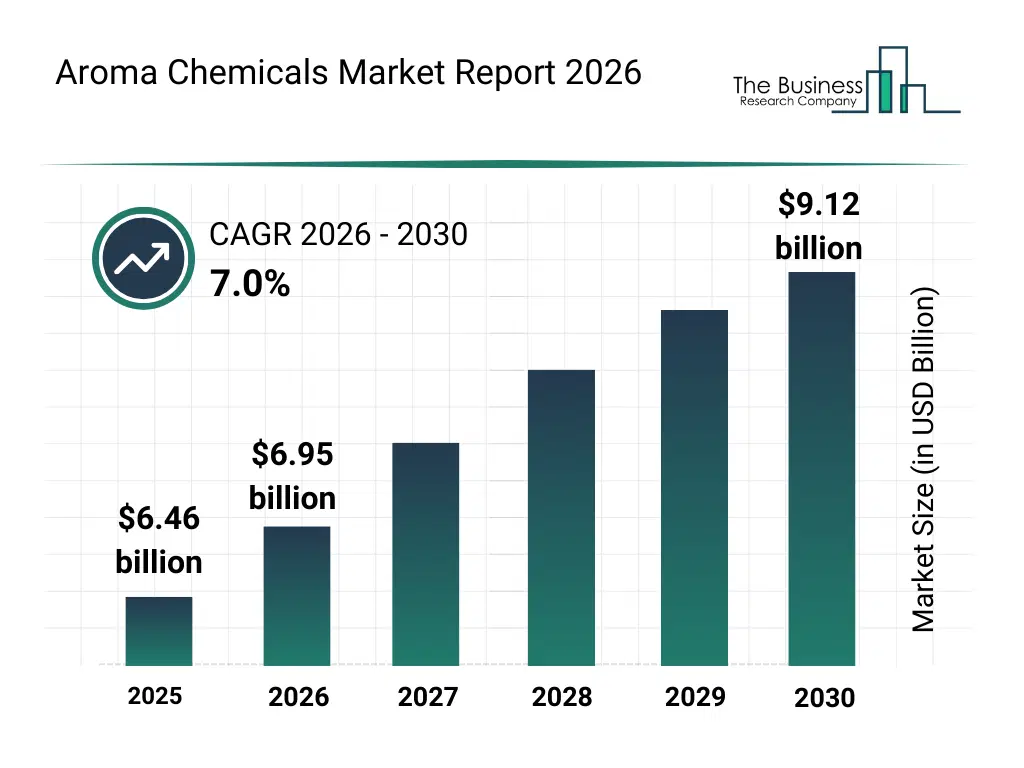
What Is The Aroma Chemicals Market Size and Share 2026?
The aroma chemicals market size has grown strongly in recent years. It will grow from $6.46 billion in 2025 to $6.95 billion in 2026 at a compound annual growth rate (CAGR) of 7.6%. The growth in the historic period can be attributed to expansion of food and beverage processing industries, growth of personal care and cosmetics manufacturing, increasing consumer preference for flavored products, rising use of synthetic aroma compounds, availability of large-scale chemical synthesis.What Is The Aroma Chemicals Market Growth Forecast?
The aroma chemicals market size is expected to see strong growth in the next few years. It will grow to $9.12 billion in 2030 at a compound annual growth rate (CAGR) of 7.0%. The growth in the forecast period can be attributed to increasing demand for clean-label ingredients, rising adoption of natural-identical aroma chemicals, expansion of premium fragrance formulations, growing investments in sustainable chemistry, increasing applications in wellness products. Major trends in the forecast period include increasing demand for natural and bio-based aroma chemicals, rising use in functional foods and beverages, growing adoption of sustainable fragrance ingredients, expansion of high-purity synthetic aroma compounds, enhanced focus on regulatory compliance.
Global Aroma Chemicals Market Segmentation
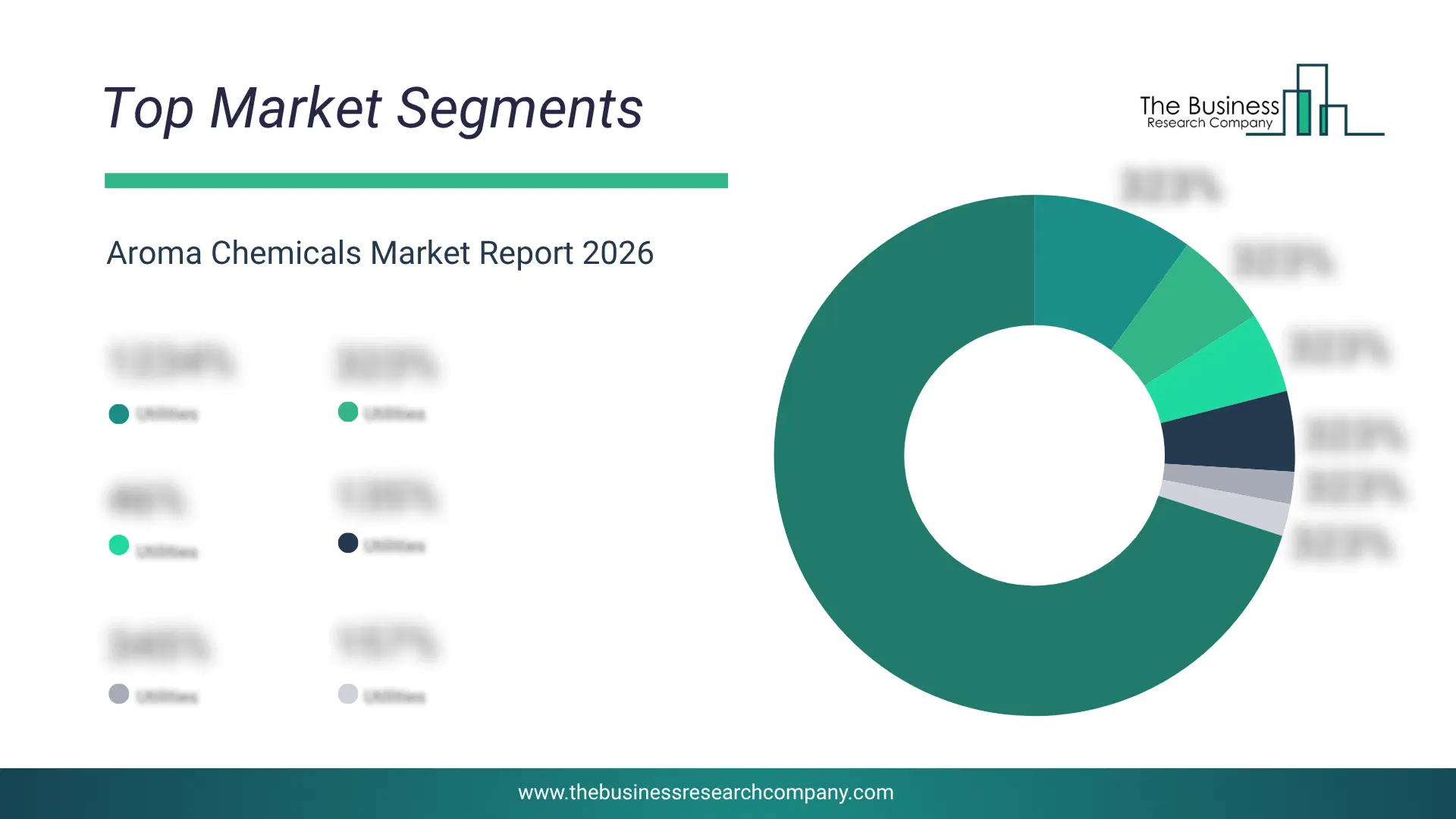
1) By Product: Benzenoids, Terpenoids, Musk Chemicals, Other Products 2) By Source: Natural, Synthetic, Natural-identical 3) By Application: Food And Beverages, Fine Fragrances, Cosmetics And Toiletries, Soaps And Detergents, Other Applications Subsegments: 1) By Benzenoids: Benzyl Alcohol, Ethyl Vanillin, Phenylacetaldehyde 2) By Terpenoids: Limonene, Pinene, Geraniol 3) By Musk Chemicals: Synthetic Musk, Natural Musk 4) By Other Products: Aldehydes, Esters, LactonesWhat Is The Driver Of The Aroma Chemicals Market?
The increasing demand for cosmetics and personal care products is expected to propel the growth of the aroma chemicals market. Cosmetics and personal care items are those made of chemicals that are applied to the human body in an effort to clean, enhance, make it more appealing, or otherwise change the way it looks. Aroma chemicals are primarily used in cosmetics and personal care products to manufacture different types of beauty products and flavors and fragrances. Consumer demand for cosmetics and personal care items is growing, which boosts the market for aroma chemicals. For instance, in 2023, according to the Cosmetic Toiletry & Perfumery Association (CTPA), a UK-based trade association representing the cosmetic and personal care industry, in 2022, the color cosmetics sector sold 118,178 units, which increased to 123,056 units in 2023, reflecting a growth of approximately 4.1%. Similarly, the skincare sector experienced a rise from 456,401 units sold in 2022 to 460,868 units in 2023, marking a growth of around 1.0%. Therefore, increasing demand for cosmetics and personal care products is driving the growth of the aroma chemicals industry.Key Players In The Global Aroma Chemicals Market
Major companies operating in the aroma chemicals market are BASF SE, Solvay S.A., Takasago International Corporation, Kao Corporation, Hindustan Mint and Agro Products Pvt. Ltd., Givaudan, Privi Speciality Chemicals Limited, Symrise AG, Robertet SA, International Flavors & Fragrances Inc., Treatt PLC, Firmenich SA, Bell Flavors & Fragrances, Cedarome Canada Inc., Eternis Fine Chemicals Ltd., Sensient Technologies, Frutarom, Mane, T. Hasegawa, Shandong Yingyang Flavors & Fragrance Co. Ltd., Huabao International Holdings, Jiaxing Wintrust Flavours, CPL Aromas, Alpha Aromatics, Veera Fragrances, TFF Group, Wild Flavors Inc., Berjé Inc., Zhejiang Newfine Industry Co. Ltd., The Lebermuth Co. Inc., Synerzine, Triveni Aromatics and Perfumery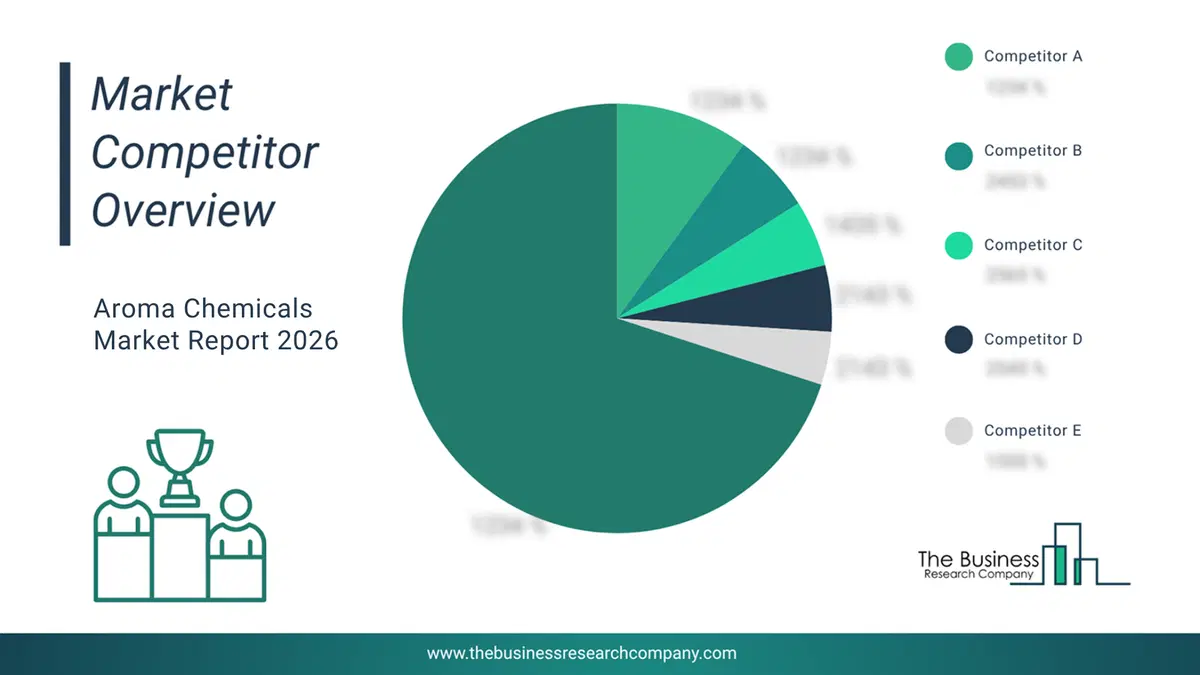
This chart is for illustrative purposes; the full report includes a detailed competitor analysis and comprehensive overview of the top 10 companies in the market.
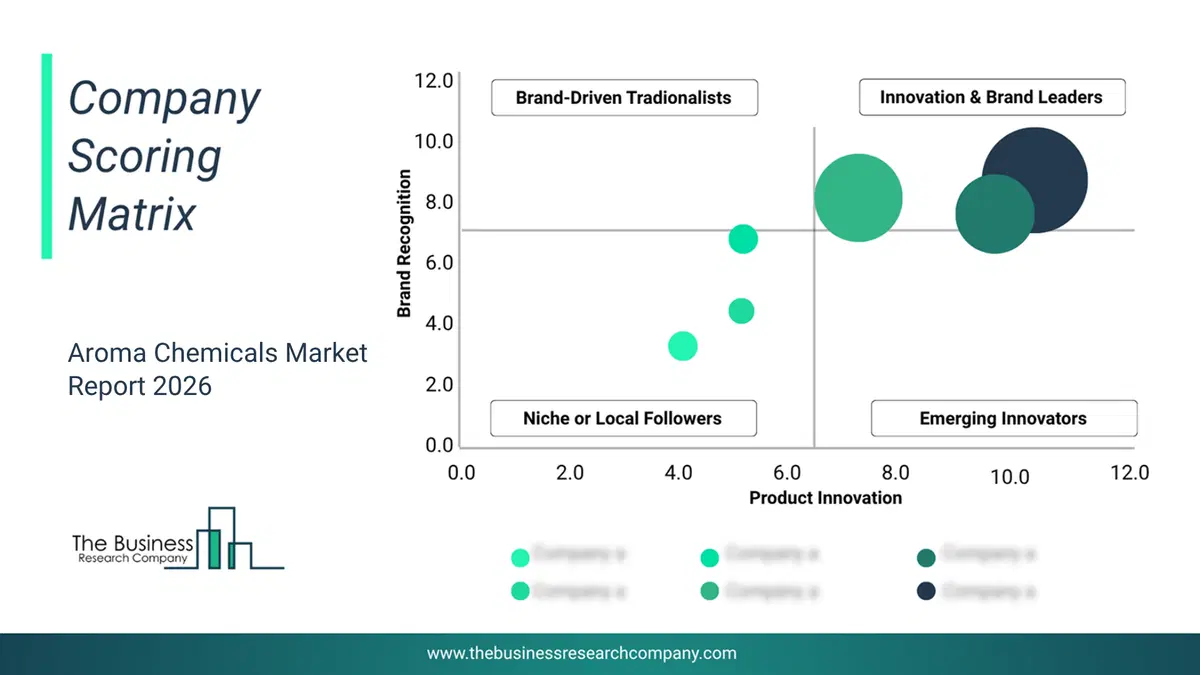
This chart maps companies by product innovation and brand strength, with bubble size indicating relative revenue, helping identify market leaders, challengers, and niche players. This is an illustrative chart; the full report provides a complete and accurate competitive analysis.
Global Aroma Chemicals Market Trends and Insights
Major companies operating in the aroma chemicals market are focusing on developing innovative solutions, such as bio-based aromatic compounds, to strengthen their market position and explore new applications. Bio-based aromatic compounds refer to naturally derived chemicals that offer functional properties for fragrances, flavors, and pharmaceutical applications while being sustainable. For instance, in January 2024, Kao Corporation, a Japan-based health and beauty care and chemical products manufacturer, launched Bio Aromatic Compound ‘Gallic Acid,’ a polyphenolic compound widely found in herbs and foods such as tea, wine, plums, and strawberries. Recognized for its antioxidant, anti-inflammatory, antimicrobial, and anticancer properties, gallic acid has gained attention for applications in drug delivery through nanocarrier systems that enhance bioavailability. Kao plans to introduce bio-based gallic acid to overseas markets, including Asia and Europe, and aims to expand into the fermentative production of other aromatic compounds beyond gallic acid in the future.What Are Latest Mergers And Acquisitions In The Aroma Chemicals Market?
In February 2023, Exponent, a UK-based engineering and scientific consulting firm, acquired the flavor specialty ingredients division from International Flavors & Fragrances Inc. (IFF) for $220 million. The strategic move aimed at enhancing its portfolio in the food and beverage sector. This acquisition will enable Exponent to strengthen its position in the specialty flavor market, which includes natural and synthetic aroma chemicals for various flavor applications. International Flavors & Fragrances Inc. (IFF) is a US-based company that specializes in the creation of flavors, fragrances, and aroma ingredients.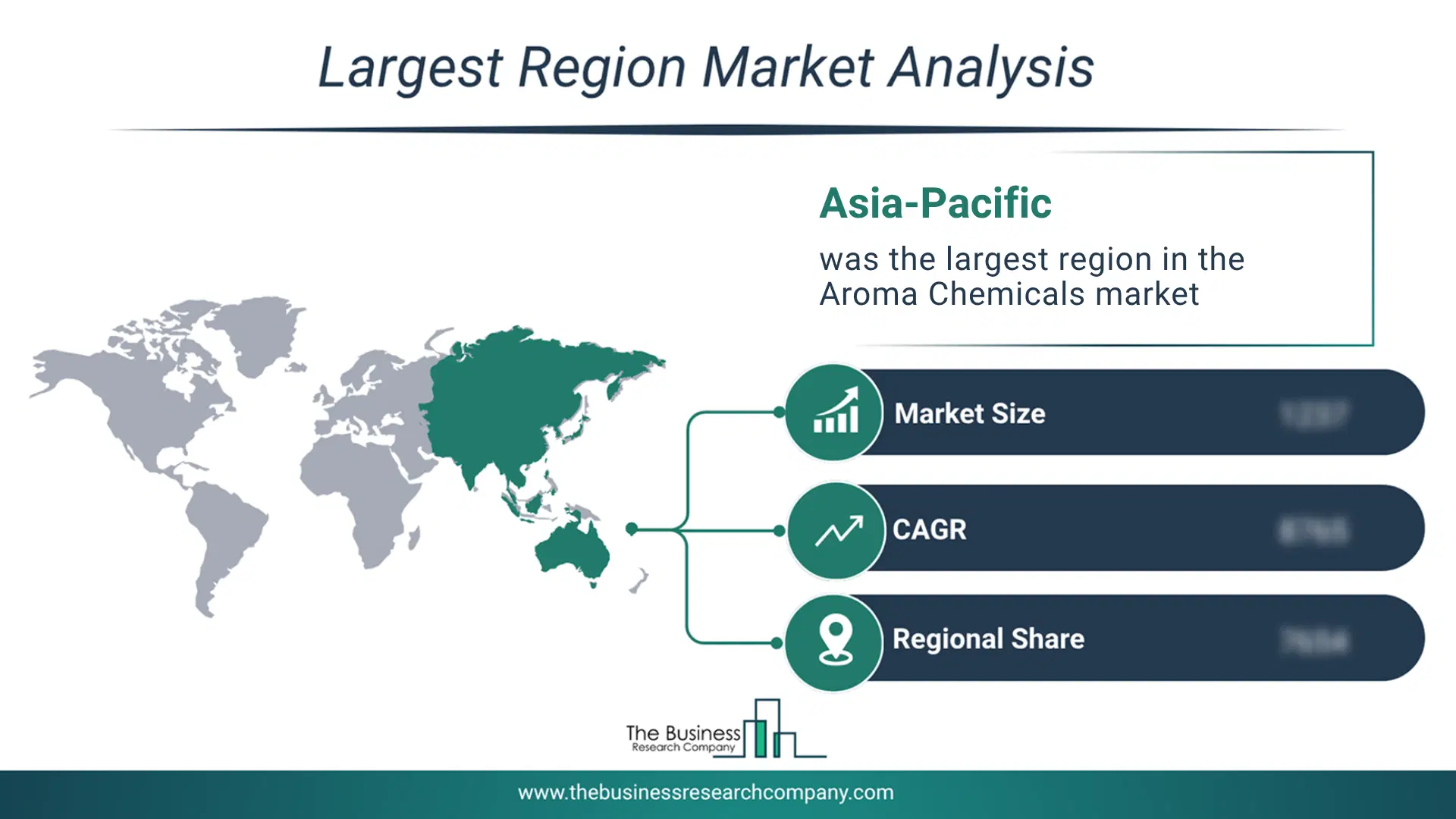
Regional Insights
Asia-Pacific was the largest region in the aroma chemicals market in 2025. The regions covered in this market report are Asia-Pacific, South East Asia, Western Europe, Eastern Europe, North America, South America, Middle East, Africa The countries covered in this market report are Australia, Brazil, China, France, Germany, India, Indonesia, Japan, Taiwan, Russia, South Korea, UK, USA, Canada, Italy, SpainWhat Defines the Aroma Chemicals Market?
The aroma chemicals market consists of sales of benzyl alcohol, acetone, linalool, ethanol, ethyl acetate, camphor, formaldehyde, methylene chloride, and limonene. Values in this market are ‘factory gate’ values, that is, the value of goods sold by the manufacturers or creators of the goods, whether to other entities (including downstream manufacturers, wholesalers, distributors, and retailers) or directly to end customers. The value of goods in this market includes related services sold by the creators of the goods.How is Market Value Defined and Measured?
The market value is defined as the revenues that enterprises gain from the sale of goods and/or services within the specified market and geography through sales, grants, or donations in terms of the currency (in USD unless otherwise specified). The revenues for a specified geography are consumption values that are revenues generated by organizations in the specified geography within the market, irrespective of where they are produced. It does not include revenues from resales along the supply chain, either further along the supply chain or as part of other products.
This chart presents market attractiveness based on a quantitative evaluation of growth, competition, strategic alignment, and risk, offering a clear view of opportunity areas for decision-making. This chart is for illustrative purposes; the full report contains the complete analysis.

This chart highlights the Total Addressable Market (TAM) by estimating the maximum revenue opportunity using an assumption-driven approach, supporting strategic planning and opportunity sizing across markets. The chart is illustrative; the full report provides a more comprehensive analysis.
What Key Data and Analysis Are Included in the Aroma Chemicals Market Report 2026?
The aroma chemicals market research report is one of a series of new reports from The Business Research Company that provides market statistics, including industry global market size, regional shares, competitors with the market share, detailed market segments, market trends and opportunities, and any further data you may need to thrive in the aroma chemicals industry. The market research report delivers a complete perspective of everything you need, with an in-depth analysis of the current and future state of the industry.Aroma Chemicals Market Report Forecast Analysis
| Report Attribute | Details |
|---|---|
| Market Size Value In 2026 | $6.95 billion |
| Revenue Forecast In 2030 | $9.12 billion |
| Growth Rate | CAGR of 7.6% from 2026 to 2030 |
| Base Year For Estimation | 2025 |
| Actual Estimates/Historical Data | 2020-2025 |
| Forecast Period | 2026 - 2030 |
| Market Representation | Revenue in USD Billion and CAGR from 2026 to 2030 |
| Segments Covered | Product, Source, Application |
| Regional Scope | Asia-Pacific, Western Europe, Eastern Europe, North America, South America, Middle East, Africa |
| Country Scope | The countries covered in this market report are Australia, Brazil, China, France, Germany, India, Indonesia, Japan, Taiwan, Russia, South Korea, UK, USA, Canada, Italy, Spain |
| Key Companies Profiled | BASF SE, Solvay S.A., Takasago International Corporation, Kao Corporation, Hindustan Mint and Agro Products Pvt. Ltd., Givaudan, Privi Speciality Chemicals Limited, Symrise AG, Robertet SA, International Flavors & Fragrances Inc., Treatt PLC, Firmenich SA, Bell Flavors & Fragrances, Cedarome Canada Inc., Eternis Fine Chemicals Ltd., Sensient Technologies, Frutarom, Mane, T. Hasegawa, Shandong Yingyang Flavors & Fragrance Co. Ltd., Huabao International Holdings, Jiaxing Wintrust Flavours, CPL Aromas, Alpha Aromatics, Veera Fragrances, TFF Group, Wild Flavors Inc., Berjé Inc., Zhejiang Newfine Industry Co. Ltd., The Lebermuth Co. Inc., Synerzine, Triveni Aromatics and Perfumery |
| Customization Scope | Request for Customization |
| Pricing And Purchase Options | Explore Purchase Options |