

Asthma Treatment Market Report 2026
Global Outlook – By Treatment (Long-Term Control Medications, Quick-Relief Medications), By Device Type (Inhalers, Dry Powder, Metered Dose, Soft Mist Nebulizers), By Drug Class (Short-Acting Beta-Agonists (SABA), Long-Acting Beta-Agonists (LABA), Inhaled Corticosteroids (ICS), Leukotriene Modifiers, Immunomodulators, Combination Drugs, Other Drug Class), By Route Of Administration (Oral, Inhaled, Intravenous, Subcutaneous), By Distribution Channel (Hospital Pharmacies, Retail Pharmacies, Online Pharmacies, Other Distribution Channels) – Market Size, Trends, Strategies, and Forecast to 2030
Asthma Treatment Market Overview
• Asthma Treatment market size has reached to $23.75 billion in 2025 • Expected to grow to $29.49 billion in 2030 at a compound annual growth rate (CAGR) of 4.4% • Growth Driver: Rising Prevalence Of Respiratory Disorders Fueling The Growth Of The Market Due To Air Pollution • Market Trend: Innovative Anti-Inflammatory Rescue Inhaler For Asthma Enhanced Market Growth • North America was the largest region in 2025 and Asia-Pacific is the fastest growing region.What Is Covered Under Asthma Treatment Market?
Asthma treatment refers to the medical care and management strategies used to control and relieve the symptoms of asthma, prevent asthma attacks, and improve overall lung function in individuals with the condition. Asthma treatment helps reduce airway inflammation and control symptoms, making it easier for individuals to breathe. The main types of asthma treatment are long-term control medications and quick-relief medications. Long-term control medications refer to medicines taken daily to keep asthma under control and prevent symptoms. The multiple device types involved are inhalers, dry powder, metered dose, and soft mist nebulizers. The several drug classes include short-acting beta-agonists (SABA), long-acting beta-agonists (LABA), inhaled corticosteroids (ICS), leukotriene modifiers, immunomodulators, combination drugs, and others. The various routes of administration include oral, inhaled, intravenous, and subcutaneous, which are distributed through various distribution channels such as hospital pharmacies, retail pharmacies, online pharmacies, and other distribution channels.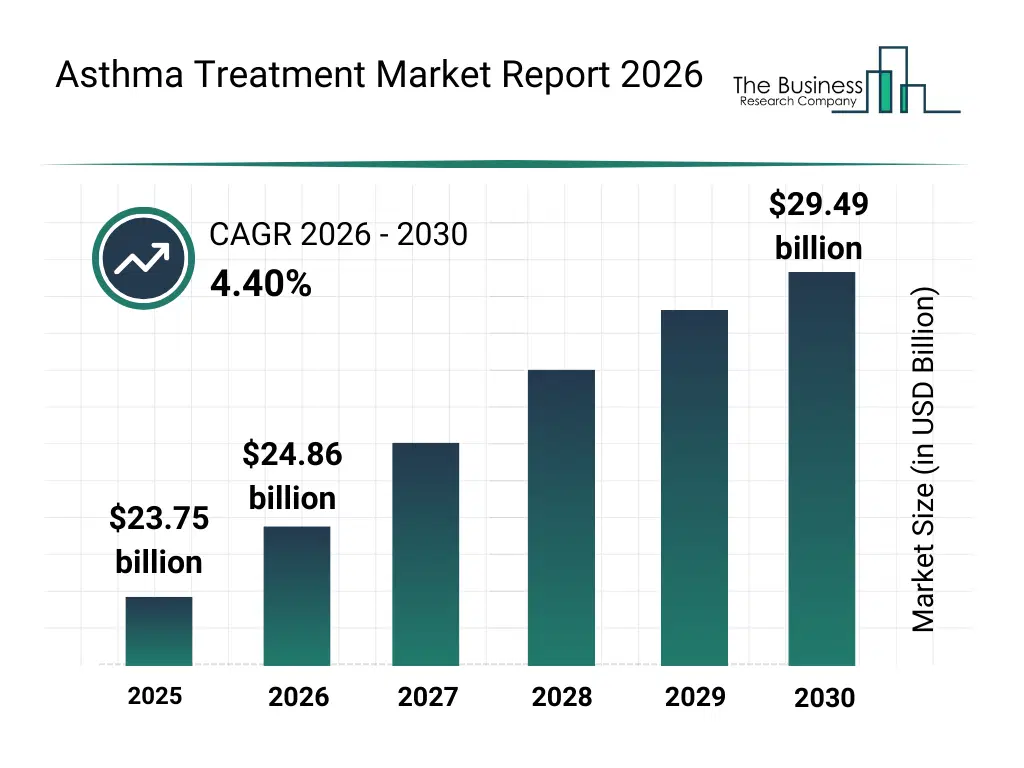
What Is The Asthma Treatment Market Size and Share 2026?
The asthma treatment market size has grown steadily in recent years. It will grow from $23.75 billion in 2025 to $24.86 billion in 2026 at a compound annual growth rate (CAGR) of 4.7%. The growth in the historic period can be attributed to increasing prevalence of asthma globally, reliance on short-acting beta-agonists (saba), limited awareness of long-term control medications, conventional inhaler adoption, growing hospital pharmacy networks.What Is The Asthma Treatment Market Growth Forecast?
The asthma treatment market size is expected to see steady growth in the next few years. It will grow to $29.49 billion in 2030 at a compound annual growth rate (CAGR) of 4.4%. The growth in the forecast period can be attributed to development of novel biologics and ltra therapies, adoption of digital inhalers and smart monitoring systems, expansion of online pharmacy distribution, increasing awareness of combination therapies, rising investment in personalized medicine and patient adherence programs. Major trends in the forecast period include rising adoption of biologics and targeted therapies, increased use of combination drugs for asthma management, growth in home-based and remote monitoring devices, expansion of online and retail pharmacy channels, focus on personalized asthma management plans.
Global Asthma Treatment Market Segmentation
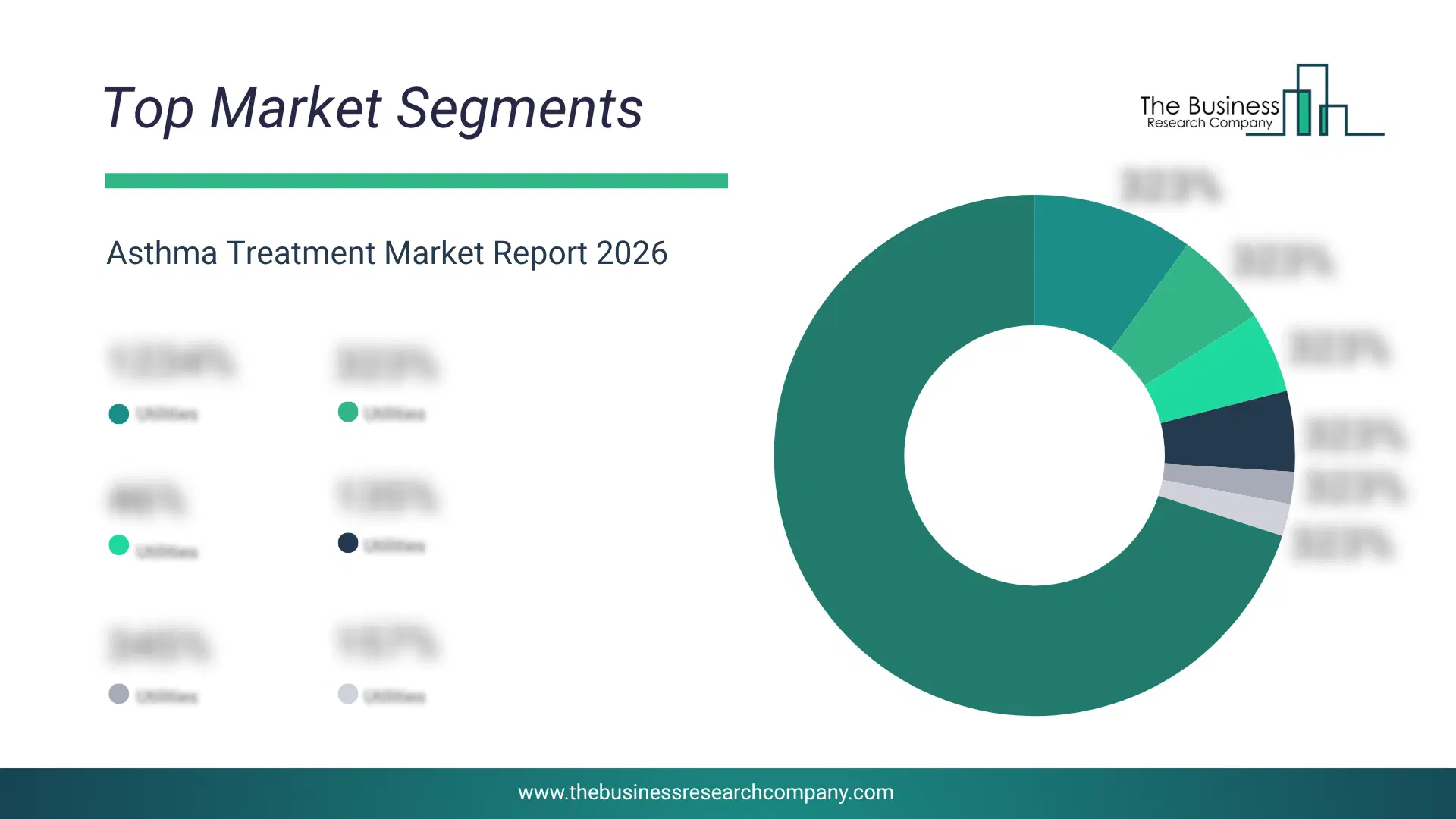
1) By Treatment: Long-Term Control Medications, Quick-Relief Medications 2) By Device Type: Inhalers, Dry Powder, Metered Dose, Soft Mist Nebulizers 3) By Drug Class: Short-Acting Beta-Agonists (SABA), Long-Acting Beta-Agonists (LABA), Inhaled Corticosteroids (ICS), Leukotriene Modifiers, Immunomodulators, Combination Drugs, Other Drug Class 4) By Route Of Administration: Oral, Inhaled, Intravenous, Subcutaneous 5) By Distribution Channel: Hospital Pharmacies, Retail Pharmacies, Online Pharmacies, Other Distribution Channels Subsegments: 1) By Long-Term Control Medications: Inhaled Corticosteroids (ICS), Long-Acting Beta-Agonists (LABA), Leukotriene Receptor Antagonists (LTRA), Long-Acting Muscarinic Antagonists (LAMA), Methylxanthines, Biologics 2) By Quick-Relief Medications: Short-Acting Beta-Agonists (SABA), Systemic Corticosteroids, AnticholinergicsWhat Is The Driver Of The Asthma Treatment Market?
The rising prevalence of respiratory disorders is expected to propel the growth of the asthma treatment market going forward. Respiratory disorders refer to a group of diseases that affect the lungs and breathing, including chronic obstructive pulmonary disease (COPD), bronchitis, and asthma. The increasing prevalence of respiratory disorders is largely attributed to air pollution, as particulate matter and nitrogen oxides irritate and inflame the airways, leading to breathing difficulties and triggering or worsening conditions such as asthma. Rising respiratory disorders increase demand for asthma treatment, which is managed through medication, inhalers, and lifestyle changes to control airway inflammation and symptoms. For instance, in December 2023, according to the National Library of Medicine, a US-based national library, by 2050, chronic obstructive pulmonary disease (COPD) cases in low- and middle-income countries are projected to more than double those in high-income countries, with sub-Saharan Africa expected to see a 59% increase and lead globally in chronic obstructive pulmonary disease (COPD) prevalence and cases by 2040. Therefore, the rising prevalence of respiratory disorders is driving the growth of the asthma treatment industry.Key Players In The Global Asthma Treatment Market
Major companies operating in the asthma treatment market are Pfizer Inc., Johnson & Johnson, F. Hoffmann-La Roche Ltd., Merck & Co. Inc., AbbVie Inc., Novartis AG, Sanofi S.A., AstraZeneca PLC, GlaxoSmithKline plc, Amgen Inc., Boehringer Ingelheim International GmbH, Teva Pharmaceutical Industries Limited, Regeneron Pharmaceuticals Inc., Sun Pharmaceutical Industries Limited, Genentech Inc., Chiesi Farmaceutici S.p.A., Cipla Limited.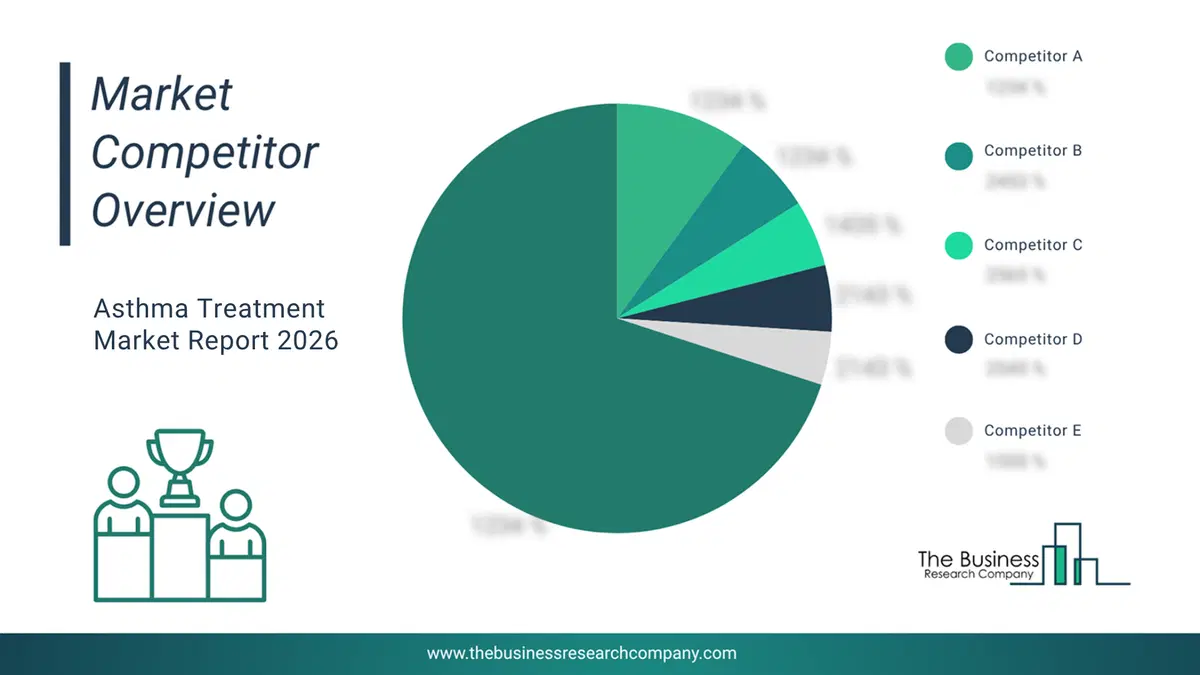
This chart is for illustrative purposes; the full report includes a detailed competitor analysis and comprehensive overview of the top 10 companies in the market.
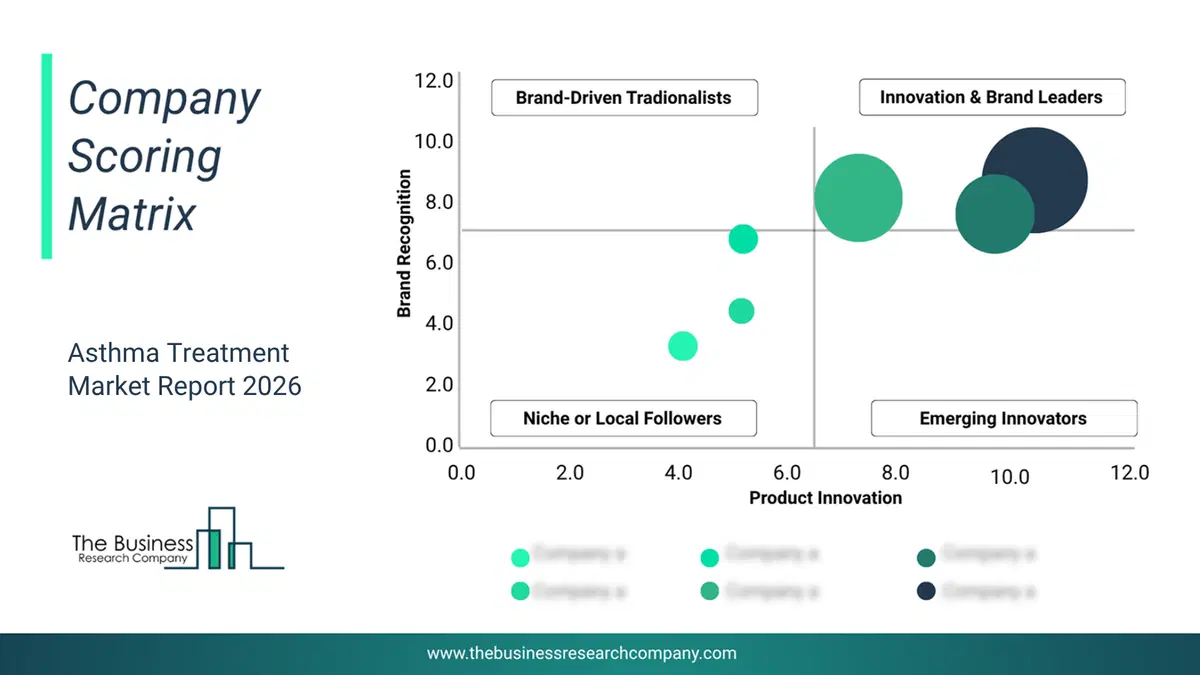
This chart maps companies by product innovation and brand strength, with bubble size indicating relative revenue, helping identify market leaders, challengers, and niche players. This is an illustrative chart; the full report provides a complete and accurate competitive analysis.
Global Asthma Treatment Market Trends and Insights
Major companies operating in the asthma treatment market are focusing on developing innovative solutions, such as anti-inflammatory rescue inhalers, to enhance rapid symptom relief while addressing underlying airway inflammation in asthma patients. Anti-inflammatory rescue inhalers refer to inhalers that provide rapid relief of asthma symptoms (rescue function) while simultaneously reducing airway inflammation (anti-inflammatory action) during an asthma attack. For instance, in January 2024, AstraZeneca, a UK-based biopharmaceutical company, launched AIRSUPRA (albuterol/budesonide), an innovative inhaler for asthma. It is the first and only FDA-approved fixed-dose combination of albuterol, a short-acting beta2-agonist (SABA), and budesonide, an inhaled corticosteroid (ICS), designed as a rescue medication for asthma. It offers rapid bronchodilation while simultaneously targeting airway inflammation during asthma exacerbations, addressing both symptoms and underlying inflammation in a single inhalation. The inhaler is intended for patients aged 18 years and older and supports better overall asthma control while reducing reliance on separate controller medications.What Are Latest Mergers And Acquisitions In The Asthma Treatment Market?
In January 2024, GSK plc, a UK-based pharmaceutical company, acquired Aiolos Bio for an undisclosed amount. With this acquisition, GSK aims to strengthen its respiratory treatment portfolio and drive long-term growth by leveraging Aiolos Bio’s innovative therapies and GSK’s global reach to better serve patients worldwide. Aiolos Bio is a US-based clinical-stage biopharmaceutical company specializing in asthma treatment.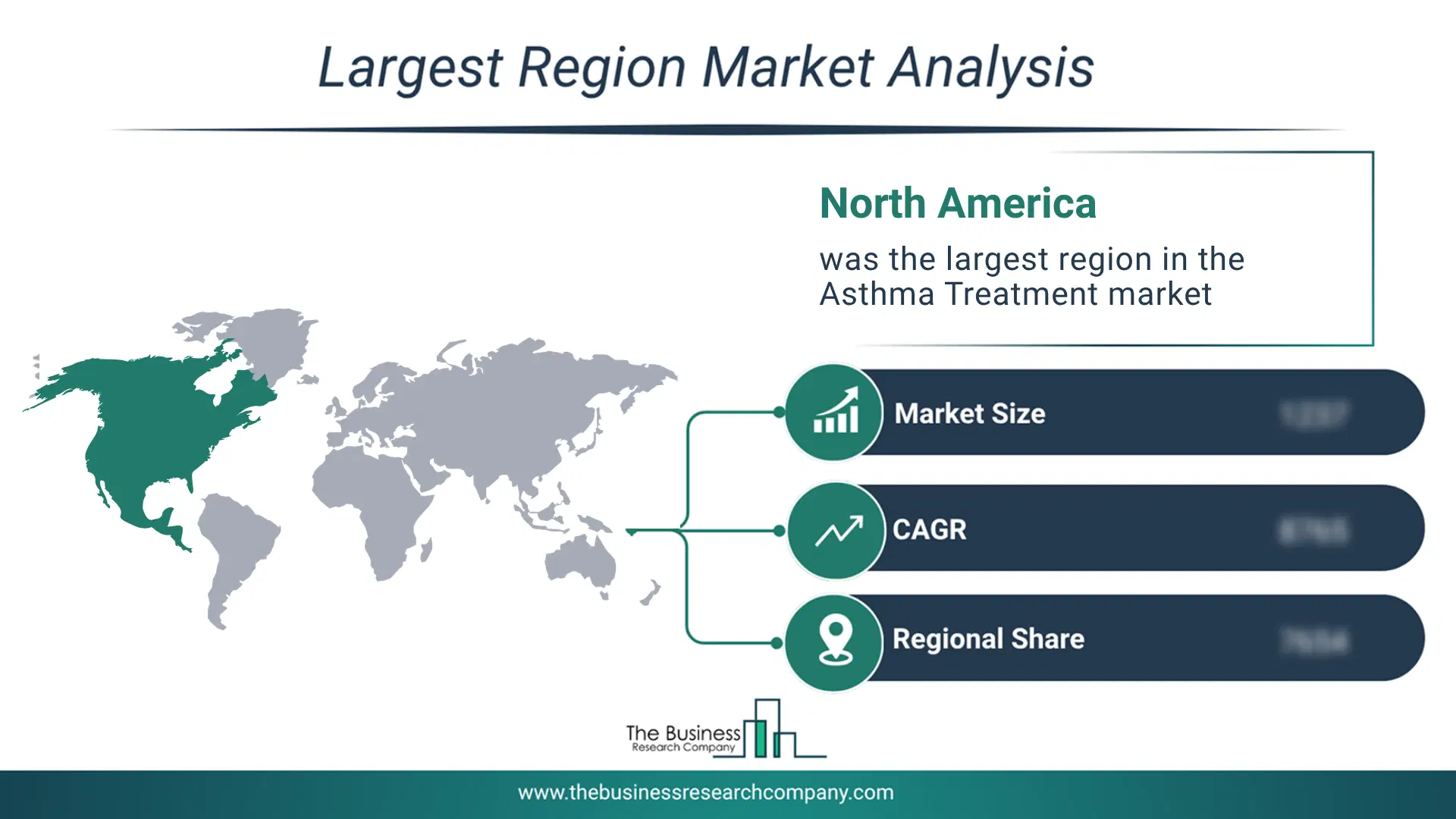
Regional Insights
North America was the largest region in the asthma treatment market in 2025. Asia-Pacific is expected to be the fastest-growing region in the forecast period. The regions covered in this market report are Asia-Pacific, South East Asia, Western Europe, Eastern Europe, North America, South America, Middle East, Africa. The countries covered in this market report are Australia, Brazil, China, France, Germany, India, Indonesia, Japan, Taiwan, Russia, South Korea, UK, USA, Canada, Italy, Spain.What Defines the Asthma Treatment Market?
The asthma treatment market consists of revenues earned by entities by providing services such as diagnosis, medication administration, inhalation therapy, monitoring, and patient education. The market value includes the value of related goods sold by the service provider or included within the service offering. The asthma treatment market also includes sales of nebulizers, leukotriene modifiers, corticosteroids, and bronchodilators. Values in this market are ‘factory gate’ values, that is the value of goods sold by the manufacturers or creators of the goods, whether to other entities (including downstream manufacturers, wholesalers, distributors and retailers) or directly to end customers. The value of goods in this market includes related services sold by the creators of the goods.How is Market Value Defined and Measured?
The market value is defined as the revenues that enterprises gain from the sale of goods and/or services within the specified market and geography through sales, grants, or donations in terms of the currency (in USD unless otherwise specified). The revenues for a specified geography are consumption values that are revenues generated by organizations in the specified geography within the market, irrespective of where they are produced. It does not include revenues from resales along the supply chain, either further along the supply chain or as part of other products.
This chart presents market attractiveness based on a quantitative evaluation of growth, competition, strategic alignment, and risk, offering a clear view of opportunity areas for decision-making. This chart is for illustrative purposes; the full report contains the complete analysis.

This chart highlights the Total Addressable Market (TAM) by estimating the maximum revenue opportunity using an assumption-driven approach, supporting strategic planning and opportunity sizing across markets. The chart is illustrative; the full report provides a more comprehensive analysis.
What Key Data and Analysis Are Included in the Asthma Treatment Market Report 2026?
The asthma treatment market research report is one of a series of new reports from The Business Research Company that provides market statistics, including industry global market size, regional shares, competitors with the market share, detailed market segments, market trends and opportunities, and any further data you may need to thrive in the asthma treatment industry. The market research report delivers a complete perspective of everything you need, with an in-depth analysis of the current and future state of the industry.Asthma Treatment Market Report Forecast Analysis
| Report Attribute | Details |
|---|---|
| Market Size Value In 2026 | $24.86 billion |
| Revenue Forecast In 2030 | $29.49 billion |
| Growth Rate | CAGR of 4.7% from 2026 to 2030 |
| Base Year For Estimation | 2025 |
| Actual Estimates/Historical Data | 2020-2025 |
| Forecast Period | 2026 - 2030 |
| Market Representation | Revenue in USD Billion and CAGR from 2026 to 2030 |
| Segments Covered | Treatment, Device Type, Drug Class, Route Of Administration, Distribution Channel |
| Regional Scope | Asia-Pacific, Western Europe, Eastern Europe, North America, South America, Middle East, Africa |
| Country Scope | The countries covered in the report are Australia, Brazil, China, France, Germany, India, Indonesia, Japan, Taiwan, Russia, South Korea, UK, USA, Canada, Italy, Spain. |
| Key Companies Profiled | Pfizer Inc., Johnson & Johnson, F. Hoffmann-La Roche Ltd., Merck & Co. Inc., AbbVie Inc., Novartis AG, Sanofi S.A., AstraZeneca PLC, GlaxoSmithKline plc, Amgen Inc., Boehringer Ingelheim International GmbH, Teva Pharmaceutical Industries Limited, Regeneron Pharmaceuticals Inc., Sun Pharmaceutical Industries Limited, Genentech Inc., Chiesi Farmaceutici S.p.A., Cipla Limited. |
| Customization Scope | Request for Customization |
| Pricing And Purchase Options | Explore Purchase Options |