
Automotive Interior Market Report 2026
Global Outlook – By Vehicle Type (Passenger Car, Commercial Vehicle), By Component (Infotainment System, Instrument Panels, Interior Lighting), By Application (Dashboard, Seats, Door Panel and Trims, Carpet and Headliners) – Market Size, Trends, Strategies, and Forecast to 2030
Automotive Interior Market Overview
• Automotive Interior market size has reached to $159.25 billion in 2025 • Expected to grow to $225.03 billion in 2030 at a compound annual growth rate (CAGR) of 7.2% • Growth Driver: Surging Demand For Luxury Vehicles Fueling Growth In The Automotive Interior Market • Market Trend: Innovative Smart Seating Technology Boosts Comfort And Efficiency • Asia-Pacific was the largest region and fastest growing region.Market Gains By 2030 – Top Opportunities By Segment
Market Gain identifies the most promising market opportunities by highlighting the segments or products expected to generate the highest incremental revenue growth over the next five years.
What Is Covered Under Automotive Interior Market?
Automotive interiors refer to fitting together all the components of the car while maintaining its aesthetics and comfort. It plays a vital role in vehicles’ performance, aesthetic appeal, and scalability, which consists of the infotainment system, body panels, instrument panels, and others. The automotive interior is used for providing a comfortable seating experience for passengers in vehicles. The main types of vehicles in automotive interior are passenger cars and commercial vehicles. A passenger car refers to a road motor vehicle, which is intended for the carriage of passengers from one place to another automotive interiors are designed to comfort and safe riding passengers. The different components include an infotainment system, instrument panels, interior lighting, body panels, and others. The several applications include dashboard, seats, airbags and seat belts, door panel and trims, carpet, and headliners.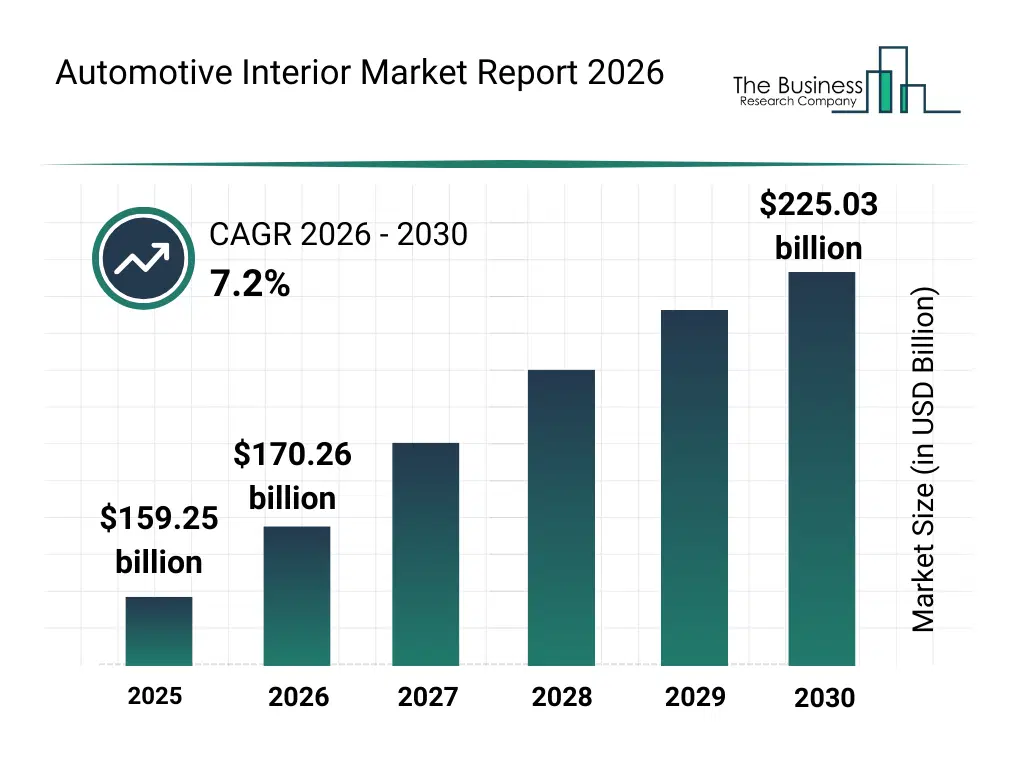
What Is The Automotive Interior Market Size and Share 2026?
The automotive interior market size has grown strongly in recent years. It will grow from $159.25 billion in 2025 to $170.26 billion in 2026 at a compound annual growth rate (CAGR) of 6.9%. The growth in the historic period can be attributed to rising vehicle production, consumer demand for comfort, interior customization trends, infotainment penetration, safety feature integration.What Is The Automotive Interior Market Growth Forecast?
The automotive interior market size is expected to see strong growth in the next few years. It will grow to $225.03 billion in 2030 at a compound annual growth rate (CAGR) of 7.2%. The growth in the forecast period can be attributed to electric vehicle interior redesign, autonomous vehicle interiors, sustainable material adoption, digital cockpit demand, premium vehicle sales growth. Major trends in the forecast period include growth of smart and connected interiors, adoption of advanced infotainment systems, demand for lightweight interior materials, focus on enhanced passenger comfort, integration of digital displays.
Global Automotive Interior Market Segmentation
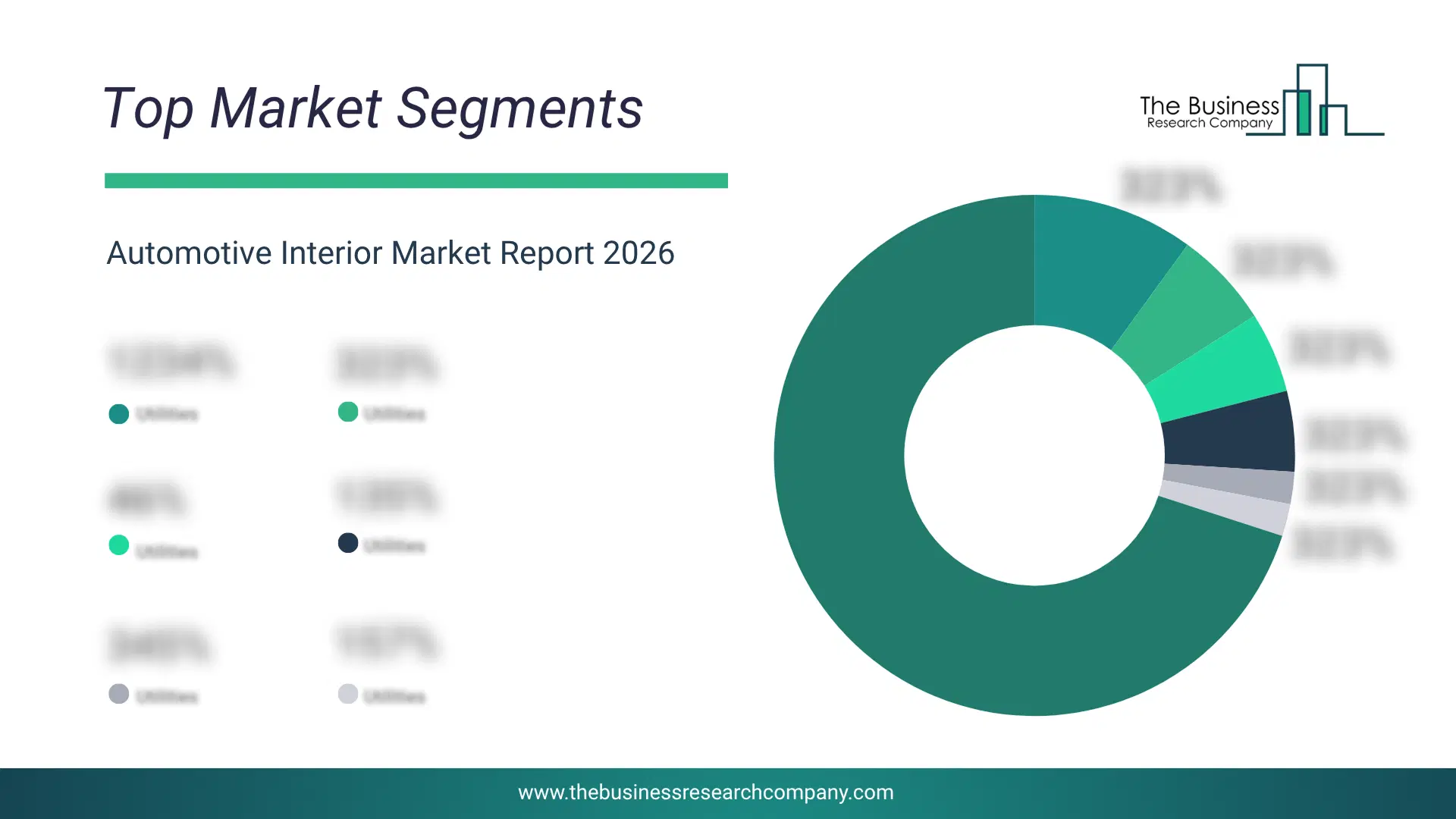
1) By Vehicle Type: Passenger Car, Commercial Vehicle 2) By Component: Infotainment System, Instrument Panels, Interior Lighting 3) By Application: Dashboard, Seats, Door Panel and Trims, Carpet and Headliners Subsegments: 1) By Passenger Car: Compact Cars, Sedans, SUVs, Hatchbacks, Luxury Cars 2) By Commercial Vehicle: Light Commercial Vehicles (LCVs), Heavy Commercial Vehicles (HCVs), Buses And Coaches, Trucks The top segments in the automotive interior market will be: • Passenger Car will reach $137.25 Billion by 2030. • Commercial Vehicle will reach $95.49 Billion by 2030.What Is The Driver Of The Automotive Interior Market?
Growing demand for luxury vehicles is expected to propel the growth of the automotive interior market going forward. Luxury vehicles refer to a vehicle that has high-end features that go above and beyond the usual necessities. These vehicles have more luxurious interiors, superior performance capabilities, and the latest safety and technological features due to the use of automotive interiors. For instance, in April 2023, according to a report published by CarExpert Pty Ltd, an Australia-based automotive publisher, the Jaguar F-Pace SUV is the brand's best-selling vehicle in Australia with 48 sales to date in 2023. Thirty-one Grecale SUVs were sold by Maserati in 2023. Volo's XC40 luxury SUV saw an increase in sales of 18.7% in 2023, totaling 1505 units. Therefore, an increase in demand for luxury vehicles is driving the growth of the automotive interior industry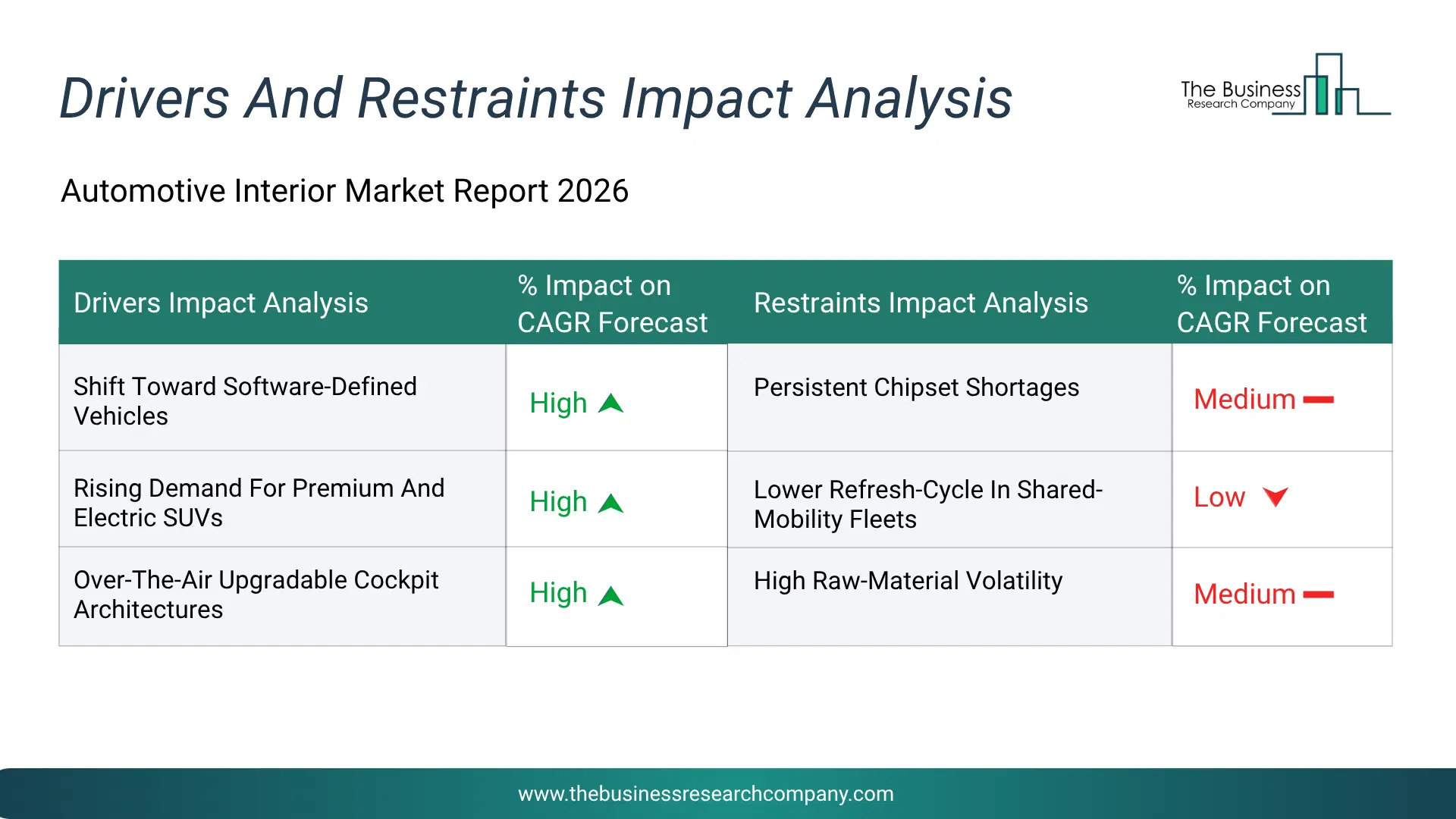
Infographic Chart Showing Key Market Drivers Analysis And Restraints For Automotive Interior Market
The chart presents an impact analysis of key drivers and restraints, quantifying their relative influence on the market's growth rate and helping assess the balance between growth enablers and limiting factors. This chart offers a high-level perspective; the full report contains more detailed insights.
How Will The Drivers Impact Growth In The Global Automotive Interior Market?
• Shift Toward Software-Defined Vehicles (High) – During the forecast period,the shift toward software-defined vehicles is expected to become a key growth driver for the automotive interior market by 2030. The transition toward software-defined vehicles (SDVs) is significantly driving growth in the automotive cockpit and electronics market. Vehicles are increasingly becoming platforms where software controls core functionalities such as infotainment, safety, and user experience. This shift enables continuous feature upgrades, personalization, and improved performance without requiring hardware changes. Automakers are investing heavily in centralized computing architectures, boosting demand for advanced cockpit systems. It also enhances integration between multiple vehicle systems, creating a seamless digital environment. As a result, suppliers of digital interfaces, processors, and connected technologies benefit from rising demand. This transformation is accelerating innovation cycles and expanding revenue opportunities in the market. • Rising Demand For Premium And Electric SUVs (High) – During the forecast period,the rising demand for premium and electric SUVs is expected to emerge as a major factor driving the expansion of the automotive interior market by 2030. The growing popularity of premium and electric SUVs is acting as a strong market driver due to their higher adoption of advanced cockpit technologies. Consumers in this segment expect enhanced comfort, digital displays, connectivity, and intelligent features. Electric SUVs, in particular, emphasize futuristic interiors with large touchscreens and minimalistic controls. Automakers are differentiating their offerings through high-end cockpit experiences, increasing demand for integrated systems. This trend also pushes the adoption of augmented reality displays, voice assistants, and AI-driven personalization. Higher disposable incomes and lifestyle changes are further fueling this demand globally. Consequently, the market for advanced cockpit components is expanding rapidly. • Over-The-Air Upgradable Cockpit Architectures (High) – During the forecast period,the over-the-air upgradable cockpit architectures is expected to act as a key growth catalyst for the automotive interior market by 2030. Over-the-air (OTA) upgradable cockpit architectures are transforming how vehicle features are maintained and enhanced over time. This capability allows manufacturers to remotely update software, fix bugs, and introduce new functionalities without requiring physical service visits. It improves customer satisfaction and reduces lifecycle maintenance costs. OTA systems also support continuous innovation, enabling automakers to keep vehicles technologically relevant. This drives demand for connected infrastructure, cloud integration, and cybersecurity solutions. Additionally, it creates recurring revenue streams through feature subscriptions and upgrades. As a result, OTA-enabled cockpit systems are becoming a key growth driver in the market.How Will The Restraints Impact Growth In The Global Automotive Interior Market?
• Persistent Chipset Shortages (High) – During the forecast period,the persistent chipset shortages continue to act as a major restraint in the automotive cockpit and electronics market. Modern vehicles rely heavily on semiconductors for infotainment, connectivity, and advanced driver-assistance systems. Supply chain disruptions and high demand from multiple industries have created a mismatch between supply and demand. This leads to production delays, increased costs, and reduced availability of advanced features. Automakers are forced to prioritize certain models or reduce functionalities in some cases. Smaller suppliers are particularly affected due to limited bargaining power. The uncertainty in semiconductor supply also impacts long-term planning and investment decisions. As a result, market growth is hindered despite strong demand. Addressing this issue requires diversification of supply sources and increased local manufacturing capabilities. • Lower Refresh-Cycle In Shared-Mobility Fleets (High) – During the forecast period,the lower refresh cycle in shared-mobility fleets acts as a restraint by reducing the frequency of upgrades and replacements of cockpit systems. Fleet operators prioritize cost efficiency and longer vehicle usage periods rather than frequent technology upgrades. This limits the demand for new cockpit components and advanced features. Unlike private vehicle owners, shared-mobility services focus on durability over premium experiences. As a result, adoption of high-end infotainment and digital interfaces is comparatively slower in this segment. Additionally, centralized fleet management systems reduce the need for individualized cockpit customization. This trend restricts revenue growth opportunities for component manufacturers. It also slows the penetration of innovative technologies in fleet-based vehicles. Consequently, the overall market expansion is partially constrained. • High Raw-Material Volatility (High) – During the forecast period,the high raw-material volatility is a significant restraint impacting the profitability and stability of the automotive cockpit market. Key materials such as plastics, metals, and electronic components experience frequent price fluctuations due to global economic conditions. These variations increase production costs and create pricing uncertainties for manufacturers. Companies often struggle to maintain margins while remaining competitive in pricing. Supply disruptions and geopolitical factors further exacerbate this issue. Additionally, long-term contracts become challenging to manage under unstable cost conditions. This volatility can delay project execution and reduce investment in innovation. Smaller manufacturers are particularly vulnerable to such fluctuations. Overall, raw-material instability negatively affects market growth and operational efficiency.Key Players In The Global Automotive Interior Market
Major companies operating in the automotive interior market report include Adient plc, Faurecia SE, Lear Corporation, Yanfeng Automotive Interior Systems Co. Ltd., Magna International Inc., Toyota Boshoku Corporation, Grupo Antolín-Irausa SA, Hyundai Mobis Co. Ltd., Visteon Corporation, Johnson Controls International plc, Grammer AG, Tachi-S Co. Ltd., Sage Automotive Interiors, International Automotive Components Group, Keiper Recaro Group, Toyoda Gosei Co. Ltd., Nifco Inc., NHK Spring Co. Ltd., Guelph Manufacturing Group, Panasonic Corporation, Pioneer Corporation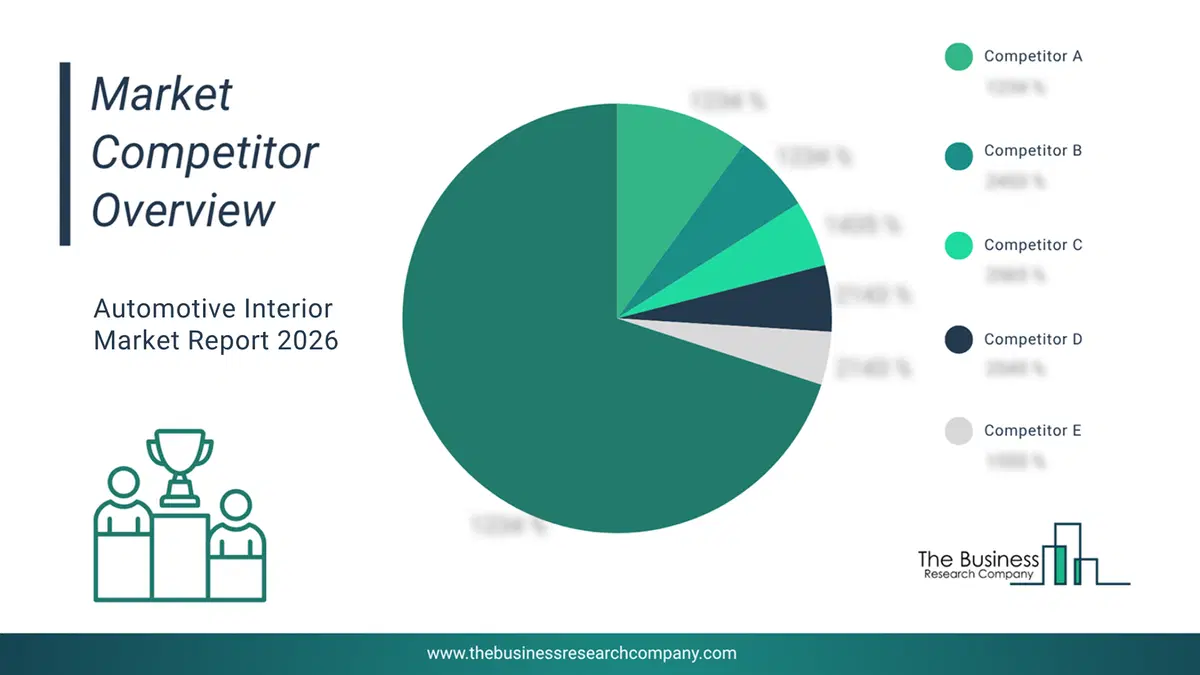
This chart is for illustrative purposes; the full report includes a detailed competitor analysis and comprehensive overview of the top 10 companies in the market.
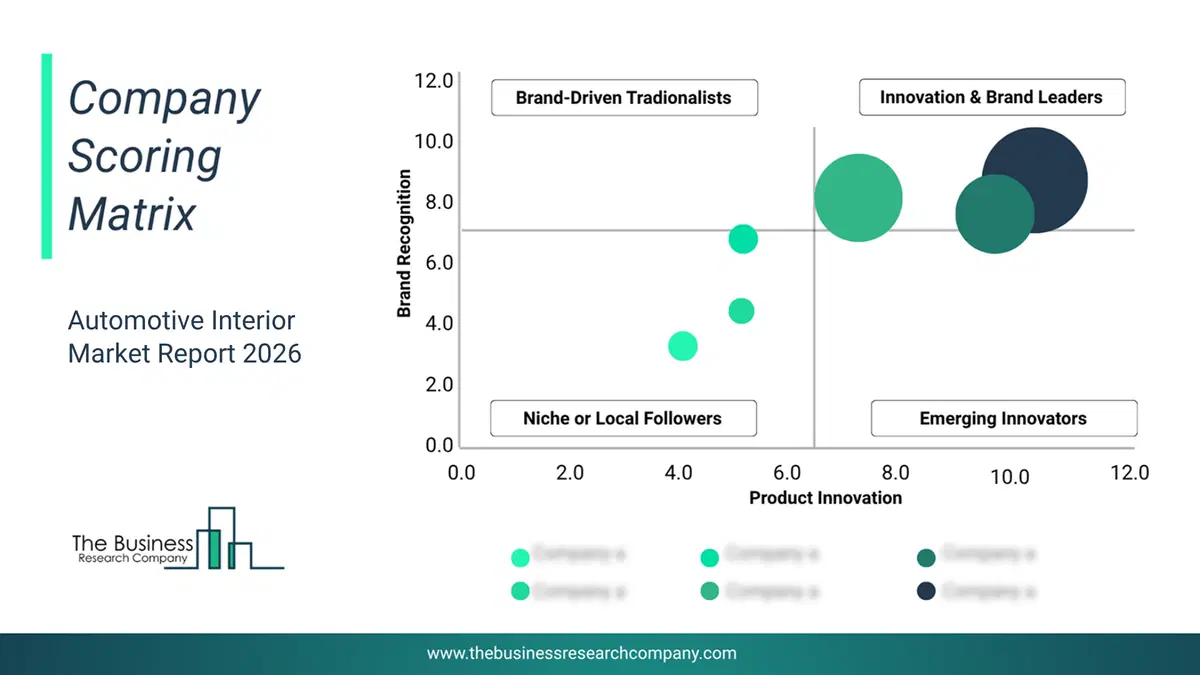
This chart maps companies by product innovation and brand strength, with bubble size indicating relative revenue, helping identify market leaders, challengers, and niche players. This is an illustrative chart; the full report provides a complete and accurate competitive analysis.
Global Automotive Interior Market Trends and Insights
Major companies in the automotive interior market are focusing on developing innovative solutions, such as smart sustainable trim components, to enhance vehicle comfort, aesthetics, and environmental sustainability. Smart sustainable trim components are automotive interior parts made from eco-friendly materials that integrate advanced features, like sensors or adaptive functionality, to improve comfort, safety, and efficiency. For instance, in February 2025, Lear Corporation, a US-based manufacturing company, launched ComfortMax Seat engineering technology to enhance occupant comfort through faster heating and ventilation response. This technology integrates thermal control directly into the seat, reducing reliance on cabin HVAC systems and improving personalized comfort. Additionally, the modular design lowers part count by up to 50%, streamlining production and improving overall manufacturing efficiency.What Are Latest Mergers And Acquisitions In The Automotive Interior Market?
In May 2025, Autoneum Holding AG. a Switzerland‑based automotive parts manufacturing company, acquired Chengdu Yiqi‑Sihuan Automobile Interior Co., Ltd. For an undisclosed amount. With this acquisition, Autoneum aims to expand its footprint in China’s automotive market and broaden its customer base to include major Chinese OEMs thereby accelerating its global growth in a key region. Chengdu Yiqi‑Sihuan Automobile Interior Co. Ltd. is a China‑based company that manufactures automotive interior parts.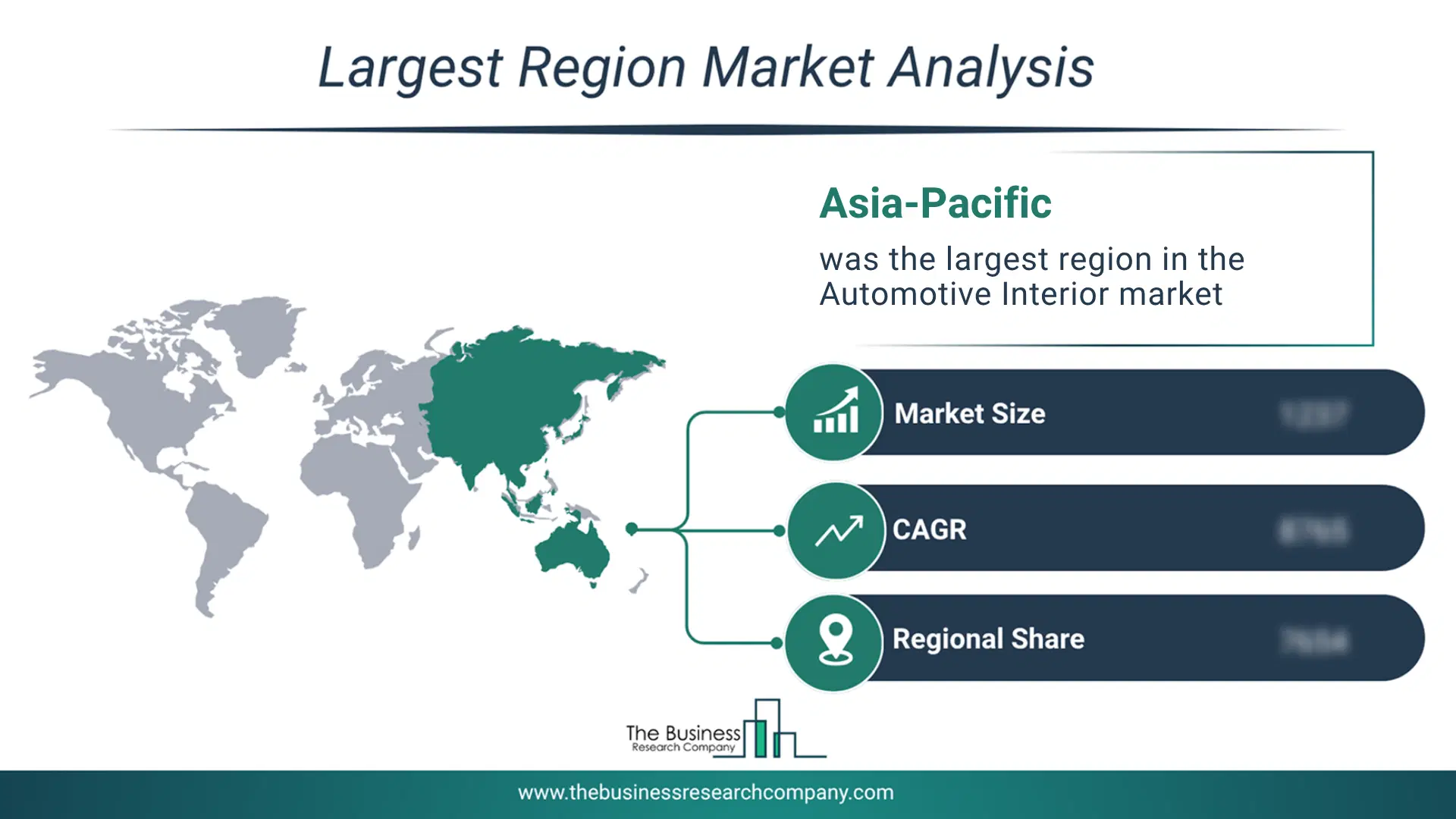
Regional Outlook
Asia-Pacific was the largest region in the automotive interior market in 2025. Asia-Pacific is expected to be the fastest-growing region in the forecast period. The regions covered in this market report include Asia-Pacific, South East Asia, Western Europe, Eastern Europe, North America, South America, Middle East, Africa. The countries covered in this market report include Australia, Brazil, China, France, Germany, India, Indonesia, Japan, Taiwan, Russia, South Korea, UK, USA, Canada, Italy, SpainWhat Defines the Automotive Interior Market?
The automotive interiors market consists of sales of interiors made of vinyl, wood and faux leather. Values in this market are ‘factory gate’ values, that is the value of goods sold by the manufacturers or creators of the goods, whether to other entities (including downstream manufacturers, wholesalers, distributors and retailers) or directly to end customers. The value of goods in this market includes related services sold by the creators of the goods.How is Market Value Defined and Measured?
The market value is defined as the revenues that enterprises gain from the sale of goods and/or services within the specified market and geography through sales, grants, or donations in terms of the currency (in USD unless otherwise specified). The revenues for a specified geography are consumption values that are revenues generated by organizations in the specified geography within the market, irrespective of where they are produced. It does not include revenues from resales along the supply chain, either further along the supply chain or as part of other products.
This chart presents market attractiveness based on a quantitative evaluation of growth, competition, strategic alignment, and risk, offering a clear view of opportunity areas for decision-making. This chart is for illustrative purposes; the full report contains the complete analysis.

This chart highlights the Total Addressable Market (TAM) by estimating the maximum revenue opportunity using an assumption-driven approach, supporting strategic planning and opportunity sizing across markets. The chart is illustrative; the full report provides a more comprehensive analysis.
What Key Data and Analysis Are Included in the Automotive Interior Market Report 2026?
The automotive interior market research report is one of a series of new reports from The Business Research Company that provides market statistics, including industry global market size, regional shares, competitors with the market share, detailed market segments, market trends and opportunities, and any further data you may need to thrive in the automotive interior industry. The market research report delivers a complete perspective of everything you need, with an in-depth analysis of the current and future state of the industry.Automotive Interior Market Report Forecast Analysis
| Report Attribute | Details |
|---|---|
| Market Size Value In 2026 | $170.26 billion |
| Revenue Forecast In 2030 | $225.03 billion |
| Growth Rate | CAGR of 6.9% from 2026 to 2030 |
| Base Year For Estimation | 2025 |
| Actual Estimates/Historical Data | 2020-2025 |
| Forecast Period | 2026 - 2030 |
| Market Representation | Revenue in USD Billion and CAGR from 2026 to 2030 |
| Segments Covered | Vehicle Type, Component, Application |
| Regional Scope | Asia-Pacific, Western Europe, Eastern Europe, North America, South America, Middle East, Africa |
| Country Scope | The countries covered in the report are Australia, Brazil, China, France, Germany, India, Indonesia, Japan, Taiwan, Russia, South Korea, UK, USA, Canada, Italy, Spain. |
| Key Companies Profiled | Adient plc, Faurecia SE, Lear Corporation, Yanfeng Automotive Interior Systems Co. Ltd., Magna International Inc., Toyota Boshoku Corporation, Grupo Antolín-Irausa SA, Hyundai Mobis Co. Ltd., Visteon Corporation, Johnson Controls International plc, Grammer AG, Tachi-S Co. Ltd., Sage Automotive Interiors, International Automotive Components Group, Keiper Recaro Group, Toyoda Gosei Co. Ltd., Nifco Inc., NHK Spring Co. Ltd., Guelph Manufacturing Group, Panasonic Corporation, Pioneer Corporation |
| Customization Scope | Request for Customization |
| Pricing And Purchase Options | Explore Purchase Options |