
Baby Care Products Market Report 2026
Global Outlook – By Type (Baby Skin Care, Baby Hair Care Products, Bathing Products, Baby Toiletries, Other Products), By Buyer Type (Institutional Buyers, Residential Buyers), By Distribution Channel (Online Platform, Departmental Stores, Specialized Stores, Supermarkets, Other Distribution Channels) – Market Size, Trends, Strategies, and Forecast to 2030
Baby Care Products Market Overview
• Baby Care Products market size has reached to $67.98 billion in 2025 • Expected to grow to $108.63 billion in 2030 at a compound annual growth rate (CAGR) of 9.7% • Growth Driver: Surging Infant Population Driving Growth In The Baby Care Products Market • Market Trend: Innovation In Baby Care Products With Launch Of Ultra-Pure Water Wipes • Europe was the largest region in 2025 and Asia-Pacific is the fastest growing region.What Is Covered Under Baby Care Products Market?
Baby care products are a range of specialized items designed to cater to the hygiene, comfort, and overall well-being of infants and toddlers. These products are formulated and designed with the delicate skin and health needs of babies in mind, using gentle ingredients and materials that are safe for sensitive skin. The main types of baby care products are baby skin care, baby hair care products, bathing products, baby toiletries, baby food and beverages, and others. Baby skincare products include creams and lotions which have a higher content of moisturizer used for the face and body to hydrate skin and protect baby skin from environmental influences such as sunlight, cold temperature, UV radiation, and others. The different buyer types include institutional buyers and residential buyers that are distributed through various channels such as online platforms, departmental stores, specialized stores, supermarkets, and others.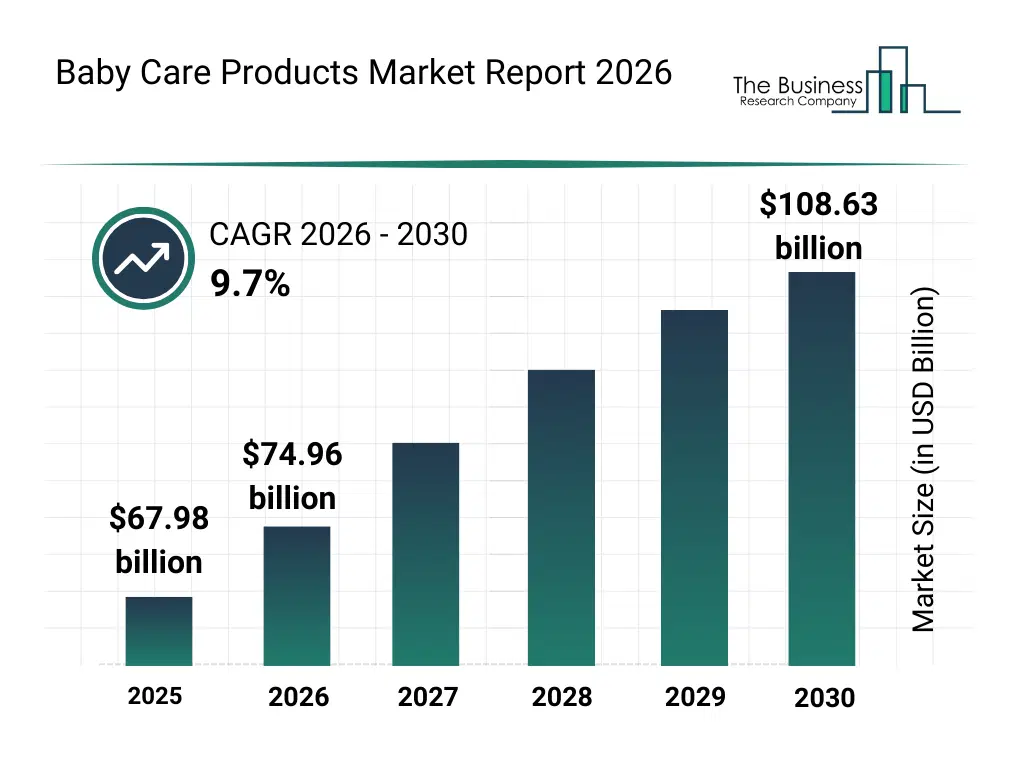
What Is The Baby Care Products Market Size and Share 2026?
The baby care products market size has grown rapidly in recent years. It will grow from $67.98 billion in 2025 to $74.96 billion in 2026 at a compound annual growth rate (CAGR) of 10.3%. The growth in the historic period can be attributed to increasing birth rates in emerging markets, growth of disposable income levels, rising awareness of infant hygiene, expansion of retail distribution networks, availability of mass-market baby care brands.What Is The Baby Care Products Market Growth Forecast?
The baby care products market size is expected to see strong growth in the next few years. It will grow to $108.63 billion in 2030 at a compound annual growth rate (CAGR) of 9.7%. The growth in the forecast period can be attributed to increasing demand for premium baby care products, rising focus on sustainable packaging, expansion of online baby care retail platforms, growing influence of pediatric recommendations, increasing product innovation in baby nutrition. Major trends in the forecast period include rising demand for organic and natural baby products, increasing focus on dermatologically tested formulations, growing use of e-commerce channels, expansion of functional baby nutrition products, enhanced emphasis on product safety and transparency.
Global Baby Care Products Market Segmentation
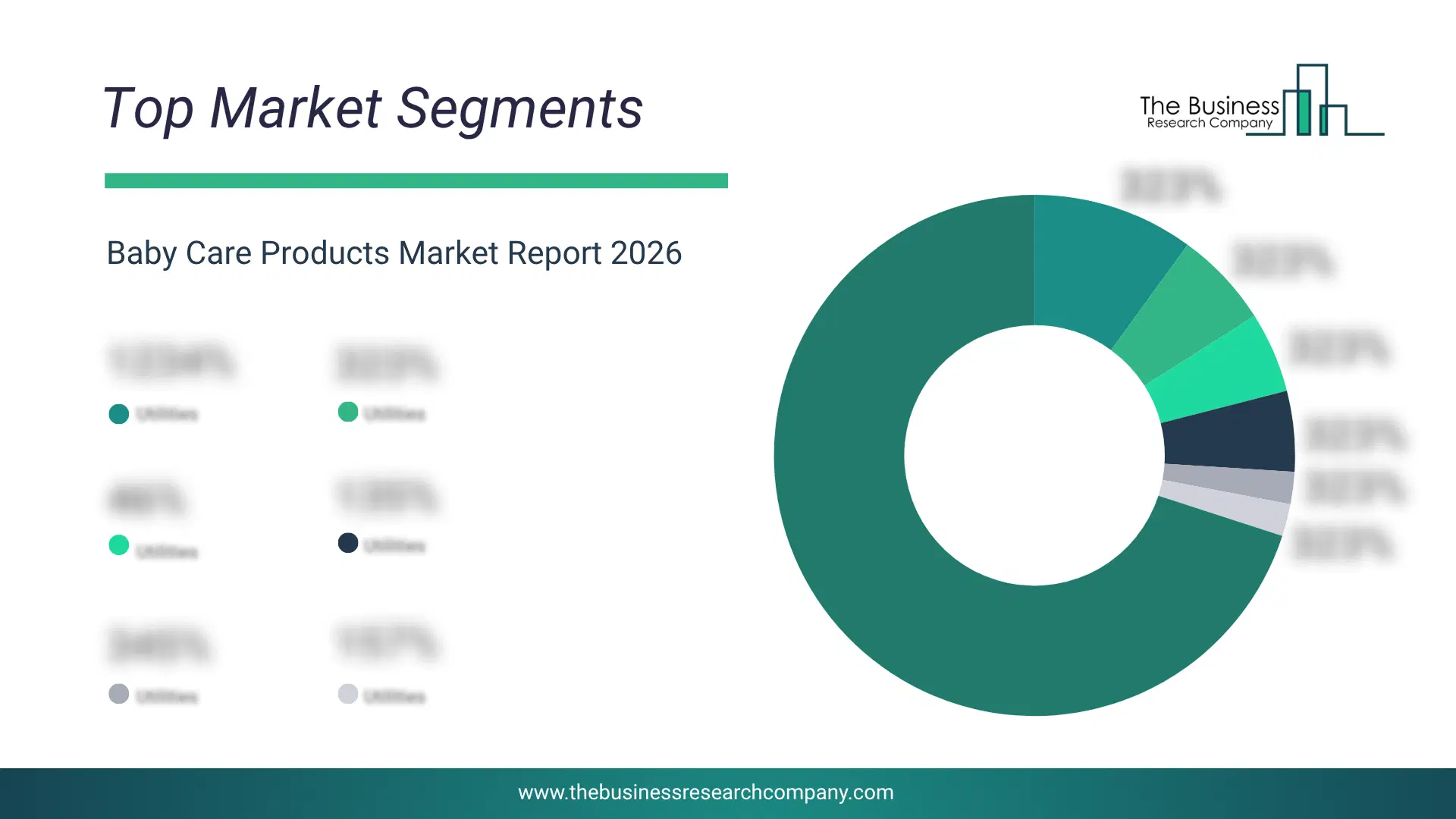
1) By Type: Baby Skin Care, Baby Hair Care Products, Bathing Products, Baby Toiletries, Other Products 2) By Buyer Type: Institutional Buyers, Residential Buyers 3) By Distribution Channel: Online Platform, Departmental Stores, Specialized Stores, Supermarkets, Other Distribution Channels Subsegments: 1) By Baby Skin Care: Baby Lotions, Baby Creams, Diaper Rash Creams, Baby Oils 2) By Baby Hair Care Products: Baby Shampoo, Baby Conditioner, Hair Oil 3) By Bathing Products: Baby Bath Wash, Bubble Bath, Bath Oils 4) By Baby Toiletries: Wipes, Diapers, Baby Powder 5) By Other Product: Baby Sunscreen, Baby Insect RepellentWhat Is The Driver Of The Baby Care Products Market?
The rising infant population is expected to propel the growth of the baby care products market going forward. The infant population refers to the number of infants or newborns within a specific demographic group or geographical area, from birth up to one year of age. Baby care products are used for infants address the unique needs and sensitivities of babies, providing everything from skincare items, diapers, and feeding products to safety equipment and nursery items. For instance, in May 2024, according to the Office for Health Improvement and Disparities, a UK-based government department, the proportion of deliveries to women from ethnic minority groups (excluding white minority groups) rose from 22.9% in the financial year ending 2022 to 25.3% in the financial year ending 2023. Additionally, the rate of deliveries by caesarean section increased from 34.7% in the financial year ending 2022 to 37.8% in the financial year ending 2023. Furthermore, hospital admissions for infants under 14 days old rose from 81.6 per 1,000 population in the financial year ending 2022 to 84.8 in the financial year ending 2023.Therefore, rising infant population is driving the growth of the baby care products industry.Key Players In The Global Baby Care Products Market
Major companies operating in the baby care products market are Johnson & Johnson Services Inc., The Procter & Gamble Company, Kimberly-Clark Corporation, Unilever Plc, Beiersdorf AG, The Himalaya Drug Company Ltd., Dabur India Limited, Pigeon Corporation, Artsana Group, Unicharm Corporation, L’Oréal SA, Burt’s Bees Inc., Avon Products Inc., Nestlé SA, Abbott Laboratories, Danone SA, Me N Moms Private Ltd., LUV N Care Ltd., Baby Boom Consumer Products Inc., Munchkin Inc., Gerber Products Company, Sebapharma GmbH & Co. KG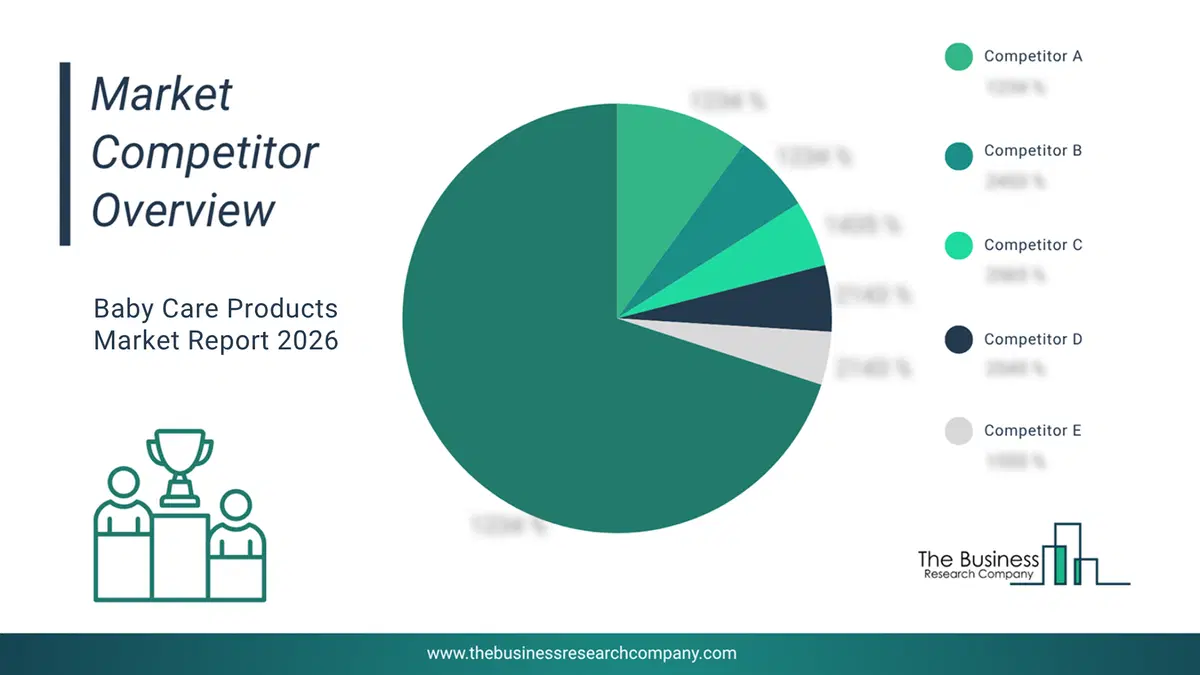
This chart is for illustrative purposes; the full report includes a detailed competitor analysis and comprehensive overview of the top 10 companies in the market.
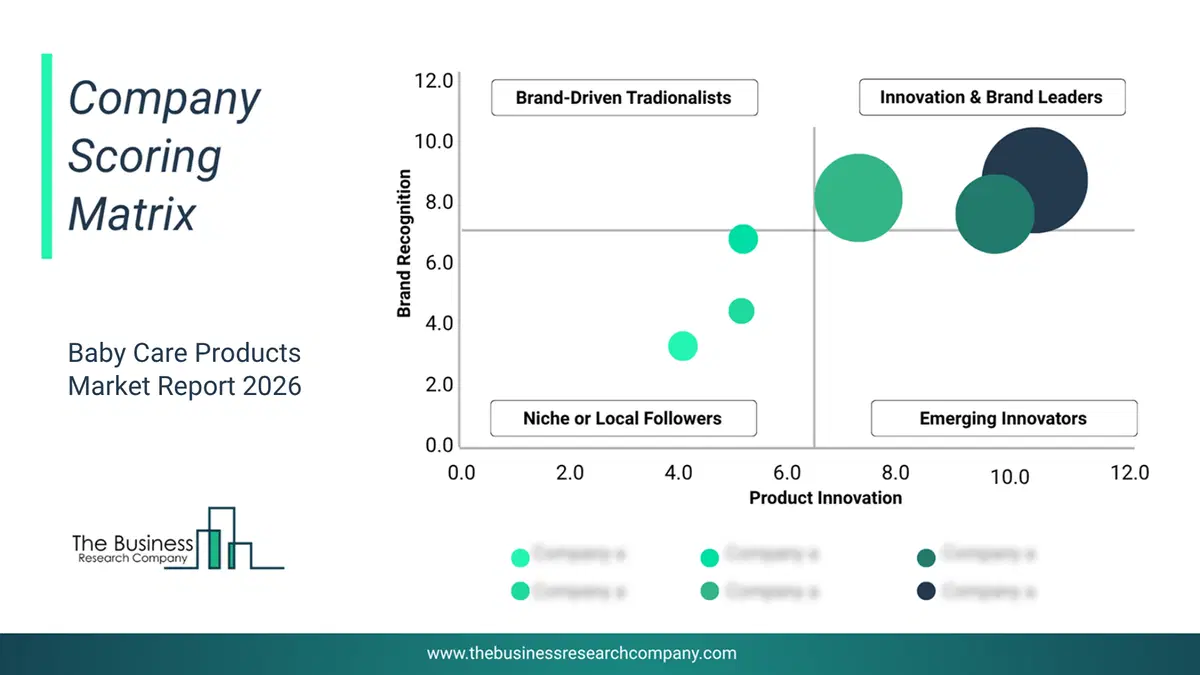
This chart maps companies by product innovation and brand strength, with bubble size indicating relative revenue, helping identify market leaders, challengers, and niche players. This is an illustrative chart; the full report provides a complete and accurate competitive analysis.
Global Baby Care Products Market Trends and Insights
Major companies operating in the baby care products market are focusing on developing innovating products, such as ultra-pure water wipes, to provide a competitive edge in the market. Ultra-pure water wipes are used for infants during clean-up sessions as a baby care product. For instance, in June 2023, Ginni Filaments Ltd., an Indian-based nonwoven fabric company, launched ultra-pure water wipes. Ultra-pure water wipes are wipes that have a high-water content and gently cleanse babies skin, providing a soothing and refreshing experience for babies. These wipes are made with soft, skin-friendly, and breathable nonwoven spunlace fabric. Ultra-pure water wipes are registered as ‘paaniwipes’ under the brand name ‘Adore Baby.What Are Latest Mergers And Acquisitions In The Baby Care Products Market?
In September 2024, DOMS, an India-based company operating in direct-to-consumer beauty products and baby care products, acquired The Moms Co for an undisclosed amount. Through this acquisition, MyGlamm aims to strengthen its baby care products in pre-and post-natal care as well as strengthen its direct-to-consumer market. The Moms Co is an India-based company that provides baby care products.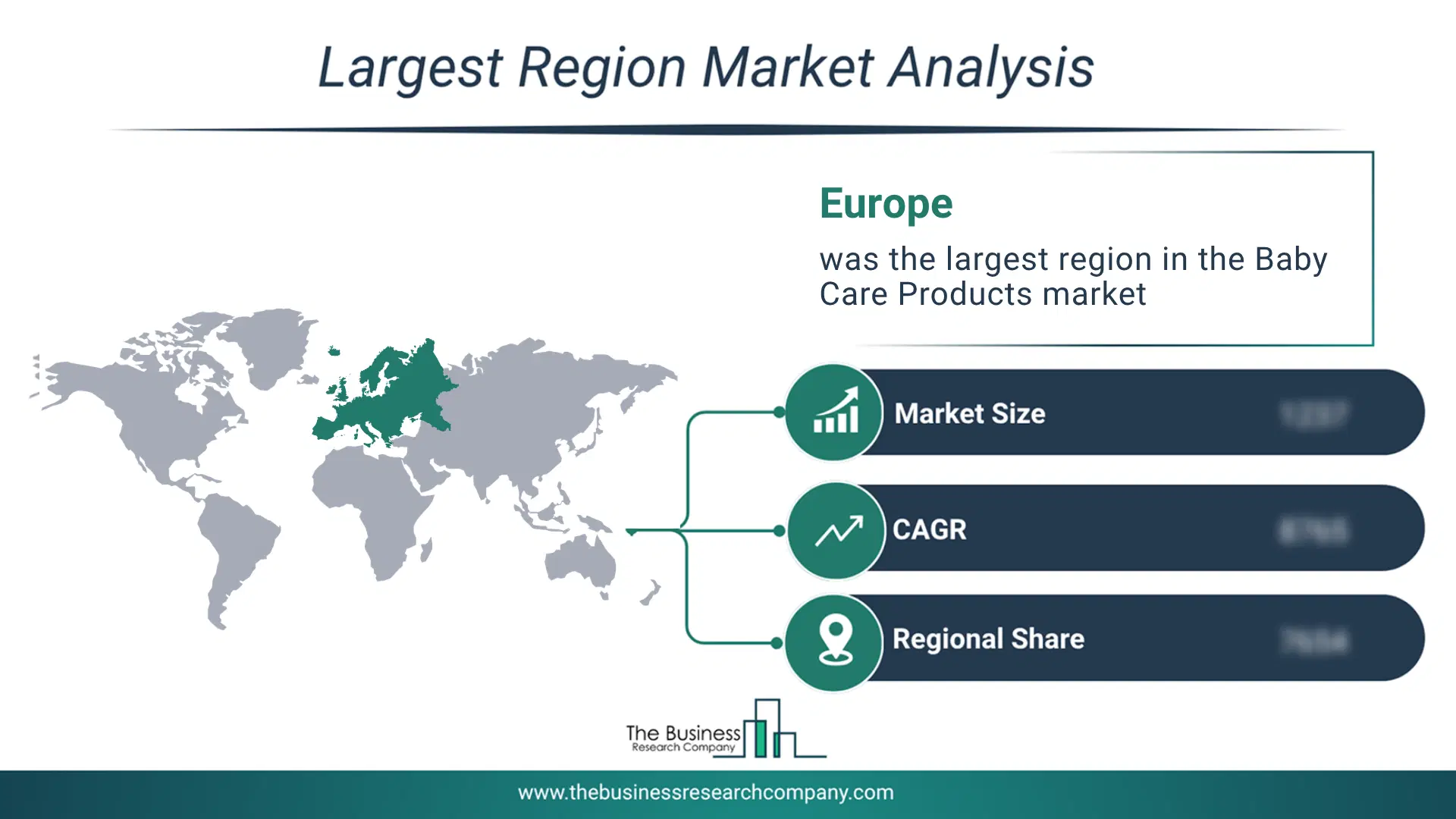
Regional Insights
Europe was the largest region in the baby care products market in 2025. Asia-Pacific is expected to be the fastest-growing region in the forecast period. The regions covered in this market report are Asia-Pacific, South East Asia, Western Europe, Eastern Europe, North America, South America, Middle East, Africa The countries covered in this market report are Australia, Brazil, China, France, Germany, India, Indonesia, Japan, Taiwan, Russia, South Korea, UK, USA, Canada, Italy, SpainWhat Defines the Baby Care Products Market?
The baby care products market consists of sales of baby soaps, shampoo and lotion. Values in this market are ‘factory gate’ values, that is the value of goods sold by the manufacturers or creators of the goods, whether to other entities (including downstream manufacturers, wholesalers, distributors, and retailers) or directly to end customers. The value of goods in this market includes related services sold by the creators of the goods.How is Market Value Defined and Measured?
The market value is defined as the revenues that enterprises gain from the sale of goods and/or services within the specified market and geography through sales, grants, or donations in terms of the currency (in USD unless otherwise specified). The revenues for a specified geography are consumption values that are revenues generated by organizations in the specified geography within the market, irrespective of where they are produced. It does not include revenues from resales along the supply chain, either further along the supply chain or as part of other products.
This chart presents market attractiveness based on a quantitative evaluation of growth, competition, strategic alignment, and risk, offering a clear view of opportunity areas for decision-making. This chart is for illustrative purposes; the full report contains the complete analysis.

This chart highlights the Total Addressable Market (TAM) by estimating the maximum revenue opportunity using an assumption-driven approach, supporting strategic planning and opportunity sizing across markets. The chart is illustrative; the full report provides a more comprehensive analysis.
What Key Data and Analysis Are Included in the Baby Care Products Market Report 2026?
The baby care products market research report is one of a series of new reports from The Business Research Company that provides market statistics, including industry global market size, regional shares, competitors with the market share, detailed market segments, market trends and opportunities, and any further data you may need to thrive in the baby care products industry. The market research report delivers a complete perspective of everything you need, with an in-depth analysis of the current and future state of the industry.Baby Care Products Market Report Forecast Analysis
| Report Attribute | Details |
|---|---|
| Market Size Value In 2026 | $74.96 billion |
| Revenue Forecast In 2030 | $108.63 billion |
| Growth Rate | CAGR of 10.3% from 2026 to 2030 |
| Base Year For Estimation | 2025 |
| Actual Estimates/Historical Data | 2020-2025 |
| Forecast Period | 2026 - 2030 |
| Market Representation | Revenue in USD Billion and CAGR from 2026 to 2030 |
| Segments Covered | Type, Buyer Type, Distribution Channel |
| Regional Scope | Asia-Pacific, Western Europe, Eastern Europe, North America, South America, Middle East, Africa |
| Country Scope | The countries covered in this market report are Australia, Brazil, China, France, Germany, India, Indonesia, Japan, Taiwan, Russia, South Korea, UK, USA, Canada, Italy, Spain |
| Key Companies Profiled | Johnson & Johnson Services Inc., The Procter & Gamble Company, Kimberly-Clark Corporation, Unilever Plc, Beiersdorf AG, The Himalaya Drug Company Ltd., Dabur India Limited, Pigeon Corporation, Artsana Group, Unicharm Corporation, L’Oréal SA, Burt’s Bees Inc., Avon Products Inc., Nestlé SA, Abbott Laboratories, Danone SA, Me N Moms Private Ltd., LUV N Care Ltd., Baby Boom Consumer Products Inc., Munchkin Inc., Gerber Products Company, Sebapharma GmbH & Co. KG |
| Customization Scope | Request for Customization |
| Pricing And Purchase Options | Explore Purchase Options |