
Baby Food Market Report 2026
Global Outlook – By Type (Milk Formula, Dried Baby Food, Ready to Feed Baby Food, Other Types), By Category (Organic, Conventional), By Distribution Channel (Hypermarkets, Supermarkets, Drug Stores, Specialty Stores, Online) – Market Size, Trends, Strategies, and Forecast to 2030
Baby Food Market Overview
• Baby Food market size has reached to $82.43 billion in 2025 • Expected to grow to $107.65 billion in 2030 at a compound annual growth rate (CAGR) of 5.4% • Growth Driver: Rising Infant Population Fueling Growth In The Baby Food Market • Market Trend: Increasing Adoption Of Clean-Label, Plant-Based Baby Food Solutions • Asia-Pacific was the largest region and fastest growing region.Market Gains By 2030 – Top Opportunities By Segment
Market Gain identifies the most promising market opportunities by highlighting the segments or products expected to generate the highest incremental revenue growth over the next five years.
What Is Covered Under Baby Food Market?
The baby food refers to the food products consumed by kids and infants. Baby food is any smooth, easily swallowed food that is created specifically for infants between the ages of four to six months and two years. The main types of baby food are milk formula, dried baby food, ready-to-feed baby food, and other types. Milk formula is a synthetic alternative to breast milk that is used to feed babies. It can be purchased as a powder to be blended with water or as an instant liquid. They are of various categories such as organic, and conventional. Baby foods are based on various distribution channels such as hypermarkets, supermarkets, drug stores, specialty stores, and online.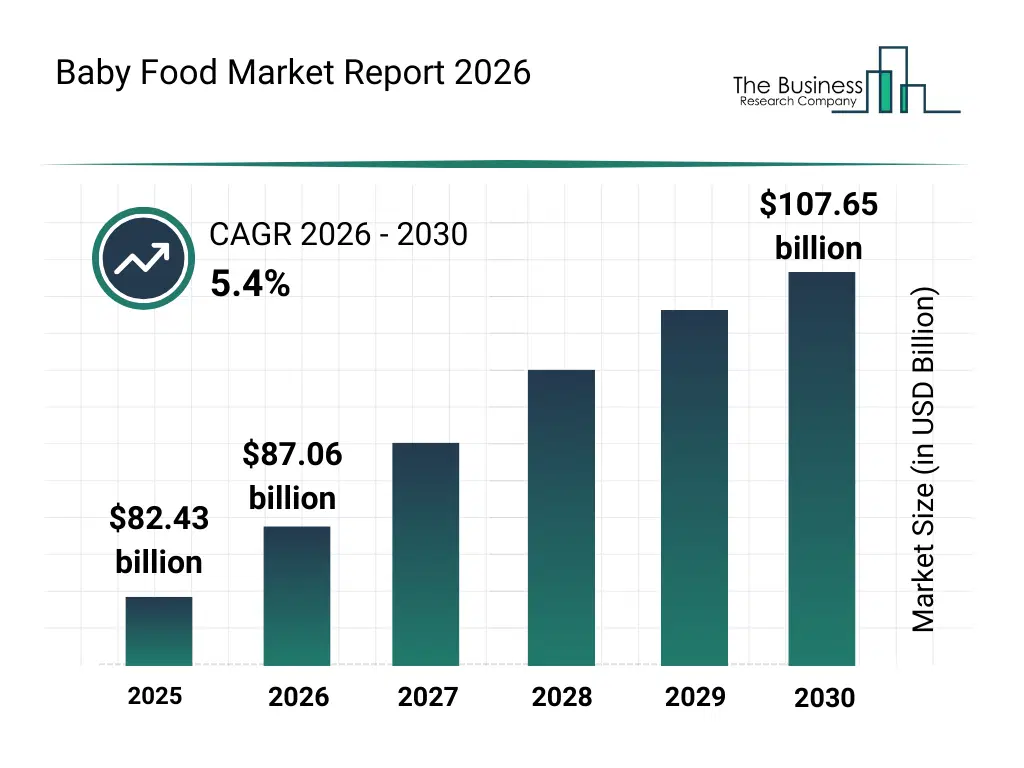
What Is The Baby Food Market Size and Share 2026?
The baby food market size has grown strongly in recent years. It will grow from $82.43 billion in 2025 to $87.06 billion in 2026 at a compound annual growth rate (CAGR) of 5.6%. The growth in the historic period can be attributed to rising urban population and working parents, increasing awareness of infant nutrition, expansion of organized retail channels, growing availability of packaged baby food products, rising disposable income levels.What Is The Baby Food Market Growth Forecast?
The baby food market size is expected to see strong growth in the next few years. It will grow to $107.65 billion in 2030 at a compound annual growth rate (CAGR) of 5.4%. The growth in the forecast period can be attributed to increasing demand for organic infant nutrition, rising penetration of online baby food sales, growing focus on personalized nutrition for infants, expansion of premium baby food offerings, increasing regulatory emphasis on infant food safety. Major trends in the forecast period include increasing demand for organic and clean-label baby food, rising preference for ready-to-feed formats, growing focus on nutritional fortification, expansion of e-commerce distribution channels, enhanced emphasis on food safety and traceability.
Global Baby Food Market Segmentation
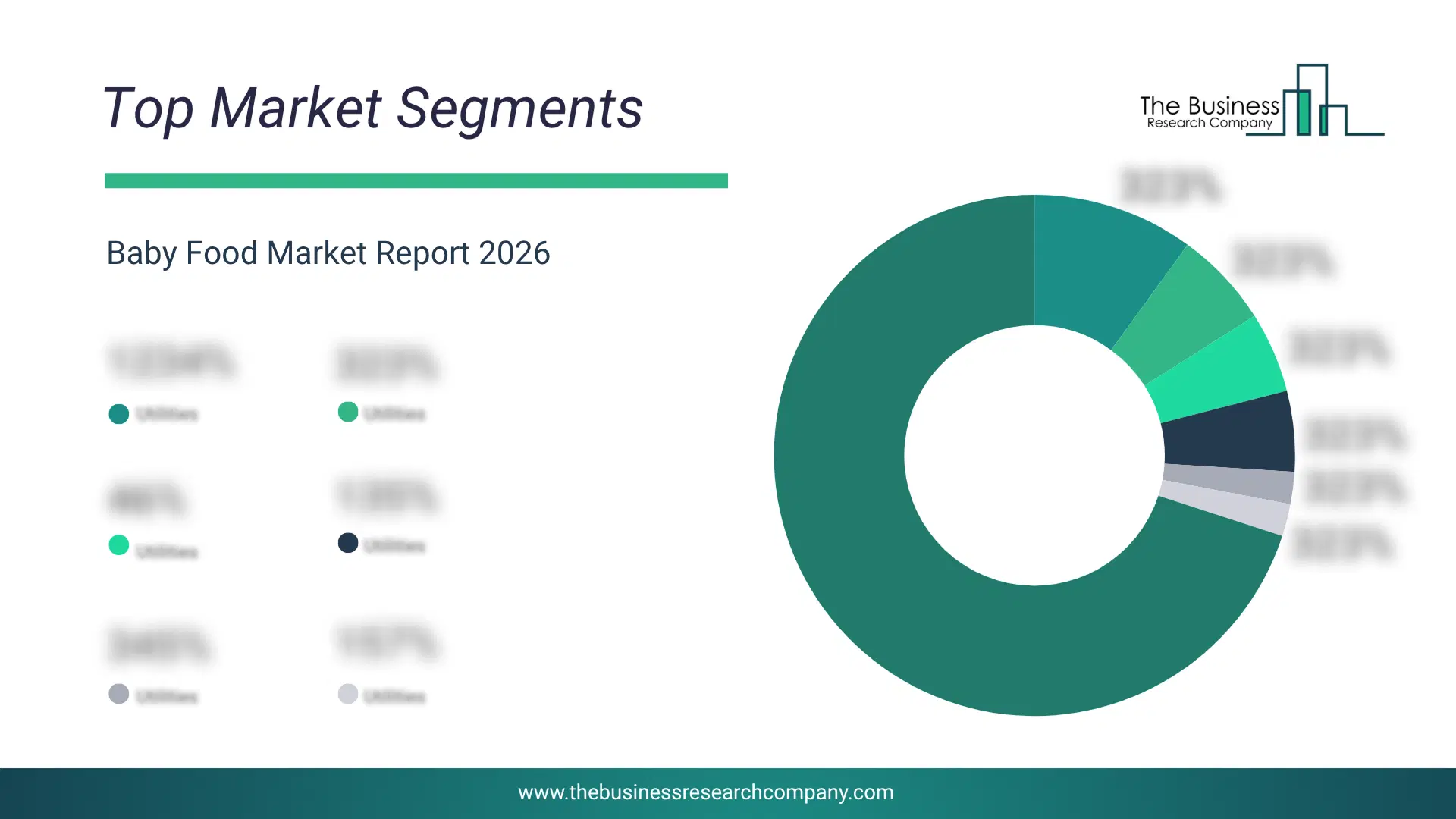
1) By Type: Milk Formula, Dried Baby Food, Ready to Feed Baby Food, Other Types 2) By Category: Organic, Conventional 3) By Distribution Channel: Hypermarkets, Supermarkets, Drug Stores, Specialty Stores, Online Subsegments: 1) By Milk Formula: Infant Formula, Follow-On Formula, Special Medical Formulas 2) By Dried Baby Food: Powdered Cereals, Freeze-Dried Meals, Dehydrated Snacks 3) By Ready to Feed Baby Food: Jarred Baby Food, Pouches, Meal Kits 4) By Other Types: Homemade Baby Food Kits, Baby Snacks The top segments in the baby food market will be: • Milk Formula will reach $52.91 Billion by 2030. • Ready to Feed Baby Food will reach $32.96 Billion by 2030. • Dried Baby Food will reach $13.96 Billion by 2030. • Other Types will reach $7.31 Billion by 2030.What Is The Driver Of The Baby Food Market?
The increasing infant population is expected to propel the growth of the baby food market going forward. The infant population refers to the number of infants or newborns within a specific demographic group or geographical area, from birth up to one year of age. Baby food is processed and prepared to be safe and easy for infants to meet the dietary and developmental requirements of the infant population. For instance, in April 2025, according to the Centers for Disease Control and Prevention (CDC), a U.S.-based health agency, reported that the number of live births in the United States reached 3,622,673 an increase of 1% from 2023. Therefore, the increasing infant population is driving the growth of the baby food industry.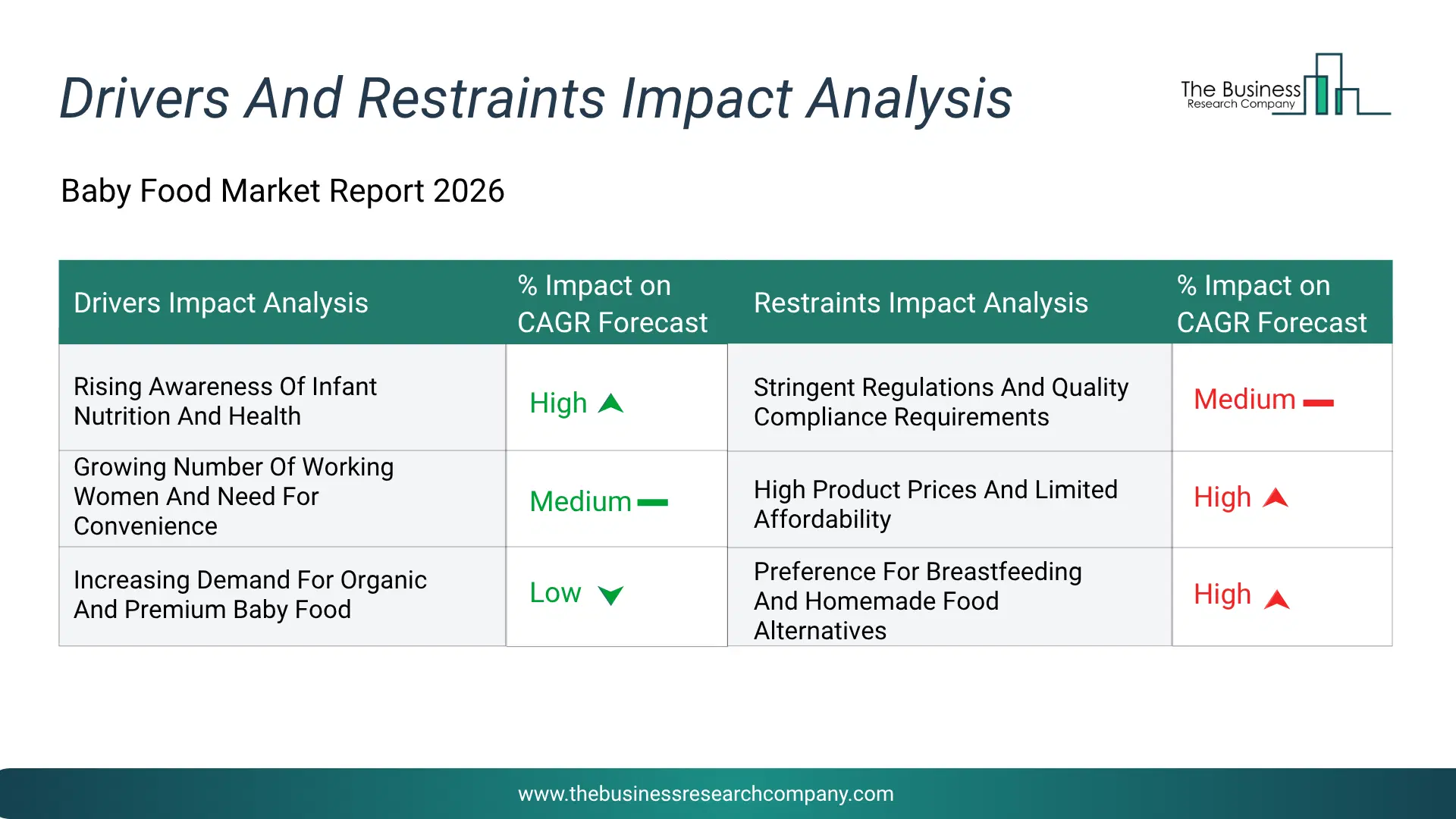
Infographic Chart Showing Key Market Drivers Analysis And Restraints For Baby Food Market
The chart presents an impact analysis of key drivers and restraints, quantifying their relative influence on the market's growth rate and helping assess the balance between growth enablers and limiting factors. This chart offers a high-level perspective; the full report contains more detailed insights.
How Will The Drivers Impact Growth In The Global Baby Food Market?
• Rising Awareness Of Infant Nutrition And Health (High) – During the forecast period, the rising awareness of infant nutrition and health is expected to become a key growth driver for the baby food market by 2030. Parents are increasingly focusing on balanced nutrition during the early stages of childhood development, driving demand for scientifically formulated baby food products enriched with essential vitamins, minerals, and functional ingredients. Growing access to pediatric guidance, nutrition education, and digital health information is encouraging informed purchasing decisions. Manufacturers are responding by introducing products that support immunity, cognitive development, and healthy growth. This heightened focus on early-life nutrition is strengthening demand across multiple baby food categories. • Growing Number Of Working Women And Need For Convenience (Medium) – During the forecast period, the growing number of working women and need for convenience is expected to emerge as a major factor driving the expansion of the baby food market by 2030. Increasing workforce participation among mothers is creating stronger demand for convenient, ready-to-use feeding solutions that save preparation time while maintaining nutritional quality. Consumers are seeking products that offer portability, ease of storage, and consistent nutrition for infants and toddlers. Manufacturers are therefore expanding their portfolios with convenient packaging formats and ready-to-consume options tailored to modern lifestyles. • Increasing Demand For Organic And Premium Baby Food (Low) – During the forecast period, the increasing demand for organic and premium baby food is expected to act as a key growth catalyst for the baby food market by 2030. Parents are increasingly prioritizing products made with natural ingredients, clean-label formulations, and strict quality standards to ensure safe and healthy nutrition for their children. The willingness to spend more on premium offerings is encouraging manufacturers to develop specialized products featuring organic ingredients, functional nutrition benefits, and enhanced product transparency. Growing consumer trust in certified and high-quality baby food products is further supporting market expansion.How Will The Restraints Impact Growth In The Global Baby Food Market?
• Stringent Regulations And Quality Compliance Requirements (High) – During the forecast period, the stringent regulations and quality compliance requirements are a major restraint for the baby food market. Baby food products must meet strict standards related to ingredient safety, nutritional content, labeling, packaging, and manufacturing hygiene. Regulatory approvals, product testing, and frequent quality audits can increase operational costs for manufacturers. Compliance challenges may also delay new product launches and market expansion, especially across multiple countries with different standards. As a result, strict regulatory requirements can limit profitability and slow overall market growth. • High Product Prices And Limited Affordability (Medium) – During the forecast period, the high product prices and limited affordability are major restraints for the baby food market. Premium, organic, fortified, and specialized baby food products often carry higher prices due to quality ingredients, strict safety standards, and advanced packaging. These elevated costs can make commercial baby food less accessible for price-sensitive families, especially in developing markets. Many consumers may choose lower-cost homemade alternatives or reduce purchase frequency during economic uncertainty. As a result, affordability challenges can restrict broader market penetration and growth. • Preference For Breastfeeding And Homemade Food Alternatives (Low) – During the forecast period, the preference for breastfeeding and homemade food alternatives is a major restraint for the baby food market. Many parents prefer breastfeeding due to its recognized health benefits, nutritional value, and cost-effectiveness during early infant stages. Others choose homemade baby food to ensure freshness, ingredient control, and lower feeding costs. Growing awareness of natural feeding practices and parental trust in home-prepared meals can reduce dependence on packaged baby food products. As a result, preference for breastfeeding and homemade alternatives can limit market demand growth.Key Players In The Global Baby Food Market
Major companies operating in the baby food market are Abbott Nutrition, Bellamy Organics, Danone SA, Mead Johnson & Company LLC, Nestle SA, Perrigo Company plc, Royal FrieslandCampina NV, Hain Celestial Group Inc., Reckitt Benckiser Group plc, Inner Mongolia Yili Industrial Group Company Ltd., Deutsches Milchkontor GmbH, SMA Nutrition, Aptamil, HiPP GmbH & Co, Ella's Kitchen Group Ltd., Holle Baby Food, BUBS Australia Ltd., Happy Tot, NurturMe, Peter Rabbit Ltd., Pure Spoon, Serenity Kids Inc., Earth's Best Organic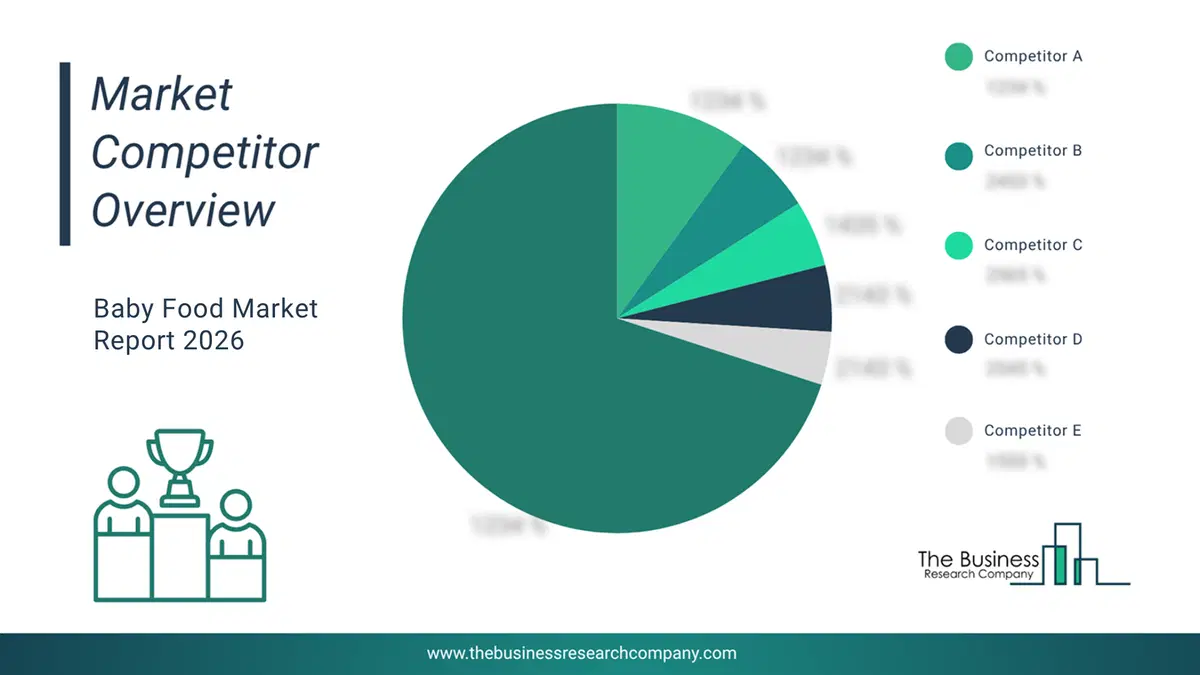
This chart is for illustrative purposes; the full report includes a detailed competitor analysis and comprehensive overview of the top 10 companies in the market.
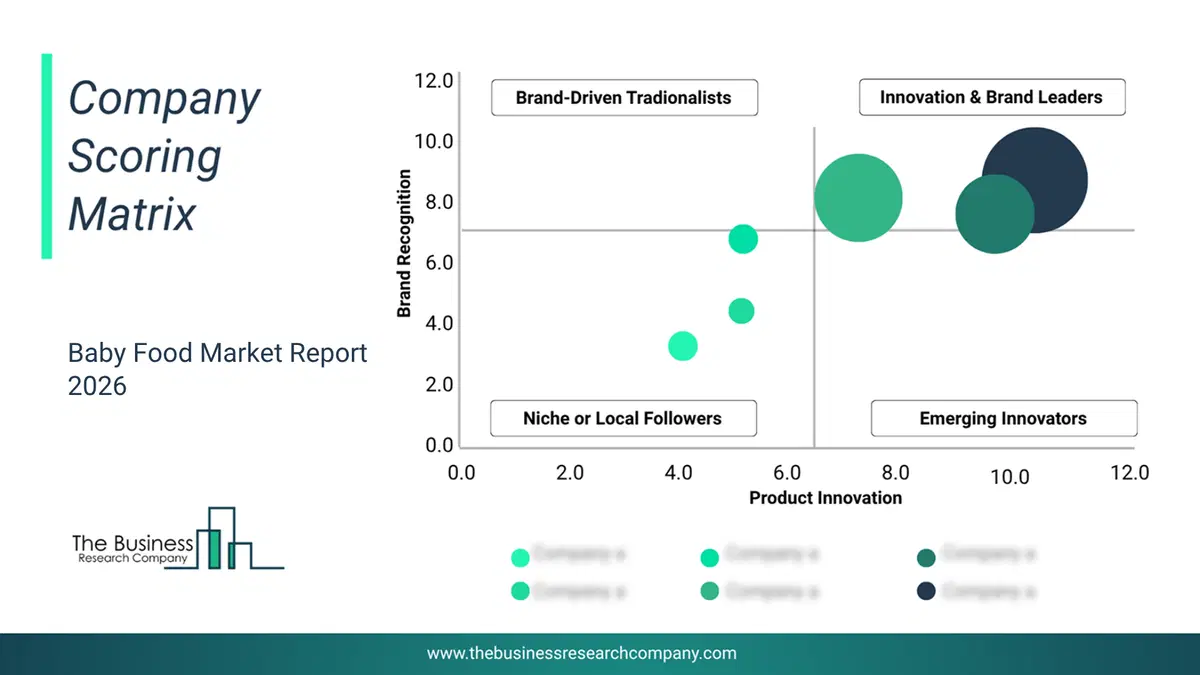
This chart maps companies by product innovation and brand strength, with bubble size indicating relative revenue, helping identify market leaders, challengers, and niche players. This is an illustrative chart; the full report provides a complete and accurate competitive analysis.
Global Baby Food Market Trends and Insights
Major companies operating in the baby food market are continuing to innovate products, such as plant-based and toddler-friendly foods, to provide more nutritious and sustainable alternatives for modern parents. Plant-based baby/toddler foods refer to meals, purees, snacks or formula designed for infants or toddlers that use plant-derived ingredients (e.g., legumes, grains, vegetables) instead of traditional animal-based proteins or dairy meeting demand for clean-label, vegetarian, or allergy-conscious options. For instance, in April 2024, Else Nutrition, an Israel-based nutrition company specializing in plant-based infant and toddler formula, launched its stage-2 follow-on formula and stage-3 toddler drink in Australia offering soy-free, plant-based nutrition for infants aged 6–12 months and toddlers aged 12–36 months.What Are Latest Mergers And Acquisitions In The Baby Food Market?
In March 2024, Chernogolovka Group of Companies, a Russia-based provider of water and non-alcoholic beverages, acquired the baby food business of Kraft Heinz for an undisclosed amount. As a result of this acquisition, Chernogolovka aims to broaden its assortment, particularly in the first complementary foods category. Kraft Heinz is a US-based company that produces baby food.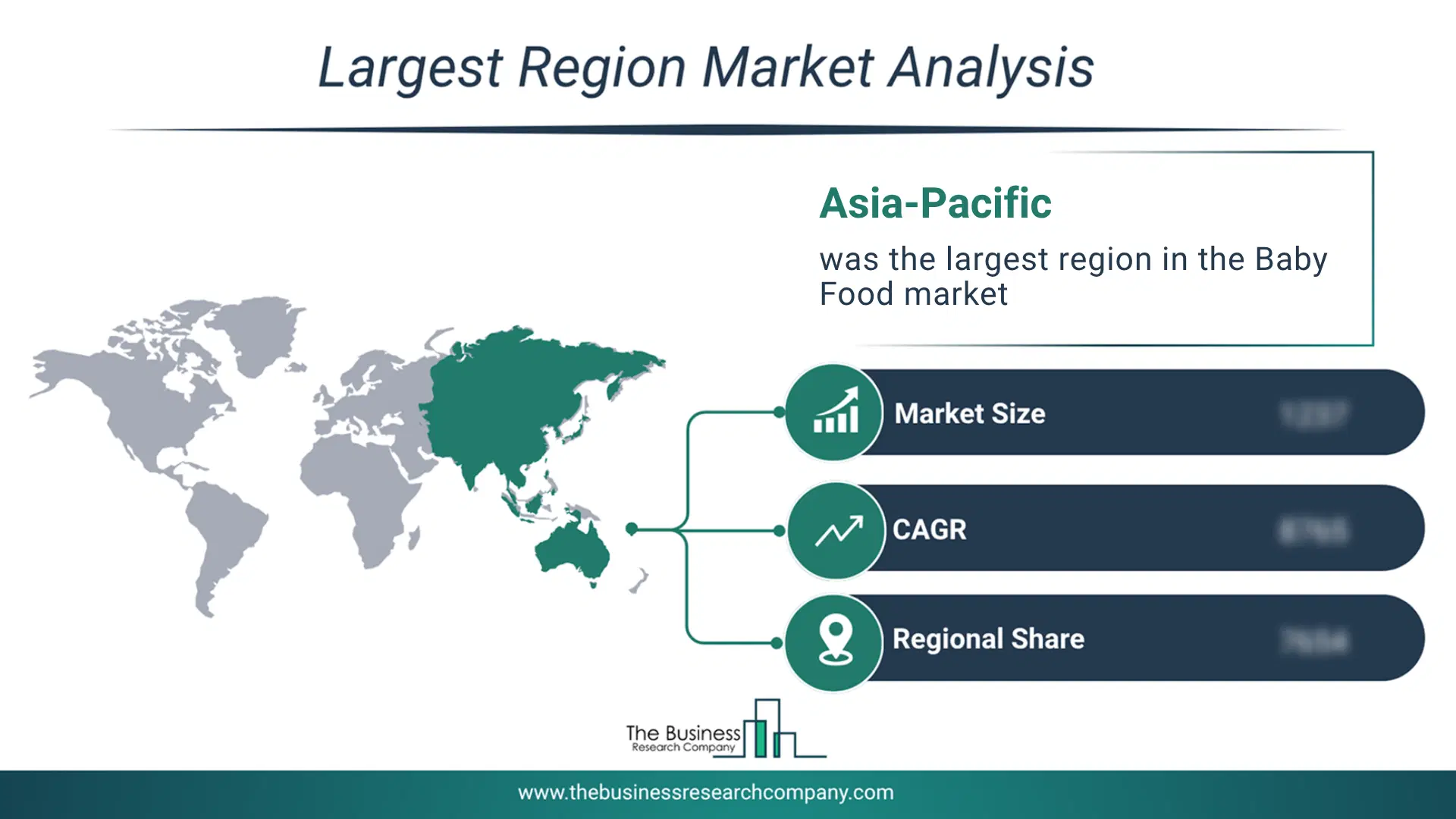
Regional Outlook
Asia-Pacific was the largest region in the baby food market in 2025 and is expected to be the fastest-growing region in the forecast period. The regions covered in this market report are Asia-Pacific, South East Asia, Western Europe, Eastern Europe, North America, South America, Middle East and Africa. The countries covered in this market report are Australia, Brazil, China, France, Germany, India, Indonesia, Japan, Taiwan, Russia, South Korea, UK, USA, Italy, Spain, CanadaWhat Defines the Baby Food Market?
The baby food market consists of sales of cereals, juice, and purees made from fruit, vegetable, cereal. Values in this market are ‘factory gate’ values, that is the value of goods sold by the manufacturers or creators of the goods, whether to other entities (including downstream manufacturers, wholesalers, distributors and retailers) or directly to end customers. The value of goods in this market includes related services sold by the creators of the goods.How is Market Value Defined and Measured?
The market value is defined as the revenues that enterprises gain from the sale of goods and/or services within the specified market and geography through sales, grants, or donations in terms of the currency (in USD unless otherwise specified). The revenues for a specified geography are consumption values that are revenues generated by organizations in the specified geography within the market, irrespective of where they are produced. It does not include revenues from resales along the supply chain, either further along the supply chain or as part of other products.
This chart presents market attractiveness based on a quantitative evaluation of growth, competition, strategic alignment, and risk, offering a clear view of opportunity areas for decision-making. This chart is for illustrative purposes; the full report contains the complete analysis.

This chart highlights the Total Addressable Market (TAM) by estimating the maximum revenue opportunity using an assumption-driven approach, supporting strategic planning and opportunity sizing across markets. The chart is illustrative; the full report provides a more comprehensive analysis.
What Key Data and Analysis Are Included in the Baby Food Market Report 2026?
The baby food market research report is one of a series of new reports from The Business Research Company that provides market statistics, including industry global market size, regional shares, competitors with the market share, detailed market segments, market trends and opportunities, and any further data you may need to thrive in the baby food industry. The market research report delivers a complete perspective of everything you need, with an in-depth analysis of the current and future state of the industry.Baby Food Market Report Forecast Analysis
| Report Attribute | Details |
|---|---|
| Market Size Value In 2026 | $87.06 billion |
| Revenue Forecast In 2030 | $107.65 billion |
| Growth Rate | CAGR of 5.6% from 2026 to 2030 |
| Base Year For Estimation | 2025 |
| Actual Estimates/Historical Data | 2020-2025 |
| Forecast Period | 2026 - 2030 |
| Market Representation | Revenue in USD Billion and CAGR from 2026 to 2030 |
| Segments Covered | Type, Category, Distribution Channel |
| Regional Scope | Asia-Pacific, Western Europe, Eastern Europe, North America, South America, Middle East, Africa |
| Country Scope | The countries covered in the report are Australia, Brazil, China, France, Germany, India, Indonesia, Japan, Taiwan, Russia, South Korea, UK, USA, Canada, Italy, Spain. |
| Key Companies Profiled | Abbott Nutrition, Bellamy Organics, Danone SA, Mead Johnson & Company LLC, Nestle SA, Perrigo Company plc, Royal FrieslandCampina NV, Hain Celestial Group Inc., Reckitt Benckiser Group plc, Inner Mongolia Yili Industrial Group Company Ltd., Deutsches Milchkontor GmbH, SMA Nutrition, Aptamil, HiPP GmbH & Co, Ella's Kitchen Group Ltd., Holle Baby Food, BUBS Australia Ltd., Happy Tot, NurturMe, Peter Rabbit Ltd., Pure Spoon, Serenity Kids Inc., Earth's Best Organic |
| Customization Scope | Request for Customization |
| Pricing And Purchase Options | Explore Purchase Options |