
Ballast Water Treatment Market Report 2026
Global Outlook – By Technology (Physical Disinfection, Mechanical Method, Chemical Method), By Capacity (Less Than 1,500 m3, 1,500–5,000 m3, More Than 5,000 m3), By Service (Installation And Calibration, Performance Measurement, Recommissioning), By Ship Type (Container Ships, Dry Bulk Carriers, Tankers, General Cargos, Other Ship Types) – Market Size, Trends, Strategies, and Forecast to 2030
Ballast Water Treatment Market Overview
• Ballast Water Treatment market size has reached to $139.67 billion in 2025 • Expected to grow to $502.95 billion in 2030 at a compound annual growth rate (CAGR) of 28.4% • Growth Driver: The Role Of Shipping In Driving The Ballast Water Treatment Market • Market Trend: Innovative Technologies Transforming The Ballast Water Treatment Market • Asia-Pacific was the largest region and fastest growing region.Market Gains By 2030 – Top Opportunities By Segment
Market Gain identifies the most promising market opportunities by highlighting the segments or products expected to generate the highest incremental revenue growth over the next five years.
What Is Covered Under Ballast Water Treatment Market?
Ballast water treatment refers to the pumped-in to keep the ship working safely throughout the voyage. This approach minimizes stress on the hull, increases propulsion and maneuverability, and compensates for weight fluctuations due to cargo load levels and fuel and water consumption. The ballast water treatment is used to maintain safe operating conditions throughout a voyage. The main ballast water treatment technologies are physical disinfection, mechanical methods, and chemical methods. Physical disinfection refers to physically treating something by passing it through a filter to remove living creatures and dirt with a particle size of 50 microns or larger. The various capacities are less than 1,500 m3, 1,500–5,000 m3, and more than 5,000 m3. The services offered are installation and calibration, performance measurement and recommissioning, and different types of ships are container ships, dry bulk carriers, tankers, general cargoes, and other ship types.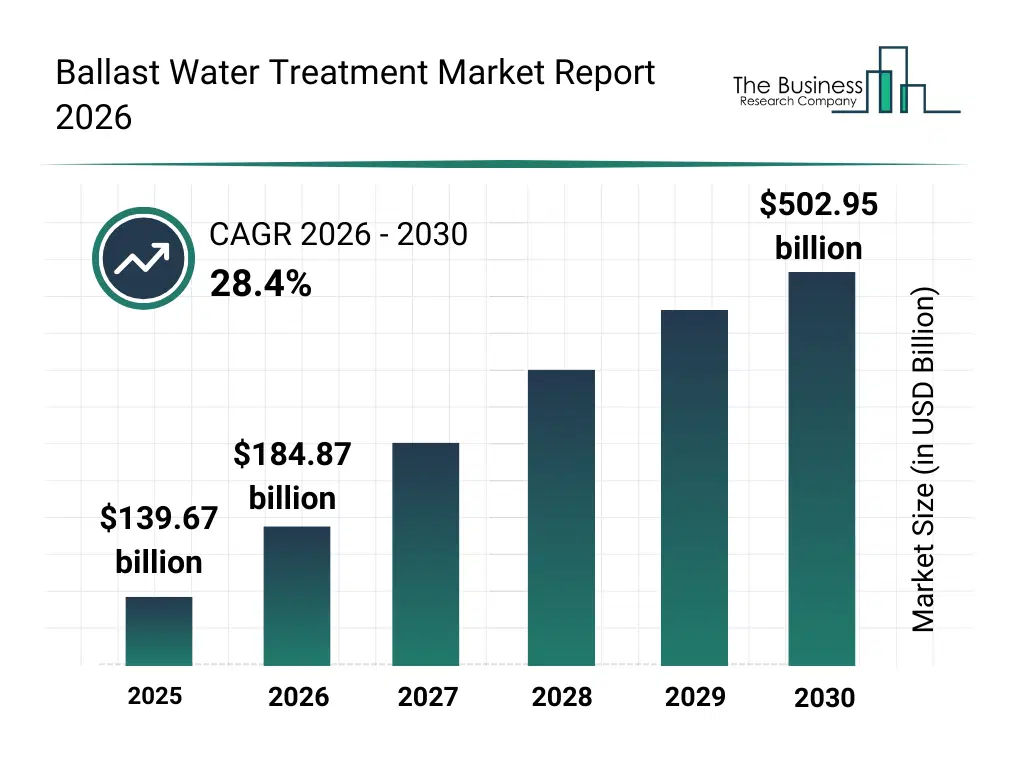
What Is The Ballast Water Treatment Market Size and Share 2026?
The ballast water treatment market size has grown exponentially in recent years. It will grow from $139.67 billion in 2025 to $184.87 billion in 2026 at a compound annual growth rate (CAGR) of 32.4%. The growth in the historic period can be attributed to implementation of imo ballast water management convention, rising international maritime traffic, adoption of physical and chemical treatment methods, advancements in filtration and disinfection technologies, increasing environmental regulations for marine ecosystems.What Is The Ballast Water Treatment Market Growth Forecast?
The ballast water treatment market size is expected to see exponential growth in the next few years. It will grow to $502.95 billion in 2030 at a compound annual growth rate (CAGR) of 28.4%. The growth in the forecast period can be attributed to rising investments in eco-friendly ballast water treatment technologies, integration of smart monitoring and control systems, growing demand for retrofitting older vessels, expansion of global shipping fleet, development of hybrid treatment methods combining physical and chemical processes. Major trends in the forecast period include adoption of advanced uv and filtration technologies, integration of automated ballast monitoring systems, expansion of chemical treatment solutions for ballast water, growing focus on compliance with imo d-2 standards, increasing demand for energy-efficient ballast water treatment systems.
Global Ballast Water Treatment Market Segmentation
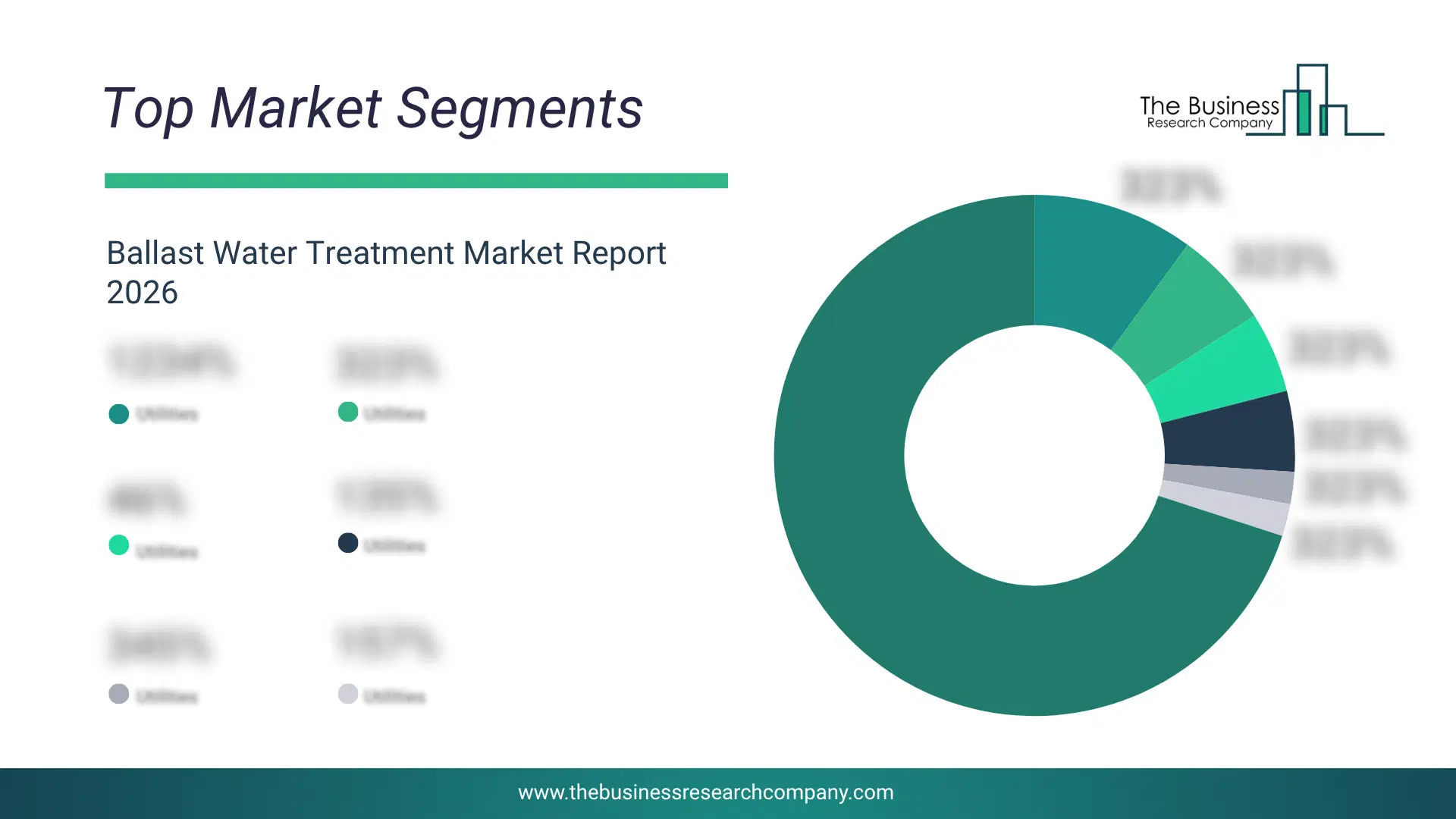
1) By Technology: Physical Disinfection, Mechanical Method, Chemical Method 2) By Capacity: Less Than 1,500 m3, 1,500–5,000 m3, More Than 5,000 m3 3) By Service: Installation And Calibration, Performance Measurement, Recommissioning 4) By Ship Type: Container Ships, Dry Bulk Carriers, Tankers, General Cargos, Other Ship Types Subsegments: 1) By Physical Disinfection: Ultraviolet (UV) Treatment, Thermal Treatment, Filtration Methods 2) By Mechanical Method: Centrifugation, Hydrocyclones, Settling Tanks 3) By Chemical Method: Chlorination, Ozonation, Electrochlorination, Other Chemical Treatments The top segments in the ballast water treatment market will be: • Physical Disinfection will reach $272 Billion by 2030. • Mechanical Method will reach $147 Billion by 2030. • Chemical Method will reach $82 Billion by 2030.What Is The Driver Of The Ballast Water Treatment Market?
The increase in shipping is expected to propel the growth of the ballast water treatment market going forward. Shipping refers to the transportation of goods, commodities, or cargo from one place to another, typically over bodies of water. Shipping is an essential component of international trade, and it facilitates the movement of goods between countries and continents. As international trade continues to grow, the number of vessels navigating across different regions also increases. This, in turn, raises the risk of introducing invasive species and aquatic organisms through ballast water. For instance, in April 2024, according to a State of the Cruise Industry report conducted by the Cruise Lines International Association (CLIA), an US-based cruise line trade association, an estimated 31.7 million cruise ships carried passengers in 2023, marking a 7% rise compared to the past four years. Therefore, the increase in shipping is driving the growth of the ballast water treatment industry.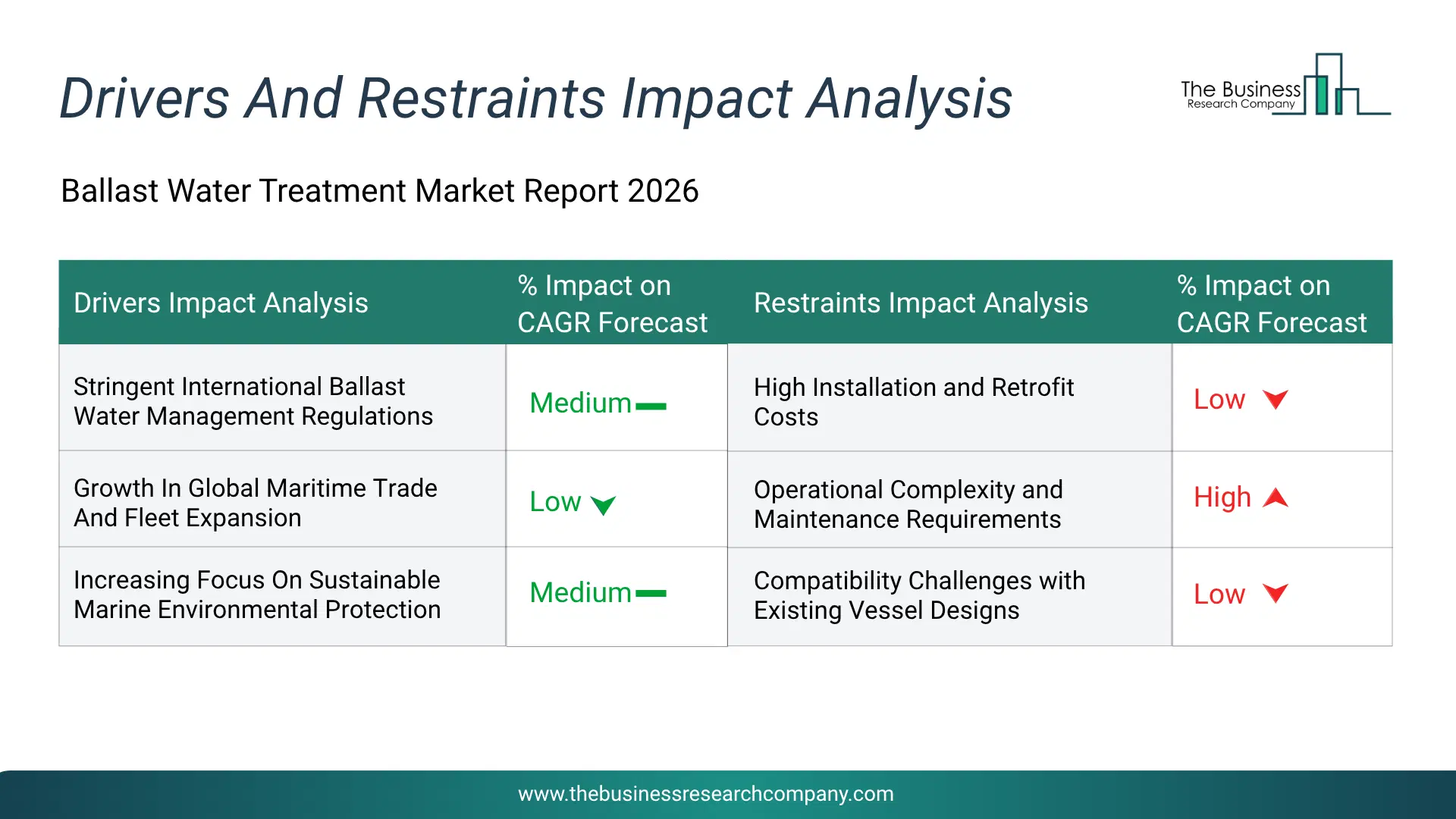
Infographic Chart Showing Key Market Drivers Analysis And Restraints For Ballast Water Treatment Market
The chart presents an impact analysis of key drivers and restraints, quantifying their relative influence on the market's growth rate and helping assess the balance between growth enablers and limiting factors. This chart offers a high-level perspective; the full report contains more detailed insights.
How Will The Drivers Impact Growth In The Global Ballast Water Treatment Market?
• Stringent International Ballast Water Management Regulations (Medium) – During the forecast period, the stringent international ballast water management regulations are expected to emerge as a major factor driving the expansion of the ballast water treatment market by 2030. international maritime organization (IMO) requirements and national maritime regulations are compelling vessel operators to install certified ballast water treatment systems that comply with discharge standards and prevent the transfer of invasive aquatic species. growing retrofitting activities for existing fleets and the installation of compliant systems on newly built vessels are further supporting market expansion. • Growth In Global Maritime Trade And Fleet Expansion (Low) – During the forecast period, the growth in global maritime trade and fleet expansion is expected to emerge as a major factor driving the expansion of the ballast water treatment market by 2030. increasing seaborne transportation of containerized cargo, crude oil, LNG, dry bulk commodities, and manufactured products is encouraging shipping companies to expand and modernize their fleets. rising vessel construction and fleet renewal activities are creating sustained demand for advanced ballast water treatment systems across commercial shipping operations. • Increasing Focus On Sustainable Marine Environmental Protection (Medium) – During the forecast period, the increasing focus on sustainable marine environmental protection is expected to act as a key growth catalyst for the ballast water treatment market by 2030. governments, port authorities, and shipping companies are increasingly prioritizing technologies that reduce ecological impacts by eliminating harmful aquatic organisms before ballast water discharge. expanding environmental compliance programs, corporate sustainability commitments, and investments in cleaner maritime operations are further accelerating the adoption of advanced ballast water treatment solutions.How Will The Restraints Impact Growth In The Global Ballast Water Treatment Market?
• High Installation and Retrofit Costs (Medium) – During the forecast period, during the forecast period, the ballast water treatment market the high installation and retrofit costs remain a significant restraint on the ballast water treatment market because installing compliant treatment systems requires substantial capital investment. Shipowners must invest in treatment equipment, engineering modifications, dry-docking, commissioning, and certification before systems become operational. Retrofitting older vessels often involves additional customization, increasing project complexity and expenses. These high upfront costs can delay adoption, particularly among small and medium-sized shipping operators. • Operational Complexity and Maintenance Requirements (Low) – During the forecast period, during the forecast period, the ballast water treatment market operational complexity and maintenance requirements continue to restrain the ballast water treatment market because treatment systems require regular inspection, calibration, filter replacement, and crew training to maintain regulatory compliance. Variations in water quality, salinity, sediment concentration, and operating conditions can affect treatment efficiency and system performance. Vessel operators must also allocate resources for ongoing monitoring and servicing throughout the equipment lifecycle. These operational challenges increase ownership costs and may discourage adoption among some fleet operators. • Compatibility Challenges with Existing Vessel Designs (Medium) – During the forecast period, during the forecast period, the ballast water treatment market compatibility challenges with existing vessel designs act as a restraint on the ballast water treatment market because integrating treatment systems into older vessels is often technically complex. Differences in ballast tank configurations, onboard space limitations, power availability, and piping layouts require customized engineering solutions that increase installation time and costs. These retrofit challenges may delay compliance projects and reduce investment among operators with aging fleets. Until more standardized installation solutions become available, compatibility issues will continue to moderate market growth.Key Players In The Global Ballast Water Treatment Market
Major companies operating in the ballast water treatment market are Wärtsilä Corporation, Xylem Inc., Evoqua Water Technologies LLC, Calgon Carbon Corporation, Ecochlor Inc, Alfa Laval AB, GEA Group AG, Hitachi Ltd., Veolia Water Technologies, Norwegian Greentech AS, ERMA FIRST ESK Engineering Solutions S.A., Industrie De Nora S.p.A., Atlantium Technologies Ltd., BIO-UV Group, DESMI A/S, JFE Engineering Corporation, Mitsubishi Heavy Industries Ltd., PANASIA CO. LTD, BioMicrobics Inc., Wuxi Brightsky Electronic Co. Ltd., Hyde Marine Inc., TECO Technologies Inc., D2 Marine Solutions, Boll Filter Corporation, Aquarius Marine Coatings Ltd., Cathelco Ltd., Coldharbour Marine Ltd., Damen Green Solutions, Filtertechnik Jäger GmbH, Hatenboer-Water BV, Headway Technology Group Co. Ltd.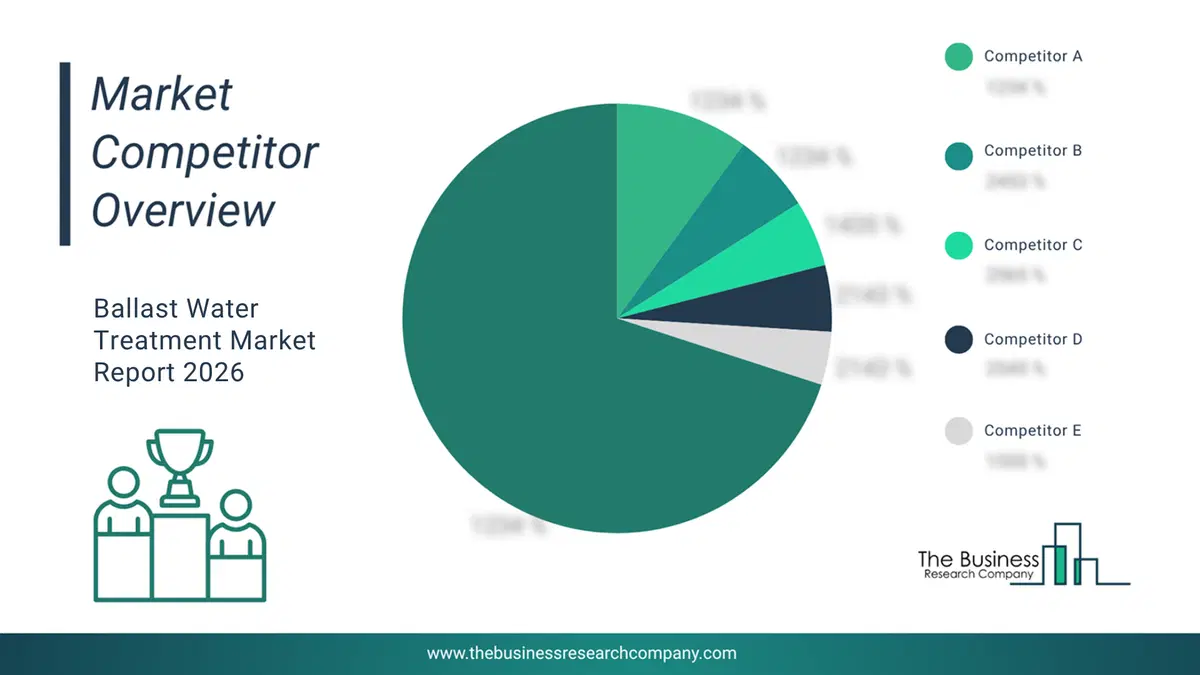
This chart is for illustrative purposes; the full report includes a detailed competitor analysis and comprehensive overview of the top 10 companies in the market.
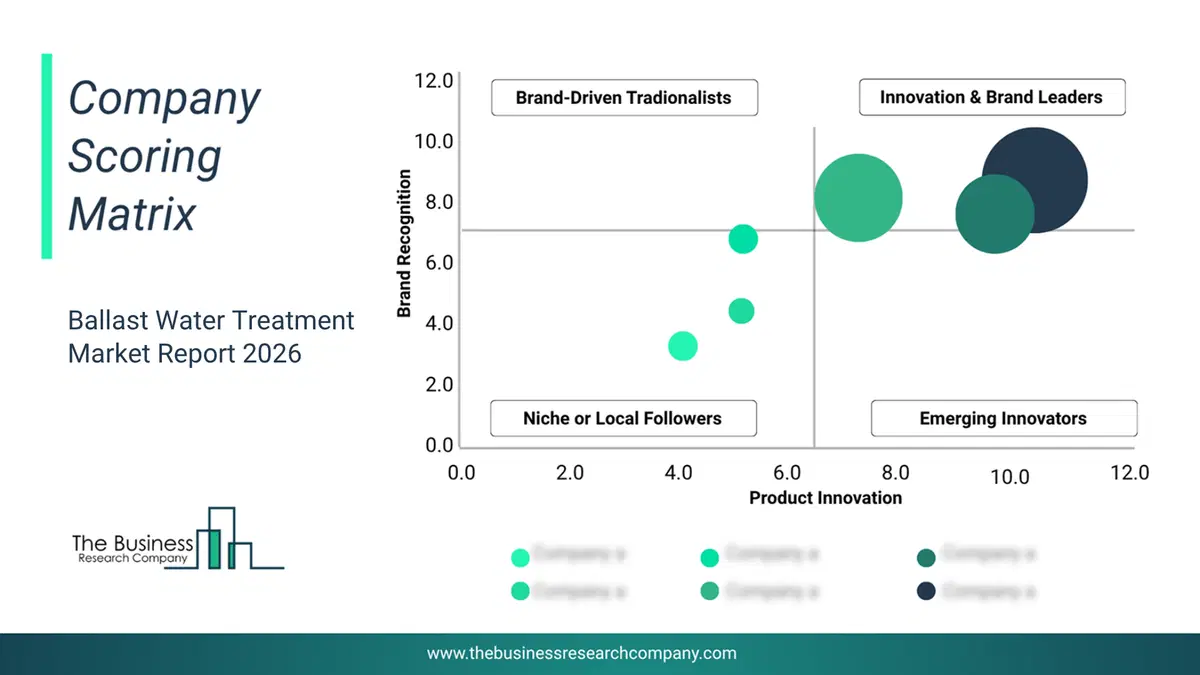
This chart maps companies by product innovation and brand strength, with bubble size indicating relative revenue, helping identify market leaders, challengers, and niche players. This is an illustrative chart; the full report provides a complete and accurate competitive analysis.
Global Ballast Water Treatment Market Trends and Insights
Major companies in the ballast water treatment market are focusing on developing innovative technologies, such as advanced filtration and UV systems, to enhance efficiency and meet rising regulatory and environmental demands. Advanced filtration and UV systems are technologies that remove impurities and microorganisms from ballast water using fine filters and ultraviolet light to ensure safe and environmentally compliant water discharge. For instance, in October 2023, BIO-UV Group, a UK-based water purification and disinfection systems manufacturing company, launched the BIO-SEA L01-0030 Mini, the smallest UV-based ballast water treatment system in the market, targeting operators of workboats, yachts, research vessels, and offshore support vessels. The company designed this fully automated system to integrate filtration and UV treatment for ballast water flow rates between 13 m³/h and 30 m³/h, with a compact skid footprint of just 1 m², providing an efficient solution to address the increasing demand for ballast water treatment technologies.What Are Latest Mergers And Acquisitions In The Ballast Water Treatment Market?
In April 2024, Optimarin AS, a Norwegian ballast water treatment system manufacturing company, acquired the Hyde Marine brand from Italy’s De Nora for an undisclosed amount. With this acquisition, Optimarin aims to enhance its ballast water management capabilities, enabling the company to offer advanced treatment solutions and improve compliance with environmental regulations, thereby positioning itself for sustained growth in the competitive maritime sector. Hyde Marine, Inc. is an Italy-based blast water treatment systems (BWTS) manufacturing company designed to control the spread of non-indigenous aquatic organisms.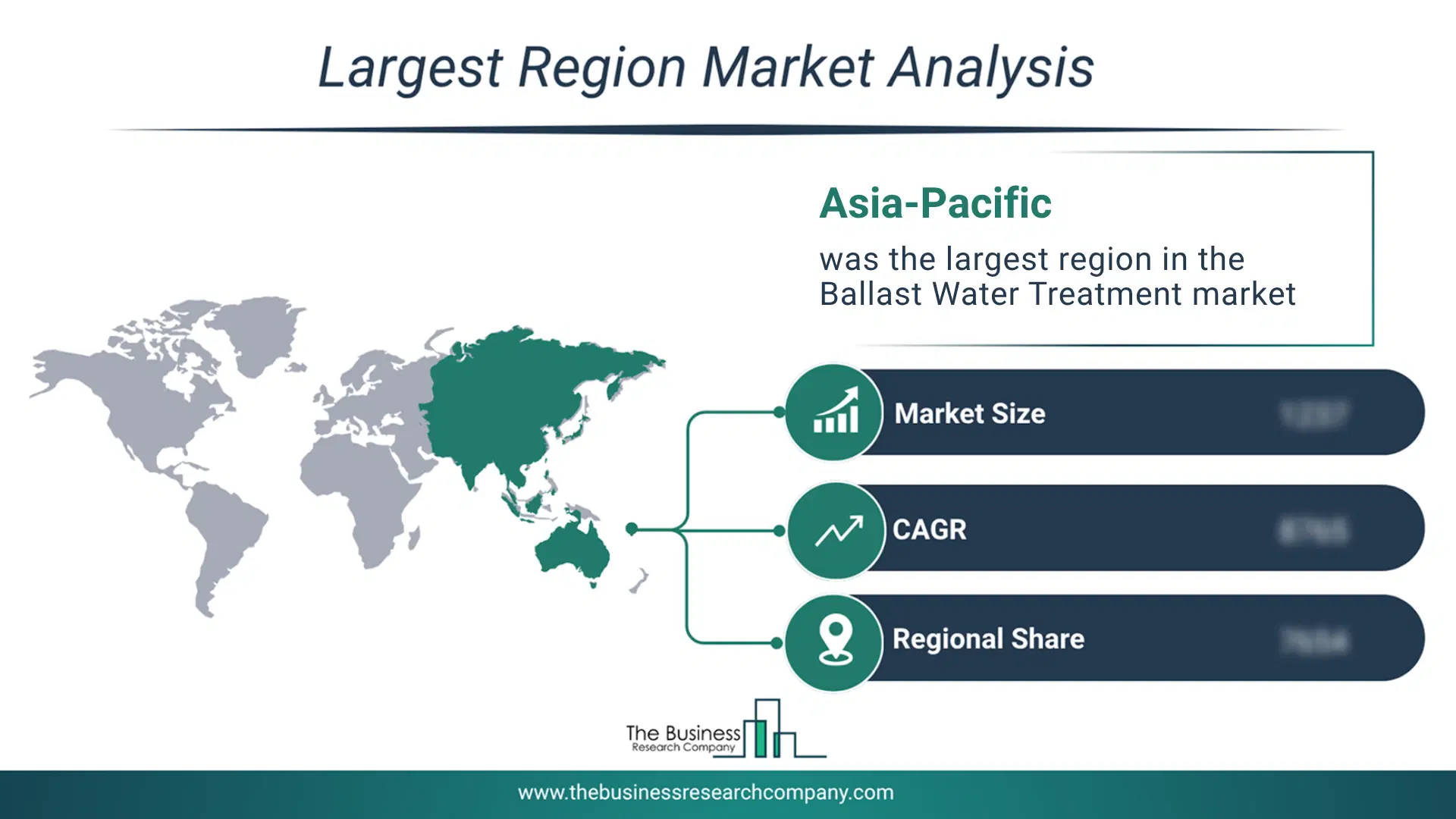
Regional Outlook
Asia-Pacific was the largest region in the ballast water treatment market share in 2025 and is expected to be the fastest-growing region in the forecast period. The regions covered in this market report are Asia-Pacific, South East Asia, Western Europe, Eastern Europe, North America, South America, Middle East, Africa. The countries covered in this market report are Australia, Brazil, China, France, Germany, India, Indonesia, Japan, Taiwan, Russia, South Korea, UK, USA, Canada, Italy, SpainWhat Defines the Ballast Water Treatment Market?
The ballast water treatment market includes revenues earned by entities by separation and filtration, ozone, electrical currents, or UV radiation, and biocides or a form of chlorination. The market value includes the value of related goods sold by the service provider or included within the service offering. Only goods and services traded between entities or sold to end consumers are included.How is Market Value Defined and Measured?
The market value is defined as the revenues that enterprises gain from the sale of goods and/or services within the specified market and geography through sales, grants, or donations in terms of the currency (in USD unless otherwise specified). The revenues for a specified geography are consumption values that are revenues generated by organizations in the specified geography within the market, irrespective of where they are produced. It does not include revenues from resales along the supply chain, either further along the supply chain or as part of other products.
This chart presents market attractiveness based on a quantitative evaluation of growth, competition, strategic alignment, and risk, offering a clear view of opportunity areas for decision-making. This chart is for illustrative purposes; the full report contains the complete analysis.

This chart highlights the Total Addressable Market (TAM) by estimating the maximum revenue opportunity using an assumption-driven approach, supporting strategic planning and opportunity sizing across markets. The chart is illustrative; the full report provides a more comprehensive analysis.
What Key Data and Analysis Are Included in the Ballast Water Treatment Market Report 2026?
The ballast water treatment market research report is one of a series of new reports from The Business Research Company that provides market statistics, including Market Report 2026?global market size, regional shares, competitors with the market share, detailed market segments, market trends and opportunities, and any further data you may need to thrive in the ballast water treatment Market Report 2026? The market research report delivers a complete perspective of everything you need, with an in-depth analysis of the current and future state of the Market Report 2026?Ballast Water Treatment Market Report Forecast Analysis
| Report Attribute | Details |
|---|---|
| Market Size Value In 2026 | $184.87 billion |
| Revenue Forecast In 2030 | $502.95 billion |
| Growth Rate | CAGR of 28.4% from 2026 to 2030 |
| Base Year For Estimation | 2025 |
| Actual Estimates/Historical Data | 2020-2025 |
| Forecast Period | 2026 - 2030 |
| Market Representation | Revenue in USD Billion and CAGR from 2026 to 2030 |
| Segments Covered | Technology, Capacity, Service, Ship Type |
| Regional Scope | Asia-Pacific, Western Europe, Eastern Europe, North America, South America, Middle East, Africa |
| Country Scope | The countries covered in the report are Australia, Brazil, China, France, Germany, India, Indonesia, Japan, Taiwan, Russia, South Korea, UK, USA, Canada, Italy, Spain. |
| Key Companies Profiled | Wärtsilä Corporation, Xylem Inc., Evoqua Water Technologies LLC, Calgon Carbon Corporation, Ecochlor Inc, Alfa Laval AB, GEA Group AG, Hitachi Ltd., Veolia Water Technologies, Norwegian Greentech AS, ERMA FIRST ESK Engineering Solutions S.A., Industrie De Nora S.p.A., Atlantium Technologies Ltd., BIO-UV Group, DESMI A/S, JFE Engineering Corporation, Mitsubishi Heavy Industries Ltd., PANASIA CO. LTD, BioMicrobics Inc., Wuxi Brightsky Electronic Co. Ltd., Hyde Marine Inc., TECO Technologies Inc., D2 Marine Solutions, Boll Filter Corporation, Aquarius Marine Coatings Ltd., Cathelco Ltd., Coldharbour Marine Ltd., Damen Green Solutions, Filtertechnik Jäger GmbH, Hatenboer-Water BV, Headway Technology Group Co. Ltd. |
| Customization Scope | Request for Customization |
| Pricing And Purchase Options | Explore Purchase Options |