
Bio-Based Solvents Market Report 2026
Global Outlook – By Product Type (Bio-Alcohols, Bio-Glycols, Bio-Lactate Esters, Bio-Based Ketones, Bio-Based Ethers, D-Limonene, Other Bio-Based Solvents), By Solvent Properties (Solvency Power, Evaporation Rate, Toxicity Level, Biodegradability, Volatility), By Feedstock Source (Sugar-Based, Starch-Based, Cellulose-Based, Vegetable Oil-Based, Algae-Based , Glycerol-Based (By-Product Of Biodiesel)), By Application (Paints And Coatings, Adhesives And Sealants, Printing Inks, Industrial And Domestic Cleaners, Pharmaceuticals, Cosmetics And Personal Care, Other Applications), By End-User (Automotive, Construction, Packaging, Textiles, Other End-Users) – Market Size, Trends, Strategies, and Forecast to 2030
Bio-Based Solvents Market Overview
• Bio-Based Solvents market size has reached to $7.61 billion in 2025 • Expected to grow to $11.57 billion in 2030 at a compound annual growth rate (CAGR) of 8.7% • Growth Driver: Rising Regulatory Pressures To Reduce VOC Emissions Are Driving Market Growth Due To Stricter Standards And Demand For Eco-friendly Solvent Alternatives • Market Trend: Innovation In Biotechnology And Green Chemistry Driving Adoption Of Levulinate-Ketal Bio-Solvents As Cyclopentasiloxane (D5) Alternatives • Europe was the largest region in 2025 and Asia-pacific is the fastest growing region.What Is Covered Under Bio-Based Solvents Market?
A bio-based solvent is a liquid made from renewable biological materials such as plant oils, sugars, or other biomass used to dissolve or thin substances. Its purpose is to perform cleaning and dissolving tasks like conventional solvents while reducing reliance on petroleum and often lowering toxicity and environmental impact. The main product types of bio-based solvents are bio-alcohols, bio-glycols, bio-lactate esters, bio-based ketones, bio-based ethers, D-limonene, and others. Bio-alcohols refer to environmentally friendly solvents derived from renewable biomass sources such as sugar, starch, or cellulose. They are used as sustainable alternatives to conventional petrochemical solvents due to their low toxicity, high solvency power, and biodegradability. These solvents are characterized by properties such as solvency power, evaporation rate, toxicity level, biodegradability, and volatility, and are obtained from feedstock sources that include sugar-based, starch-based, cellulose-based, vegetable oil-based, algae-based, and glycerol-based (by-product of biodiesel) materials. The key applications include paints and coatings, adhesives and sealants, printing inks, industrial and domestic cleaners, pharmaceuticals, cosmetics and personal care, and others. The major end-users encompass automotive, construction, packaging, textiles, and others.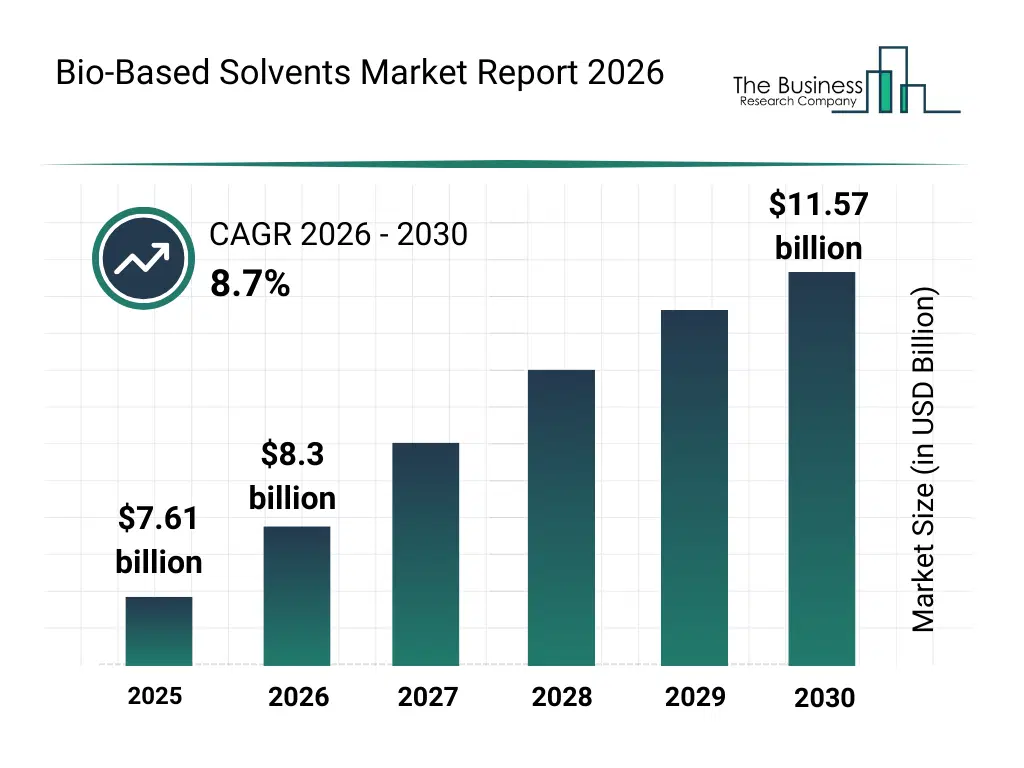
What Is The Bio-Based Solvents Market Size and Share 2026?
The bio-based solvents market size has grown strongly in recent years. It will grow from $7.61 billion in 2025 to $8.3 billion in 2026 at a compound annual growth rate (CAGR) of 9.0%. The growth in the historic period can be attributed to use of conventional organic solvents, growth in chemical manufacturing, industrial cleaning demand, availability of biomass feedstocks, regulatory pressure on emissions.What Is The Bio-Based Solvents Market Growth Forecast?
The bio-based solvents market size is expected to see strong growth in the next few years. It will grow to $11.57 billion in 2030 at a compound annual growth rate (CAGR) of 8.7%. The growth in the forecast period can be attributed to stringent environmental regulations, growth in sustainable manufacturing, innovation in bio solvent chemistry, rising demand for biodegradable products, expansion of green chemistry initiatives. Major trends in the forecast period include shift from petroleum based to renewable solvents, rising demand for low toxicity solvents, growing use in paints and coatings, expansion in personal care and pharmaceutical applications, focus on high performance green solvents.
Global Bio-Based Solvents Market Segmentation
1) By Product Type: Bio-Alcohols, Bio-Glycols, Bio-Lactate Esters, Bio-Based Ketones, Bio-Based Ethers, D-Limonene, Other Bio-Based Solvents 2) By Solvent Properties: Solvency Power, Evaporation Rate, Toxicity Level, Biodegradability, Volatility 3) By Feedstock Source: Sugar-Based, Starch-Based, Cellulose-Based, Vegetable Oil-Based, Algae-Based , Glycerol-Based (By-Product Of Biodiesel) 4) By Application: Paints And Coatings, Adhesives And Sealants, Printing Inks, Industrial And Domestic Cleaners, Pharmaceuticals, Cosmetics And Personal Care, Other Applications 5) By End-User: Automotive, Construction, Packaging, Textiles, Other End-Users Subsegments: 1) By Bio-Alcohols: Bio Ethanol, Bio Methanol, Bio Propanol, Bio Isopropanol, Bio Butanol, Bio Isobutanol 2) By Bio-Glycols: Bio Ethylene Glycol, Bio Propylene Glycol, Bio Diethylene Glycol, Bio Triethylene Glycol, Bio Butanediol 3) By Bio-Lactate Esters: Ethyl Lactate, Methyl Lactate, Propyl Lactate, Butyl Lactate, Isoamyl Lactate 4) By Bio-Based Ketones: Bio Acetone, Bio Methyl Ethyl Ketone, Bio Methyl Isobutyl Ketone, Bio Cyclohexanone, Bio Diisobutyl Ketone 5) By Bio-Based Ethers: Bio Diethyl Ether, Bio Dibutyl Ether, Bio Dipropyl Ether, Bio Tetrahydrofuran, Bio Methyltetrahydrofuran 6) By D-Limonene: Food Grade D Limonene, Technical Grade D Limonene, Industrial Grade D Limonene, Fragrance Grade D Limonene, High Purity D Limonene 7) By Other Bio-Based Solvents: Methyl Soyate, Ethyl Levulinate, Gamma Valerolactone, Propylene Carbonate From Bio Based Carbon Dioxide, Ethyl Acetate From Bio EthanolWhat Is The Driver Of The Bio-Based Solvents Market?
The increasing regulatory pressures to reduce volatile organic compound (VOC) emissions are expected to propel the growth of the bio-based solvent market going forward. Volatile organic compounds refer to a group of organic chemicals that easily evaporate at room temperature and significantly contribute to air pollution, ground-level ozone, and adverse health effects. The rise in pressure to reduce volatile organic compound (VOC) emissions is due to the harmful environmental and health impacts associated with them, as they contribute to photochemical smog, respiratory illnesses, and climate change. Bio-based solvents support the reduction of volatile organic compound (VOC) emissions by providing low-volatile organic compound (VOC), eco-friendly, and compliant alternatives, enabling industries to meet stricter emission standards and transition towards sustainable production processes. For instance, in July 2024, the California Department of Pesticide Regulation, a US-based government agency, reported that volatile organic compound (VOC) emissions in key ozone nonattainment areas across California remained within state implementation plan (SIP) goals for 2023 however, some regions experienced increases compared to 2022. In the San Joaquin Valley, emissions rose by 2.26 tons per day (tpd), from 12.528 tpd in 2022 to 14.788 tpd in 2023, with projections indicating a continued upward trend in 2024. Similarly, emissions in the Sacramento Metro area increased from 1.097 tpd in 2022 to 1.371 tpd in 2023, with smaller variations observed in the Southeast Desert, Ventura, and South Coast regions. Restrictions on high-VOC applications are expected to continue through 2025 to maintain regulatory compliance. Therefore, the increasing regulatory pressures to reduce volatile organic compound (VOC) emissions are driving the bio-based solvent industry.Key Players In The Global Bio-Based Solvents Market
Major companies operating in the bio-based solvents market are Shell Catalysts & Technologies, Cargill Incorporated, Archer Daniels Midland Company (ADM), BASF SE, Merck KGaA, Dow Chemical Company, LyondellBasell Industries Holdings B.V., AkzoNobel N.V., Eastman Chemical Company, Solvay S.A., Huntsman Corporation, Clariant AG, Stepan Company , Ashland Global Holdings Inc., Corbion N.V., Genomatica Inc. , Gevo Inc., GFBiochemicals Ltd., Galactic S.A., INEOS Nitriles.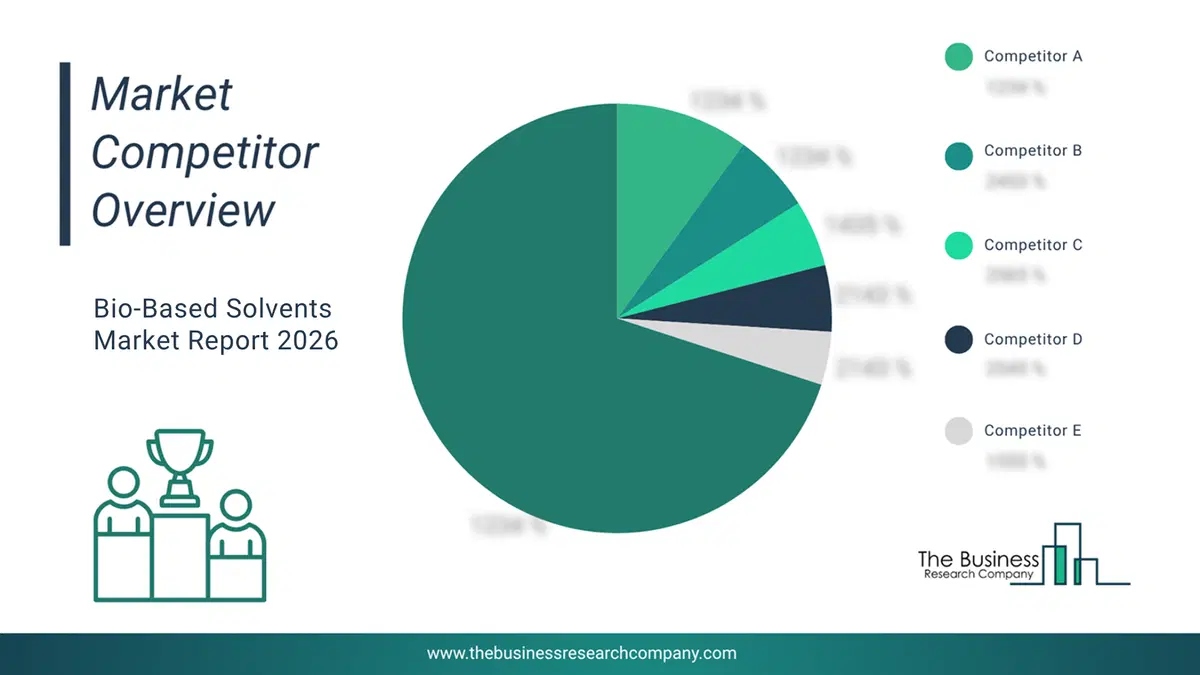
This chart is for illustrative purposes; the full report includes a detailed competitor analysis and comprehensive overview of the top 10 companies in the market.
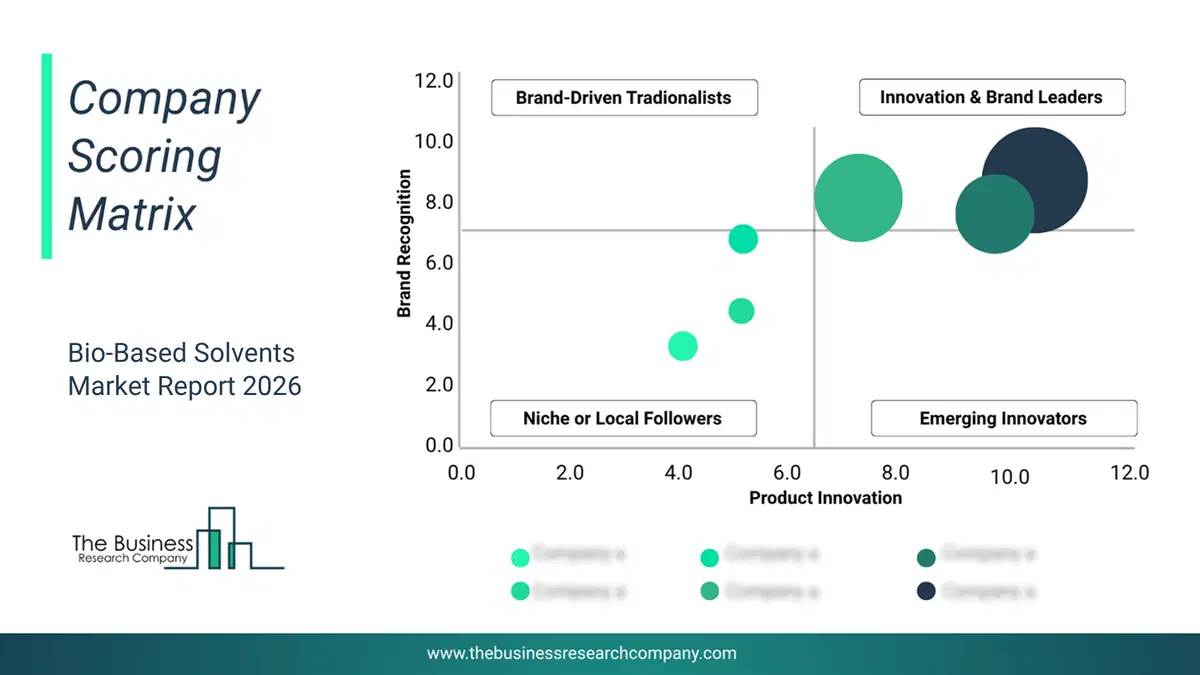
This chart maps companies by product innovation and brand strength, with bubble size indicating relative revenue, helping identify market leaders, challengers, and niche players. This is an illustrative chart; the full report provides a complete and accurate competitive analysis.
Global Bio-Based Solvents Market Trends and Insights
Major companies operating in the bio-based solvent market are focusing on developing innovations in biotechnology and green chemistry, such as levulinate-ketal solvents, to replace volatile silicones and petro-solvents in formulations. Levulinate-ketal solvents are acetals made from levulinic acid (from second-generation biomass) and bio-diols; they deliver silicone-like volatility and feel with high biobased content and safer, biodegradable profiles. For instance, in October 2025, GFBiochemicals, a France-based biochemical company, introduced RE:CHEMISTRY NEW320 (INCI: Ethyl Propanediol Acetal Levulinate), a plant-based solvent and emollient alternative to cyclopentasiloxane (D5) for personal-care formulations. Derived from second-generation biomass using levulinate-ketal chemistry, this solvent delivers silicone-like volatility and sensory performance while maintaining a high biobased content and enhanced biodegradability. RE:CHEMISTRY NEW320 enables formulators to reduce dependence on petrochemical and palm-derived ingredients without compromising on texture, dry-down, or overall product quality. This launch underscores GFBiochemicals’ commitment to advancing green chemistry solutions and reflects a broader market shift toward sustainable, high-performance bio-based solvents in the cosmetics and personal-care sector.What Are Latest Mergers And Acquisitions In The Bio-Based Solvents Market?
In June 2024, Technip Energies, a France-based company specializing in engineering and technology solutions for the energy transition, partnered with Shell Catalysts & Technologies to accelerate the commercialization of Bio-2-Glycols technology for the production of bio-based monoethylene glycol (MEG) from glucose. Through this partnership, Technip Energies and Shell Catalysts & Technologies aim to combine Shell’s research and development expertise with Technip Energies’ bio-MEG process technology to deliver a more efficient, scalable, and sustainable bio-based MEG solution to the market. Shell Catalysts & Technologies is a Netherlands-based company that provides advanced refining and chemical technologies and supports the bio-based chemicals by delivering catalyst and process innovations that improve efficiency and sustainability in chemical production.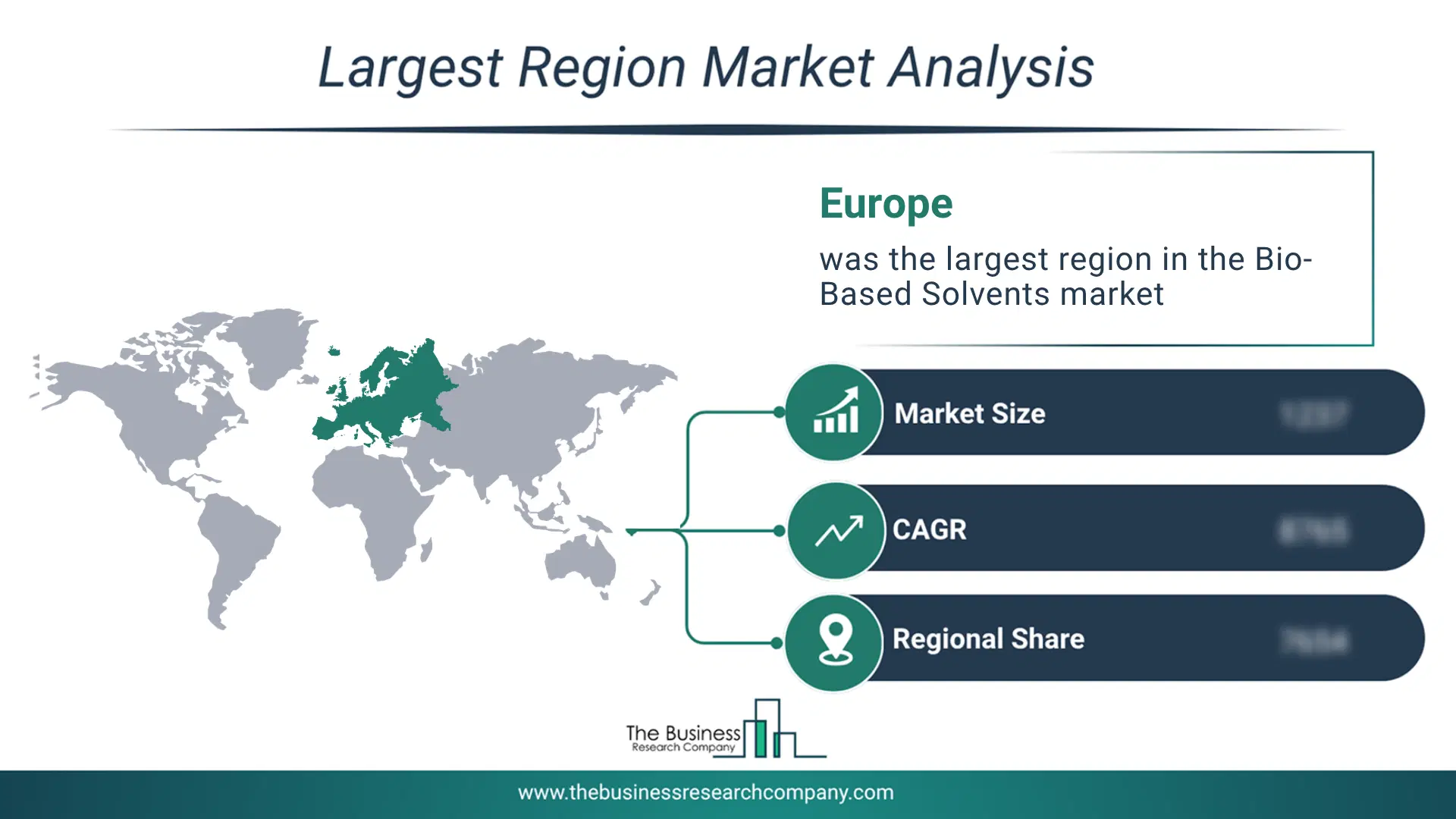
Regional Insights
Europe was the largest region in the bio-based Solvents market in 2025. Asia-Pacific is expected to be the fastest-growing region in the forecast period. The regions covered in this market report are Asia-Pacific, South East Asia, Western Europe, Eastern Europe, North America, South America, Middle East, Africa The countries covered in this market report are Australia, Brazil, China, France, Germany, India, Indonesia, Japan, Taiwan, Russia, South Korea, UK, USA, Canada, Italy, SpainWhat Defines the Bio-Based Solvents Market?
The bio-based solvents market consists of sales of bio-ethanol, plant-derived propylene glycol, ethyl lactate, bio-acetone, and 2-methyloxolane. Values in this market are ‘factory gate’ values, that is, the value of goods sold by the manufacturers or creators of the goods, whether to other entities (including downstream manufacturers, wholesalers, distributors, and retailers) or directly to end customers. The value of goods in this market includes related services sold by the creators of the goods.How is Market Value Defined and Measured?
The market value is defined as the revenues that enterprises gain from the sale of goods and/or services within the specified market and geography through sales, grants, or donations in terms of the currency (in USD unless otherwise specified). The revenues for a specified geography are consumption values that are revenues generated by organizations in the specified geography within the market, irrespective of where they are produced. It does not include revenues from resales along the supply chain, either further along the supply chain or as part of other products.
This chart presents market attractiveness based on a quantitative evaluation of growth, competition, strategic alignment, and risk, offering a clear view of opportunity areas for decision-making. This chart is for illustrative purposes; the full report contains the complete analysis.

This chart highlights the Total Addressable Market (TAM) by estimating the maximum revenue opportunity using an assumption-driven approach, supporting strategic planning and opportunity sizing across markets. The chart is illustrative; the full report provides a more comprehensive analysis.
What Key Data and Analysis Are Included in the Bio-Based Solvents Market Report 2026?
The bio-based solvents market research report is one of a series of new reports from The Business Research Company that provides market statistics, including industry global market size, regional shares, competitors with the market share, detailed market segments, market trends and opportunities, and any further data you may need to thrive in the bio-based solvents industry. The market research report delivers a complete perspective of everything you need, with an in-depth analysis of the current and future state of the industry.Bio Based Solvents Market Report Forecast Analysis
| Report Attribute | Details |
|---|---|
| Market Size Value In 2026 | $8.3 billion |
| Revenue Forecast In 2030 | $11.57 billion |
| Growth Rate | CAGR of 9.0% from 2026 to 2030 |
| Base Year For Estimation | 2025 |
| Actual Estimates/Historical Data | 2020-2025 |
| Forecast Period | 2026 - 2030 |
| Market Representation | Revenue in USD Billion and CAGR from 2026 to 2030 |
| Segments Covered | Product Type, Solvent Properties, Feedstock Source, Application, End-User |
| Regional Scope | Asia-Pacific, Western Europe, Eastern Europe, North America, South America, Middle East, Africa |
| Country Scope | The countries covered in this market report are Australia, Brazil, China, France, Germany, India, Indonesia, Japan, Taiwan, Russia, South Korea, UK, USA, Canada, Italy, Spain |
| Key Companies Profiled | Shell Catalysts & Technologies, Cargill Incorporated, Archer Daniels Midland Company (ADM), BASF SE, Merck KGaA, Dow Chemical Company, LyondellBasell Industries Holdings B.V., AkzoNobel N.V., Eastman Chemical Company, Solvay S.A., Huntsman Corporation, Clariant AG, Stepan Company , Ashland Global Holdings Inc., Corbion N.V., Genomatica Inc. , Gevo Inc., GFBiochemicals Ltd., Galactic S.A., INEOS Nitriles. |
| Customization Scope | Request for Customization |
| Pricing And Purchase Options | Explore Purchase Options |