
Biotech Ingredient Market Report 2026
Global Outlook – By Type (Active Pharmaceutical Ingredients, Biosimilars), By Expression Systems (Mammalian Expression Systems, Microbial Expression Systems, Yeast Expression Systems, Plant Expression Systems, Insect Expression Systems), By Application (Food And Beverages, Personal Care And Cosmetics, Cleaning Products, Other Applications) – Market Size, Trends, Strategies, and Forecast to 2030
Biotech Ingredient Market Overview
• Biotech Ingredient market size has reached to $63.25 billion in 2025 • Expected to grow to $87.06 billion in 2030 at a compound annual growth rate (CAGR) of 6.6% • Growth Driver: Biotech Ingredient Market Surges Amid Rising Demand In Personal Care Products • Market Trend: Innovative Biotech Solutions Transforming The Cosmeceutical Landscape • Europe was the largest region in 2025 and Asia-Pacific is the fastest growing region.What Is Covered Under Biotech Ingredient Market?
Biotech ingredients refer to chemical components produced by microbes, most commonly yeast, yeast-like organisms, or algae that have their DNA edited such that their metabolism results in a commercially viable compound. These ingredients are safer and are often less expensive for consumers. The main types of biotech ingredients are active pharmaceutical ingredients and biosimilars. An active pharmaceutical ingredient (API) refers to a component of an OTC or prescription medication that causes the desired health effects. The various expression systems include mammalian expression systems, microbial expression systems, yeast expression systems, plant expression systems, and insect expression systems that are used in various applications, including food and beverages, personal care and cosmetics, cleaning products, and others.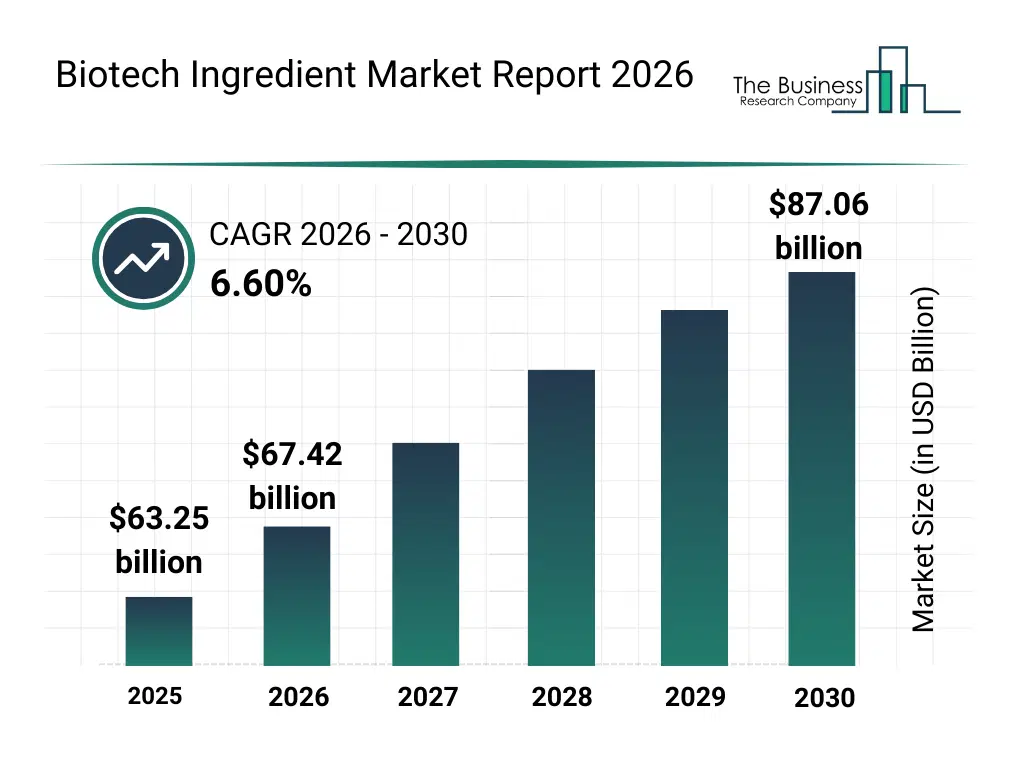
What Is The Biotech Ingredient Market Size and Share 2026?
The biotech ingredient market size has grown strongly in recent years. It will grow from $63.25 billion in 2025 to $67.42 billion in 2026 at a compound annual growth rate (CAGR) of 6.6%. The growth in the historic period can be attributed to increasing demand for natural and safe ingredients, advances in microbial fermentation technologies, growing awareness of biotech applications in food and personal care, rising consumer preference for sustainable ingredients, early adoption of yeast- and algae-based compounds.What Is The Biotech Ingredient Market Growth Forecast?
The biotech ingredient market size is expected to see strong growth in the next few years. It will grow to $87.06 billion in 2030 at a compound annual growth rate (CAGR) of 6.6%. The growth in the forecast period can be attributed to expansion of precision medicine and personalized nutrition, increased government support for biotech R&D, scaling up of microbial and yeast expression systems, adoption of AI and automation in production, growing application across cosmetics, cleaning products, and food industries. Major trends in the forecast period include synthetic biology advancements, microbial engineering innovations, cost-effective ingredient production, regulatory compliance & safety standards, expansion in food, personal care, and cleaning applications.
Global Biotech Ingredient Market Segmentation
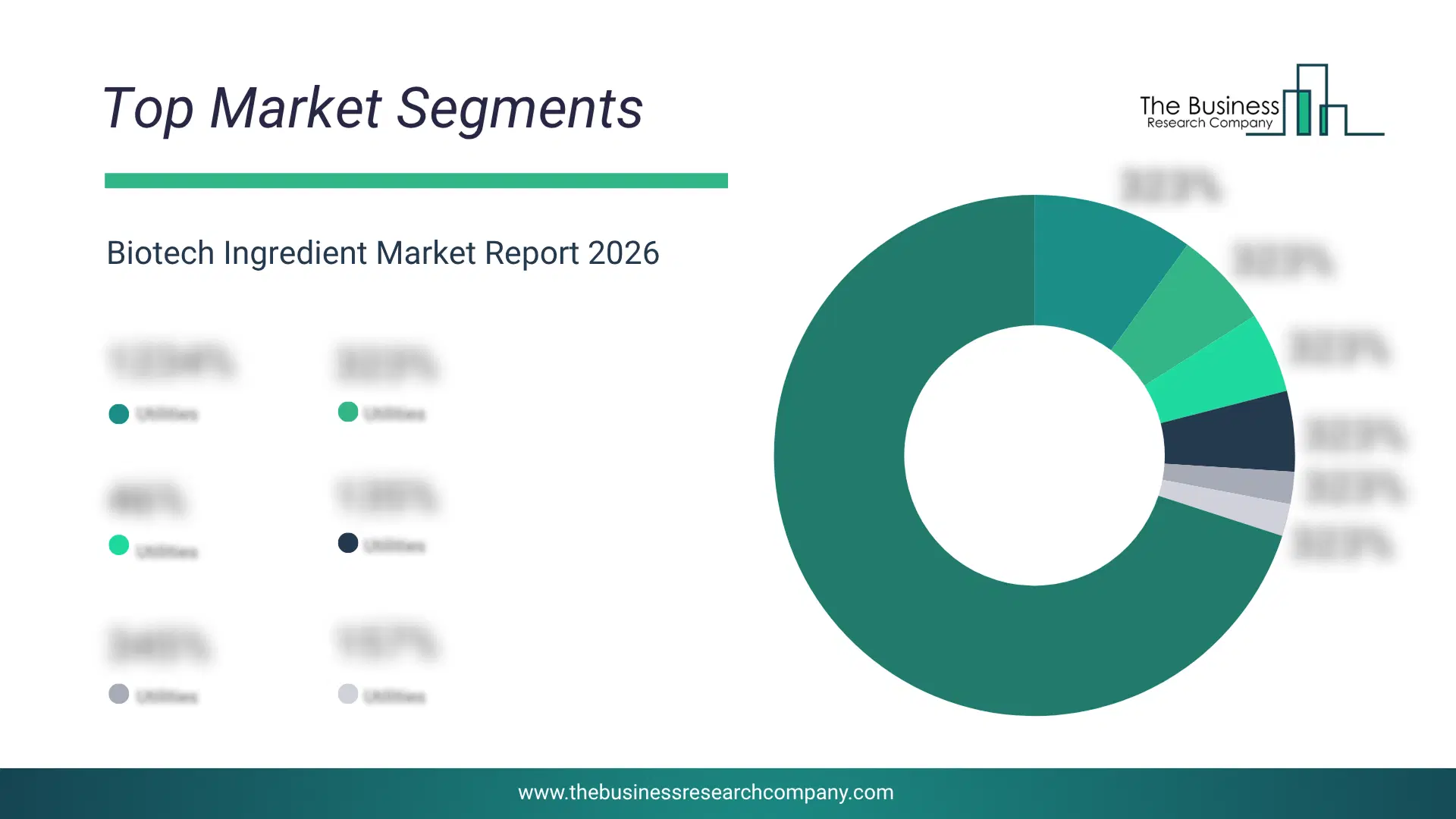
1) By Type: Active Pharmaceutical Ingredients, Biosimilars 2) By Expression Systems: Mammalian Expression Systems, Microbial Expression Systems, Yeast Expression Systems, Plant Expression Systems, Insect Expression Systems 3) By Application: Food And Beverages, Personal Care And Cosmetics, Cleaning Products, Other Applications Subsegments: 1) By Active Pharmaceutical Ingredients (APIs): Biologic APIs, Synthetic APIs 2) By Biosimilars: Monoclonal Antibodies, Recombinant Proteins, Insulin BiosimilarsWhat Is The Driver Of The Biotech Ingredient Market?
The increasing demand in personal care products is expected to propel the growth of the biotech ingredient market going forward. Personal care products refer to a broad category of items that are used for maintaining personal hygiene and enhancing one's appearance. Biotech ingredients in personal care products offer reduced environmental footprint, sustainability, consistent quality, reduced allergenic potential, biocompatibility, enhanced efficacy, and reduced dependence on petrochemicals. For instance, in December 2024, according to the Bureau of Labor Statistics, a US-based government agency, the average annual expenditure on personal care products and services rose from $866 per consumer unit in 2022 to $950 per consumer unit in 2023. Therefore, the increasing demand for personal care products is driving the growth of the biotech ingredient industry.Key Players In The Global Biotech Ingredient Market
Major companies operating in the biotech ingredient market are Merck & Co. Inc., Sanofi S.A., AbbVie Inc., International Flavors & Fragrance (IFF) Inc., Novartis AG, Pfizer Inc., Teva Pharmaceutical Industries Ltd., Mylan Inc., Boehringer Ingelheim International GmbH., AstraZeneca plc., Givaudan, Firmenich SA, Amyris Inc., Advanced BioTech, Sollice Biotech, Novocap S.A., Eli Lilly, Bristol-Myers Squibb Company, GlaxoSmithKline plc., F. Hoffmann-La Roche AG, Biogen Inc., Amgen Inc., Johnson & Johnson, Genentech Inc., Regeneron Pharmaceuticals Inc., Vertex Pharmaceuticals Incorporated, Alexion Pharmaceuticals Inc., Celgene Corporation, Gilead Sciences Inc., BioMarin Pharmaceutical Inc., Incyte Corporation, Seattle Genetics Inc., Alnylam Pharmaceuticals Inc., Ionis Pharmaceuticals Inc., Moderna Inc., Editas Medicine Inc., Intellia Therapeutics Inc., Sangamo Therapeutics Inc., Bluebird Bio Inc., Spark Therapeutics Inc.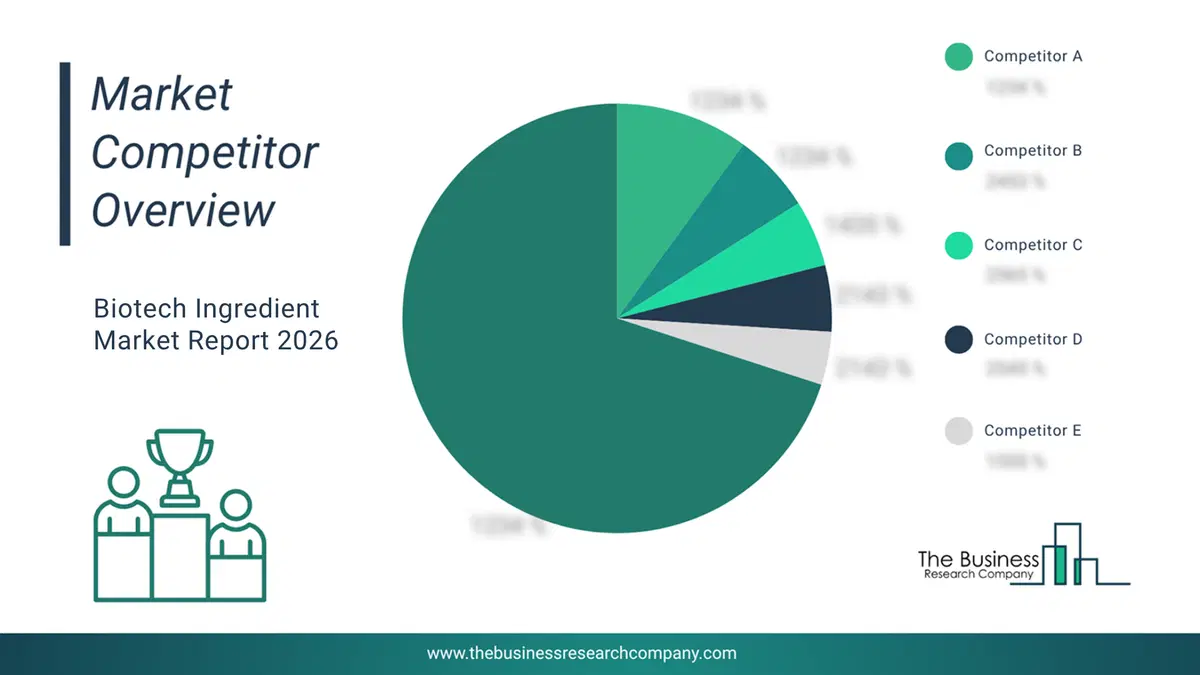
This chart is for illustrative purposes; the full report includes a detailed competitor analysis and comprehensive overview of the top 10 companies in the market.
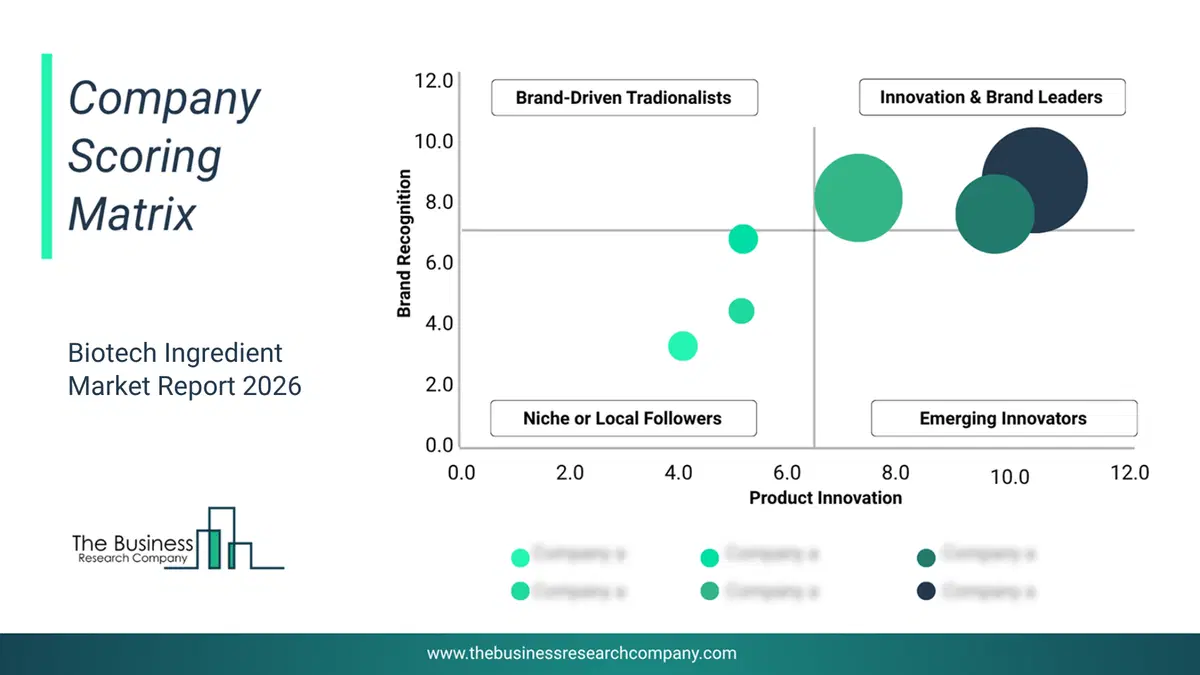
This chart maps companies by product innovation and brand strength, with bubble size indicating relative revenue, helping identify market leaders, challengers, and niche players. This is an illustrative chart; the full report provides a complete and accurate competitive analysis.
Global Biotech Ingredient Market Trends and Insights
Major companies operating in the biotech ingredient market are focusing on developing innovative solutions, such as advanced biotechnology-based ingredient platforms, to meet the rising demand for high-performance, sustainable, and next-generation cosmetic and personal care formulations. These biotechnology-driven ingredients leverage enzymatic and bio-based processes to create novel molecular structures with enhanced functionality, offering greater performance, scalability, and environmental benefits compared with traditional chemically synthesized ingredients. For instance, in March 2023, International Flavors & Fragrances Inc., a US-based manufacturer of fragrance, biotech solutions, cosmetic energetics, and organic health ingredients, launched Aurist AGC, a novel biopolymer for hair care. This illustrates the new DEB platform's potential by utilizing IFF's comprehensive biotechnology functionality to ensure sustained and high-performance glamour solutions that really can truly contribute to change in the cosmeceutical industry. The ingredient uses IFF's proprietary Designed Enzymatic Biopolymers (DEB) technology, an advanced biotechnology capable of producing novel bio-based polysaccharides with distinct structures and product features.What Are Latest Mergers And Acquisitions In The Biotech Ingredient Market?
In July 2023, Evonik, a Germany-based specialty chemicals company, acquired Novachem for an undisclosed amount. Through this acquisition, Evonik aims to strengthen its biotech ingredient capabilities by integrating Novachem’s natural and sustainable active ingredients and expanding its portfolio of high-value cosmetic actives. Novachem is an Argentina-based biotech company that provides biotechnologically derived active ingredients for skin and hair care.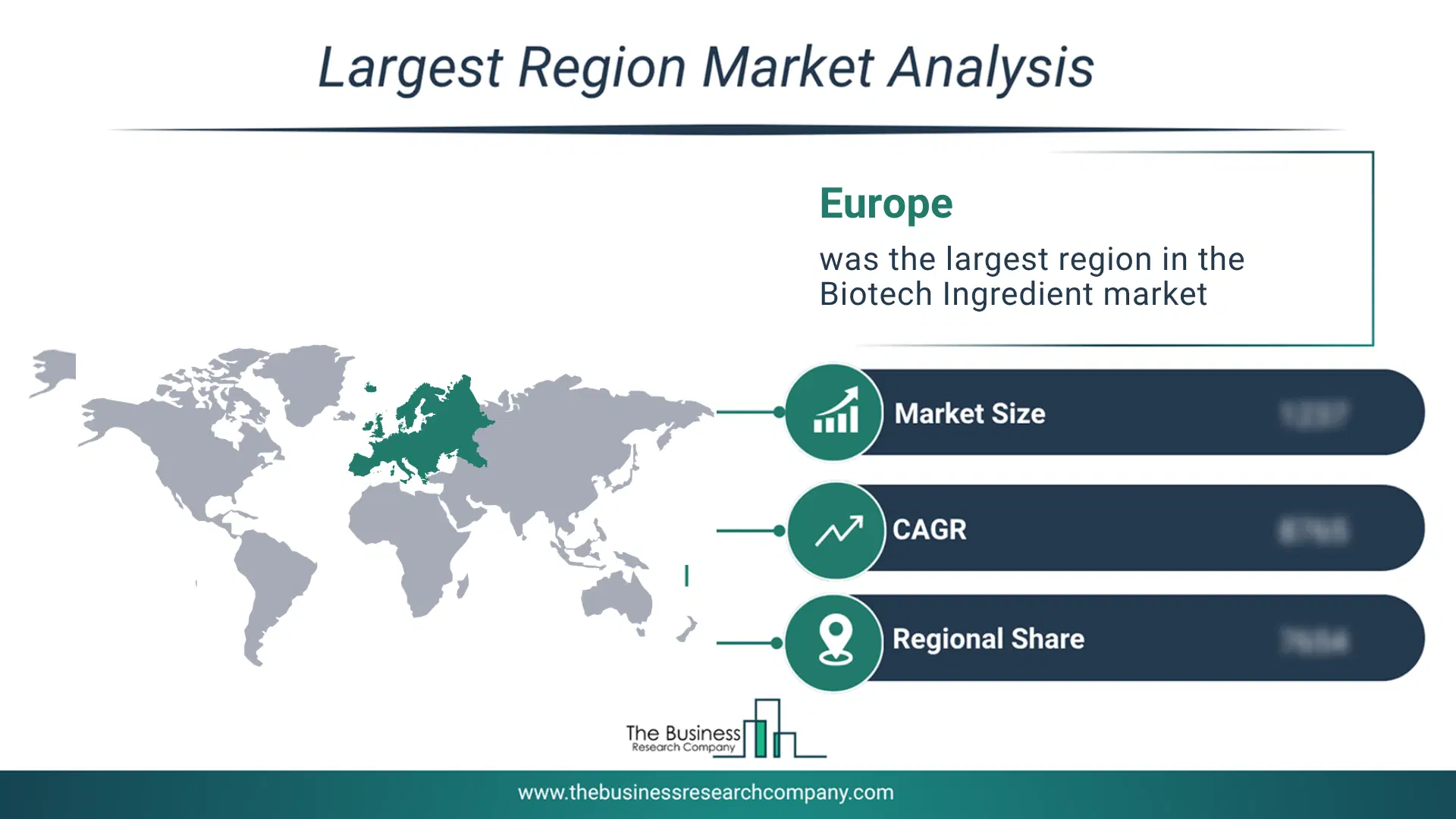
Regional Insights
Europe was the largest region in the biotech ingredient market in 2025. Asia-Pacific is expected to be the fastest-growing region in the biotech ingredients market report during the forecast period. The regions covered in this market report are Asia-Pacific, South East Asia, Western Europe, Eastern Europe, North America, South America, Middle East, Africa. The countries covered in this market report are Australia, Brazil, China, France, Germany, India, Indonesia, Japan, Taiwan, Russia, South Korea, UK, USA, Canada, Italy, Spain.What Defines the Biotech Ingredient Market?
The biotech ingredient market consists of sales of shea butter, coconut oil, mango butter, frankincense essential oil, patchouli essential oil, and licorice extract. Values in this market are ‘factory gate’ values, that is the value of goods sold by the manufacturers or creators of the goods, whether to other entities (including downstream manufacturers, wholesalers, distributors, and retailers) or directly to end customers. The value of goods in this market includes related services sold by the creators of the goods.How is Market Value Defined and Measured?
The market value is defined as the revenues that enterprises gain from the sale of goods and/or services within the specified market and geography through sales, grants, or donations in terms of the currency (in USD unless otherwise specified). The revenues for a specified geography are consumption values that are revenues generated by organizations in the specified geography within the market, irrespective of where they are produced. It does not include revenues from resales along the supply chain, either further along the supply chain or as part of other products.
This chart presents market attractiveness based on a quantitative evaluation of growth, competition, strategic alignment, and risk, offering a clear view of opportunity areas for decision-making. This chart is for illustrative purposes; the full report contains the complete analysis.

This chart highlights the Total Addressable Market (TAM) by estimating the maximum revenue opportunity using an assumption-driven approach, supporting strategic planning and opportunity sizing across markets. The chart is illustrative; the full report provides a more comprehensive analysis.
What Key Data and Analysis Are Included in the Biotech Ingredient Market Report 2026?
The biotech ingredient market research report is one of a series of new reports from The Business Research Company that provides market statistics, including industry global market size, regional shares, competitors with the market share, detailed market segments, market trends and opportunities, and any further data you may need to thrive in the biotech ingredient industry. The market research report delivers a complete perspective of everything you need, with an in-depth analysis of the current and future state of the industry.Biotech Ingredient Market Report Forecast Analysis
| Report Attribute | Details |
|---|---|
| Market Size Value In 2026 | $67.42 billion |
| Revenue Forecast In 2030 | $87.06 billion |
| Growth Rate | CAGR of 6.6% from 2026 to 2030 |
| Base Year For Estimation | 2025 |
| Actual Estimates/Historical Data | 2020-2025 |
| Forecast Period | 2026 - 2030 |
| Market Representation | Revenue in USD Billion and CAGR from 2026 to 2030 |
| Segments Covered | Type, Expression Systems, Application |
| Regional Scope | Asia-Pacific, Western Europe, Eastern Europe, North America, South America, Middle East, Africa |
| Country Scope | The countries covered in the report are Australia, Brazil, China, France, Germany, India, Indonesia, Japan, Taiwan, Russia, South Korea, UK, USA, Canada, Italy, Spain. |
| Key Companies Profiled | Merck & Co. Inc., Sanofi S.A., AbbVie Inc., International Flavors & Fragrance (IFF) Inc., Novartis AG, Pfizer Inc., Teva Pharmaceutical Industries Ltd., Mylan Inc., Boehringer Ingelheim International GmbH., AstraZeneca plc., Givaudan, Firmenich SA, Amyris Inc., Advanced BioTech, Sollice Biotech, Novocap S.A., Eli Lilly, Bristol-Myers Squibb Company, GlaxoSmithKline plc., F. Hoffmann-La Roche AG, Biogen Inc., Amgen Inc., Johnson & Johnson, Genentech Inc., Regeneron Pharmaceuticals Inc., Vertex Pharmaceuticals Incorporated, Alexion Pharmaceuticals Inc., Celgene Corporation, Gilead Sciences Inc., BioMarin Pharmaceutical Inc., Incyte Corporation, Seattle Genetics Inc., Alnylam Pharmaceuticals Inc., Ionis Pharmaceuticals Inc., Moderna Inc., Editas Medicine Inc., Intellia Therapeutics Inc., Sangamo Therapeutics Inc., Bluebird Bio Inc., Spark Therapeutics Inc. |
| Customization Scope | Request for Customization |
| Pricing And Purchase Options | Explore Purchase Options |