
Cast Aluminum Automotive Parts Market Report 2026
Global Outlook – By Type (Engine Blocks And Cylinder Heads, Transmission Cases, Suspension Components, Other Types), By Vehicle Type (Passenger Cars, Light Commercial Vehicles, Heavy Commercial Vehicles), By Application (Powertrain, Vehicle Structures, Chassis And Suspension, E-Mobility Components, Other Applications), By End Application (Original Equipment Manufacturer (OEM), Aftermarket) – Market Size, Trends, Strategies, and Forecast to 2030
Cast Aluminum Automotive Parts Market Overview
• Cast Aluminum Automotive Parts market size has reached to $31.27 billion in 2025 • Expected to grow to $44.06 billion in 2030 at a compound annual growth rate (CAGR) of 7.2% • Growth Driver: Surge In Electric And Hybrid Vehicle Adoption Is Driving The Market Growth Due To Stricter Emissions Regulations And Demand For Lightweight, Energy-Efficient Components • Market Trend: Innovative Aluminum Die-Casting Process Reduces Waste And CO2 Emissions • North America was the largest region in 2025 and Asia-Pacific is the fastest growing region.Market Gains By 2030 – Top Opportunities By Segment
Market Gain identifies the most promising market opportunities by highlighting the segments or products expected to generate the highest incremental revenue growth over the next five years.
What Is Covered Under Cast Aluminum Automotive Parts Market?
Cast aluminum automotive parts refer to vehicle components manufactured by pouring molten aluminum into molds, allowing it to solidify into precise shapes. These parts are lightweight, corrosion-resistant, and offer high strength-to-weight ratios, making them ideal for structural and engine applications in vehicles. These parts help to reduce overall vehicle weight, improve fuel efficiency, and maintain durability under mechanical and thermal stress. The main types of cast aluminum automotive parts are engine blocks and cylinder heads, transmission cases, suspension components, body panels, and others. Engine blocks and cylinder heads are the main engine components, with the block housing cylinders and the head sealing them while managing airflow and fuel. These parts are used for various vehicle types such as passenger cars, light commercial vehicles, and heavy commercial vehicles. The applications of these parts span powertrain, vehicle structures, chassis and suspension, e-mobility components, and others, serving various end users such as original equipment manufacturers (OEMs) and the aftermarket.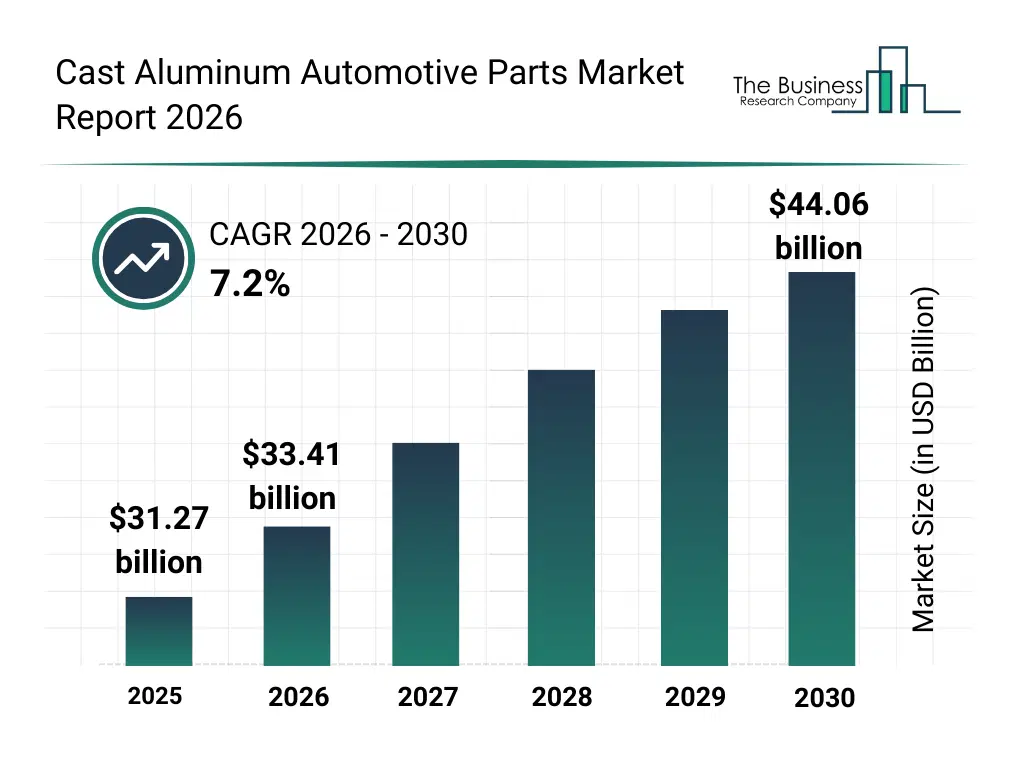
What Is The Cast Aluminum Automotive Parts Market Size and Share 2026?
The cast aluminum automotive parts market size has grown strongly in recent years. It will grow from $31.27 billion in 2025 to $33.41 billion in 2026 at a compound annual growth rate (CAGR) of 6.8%. The growth in the historic period can be attributed to vehicle lightweighting initiatives, expansion of aluminum casting facilities, growth in passenger vehicle production, increasing use of aluminum in powertrain components, advancements in casting technologies.What Is The Cast Aluminum Automotive Parts Market Growth Forecast?
The cast aluminum automotive parts market size is expected to see strong growth in the next few years. It will grow to $44.06 billion in 2030 at a compound annual growth rate (CAGR) of 7.2%. The growth in the forecast period can be attributed to rising electric vehicle penetration, increasing demand for high-strength lightweight materials, expansion of structural aluminum applications, growing investments in advanced casting processes, increasing focus on vehicle efficiency standards. Major trends in the forecast period include increasing use of lightweight aluminum components, rising adoption of high-pressure die casting, growing demand for structural aluminum parts, expansion of aluminum use in ev platforms, improved casting precision and quality.
Global Cast Aluminum Automotive Parts Market Segmentation
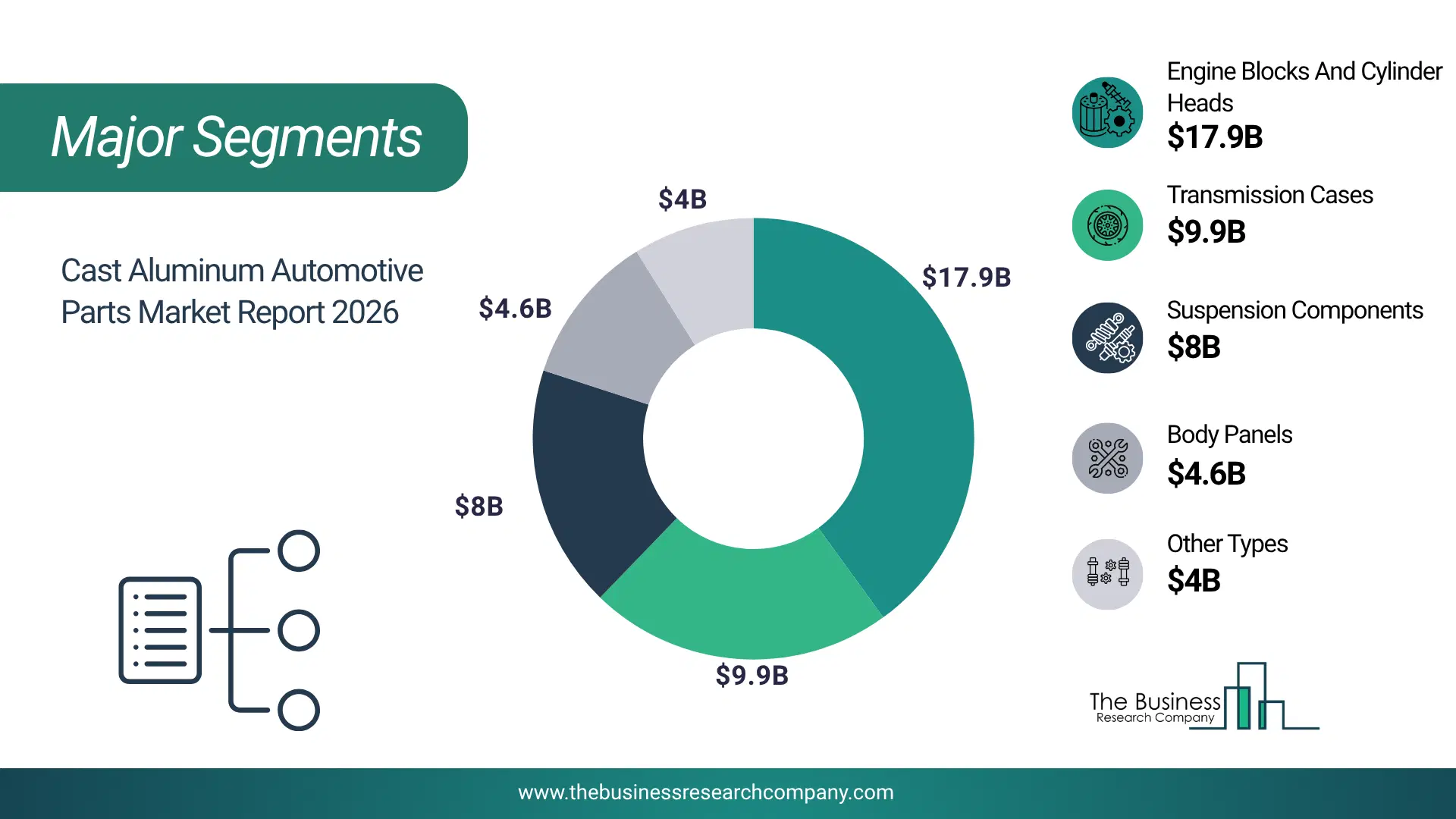
1) By Type: Engine Blocks And Cylinder Heads, Transmission Cases, Suspension Components, Other Types 2) By Vehicle Type: Passenger Cars, Light Commercial Vehicles, Heavy Commercial Vehicles 3) By Application: Powertrain, Vehicle Structures, Chassis And Suspension, E-Mobility Components, Other Applications 4) By End Application: Original Equipment Manufacturer (OEM), Aftermarket Subsegments: 1) By Engine Blocks And Cylinder Heads: V-Type Engine Blocks, Inline Engine Blocks, Flat Engine Blocks, Aluminum Cylinder Heads 2) By Transmission Cases: Manual Transmission Cases, Automatic Transmission Cases, Dual-Clutch Transmission Cases, Continuously Variable Transmission Cases 3) By Suspension Components: Control Arms, Steering Knuckles, Suspension Links, Strut Mounts. 4) By Other Types: Brake Components, Heat Shields, Fuel System Components, Miscellaneous Cast Aluminum Parts The top segments in the cast aluminum automotive parts market will be: • Engine Blocks And Cylinder Heads will reach $17.85 billion by 2030. • Transmission Cases will reach $9.81 billion by 2030. • Suspension Components will reach $7.96 billion by 2030. • Body Panels will reach $4.52 billion by 2030. • Other Types will reach $3.93 billion by 2030.What Is The Driver Of The Cast Aluminum Automotive Parts Market?
The surge in electric and hybrid vehicle adoption is expected to drive the growth in the cast aluminum automotive parts market going forward. A surge in electric and hybrid vehicle adoption refers to the rapid increase in the use of electric and hybrid vehicles over traditional vehicles, driven by environmental concerns, technological advancements, and supportive government policies. This trend reflects a global shift toward cleaner and more sustainable transportation solutions. The surge in electric and hybrid vehicle adoption is driven by stricter emissions regulations, as they encourage a shift toward cleaner transportation to reduce environmental pollution and meet government-mandated standards. Cast aluminum automotive parts help drive the surge in electric and hybrid vehicle adoption by reducing overall vehicle weight, which improves energy efficiency, extends battery range, and enhances performance. For instance, in February 2025, the Climate Change Committee, a UK-based government organization, predicted that by 2040, electric vehicles will dominate UK roads, with 80% of cars and 74% of vans being electric, while the market share of new electric cars is expected to increase from 16% in 2023 to 55% by 2027, and electric vans from 6% to 34%, ultimately reaching approximately 95% of new vehicle sales by 2030 and 100% by 2035, highlighting faster adoption in cars than vans. Therefore, the surge in electric and hybrid vehicle adoption is driving the growth of the cast aluminum automotive parts industry.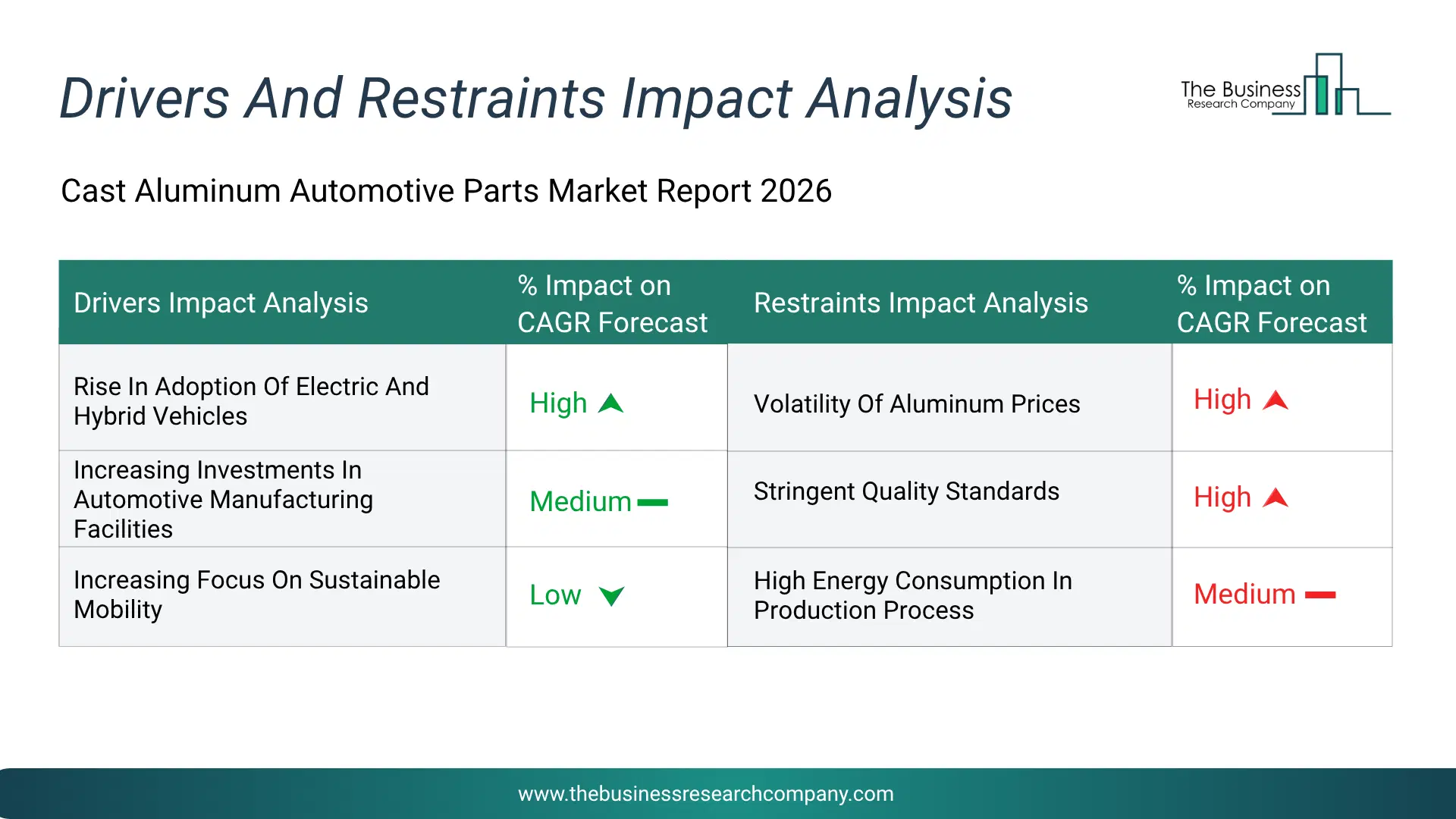
Infographic Chart Showing Key Market Drivers Analysis And Restraints For Cast Aluminum Automotive Parts Market
The chart presents an impact analysis of key drivers and restraints, quantifying their relative influence on the market's growth rate and helping assess the balance between growth enablers and limiting factors. This chart offers a high-level perspective; the full report contains more detailed insights.
How Will The Drivers Impact Growth In The Global Cast Aluminum Automotive Parts Market?
• Rise In Adoption Of Electric And Hybrid Vehicles (High) – During the forecast period, the rise in adoption of electric and hybrid vehicles is expected to become a key growth driver for the cast aluminum automotive parts market by 2030. The expanding production of evs and hybrid models is increasing demand for lightweight components that enhance energy efficiency and extend driving range. Aluminum’s superior strength-to-weight ratio makes it well-suited for battery enclosures, motor housings, and structural components that reduce total vehicle mass. Its strong thermal conductivity also supports efficient heat dissipation in batteries and power electronics. Automakers are progressively transitioning to cast aluminum solutions to comply with stringent efficiency and emission regulations. • Increasing Investments In Automotive Manufacturing Facilities (Medium) – During the forecast period, the increasing investments in automotive manufacturing facilities are expected to emerge as a major factor driving expansion of the cast aluminum automotive parts market by 2030. Expansion and modernization of vehicle production plants are increasing overall manufacturing capacity, which in turn raises demand for lightweight and durable aluminum components. Newly established and upgraded facilities are incorporating advanced casting technologies, enabling high-volume production of precision components such as engine blocks, wheels, and battery housings. These investments facilitate broader adoption of aluminum to meet fuel efficiency targets and regulatory compliance requirements. • Increasing Focus On Sustainable Mobility (Low) – During the forecast period, the increasing focus on sustainable mobility is expected to act as a key growth catalyst for the cast aluminum automotive parts market by 2030. The global shift toward cleaner transportation is driving demand for lightweight materials that reduce emissions and enhance fuel efficiency. Cast aluminum provides a sustainable solution by lowering vehicle weight while maintaining structural integrity and safety. Its high recyclability aligns with circular economy objectives and environmentally responsible production practices. With tightening environmental regulations and growing consumer preference for low-emission vehicles, manufacturers are increasingly adopting aluminum-based vehicle designs.How Will The Restraints Impact Growth In The Global Cast Aluminum Automotive Parts Market?
• Volatility Of Aluminum Prices (High) – During the forecast period, the volatility of aluminum prices acts as a restraint for the cast aluminum automotive parts market because fluctuations directly impact production costs for manufacturers. Since aluminum is the primary raw material, sudden price spikes can squeeze profit margins and reduce cost competitiveness. Automakers may delay or scale back aluminum-intensive projects when raw material costs are unpredictable. Price instability also creates challenges in long-term supply chain planning and contract agreements. As a result, persistent volatility in aluminum prices can slow down the wider adoption of cast aluminum parts in the automotive industry. • Stringent Quality Standards (High) – During the forecast period, the stringent quality standards act as a restraint for the cast aluminum automotive parts market because they require manufacturers to meet rigorous safety, durability, and performance benchmarks. Achieving these standards often demands advanced casting technologies, precision engineering, and extensive testing, which raise production costs. Smaller manufacturers may struggle to comply, limiting their market participation. Any failure to meet standards can result in recalls or reputational damage, further adding to risks. Consequently, strict regulations and quality requirements can slow down market growth despite rising demand. • High Energy Consumption In Production Process (Medium) – During the forecast period, the cast aluminum automotive parts market is restrained by high energy consumption in the production process because aluminum melting, casting, and refining require significant thermal energy and continuous furnace operations. This leads to elevated operational costs, especially in regions with high electricity or fuel prices. Energy-intensive processes also increase the carbon footprint, pushing manufacturers to invest in cleaner technologies or offset mechanisms, which further raises expenses. Smaller foundries are particularly impacted as they lack access to energy-efficient infrastructure or large-scale optimization systems. As a result, high energy consumption limits cost competitiveness and slows broader adoption of cast aluminum components in the automotive industry.Key Players In The Global Cast Aluminum Automotive Parts Market
Major companies operating in the cast aluminum automotive parts market are Nemak,S.A.B. de C.V., Ryobi Limited, GF Casting Solutions, Linamar Corporation, Aisin Corporation, CIE Automotive, Martinrea International Inc., Endurance Technologies Ltd., Rockman Industries, Aludyne Inc. (Shiloh Industries), KSM Castings Group GmbH, Form Technologies, Bocar Group, Consolidated Metco Inc., Sandhar Technologies, Sundaram Clayton Ltd, Able Die Casting, Modern Aluminum Castings Co., American Aluminum Casting Co., Buvo Castings, Teksid / Teksid SPA, Wisconsin Aluminum Foundry Co., Stahl Specialty Company, Alcast Technologies, A&B Die Casting (A&B Aluminium), Gibbs Die Casting (GIBBS)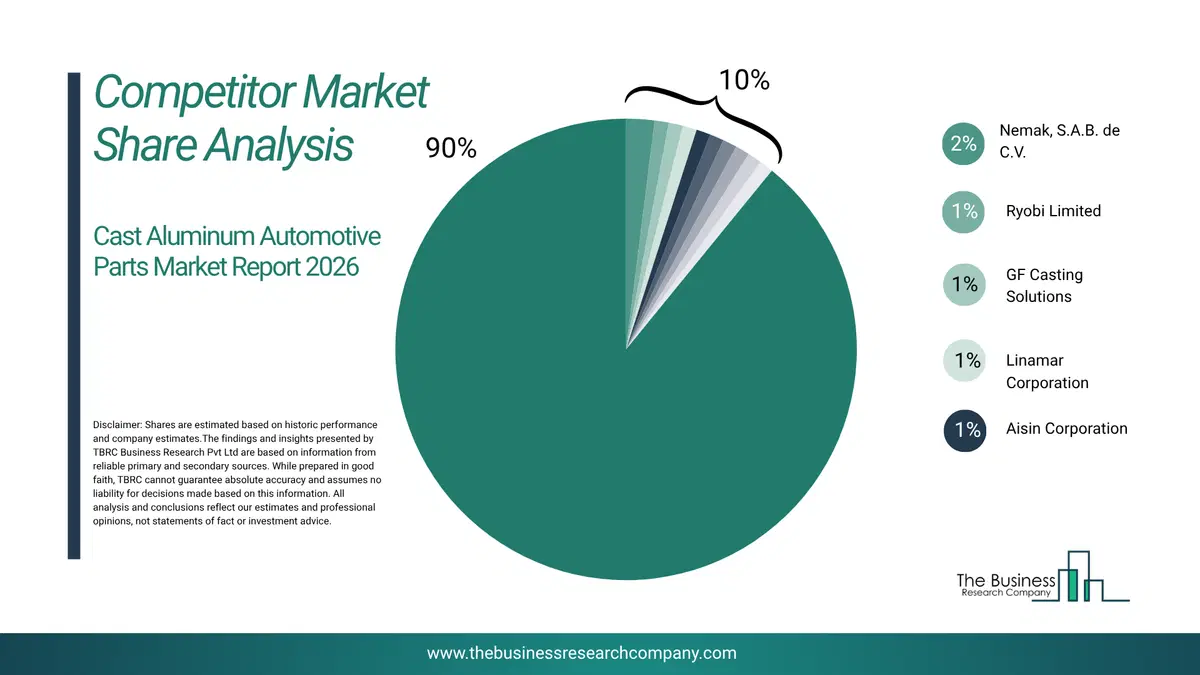
This chart is for illustrative purposes; the full report includes a detailed competitor analysis and comprehensive overview of the top 10 companies in the market.
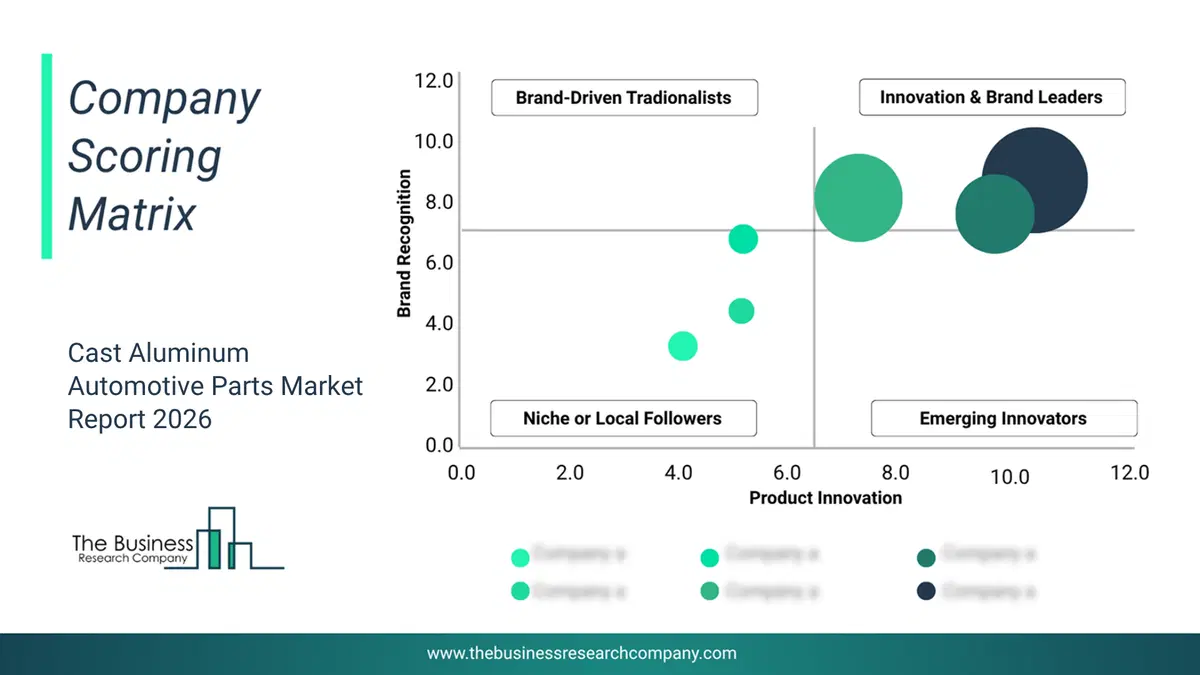
This chart maps companies by product innovation and brand strength, with bubble size indicating relative revenue, helping identify market leaders, challengers, and niche players. This is an illustrative chart; the full report provides a complete and accurate competitive analysis.
Global Cast Aluminum Automotive Parts Market Trends and Insights
Major companies operating in the cast aluminum automotive parts market are focusing on developing advanced production processes, such as closed-loop recycling systems, to boost sustainability, enhance resource efficiency, and reduce environmental impact and material waste. Closed-loop recycling systems refer to a sustainable manufacturing approach where aluminum scrap generated during the die-casting process is collected, remelted, and reused directly to create new high-quality parts. For instance, in August 2025, Honda Motor Co. Ltd., a Japan-based automotive manufacturing company, launched closed-loop die-casting technology for aluminum recycling at the Automotive Engineering Exposition, aiming to promote sustainable manufacturing. This technology allows die-cast aluminum scrap to be recycled by accurately removing impurities and controlling the alloy composition during melting, eliminating the requirement for high-purity aluminum dilution. The process enables the production of large, high-quality structural automotive components for electric vehicles, lowering costs and CO₂ emissions while advancing sustainability initiatives.What Are Latest Mergers And Acquisitions In The Cast Aluminum Automotive Parts Market?
In September 2025, Nemak, S.A.B. de C.V., a Mexico-based manufacturing company, acquired GF Casting Solutions AG for an undisclosed amount. Through this acquisition, Nemak aims to expand and diversify its customer base, enhance technological capabilities in aluminum and magnesium structural components, strengthen its position in high-pressure die casting, and accelerate its transition toward sustainable mobility while broadening its global footprint. GF Casting Solutions AG is a Switzerland-based manufacturing company that offers cast aluminum automotive parts.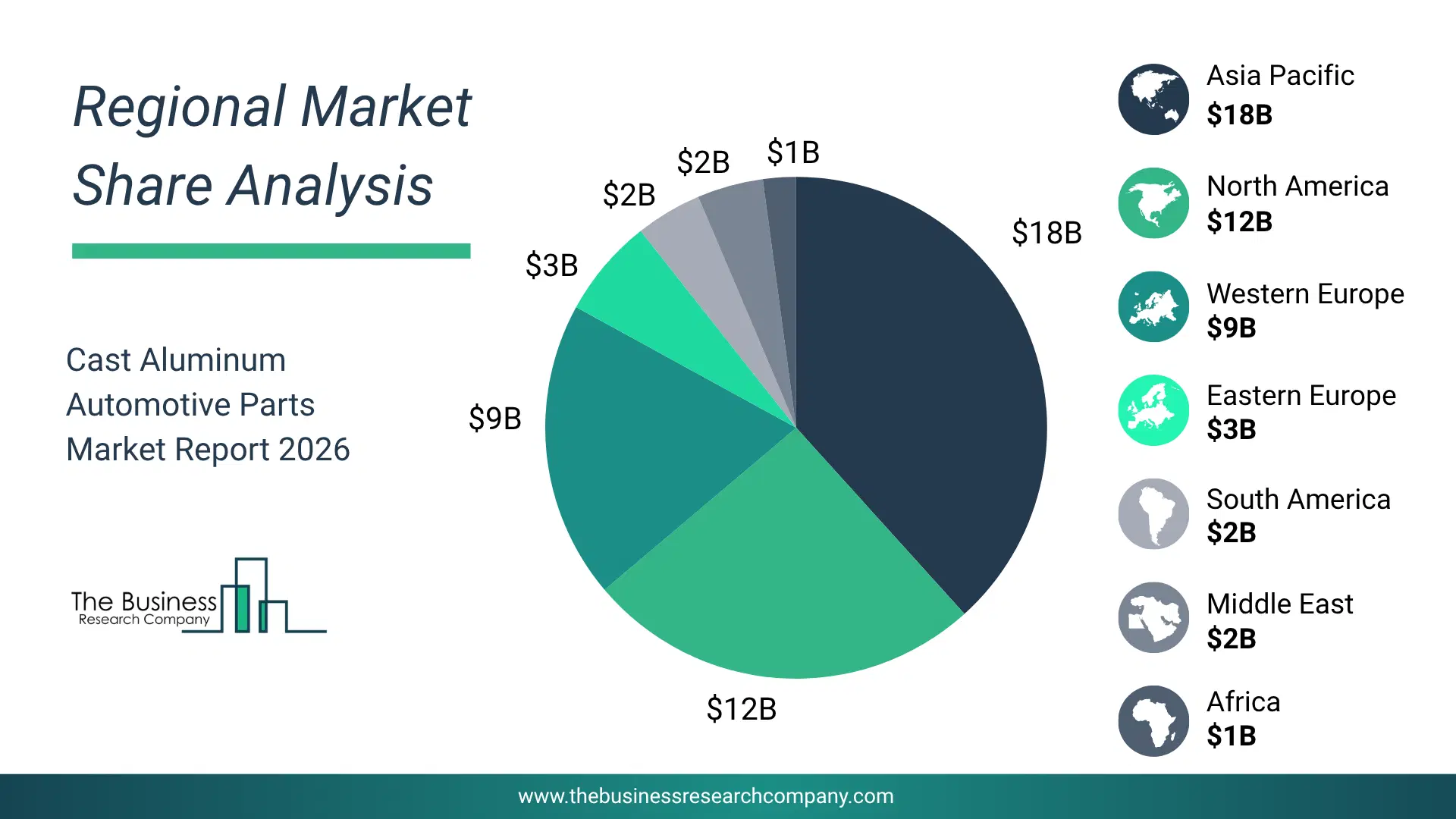
Regional Outlook
North America was the largest region in the cast aluminum automotive parts market in 2025. Asia-Pacific is expected to be the fastest-growing region in the forecast period. The regions covered in this market report are Asia-Pacific, South East Asia, Western Europe, Eastern Europe, North America, South America, Middle East, Africa The countries covered in this market report are Australia, Brazil, China, France, Germany, India, Indonesia, Japan, Taiwan, Russia, South Korea, UK, USA, Canada, Italy, Spain.What Defines the Cast Aluminum Automotive Parts Market?
The cast aluminum automotive parts market consists of sales of chassis components, brake system parts, cylinder heads, wheels, and other structural and functional vehicle parts. Values in this market are ‘factory gate’ values, that is, the value of goods sold by the manufacturers or creators of the goods, whether to other entities (including downstream manufacturers, wholesalers, distributors, and retailers) or directly to end customers. The value of goods in this market includes related services sold by the creators of the goods.How is Market Value Defined and Measured?
The market value is defined as the revenues that enterprises gain from the sale of goods and/or services within the specified market and geography through sales, grants, or donations in terms of the currency (in USD unless otherwise specified). The revenues for a specified geography are consumption values that are revenues generated by organizations in the specified geography within the market, irrespective of where they are produced. It does not include revenues from resales along the supply chain, either further along the supply chain or as part of other products.
This chart presents market attractiveness based on a quantitative evaluation of growth, competition, strategic alignment, and risk, offering a clear view of opportunity areas for decision-making. This chart is for illustrative purposes; the full report contains the complete analysis.

This chart highlights the Total Addressable Market (TAM) by estimating the maximum revenue opportunity using an assumption-driven approach, supporting strategic planning and opportunity sizing across markets. The chart is illustrative; the full report provides a more comprehensive analysis.
What Key Data and Analysis Are Included in the Cast Aluminum Automotive Parts Market Report 2026?
The cast aluminum automotive parts market research report is one of a series of new reports from The Business Research Company that provides market statistics, including industry global market size, regional shares, competitors with the market share, detailed market segments, market trends and opportunities, and any further data you may need to thrive in the cast aluminum automotive parts industry. The market research report delivers a complete perspective of everything you need, with an in-depth analysis of the current and future state of the industry.Cast Aluminum Automotive Parts Market Report Forecast Analysis
| Report Attribute | Details |
|---|---|
| Market Size Value In 2026 | $33.41 billion |
| Revenue Forecast In 2030 | $44.06 billion |
| Growth Rate | CAGR of 7.2% from 2026 to 2030 |
| Base Year For Estimation | 2025 |
| Actual Estimates/Historical Data | 2020-2025 |
| Forecast Period | 2026 - 2030 |
| Market Representation | Revenue in USD Billion and CAGR from 2026 to 2030 |
| Segments Covered | Type, Vehicle Type, Application, End Application |
| Regional Scope | Asia-Pacific, Western Europe, Eastern Europe, North America, South America, Middle East, Africa |
| Country Scope | The countries covered in the report are Australia, Brazil, China, France, Germany, India, ... |
| Key Companies Profiled | Nemak,S.A.B. de C.V., Ryobi Limited, GF Casting Solutions, Linamar Corporation, Aisin Corporation, CIE Automotive, Martinrea International Inc., Endurance Technologies Ltd., Rockman Industries, Aludyne Inc. (Shiloh Industries), KSM Castings Group GmbH, Form Technologies, Bocar Group, Consolidated Metco Inc., Sandhar Technologies, Sundaram Clayton Ltd, Able Die Casting, Modern Aluminum Castings Co., American Aluminum Casting Co., Buvo Castings, Teksid / Teksid SPA, Wisconsin Aluminum Foundry Co., Stahl Specialty Company, Alcast Technologies, A&B Die Casting (A&B Aluminium), Gibbs Die Casting (GIBBS) |
| Customization Scope | Request for Customization |
| Pricing And Purchase Options | Explore Purchase Options |