
Cryogenic Insulation Market Report 2026
Global Outlook – By Type (Cellular, Fibrous, Flake, Granular, Reflective, Other Types), By Application (Storage Tanks, Fuel Tanks, Pipe Systems, Terminals, Other Applications), By End-Use Industry (Energy And Power, Food And Beverages, Chemical, Medical, Other End-Use Industries) – Market Size, Trends, Strategies, and Forecast to 2030
Cryogenic Insulation Market Overview
• Cryogenic Insulation market size has reached to $7.4 billion in 2025 • Expected to grow to $9.62 billion in 2030 at a compound annual growth rate (CAGR) of 5.4% • Growth Driver: Growth In The Aerospace Industry Boosts The Cryogenic Insulation Market • Market Trend: Adoption of Advanced Cryogenic Insulation Systems to Enhance Thermal Efficiency • Asia-Pacific was the largest region and fastest growing region.Market Gains By 2030 – Top Opportunities By Segment
Market Gain identifies the most promising market opportunities by highlighting the segments or products expected to generate the highest incremental revenue growth over the next five years.
What Is Covered Under Cryogenic Insulation Market?
Cryogenic insulation refers to a high-performance insulation material that provides a high level of thermal isolation for applications operating at temperatures below -75 degrees Celsius by protecting and reducing energy leaks. It maintains its integrity in frigid temperatures, absorbs high mechanical forces, and ensures superior low-thermal conductivity. The main types of cryogenic insulation are cellular, fibrous, flaky, granular, reflective, and others. Cellular refers to fiber insulation called cellulose employed in unfinished attic floors, open new walls, and enclosed existing walls. These are used in various applications, such as storage tanks, fuel tanks, pipe systems, terminals, and other applications, and for various end-users, such as energy and power, food and beverages, chemicals, medical care, and other end-users.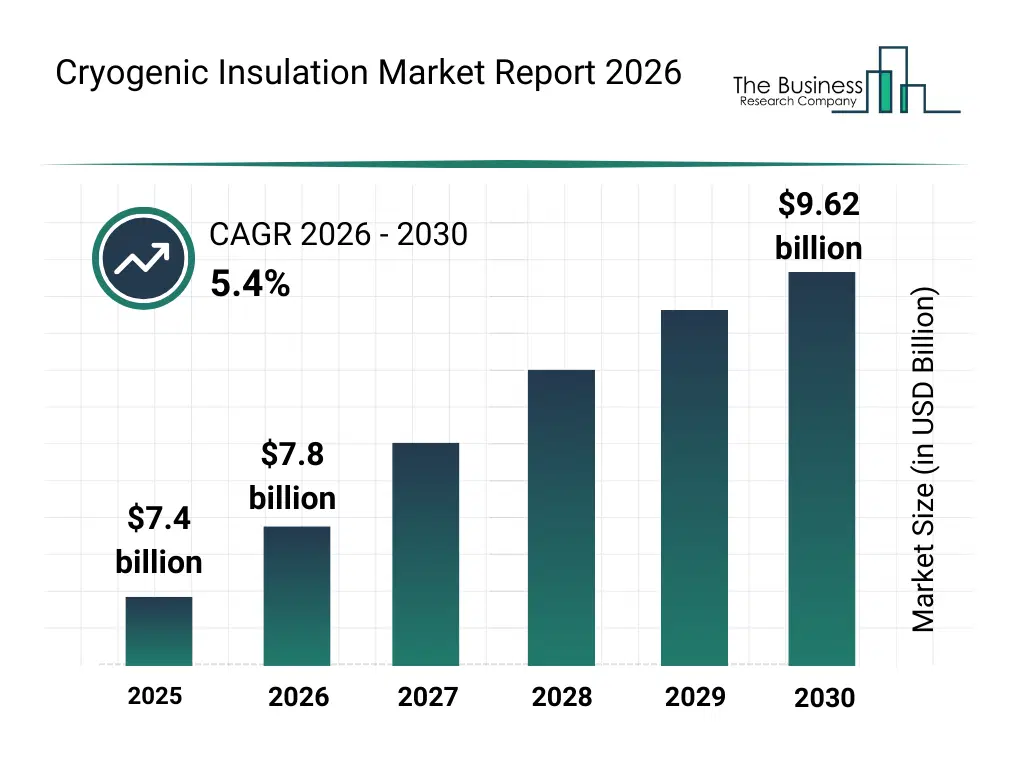
What Is The Cryogenic Insulation Market Size and Share 2026?
The cryogenic insulation market size has grown strongly in recent years. It will grow from $7.4 billion in 2025 to $7.8 billion in 2026 at a compound annual growth rate (CAGR) of 5.3%. The growth in the historic period can be attributed to expansion of lng production and transport, growth of cryogenic storage facilities, increasing use of industrial gases, rising investments in energy infrastructure, availability of advanced insulation materials.What Is The Cryogenic Insulation Market Growth Forecast?
The cryogenic insulation market size is expected to see strong growth in the next few years. It will grow to $9.62 billion in 2030 at a compound annual growth rate (CAGR) of 5.4%. The growth in the forecast period can be attributed to increasing hydrogen economy investments, rising demand for energy-efficient insulation solutions, expansion of cryogenic applications in healthcare, growing focus on low-carbon energy systems, increasing integration of smart insulation technologies. Major trends in the forecast period include increasing demand for lng and cryogenic storage infrastructure, rising use of advanced insulation materials, growing adoption in hydrogen and energy transition projects, expansion of low-temperature transport systems, enhanced focus on thermal efficiency and safety.
Global Cryogenic Insulation Market Segmentation
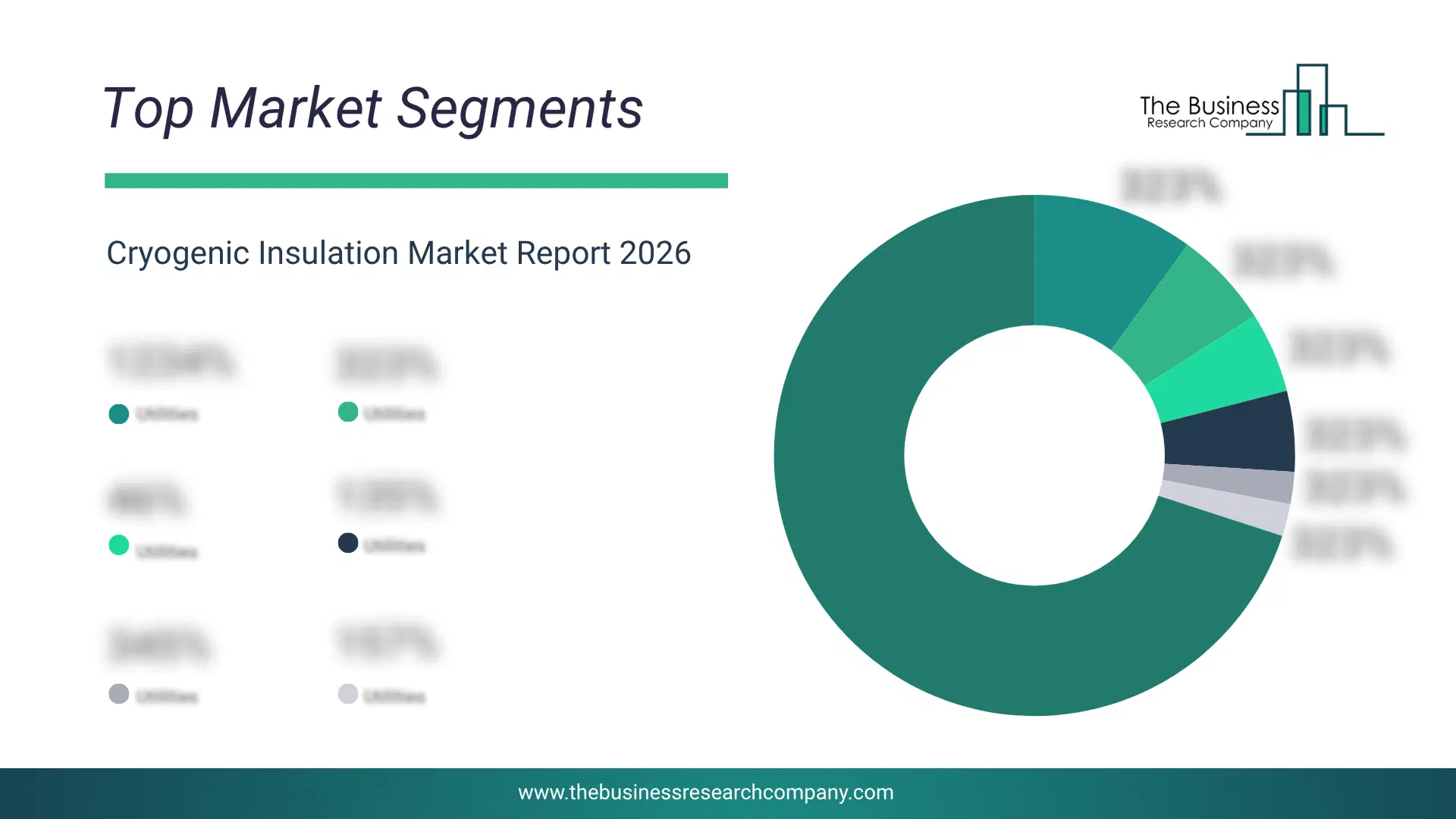
1) By Type: Cellular, Fibrous, Flake, Granular, Reflective, Other Types 2) By Application: Storage Tanks, Fuel Tanks, Pipe Systems, Terminals, Other Applications 3) By End-Use Industry: Energy And Power, Food And Beverages, Chemical, Medical, Other End-Use Industries Subsegments: 1) By Cellular: Polyurethane Foam, Polyisocyanurate Foam, Expanded Polystyrene (EPS) 2) By Fibrous: Mineral Wool, Glass Wool, Ceramic Fiber 3) By Flake: Expanded Perlite, Expanded Clay 4) By Granular: Vermiculite, Expanded Polystyrene Granules 5) By Reflective: Reflective Foil Insulation, Radiant Barrier Systems 6) By Other Types: Aerogel, Vacuum Insulated Panels (VIPs) The top segments in the cryogenic insulation market will be: • Cellular will reach $3823.5 Million by 2025. • Energy And Power will reach $2934.6 Million by 2025. • Storage Tanks will reach $2778.24 Million by 2025. • Pipe Systems will reach $1820.65 Million by 2025. • Chemical will reach $1751.31 Million by 2025.What Is The Driver Of The Cryogenic Insulation Market?
The growing aerospace industry is expected to propel the growth of the cryogenic insulation market going forward. The aerospace industry is a sector that deals with vehicular flight within and beyond Earth's atmosphere and encompasses research, development, design, manufacturing, operation, and maintenance of both aircraft and spacecraft. Cryogenic insulation in the aerospace industry is crucial for maintaining extremely low temperatures in propulsion systems, fuel storage, and spacecraft components, ensuring optimal performance. For instance, in January 2023, according to Cirium Fleet Forecast, a UK-based aerospace corporation, it is estimated that the global demand for new aircraft is expected to reach 44,500 by 2042, worth $2.9 trillion. Therefore, the growing aerospace industry is driving the growth of the cryogenic insulation industry.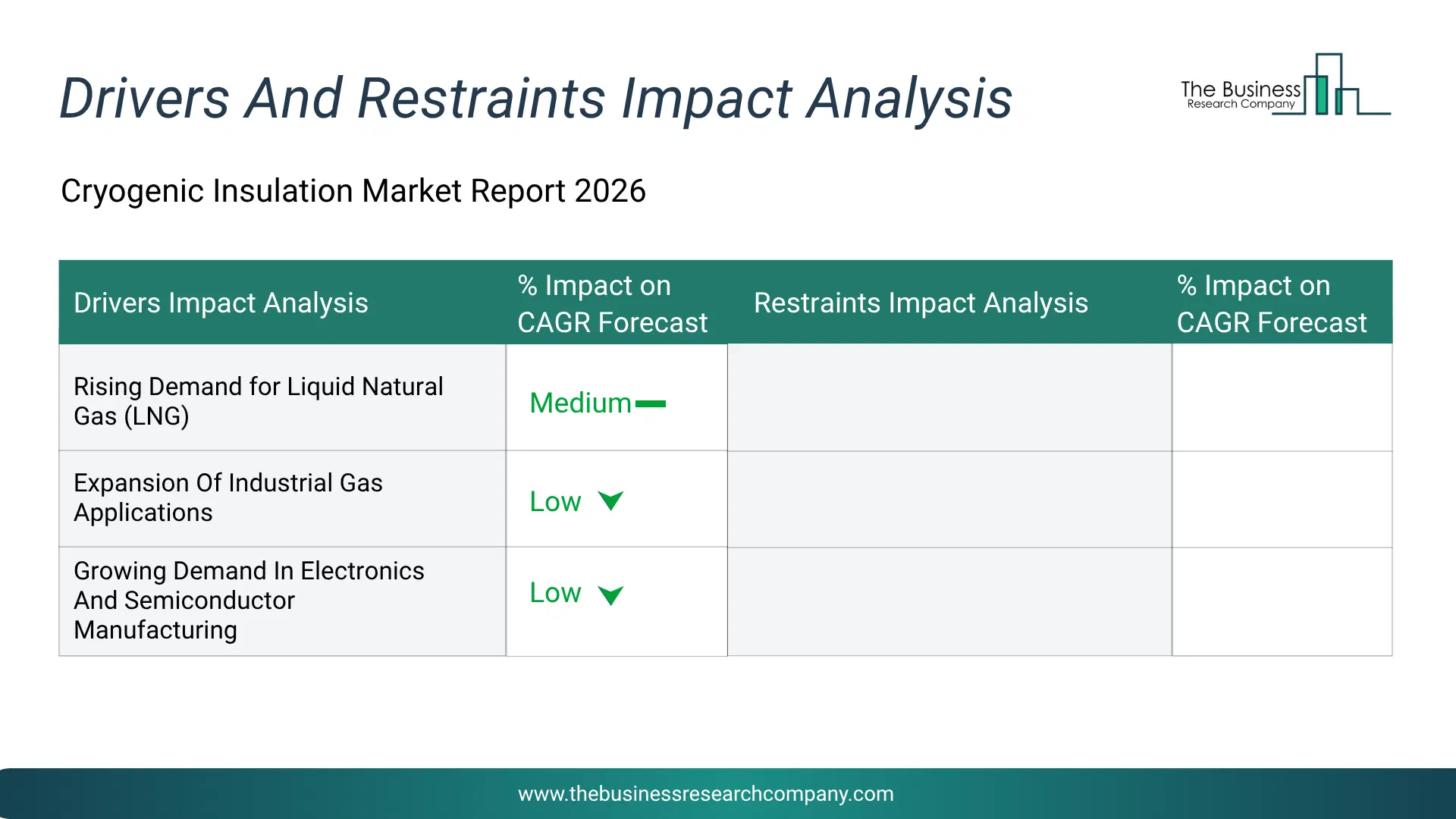
Infographic Chart Showing Key Market Drivers Analysis And Restraints For Cryogenic Insulation Market
The chart presents an impact analysis of key drivers and restraints, quantifying their relative influence on the market's growth rate and helping assess the balance between growth enablers and limiting factors. This chart offers a high-level perspective; the full report contains more detailed insights.
How Will The Drivers Impact Growth In The Global Cryogenic Insulation Market?
• Rising Demand for Liquid Natural Gas (LNG) (Medium) – The rising demand for LNG will become a key driver of growth in the cryogenic insulation market by 2030. Cryogenic insulation is essential for LNG because it must be stored and transported at extremely low temperatures (-162°C or -260°F) to remain in its liquid state and prevent evaporation losses. Without effective insulation, heat ingress can cause LNG to vaporize, leading to safety hazards, energy losses and increased operational costs. As a result, the rising demand for LNG is anticipated to contributing to a 1.7% annual growth in the market. • Expansion Of Industrial Gas Applications (Low) – The expansion of industrial gas applications will emerge as a major factor driving the expansion of the cryogenic insulation market by 2030. Cryogenic insulation is crucial for industrial gas applications because gases like oxygen, nitrogen and argon must be stored and transported at extremely low temperatures to remain in liquid form and maintain their purity. Without proper insulation, heat ingress can cause excessive boil-off, pressure buildup and safety risks, leading to inefficiencies and higher operational costs. Consequently, the expansion of industrial gas applications capabilities is projected to contributing to a 1.2% annual growth in the market. • Growing Demand In Electronics And Semiconductor Manufacturing (Low) – The growing demand in electronics and semiconductor manufacturing within digital manufacturing processes will serve as a key growth catalyst for the cryogenic insulation market by 2030. Cryogenic insulation is crucial in electronics and semiconductor manufacturing to maintain ultra-low temperatures for superconducting materials, high-precision cooling and cryogenic etching processes. It minimizes heat transfer, ensuring stable operating conditions that enhance performance, reduce defects and improve efficiency in semiconductor fabrication. Therefore, this growing demand in electronics and semiconductor manufacturing operations is projected to supporting to a 0.7% annual growth in the market. • Rise In Clean Energy Initiatives (Low) – The rise in clean energy initiatives will become a significant driver contributing to the growth of the cryogenic insulation market by 2030. Cryogenic insulation is essential for clean energy applications to efficiently store and transport hydrogen and liquid oxygen, which require ultra-low temperatures to remain in a liquid state. It minimizes thermal losses, enhancing energy efficiency and ensuring the safe handling of these fuels for sustainable power generation. Consequently, the rise in clean energy initiatives strategies is projected to contributing to a 0.4% annual growth in the market.How Will The Restraints Impact Growth In The Global Cryogenic Insulation Market?
• Supply Chain Disruptions (Medium) – Supply Chain Disruptions will restrict the growth of the Cryogenic Insulation market during the forecast period. Cryogenic insulation production depends on specialized materials including perlite, foam glass, and polyurethane, which may be subject to supply chain constraints. Supply disruptions can affect product availability, increase costs, and create project delays. Dependence on limited suppliers for specialized insulation materials creates vulnerability to supply chain issues. • High Initial Investment Costs (Low) – High Initial Investment Costs will restrict the growth of the Cryogenic Insulation market during the forecast period. Cryogenic insulation systems require significant capital investment in materials, installation, and quality assurance. The high cost of advanced insulation solutions creates barriers for smaller facilities and budget-constrained projects. Investment requirements can lead to project delays and reduced adoption of high-performance insulation systems.Key Players In The Global Cryogenic Insulation Market
Major companies operating in the cryogenic insulation market are Aspen Aerogels Inc., Armacell Enterprise GmbH & Co. KG, Lydall Inc., Johns Manville Inc., Evonik Industries AG, Air Liquide SA, Air Products and Chemicals Inc., Cryofab Inc., Cryomagnetics Inc., Cryomech Inc., Cryostar SAS, Cryotherm GmbH & Co. KG, Insul-Therm International Inc., Isolation Technologies LLC, Janis Research Company LLC, MLI Insulation Systems, Chart Industries Inc., Advanced Insulation Systems Ltd., Insultherm Inc., Thermal Energy Products Inc.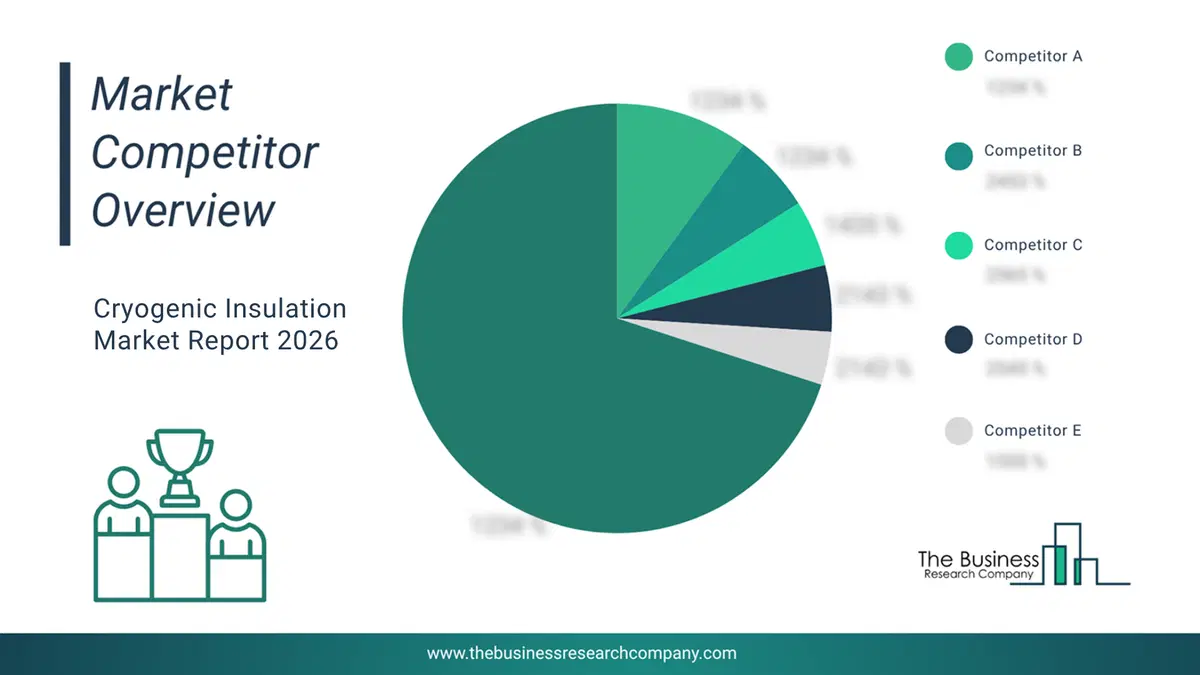
This chart is for illustrative purposes; the full report includes a detailed competitor analysis and comprehensive overview of the top 10 companies in the market.
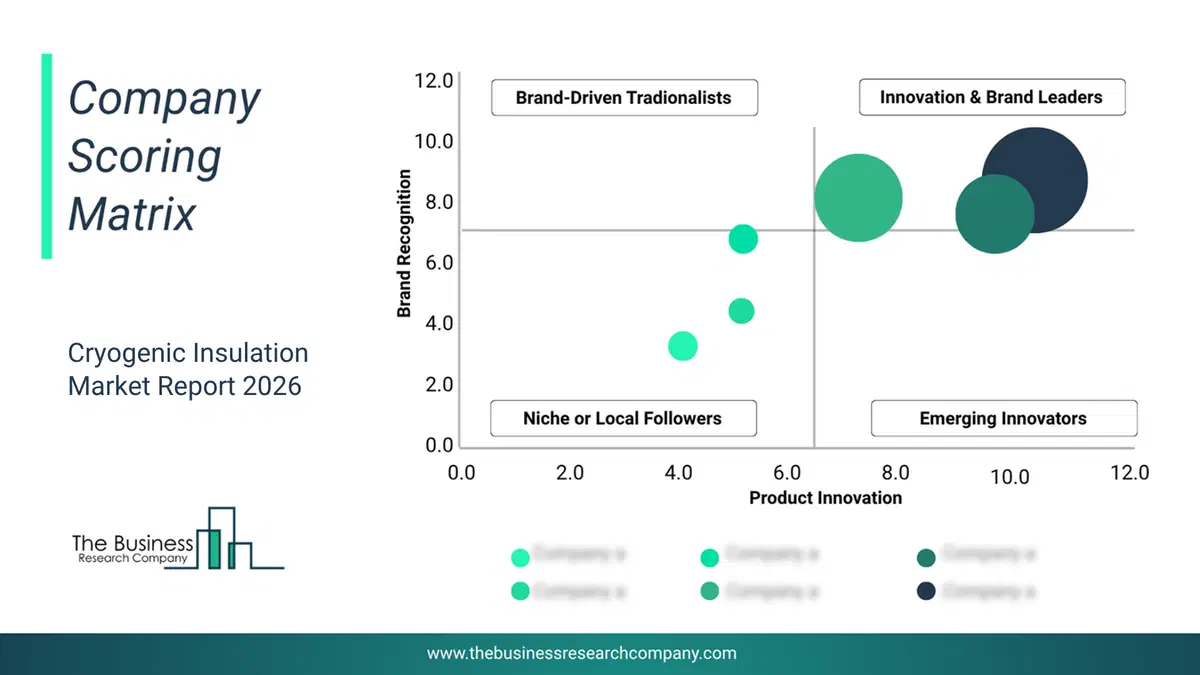
This chart maps companies by product innovation and brand strength, with bubble size indicating relative revenue, helping identify market leaders, challengers, and niche players. This is an illustrative chart; the full report provides a complete and accurate competitive analysis.
Global Cryogenic Insulation Market Trends and Insights
Major companies operating in the cryogenic insulation market are focusing on developing innovative solutions such as aerogel-based flexible insulation blankets to enhance thermal performance, minimize insulation thickness, and optimize installation space. Aerogel-based flexible insulation blankets use silica-based aerogel particles embedded within a reinforced fiber matrix, delivering extremely low thermal conductivity while remaining lightweight and conformable, enabling easier installation, reduced insulation envelope, and lower heat loss compared to conventional rigid foams or multilayer insulation systems. For instance, in April 2025, Armacell, a Luxembourg-based manufacturer of engineered foams and technical insulation, launched ArmaGel XGC, a next-generation cryogenic and dual-temperature aerogel insulation blanket. The product provides superior thermal performance down to –196°C, features a low-dust formulation to enhance installer safety, and offers a thin, flexible design that can be wrapped around pipes, tanks, and equipment reducing space requirements, improving energy efficiency, and allowing faster and safer installation than traditional insulation materials.What Are Latest Mergers And Acquisitions In The Cryogenic Insulation Market?
In August 2024, Dover, a US-based manufacturer of industrial products, acquired SPS Cryogenics B.V. and Special Gas Systems B.V. for an undisclosed amount. Through this acquisition, Dover aims to expand its offerings and boost its capabilities in the cryogenic sector. SPS Cryogenics BV is a Netherlands-based manufacturer of vacuum-insulated piping systems serving the cryogenics industry and its sister company Special Gas Systems (SGS) B.V., a Netherlands-based manufacturer of cryogenic systems and components.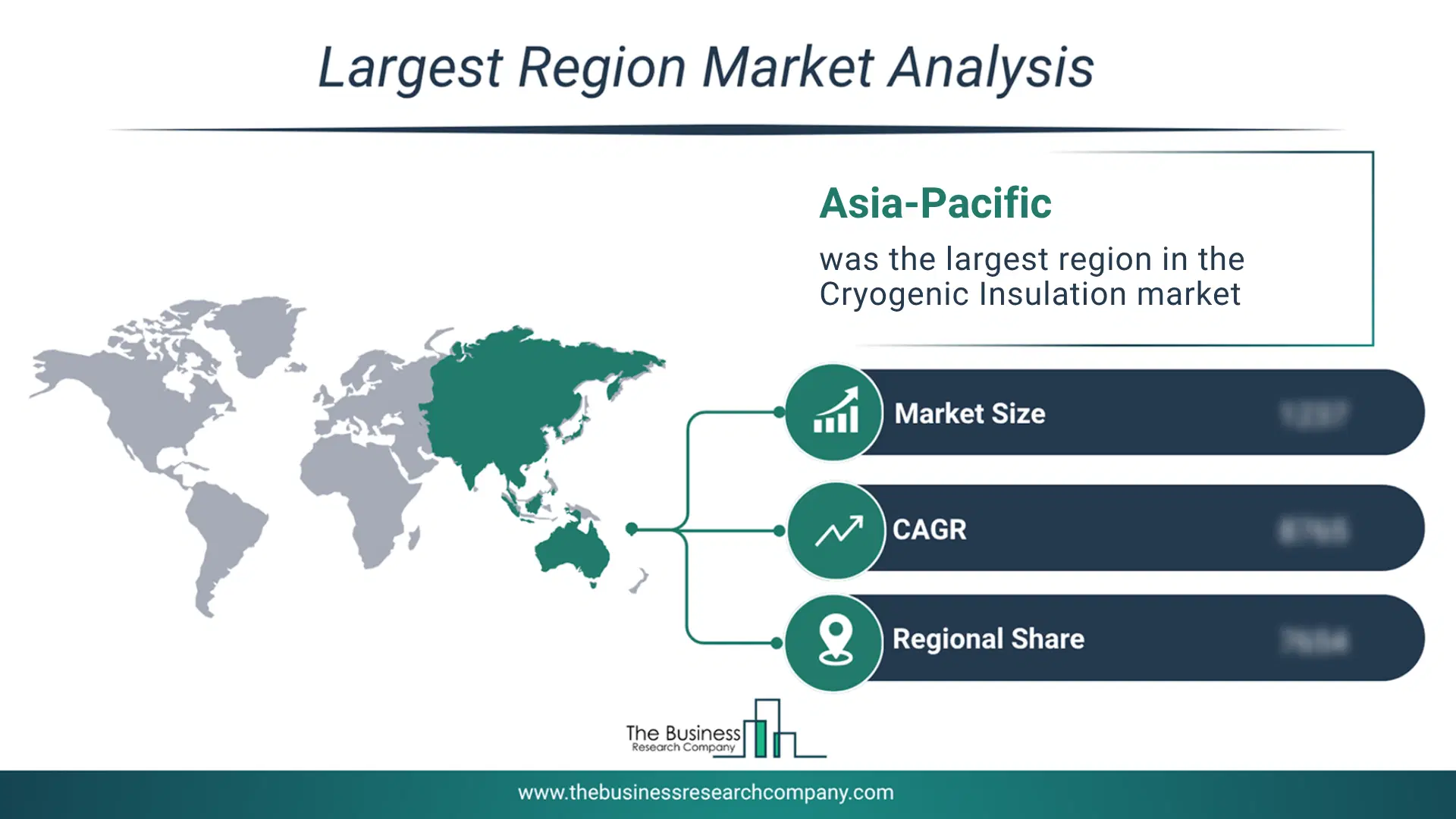
Regional Insights
Asia-Pacific was the largest region in the cryogenic insulation market in 2025. North America is expected to be the fastest-growing region in the forecast period. The regions covered in this market report are Asia-Pacific, South East Asia, Western Europe, Eastern Europe, North America, South America, Middle East, Africa The countries covered in this market report are Australia, Brazil, China, France, Germany, India, Indonesia, Japan, Taiwan, Russia, South Korea, UK, USA, Canada, Italy, SpainWhat Defines the Cryogenic Insulation Market?
The cryogenic insulation market consists of sales of polyurethane (PU), polyisocyanurate (PIR), and perlite cryogenic insulation. Values in this market are ‘factory gate’ values, that is, the value of goods sold by the manufacturers or creators of the goods, whether to other entities (including downstream manufacturers, wholesalers, distributors, and retailers) or directly to end customers. The value of goods in this market includes related services sold by the creators of the goods.How is Market Value Defined and Measured?
The market value is defined as the revenues that enterprises gain from the sale of goods and/or services within the specified market and geography through sales, grants, or donations in terms of the currency (in USD unless otherwise specified). The revenues for a specified geography are consumption values that are revenues generated by organizations in the specified geography within the market, irrespective of where they are produced. It does not include revenues from resales along the supply chain, either further along the supply chain or as part of other products.
This chart presents market attractiveness based on a quantitative evaluation of growth, competition, strategic alignment, and risk, offering a clear view of opportunity areas for decision-making. This chart is for illustrative purposes; the full report contains the complete analysis.

This chart highlights the Total Addressable Market (TAM) by estimating the maximum revenue opportunity using an assumption-driven approach, supporting strategic planning and opportunity sizing across markets. The chart is illustrative; the full report provides a more comprehensive analysis.
What Key Data and Analysis Are Included in the Cryogenic Insulation Market Report 2026?
The cryogenic insulation market research report is one of a series of new reports from The Business Research Company that provides market statistics, including industry global market size, regional shares, competitors with the market share, detailed market segments, market trends and opportunities, and any further data you may need to thrive in the cryogenic insulation industry. The market research report delivers a complete perspective of everything you need, with an in-depth analysis of the current and future state of the industry.Cryogenic Insulation Market Report Forecast Analysis
| Report Attribute | Details |
|---|---|
| Market Size Value In 2026 | $7.8 billion |
| Revenue Forecast In 2030 | $9.62 billion |
| Growth Rate | CAGR of 5.3% from 2026 to 2030 |
| Base Year For Estimation | 2025 |
| Actual Estimates/Historical Data | 2020-2025 |
| Forecast Period | 2026 - 2030 |
| Market Representation | Revenue in USD Billion and CAGR from 2026 to 2030 |
| Segments Covered | Type, Application, End-Use Industry |
| Regional Scope | Asia-Pacific, Western Europe, Eastern Europe, North America, South America, Middle East, Africa |
| Country Scope | The countries covered in the report are Australia, Brazil, China, France, Germany, India, Indonesia, Japan, Taiwan, Russia, South Korea, UK, USA, Canada, Italy, Spain. |
| Key Companies Profiled | Aspen Aerogels Inc., Armacell Enterprise GmbH & Co. KG, Lydall Inc., Johns Manville Inc., Evonik Industries AG, Air Liquide SA, Air Products and Chemicals Inc., Cryofab Inc., Cryomagnetics Inc., Cryomech Inc., Cryostar SAS, Cryotherm GmbH & Co. KG, Insul-Therm International Inc., Isolation Technologies LLC, Janis Research Company LLC, MLI Insulation Systems, Chart Industries Inc., Advanced Insulation Systems Ltd., Insultherm Inc., Thermal Energy Products Inc. |
| Customization Scope | Request for Customization |
| Pricing And Purchase Options | Explore Purchase Options |