
Defense Aircraft Materials Market Report 2026
Global Outlook – By Material Type (Aluminum Alloys, Steels, Titanium Alloys, Composites), By Application (Transport Aircraft, Combat Aircrafts, Military Cargo, Helicopters, Other Applications), By End-User (Military Organizations, Defense Contractors, Government Agencies) – Market Size, Trends, Strategies, and Forecast to 2030
Defense Aircraft Materials Market Overview
• Defense Aircraft Materials market size has reached to $43.89 billion in 2025 • Expected to grow to $59.01 billion in 2030 at a compound annual growth rate (CAGR) of 6% • Growth Driver: Rising Demand For Advanced Military Aircraft Boosting The Need For High-Performance Aircraft Materials • Market Trend: Innovations In Radiation Absorbent Composites Enhancing Stealth And Survivability In Fighter Aircraft • North America was the largest region in 2025 and Asia-Pacific is the fastest growing region.Market Gains By 2030 – Top Opportunities By Segment
Market Gain identifies the most promising market opportunities by highlighting the segments or products expected to generate the highest incremental revenue growth over the next five years.
What Is Covered Under Defense Aircraft Materials Market?
Defense aircraft materials refer to specialized substances used in building military aircraft, designed to meet strict standards for strength, durability, and weight. Defense aircraft materials are utilized to enhance performance, durability, and stealth capabilities by providing high strength-to-weight ratios, resistance to extreme temperatures, and improved radar absorption. The main material types of the defense aircraft materials include aluminum alloys, steels, titanium alloys, and composites. Aluminum alloys refer to lightweight, high-strength metallic materials widely used in aircraft structures, fuselages, and skin panels due to their excellent strength-to-weight ratio, corrosion resistance, and manufacturability. The various applications include transport aircraft, combat aircraft, military cargo, helicopters, and other applications, and they are used by several end-users such as military organizations, defense contractors, and government agencies.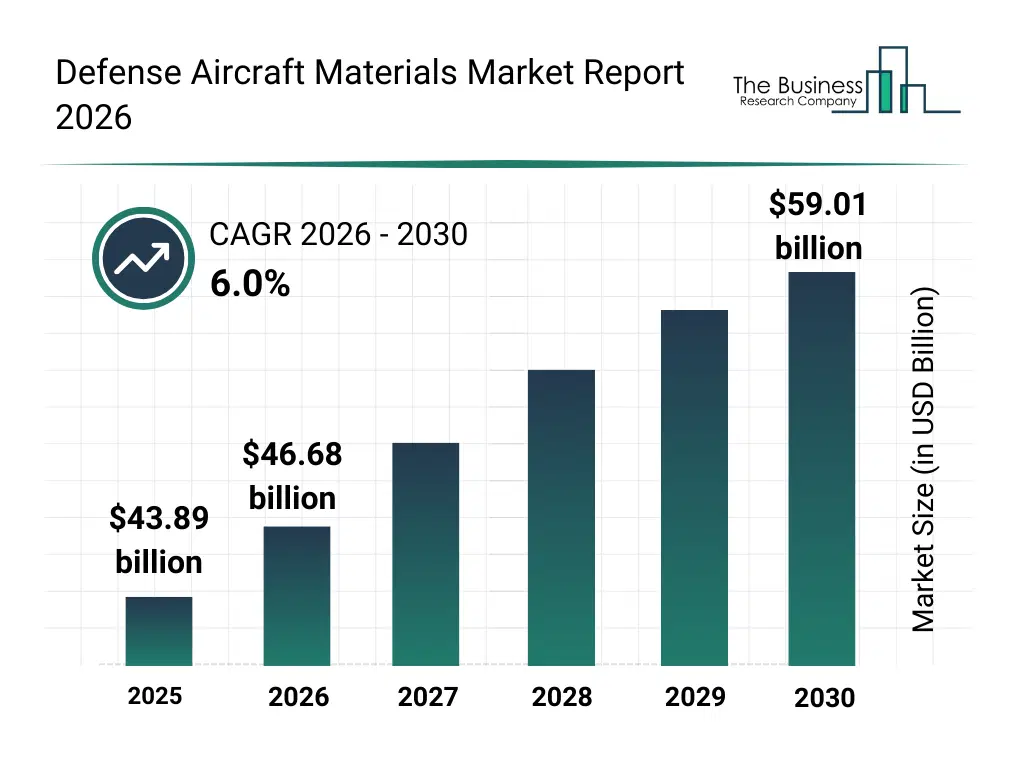
What Is The Defense Aircraft Materials Market Size and Share 2026?
The defense aircraft materials market size has grown strongly in recent years. It will grow from $43.89 billion in 2025 to $46.68 billion in 2026 at a compound annual growth rate (CAGR) of 6.4%. The growth in the historic period can be attributed to increasing adoption of lightweight composite materials to improve aircraft maneuverability and fuel efficiency, rising demand for high-temperature alloys in advanced military engine components, expansion of stealth aircraft programs requiring radar-absorbing materials and coatings, advancements in metal matrix and ceramic composites enabling stronger structural components, growth in defense procurement programs driving production of specialized aircraft materials.What Is The Defense Aircraft Materials Market Growth Forecast?
The defense aircraft materials market size is expected to see strong growth in the next few years. It will grow to $59.01 billion in 2030 at a compound annual growth rate (CAGR) of 6.0%. The growth in the forecast period can be attributed to growing need for next-generation materials supporting hypersonic and high-performance military aircraft, rising investment in multifunctional coatings offering thermal, radar, and corrosion protection, increasing use of additive manufacturing to produce lightweight and complex aircraft components, expansion of unmanned combat aerial vehicle production boosting demand for advanced structural materials, development of sustainable and energy-efficient material solutions for modernized defense aviation. Major trends in the forecast period include rising demand for lightweight and ultra-high-strength materials, growing adoption of stealth-enhancing materials, increased use of ceramic matrix composites, expansion of additive manufacturing, greater integration of multi-functional materials.
Global Defense Aircraft Materials Market Segmentation
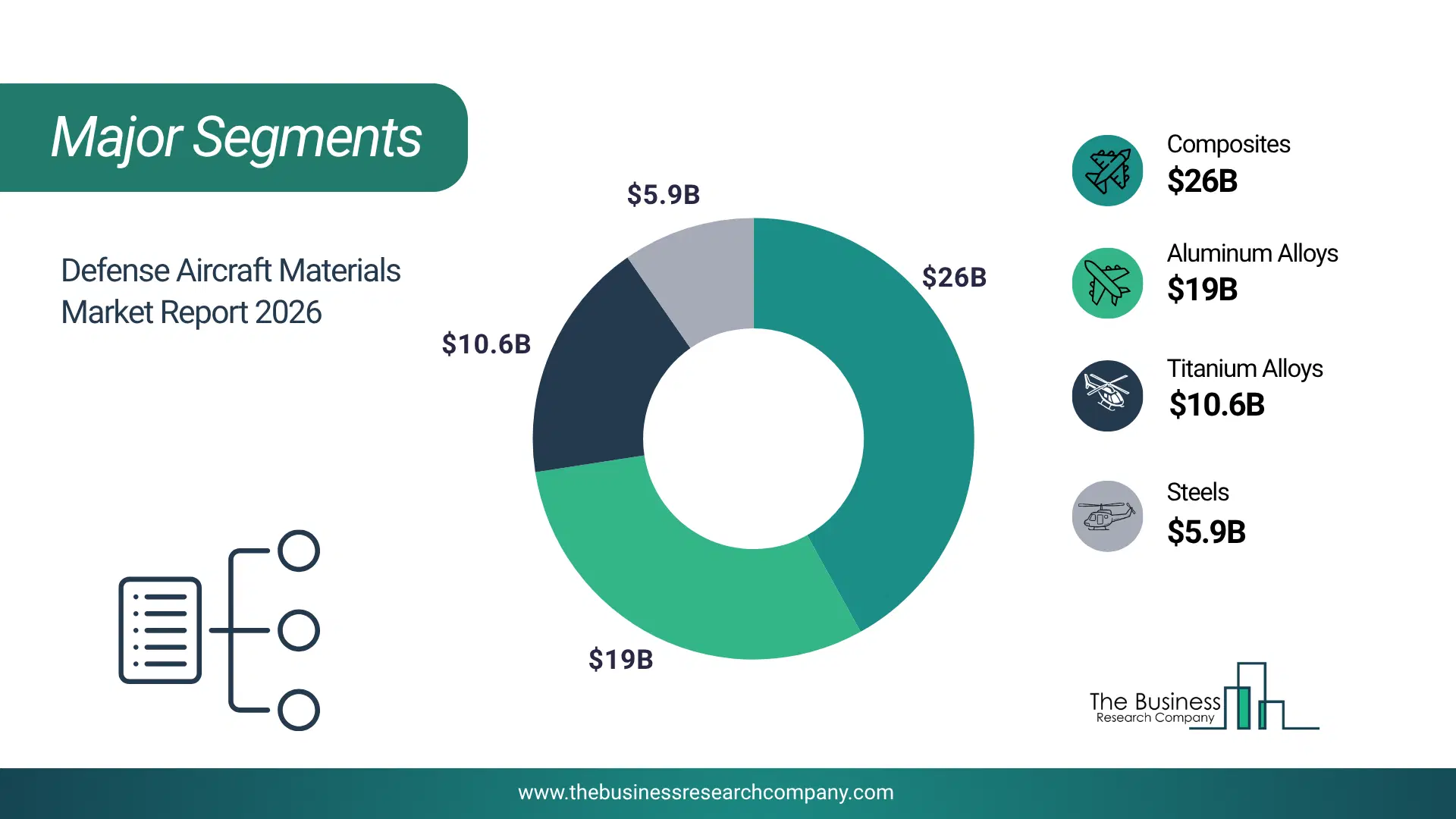
1) By Material Type: Aluminum Alloys, Steels, Titanium Alloys, Composites 3) By Application: Transport Aircraft, Combat Aircrafts, Military Cargo, Helicopters, Other Applications 4) By End-User: Military Organizations, Defense Contractors, Government Agencies Subsegments: 1) By Aluminum Alloys: 2xxx Series Aluminum Alloys, 7xxx Series Aluminum Alloys, High-Strength Aluminum-Lithium Alloys, Heat-Treatable Aluminum Alloys 2) By Steels: Stainless Steels, High-Strength Low-Alloy (HSLA) Steels, Maraging Steels, Tool Steels 3) By Titanium Alloys: Alpha Titanium Alloys, Beta Titanium Alloys, Alpha-Beta Titanium Alloys, Titanium Matrix Composites 4) By Composites: Carbon Fiber Reinforced Polymers (CFRP), Glass Fiber Reinforced Polymers (GFRP), Aramid Fiber Composites, Ceramic Matrix Composites (CMC) The top segments in the defense aircraft materials market will be: • Composites will reach $25.97 billion by 2030. • Aluminum Alloys will reach $18.96 billion by 2030. • Titanium Alloys will reach $10.59 billion by 2030. • Steels will reach $5.84 billion by 2030.What Is Driver Of The Defense Aircraft Materials Market?
The increasing demand for advanced military aircraft is expected to propel the growth of the defense aircraft materials market going forward. Advanced military aircraft refers to high-tech combat planes equipped with stealth, precision systems, and superior speed for modern defense missions. The demand for advanced military aircraft is increasing due to rising geopolitical tensions because countries are prioritizing aerial dominance, preparing for high-tech warfare, and enhancing rapid response capabilities in unstable regions. Defense aircraft materials, such as aerospace superalloys and advanced composites, play a crucial role in enhancing the performance, durability, and survivability of advanced military aircraft by withstanding extreme temperatures, reducing weight, and improving fuel efficiency and maneuverability. For instance, in January 2024, according to the U.S. Department of State, a U.S.-based department responsible for the country’s foreign policy and international relations, $80.9 billion worth of military equipment and services was transferred in 2023, marking a 55.9% increase compared to the $50.9 billion transferred in fiscal 2022. Therefore, the increasing demand for advanced military aircraft is driving the growth of the defense aircraft materials industry.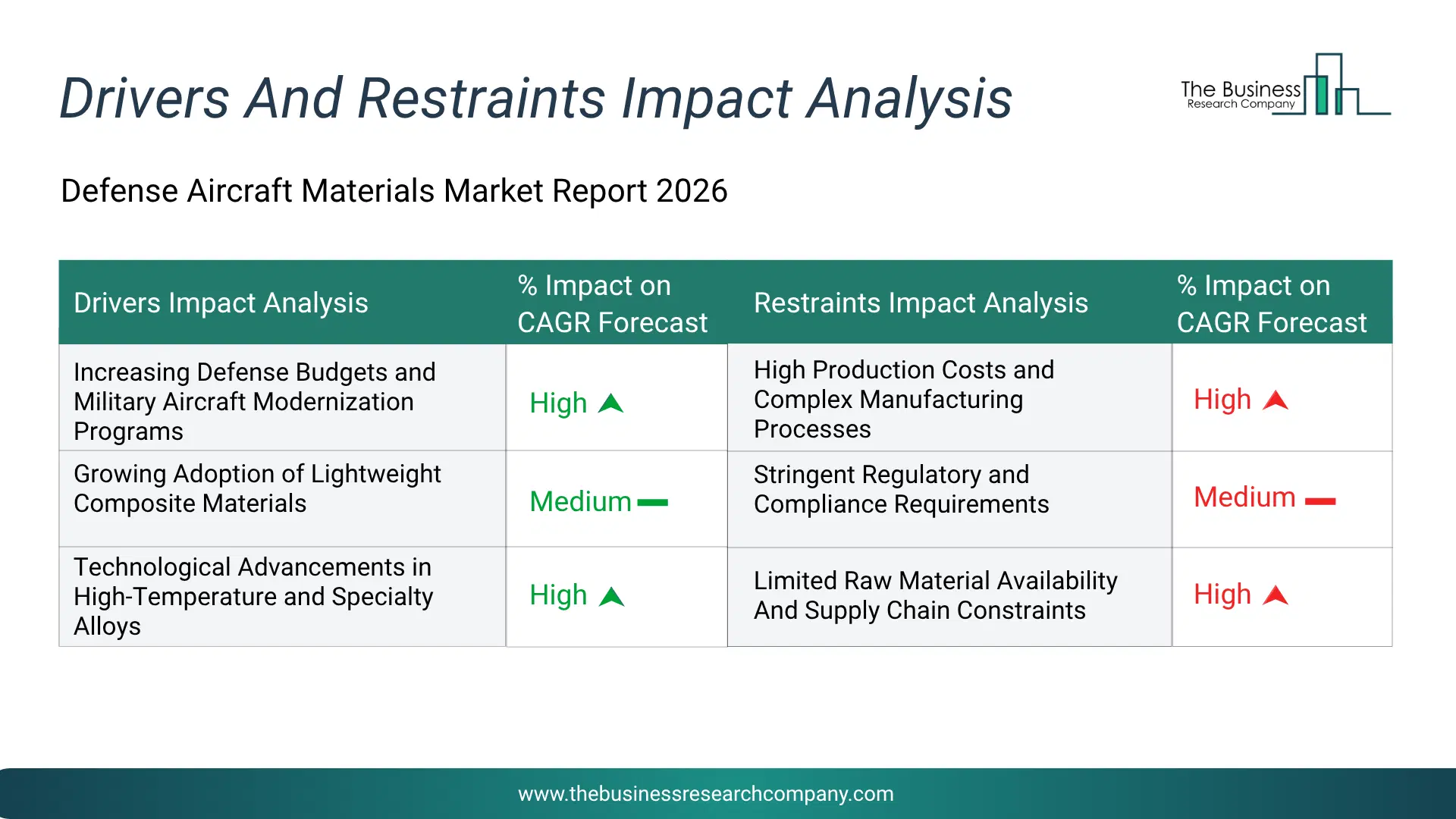
Infographic Chart Showing Key Market Drivers Analysis And Restraints For Defense Aircraft Materials Market
The chart presents an impact analysis of key drivers and restraints, quantifying their relative influence on the market's growth rate and helping assess the balance between growth enablers and limiting factors. This chart offers a high-level perspective; the full report contains more detailed insights.
How Will The Drivers Impact Growth In The Global Defense Aircraft Materials Market?
• Increasing Defense Budgets and Military Aircraft Modernization Programs (High) – During the forecast period, the increasing defense budgets and military aircraft modernization programs are expected to become a key growth driver for the defense aircraft materials market by 2030. Rising geopolitical tensions, border security concerns, and global defense modernization initiatives are significantly driving investments in next -generation military aircraft. Governments across north america, europe, and asia -pacific are allocating higher defense budgets toward advanced fighter jets, surveillance aircraft, transport planes, and unmanned aerial vehicles (uavs). These modernization programs require high -performance materials such as advanced aluminum alloys, titanium, composite materials, and specialty coatings that offer superior strength, durability, and resistance to extreme operational conditions. The consistent procurement and upgrade cycles of defense aircraft are creating sustained demand for lightweight, high -strength, and heat -resistant materials, acting as a major growth driver for the market. • Growing Adoption of Lightweight Composite Materials (Medium) – During the forecast period, the growing adoption of lightweight composite materials is expected to emerge as a major factor driving the expansion of the defense aircraft materials market by 2030. The defense aerospace industry is increasingly shifting from traditional metal structures to advanced composite materials such as carbon fiber reinforced polymers (cfrp), ceramic matrix composites, and high-performance thermoplastics. These materials provide superior strength-to-weight ratios, corrosion resistance, fatigue performance, and radar-absorbing properties, which are critical for stealth and high-speed aircraft. Lightweight materials improve fuel efficiency, payload capacity, and mission performance, making them integral to modern combat aircraft design. The expanding use of composites in fuselage structures, wings, and interior components is a strong driver supporting long-term market growth. • Technological Advancements in High-Temperature and Specialty Alloys (High) – During the forecast period, the technological advancements in high-temperature and specialty alloys is expected to act as a key growth catalyst for the defense aircraft materials market by 2030. Defense aircraft operate under extreme thermal, mechanical, and environmental conditions, requiring materials that can withstand high temperatures, pressure variations, and structural stress. Advances in titanium alloys, nickel-based superalloys, and heat-resistant coatings are enhancing engine performance and airframe durability. Additive manufacturing and advanced material processing techniques are enabling the production of complex, high-performance components with improved structural efficiency. Continuous r&d investments in material science and aerospace engineering are significantly contributing to the evolution of next-generation defense aircraft materials, driving steady market expansion.How Will The Restraints Impact Growth In The Global Defense Aircraft Materials Market?
• High Production Costs and Complex Manufacturing Processes (High) – During the forecast period, the defense aircraft materials, particularly advanced composites and specialty alloys, involve complex manufacturing processes and stringent quality control requirements. Production costs are significantly higher compared to commercial aviation materials due to limited production volumes, high-performance specifications, and certification requirements. These high costs can impact profit margins for manufacturers and limit procurement flexibility for defense agencies, acting as a restraint on overall market growth. • Stringent Regulatory and Compliance Requirements (Medium) – During the forecast period, the defense aircraft materials must meet rigorous military standards, safety certifications, and export control regulations. Compliance with defense procurement policies, international trade restrictions, and quality assurance standards increases administrative and operational complexity for manufacturers. Delays in approvals, strict testing procedures, and geopolitical export limitations can slow market expansion. These regulatory challenges act as a notable restraint, particularly for smaller material suppliers entering the defense aerospace ecosystem. • Limited Raw Material Availability And Supply Chain Constraints (High) – During the forecast period, the limited raw material availability and supply chain constraints act as a restraint for the defense aircraft materials market by creating shortages and delays in the procurement of critical inputs such as titanium alloys, carbon fiber composites, and specialty metals. Dependence on a limited number of global suppliers increases vulnerability to geopolitical tensions and trade restrictions. Disruptions in logistics and long lead times further impact production schedules and increase overall costs. These challenges reduce manufacturing efficiency and slow down the timely delivery of defense aircraft programs, ultimately restraining market growth.Key Players In The Global Defense Aircraft Materials Market
Major companies operating in the defense aircraft materials market are Airbus SE, General Dynamics Corporation, SABIC (Saudi Basic Industries Corporation), Northrop Grumman Corporation, Honeywell International Inc., Safran S.A., Thales Group, Toray Industries Inc., Evonik Industries AG, Kobe Steel Ltd., Alcoa Corporation, Celanese Corporation, Teijin Limited, Novelis Inc., Howmet Aerospace Inc., Elbit Systems Ltd., Kaiser Aluminum Corporation, Hexcel Corporation, SGL Carbon SE, Tex Tech Industries Inc.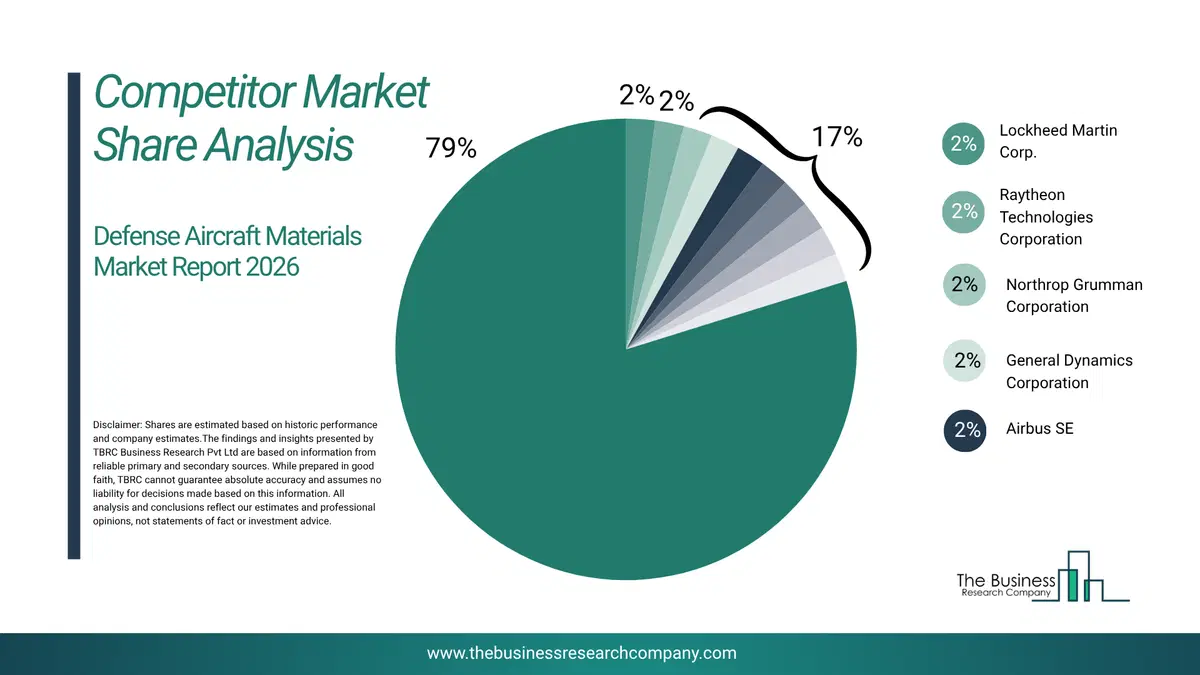
This chart is for illustrative purposes; the full report includes a detailed competitor analysis and comprehensive overview of the top 10 companies in the market.
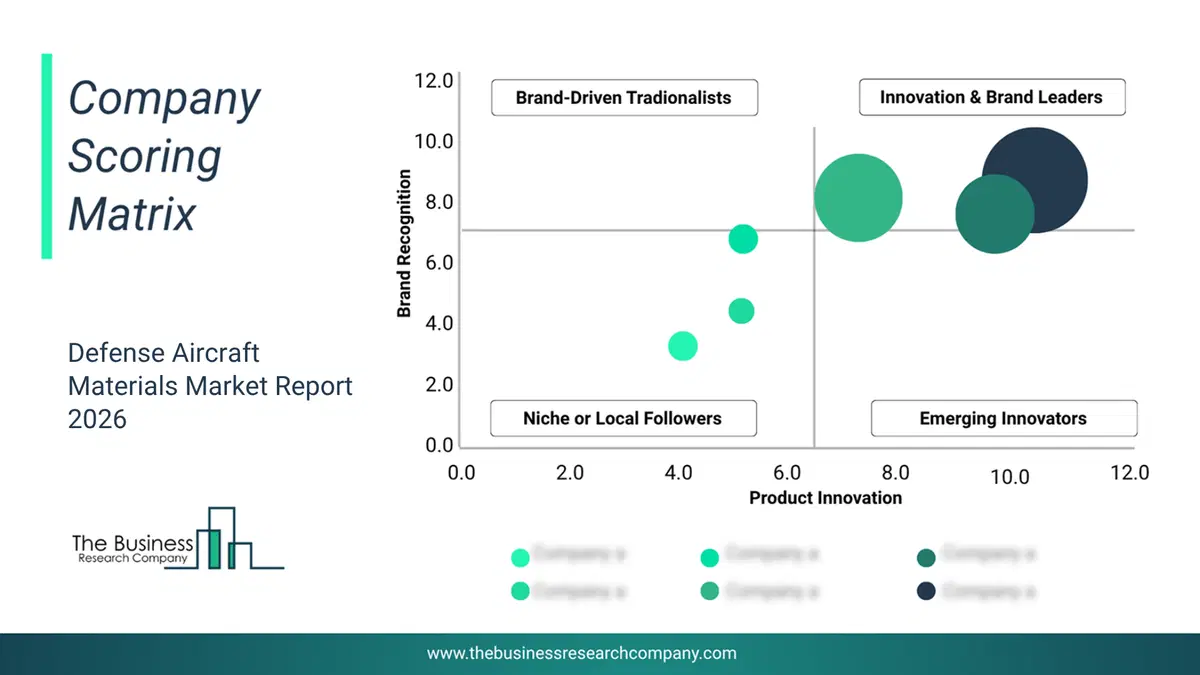
This chart maps companies by product innovation and brand strength, with bubble size indicating relative revenue, helping identify market leaders, challengers, and niche players. This is an illustrative chart; the full report provides a complete and accurate competitive analysis.
Global Defense Aircraft Materials Market Trends and Insights
Major companies operating in defense aircraft materials are focusing on developing innovative solutions such as carbon-fibre 3D printing materials to enhance aircraft performance, reduce weight, and improve fuel efficiency. Carbon-fiber 3D printing materials are composite filaments or powders made by combining a base material (such as nylon, PLA, or polyamide) with short carbon fibers. These fibers increase the strength, stiffness, and durability of the printed parts while keeping them lightweight. For instance, in June 2024, the Defense Research and Development Organization (DRDO), an India-based government agency, launched FS6130CF-F, a new high-performance carbon-fiber-reinforced PA6 material, for use with Farsoon’s industrial flight 3D printing systems. It is fully compatible with the Flight HT403P-2 (dual-laser) and Flight HT/ST252P high-temperature laser PBF platforms and is now available in both the US and European markets.What Are Latest Mergers And Acquisitions In The Defense Aircraft Materials Market? Tex Tech Acquired Fiber Materials Inc. To Strengthen Aerospace Composite Capabilities
In January 2025, Tex Tech Industries Inc., a US-based manufacturer of high-performance textiles and engineered materials, acquired Fiber Materials Inc. for an undisclosed amount. Through this acquisition, Tex Tech aims to enhance its capabilities in advanced materials for extreme environments, strengthening its position in supplying critical aerospace and defense components such as thermal protection systems and composite structures. Fiber Materials Inc. is a US-based manufacturer of composite materials intended for the defense sector.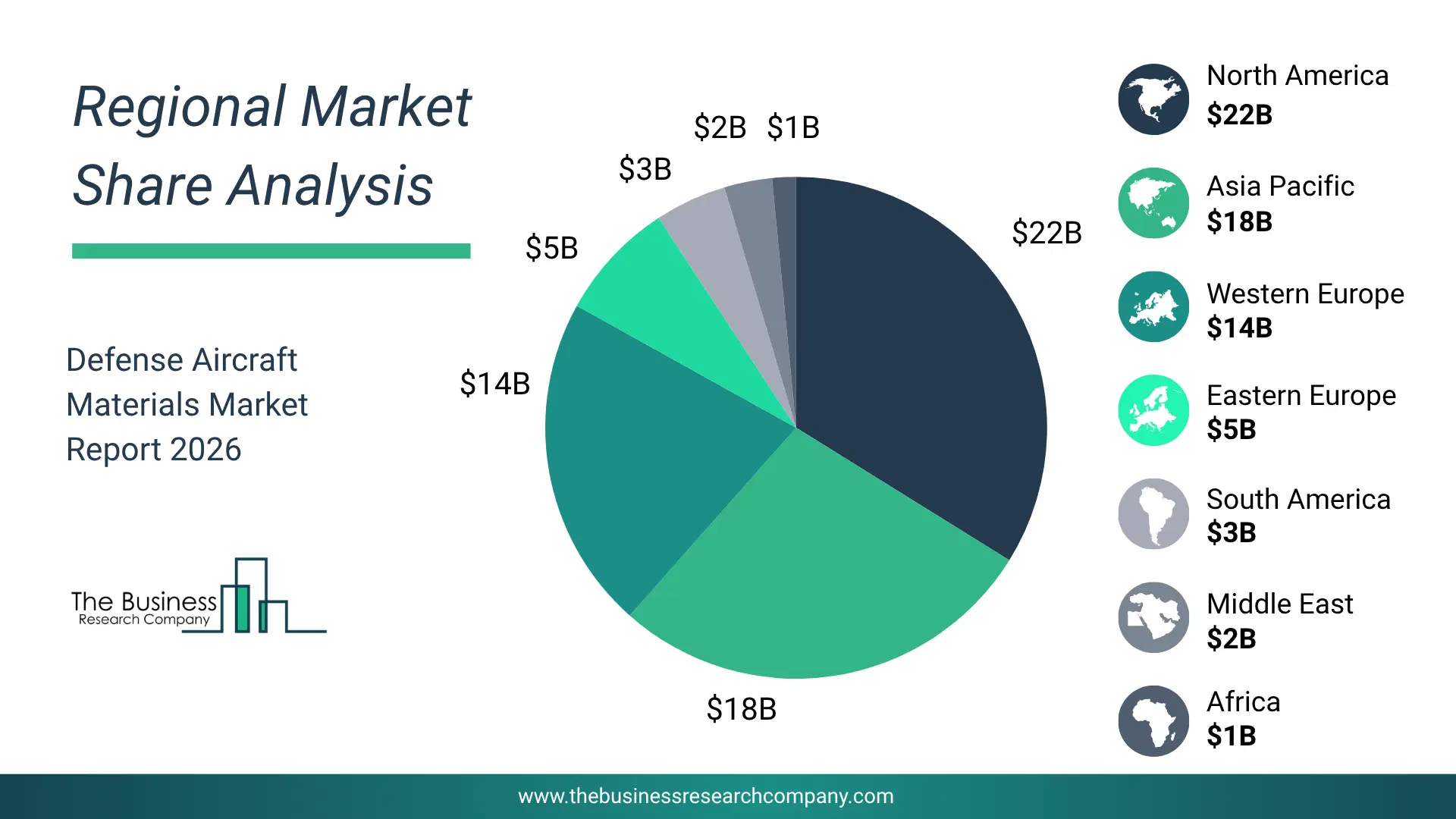
Regional Insights
North America was the largest region in the defense aircraft materials market in 2025. Asia-Pacific is expected to be the fastest-growing region in the forecast period. The regions covered in this market report are Asia-Pacific, South East Asia, Western Europe, Eastern Europe, North America, South America, Middle East, Africa. The countries covered in this market report are Australia, Brazil, China, France, Germany, India, Indonesia, Japan, Taiwan, Russia, South Korea, UK, USA, Canada, Italy, SpainWhat Defines the Defense Aircraft Materials Market?
The defense aircraft materials market consists of sales of raw materials, structural components, engine components, interior components, weapon systems, and coating and surface treatments. Values in this market are ‘factory gate’ values, that is the value of goods sold by the manufacturers or creators of the goods, whether to other entities (including downstream manufacturers, wholesalers, distributors and retailers) or directly to end customers. The value of goods in this market includes related services sold by the creators of the goods.How is Market Value Defined and Measured?
The market value is defined as the revenues that enterprises gain from the sale of goods and/or services within the specified market and geography through sales, grants, or donations in terms of the currency (in USD unless otherwise specified). The revenues for a specified geography are consumption values that are revenues generated by organizations in the specified geography within the market, irrespective of where they are produced. It does not include revenues from resales along the supply chain, either further along the supply chain or as part of other products.
This chart presents market attractiveness based on a quantitative evaluation of growth, competition, strategic alignment, and risk, offering a clear view of opportunity areas for decision-making. This chart is for illustrative purposes; the full report contains the complete analysis.

This chart highlights the Total Addressable Market (TAM) by estimating the maximum revenue opportunity using an assumption-driven approach, supporting strategic planning and opportunity sizing across markets. The chart is illustrative; the full report provides a more comprehensive analysis.
What Key Data and Analysis Are Included in the Defense Aircraft Materials Market Report 2026?
The defense aircraft materials market research report is one of a series of new reports from The Business Research Company that provides market statistics, including industry global market size, regional shares, competitors with the market share, detailed market segments, market trends and opportunities, and any further data you may need to thrive in the defense aircraft materials industry. The market research report delivers a complete perspective of everything you need, with an in-depth analysis of the current and future state of the industry.Defense Aircraft Materials Market Report Forecast Analysis
| Report Attribute | Details |
|---|---|
| Market Size Value In 2026 | $46.68 billion |
| Revenue Forecast In 2030 | $59.01 billion |
| Growth Rate | CAGR of 6% from 2026 to 2030 |
| Base Year For Estimation | 2025 |
| Actual Estimates/Historical Data | 2020-2025 |
| Forecast Period | 2026 - 2030 |
| Market Representation | Revenue in USD Billion and CAGR from 2026 to 2030 |
| Segments Covered | Material Type, Application, End-User |
| Regional Scope | Asia-Pacific, Western Europe, Eastern Europe, North America, South America, Middle East, Africa |
| Country Scope | The countries covered in the report are Australia, Brazil, China, France, Germany, India, ... |
| Key Companies Profiled | Airbus SE, General Dynamics Corporation, SABIC (Saudi Basic Industries Corporation), Northrop Grumman Corporation, Honeywell International Inc., Safran S.A., Thales Group, Toray Industries Inc., Evonik Industries AG, Kobe Steel Ltd., Alcoa Corporation, Celanese Corporation, Teijin Limited, Novelis Inc., Howmet Aerospace Inc., Elbit Systems Ltd., Kaiser Aluminum Corporation, Hexcel Corporation, SGL Carbon SE, Tex Tech Industries Inc. |
| Customization Scope | Request for Customization |
| Pricing And Purchase Options | Explore Purchase Options |