
Diabetic Foot Ulcer Biologics Market Report 2026
Global Outlook – By Type (Growth Factors, Skin Substitutes, Collagen-Based Biologics, Cell-Based Biologics), By Indication (Neuro-Ischemic Ulcers, Neuropathic Diabetic Foot Ulcer, Ischemic Diabetic Foot Ulcer), By Technology (Gene Therapy, Stem Cell Therapy, Tissue Engineering), By End User (Hospitals, Clinics, Ambulatory Surgical Centers, Long-Term Care Settings, Other End Users) – Market Size, Trends, Strategies, and Forecast to 2030
Diabetic Foot Ulcer Biologics Market Overview
• Diabetic Foot Ulcer Biologics market size has reached to $1.93 billion in 2025 • Expected to grow to $2.87 billion in 2030 at a compound annual growth rate (CAGR) of 8.3% • Growth Driver: Rising Diabetes Prevalence Fueling The Growth Of The Market Due To Increasing Demand For Advanced Wound Care Solutions • Market Trend: Advancements In Biologic Therapies For Diabetic Foot Ulcers With Focus On Placental-Derived Allografts And Clinical Trials • North America was the largest region in 2025 and Asia-Pacific is the fastest growing region.What Is Covered Under Diabetic Foot Ulcer Biologics Market?
Diabetic foot ulcer biologics are advanced therapeutic products derived from living cells, tissues, or biological materials designed to promote wound healing and tissue regeneration in diabetic foot ulcers. These biologics enhance the natural repair processes by providing essential growth factors, extracellular matrices, and cellular components that accelerate healing and reduce complications associated with chronic diabetic wounds. The main types of diabetic foot ulcer biologics are growth factors, skin substitutes, collagen-based biologics, and cell-based biologics. Growth factors are natural or synthetic substances that stimulate cell proliferation, differentiation, and tissue regeneration to promote healing and development. Key indications are neuro-ischemic ulcers, neuropathic diabetic foot ulcers, and ischemic diabetic foot ulcers. The various technologies involved are gene therapy, stem cell therapy, and tissue engineering, and they are used in several end users such as hospitals, clinics, ambulatory surgical centers, long-term care settings, and others.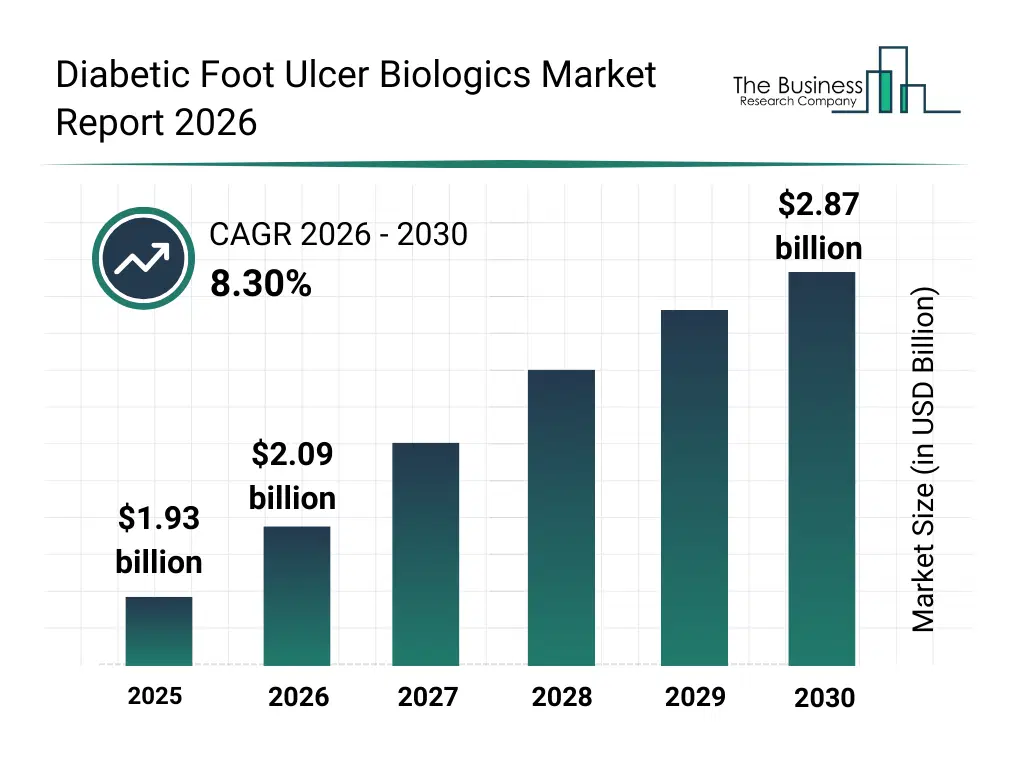
What Is The Diabetic Foot Ulcer Biologics Market Size and Share 2026?
The diabetic foot ulcer biologics market size has grown strongly in recent years. It will grow from $1.93 billion in 2025 to $2.09 billion in 2026 at a compound annual growth rate (CAGR) of 8.3%. The growth in the historic period can be attributed to limited availability of advanced biologics, reliance on conventional wound care treatments, rising prevalence of diabetes-related foot ulcers, increasing hospital and clinic adoption, lack of standardized treatment protocols.What Is The Diabetic Foot Ulcer Biologics Market Growth Forecast?
The diabetic foot ulcer biologics market size is expected to see strong growth in the next few years. It will grow to $2.87 billion in 2030 at a compound annual growth rate (CAGR) of 8.3%. The growth in the forecast period can be attributed to technological advancements in stem cell and gene therapy, growing investment in tissue engineering research, increasing adoption of autologous and allogeneic cell-based biologics, expansion of long-term care and ambulatory surgical centers, rising awareness of personalized wound care solutions. Major trends in the forecast period include increasing adoption of stem cell and gene therapies, rising use of collagen-based biologics for wound healing, expansion of skin substitutes in diabetic foot ulcer management, integration of advanced tissue engineering techniques, growing focus on personalized and targeted biologics treatments.
Global Diabetic Foot Ulcer Biologics Market Segmentation
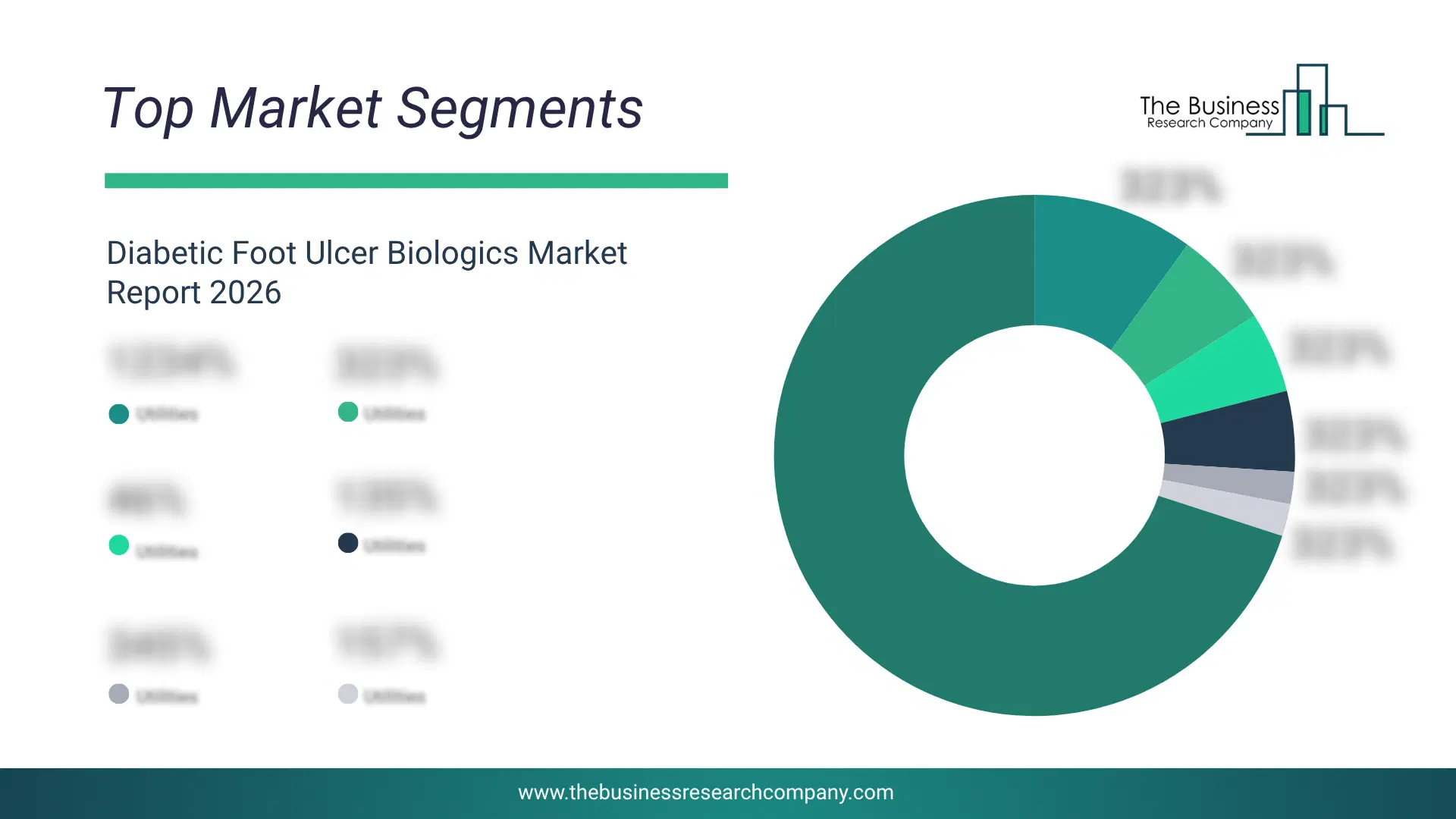
1) By Type: Growth Factors, Skin Substitutes, Collagen-Based Biologics, Cell-Based Biologics 2) By Indication: Neuro-Ischemic Ulcers, Neuropathic Diabetic Foot Ulcer, Ischemic Diabetic Foot Ulcer 3) By Technology: Gene Therapy, Stem Cell Therapy, Tissue Engineering 4) By End User: Hospitals, Clinics, Ambulatory Surgical Centers, Long-Term Care Settings, Other End Users Subsegments: 1) By Growth Factors: Platelet-Derived Growth Factor, Epidermal Growth Factor, Fibroblast Growth Factor, Vascular Endothelial Growth Factor 2) By Skin Substitutes: Synthetic Skin Substitutes, Biological Skin Substitutes, Composite Skin Substitutes 3) By Collagen-Based Biologics: Bovine-Derived Collagen, Porcine-Derived Collagen, Human-Derived Collagen 4) By Cell-Based Biologics: Autologous Cell-Based Biologics, Allogeneic Cell-Based Biologics, Stem Cell-Based BiologicsWhat Is The Driver Of The Diabetic Foot Ulcer Biologics Market?
The rising prevalence of diabetes is expected to propel the growth of the diabetic foot ulcer biologics market going forward. Diabetes is a chronic medical condition characterized by elevated blood glucose levels resulting from the body's inability to produce or effectively use insulin. The rise in diabetes prevalence is due to sedentary lifestyles, prompting increasing demand for long-term care solutions that manage blood sugar effectively while minimizing daily disruption. The diabetic foot ulcer biologics are essential for diabetes care, as they accelerate wound healing, prevent infections, and reduce complications from chronic foot ulcers. For instance, in April 2025, according to the International Diabetes Federation (IDF) Atlas, a Belgium-based non-profit organization, in 2024, type 1 diabetes affected 9.5 million of the 589 million adults with diabetes, and that number is expected to rise to 853 million by 2050. Therefore, the rising prevalence of diabetes is driving the growth of the diabetic foot ulcer biologics industry.Key Players In The Global Diabetic Foot Ulcer Biologics Market
Major companies operating in the diabetic foot ulcer biologics market are Smith & Nephew plc, Integra LifeSciences Holdings Corp., Organogenesis Holdings Inc., MIMEDX Group Inc., LifeNet Health, Aroa Biosurgery, Tissue Regenix Group plc, Stempeutics Research, ACell Inc.,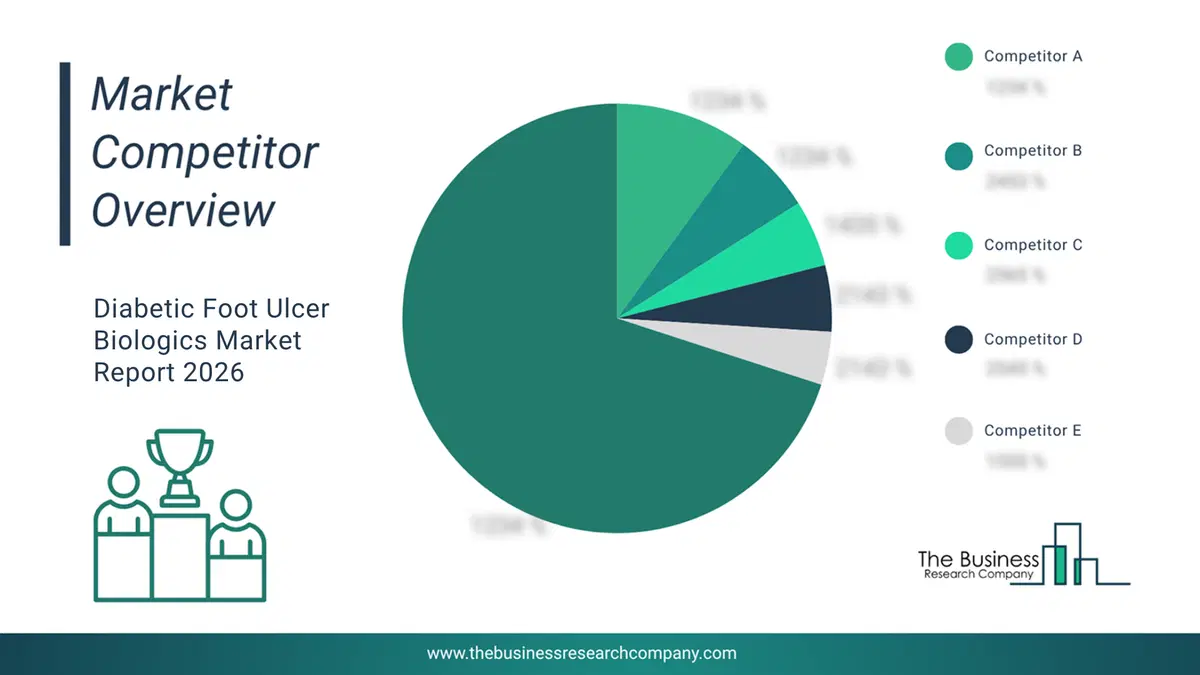
This chart is for illustrative purposes; the full report includes a detailed competitor analysis and comprehensive overview of the top 10 companies in the market.
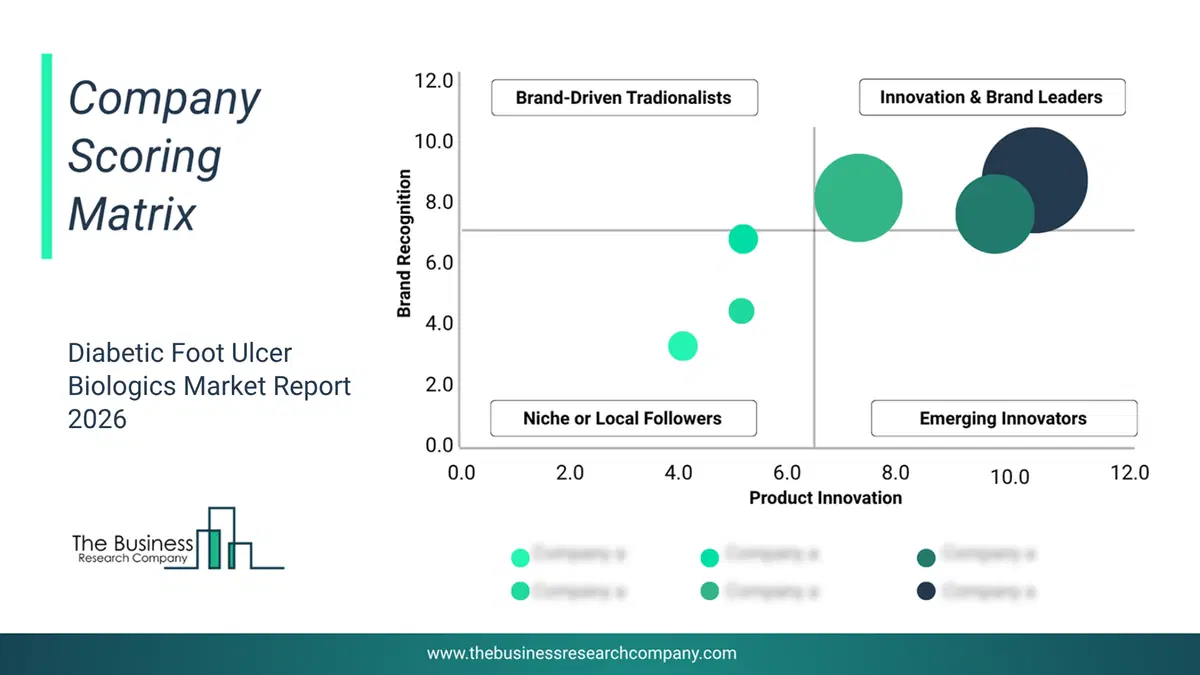
This chart maps companies by product innovation and brand strength, with bubble size indicating relative revenue, helping identify market leaders, challengers, and niche players. This is an illustrative chart; the full report provides a complete and accurate competitive analysis.
Global Diabetic Foot Ulcer Biologics Market Trends and Insights
Major companies operating in the diabetic foot ulcer biologics market are focusing on research and development in biologic therapies, such as placental-derived allograft, to enhance wound healing, reduce complications, and improve patient outcomes in the treatment of chronic foot ulcers. Placental-derived allograft is a biological tissue graft obtained from donated human placental tissues, such as the amnion or chorion, and used in medical applications to promote healing, reduce inflammation, and support tissue regeneration. For instance, in January 2025, BioStem Technologies Inc., a US-based pharmaceutical company, launched clinical trial using its BioREtain technology with Vendaje for treating diabetic foot ulcers. This study compares Vendaje combined with standard care versus standard care alone to demonstrate its effectiveness in healing non-healing diabetic foot ulcers. It includes a follow-up phase to evaluate the long-term durability and stability of healed wounds, ensuring sustained treatment success and reducing the risk of ulcer recurrence.What Are Latest Mergers And Acquisitions In The Diabetic Foot Ulcer Biologics Market?
In March 2024, BiomX Inc., a US-based biotechnology company focused on phage therapy, acquired Adaptive Phage Therapeutics Inc. for an undisclosed amount. With this acquisition, BiomX aims to create a leading phage‑therapy company by combining advanced platforms and an enhanced pipeline that includes two Phase 2 assets targeting chronic pulmonary infections in cystic fibrosis and diabetic foot osteomyelitis. Adaptive Phage Therapeutics, Inc. is a US-based clinical‑stage biotech company pioneering personalized phage‑based treatments for serious bacterial infections.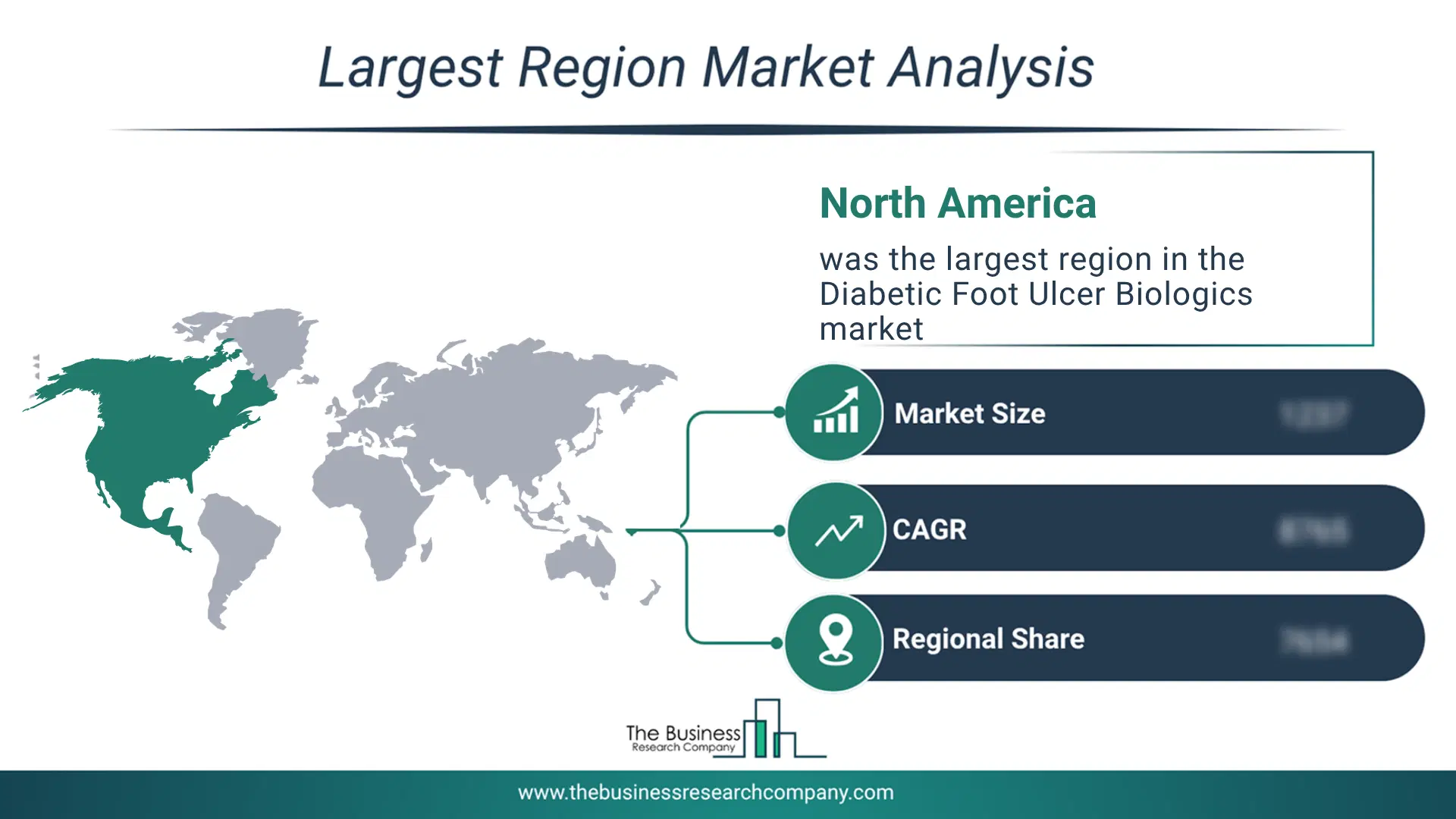
Regional Insights
North America was the largest region in the diabetic foot ulcer biologics market in 2025. Asia-Pacific is expected to be the fastest-growing region in the forecast period. The regions covered in this market report are Asia-Pacific, South East Asia, Western Europe, Eastern Europe, North America, South America, Middle East, Africa. The countries covered in this market report are Australia, Brazil, China, France, Germany, India, Indonesia, Japan, Taiwan, Russia, South Korea, UK, USA, Canada, Italy, Spain.What Defines the Diabetic Foot Ulcer Biologics Market?
The diabetic foot ulcer biologics market consists of revenues earned by entities by providing services such as wound care management services, personalized treatment planning, post-operative care and follow-up, telemedicine and remote monitoring, and clinical trial and research services. The market value includes the value of related goods sold by the service provider or included within the service offering. The diabetic foot ulcer biologics market also includes sales of bioreactors and cell culture systems, tissue processing and preservation devices, wound dressing application tools, and automated cell sorting and separation machines. Values in this market are ‘factory gate’ values, that is the value of goods sold by the manufacturers or creators of the goods, whether to other entities (including downstream manufacturers, wholesalers, distributors and retailers) or directly to end customers. The value of goods in this market includes related services sold by the creators of the goods.How is Market Value Defined and Measured?
The market value is defined as the revenues that enterprises gain from the sale of goods and/or services within the specified market and geography through sales, grants, or donations in terms of the currency (in USD unless otherwise specified). The revenues for a specified geography are consumption values that are revenues generated by organizations in the specified geography within the market, irrespective of where they are produced. It does not include revenues from resales along the supply chain, either further along the supply chain or as part of other products.
This chart presents market attractiveness based on a quantitative evaluation of growth, competition, strategic alignment, and risk, offering a clear view of opportunity areas for decision-making. This chart is for illustrative purposes; the full report contains the complete analysis.

This chart highlights the Total Addressable Market (TAM) by estimating the maximum revenue opportunity using an assumption-driven approach, supporting strategic planning and opportunity sizing across markets. The chart is illustrative; the full report provides a more comprehensive analysis.
What Key Data and Analysis Are Included in the Diabetic Foot Ulcer Biologics Market Report 2026?
The diabetic foot ulcer biologics market research report is one of a series of new reports from The Business Research Company that provides market statistics, including industry global market size, regional shares, competitors with the market share, detailed market segments, market trends and opportunities, and any further data you may need to thrive in the diabetic foot ulcer biologics industry. The market research report delivers a complete perspective of everything you need, with an in-depth analysis of the current and future state of the industry.Diabetic Foot Ulcer Biologics Market Report Forecast Analysis
| Report Attribute | Details |
|---|---|
| Market Size Value In 2026 | $2.09 billion |
| Revenue Forecast In 2030 | $2.87 billion |
| Growth Rate | CAGR of 8.3% from 2026 to 2030 |
| Base Year For Estimation | 2025 |
| Actual Estimates/Historical Data | 2020-2025 |
| Forecast Period | 2026 - 2030 |
| Market Representation | Revenue in USD Billion and CAGR from 2026 to 2030 |
| Segments Covered | Type, Indication, Technology, End User |
| Regional Scope | Asia-Pacific, Western Europe, Eastern Europe, North America, South America, Middle East, Africa |
| Country Scope | The countries covered in the report are Australia, Brazil, China, France, Germany, India, Indonesia, Japan, Taiwan, Russia, South Korea, UK, USA, Canada, Italy, Spain. |
| Key Companies Profiled | Smith & Nephew plc, Integra LifeSciences Holdings Corp., Organogenesis Holdings Inc., MIMEDX Group Inc., LifeNet Health, Aroa Biosurgery, Tissue Regenix Group plc, Stempeutics Research, ACell Inc., |
| Customization Scope | Request for Customization |
| Pricing And Purchase Options | Explore Purchase Options |