

Dyslipidemia Market Report 2026
Global Outlook – By Treatment (Statins, Bile Acid Sequestrants, PCSK9 Inhibitors, Small Interfering RNA (siRNA), Cholesterol Absorption Inhibitors, Fibrates, Niacins, Omega-3 Fatty Acid Derivatives, Other Treatments), By Route Of Administration (Oral, Parental), By Distribution Channel (Hospital Pharmacies, Retail Pharmacies, Drug Store, Online Pharmacies) - Market Size, Trends, Strategies, and Forecast to 2030
Dyslipidemia Market Overview
• Dyslipidemia market size has reached to $17.91 billion in 2025 • Expected to grow to $29.08 billion in 2030 at a compound annual growth rate (CAGR) of 10.1% • Growth Driver: Rising Obese Population Driving The Growth Of The Market Due To Increasing Metabolic Disorders • Market Trend: Expansion Of Advanced Combination Therapies Boosting The Market Due To Improved Treatment Options • North America was the largest region in 2025 and Asia-Pacific is the fastest growing region.What Is Covered Under Dyslipidemia Market?
Dyslipidemia is a health condition where the levels of lipids (fats) in the blood become abnormal. Managing dyslipidemia primarily aims to regulate lipid levels, reduce the risk of cardiovascular diseases, and improve heart health through a combination of lifestyle modifications, medication, and routine monitoring. The main treatment types of dyslipidemia are statins, bile acid sequestrants, pcsk9 inhibitors, small interfering rna (sirna), cholesterol absorption inhibitors, fibrates, niacins, omega-3 fatty acid derivatives, others. Statins are medications that lower cholesterol by inhibiting the enzyme HMG-CoA reductase, which plays a key role in cholesterol production in the liver. These are administered through various route of administration such as oral, parental and are distributed through various distribution channels such as hospital pharmacies, retail pharmacies, drug store, online pharmacies.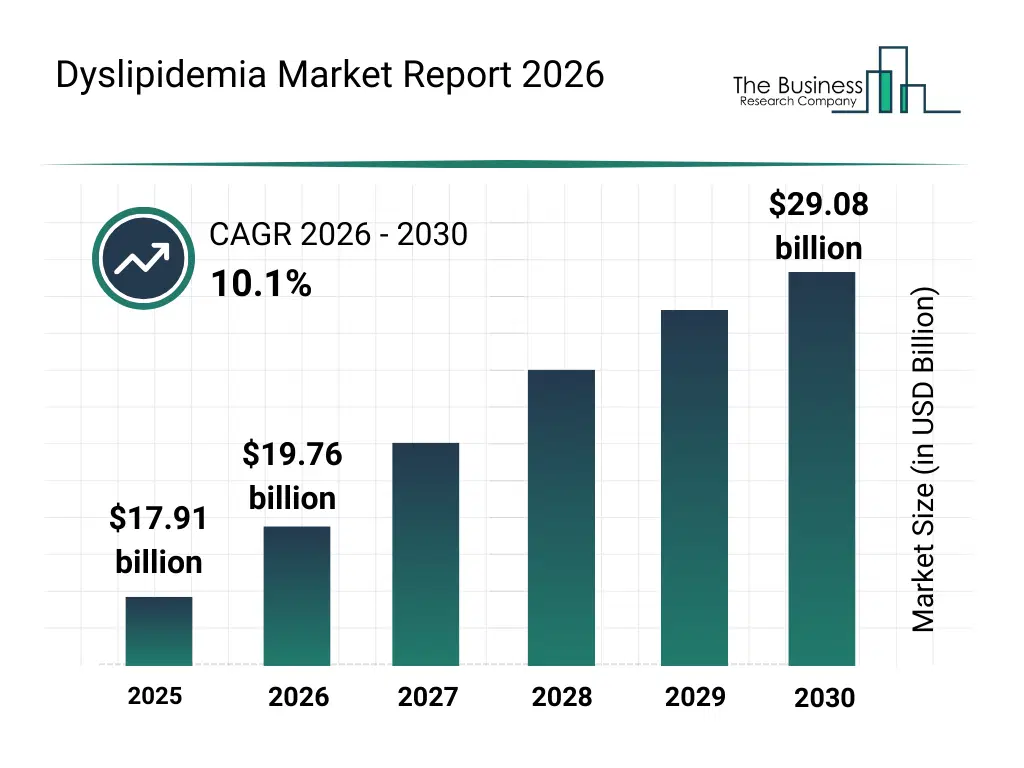
What Is The Dyslipidemia Market Size and Share 2026?
The dyslipidemia market size has grown rapidly in recent years. It will grow from $17.91 billion in 2025 to $19.76 billion in 2026 at a compound annual growth rate (CAGR) of 10.3%. The growth in the historic period can be attributed to cardiovascular disease burden, statin therapy adoption, lipid screening programs, clinical guideline updates, primary care expansion.What Is The Dyslipidemia Market Growth Forecast?
The dyslipidemia market size is expected to see rapid growth in the next few years. It will grow to $29.08 billion in 2030 at a compound annual growth rate (CAGR) of 10.1%. The growth in the forecast period can be attributed to precision cardiology growth, novel lipid therapies, digital lipid monitoring, preventive healthcare focus, aging population. Major trends in the forecast period include growing use of advanced lipid-lowering therapies, rising adoption of pcsk9 inhibitors and sirna, increased focus on cardiovascular risk reduction, expansion of combination drug therapies, improved patient monitoring and compliance.
Global Dyslipidemia Market Segmentation
1) By Treatment: Statins, Bile Acid Sequestrants, PCSK9 Inhibitors, Small Interfering RNA (siRNA), Cholesterol Absorption Inhibitors, Fibrates, Niacins, Omega-3 Fatty Acid Derivatives, Other Treatments 2) By Route Of Administration: Oral, Parental 3) By Distribution Channel: Hospital Pharmacies, Retail Pharmacies, Drug Store, Online Pharmacies Subsegments: 1) By Statins: Atorvastatin, Simvastatin, Rosuvastatin, Pravastatin 2) By Bile Acid Sequestrants: Cholestyramine, Colesevelam 3) By PCSK9 Inhibitors: Evolocumab, Alirocumab 4) By Small Interfering RNA (siRNA): Inclisiran 5) By Cholesterol Absorption Inhibitors: Ezetimibe 6) By Fibrates: Fenofibrate, Gemfibrozil 7) By Niacins: Nicotinic Acid 8) By Omega-3 Fatty Acid Derivatives: Eicosapentaenoic Acid (EPA), Docosahexaenoic Acid (DHA) 9) By Other Treatments: Herbal Supplements, Combination TherapiesWhat Is The Driver Of The Dyslipidemia Market?
The increasing obese population is expected to propel the growth of the dyslipidemia market going forward. The obese population refers to individuals who have excess body fat that poses significant health risks, including metabolic and cardiovascular complications. The obese population is rising due to lifestyle shifts that promote prolonged energy imbalance, including sedentary behavior, high-calorie diets, reduced physical activity, and environmental and socioeconomic influences. The dyslipidemia market supports this trend because obesity disrupts lipid metabolism, leading to abnormal cholesterol and triglyceride levels that heighten cardiovascular risk and require medical management. For instance, in March 2024, according to the World Health Organization, a Switzerland-based intergovernmental health agency, approximately one in eight people worldwide were living with obesity, including 2.5 billion adults aged 18 and older, and 37 million children under five years old were overweight. Therefore, the increasing obese population is driving the growth of the dyslipidemia industry.Key Players In The Global Dyslipidemia Market
Major companies operating in the dyslipidemia market are Pfizer Inc, Merck & Co Inc, Sanofi SA, AstraZeneca plc, Novartis AG, Amgen Inc, Viatris Inc, Teva Pharmaceutical Industries Ltd, Zydus Lifesciences Ltd, Lupin Pharmaceuticals Inc, Alnylam Pharmaceuticals Inc, Amarin Corporation, Esperion Therapeutics Inc, NewAmsterdam Pharma Holding BV, Regeneron Pharmaceuticals Inc, Johnson & Johnson, Bristol‑Myers Squibb Company, Bayer AG, AbbVie Inc, GlaxoSmithKline plc, Takeda Pharmaceutical Company Limited, Sun Pharmaceutical Industries Ltd, Dr Reddys Laboratories Ltd, Cipla Limited, Torrent Pharmaceuticals Ltd, Roche Holding AG, Boehringer Ingelheim GmbH, Novo Nordisk A/S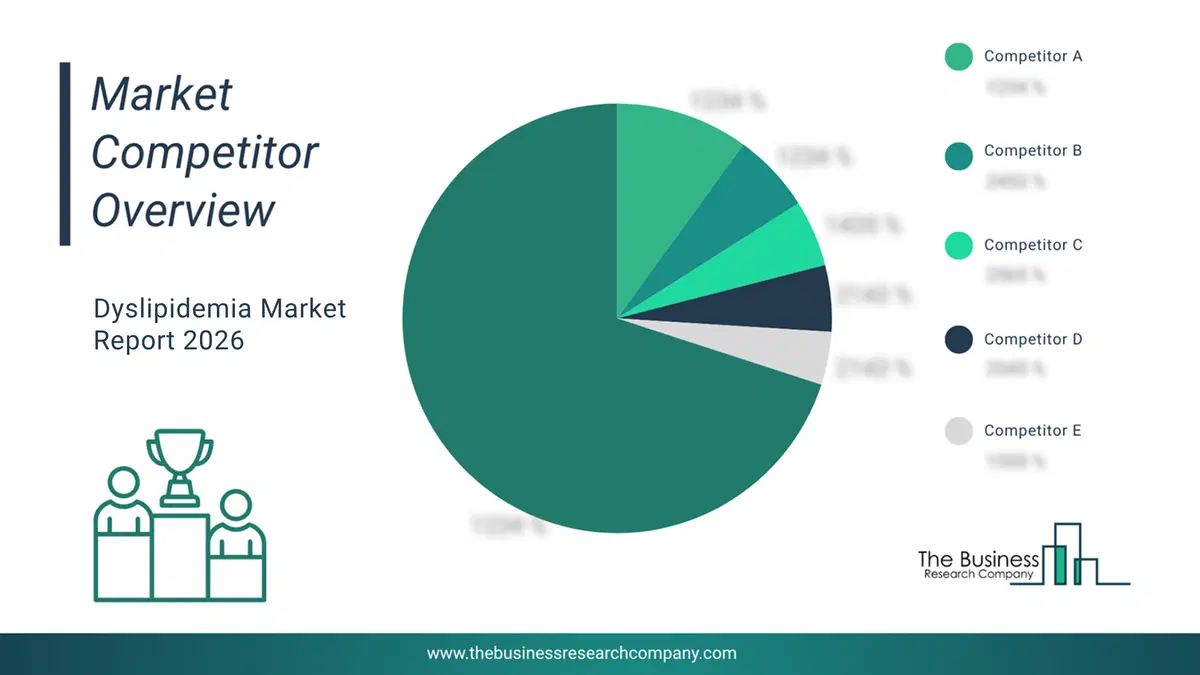
This chart is for illustrative purposes; the full report includes a detailed competitor analysis and comprehensive overview of the top 10 companies in the market.
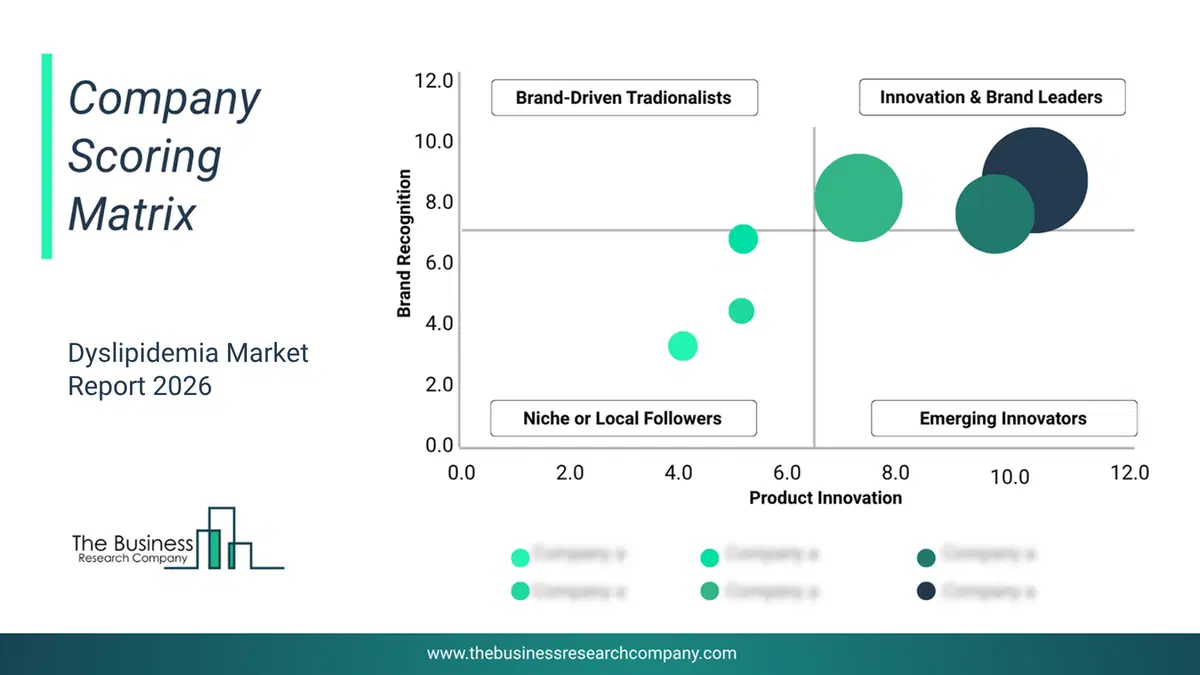
This chart maps companies by product innovation and brand strength, with bubble size indicating relative revenue, helping identify market leaders, challengers, and niche players. This is an illustrative chart; the full report provides a complete and accurate competitive analysis.
Global Dyslipidemia Market Trends and Insights
Major companies operating in the dyslipidemia market are focusing on developing advanced combination therapies to improve treatment efficacy, enhance patient compliance, and address multiple lipid abnormalities within a single regimen. Advanced combination therapies refer to treatment approaches that integrate two or more therapeutic agents to target different pathways involved in lipid regulation, thereby improving outcomes, reducing side effects, and offering greater flexibility in managing complex lipid disorders. For instance, in March 2024, Esperion Therapeutics Inc., a US-based pharmaceutical company, announced that NEXLETOL (bempedoic acid) and NEXLIZET (a combination of bempedoic acid and ezetimibe) received updated approvals from the U.S. Food and Drug Administration, allowing their use as standalone therapies or in combination with statins. These non-statin oral medications are designed to lower low-density lipoprotein cholesterol (LDL-C) and reduce cardiovascular risk, providing an important option for patients who are unable to tolerate statins or prefer alternative lipid-lowering strategies.What Are Latest Mergers And Acquisitions In The Dyslipidemia Market?
In October 2024, AstraZeneca PLC, a UK-based pharmaceutical company, secured an exclusive license from CSPC for a pre‑clinical small molecule called YS2302018. This partnership aims to develop a novel lipid-lowering therapy targeting lipoprotein(a) to reduce cardiovascular risk and potentially combine it with AstraZeneca’s existing PCSK9 inhibitor for enhanced treatment outcomes. CSPC Pharmaceutical Group Ltd. is a China-based pharmaceutical company that that researches, develops, manufactures, and sells pharmaceutical products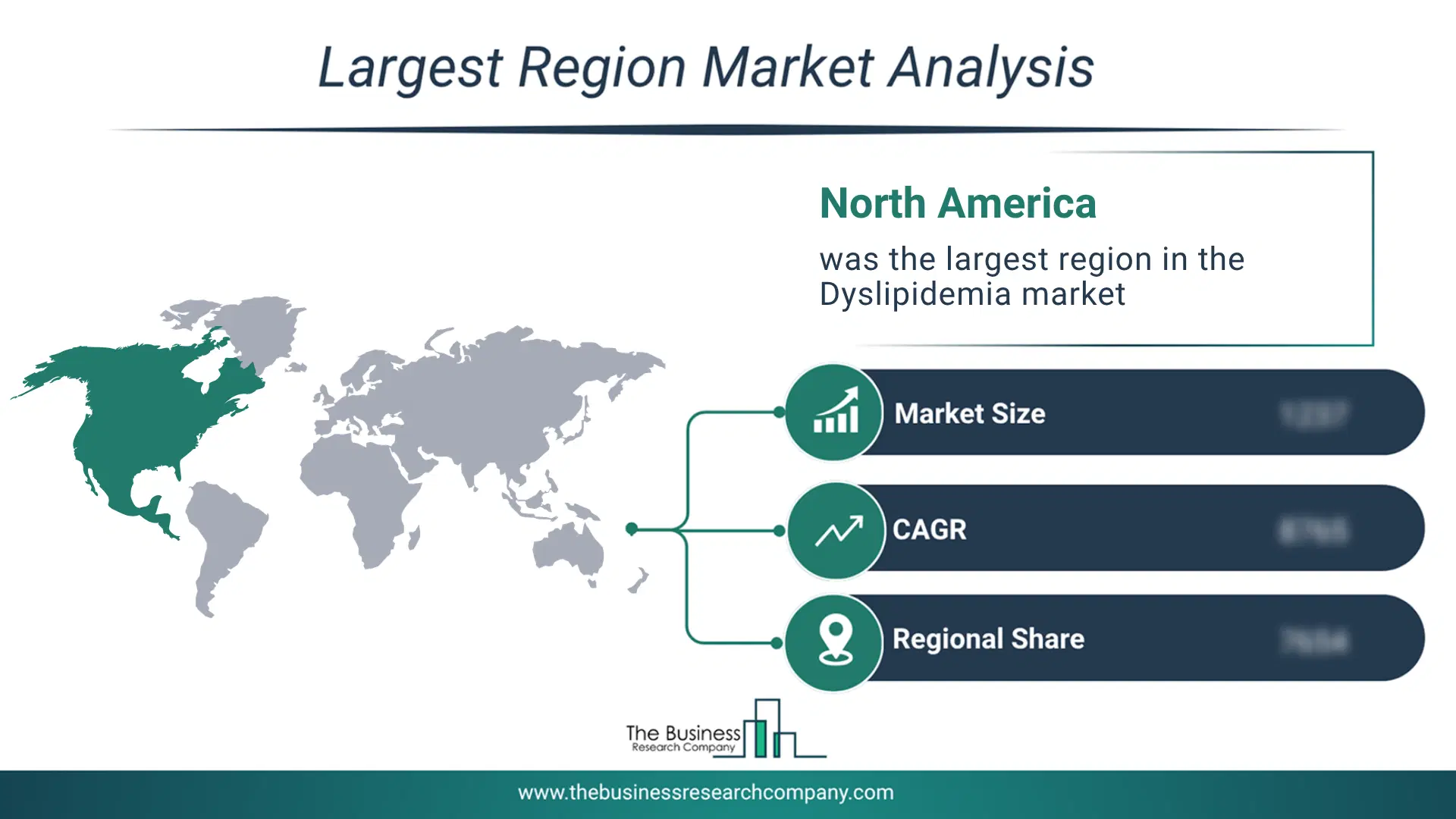
Regional Outlook
North America was the largest region in the dyslipidemia market in 2025. Asia-Pacific is expected to be the fastest-growing region in the forecast period. The regions covered in this market report are Asia-Pacific, South East Asia, Western Europe, Eastern Europe, North America, South America, Middle East, Africa. The countries covered in this market report are Australia, Brazil, China, France, Germany, India, Indonesia, Japan, Taiwan, Russia, South Korea, UK, USA, Canada, Italy, Spain.What Defines the Dyslipidemia Market?
The dyslipidemia market consists of revenues earned by entities by providing services such as diagnosis, lipid profile testing, medical consultations, lifestyle counseling, prescription, and advanced therapeutic interventions for managing abnormal lipid levels. The market value includes the value of related goods sold by the service provider or included within the service offering. The dyslipidemia market also includes sales of products such as ezetimibe combination drugs, adenosine triphosphate-citrate lyase (ACL) inhibitors, and bempedoic acid combination drugs. Values in this market are ‘factory gate’ values, that is, the value of goods sold by the manufacturers or creators of the goods, whether to other entities (including downstream manufacturers, wholesalers, distributors, and retailers) or directly to end customers. The value of goods in this market includes related services sold by the creators of the goods.How is Market Value Defined and Measured?
The market value is defined as the revenues that enterprises gain from the sale of goods and/or services within the specified market and geography through sales, grants, or donations in terms of the currency (in USD unless otherwise specified). The revenues for a specified geography are consumption values that are revenues generated by organizations in the specified geography within the market, irrespective of where they are produced. It does not include revenues from resales along the supply chain, either further along the supply chain or as part of other products.
This chart presents market attractiveness based on a quantitative evaluation of growth, competition, strategic alignment, and risk, offering a clear view of opportunity areas for decision-making. This chart is for illustrative purposes; the full report contains the complete analysis.

This chart highlights the Total Addressable Market (TAM) by estimating the maximum revenue opportunity using an assumption-driven approach, supporting strategic planning and opportunity sizing across markets. The chart is illustrative; the full report provides a more comprehensive analysis.
What Key Data and Analysis Are Included in the Dyslipidemia Market Report 2026?
The dyslipidemia market research report is one of a series of new reports from The Business Research Company that provides market statistics, including industry global market size, regional shares, competitors with the market share, detailed market segments, market trends and opportunities, and any further data you may need to thrive in the dyslipidemia industry. The market research report delivers a complete perspective of everything you need, with an in-depth analysis of the current and future state of the industry.Dyslipidemia Market Report Forecast Analysis
| Report Attribute | Details |
|---|---|
| Market Size Value In 2026 | $19.76 billion |
| Revenue Forecast In 2030 | $29.08 billion |
| Growth Rate | CAGR of 10.1% from 2026 to 2030 |
| Base Year For Estimation | 2025 |
| Actual Estimates/Historical Data | 2020-2025 |
| Forecast Period | 2026 - 2030 |
| Market Representation | Revenue in USD Billion and CAGR from 2026 to 2030 |
| Segments Covered | Treatment, Route Of Administration, Distribution Channel |
| Regional Scope | Asia-Pacific, Western Europe, Eastern Europe, North America, South America, Middle East, Africa |
| Country Scope | The countries covered in the report are Australia, Brazil, China, France, Germany, India, Indonesia, Japan, Taiwan, Russia, South Korea, UK, USA, Canada, Italy, Spain |
| Key Companies Profiled | Pfizer Inc, Merck & Co Inc, Sanofi SA, AstraZeneca plc, Novartis AG, Amgen Inc, Viatris Inc, Teva Pharmaceutical Industries Ltd, Zydus Lifesciences Ltd, Lupin Pharmaceuticals Inc, Alnylam Pharmaceuticals Inc, Amarin Corporation, Esperion Therapeutics Inc, NewAmsterdam Pharma Holding BV, Regeneron Pharmaceuticals Inc, Johnson & Johnson, Bristol‑Myers Squibb Company, Bayer AG, AbbVie Inc, GlaxoSmithKline plc, Takeda Pharmaceutical Company Limited, Sun Pharmaceutical Industries Ltd, Dr Reddys Laboratories Ltd, Cipla Limited, Torrent Pharmaceuticals Ltd, Roche Holding AG, Boehringer Ingelheim GmbH, Novo Nordisk A/S |
| Customization Scope | Request for Customization |
| Pricing And Purchase Options | Explore Purchase Options |