

Fire Protection System Pipes Market Report 2026
Global Outlook – By Туре (Seamless Pipes, Welded Pipes), By Material (Steel, CPVC, Copper, Other Materials), By Application (Fire Suppression System, Fire Sprinkler System), By End-Use Industry (Residential, Industrial, Commercial) – Market Size, Trends, Strategies, and Forecast to 2030
Fire Protection System Pipes Market Overview
• Fire Protection System Pipes market size has reached to $16.89 billion in 2025 • Expected to grow to $23.79 billion in 2030 at a compound annual growth rate (CAGR) of 7.2% • Growth Driver: Rising Incidence Of Fire Breakouts Catalyst For The Surge In Fire Protection System Pipe Market • Market Trend: Advancements In Fire Protection Solutions For Modern Infrastructure • North America was the largest region in 2025 and Asia-Pacific is the fastest growing region.Market Gains By 2030 – Top Opportunities By Segment
Market Gain identifies the most promising market opportunities by highlighting the segments or products expected to generate the highest incremental revenue growth over the next five years.
What Is Covered Under Fire Protection System Pipes Market?
Fire protection system pipes refer to automatic sprinkler systems and other water systems that are used to put out fires and carry water or other liquid to connect firefighting equipment. For ease of identification by firefighters and other personnel, these pipes are generally painted red to set them apart from other water systems. The main types of fire protection system pipes are seamless pipes and welded pipes. Seamless pipe refers to a hollow tube manufactured from a heated, solid circular steel billet that has been pushed or drawn over a form. which included several materials, such as steel, CPVC, copper, and other materials. and prime applications are fire suppression systems and fire sprinkler systems. and used by major end users in residential, industrial, and commercial industries.
What Is The Fire Protection System Pipes Market Size and Share 2026?
The fire protection system pipes market size has grown strongly in recent years. It will grow from $16.89 billion in 2025 to $18.02 billion in 2026 at a compound annual growth rate (CAGR) of 6.7%. The growth in the historic period can be attributed to growing adoption of fire sprinkler systems, rising demand in residential construction, increased focus on industrial fire safety, expansion of commercial buildings, use of steel and alloy pipes for durability.What Is The Fire Protection System Pipes Market Growth Forecast?
The fire protection system pipes market size is expected to see strong growth in the next few years. It will grow to $23.79 billion in 2030 at a compound annual growth rate (CAGR) of 7.2%. The growth in the forecast period can be attributed to increasing adoption of advanced fire suppression systems, growth in urban infrastructure and smart buildings, rising demand for corrosion-resistant and lightweight pipes, technological advancements in seamless and welded pipes, expansion in residential and commercial fire safety projects. Major trends in the forecast period include use of corrosion-resistant pipes in fire protection systems, integration of automatic fire sprinkler systems, adoption of cpvc and copper pipes for fire safety, enhancement in pipe strength and durability, implementation of standardized pipe color coding for easy identification.
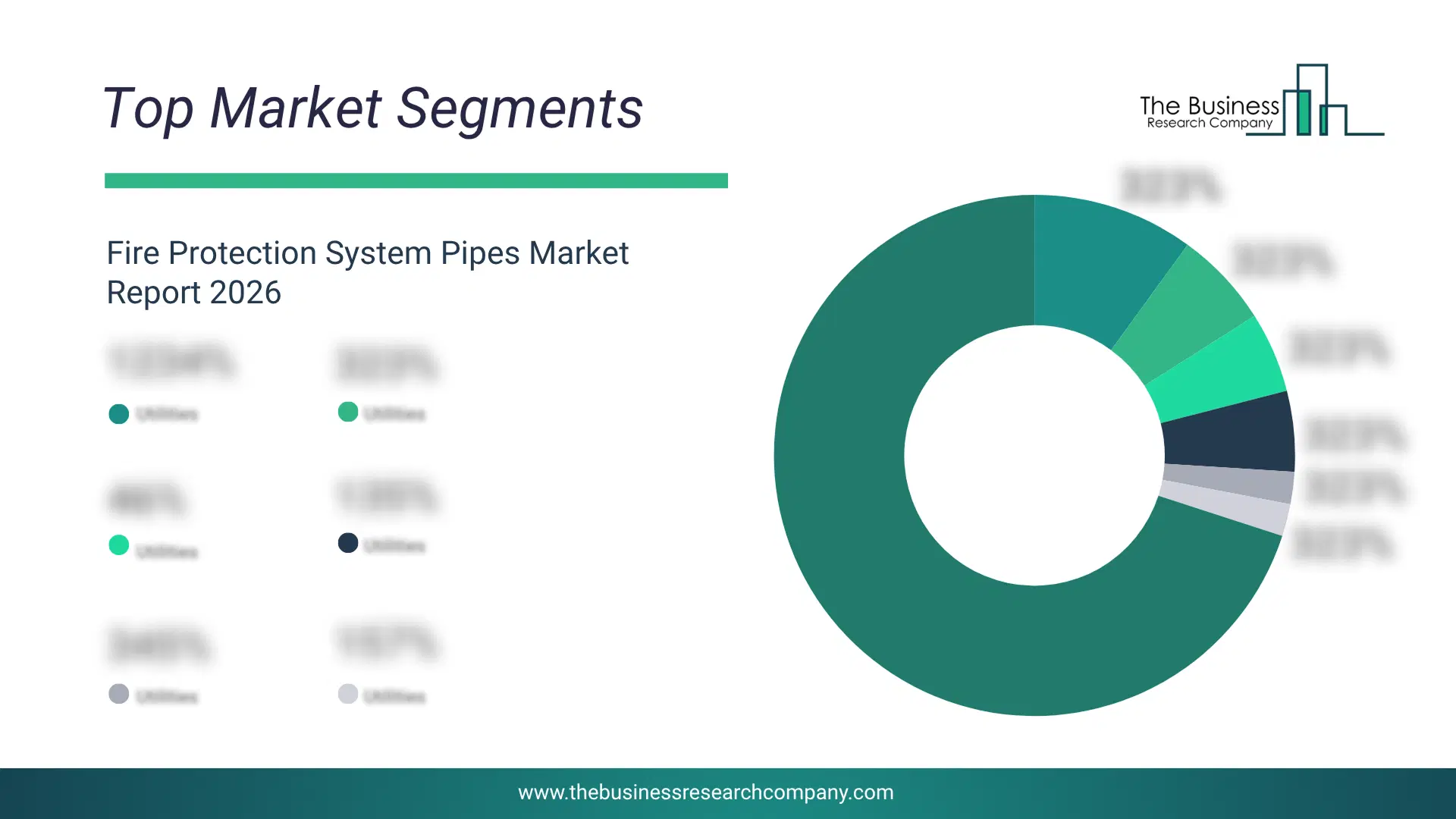
Global Fire Protection System Pipes Market Segmentation
1) By Туре: Seamless Pipes, Welded Pipes 2) By Material: Steel, CPVC, Copper, Other Materials 3) By Application: Fire Suppression System, Fire Sprinkler System 4) By End-Use Industry: Residential, Industrial, Commercial Subsegments: 1) By Seamless Pipes: Carbon Steel Seamless Pipes, Stainless Steel Seamless Pipes, Alloy Steel Seamless Pipes 2) By Welded Pipes: Carbon Steel Welded Pipes, Stainless Steel Welded Pipes, Alloy Steel Welded Pipes The top segments in the fire protection system pipes market will be: • Welded Pipes will reach $17 Billion by 2030. • Seamless Pipes will reach $7 Billion by 2030.What Is The Driver Of The Fire Protection System Pipes Market?
The increase in loss of human lives and property due to fire breakouts is expected to significantly drive the fire protection system pipe market going forward. Fire breakouts refer to tragic occurrences that may result in the loss of property and horrifying burn injuries that inflict excruciating agony, scarring, deformity, disability, the need for ongoing care, and even death. Fire protection system pipes are major protectors from fire accidents. This has sprinklers and smoke detectors. If a fire starts, smoke triggers the detector, turning on the sprinkler system, so these factors boost the fire protection system pipe market. For instance, in November 2025, according to the reports published by the National Fire Protection Association, a US-based international nonprofit organization, in 2024, local fire departments responded to an estimated 1.38 million fires in the United States. These fires caused an estimated 3,920 civilian fire deaths and 11,780 reported civilian fire injuries.Therefore, the increase in loss of human lives and property due to fire breakouts is expected to drive the growth of the fire protection system pipes industry.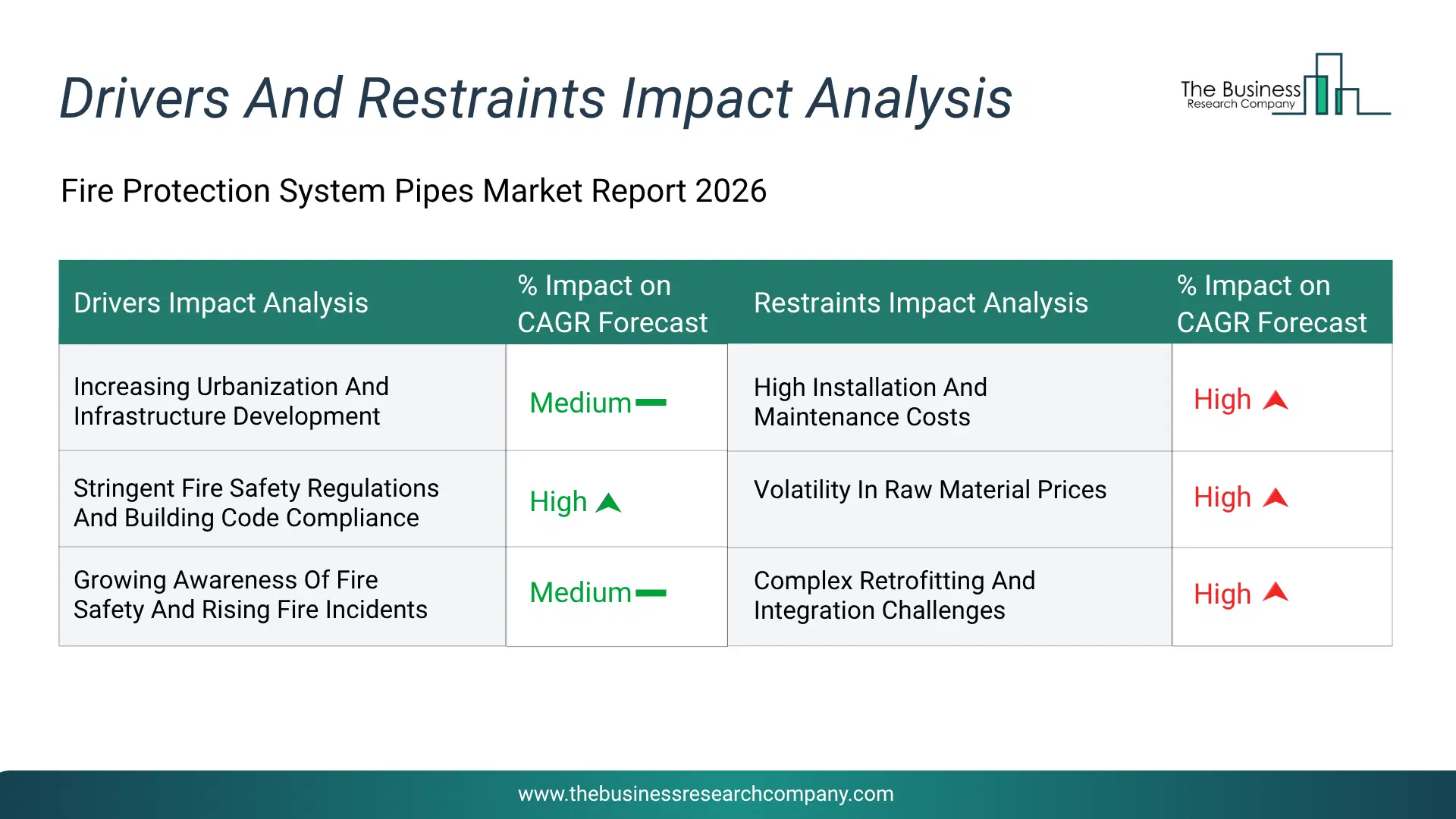
Infographic Chart Showing Key Market Drivers Analysis And Restraints For Fire Protection System Pipes Market
The chart presents an impact analysis of key drivers and restraints, quantifying their relative influence on the market's growth rate and helping assess the balance between growth enablers and limiting factors. This chart offers a high-level perspective; the full report contains more detailed insights.
How Will The Drivers Impact Growth In The Global Fire Protection System Pipes Market?
• Increasing Urbanization And Infrastructure Development (Medium) – During the forecast period, the increasing urbanization and infrastructure development are expected to emerge as a major factor driving the expansion of the fire protection system pipes market by 2030. rapid construction of residential buildings, commercial complexes, industrial facilities, healthcare institutions, airports, warehouses, and transportation infrastructure is creating sustained demand for fire sprinkler and suppression networks. in addition, investments in smart cities, public infrastructure, and building modernization projects are increasing the installation and replacement of advanced fire protection piping systems. • Stringent Fire Safety Regulations And Building Code Compliance (High) – During the forecast period, the stringent fire safety regulations and building code compliance are expected to emerge as a major factor driving the expansion of the fire protection system pipes market by 2030. governments and regulatory agencies are enforcing stricter fire protection standards that require certified piping systems in commercial buildings, manufacturing facilities, healthcare institutions, and high-rise residential projects. property owners are also upgrading fire suppression infrastructure to meet regulatory requirements, improve occupant safety, and reduce insurance-related risks. • Growing Awareness Of Fire Safety And Rising Fire Incidents (Medium) – During the forecast period, the growing awareness of fire safety and rising fire incidents are expected to act as a key growth catalyst for the fire protection system pipes market by 2030. increasing incidents of industrial, commercial, and residential fires are encouraging businesses and property owners to invest in reliable fire suppression infrastructure that protects lives, critical assets, and operational continuity. rising workplace safety initiatives and proactive risk management strategies are further accelerating the replacement of aging piping systems with more durable and high-performance solutions.How Will The Restraints Impact Growth In The Global Fire Protection System Pipes Market?
• High Installation And Maintenance Costs (Medium) – During the forecast period, high Installation And Maintenance Costs remain one of the most significant restraints for the Fire Protection System Pipes market because the deployment of complete fire suppression piping networks requires substantial upfront investment. Costs include pipe procurement, engineering design, specialized fittings, valves, pumps, sprinkler systems, skilled labor, testing, certification, and regulatory inspections. Large industrial plants and commercial complexes often require customized piping layouts that further increase project expenses. After installation, periodic inspections, corrosion monitoring, pressure testing, maintenance, and replacement of aging components generate recurring operational costs throughout the system's lifecycle. These high capital and maintenance expenditures discourage adoption among small and medium-sized enterprises as well as budget-sensitive construction projects, particularly in developing economies, thereby limiting the pace of market growth. • Volatility In Raw Material Prices (High) – During the forecast period, volatility In Raw Material Prices poses a considerable challenge for manufacturers of fire protection system pipes because the industry depends heavily on raw materials such as carbon steel, stainless steel, copper, ductile iron, CPVC, and specialty alloys. Prices of these materials fluctuate due to global supply chain disruptions, inflation, geopolitical conflicts, trade restrictions, energy price changes, and mining or manufacturing capacity constraints. Rising raw material costs increase production expenses, reduce manufacturer profit margins, and frequently lead to higher selling prices for finished fire protection pipes. Contractors and developers may delay procurement decisions, renegotiate contracts, or postpone construction projects when material prices become unpredictable. This pricing uncertainty negatively affects investment planning across the entire supply chain and acts as a restraint on overall market expansion. • Complex Retrofitting And Integration Challenges (Medium) – During the forecast period, complex Retrofitting And Integration Challenges restrict market growth because upgrading existing buildings with modern fire protection piping systems is often technically demanding and expensive. Older buildings may not have sufficient space to accommodate new pipe layouts or may require structural modifications to walls, ceilings, and utility systems before installation can begin. Integrating new fire protection pipes with existing sprinkler heads, pumps, valves, alarms, and monitoring systems also requires careful engineering to ensure regulatory compliance and system reliability. In many commercial and industrial facilities, retrofit projects require temporary shutdowns that interrupt business operations and increase indirect costs. These technical complexities, extended installation timelines, and higher project expenditures discourage many building owners from undertaking comprehensive fire protection upgrades, thereby slowing demand in the retrofit segment despite increasing fire safety awareness.Key Players In The Global Fire Protection System Pipes Market
Major companies operating in the fire protection system pipes market report are Johnson Controls International plc, Simona AG, Tata Steel Ltd., China Lesso Group Holdings Ltd., Astral Limited, Aquatherm LLC, Bull Moose Tube Company, Engineered Fire Piping S.L., Jakob Eschbach GmbH, Jindal Industries Pvt. Ltd., Kan-Therm GmbH, Minimax GmbH, Octal Steel, Tpmcsteel, Zekelman Industries, Victaulic, Anvil International LP, Mueller Industries Inc., The Viking Corporation, Wavin BV, Globe Fire Sprinkler Corporation, Ferguson Fire & Fabrication Inc., Uponor Corporation, Carpenter & Paterson Ltd., FlexHead Industries Inc., Metraflex Company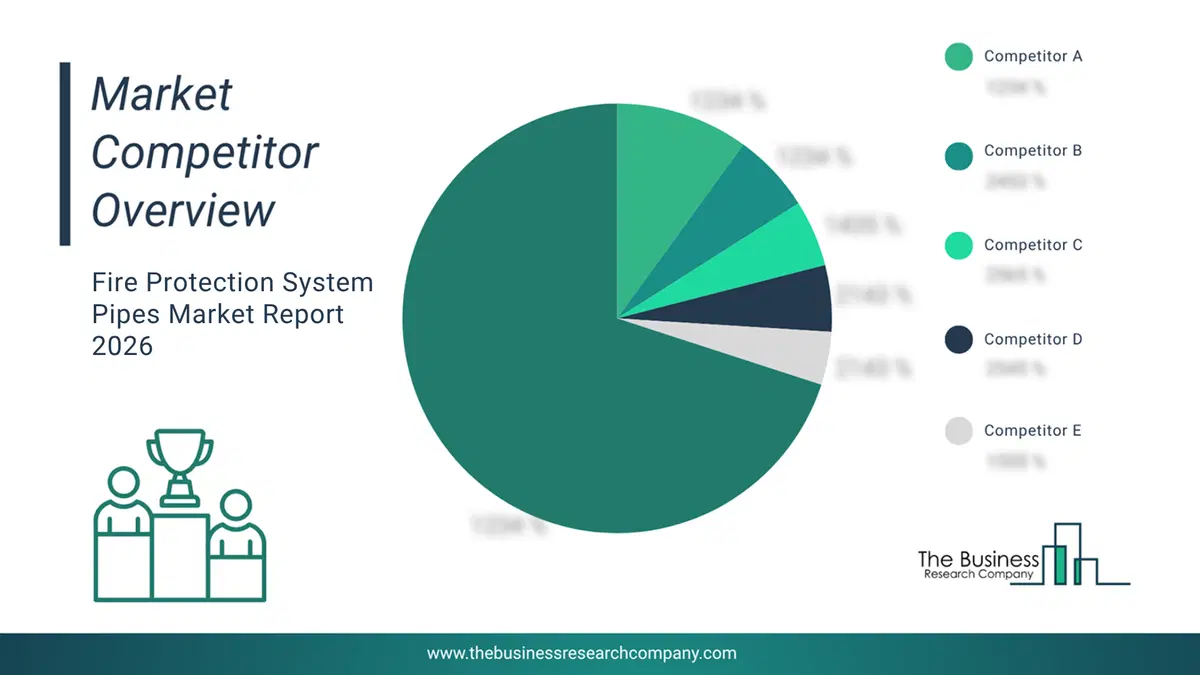
This chart is for illustrative purposes; the full report includes a detailed competitor analysis and comprehensive overview of the top 10 companies in the market.
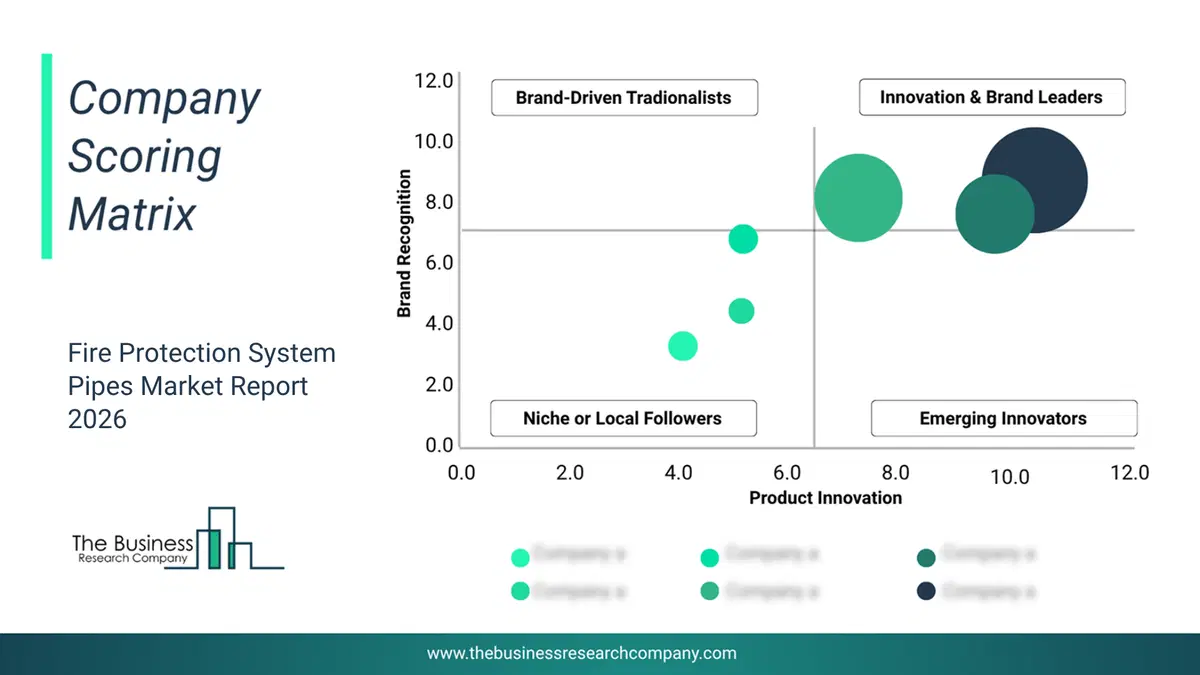
This chart maps companies by product innovation and brand strength, with bubble size indicating relative revenue, helping identify market leaders, challengers, and niche players. This is an illustrative chart; the full report provides a complete and accurate competitive analysis.
Global Fire Protection System Pipes Market Trends and Insights
Major companies operating in the fire-stopping materials market are developing innovative products, such as flexible epoxy technology, to enhance fire protection performance, improve application efficiency, and ensure compliance with stringent safety standards, ultimately providing safer and more durable solutions for modern construction and infrastructure projects. Flexible epoxy technology is a unique type of epoxy resin designed for enhanced flexibility and strong adhesion, ideal for high-performance uses such as fire-resistant coatings. For instance, in September 2024, Pittsburgh Plate Glass (PPG) Company, a US-based paint and coating manufacturing company, launched the PPG STEELGUARD® 951 epoxy intumescent fire protection coating in the Americas. is an advanced intumescent coating designed to provide enhanced fire protection for structural steel. This innovative coating helps protect steel buildings and infrastructure by expanding when exposed to high temperatures, thereby forming an insulating layer that slows down heat transfer to the steel. As a result, it helps maintain the structural integrity of steel in the event of a fire, buying crucial time for evacuation and emergency response.What Are Latest Mergers And Acquisitions In The Fire Protection System Pipes Market?
In December 2025, Aliaxis SA, a Belgium-based building products and piping systems company, acquired Johnson Controls’ CPVC pipe fittings business for an undisclosed amount. With this acquisition, Aliaxis aims to expand its residential and light commercial sprinkler systems portfolio and strengthen its position in the fire protection and plumbing market. Johnson Controls’ International plc is a U.S.-based provider of CPVC pipe fittings specifically designed for residential and light commercial sprinkler systems.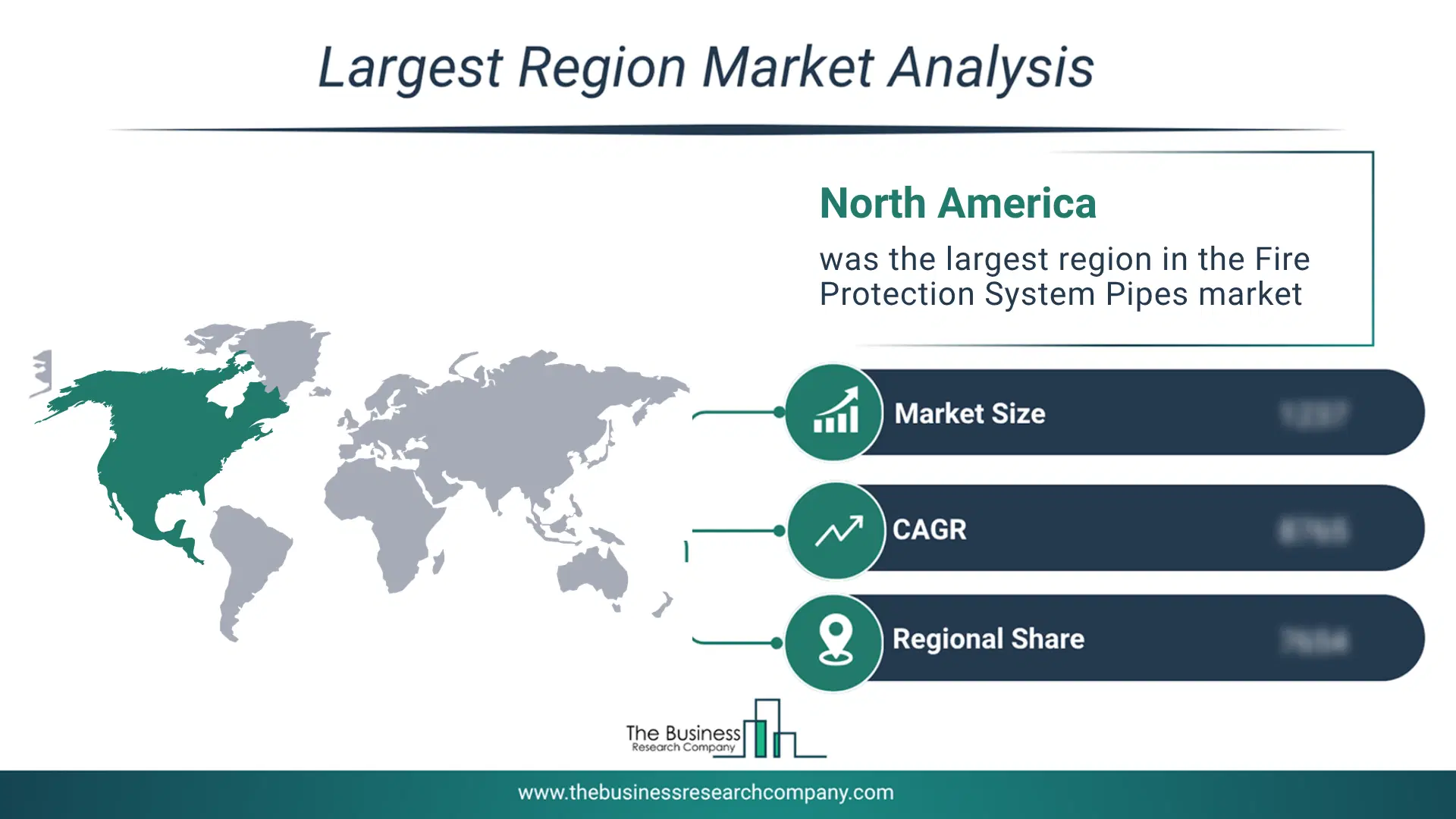
Regional Outlook
North America was the largest region in the fire protection system pipes market in 2025.Asia-Pacific is expected to be the fastest-growing region in the global fire protection system pipes market report during the forecast period. The regions covered in the fire protection system pipes market are Asia-Pacific, South East Asia, Western Europe, Eastern Europe, North America, South America, Middle East, Africa. The countries covered in the fire protection system pipes market are Australia, Brazil, China, France, Germany, India, Indonesia, Japan, Taiwan, Russia, South Korea, UK, USA, Canada, Italy, Spain.What Defines the Fire Protection System Pipes Market?
The fire protection system pipes market consists of sales of alloy pipe, composite pipe, deluge system pipes, dry pipe systems, and composite pipes. Values in this market are ‘factory gate’ values, that is, the value of goods sold by the manufacturers or creators of the goods, whether to other entities (including downstream manufacturers, wholesalers, distributors, and retailers) or directly to end customers. The value of goods in this market includes related services sold by the creators of the goods.How is Market Value Defined and Measured?
The market value is defined as the revenues that enterprises gain from the sale of goods and/or services within the specified market and geography through sales, grants, or donations in terms of the currency (in USD unless otherwise specified). The revenues for a specified geography are consumption values that are revenues generated by organizations in the specified geography within the market, irrespective of where they are produced. It does not include revenues from resales along the supply chain, either further along the supply chain or as part of other products.
This chart presents market attractiveness based on a quantitative evaluation of growth, competition, strategic alignment, and risk, offering a clear view of opportunity areas for decision-making. This chart is for illustrative purposes; the full report contains the complete analysis.

This chart highlights the Total Addressable Market (TAM) by estimating the maximum revenue opportunity using an assumption-driven approach, supporting strategic planning and opportunity sizing across markets. The chart is illustrative; the full report provides a more comprehensive analysis.
What Key Data and Analysis Are Included in the Fire Protection System Pipes Market Report 2026?
The fire protection system pipes market research report is one of a series of new reports from The Business Research Company that provides market statistics, including Market Report 2026?global market size, regional shares, competitors with the market share, detailed market segments, market trends and opportunities, and any further data you may need to thrive in the fire protection system pipes Market Report 2026? The market research report delivers a complete perspective of everything you need, with an in-depth analysis of the current and future state of the Market Report 2026?Fire Protection System Pipes Market Report Forecast Analysis
| Report Attribute | Details |
|---|---|
| Market Size Value In 2026 | $18.02 billion |
| Revenue Forecast In 2030 | $23.79 billion |
| Growth Rate | CAGR of 7.2% from 2026 to 2030 |
| Base Year For Estimation | 2025 |
| Actual Estimates/Historical Data | 2020-2025 |
| Forecast Period | 2026 - 2030 |
| Market Representation | Revenue in USD Billion and CAGR from 2026 to 2030 |
| Segments Covered | Туре, Material, Application, End-Use Industry |
| Regional Scope | Asia-Pacific, Western Europe, Eastern Europe, North America, South America, Middle East, Africa |
| Country Scope | The countries covered in the report are Australia, Brazil, China, France, Germany, India, Indonesia, Japan, Taiwan, Russia, South Korea, UK, USA, Canada, Italy, Spain. |
| Key Companies Profiled | Johnson Controls International plc, Simona AG, Tata Steel Ltd., China Lesso Group Holdings Ltd., Astral Limited, Aquatherm LLC, Bull Moose Tube Company, Engineered Fire Piping S.L., Jakob Eschbach GmbH, Jindal Industries Pvt. Ltd., Kan-Therm GmbH, Minimax GmbH, Octal Steel, Tpmcsteel, Zekelman Industries, Victaulic, Anvil International LP, Mueller Industries Inc., The Viking Corporation, Wavin BV, Globe Fire Sprinkler Corporation, Ferguson Fire & Fabrication Inc., Uponor Corporation, Carpenter & Paterson Ltd., FlexHead Industries Inc., Metraflex Company |
| Customization Scope | Request for Customization |
| Pricing And Purchase Options | Explore Purchase Options |