

Fog Computing Market Report 2026
Global Outlook – By Component (Hardware, Software), By Deployment Models (Private Fog Node, Community Fog Node, Public Fog Node, Hybrid Fog Node), By Application (Building And Home Automation, Smart Energy, Smart Manufacturing, Transportation And Logistics, Connected Health, Security And Emergencies, Retail, Other Applications) – Market Size, Trends, Strategies, and Forecast to 2030
Fog Computing Market Overview
• Fog Computing market size has reached to $0.28 billion in 2025 • Expected to grow to $1.29 billion in 2030 at a compound annual growth rate (CAGR) of 35.2% • Growth Driver: Rising Adoption Of Smart Devices Fuels Fog Computing Growth • North America was the largest region in 2025 and Asia-Pacific is the fastest growing region.What Is Covered Under Fog Computing Market?
Fog computing is a decentralized computing architecture that moves processing resources to the network's edge, closer to data sources or endpoint devices, rather than depending only on centralized cloud servers. It improves real-time applications by moving computing, storage, and networking resources closer to the data source. The main components of fog computing are hardware and software. Hardware comprises the tangible components of a computer, encompassing devices like sensors, switches, routers, and other low-powered hardware that are used in fog computing to collect and process data locally, thereby minimizing latency and enhancing system performance. The deployment models include private fog nodes, community fog nodes, public fog nodes, and hybrid fog nodes, and the applications are categorized into building and home automation, smart energy, smart manufacturing, transportation and logistics, connected health, security and emergencies, retail, and others.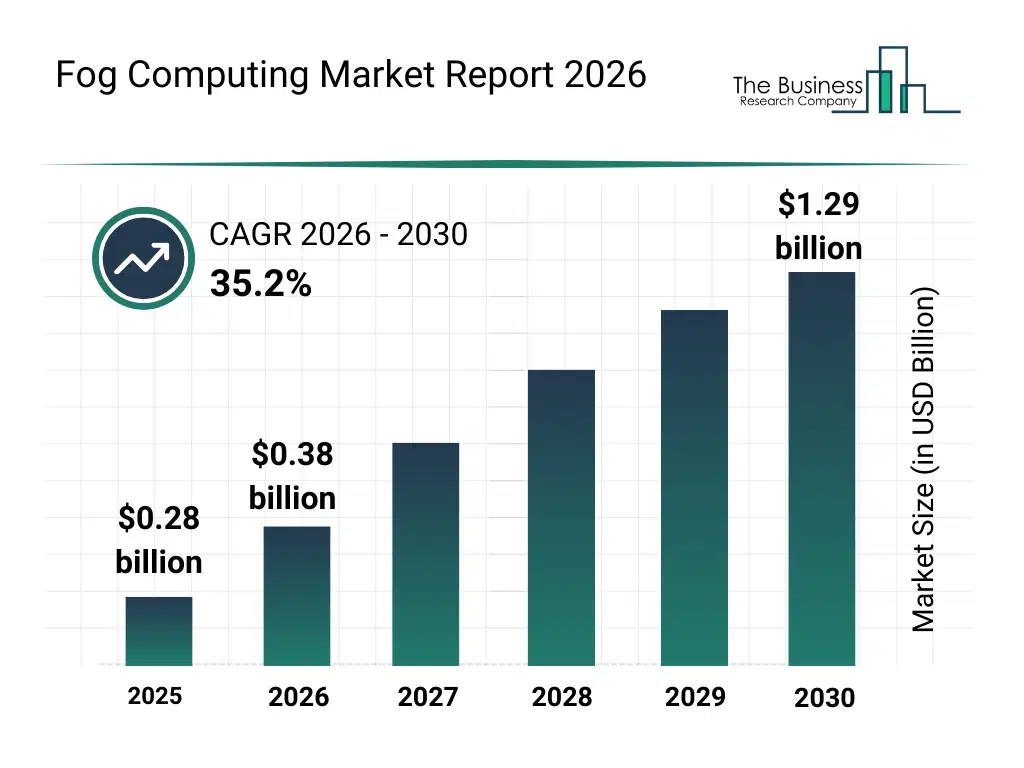
What Is The Fog Computing Market Size and Share 2026?
The fog computing market size has grown exponentially in recent years. It will grow from $0.28 billion in 2025 to $0.38 billion in 2026 at a compound annual growth rate (CAGR) of 35.6%. The growth in the historic period can be attributed to rapid growth of connected devices, limitations of centralized cloud latency, early adoption in industrial automation, demand for real-time data processing, expansion of smart infrastructure projects.What Is The Fog Computing Market Growth Forecast?
The fog computing market size is expected to see exponential growth in the next few years. It will grow to $1.29 billion in 2030 at a compound annual growth rate (CAGR) of 35.2%. The growth in the forecast period can be attributed to rising adoption of autonomous systems, increased deployment of smart cities, growing need for localized data security, expansion of latency-sensitive applications, integration of fog with hybrid cloud environments. Major trends in the forecast period include edge-level data processing optimization, low-latency application enablement, distributed fog node deployment, enhanced data locality management, interoperable fog architecture design.
Global Fog Computing Market Segmentation
1) By Component: Hardware, Software 2) By Deployment Models: Private Fog Node, Community Fog Node, Public Fog Node, Hybrid Fog Node 3) By Application: Building And Home Automation, Smart Energy, Smart Manufacturing, Transportation And Logistics, Connected Health, Security And Emergencies, Retail, Other Applications Subsegments: 1) By Hardware: Fog Nodes, Networking Equipment, Gateways 2) By Software: Fog Computing Platforms, Data Management Software, Security SoftwareWhat Are The Drivers Of The Fog Computing Market?
The growing adoption of smart devices is expected to propel the growth of the fog computing market going forward. Smart devices refer to ordinary objects enhanced with sophisticated computing capabilities, encompassing technologies such as artificial intelligence (AI) and machine learning, and are interconnected to create the Internet of Things (IoT). Fog computing on smart devices provides real-time data processing, decreases latency, and improves scalability by shifting computer workloads from centralized clouds to edge devices. For instance, in February 2023, according to the BuildOps Inc., a US-based software-as-a-service (SaaS) company, the number of IoT-connected devices increased by 28% from 2022 to 2023 and is projected to reach 16 billion by the end of 2023. Therefore, the growing adoption of smart devices is driving the growth of the fog computing industry. The rise of 5G networks is expected to propel the growth of the fog computing market going forward. 5G networks refers to next-generation mobile communication systems that deliver extremely fast data speeds, low latency, and high network capacity. The growth of 5G networks is due to increasing digital transformation across industries, as businesses and consumers require faster and more reliable connectivity to support modern digital operations. Expanding 5G network infrastructure creates demand for fog computing solutions that process data closer to end users and devices at network edges, reducing latency and enabling real-time applications that 5G connectivity makes possible. For instance, in July 2024, according to 5G Americas, a US-based telecommunication company, global 5G connections neared 2 billion in the first quarter of 2024, with 185 million new subscriptions added, and are projected to reach about 7.7 billion by 2028. Therefore, the rise of 5G networks is driving the growth of the fog computing industry. The expansion of smart city initiatives is expected to propel the growth of the fog computing market going forward. Smart city initiatives refer to projects that use technology and data to improve the efficiency, sustainability, and quality of life in urban areas. The rising expansion of smart city initiatives is driven by growing urbanization demands, as cities face mounting pressure to manage increasing populations efficiently while addressing challenges in transportation, energy consumption, and public safety through technology solutions. Expanding smart city initiatives directly support the need for fog computing infrastructure as distributed edge processing becomes essential to handle real-time data from thousands of IoT sensors and devices deployed across urban environments without overwhelming centralized cloud systems. For instance, in December 2024, according to the United States Department of Transportation, a US-based federal agency, the U.S. Department of Transportation awarded $54 million in grants for 34 projects across 21 states. Additional information about these projects is available below and in the FY24 SMART Project List. On May 6, 2025, Secretary Duffy announced the final approval of 21 Stage 1 grants, followed by approval of 8 more, while 5 projects remain under Departmental review. In total, USDOT received 308 applications for the FY24 SMART Grants Program, with an average funding request of $1,548,804. Therefore, the expansion of smart city initiatives is driving the growth of the fog computing industry.Key Players In The Global Fog Computing Market
Major companies operating in the fog computing market are Lockheed Martin Corporation; Honeywell International Inc; Johnson Controls International plc; NEC Corporation; Hikvision Digital Technology Co. Ltd.; IDEMIA; HID Global Corporation; ZKTeco Co. Ltd.; Matrix Comsec Pvt. Ltd.; Telos Corporation; Anviz Global Inc.; Fingerprint Cards AB (FPC); Cross Match Technologies Inc.; Daon Inc.; 3M Cogent Inc.; Accu-Time Systems Inc.; BioEnable Technologies Pvt. Ltd.; Aware Inc.; Suprema Inc.; BioLink Solutions; Merkatum Corporation; Hitachi Omron Terminal Solutions; SecuGen Corporation; Realtime Biometrics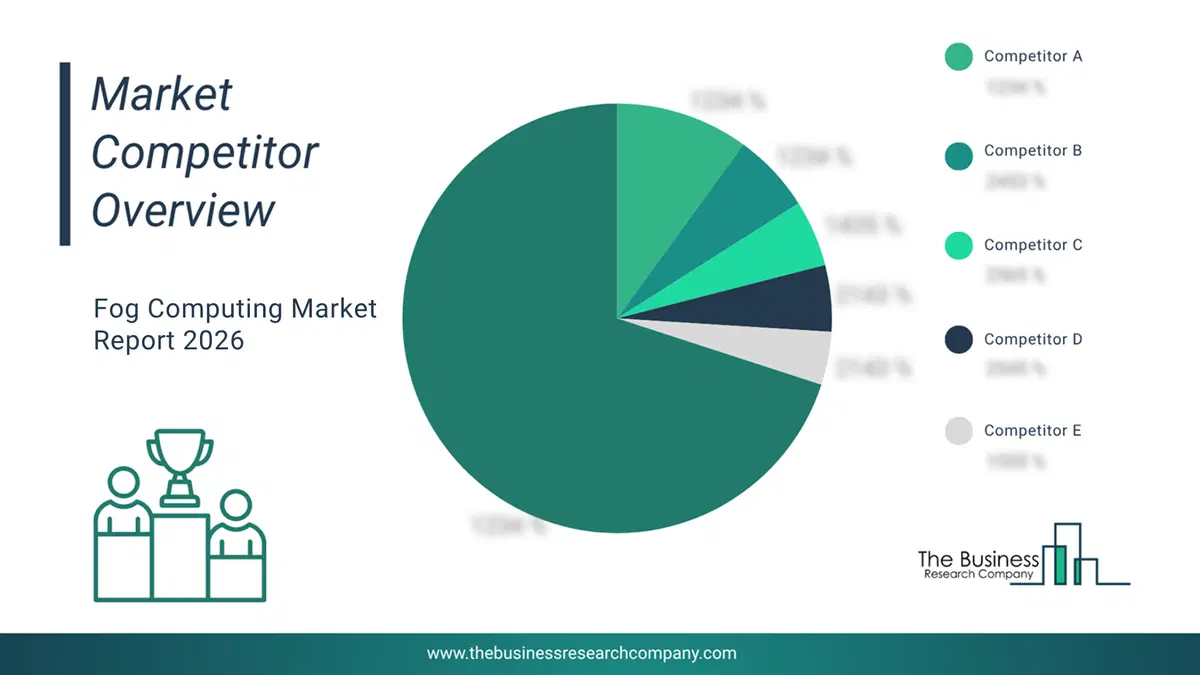
This chart is for illustrative purposes; the full report includes a detailed competitor analysis and comprehensive overview of the top 10 companies in the market.
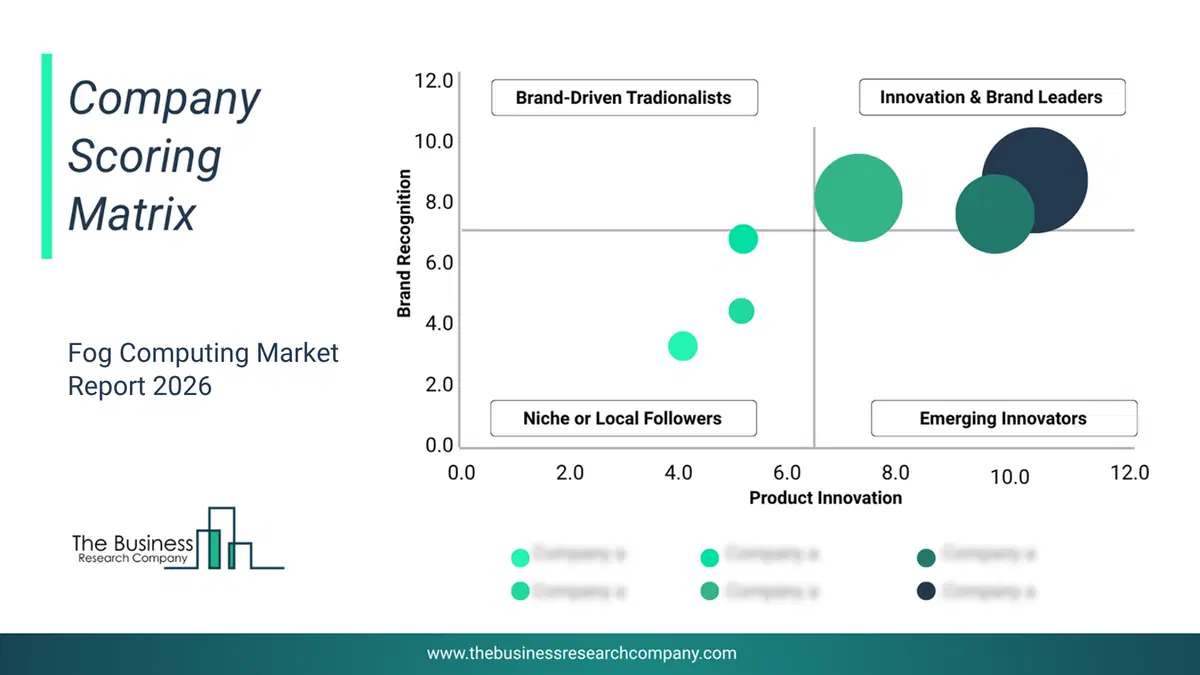
This chart maps companies by product innovation and brand strength, with bubble size indicating relative revenue, helping identify market leaders, challengers, and niche players. This is an illustrative chart; the full report provides a complete and accurate competitive analysis.
Regional Insights
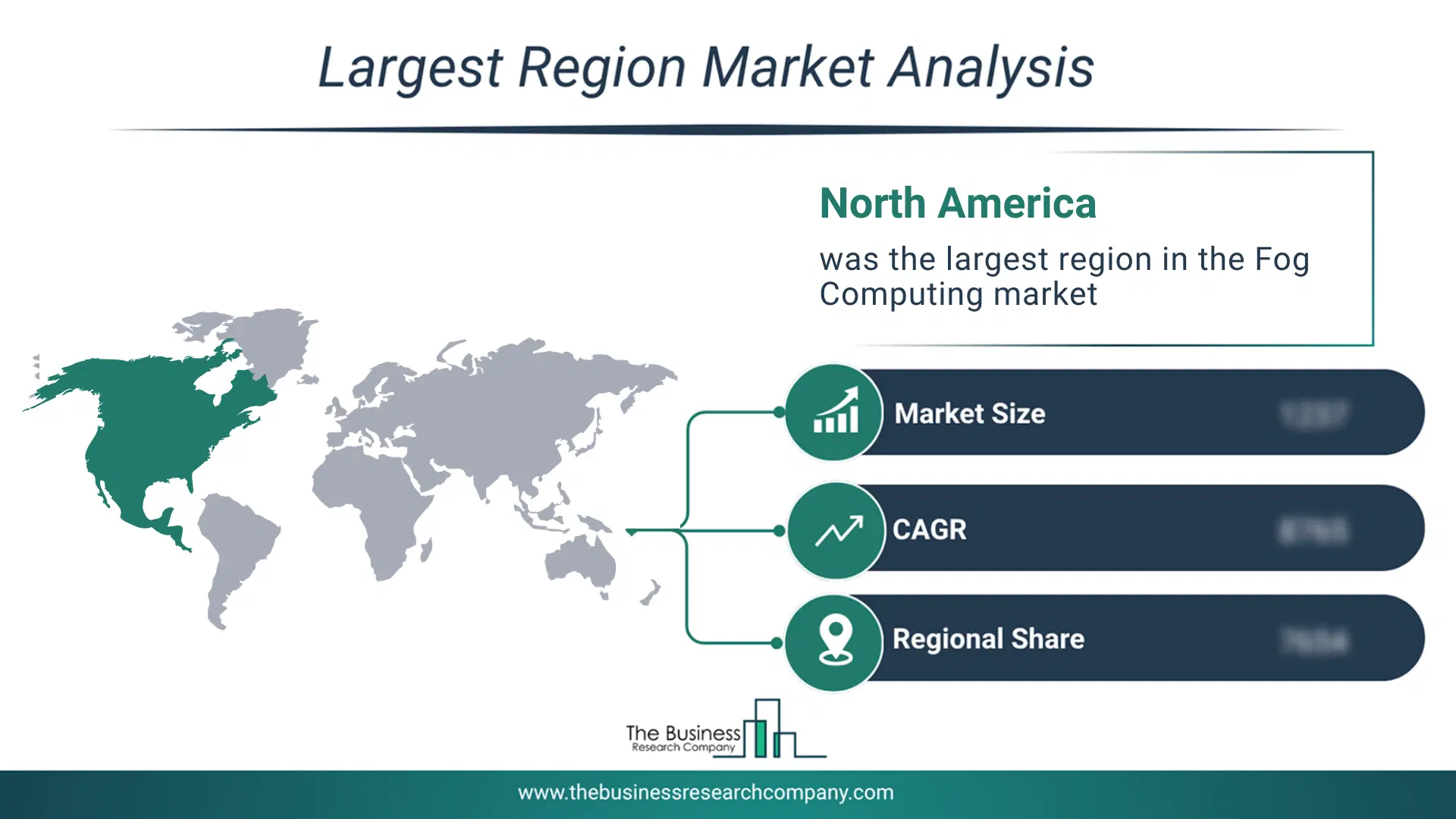
North America was the largest region in the fog computing market in 2025. Asia-Pacific is expected to be the fastest-growing region in the forecast period. The regions covered in this market report are Asia-Pacific, South East Asia, Western Europe, Eastern Europe, North America, South America, Middle East, Africa. The countries covered in this market report are Australia, Brazil, China, France, Germany, India, Indonesia, Japan, Taiwan, Russia, South Korea, UK, USA, Canada, Italy, SpainWhat Defines the Fog Computing Market?
The fog computing market consists of revenues earned by entities by providing services such as real-time data processing, data pre-processing, rule-based real-time monitoring, and short-term storage. The market value includes the value of related goods sold by the service provider or included within the service offering. The fog computing market also includes sales of products such as servers, routers, switches, controllers, gateways, fog computing platforms, and customized application software. Values in this market are ‘factory gate’ values, that is the value of goods sold by the manufacturers or creators of the goods, whether to other entities (including downstream manufacturers, wholesalers, distributors and retailers) or directly to end customers. The value of goods in this market includes related services sold by the creators of the goods.How is Market Value Defined and Measured?
The market value is defined as the revenues that enterprises gain from the sale of goods and/or services within the specified market and geography through sales, grants, or donations in terms of the currency (in USD unless otherwise specified). The revenues for a specified geography are consumption values that are revenues generated by organizations in the specified geography within the market, irrespective of where they are produced. It does not include revenues from resales along the supply chain, either further along the supply chain or as part of other products.
This chart presents market attractiveness based on a quantitative evaluation of growth, competition, strategic alignment, and risk, offering a clear view of opportunity areas for decision-making. This chart is for illustrative purposes; the full report contains the complete analysis.

This chart highlights the Total Addressable Market (TAM) by estimating the maximum revenue opportunity using an assumption-driven approach, supporting strategic planning and opportunity sizing across markets. The chart is illustrative; the full report provides a more comprehensive analysis.
What Key Data and Analysis Are Included in the Fog Computing Market Report 2026?
The fog computing market research report is one of a series of new reports from The Business Research Company that provides market statistics, including industry global market size, regional shares, competitors with the market share, detailed market segments, market trends and opportunities, and any further data you may need to thrive in the fog computing industry. The market research report delivers a complete perspective of everything you need, with an in-depth analysis of the current and future state of the industry.Fog Computing Market Report Forecast Analysis
| Report Attribute | Details |
|---|---|
| Market Size Value In 2026 | $0.38 billion |
| Revenue Forecast In 2030 | $1.29 billion |
| Growth Rate | CAGR of 35.2% from 2026 to 2030 |
| Base Year For Estimation | 2025 |
| Actual Estimates/Historical Data | 2020-2025 |
| Forecast Period | 2026 - 2030 |
| Market Representation | Revenue in USD Billion and CAGR from 2026 to 2030 |
| Segments Covered | Component, Deployment Models, Application |
| Regional Scope | Asia-Pacific, Western Europe, Eastern Europe, North America, South America, Middle East, Africa |
| Country Scope | The Countries Covered In This Market Report Are Australia, Brazil, China, France, Germany, India, Indonesia, Japan, Taiwan, Russia, South Korea, Uk, Usa, Canada, Italy, Spain. |
| Key Companies Profiled | Lockheed Martin Corporation, Honeywell International Inc, Johnson Controls International plc, NEC Corporation, Hikvision Digital Technology Co. Ltd., IDEMIA, HID Global Corporation, ZKTeco Co. Ltd., Matrix Comsec Pvt. Ltd., Telos Corporation, Anviz Global Inc., Fingerprint Cards AB (FPC), Cross Match Technologies Inc., Daon Inc., 3M Cogent Inc., Accu-Time Systems Inc., BioEnable Technologies Pvt. Ltd., Aware Inc., Suprema Inc., BioLink Solutions, Merkatum Corporation, Hitachi Omron Terminal Solutions, SecuGen Corporation, Realtime Biometrics |
| Customization Scope | Request for Customization |
| Pricing And Purchase Options | Explore Purchase Options |