
Fruit Sugar Market Report 2026
Global Outlook – By Product Type (Liquid Sugar, Granulated Sugar), By Fruit Type (Apple, Mango, Banana, Berries, Citrus Fruits), By Distribution Channel (Business-to-Business (B2B), Business-to-Consumer (B2C) ), By Application (Food And Beverages, Bakery And Confectionery, Dairy Products, Nutritional Supplements, Pharmaceuticals), By End-User (Household, Industrial) – Market Size, Trends, Strategies, and Forecast to 2030
Fruit Sugar Market Overview
• Fruit Sugar market size has reached to $3.10 billion in 2025 • Expected to grow to $4.32 billion in 2030 at a compound annual growth rate (CAGR) of 6.8% • Growth Driver: Rising Demand For Natural Sweeteners Fueling The Growth Of The Market Due To Consumer Preference For Clean-Label And Naturally Sourced Ingredients • Market Trend: Advanced Fruit-Derived Sweeteners Mimic Sugar Without Compromising Taste • North America was the largest region in 2025 and Asia-Pacific is the fastest growing region.What Is Covered Under Fruit Sugar Market?
Fruit sugar refers to natural sugars extracted from fruits, primarily composed of fructose and glucose. It is obtained through processing methods that preserve the natural sweetness and flavor found in fresh fruits. This type of sugar is commonly used to provide a cleaner and more natural sweetening option compared to refined sugars. The main product types of fruit sugar include liquid sugar and granulated sugar. Liquid sugar refers to a concentrated, water-soluble form of sugar extracted from fruits, designed for easy blending and consistent sweetness in various applications. There are fruit types such as apple, mango, banana, berries, and citrus fruits. The distribution channels include business-to-business (B2B) and business-to-consumer (B2C). The applications include food and beverages, bakery and confectionery, dairy products, nutritional supplements, and pharmaceuticals, and they are used by several key end-users such as household and industrial.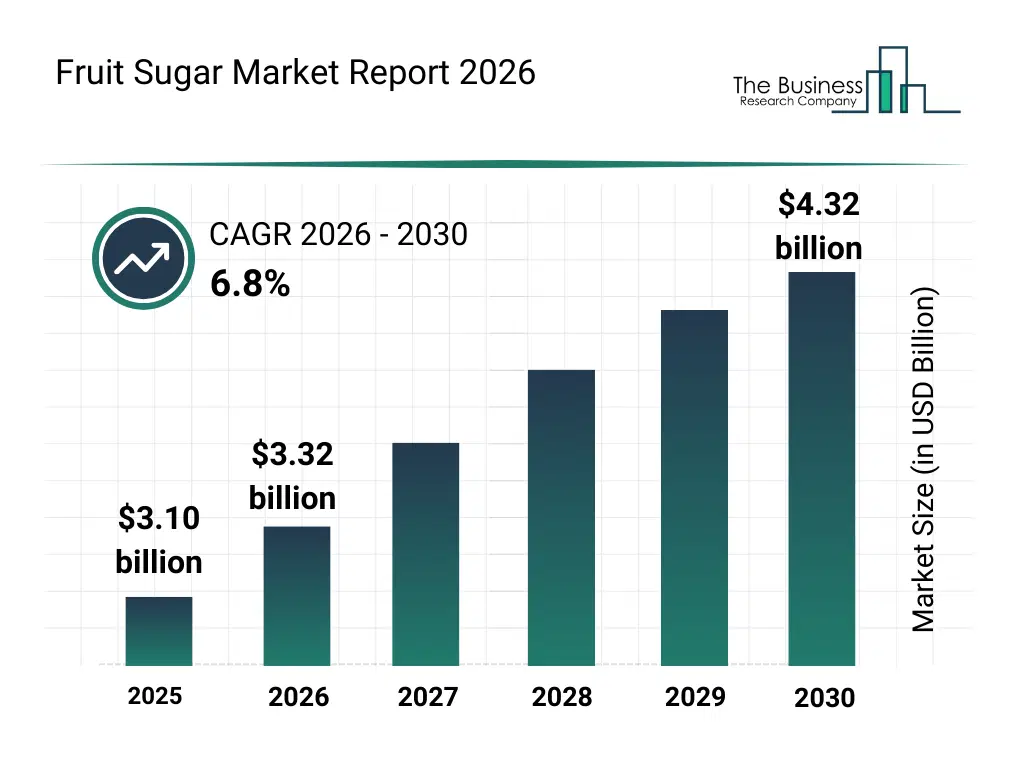
What Is The Fruit Sugar Market Size and Share 2026?
The fruit sugar market size has grown strongly in recent years. It will grow from $3.10 billion in 2025 to $3.32 billion in 2026 at a compound annual growth rate (CAGR) of 7.1%. The growth in the historic period can be attributed to increasing demand for natural sweeteners, growing health consciousness among consumers, rising consumption of beverages and confectionery, expansion of organic food market, and increasing awareness about low-calorie alternatives.What Is The Fruit Sugar Market Growth Forecast?
The fruit sugar market size is expected to see strong growth in the next few years. It will grow to $4.32 billion in 2030 at a compound annual growth rate (CAGR) of 6.8%. The growth in the forecast period can be attributed to rising adoption of fruit sugar in processed foods, growing demand for clean label products, increasing preference for non-artificial sweeteners, expansion of functional foods market, and rising investment in fruit sugar production technologies. Major trends in the forecast period include technological advancements in extraction methods, innovations in product formulations, developments in sustainable sourcing, research and development in low-calorie alternatives, and advancements in flavour enhancement techniques.
Global Fruit Sugar Market Segmentation
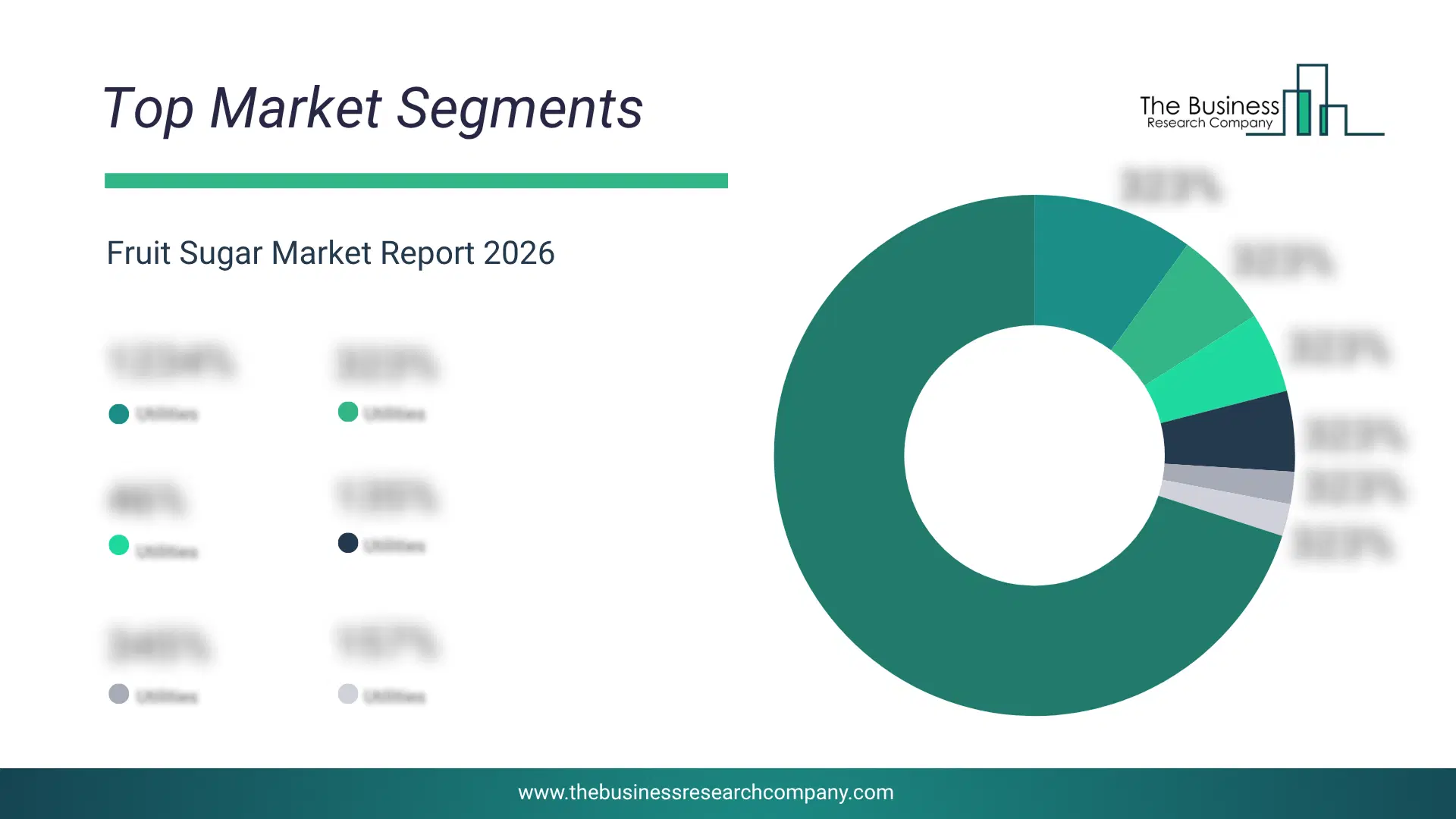
1) By Product Type: Liquid Sugar, Granulated Sugar 2) By Fruit Type: Apple, Mango, Banana, Berries, Citrus Fruits 3) By Distribution Channel: Business-to-Business (B2B), Business-to-Consumer (B2C) 4) By Application: Food And Beverages, Bakery And Confectionery, Dairy Products, Nutritional Supplements, Pharmaceuticals 5) By End-User: Household, Industrial Subsegments: 1) By Liquid Sugar: Invert Sugar, High Fructose Corn Syrup, Fructose Syrup, Glucose Syrup, Maple Syrup 2) By Granulated Sugar: White Sugar, Raw Sugar, Brown Sugar, Cane Sugar, Beet SugarWhat Are The Drivers Of The Fruit Sugar Market?
The rising demand for natural sweeteners is expected to propel the growth of the fruit sugar market going forward. Natural sweeteners are sugars and syrups derived from minimally processed sources such as fruits, honey, or other plants, providing sweetness and energy without intensive refinement. The rising demand for natural sweeteners is due to growing health awareness and increasing preference for clean-label, naturally sourced ingredients. Fruit‑sugar supports natural sweeteners by offering fructose and other fruit-derived sugars as alternative sweeteners that align with consumer preferences. For instance, in July 2023, between June 2025 and July 2025, natural honey exports from the United States increased by $890,000 (69.5%), rising from $1.28 million to $2.17 million. Therefore, the rising demand for natural sweeteners is driving the growth of the fruit sugar industry. The rising health consciousness among consumers is expected to propel the growth of the fruit sugar market going forward. Health consciousness among consumers refers to the awareness and proactive attitude of individuals toward maintaining good health through their lifestyle and dietary choices. The rise in health-conscious eating is due to increasing awareness of diet-related diseases, motivating more people to choose nutritious foods and reduce sugar intake. Health consciousness enhances fruit sugar consumption by encouraging consumers to choose natural sugars from fruits over refined and processed sugars. It supports healthier dietary habits by promoting nutrient-rich, fiber-containing sweeteners that contribute to overall wellness and balanced nutrition. For instance, in June 2024, according to the International Food Information Council, a US-based nonprofit organization, most Americans are increasingly focused on consuming more protein, rising from 59% in 2022 to 67% in 2023 and 71% in 2024. Therefore, the rising health consciousness among consumers is driving the growth of the fruit sugar industry.Key Players In The Global Fruit Sugar Market
Major companies operating in the fruit sugar market are Cargill Incorporated, Mitsui & Co. Ltd., Archer Daniels Midland Company, Louis Dreyfus Company B.V., DuPont de Nemours Inc., Associated British Foods plc, Ajinomoto Co. Inc., Wilmar International Limited, Ingredion Incorporated, Cosan S.A., Kerry Group plc, Tereos Group, COFCO Corporation, Mitr Phol Group, Südzucker AG, Tate & Lyle PLC, Roquette Frères, Agrana Beteiligungs-AG, Baolingbao Biology Co. Ltd., Global Sweeteners Holdings Limited, Grain Processing Corporation, Thai Roong Ruang Sugar Group.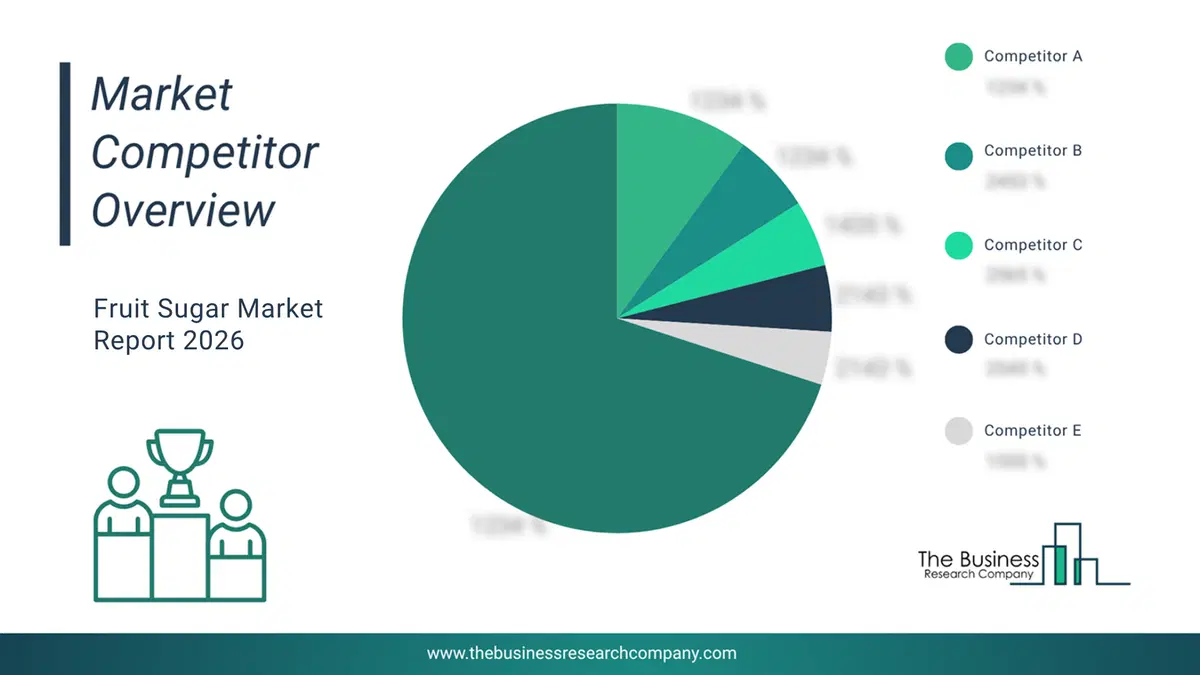
This chart is for illustrative purposes; the full report includes a detailed competitor analysis and comprehensive overview of the top 10 companies in the market.
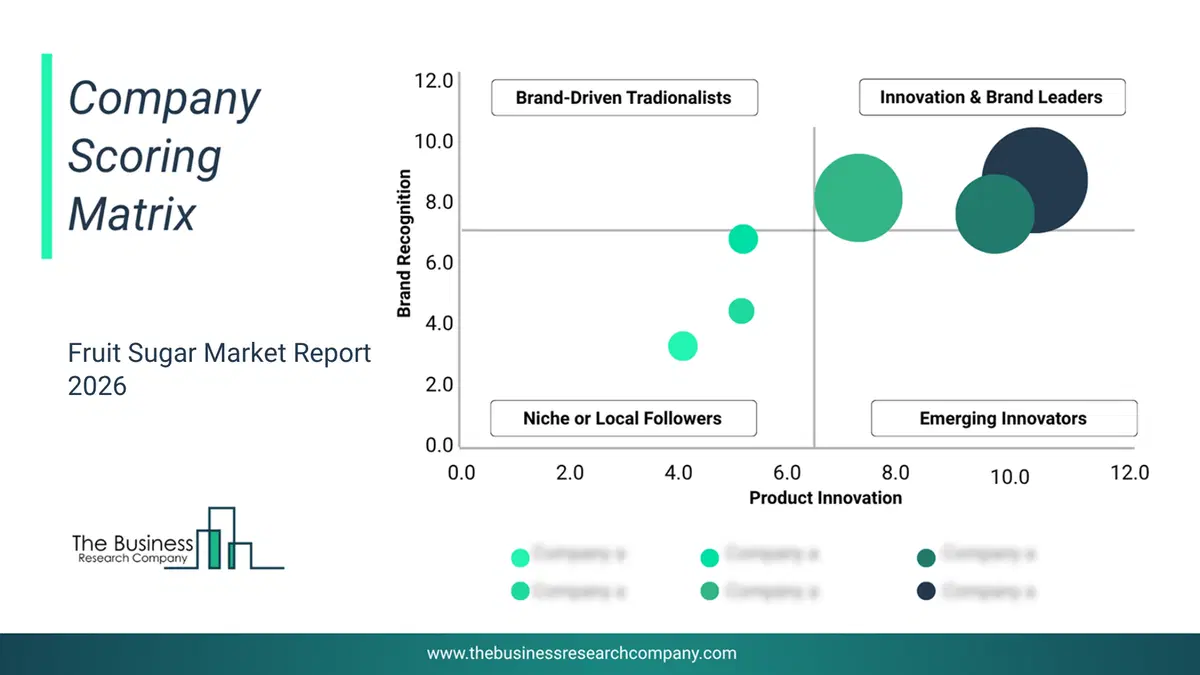
This chart maps companies by product innovation and brand strength, with bubble size indicating relative revenue, helping identify market leaders, challengers, and niche players. This is an illustrative chart; the full report provides a complete and accurate competitive analysis.
Global Fruit Sugar Market Trends and Insights
Major companies operating in the fruit sugar market are focusing on developing advanced products, such as novel plant-based alternatives, to meet consumer demand for healthier products, support sugar reduction in food manufacturing, and address sustainability goals. Novel plant-based sweeteners refer to sugar alternatives created through innovative bioprocesses, utilizing sustainable feedstocks to closely mimic the taste and functionality of conventional sugar. For instance, in June 2024, Fooditive Group, a Netherlands-based plant-based ingredient manufacturer, launched Keto-Fructose. It is a sweetener (5-keto-D-fructose) derived from apples and pears through an exclusive fermentation process that utilizes waste side streams from fruit processing. Its flavor profile is designed to closely mimic sugar, enabling it to be a seamless replacement in applications like chocolate, baked goods, and beverages without a compromise on taste. It also incorporates a circular economy production model, minimizing environmental impact and allowing for a competitive price point, which reduces operational costs for food and beverage manufacturers.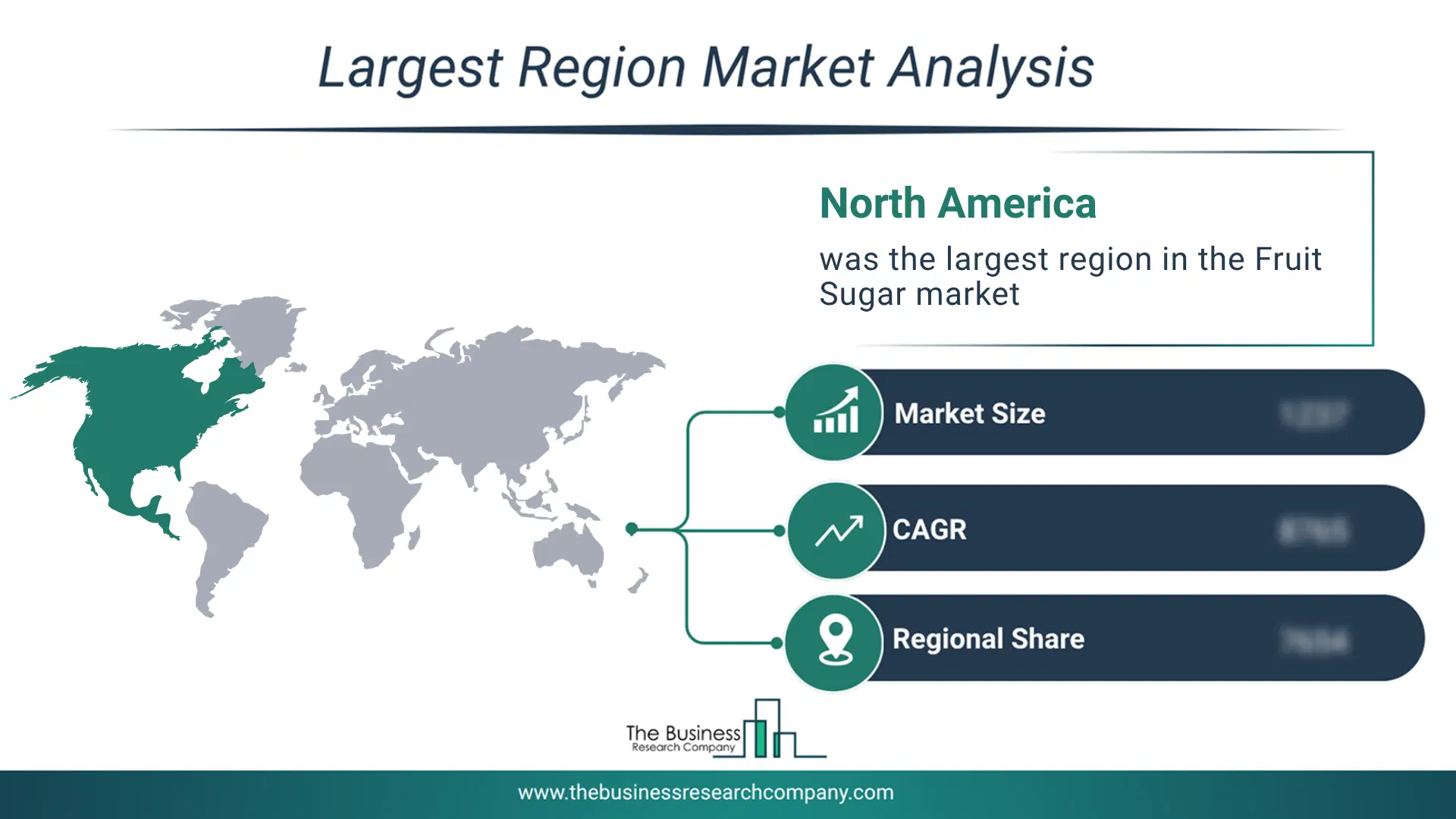
Regional Insights
North America was the largest region in the fruit sugar market in 2025. Asia-Pacific is expected to be the fastest-growing region in the forecast period. The regions covered in this market report are Asia-Pacific, South East Asia, Western Europe, Eastern Europe, North America, South America, Middle East, Africa. The countries covered in this market report are Australia, Brazil, China, France, Germany, India, Indonesia, Japan, Taiwan, Russia, South Korea, UK, USA, Canada, Italy, Spain.What Defines the Fruit Sugar Market?
The fruit sugar market consists of sales of fructose extracts, glucose syrups, natural fruit sweeteners, fruit-derived sugar powders, and low-calorie fruit sugar blends. Values in this market are ‘factory gate’ values, that is, the value of goods sold by the manufacturers or creators of the goods, whether to other entities (including downstream manufacturers, wholesalers, distributors, and retailers) or directly to end customers. The value of goods in this market includes related services sold by the creators of the goods.How is Market Value Defined and Measured?
The market value is defined as the revenues that enterprises gain from the sale of goods and/or services within the specified market and geography through sales, grants, or donations in terms of the currency (in USD unless otherwise specified). The revenues for a specified geography are consumption values that are revenues generated by organizations in the specified geography within the market, irrespective of where they are produced. It does not include revenues from resales along the supply chain, either further along the supply chain or as part of other products.
This chart presents market attractiveness based on a quantitative evaluation of growth, competition, strategic alignment, and risk, offering a clear view of opportunity areas for decision-making. This chart is for illustrative purposes; the full report contains the complete analysis.

This chart highlights the Total Addressable Market (TAM) by estimating the maximum revenue opportunity using an assumption-driven approach, supporting strategic planning and opportunity sizing across markets. The chart is illustrative; the full report provides a more comprehensive analysis.
What Key Data and Analysis Are Included in the Fruit Sugar Market Report 2026?
The fruit sugar market research report is one of a series of new reports from The Business Research Company that provides market statistics, including industry global market size, regional shares, competitors with the market share, detailed market segments, market trends and opportunities, and any further data you may need to thrive in the fruit sugar industry. The market research report delivers a complete perspective of everything you need, with an in-depth analysis of the current and future state of the industry.Fruit Sugar Market Report Forecast Analysis
| Report Attribute | Details |
|---|---|
| Market Size Value In 2026 | $3.32 billion |
| Revenue Forecast In 2030 | $4.32 billion |
| Growth Rate | CAGR of 7.1% from 2026 to 2030 |
| Base Year For Estimation | 2025 |
| Actual Estimates/Historical Data | 2020-2025 |
| Forecast Period | 2026 - 2030 |
| Market Representation | Revenue in USD Billion and CAGR from 2026 to 2030 |
| Segments Covered | Product Type, Fruit Type, Distribution Channel, Application, End-User |
| Regional Scope | Asia-Pacific, Western Europe, Eastern Europe, North America, South America, Middle East, Africa |
| Country Scope | The countries covered in the report are Australia, Brazil, China, France, Germany, India, Indonesia, Japan, Taiwan, Russia, South Korea, UK, USA, Canada, Italy, Spain. |
| Key Companies Profiled | Cargill Incorporated, Mitsui & Co. Ltd., Archer Daniels Midland Company, Louis Dreyfus Company B.V., DuPont de Nemours Inc., Associated British Foods plc, Ajinomoto Co. Inc., Wilmar International Limited, Ingredion Incorporated, Cosan S.A., Kerry Group plc, Tereos Group, COFCO Corporation, Mitr Phol Group, Südzucker AG, Tate & Lyle PLC, Roquette Frères, Agrana Beteiligungs-AG, Baolingbao Biology Co. Ltd., Global Sweeteners Holdings Limited, Grain Processing Corporation, Thai Roong Ruang Sugar Group. |
| Customization Scope | Request for Customization |
| Pricing And Purchase Options | Explore Purchase Options |