

Gastrointestinal Devices Market Report 2026
Global Outlook – By Product Type (GI Videoscopes, Biopsy Devices, Endoscopic Retrograde Cholangiopancreatography Devices (ERCP), Capsule Endoscopy, Endoscopic Ultrasound, Endoscopic Mucosal Resection (EMR), Hemostasis Devices, Other Product Types), By Sales Channel (Online Retailing, Medical Stores And Brand Outlet), By End Users (Hospitals, Clinics And Dialysis Centers, Ambulatory Surgical Center) – Market Size, Trends, Strategies, and Forecast to 2030
Gastrointestinal Devices Market Overview
• Gastrointestinal Devices market size has reached to $11.7 billion in 2025 • Expected to grow to $17.46 billion in 2030 at a compound annual growth rate (CAGR) of 8.3% • Growth Driver: The Rising Prevalence Of Gastrointestinal Diseases And Its Impact On The Gastrointestinal Devices Market • Market Trend: Expanding Endoscopy Solutions Portfolio Transforming The Gastrointestinal Devices Market • North America was the largest region in 2025 and Asia-Pacific is the fastest growing region.What Is Covered Under Gastrointestinal Devices Market?
Gastrointestinal devices are used for the diagnosis and treatment of medical conditions related to the digestive system or the gastrointestinal tract. The main product types of gastrointestinal devices are GI videoscopes, biopsy devices, endoscopic retrograde cholangiopancreatography devices (ERCP), capsule endoscopy, endoscopic ultrasound, endoscopic mucosal resection (EMR), hemostasis devices, and others. Endoscopic retrograde cholangiopancreatography, or ERCP refers to a process of diagnosing and treating problems in the liver, gallbladder, bile ducts, and pancreas. The various sales channels are online retailing, medical stores, and brand outlets. These are used in hospitals, clinics, dialysis centers, and ambulatory surgical centers.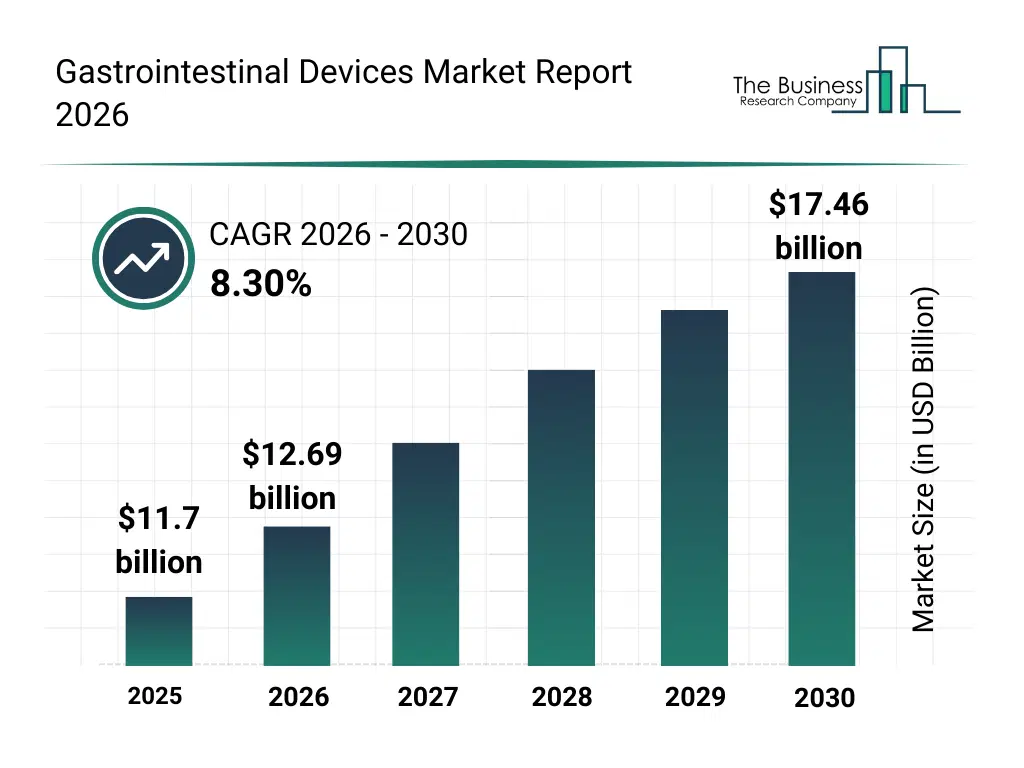
What Is The Gastrointestinal Devices Market Size and Share 2026?
The gastrointestinal devices market size has grown strongly in recent years. It will grow from $11.7 billion in 2025 to $12.69 billion in 2026 at a compound annual growth rate (CAGR) of 8.5%. The growth in the historic period can be attributed to rising prevalence of gastrointestinal disorders, expansion of hospital gastroenterology departments, technological improvements in endoscopic imaging, increasing screening programs, availability of advanced gi devices.What Is The Gastrointestinal Devices Market Growth Forecast?
The gastrointestinal devices market size is expected to see strong growth in the next few years. It will grow to $17.46 billion in 2030 at a compound annual growth rate (CAGR) of 8.3%. The growth in the forecast period can be attributed to increasing adoption of ai-assisted gi diagnostics, rising investments in advanced endoscopy centers, expansion of outpatient gi procedures, growing demand for single-use gi devices, increasing focus on patient safety and efficiency. Major trends in the forecast period include increasing adoption of advanced gi endoscopic procedures, rising use of capsule endoscopy systems, growing demand for minimally invasive gi treatments, expansion of therapeutic endoscopy applications, enhanced focus on early disease detection tools.
Global Gastrointestinal Devices Market Segmentation
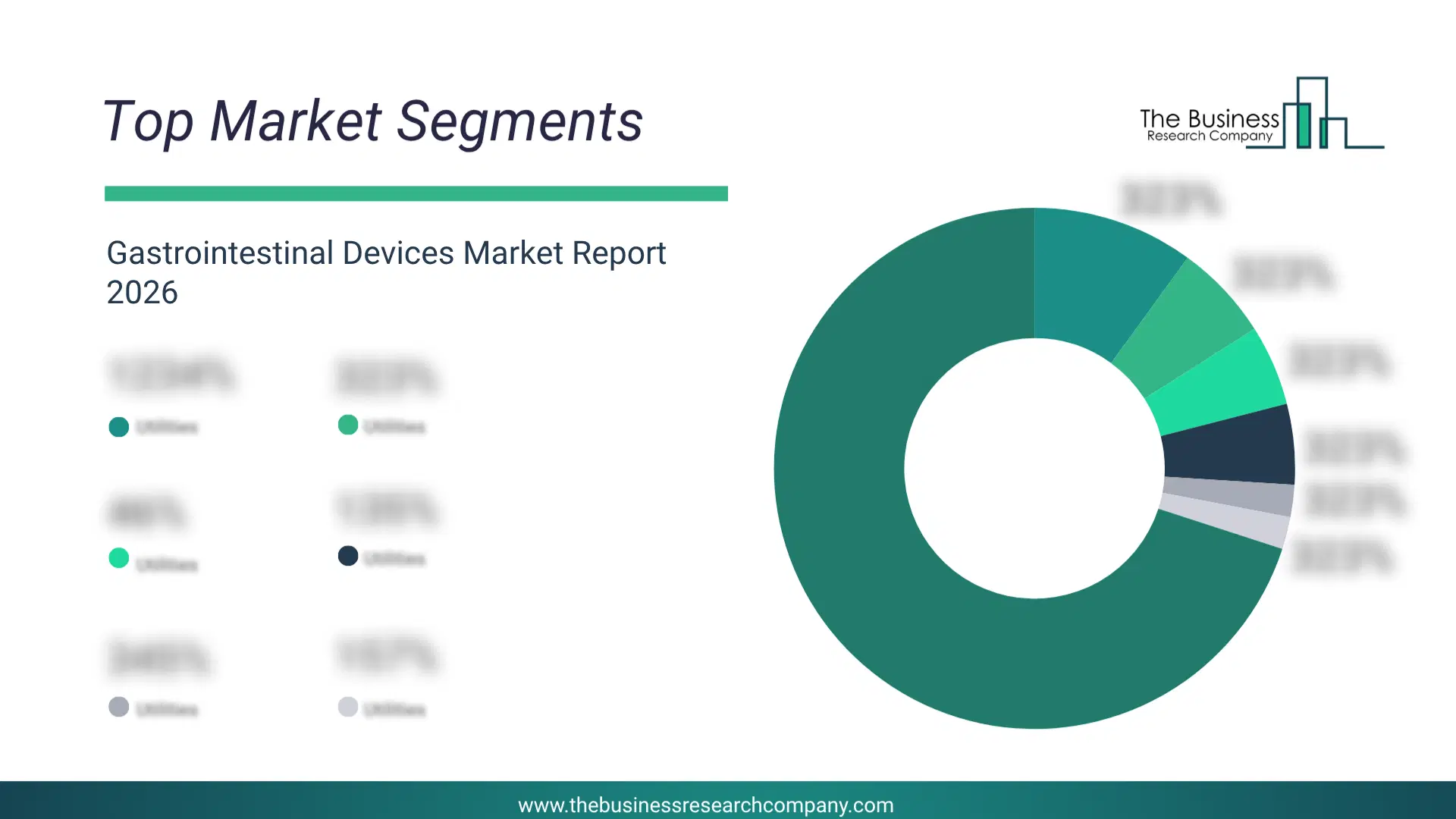
1) By Product Type: GI Videoscopes, Biopsy Devices, Endoscopic Retrograde Cholangiopancreatography Devices (ERCP), Capsule Endoscopy, Endoscopic Ultrasound, Endoscopic Mucosal Resection (EMR), Hemostasis Devices, Other Product Types 2) By Sales Channel: Online Retailing, Medical Stores And Brand Outlet 3) By End Users: Hospitals, Clinics And Dialysis Centers, Ambulatory Surgical Center Subsegments: 1) By GI Videoscopes: Flexible Videoscopes, Rigid Videoscopes 2) By Biopsy Devices: Needle Biopsy Devices, Forceps Biopsy Devices, Punch Biopsy Devices 3) By Endoscopic Retrograde Cholangiopancreatography Devices (ERCP): ERCP Cannulas, Guidewires, Balloon Sweep Devices 4) By Capsule Endoscopy: Small Intestine Capsule Endoscopes, Esophageal Capsule Endoscopes, Colonic Capsule Endoscopes 5) By Endoscopic Ultrasound: EUS Scopes, EUS-guided Fine-needle Aspiration (FNA) Devices 6) By Endoscopic Mucosal Resection (EMR): EMR Kits, EMR Suction Devices 7) By Hemostasis Devices: Mechanical Hemostasis Devices, Thermal Hemostasis Devices, Chemical Hemostasis Agents 8) By Other Product Types: Enteral Feeding Devices, Gastrostomy Tubes, Accessories For GI DevicesWhat Is The Driver Of The Gastrointestinal Devices Market?
The increasing prevalence of gastrointestinal diseases is expected to propel the growth of the gastrointestinal devices market going forward. Gastrointestinal diseases are disorders affecting the digestive tract and related organs that cause symptoms ranging from mild discomfort to severe complications. The growing prevalence of gastrointestinal diseases is largely driven by aging populations, as older adults experience higher rates of digestive system disorders requiring increased medical intervention. Increased diagnoses lead to greater demand for specialized diagnostic and therapeutic devices that enable healthcare providers to effectively manage these conditions. For instance, in July 2023, according to Crohn’s and Colitis Canada, a Canada-based national, volunteer-based charity, by 2035, there will be 470,000 inflammatory bowel disease (IBD) sufferers in Canada, up from an estimated 322,600 in 2023. Therefore, the increasing prevalence of gastrointestinal diseases is driving the growth of the gastrointestinal devices industry.Key Players In The Global Gastrointestinal Devices Market
Major companies operating in the gastrointestinal devices market are B. Braun Melsungen AG, Olympus Corporation, Interscope Inc., Steris plc, Cook Group Incorporated, MICRO-TECH Co. Ltd., Cantel Medical Corp., CONMED Corporation, PENTAX Medical Company, Karl Storz SE & Co. KG, US Endoscopy Inc., Richard Wolf GmbH, Motus GI Holdings Inc., Congentix Medical Inc., ERBE Elektromedizin GmbH, Creo Medical Group plc, GI Dynamics Inc., Mauna Kea Technologies SA, EndoMaster Pte Ltd., Fujifilm Holdings Corporation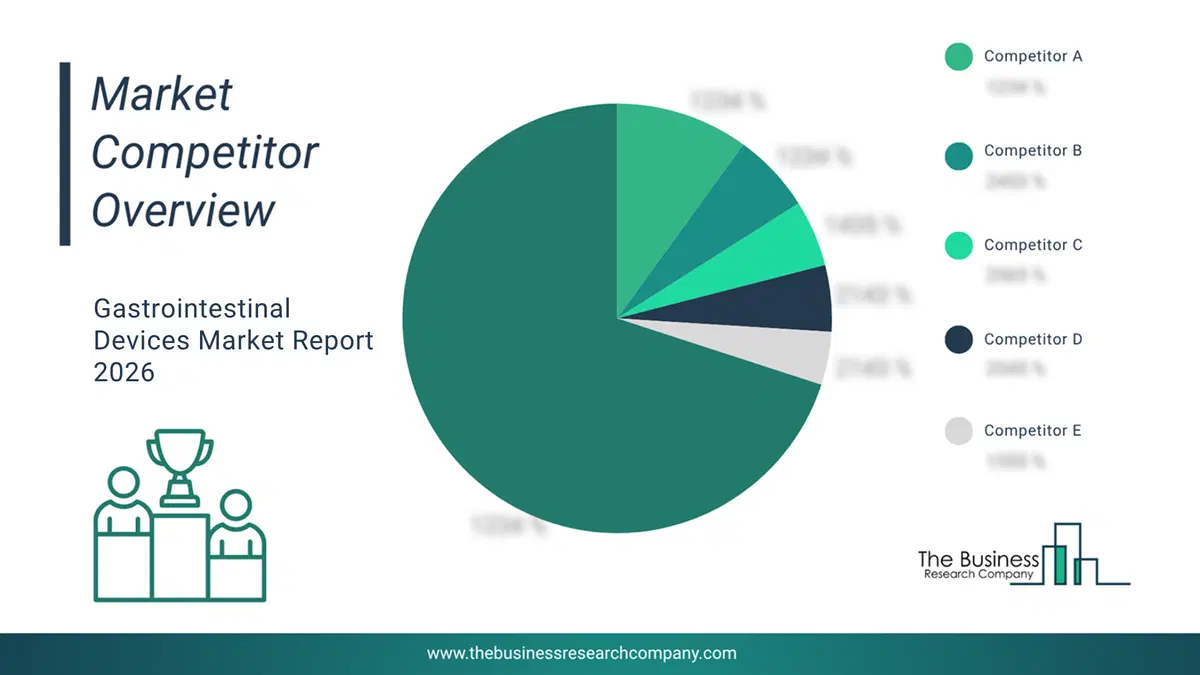
This chart is for illustrative purposes; the full report includes a detailed competitor analysis and comprehensive overview of the top 10 companies in the market.
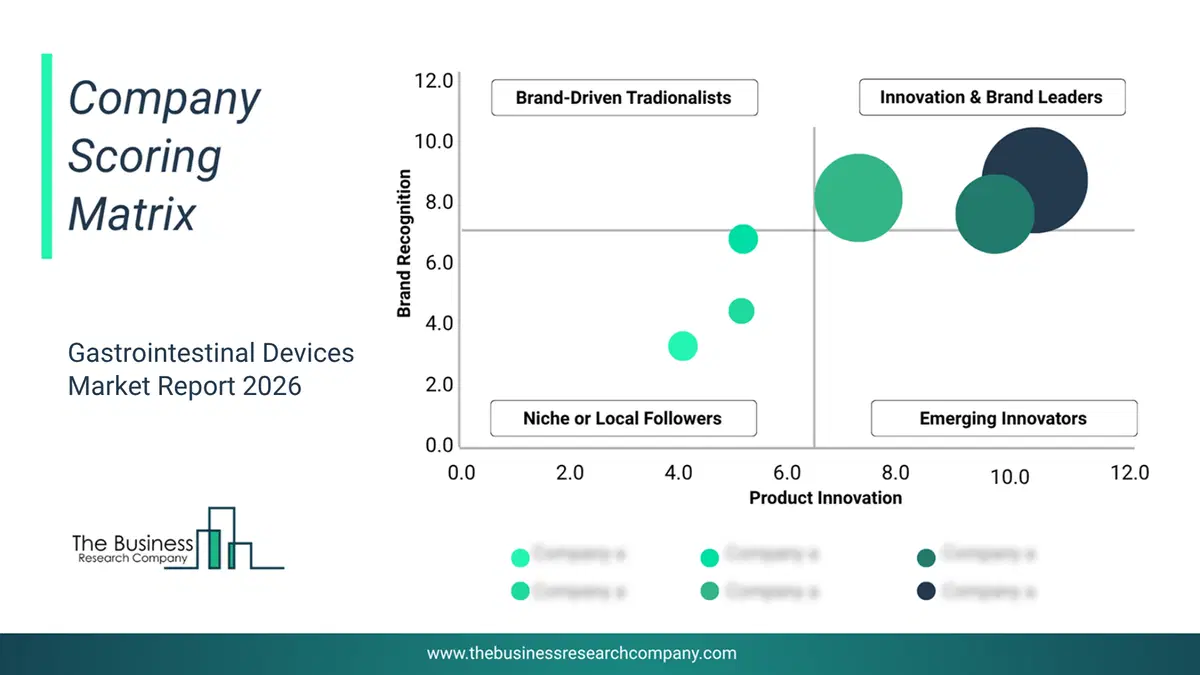
This chart maps companies by product innovation and brand strength, with bubble size indicating relative revenue, helping identify market leaders, challengers, and niche players. This is an illustrative chart; the full report provides a complete and accurate competitive analysis.
Global Gastrointestinal Devices Market Trends and Insights
Major companies operating in the gastrointestinal devices market are increasing their focus on the expansion of their endoscopy solutions portfolio to gain a competitive edge in the market. The expansion of the endoscopy solutions portfolio refers to the development and introduction of new products and services in the field of endoscopy. Endoscopy is a medical procedure that uses an endoscope, a flexible or rigid tubular device, to examine the inside of the body. For instance, in January 2023, Fujifilm India Private Limited, an India-based imaging solutions company, launched ClutchCutter and FushKnife, a new suite of endoscopy solutions portfolios for therapeutic gastrointestinal applications. ClutchCutter, a rotatable forceps that performs three functions at once, helps clinicians coagulate, dissect, and make incisions. Built for the most demanding processes, ClutchCutter has an insulated outer edge for optimum durability and jagged, serrated jaws for improved grasping capabilities. Wherever else, the FlushKnife is a diathermic slitter that enables medical professionals to perform a variety of tasks, including marking, flushing, incision, dissection, and coagulation. A ball-tip option with good traction is one of the advantages of the product, allowing for effective dissection of the target tissue and coagulation.What Are Latest Mergers And Acquisitions In The Gastrointestinal Devices Market?
In February 2023, Olympus Corporation, a Japan-based manufacturer of optics and reprography products, acquired Taewoong Medical for $370 million. Taewoong's portfolio will be housed within Olympus' therapeutic solutions division after the acquisition is complete. Olympus highlighted its extensive line of metallic GI stents in the release, which are used in minimally invasive operations to open up a biliary tract, esophagus, colon, or duodenum that has been blocked or restricted due to cancer or another digestive system issue. Taewoong Medical is a South Korea-based manufacturer of medical devices, including gastrointestinal metallic stents.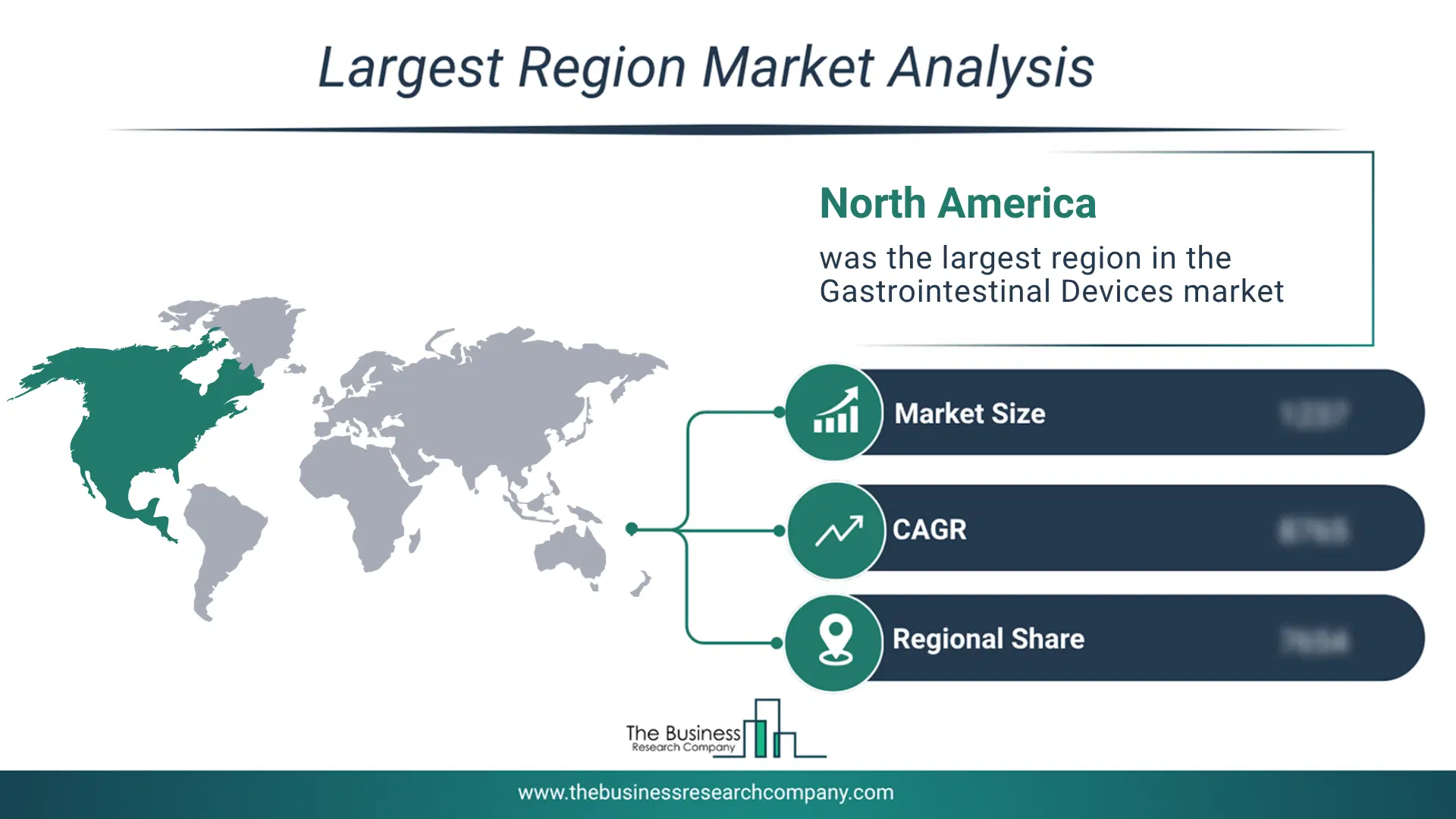
Regional Outlook
North America was the largest region in the gastrointestinal devices market in 2025. Asia-Pacific was the second largest region in the gastrointestinal devices market report. The regions covered in this market report are Asia-Pacific, South East Asia, Western Europe, Eastern Europe, North America, South America, Middle East, Africa. The countries covered in this market report are Australia, Brazil, China, France, Germany, India, Indonesia, Japan, Taiwan, Russia, South Korea, UK, USA, Canada, Italy, SpainWhat Defines the Gastrointestinal Devices Market?
The gastrointestinal devices market consists of sales of instruments such as gastroscope, an enteroscope, and an ultrasound endoscope. Values in this market are factory gate values, that is the value of goods sold by the manufacturers or creators of the goods, whether to other entities (including downstream manufacturers, wholesalers, distributors, and retailers) or directly to end customers. The value of goods in this market includes related services sold by the creators of the goods.How is Market Value Defined and Measured?
The market value is defined as the revenues that enterprises gain from the sale of goods and/or services within the specified market and geography through sales, grants, or donations in terms of the currency (in USD unless otherwise specified). The revenues for a specified geography are consumption values that are revenues generated by organizations in the specified geography within the market, irrespective of where they are produced. It does not include revenues from resales along the supply chain, either further along the supply chain or as part of other products.
This chart presents market attractiveness based on a quantitative evaluation of growth, competition, strategic alignment, and risk, offering a clear view of opportunity areas for decision-making. This chart is for illustrative purposes; the full report contains the complete analysis.

This chart highlights the Total Addressable Market (TAM) by estimating the maximum revenue opportunity using an assumption-driven approach, supporting strategic planning and opportunity sizing across markets. The chart is illustrative; the full report provides a more comprehensive analysis.
What Key Data and Analysis Are Included in the Gastrointestinal Devices Market Report 2026?
The gastrointestinal devices market research report is one of a series of new reports from The Business Research Company that provides market statistics, including industry global market size, regional shares, competitors with the market share, detailed market segments, market trends and opportunities, and any further data you may need to thrive in the gastrointestinal devices industry. The market research report delivers a complete perspective of everything you need, with an in-depth analysis of the current and future state of the industry.Gastrointestinal Devices Market Report Forecast Analysis
| Report Attribute | Details |
|---|---|
| Market Size Value In 2026 | $12.69 billion |
| Revenue Forecast In 2030 | $17.46 billion |
| Growth Rate | CAGR of 8.3% from 2026 to 2030 |
| Base Year For Estimation | 2025 |
| Actual Estimates/Historical Data | 2020-2025 |
| Forecast Period | 2026 - 2030 |
| Market Representation | Revenue in USD Billion and CAGR from 2026 to 2030 |
| Segments Covered | Product Type, Sales Channel, End Users |
| Regional Scope | Asia-Pacific, Western Europe, Eastern Europe, North America, South America, Middle East, Africa |
| Country Scope | The countries covered in the report are Australia, Brazil, China, France, Germany, India, Indonesia, Japan, Taiwan, Russia, South Korea, UK, USA, Canada, Italy, Spain. |
| Key Companies Profiled | B. Braun Melsungen AG, Olympus Corporation, Interscope Inc., Steris plc, Cook Group Incorporated, MICRO-TECH Co. Ltd., Cantel Medical Corp., CONMED Corporation, PENTAX Medical Company, Karl Storz SE & Co. KG, US Endoscopy Inc., Richard Wolf GmbH, Motus GI Holdings Inc., Congentix Medical Inc., ERBE Elektromedizin GmbH, Creo Medical Group plc, GI Dynamics Inc., Mauna Kea Technologies SA, EndoMaster Pte Ltd., Fujifilm Holdings Corporation |
| Customization Scope | Request for Customization |
| Pricing And Purchase Options | Explore Purchase Options |