
Genomic And Proteomic Tool Market Report 2026
Global Outlook – By Product Type (Instruments, Consumables, Software, ServicesBy Technology (Sequencing, Microarray, Polymerase Chain Reaction (PCR), Mass Spectrometry, Electrophoresis, Chromatography), By Workflow Stage (Sample Preparation, Library Preparation, Data Analysis, Reporting), By Application (Drug Discovery, Diagnostics, Personalized Medicine, Agriculture And Animal Research), By End User (Academic And Research Institutions, Pharmaceutical And Biotechnology Companies, Diagnostic Laboratories, Healthcare Providers) – Market Size, Trends, Strategies, and Forecast to 2030
Genomic And Proteomic Tool Market Overview
• Genomic And Proteomic Tool market size has reached to $33.14 billion in 2025 • Expected to grow to $56.95 billion in 2030 at a compound annual growth rate (CAGR) of 11.4% • Growth Driver: Surge In Personalized Medicine Fueling The Growth Of The Market Due To Advances In Genomics, Proteomics, And Biomarker-Based Tailored Treatments • Market Trend: Advancing Discovery Through Spatial Multi-Omics Innovation • North America was the largest region in 2025 and Asia-Pacific is the fastest growing region.Market Gains By 2030 – Top Opportunities By Segment
Market Gain identifies the most promising market opportunities by highlighting the segments or products expected to generate the highest incremental revenue growth over the next five years.
What Is Covered Under Genomic And Proteomic Tool Market?
Genomic and proteomic tools are a collection of advanced techniques and technologies used to study the complete set of genes (genome) and proteins (proteome) in an organism. Genomic tools focus on analyzing DNA and RNA to understand gene sequences, expression patterns, mutations, and interactions, using methods such as DNA sequencing, PCR, microarrays, and genome editing. Proteomic tools, on the other hand, examine the structure, function, abundance, and interactions of proteins through approaches such as mass spectrometry, 2D gel electrophoresis, and protein microarrays. The main product types of genomic and proteomic tools are instruments, consumables, software, and services. Instruments are purpose-built devices that measure, detect, separate, or manipulate physical or molecular properties in laboratory samples, enabling precise observation and control that human senses alone cannot achieve, across disciplines from microscopy to analytical measurement. The various technologies involved are sequencing, microarray, polymerase chain reaction (pcr), chromatography, which works by sample preparation, library preparation, data analysis, and reporting stages. The various applications involved are drug discovery, diagnostics, personalized medicine, agriculture, and animal research.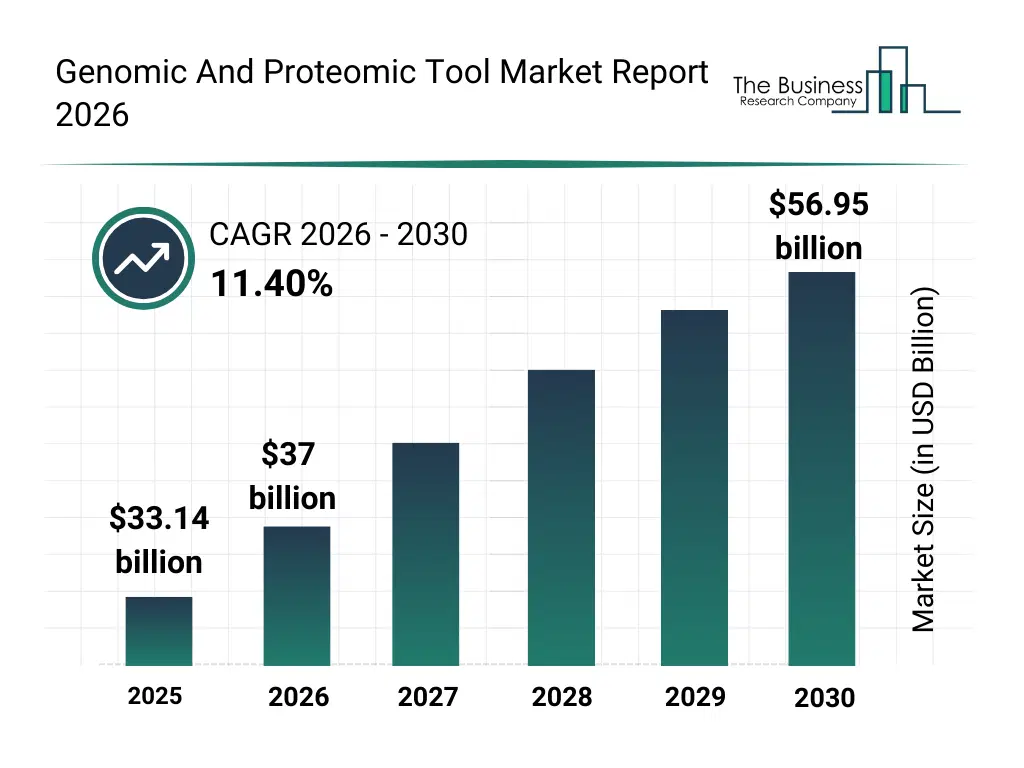
What Is The Genomic And Proteomic Tool Market Size and Share 2026?
The genomic and proteomic tool market size has grown rapidly in recent years. It will grow from $33.14 billion in 2025 to $37 billion in 2026 at a compound annual growth rate (CAGR) of 11.7%. The growth in the historic period can be attributed to rising genomic research funding, expansion of NGS technologies, growth in pharmaceutical R&D, increasing academic research activities, declining sequencing costs.What Is The Genomic And Proteomic Tool Market Growth Forecast?
The genomic and proteomic tool market size is expected to see rapid growth in the next few years. It will grow to $56.95 billion in 2030 at a compound annual growth rate (CAGR) of 11.4%. The growth in the forecast period can be attributed to growth of precision medicine, increasing clinical genomics adoption, rising demand for proteomics in drug discovery, expansion of personalized diagnostics, advancements in bioinformatics tools. Major trends in the forecast period include high-throughput sequencing adoption, integrated multi-omics platforms, automation in sample preparation, growth of cloud-based bioinformatics, expansion of biomarker discovery.
Global Genomic And Proteomic Tool Market Segmentation
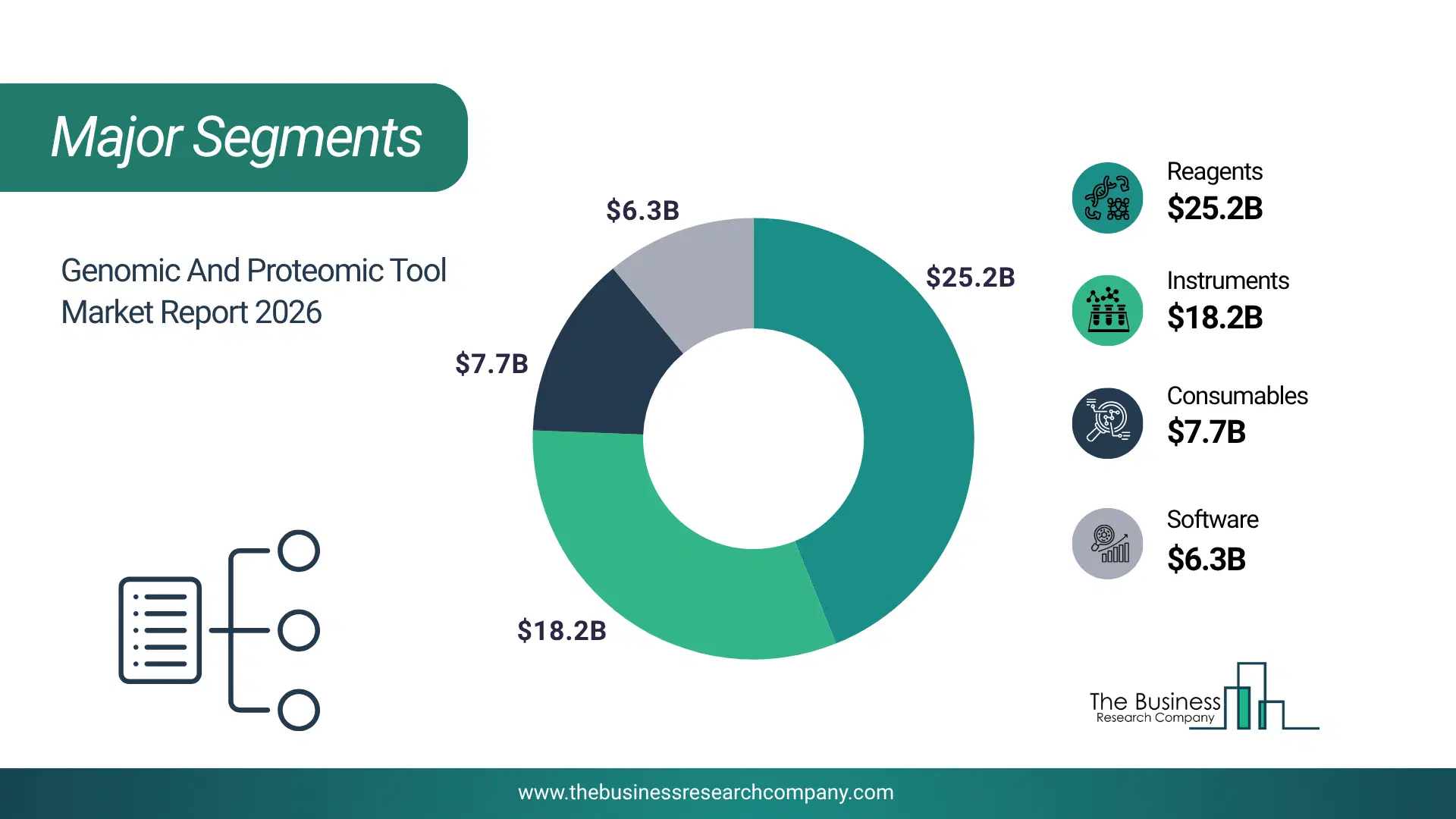
1) By Product Type: Instruments, Consumables, Software, Services 2) By Technology: Sequencing, Microarray, Polymerase Chain Reaction (PCR), Mass Spectrometry, Electrophoresis, Chromatography 3) By Workflow Stage: Sample Preparation, Library Preparation, Data Analysis, Reporting 4) By Application: Drug Discovery, Diagnostics, Personalized Medicine, Agriculture And Animal Research 5) By End User: Academic And Research Institutions, Pharmaceutical And Biotechnology Companies, Diagnostic Laboratories, Healthcare Providers Subsegments: 1) By Instruments: DNA Sequencing Systems, Polymerase Chain Reaction (PCR) Systems, Microarray Analyzers, Mass Spectrometry Instruments, Electrophoresis Systems, Chromatography Instruments, Flow Cytometers 2) By Consumables: Reagents And Kits, Assay Kits, Sample Preparation Consumables, Sequencing Consumables, Protein Assay Reagents, Microarray Chips, Laboratory Chemicals 3) By Software: Genomic Data Analysis Software, Proteomic Data Analysis Software, Bioinformatics Platforms, Clinical Data Interpretation Tools, Workflow Management Software, Cloud-based Analysis Platforms 4) By Services: Next-Generation Sequencing (NGS) Services, Gene Expression And Genotyping Services, Protein Identification And Quantification Services, Biomarker Discovery Services, Structural Biology Analysis Services, Bioinformatics And Data Interpretation Services, Molecular Diagnostics Services The top segments in the genomic and proteomic tool market will be: • Reagents will reach $25.13 billion by 2030. • Instruments will reach $18.17 billion by 2030. • Consumables will reach $7.67 billion by 2030. • Software will reach $6.22 billion by 2030.What Is The Driver Of The Genomic And Proteomic Tool Market?
The increasing adoption of personalized medicine is expected to propel the growth of the genomic and proteomic tool market going forward. Personalized medicine is the tailoring of prevention, diagnosis, and treatment to an individual’s molecular profile using biomarkers derived from deoxyribonucleic acid (DNA), ribonucleic acid (RNA), and proteins. The increasing adoption of personalized medicine is due to advances in genomics, proteomics, and biomarker discovery, which enable tailored treatments based on individual genetic profiles, driving demand for targeted therapies, improved diagnostics, and precision healthcare solutions. Advances in genomics, proteomics, and biomarker discovery have enabled the development of targeted therapies and more accurate diagnostics based on a patient’s genetic profile. Genomic and proteomic tools play a crucial role in this process by identifying genetic variations and protein biomarkers, allowing clinicians to optimize treatments and improve patient outcomes. For instance, in February 2024, according to the Personalized Medicine Coalition, a US-based nonprofit organization, the USFDA approved 16 new personalized treatments for rare disease patients in 2023, a significant increase from 6 personalized treatments in 2022. Therefore, the increasing adoption of personalized medicine is driving the genomic and proteomic tool industry.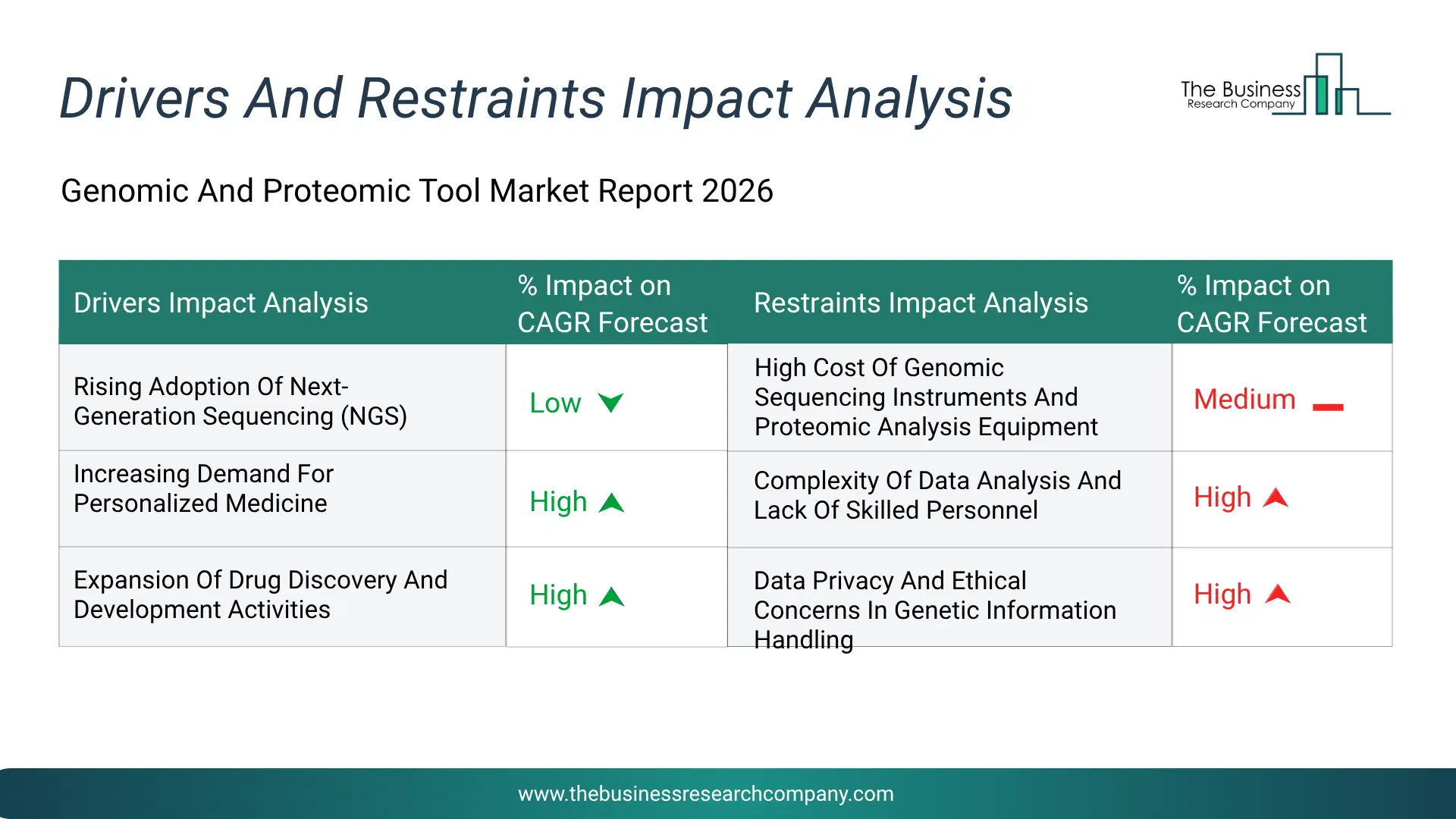
Infographic Chart Showing Key Market Drivers Analysis And Restraints For Genomic And Proteomic Tool Market
The chart presents an impact analysis of key drivers and restraints, quantifying their relative influence on the market's growth rate and helping assess the balance between growth enablers and limiting factors. This chart offers a high-level perspective; the full report contains more detailed insights.
How Will The Drivers Impact Growth In The Global Genomic And Proteomic Tool Market?
• Rising Adoption Of Next-Generation Sequencing (NGS) (Low) – During the forecast period, the rising adoption of next-generation sequencing (ngs) is expected to become a key growth driver for the genomic and proteomic tool market by 2030. The increasing adoption of next-generation sequencing (ngs) is significantly propelling the growth of the genomic and proteomic tools market by facilitating fast, high-throughput analysis of complex genetic and protein datasets. Ngs delivers detailed insights into gene expression patterns, genetic variations, and protein interactions, thereby advancing applications in precision medicine, biomarker discovery, and disease diagnostics. Declining sequencing costs and enhanced processing speed have made large-scale genomic research more accessible to academic institutions, biotechnology firms, and healthcare providers. In addition, the widespread use of ngs stimulates demand for associated products and services, including library preparation kits, reagents, advanced analytical software, and bioinformatics platforms. Collectively, these factors are accelerating scientific innovation and broadening the integration of genomics and proteomics across clinical and research environments. • Increasing Demand For Personalized Medicine (High) – During the forecast period, the increasing demand for personalized medicine is expected to emerge as a major factor driving the expansion of the genomic and proteomic tool market by 2030. The growing emphasis on personalized medicine is accelerating the expansion of the genomic and proteomic tools market, as these technologies enable in-depth analysis of individual genetic variations and protein expression patterns. By detecting specific biomarkers, mutations, and molecular pathways, they support the customization of therapies based on a patient’s distinct biological characteristics. This precision-driven approach enhances treatment effectiveness, reduces adverse effects, and improves diagnostic accuracy. Consequently, pharmaceutical companies and healthcare institutions are increasingly investing in advanced genomic and proteomic tools to advance targeted therapeutics and precision diagnostic solutions. • Expansion Of Drug Discovery And Development Activities (High) – During the forecast period, the expansion of drug discovery and development activities is expected to act as a key growth catalyst for the genomic and proteomic tool market by 2030. The growth of drug discovery and development activities is fueling the expansion of the genomic and proteomic tools market, as these technologies allow researchers to more effectively identify disease-associated genes, proteins, and molecular pathways. Genomic sequencing and proteomic profiling support the discovery of new therapeutic targets and provide deeper insights into drug mechanisms at the molecular level. As a result, pharmaceutical and biotechnology companies are increasingly leveraging these advanced tools to accelerate the development of personalized and targeted treatment strategies.How Will The Restraints Impact Growth In The Global Genomic And Proteomic Tool Market?
• High Cost Of Genomic Sequencing Instruments And Proteomic Analysis Equipment (Medium) – During the forecast period, the high cost of genomic sequencing instruments and proteomic analysis equipment acts as a major restraining factor for the genomic and proteomic tools market. Advanced sequencing platforms, mass spectrometers, and bioinformatics systems require significant capital investment and maintenance expenses. These high costs limit adoption, especially among small research institutions, academic labs, and startups with constrained budgets. Additionally, the expenses associated with skilled personnel, data storage, and analysis further increase the overall operational cost. As a result, the high financial barrier slows market penetration and restricts research scalability. • Complexity Of Data Analysis And Lack Of Skilled Personnel (High) – During the forecast period, the complexity of data analysis and the lack of skilled personnel restrain the growth of the genomic and proteomic tools market. These technologies generate massive and complex datasets that require advanced bioinformatics tools and expertise to interpret accurately. However, there is a shortage of trained professionals capable of handling multi-omics data integration, statistical modeling, and computational biology. This limits the ability of research organizations and healthcare institutions to fully utilize these tools. As a result, project timelines are delayed, costs increase, and the adoption of genomic and proteomic technologies slows down. • Data Privacy And Ethical Concerns In Genetic Information Handling (High) – During the forecast period, the data privacy and ethical concerns in genetic information handling act as a restraint for the genomic and proteomic tools market by creating regulatory and operational challenges for organizations. The sensitive nature of genomic data raises concerns related to patient confidentiality, consent management, and potential misuse of genetic information. Strict data protection laws and ethical guidelines increase compliance requirements and limit data sharing across research institutions. These restrictions slow down collaborative research and reduce the speed of innovation. As a result, concerns around data security and ethics hinder the widespread adoption of genomic and proteomic technologies.Key Players In The Global Genomic And Proteomic Tool Market
Major companies operating in the genomic and proteomic tool market are F. HoffmannLa Roche, Thermo Fisher Scientific Inc., Danaher Corporation, Merck KGaA, Becton Dickinson and Company, GE Healthcare, Eurofins Scientific SE, Agilent Technologies Inc., Illumina Inc., Bruker Corporation, Waters Corporation, Bio-Rad Laboratories Inc., QIAGEN N.V., PerkinElmer Inc., Promega, Novogene Corp., Oxford Nanopore Technologies Ltd., Pacific Biosciences of California Inc., Sophia Genetics, LC Sciences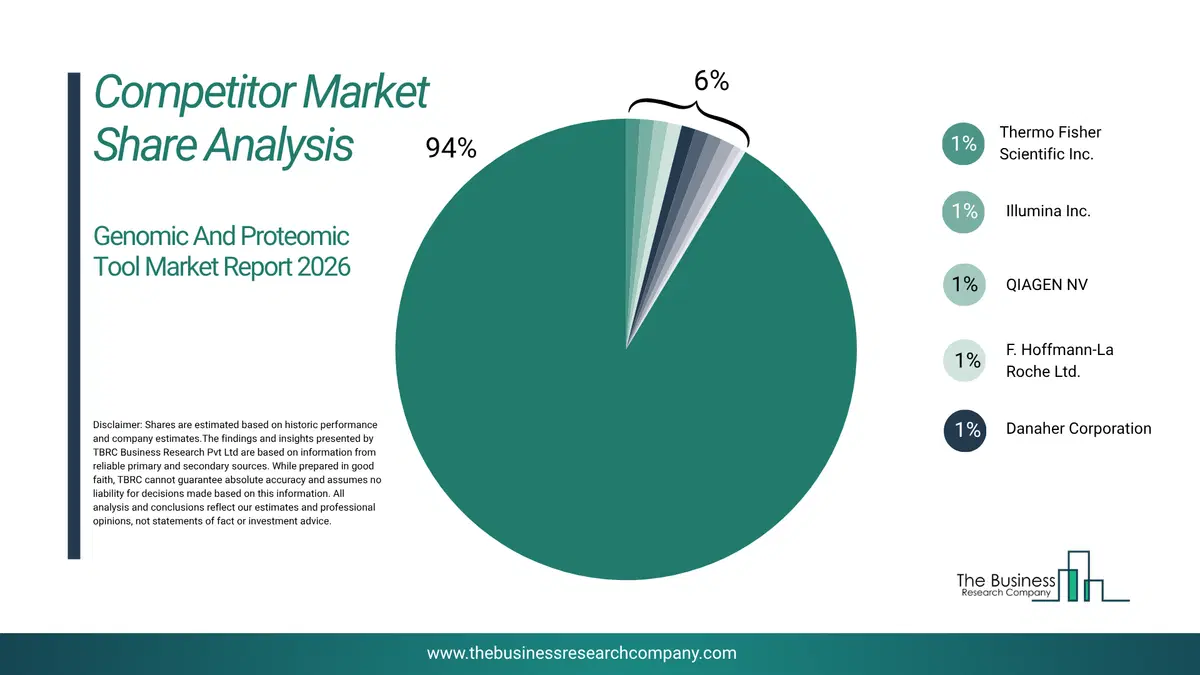
This chart is for illustrative purposes; the full report includes a detailed competitor analysis and comprehensive overview of the top 10 companies in the market.
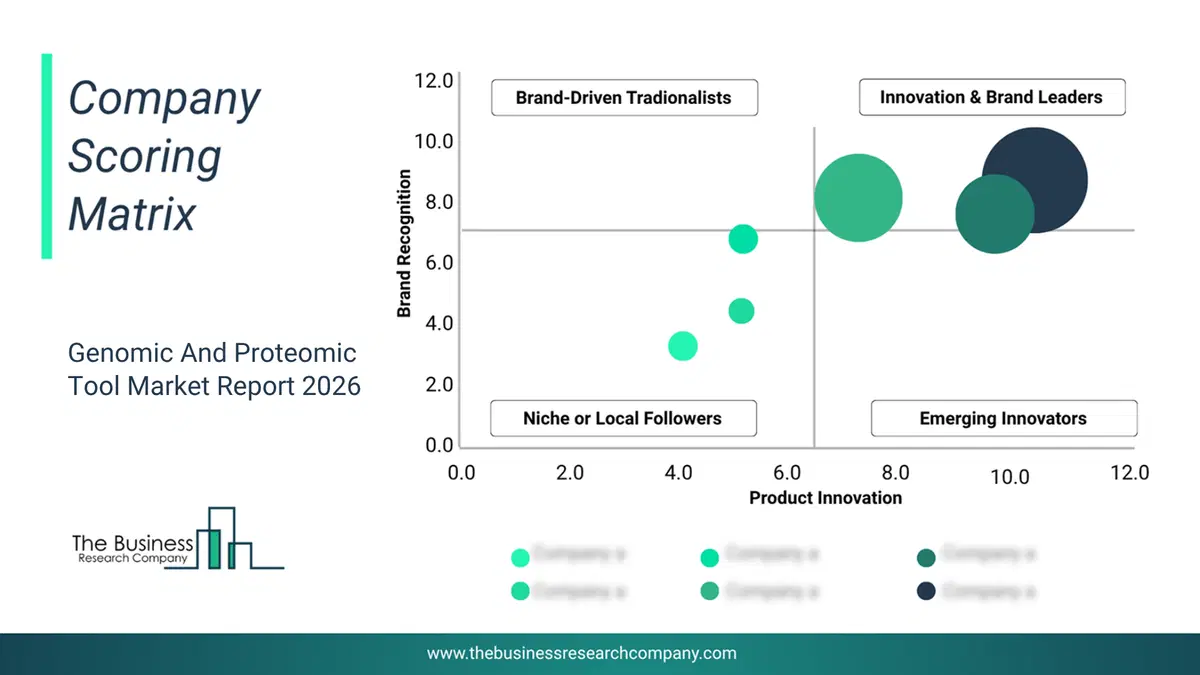
This chart maps companies by product innovation and brand strength, with bubble size indicating relative revenue, helping identify market leaders, challengers, and niche players. This is an illustrative chart; the full report provides a complete and accurate competitive analysis.
Global Genomic And Proteomic Tool Market Trends and Insights
Major companies operating in the genomic and proteomic tools market are focusing on innovation through spatial multi-omics technologies, which enable same-cell, in-situ detection of RNA and proteins to integrate molecular data layers, preserve tissue architecture, and accelerate discovery. Spatial multi-omics involves measuring gene expression and protein markers simultaneously within intact tissue at single-cell or subcellular resolution, offering richer biological insights than single-modality assays. For instance, in August 2025, 10x Genomics, a U.S.-based biotechnology company, introduced Xenium Protein, a first-of-its-kind assay for single-cell RNA and protein analysis on the Xenium in situ platform. This solution delivers a seamless, single-instrument workflow eliminating the need for cross-platform data integration and comes with validated, ready-to-use protein subpanels to simplify setup and quality control. These advancements allow researchers to maintain spatial context while expanding biomarker panels for applications such as target validation, patient stratification, and mechanism-of-action studies.What Are Latest Mergers And Acquisitions In The Genomic And Proteomic Tool Market?
In July 2024, Thermo Fisher Scientific Inc., a US-based biotechnology company, acquired Olink Holding AB for an undisclosed amount. This acquisition enhances Thermo Fisher’s next-generation proteomics portfolio by integrating Olink’s proximity extension assay (PEA) platform into its Life Sciences Solutions segment. The move strengthens the company’s capabilities in high-plex protein biomarker discovery and quantification, complementing its existing mass spectrometry and sequencing technologies, while accelerating advancements in translational research and companion diagnostic development. Olink Holding AB is a Sweden-based provider of next-generation proteomics tools and solutions.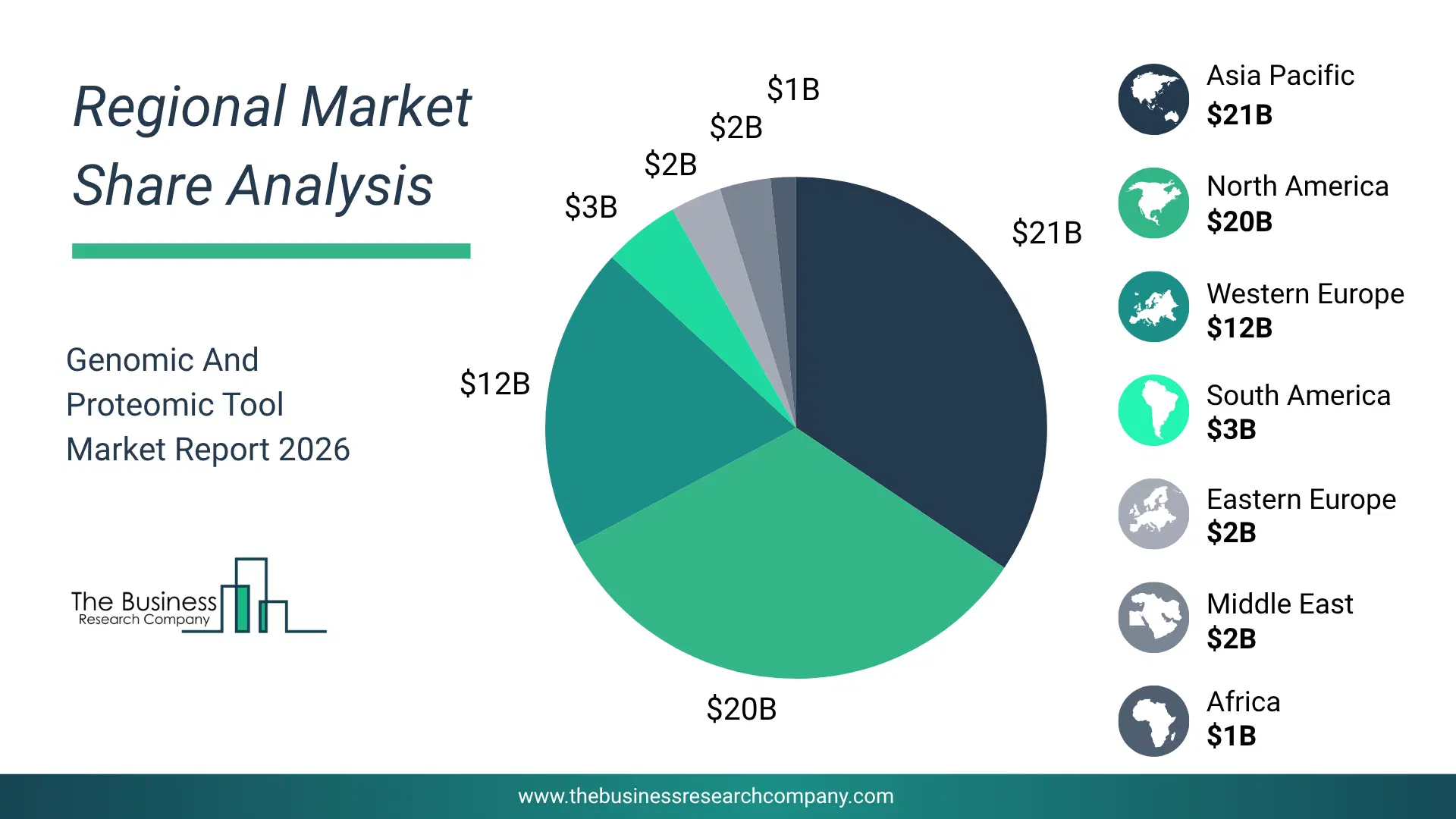
Regional Outlook
North America was the largest region in the genomic and proteomic tool market in 2025. Asia-Pacific is expected to be the fastest-growing region in the forecast period. The regions covered in this market report are Asia-Pacific, South East Asia, Western Europe, Eastern Europe, North America, South America, Middle East, Africa. The countries covered in this market report are Australia, Brazil, China, France, Germany, India, Indonesia, Japan, Taiwan, Russia, South Korea, UK, USA, Canada, Italy, SpainWhat Defines the Genomic And Proteomic Tool Market?
The genomic and proteomic tool market consists of revenues earned by entities by providing services such as DNA sequencing systems, gene expression analysis platforms, microarray technologies, and mass spectrometry systems. The market value includes the value of related goods sold by the service provider or included within the service offering. The genomic and proteomic tools market also includes sales of electrophoresis equipment, and chromatography instruments. Values in this market are ‘factory gate’ values, that is, the value of goods sold by the manufacturers or creators of the goods, whether to other entities (including downstream manufacturers, wholesalers, distributors, and retailers) or directly to end customers. The value of goods in this market includes related services sold by the creators of the goods.How is Market Value Defined and Measured?
The market value is defined as the revenues that enterprises gain from the sale of goods and/or services within the specified market and geography through sales, grants, or donations in terms of the currency (in USD unless otherwise specified). The revenues for a specified geography are consumption values that are revenues generated by organizations in the specified geography within the market, irrespective of where they are produced. It does not include revenues from resales along the supply chain, either further along the supply chain or as part of other products.
This chart presents market attractiveness based on a quantitative evaluation of growth, competition, strategic alignment, and risk, offering a clear view of opportunity areas for decision-making. This chart is for illustrative purposes; the full report contains the complete analysis.

This chart highlights the Total Addressable Market (TAM) by estimating the maximum revenue opportunity using an assumption-driven approach, supporting strategic planning and opportunity sizing across markets. The chart is illustrative; the full report provides a more comprehensive analysis.
What Key Data and Analysis Are Included in the Genomic And Proteomic Tool Market Report 2026?
The genomic and proteomic tool market research report is one of a series of new reports from The Business Research Company that provides market statistics, including industry global market size, regional shares, competitors with the market share, detailed market segments, market trends and opportunities, and any further data you may need to thrive in the genomic and proteomic tool industry. The market research report delivers a complete perspective of everything you need, with an in-depth analysis of the current and future state of the industry.Genomic And Proteomic Tool Market Report Forecast Analysis
| Report Attribute | Details |
|---|---|
| Market Size Value In 2026 | $37 billion |
| Revenue Forecast In 2030 | $56.95 billion |
| Growth Rate | CAGR of 11.4% from 2026 to 2030 |
| Base Year For Estimation | 2025 |
| Actual Estimates/Historical Data | 2020-2025 |
| Forecast Period | 2026 - 2030 |
| Market Representation | Revenue in USD Billion and CAGR from 2026 to 2030 |
| Segments Covered | Product Type, Technology, Workflow Stage, Application, End User |
| Regional Scope | Asia-Pacific, Western Europe, Eastern Europe, North America, South America, Middle East, Africa |
| Country Scope | The countries covered in the report are Australia, Brazil, China, France, Germany, India, ... |
| Key Companies Profiled | F. HoffmannLa Roche, Thermo Fisher Scientific Inc., Danaher Corporation, Merck KGaA, Becton Dickinson and Company, GE Healthcare, Eurofins Scientific SE, Agilent Technologies Inc., Illumina Inc., Bruker Corporation, Waters Corporation, Bio-Rad Laboratories Inc., QIAGEN N.V., PerkinElmer Inc., Promega, Novogene Corp., Oxford Nanopore Technologies Ltd., Pacific Biosciences of California Inc., Sophia Genetics, LC Sciences |
| Customization Scope | Request for Customization |
| Pricing And Purchase Options | Explore Purchase Options |