
Genomic Urine Testing Market Report 2026
Global Outlook – By Testing Type (Deoxyribonucleic Acid (DNA) Testing, Ribonucleic Acid (RNA) Testing, Microbial Testing, Epigenetic Testing), By Distribution Channel (Hospital Pharmacies, Mail Order Pharmacies, Speciality Pharmacies), By Application (Cancer Diagnosis, Infectious Diseases, Genetic Disorder Screening, Health Monitoring), By End-User (Hospitals And Clinics, Diagnostic Laboratories, Research And Academic Institutions, Other End Users) - Market Size, Trends, And Global Forecast 2026-2030
Genomic Urine Testing Market Overview
• Genomic Urine Testing market size has reached to $1.01 billion in 2025 • Expected to grow to $1.8 billion in 2030 at a compound annual growth rate (CAGR) of 12.2% • Growth Driver: Increasing Burden Of Chronic Kidney Disease Fueling The Growth Of The Market Due To Rising Diabetes Prevalence And Mortality Rates • Market Trend: Next-Generation Sequencing Enhances Early Cancer Detection • North America was the largest region in 2025 and Asia-Pacific is the fastest growing region.Market Gains By 2030 – Top Opportunities By Segment
Market Gain identifies the most promising market opportunities by highlighting the segments or products expected to generate the highest incremental revenue growth over the next five years.
What Is Covered Under Genomic Urine Testing Market?
Genomic urine testing is a non-invasive diagnostic method that analyzes genetic material present in urine to detect specific biomarkers related to diseases, such as cancer, infections, or genetic disorders. It combines genomics with advanced molecular techniques to identify mutations, gene expression patterns, or microbial deoxyribonucleic acid (DNA). The primary purpose is early detection, monitoring, and personalized treatment planning for various health conditions. The main testing types of genomic urine testing are deoxyribonucleic acid testing, ribonucleic acid testing, microbial testing, and epigenetic testing. Deoxyribonucleic acid (DNA) testing refers to a scientific method used to analyze an individual's genetic material to identify relationships, confirm identity, or detect inherited conditions. These tests are distributed through various channels such as hospital pharmacies, mail-order pharmacies, and specialty pharmacies. Genomic urine tests have diverse applications, including cancer diagnosis, infectious disease detection, genetic disorder screening, and overall health monitoring. They serve a wide range of end users, including hospitals and clinics, diagnostic laboratories, research and academic institutions, and other healthcare providers.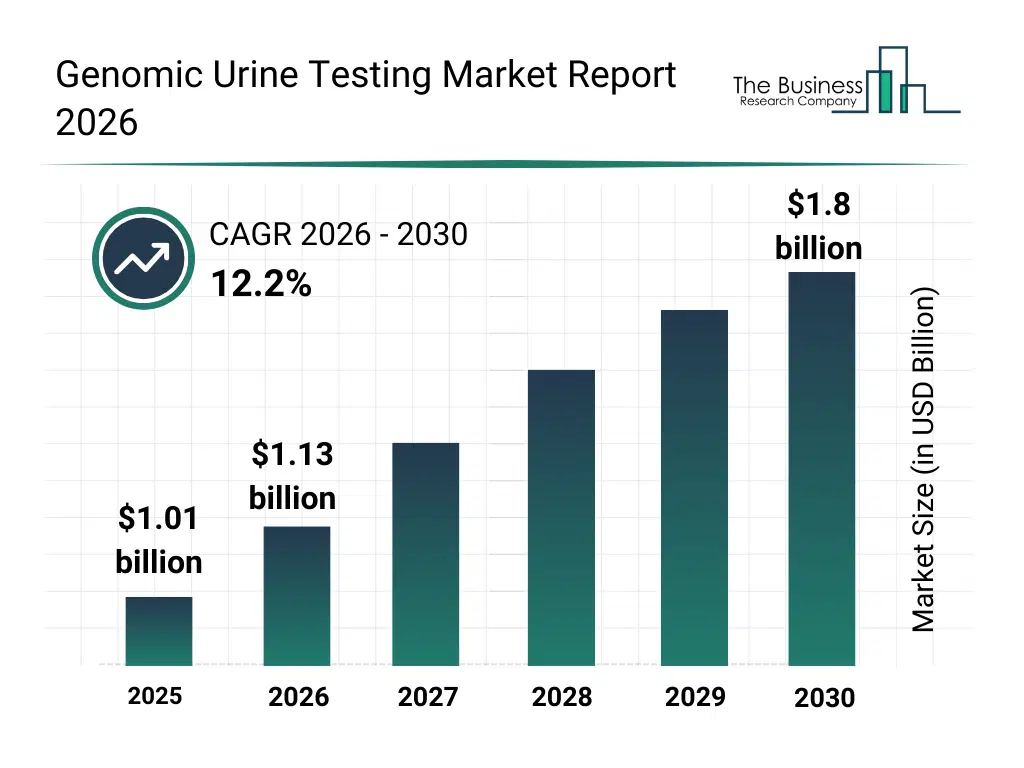
What Is The Genomic Urine Testing Market Size and Share 2026?
The genomic urine testing market size has grown rapidly in recent years. It will grow from $1.01 billion in 2025 to $1.13 billion in 2026 at a compound annual growth rate (CAGR) of 12.5%. The growth in the historic period can be attributed to advances in molecular diagnostics, need for non-invasive testing, early biomarker research, laboratory adoption of genomic assays, oncology diagnostics growth.What Is The Genomic Urine Testing Market Growth Forecast?
The genomic urine testing market size is expected to see rapid growth in the next few years. It will grow to $1.8 billion in 2030 at a compound annual growth rate (CAGR) of 12.2%. The growth in the forecast period can be attributed to integration with routine health screening, expansion into infectious disease detection, technological improvements in sensitivity, personalized monitoring demand, clinical validation studies. Major trends in the forecast period include increasing adoption of non-invasive diagnostic testing, rising use of genomic biomarkers in disease detection, growing demand for early cancer screening tools, expansion of personalized diagnostic approaches, increased research in urinary genomic profiling.
Global Genomic Urine Testing Market Segmentation
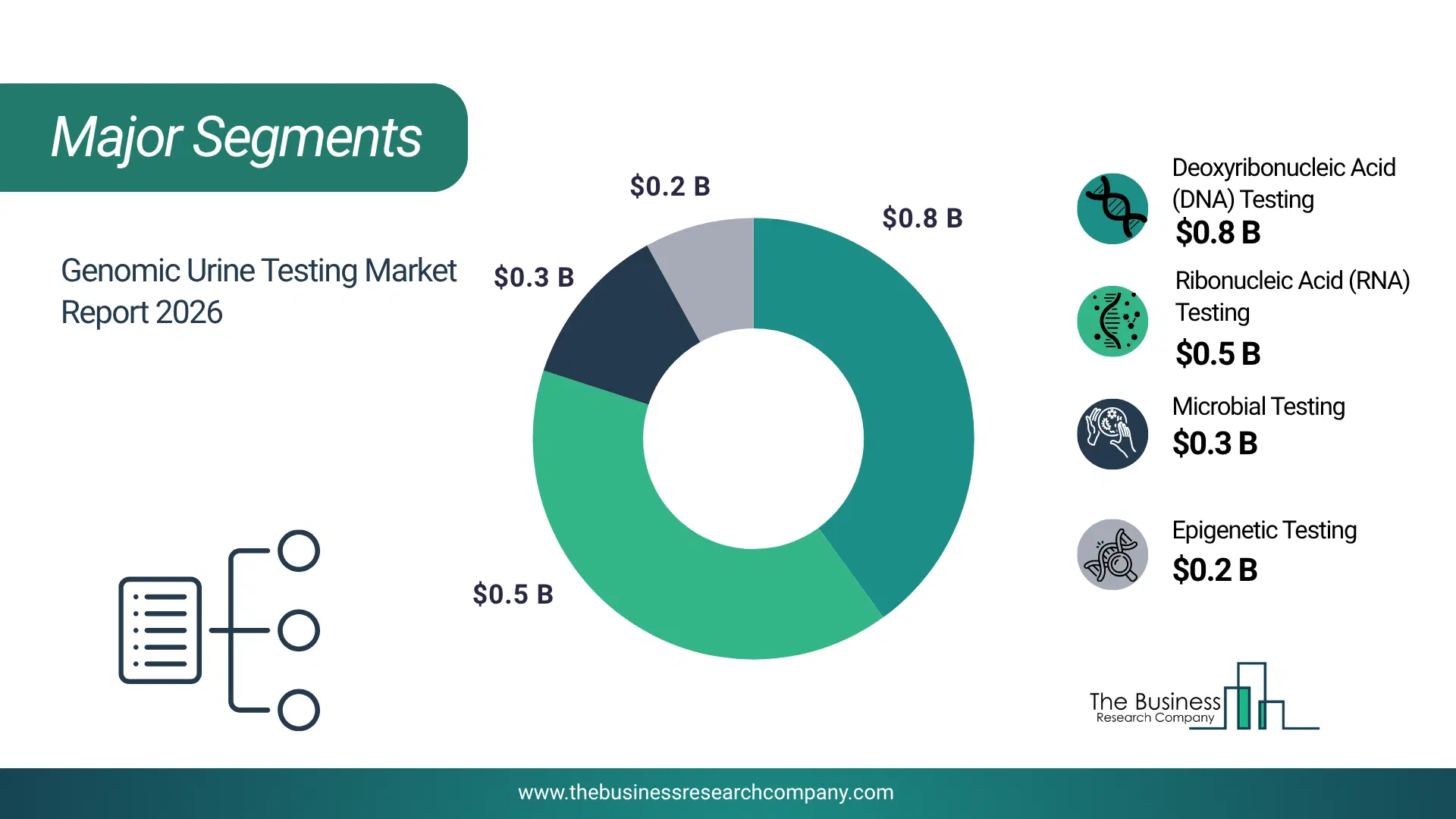
1) By Testing Type: Deoxyribonucleic Acid (DNA) Testing, Ribonucleic Acid (RNA) Testing, Microbial Testing, Epigenetic Testing 2) By Distribution Channel: Hospital Pharmacies, Mail Order Pharmacies, Speciality Pharmacies 3) By Application: Cancer Diagnosis, Infectious Diseases, Genetic Disorder Screening, Health Monitoring 4) By End-User: Hospitals And Clinics, Diagnostic Laboratories, Research And Academic Institutions, Other End Users Subsegments: 1) By Deoxyribonucleic Acid Testing: Germline Mutation Analysis, Somatic Mutation Detection, Copy Number Variation (CNV) Testing, Single Nucleotide Polymorphism Analysis 2) By Ribonucleic Acid Testing: Gene Expression Profiling, Messenger Ribonucleic Acid Analysis, Non-coding Ribonucleic Acid Detection, Fusion Transcript Detection 3) By Microbial Testing: Urinary Microbiome Profiling, Pathogen Identification, Antimicrobial Resistance Gene Detection, Quantitative Microbial Load Analysis 4) By Epigenetic Testing: Deoxyribonucleic Acid Methylation Analysis, Histone Modification Profiling, Chromatin Accessibility Testing The top segments in the genomic urine testing market will be: • Deoxyribonucleic Acid (DNA) Testing will reach $0.77 Billion by 2030. • Ribonucleic Acid (RNA) Testing will reach $0.49 Billion by 2030. • Microbial Testing will reach $0.32 Billion by 2030. • Epigenetic Testing will reach $0.2 Billion by 2030.What Is The Driver Of The Genomic Urine Testing Market?
The increasing burden of chronic kidney disease is expected to propel the growth of the genomic urine testing market going forward. Chronic kidney disease refers to a condition in which the kidneys are damaged and can no longer filter blood effectively, leading to a buildup of waste and fluids in the body. The burden of chronic kidney disease is rising due to the increasing prevalence of diabetes, as high blood sugar levels damage kidney blood vessels, impairing their ability to filter waste effectively. Genomic urine testing aids chronic kidney disease management by providing early detection of genetic markers, allowing for timely interventions and personalized treatment plans. It enhances patient outcomes by enabling more accurate monitoring and reducing disease progression. For instance, in November 2025, according to the The American Journal of Managed Care, a US-based peer reviewed medical journal/publication, reported that 788 million adults aged 20 and older were living with CKD in 2023. Therefore, the increasing burden of chronic kidney disease drives the growth of the genomic urine testing industry.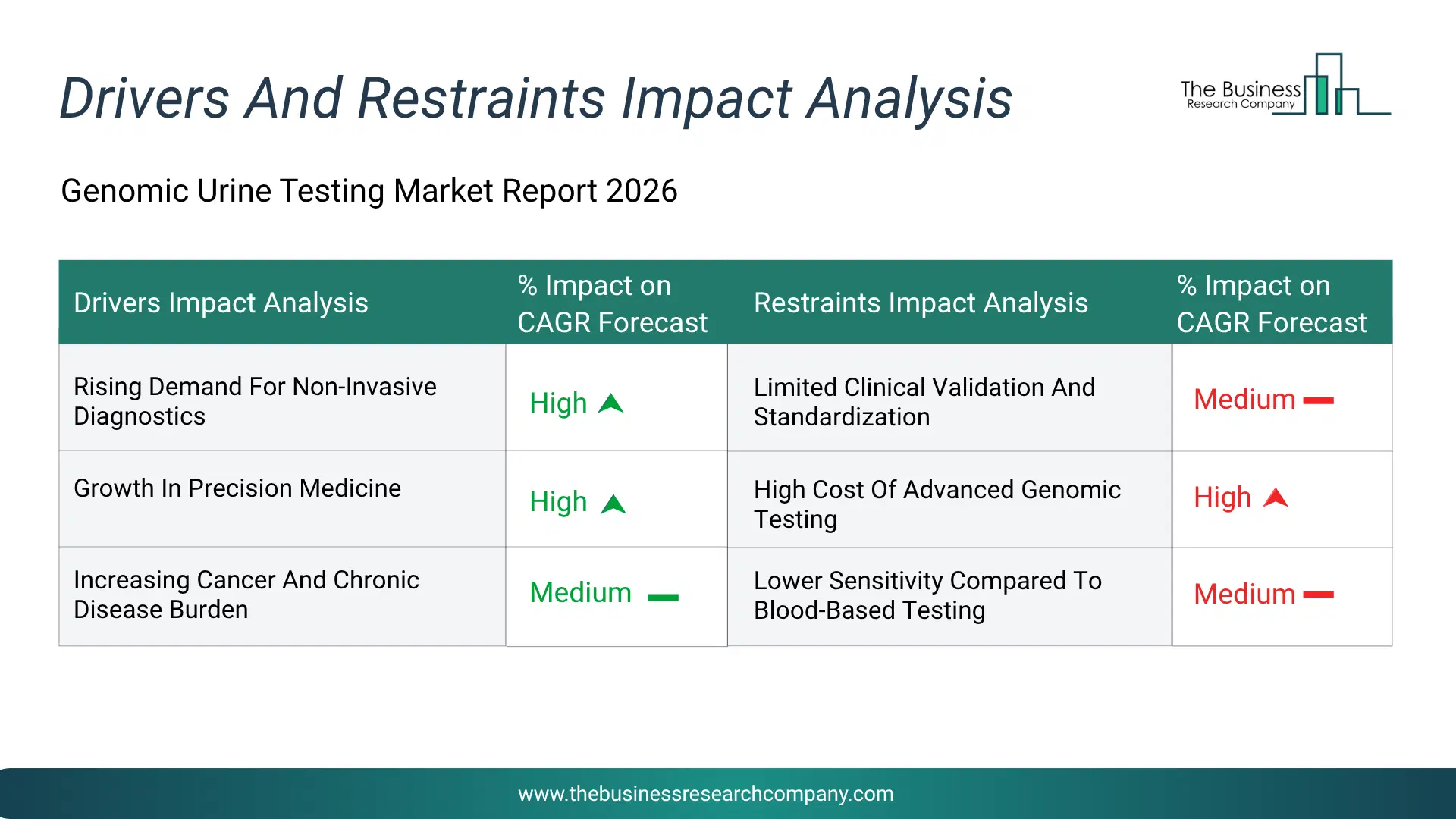
Infographic Chart Showing Key Market Drivers Analysis And Restraints For Genomic Urine Testing Market
The chart presents an impact analysis of key drivers and restraints, quantifying their relative influence on the market's growth rate and helping assess the balance between growth enablers and limiting factors. This chart offers a high-level perspective; the full report contains more detailed insights.
How Will The Drivers Impact Growth In The Global Genomic Urine Testing Market?
• Rising Demand For Non-Invasive Diagnostics (High) – During the forecast period, the rising demand for non-invasive diagnostics is expected to become a key growth driver for the genomic urine testing market by 2030. Healthcare providers and patients are increasingly shifting toward diagnostic solutions that eliminate the need for invasive procedures such as biopsies and blood draws. Urine-based genomic testing offers a convenient, pain-free, and repeatable method for disease detection and monitoring, improving patient compliance and enabling frequent testing. This approach is particularly beneficial in large-scale screening programs and long-term disease surveillance. As healthcare systems continue to emphasize patient-centric care models, adoption of non-invasive genomic testing solutions is accelerating. • Growth In Precision Medicine (High) – During the forecast period, the growth in precision medicine is expected to emerge as a major factor driving the expansion of the genomic urine testing market by 2030. Advances in genomics are enabling tailored treatment strategies based on individual genetic profiles, increasing the need for accurate and accessible diagnostic tools. Urine-based genomic tests support real-time monitoring of molecular changes, allowing clinicians to optimize therapies and improve treatment outcomes. The integration of genomic data into clinical decision-making is further strengthening the role of such testing methods in personalized healthcare delivery. • Increasing Cancer And Chronic Disease Burden (Medium) – During the forecast period, the increasing cancer and chronic disease burden is expected to act as a key growth catalyst for the genomic urine testing market by 2030. The rising incidence of conditions such as cancer, kidney disorders, and metabolic diseases is creating a strong need for early detection and continuous monitoring solutions. Genomic urine testing enables identification of disease-specific biomarkers at early stages, improving prognosis and treatment planning. Additionally, the growing aging population and lifestyle-related health conditions are further intensifying diagnostic demand. As disease prevalence continues to rise globally, adoption of advanced genomic testing solutions is expected to expand significantly.How Will The Restraints Impact Growth In The Global Genomic Urine Testing Market?
• Limited Clinical Validation And Standardization (High) – During the forecast period, limited clinical validation and standardization are restricting the growth of the genomic urine testing market. Lack of robust clinical evidence, inconsistent validation protocols, and absence of standardized testing guidelines are reducing confidence among healthcare providers and slowing adoption • High Cost Of Advanced Genomic Testing (High) – During the forecast period, high cost of advanced genomic testing is restricting the growth of the genomic urine testing market. Expensive sequencing technologies, specialized equipment, and laboratory processing costs are increasing financial burden on patients and providers, thereby limiting widespread utilization • Lower Sensitivity Compared To Blood-Based Testing (Medium) – During the forecast period, lower sensitivity compared to blood-based testing is restricting the growth of the genomic urine testing market. Reduced detection accuracy in certain conditions and variability in biomarker concentration are impacting diagnostic reliability and limiting clinical preferenceKey Players In The Global Genomic Urine Testing Market
Major companies operating in the genomic urine testing market are Eurofins Scientific SE, Thermo Fisher Scientific, Abbott Laboratories, Laboratory Corporation of America Holdings, Hologic Inc., Illumina Inc., Myriad Genetics Inc., ARUP Laboratories, MedGenome Labs Ltd, GENETWORx LLC, MDxHealth SA, Nucleix Ltd., Pacific Edge Ltd, Convergent Genomics Inc., LynxDx Inc., miR Scientific, RYND Biotech, UGenDx Ltd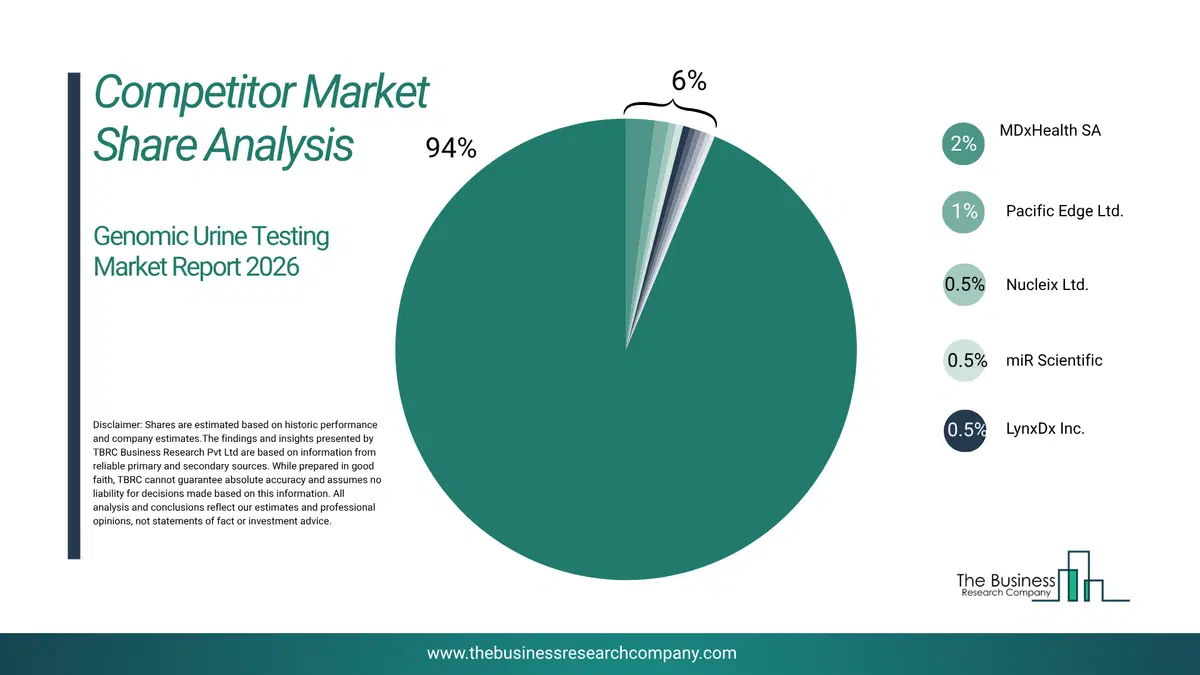
This chart is for illustrative purposes; the full report includes a detailed competitor analysis and comprehensive overview of the top 10 companies in the market.
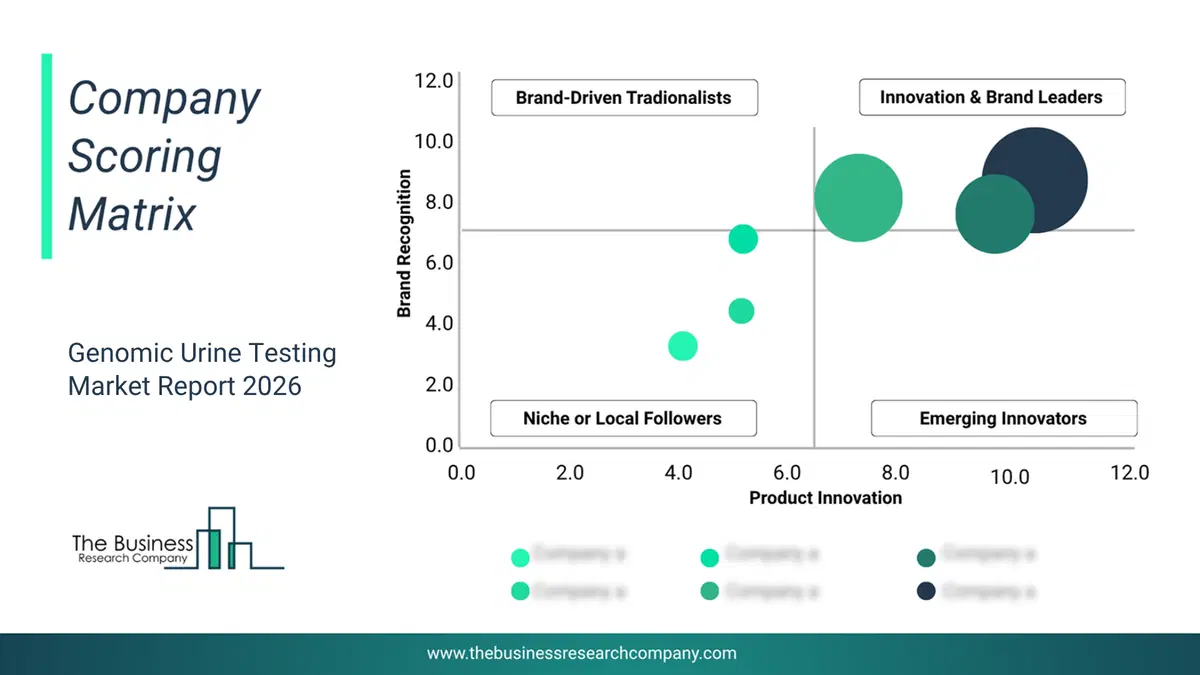
This chart maps companies by product innovation and brand strength, with bubble size indicating relative revenue, helping identify market leaders, challengers, and niche players. This is an illustrative chart; the full report provides a complete and accurate competitive analysis.
Global Genomic Urine Testing Market Trends and Insights
Major companies operating in the genomic urine testing market are focusing on developing innovative solutions such as next-generation sequencing to enhance the accuracy, sensitivity, and early detection capabilities of non-invasive diagnostic tests for various diseases. Next-generation sequencing (NGS) is an advanced DNA sequencing technology that allows for the rapid, accurate, and large-scale analysis of genetic material by simultaneously sequencing millions of deoxyribonucleic acid (DNA) fragments. For instance, in May 2023, Convergent Genomics Inc., a US-based biotechnology company, launched the genomic urine test UroAmp. This test uses next-generation deoxyribonucleic acid (DNA) sequencing to analyze mutations in 60 genes associated with bladder cancer, enabling early detection up to 12 years before clinical symptoms appear. It provides detailed genetic insights to guide diagnosis, treatment decisions, and recurrence monitoring, offering higher accuracy than traditional methods like cytology and cystoscopy.What Are Latest Mergers And Acquisitions In The Genomic Urine Testing Market?
In September 2024, A. Menarini Diagnostics, an Italy-based in-vitro diagnostics company, partnered with Nucleix Ltd. The partnership aims to commercialize and distribute Bladder EpiCheck, a non-invasive urine-based genomic test for the early detection and monitoring of bladder and upper tract urothelial cancers across Europe, enhancing access to advanced cancer diagnostics and aligning with European clinical guidelines. Nucleix Ltd. is an Israel-based molecular diagnostics company specializing in epigenetic and genomic testing technologies.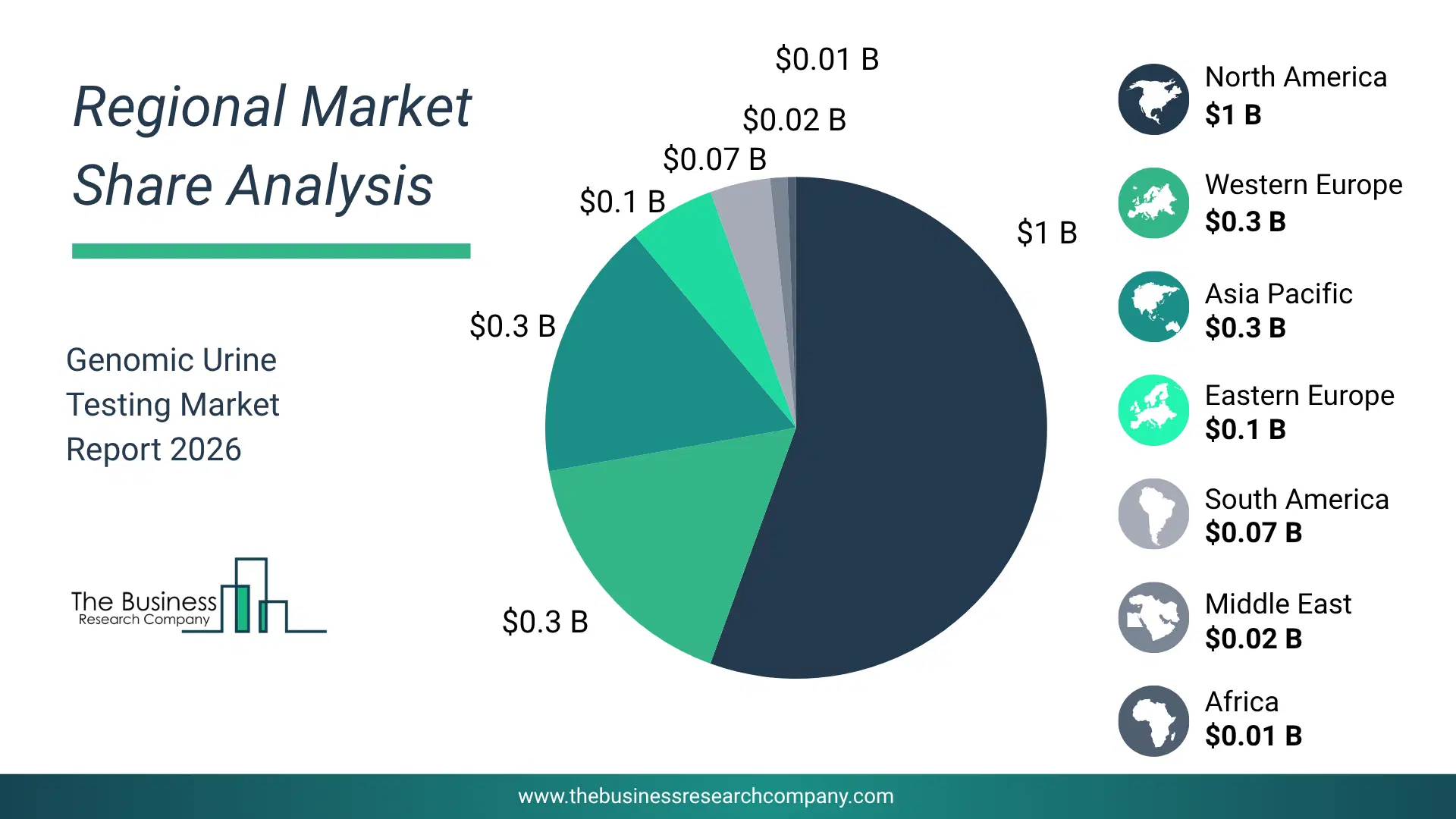
Regional Outlook
North America was the largest region in the genomic urine testing market in 2025. Asia-Pacific is expected to be the fastest-growing region in the forecast period. The regions covered in this market report are Asia-Pacific, South East Asia, Western Europe, Eastern Europe, North America, South America, Middle East, Africa. The countries covered in this market report are Australia, Brazil, China, France, Germany, India, Indonesia, Japan, Taiwan, Russia, South Korea, UK, USA, Canada, Italy, Spain.What Defines the Genomic Urine Testing Market?
The genomic urine testing market includes of revenues earned by entities by providing services such as early disease detection, genetic mutation analysis, cancer screening, infection diagnostics, personalized treatment planning, and monitoring of disease progression through non-invasive urine-based genomic profiling. The market value includes the value of related goods sold by the service provider or included within the service offering. Only goods and services traded between entities or sold to end consumers are included.How is Market Value Defined and Measured?
The market value is defined as the revenues that enterprises gain from the sale of goods and/or services within the specified market and geography through sales, grants, or donations in terms of the currency (in USD unless otherwise specified). The revenues for a specified geography are consumption values that are revenues generated by organizations in the specified geography within the market, irrespective of where they are produced. It does not include revenues from resales along the supply chain, either further along the supply chain or as part of other products.
This chart presents market attractiveness based on a quantitative evaluation of growth, competition, strategic alignment, and risk, offering a clear view of opportunity areas for decision-making. This chart is for illustrative purposes; the full report contains the complete analysis.

This chart highlights the Total Addressable Market (TAM) by estimating the maximum revenue opportunity using an assumption-driven approach, supporting strategic planning and opportunity sizing across markets. The chart is illustrative; the full report provides a more comprehensive analysis.
What Key Data and Analysis Are Included in the Genomic Urine Testing Market Report 2026?
The genomic urine testing market research report is one of a series of new reports from The Business Research Company that provides market statistics, including industry global market size, regional shares, competitors with the market share, detailed market segments, market trends and opportunities, and any further data you may need to thrive in the genomic urine testing industry. The market research report delivers a complete perspective of everything you need, with an in-depth analysis of the current and future state of the industry.Genomic Urine Testing Market Report Forecast Analysis
| Report Attribute | Details |
|---|---|
| Market Size Value In 2026 | $1.13 billion |
| Revenue Forecast In 2030 | $1.8 billion |
| Growth Rate | CAGR of 12.5% from 2026 to 2030 |
| Base Year For Estimation | 2025 |
| Actual Estimates/Historical Data | 2020-2025 |
| Forecast Period | 2026 - 2030 |
| Market Representation | Revenue in USD Billion and CAGR from 2026 to 2030 |
| Segments Covered | Testing Type, Distribution Channel, Application, End-User |
| Regional Scope | Asia-Pacific, Western Europe, Eastern Europe, North America, South America, Middle East, Africa |
| Country Scope | The countries covered in the report are Australia, Brazil, China, France, Germany, India, Indonesia, Japan, Taiwan, Russia, South Korea, UK, USA, Canada, Italy, Spain. |
| Key Companies Profiled | Eurofins Scientific SE, Thermo Fisher Scientific, Abbott Laboratories, Laboratory Corporation of America Holdings, Hologic Inc., Illumina Inc., Myriad Genetics Inc., ARUP Laboratories, MedGenome Labs Ltd, GENETWORx LLC, MDxHealth SA, Nucleix Ltd., Pacific Edge Ltd, Convergent Genomics Inc., LynxDx Inc., miR Scientific, RYND Biotech, UGenDx Ltd |
| Customization Scope | Request for Customization |
| Pricing And Purchase Options | Explore Purchase Options |