

Urine Sediment Testing Market Report 2026
Global Outlook – By Product Type (Fully Automatic Urine Sediment Analyzer, Semi-Automatic Urine Sediment Analyzer), By Application (Urinary Tract Infections, Diabetes, Kidney Diseases, Hypertension, Other Applications), By End User (Hospital, Diagnostics Centers, Clinics, Ambulatory Surgical Centers, Educational Institutes, Other End Users) - Market Size, Trends, Strategies, and Forecast to 2030
Urine Sediment Testing Market Overview
• Urine Sediment Testing market size has reached to $2034.91 billion in 2025 • Expected to grow to $3044.39 billion in 2030 at a compound annual growth rate (CAGR) of 8.4% • Growth Driver: Rising Elderly Population Fuels Expansion In Urine Sedimentation Testing Market • Market Trend: Automated Urinalysis System For Urine Sediment Testing • North America was the largest region in 2025.What Is Covered Under Urine Sediment Testing Market?
Urine sediment testing refers to a laparoscopic test used to examine the physical components of urine. A visual evaluation of the urine, chemical analysis, and microscopic investigation of the urinary sediment are all part of qualitative urinalysis. The findings aid in prognosis and treatment planning. The main types of products for urine sediment testing are fully automatic urine sediment analyzers and semi-automatic urine sediment analyzers. A fully automatic urine sediment analyzer refers to an analyzer that can store clinical data, dry chemical index, microscopic examination results, and other expansion projects. They are used for various applications to find out urinary tract infections, diabetes, kidney diseases, hypertension, and others by end users including hospitals, diagnostics centers, clinics, ambulatory surgical centers, educational institutes, and others.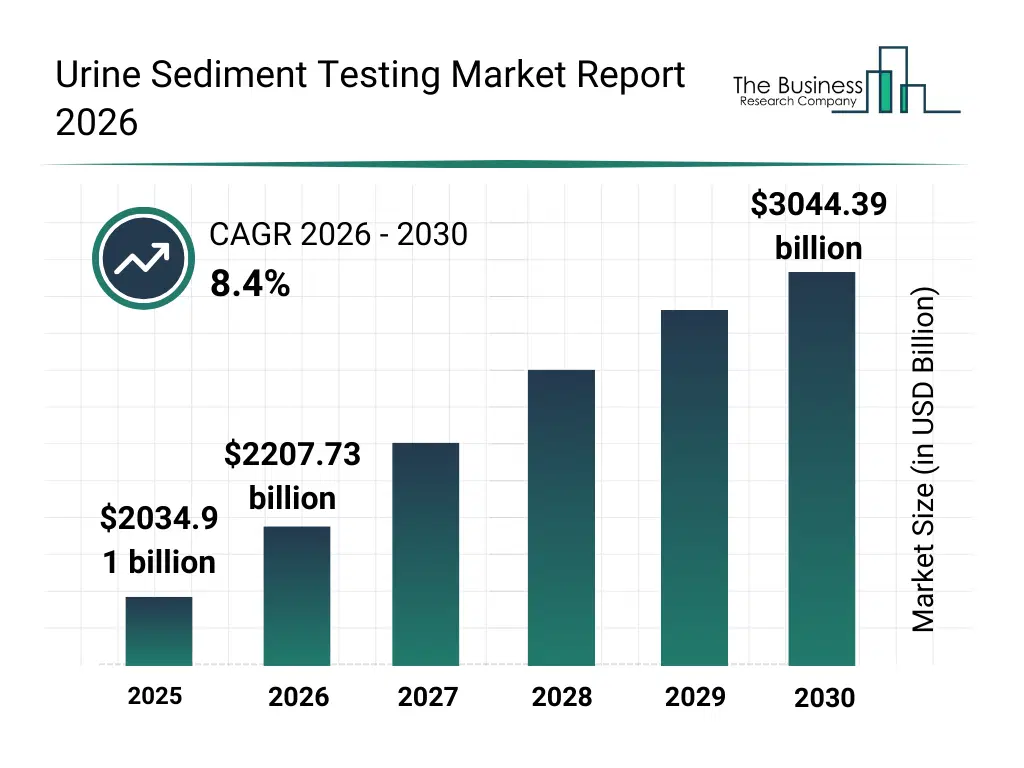
What Is The Urine Sediment Testing Market Size and Share 2026?
The urine sediment testing market size has grown strongly in recent years. It will grow from $2034.91 billion in 2025 to $2207.73 billion in 2026 at a compound annual growth rate (CAGR) of 8.5%. The growth in the historic period can be attributed to increasing prevalence of urinary tract disorders, expansion of clinical diagnostic laboratories, rising demand for routine urinalysis, growth in hospital diagnostic capabilities, adoption of semi-automated testing systems.What Is The Urine Sediment Testing Market Growth Forecast?
The urine sediment testing market size is expected to see strong growth in the next few years. It will grow to $3044.39 billion in 2030 at a compound annual growth rate (CAGR) of 8.4%. The growth in the forecast period can be attributed to increasing integration of ai-based diagnostics, rising investments in laboratory automation, growing demand for rapid diagnostic turnaround, expansion of diagnostic testing in outpatient settings, increasing focus on precision diagnostics. Major trends in the forecast period include increasing adoption of fully automated urine sediment analyzers, growing use of AI-assisted image analysis, rising demand for high-throughput diagnostic systems, expansion of laboratory automation solutions, enhanced focus on diagnostic accuracy.
Global Urine Sediment Testing Market Segmentation
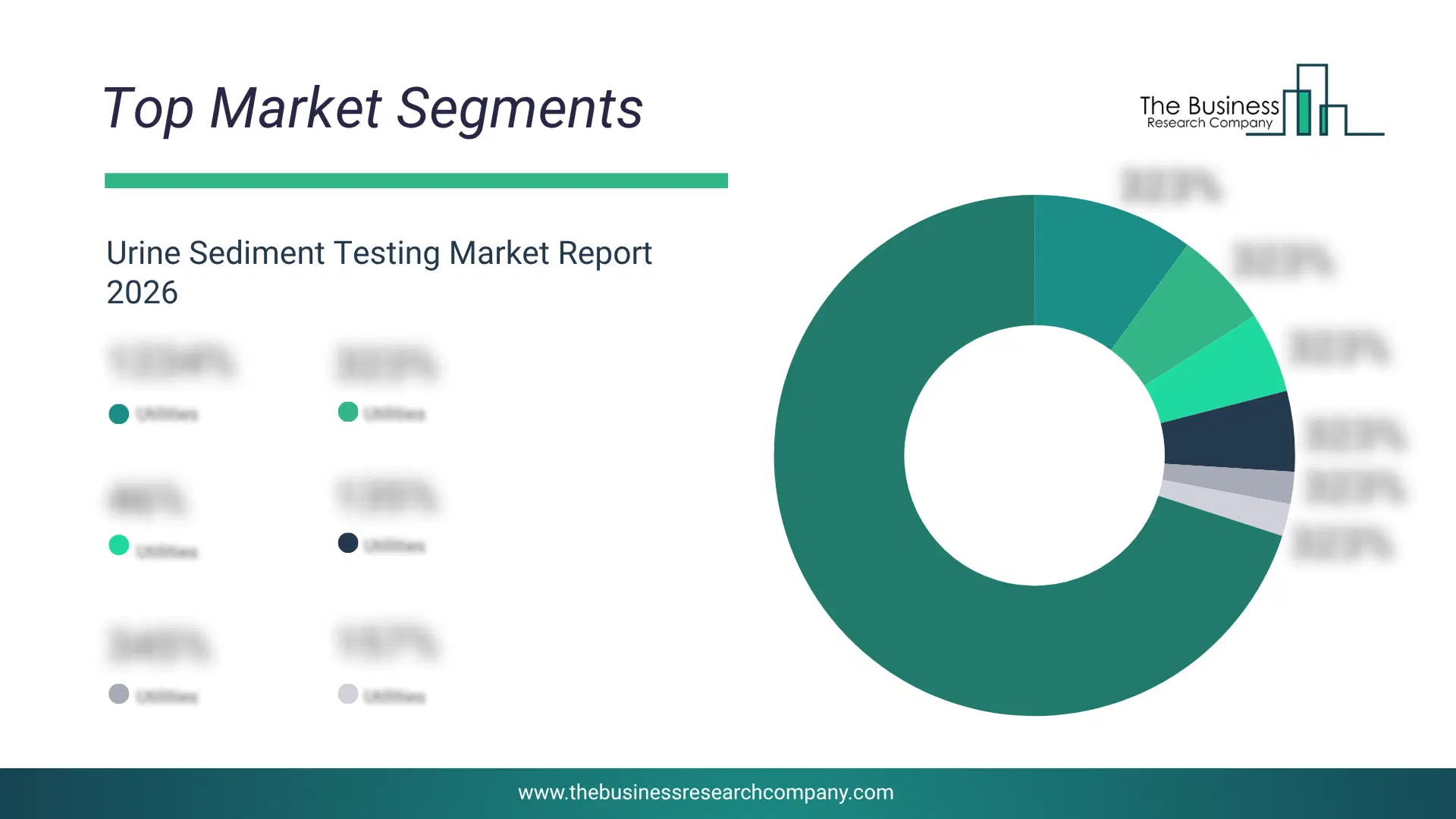
1) By Product Type: Fully Automatic Urine Sediment Analyzer, Semi-Automatic Urine Sediment Analyzer 2) By Application: Urinary Tract Infections, Diabetes, Kidney Diseases, Hypertension, Other Applications 3) By End User: Hospital, Diagnostics Centers, Clinics, Ambulatory Surgical Centers, Educational Institutes, Other End Users Subsegments: 1) By Fully Automatic Urine Sediment Analyzer: High-Throughput Analyzers, Compact Analyzers 2) By Semi-Automatic Urine Sediment Analyzer: Manual Microscopy Systems, Semi-Automated SystemsWhat Are The Drivers Of The Urine Sediment Testing Market?
The increasing elderly population is expected to propel the growth of the urine sedimentation testing market going forward. The senior population refers to the person, aged 60 and over. The elderly population gets benefits from urine sediment testing by identifying renal illness and giving information on aggravating factors, prognosis, pathogenic bacteria, and antibiotic vulnerability. For instance, in October 2024, according to the World Health Organization, a Switzerland-based health agency, by 2030, one in six individuals worldwide will be 60 years of age or older. This number is expected to reach 2.1 billion elderly people by 2050 Therefore, the increasing elderly population is driving the growth of the urine sedimentation testing market. The growing prevalence of chronic kidney diseases is expected to propel the growth of the urine sediment testing market going forward. Chronic kidney disease is a condition marked by the kidney’s inability to filter blood as effectively as they should due to gradual damage and loss of function. Urine sediment testing is a simple and non-invasive test that can provide valuable information about the health of the kidneys that can be used to diagnose and monitor chronic kidney disease (CKD). For instance, in June 2023, according to the report published by Kidney Research UK, a UK-based non-profit organization, approximately 7.2 million people in the UK are living with chronic kidney disease, representing over 10% of the population. Of these, 3.25 million are in the advanced stages of the disease, while an additional 3.9 million are in the early stages. By 2033, the number of individuals affected by chronic kidney disease is projected to rise to 7.61 million. Therefore, the growing prevalence of chronic kidney diseases is driving the growth of the urine sediment testing industry.Key Players In The Global Urine Sediment Testing Market
Major companies operating in the urine sediment testing market are Abbott Laboratories, Siemens AG, F Hoffmann-La Roche Ltd, Sysmex Corporation, Beckman Coulter Inc, ARKRAY Inc, Mindray Medical International Limited, URIT Medical Electronic Co Ltd, Analyticon Biotechnologies AG, DIRUI Industrial Co Ltd, HUMAN Gesellschaft für Biochemica und Diagnostica GmbH, Menarini Diagnostics, Shenzhen Mindray Bio-Medical Electronics Co Ltd, URIT Medical Electronic Group Co Ltd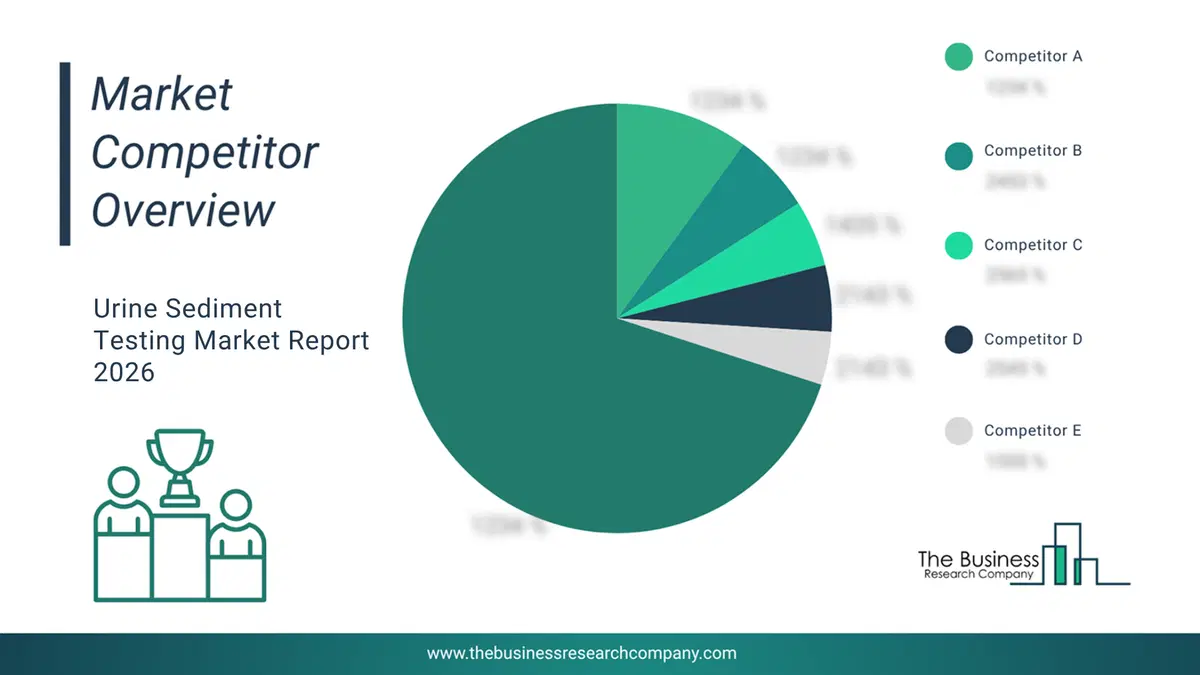
This chart is for illustrative purposes; the full report includes a detailed competitor analysis and comprehensive overview of the top 10 companies in the market.
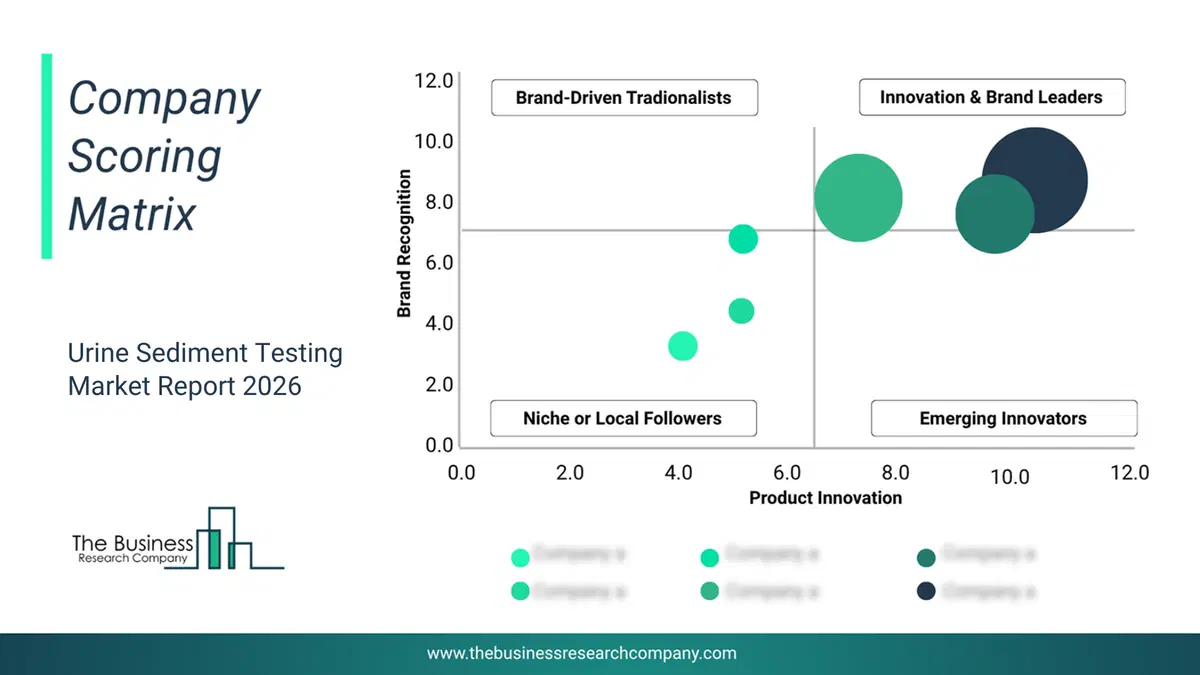
This chart maps companies by product innovation and brand strength, with bubble size indicating relative revenue, helping identify market leaders, challengers, and niche players. This is an illustrative chart; the full report provides a complete and accurate competitive analysis.
Global Urine Sediment Testing Market Trends and Insights
Major companies operating in the urine sediment testing market are focused on developing automated urinalysis systems to gain a competitive edge in the market. A urinalysis solution is a liquid used to test urine for various substances, such as leukocytes (white blood cells), nitrites, protein, and glucose. For instance, in October 2023, Beckman Coulter Inc., a US-based manufacturer of complex biomedical testing, launched DxU Iris Workcell. The DxU Iris Workcell is a fully automated urinalysis system that streamlines workflow and reduces manual reviews to 4%. The DxU Iris Workcell uses proprietary Digital Flow Morphology technology with Auto-Particle Recognition (APR) software to isolate, identify, and characterize urine particles on the screen, virtually eliminating manual microscopy. The DxU Iris Workcell is also designed to be easy to use and maintain with a user-friendly interface that requires minimal training to operate.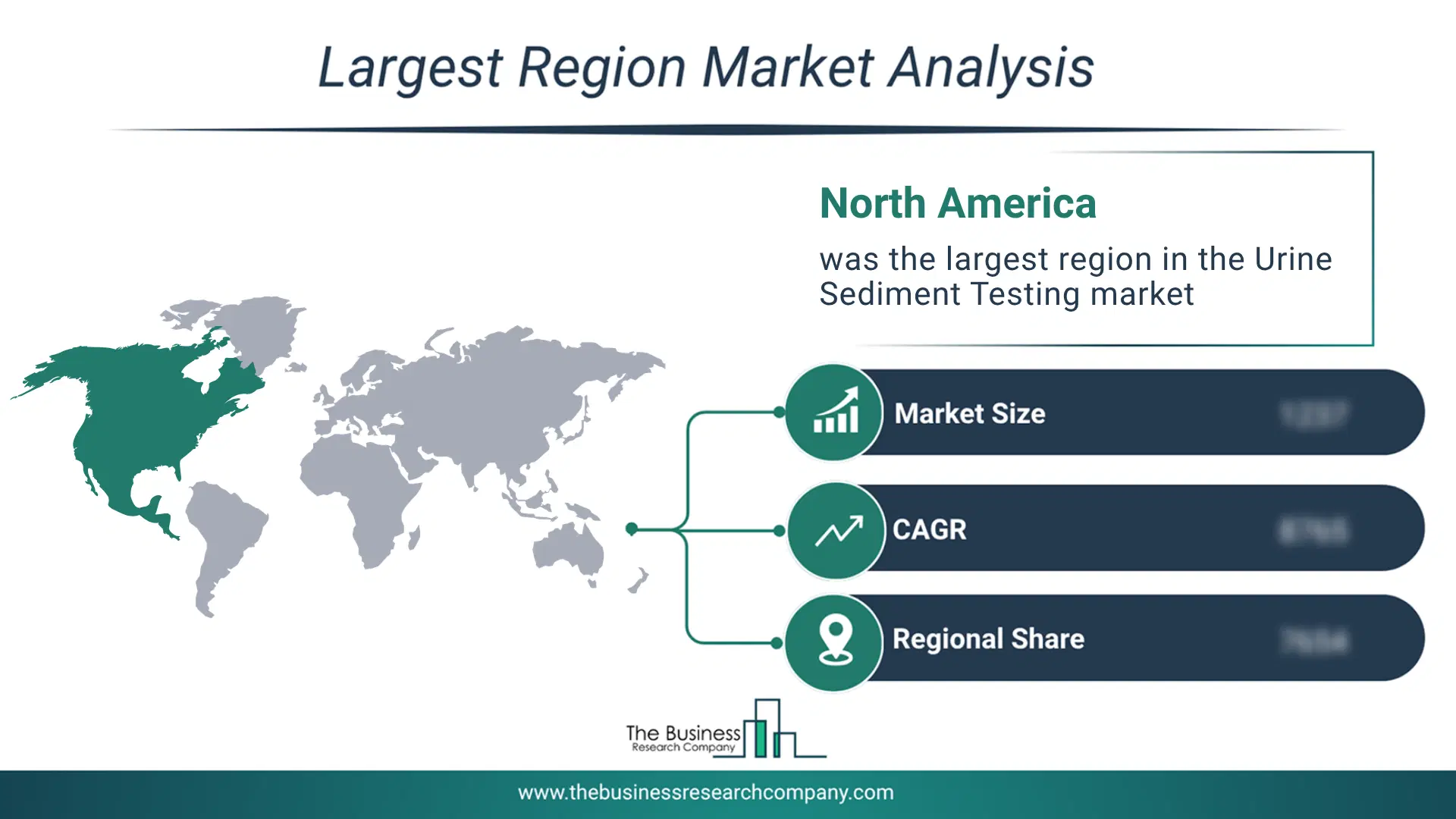
Regional Outlook
North America was the largest region in the urine sediment testing market in 2025. The regions covered in this market report are Asia-Pacific, South East Asia, Western Europe, Eastern Europe, North America, South America, Middle East, Africa. The countries covered in this market report are Australia, Brazil, China, France, Germany, India, Indonesia, Japan, Taiwan, Russia, South Korea, UK, USA, Canada, Italy, Spain.What Defines the Urine Sediment Testing Market?
The urine sediment testing market consists of sales of tubes, slides, urine sediment analyzer, and analytical kits. Values in this market are ‘factory gate’ values, that is the value of goods sold by the manufacturers or creators of the goods, whether to other entities (including downstream manufacturers, wholesalers, distributors, and retailers) or directly to end customers. The value of goods in this market includes related services sold by the creators of the goods.How is Market Value Defined and Measured?
The market value is defined as the revenues that enterprises gain from the sale of goods and/or services within the specified market and geography through sales, grants, or donations in terms of the currency (in USD unless otherwise specified). The revenues for a specified geography are consumption values that are revenues generated by organizations in the specified geography within the market, irrespective of where they are produced. It does not include revenues from resales along the supply chain, either further along the supply chain or as part of other products.
This chart presents market attractiveness based on a quantitative evaluation of growth, competition, strategic alignment, and risk, offering a clear view of opportunity areas for decision-making. This chart is for illustrative purposes; the full report contains the complete analysis.

This chart highlights the Total Addressable Market (TAM) by estimating the maximum revenue opportunity using an assumption-driven approach, supporting strategic planning and opportunity sizing across markets. The chart is illustrative; the full report provides a more comprehensive analysis.
What Key Data and Analysis Are Included in the Urine Sediment Testing Market Report 2026?
The urine sediment testing market research report is one of a series of new reports from The Business Research Company that provides market statistics, including industry global market size, regional shares, competitors with the market share, detailed market segments, market trends and opportunities, and any further data you may need to thrive in the urine sediment testing industry. The market research report delivers a complete perspective of everything you need, with an in-depth analysis of the current and future state of the industry.Urine Sediment Testing Market Report Forecast Analysis
| Report Attribute | Details |
|---|---|
| Market Size Value In 2026 | $2207.73 billion |
| Revenue Forecast In 2030 | $3044.39 billion |
| Growth Rate | CAGR of 8.4% from 2026 to 2030 |
| Base Year For Estimation | 2025 |
| Actual Estimates/Historical Data | 2020-2025 |
| Forecast Period | 2026 - 2030 |
| Market Representation | Revenue in USD Billion and CAGR from 2026 to 2030 |
| Segments Covered | Product Type, Application, End User |
| Regional Scope | Asia-Pacific, Western Europe, Eastern Europe, North America, South America, Middle East, Africa |
| Country Scope | The countries covered in the report are Australia, Brazil, China, France, Germany, India, Indonesia, Japan, Taiwan, Russia, South Korea, UK, USA, Canada, Italy, Spain |
| Key Companies Profiled | Abbott Laboratories, Siemens AG, F Hoffmann-La Roche Ltd, Sysmex Corporation, Beckman Coulter Inc, ARKRAY Inc, Mindray Medical International Limited, URIT Medical Electronic Co Ltd, Analyticon Biotechnologies AG, DIRUI Industrial Co Ltd, HUMAN Gesellschaft für Biochemica und Diagnostica GmbH, Menarini Diagnostics, Shenzhen Mindray Bio-Medical Electronics Co Ltd, URIT Medical Electronic Group Co Ltd |
| Customization Scope | Request for Customization |
| Pricing And Purchase Options | Explore Purchase Options |