
Gestational Diabetes Market Report 2026
Global Outlook – By Type (Type A1, Type A2, Other Types), By Treatment (Monitoring, Drug Treatment, Non-pharmacological Treatment), By Administration (Oral, Intravenous, Other Administrations), By End User (Hospitals, Clinics, Home Care Settings, Diagnostic Centers) - Market Size, Trends, Strategies, and Forecast to 2030
Gestational Diabetes Market Overview
• Gestational Diabetes market size has reached to $9.11 billion in 2025 • Expected to grow to $13.85 billion in 2030 at a compound annual growth rate (CAGR) of 8.7% • Growth Driver: Impact Of Rising Obesity Rates On Healthcare Demand • Market Trend: Advancements In Diagnostic Solutions For Early Detection Of Health Conditions • North America was the largest region in 2025 and Asia-Pacific is the fastest growing region.What Is Covered Under Gestational Diabetes Market?
Gestational diabetes is a type of diabetes that develops during pregnancy when the body cannot produce enough insulin to regulate blood sugar levels effectively. This condition typically occurs in the second or third trimester and can affect women who have no prior history of diabetes. Gestational diabetes poses risks to both the mother and baby, including high birth weight, preterm birth, and potential development of type 2 diabetes later in life for both. It is often managed through dietary adjustments, exercise, blood sugar monitoring, and sometimes insulin therapy to ensure a healthy pregnancy and delivery. The main types of gestational diabetes are type A1, type A2, and other types. Gestational diabetes Type A1 refers to a form of diabetes that develops during pregnancy. It is classified under gestational diabetes mellitus (GDM), which occurs when the body cannot produce enough insulin to meet the increased needs during pregnancy. The treatment involved is monitoring, drug treatment, and non-pharmacological treatment, which are taken orally, intravenously, and in other administrations. Hospitals, clinics, home care settings, and diagnostic centers use them.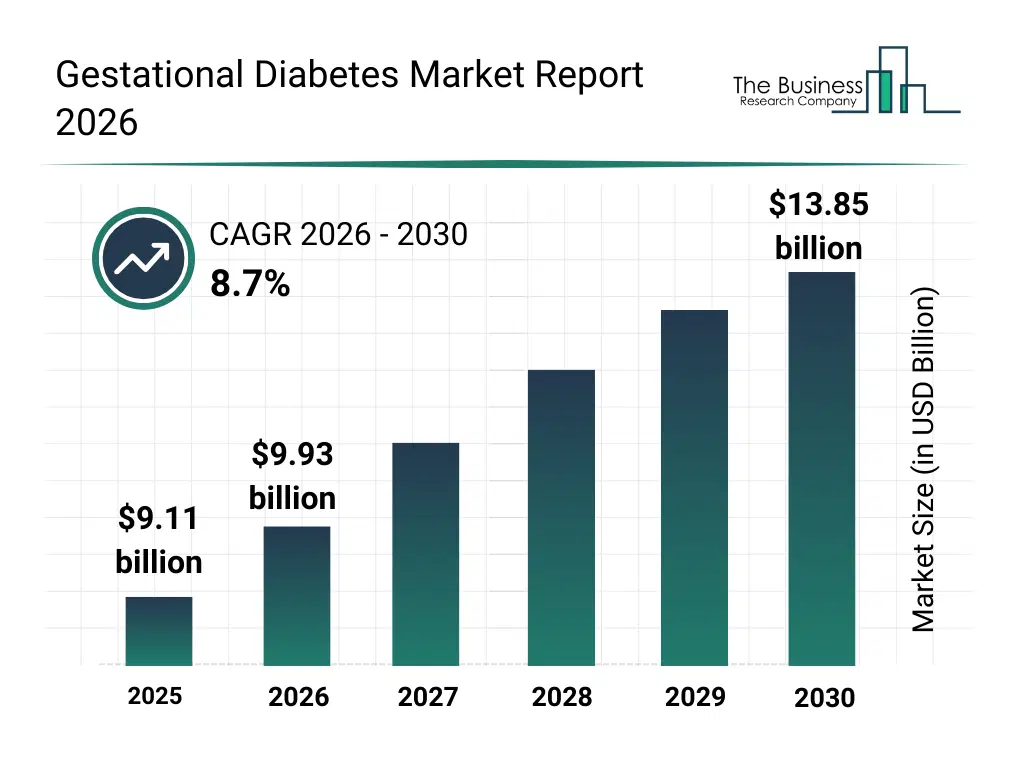
What Is The Gestational Diabetes Market Size and Share 2026?
The gestational diabetes market size has grown strongly in recent years. It will grow from $9.11 billion in 2025 to $9.93 billion in 2026 at a compound annual growth rate (CAGR) of 8.9%. The growth in the historic period can be attributed to increasing obesity rates, higher maternal age pregnancies, early diabetes screening programs, growth in prenatal care services, awareness of pregnancy complications.What Is The Gestational Diabetes Market Growth Forecast?
The gestational diabetes market size is expected to see strong growth in the next few years. It will grow to $13.85 billion in 2030 at a compound annual growth rate (CAGR) of 8.7%. The growth in the forecast period can be attributed to rising gestational diabetes prevalence, expansion of digital health monitoring, improved prenatal diagnostics, focus on preventive maternal care, healthcare policy support. Major trends in the forecast period include rising adoption of blood glucose monitoring, increased use of insulin therapy during pregnancy, growing focus on lifestyle-based disease management, expansion of prenatal screening programs, improved maternal health awareness.
Global Gestational Diabetes Market Segmentation
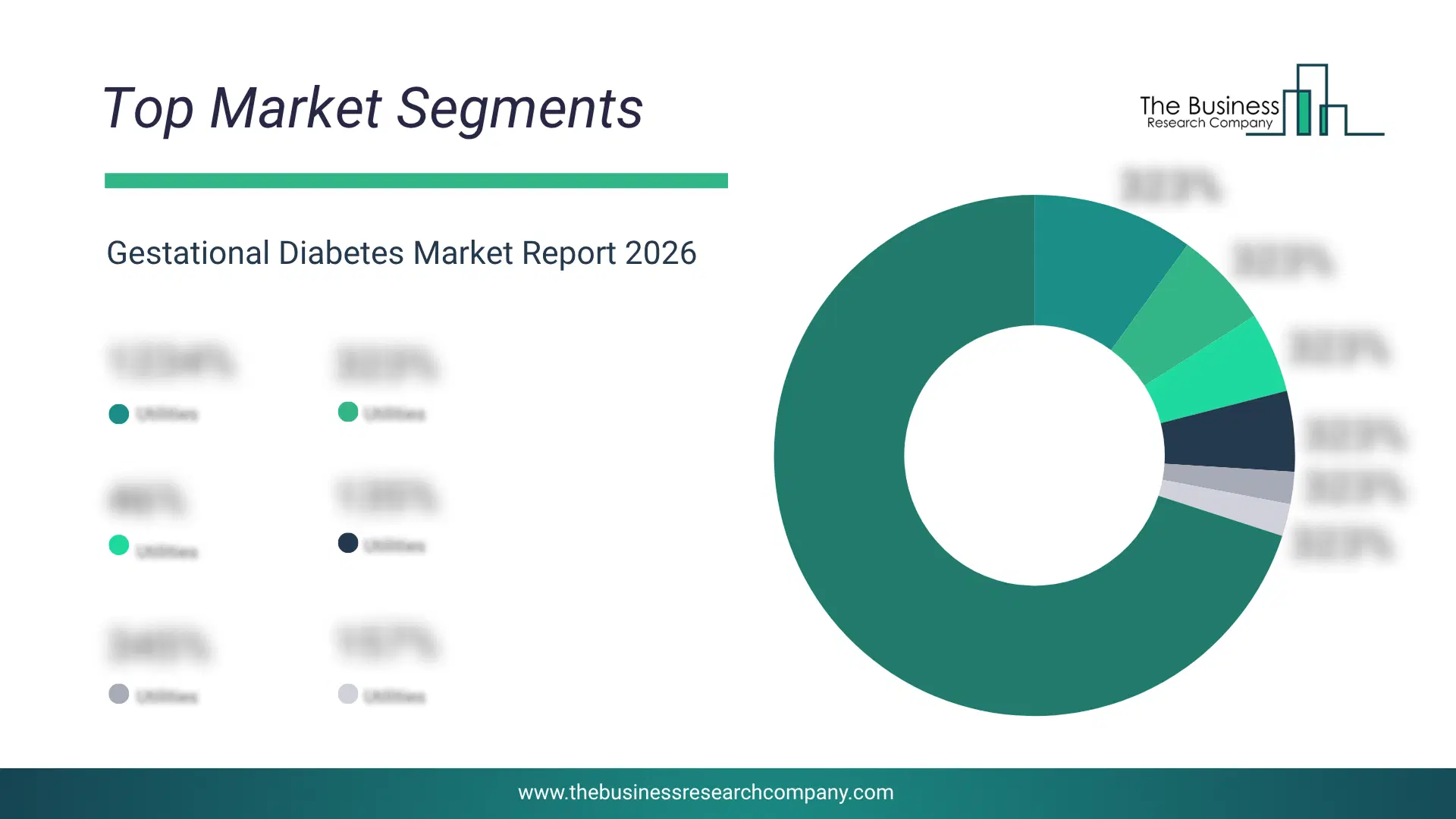
1) By Type: Type A1, Type A2, Other Types 2) By Treatment: Monitoring, Drug Treatment, Non-pharmacological Treatment 3) By Administration: Oral, Intravenous, Other Administrations 4) By End User: Hospitals, Clinics, Home Care Settings, Diagnostic Centers Subsegments: 1) By Type A1: Diet-Controlled Gestational Diabetes, Exercise-Controlled Gestational Diabetes 2) By Type A2: Insulin-Controlled Gestational Diabetes, Oral Medication-Controlled Gestational Diabetes 3) By Other Types: Pre-Gestational Diabetes, Gestational Diabetes With ComplicationsWhat Is The Driver Of The Gestational Diabetes Market?
The increasing obese population is expected to propel the growth of the gestational diabetes market going forward. The obese population is individuals whose body mass index (BMI) is 30 or higher, indicating excessive body fat that may pose significant health risks. The obese population is rising due to a combination of sedentary lifestyles, increased consumption of high-calorie, processed foods, genetic predispositions, and limited access to healthy food and exercise options. Gestational diabetes treatment is crucial for the obese population because their higher risk of insulin resistance and excessive weight gain during pregnancy can lead to complications for both mother and baby if left unmanaged. For instance, in May 2025, according to the Office for Health Improvement and Disparities, a UK-based government body, from 2023 to 2024, an estimated 64.5% of adults aged 18 and over in England were overweight or living with obesity, up from 64.0% in 2022 to 2023. Therefore, the increasing obese population is driving the gestational diabetes industry.Key Players In The Global Gestational Diabetes Market
Major companies operating in the gestational diabetes market are Sanofi S.A., Abbott Laboratories, Eli Lilly and Company, Novo Nordisk A/S, Becton Dickinson and Company, Dexcom Inc, Biocon Limited, Ascensia Diabetes Care Holdings AG, Roche Diabetes Care, Medtronic plc, Insulet Corporation, Tandem Diabetes Care Inc, Ypsomed Holding AG, Beta Bionics Inc, Bigfoot Biomedical Inc, Glooko Inc, Philips Healthcare, Sun Pharmaceutical Industries Ltd, Takeda Pharmaceutical Company Ltd, Pfizer Inc, Novartis AG, Adocia SA, Daiichi Sankyo Company Ltd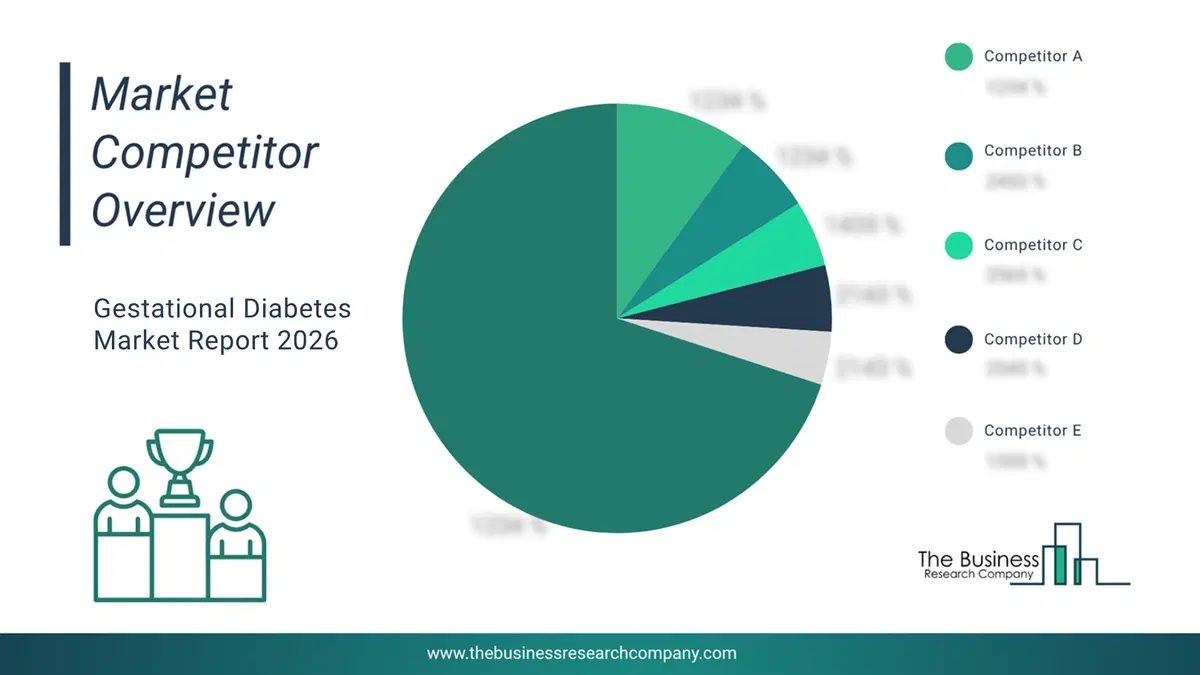
This chart is for illustrative purposes; the full report includes a detailed competitor analysis and comprehensive overview of the top 10 companies in the market.
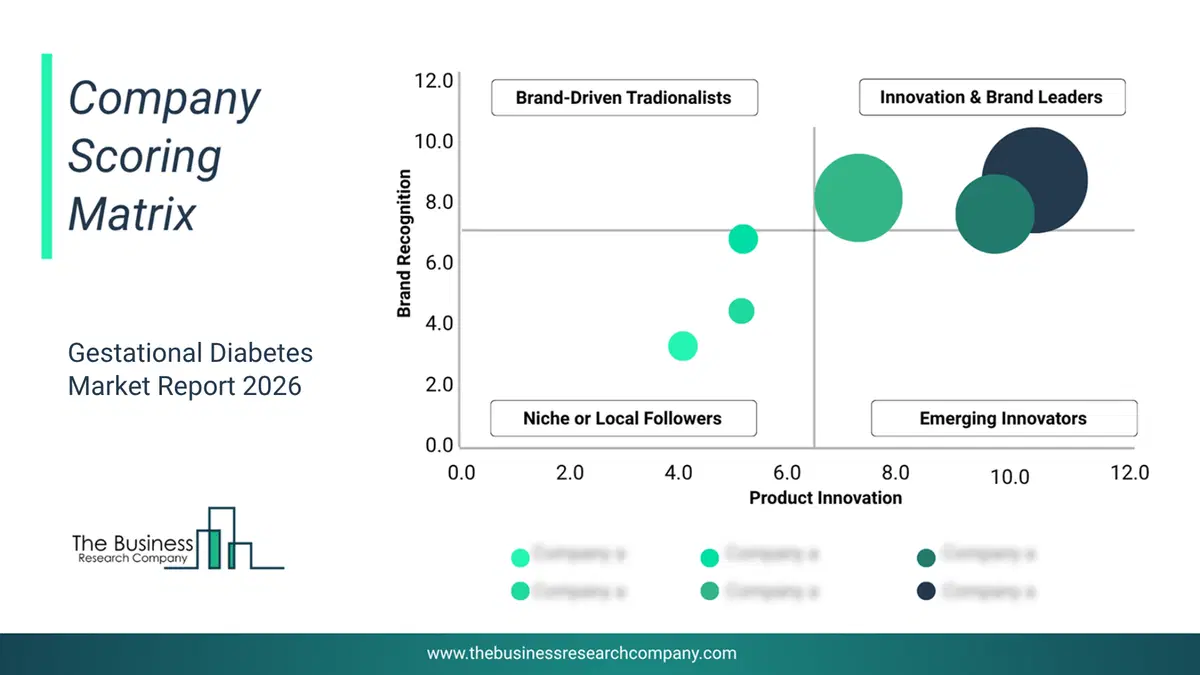
This chart maps companies by product innovation and brand strength, with bubble size indicating relative revenue, helping identify market leaders, challengers, and niche players. This is an illustrative chart; the full report provides a complete and accurate competitive analysis.
Global Gestational Diabetes Market Trends and Insights
Major companies operating in the gestational diabetes market are focusing on developing technologically advanced products, such as diagnostic kits for gestational diabetes, to provide quick, accurate, and convenient methods for early detection. A diagnostic kit for gestational diabetes is a medical tool used to measure blood glucose levels and identify abnormal glucose tolerance in pregnant women, aiding in the early detection and management of the condition. For instance, in August 2024, DirectSens GmbH, an Austria-based biotechnology company, launched the XpressGT RUO kit, a diagnostic kit designed to diagnose gestational diabetes, endometriosis, insulin resistance, and liver disease. It accurately measures 2-hydroxybutyrate (2-HB) levels found in venous blood, naturally produced by the liver during its normal functions. Elevated 2-HB levels are associated with increased reductive stress, linked to various endocrine and obesity-related disorders, including insulin resistance. The kit is compatible with any available clinical analyzer and delivers results in just 8 minutes, offering a fast and efficient diagnostic solution.What Are Latest Mergers And Acquisitions In The Gestational Diabetes Market?
In April 2024, Digostics, a UK-based diabetes home-testing provider, partnered with AgaMatrix Europe to advance gestational diabetes screening. The partnership allows AgaMatrix to exclusively distribute Digostics' home oral glucose tolerance testing (OGTT) service, GTT@home, to the UK National Health Service (NHS), leveraging its established relationships and customer base within NHS maternity services, along with its unmatched expertise in gestational diabetes monitoring, to accelerate the product's introduction in the UK. AgaMatrix Europe is a UK-based manufacturer of blood glucose monitoring solutions.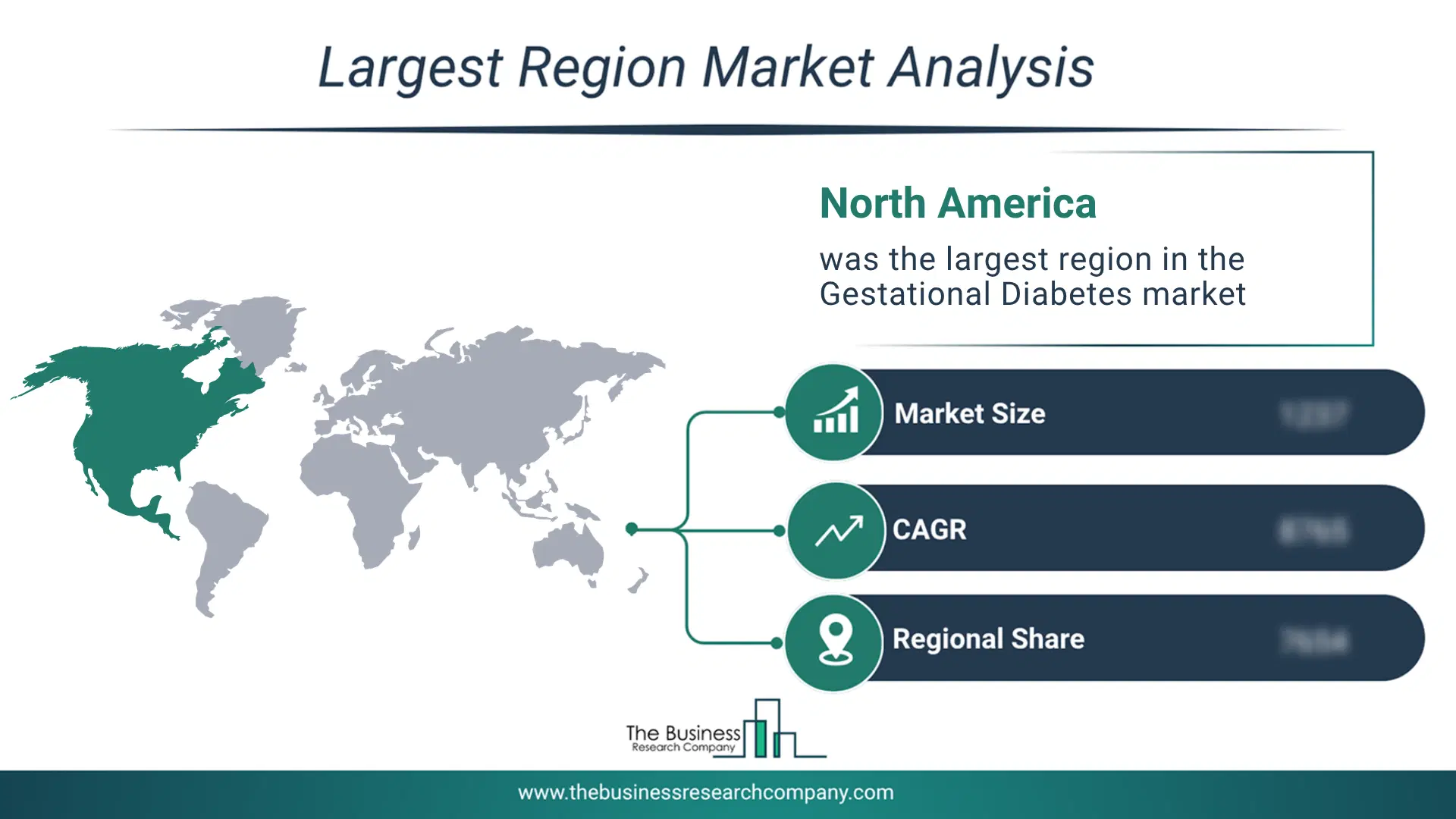
Regional Outlook
North America was the largest region in the gestational diabetes market in 2025. Asia-Pacific is expected to be the fastest-growing region in the forecast period. The regions covered in this market report are Asia-Pacific, South East Asia, Western Europe, Eastern Europe, North America, South America, Middle East, Africa. The countries covered in this market report are Australia, Brazil, China, France, Germany, India, Indonesia, Japan, Taiwan, Russia, South Korea, UK, USA, Canada, Italy, Spain.What Defines the Gestational Diabetes Market?
The gestational diabetes market consists of revenues earned by entities by providing services such as nutritional counseling, medication management, telemedicine services, lifestyle and exercise guidance. The market value includes the value of related goods sold by the service provider or included within the service offering. The gestational diabetes market also includes sales of metformin, glyburide, and insulin. Values in this market are ‘factory gate’ values, that is the value of goods sold by the manufacturers or creators of the goods, whether to other entities (including downstream manufacturers, wholesalers, distributors and retailers) or directly to end customers. The value of goods in this market includes related services sold by the creators of the goods.How is Market Value Defined and Measured?
The market value is defined as the revenues that enterprises gain from the sale of goods and/or services within the specified market and geography through sales, grants, or donations in terms of the currency (in USD unless otherwise specified). The revenues for a specified geography are consumption values that are revenues generated by organizations in the specified geography within the market, irrespective of where they are produced. It does not include revenues from resales along the supply chain, either further along the supply chain or as part of other products.
This chart presents market attractiveness based on a quantitative evaluation of growth, competition, strategic alignment, and risk, offering a clear view of opportunity areas for decision-making. This chart is for illustrative purposes; the full report contains the complete analysis.

This chart highlights the Total Addressable Market (TAM) by estimating the maximum revenue opportunity using an assumption-driven approach, supporting strategic planning and opportunity sizing across markets. The chart is illustrative; the full report provides a more comprehensive analysis.
What Key Data and Analysis Are Included in the Gestational Diabetes Market Report 2026?
The gestational diabetes market research report is one of a series of new reports from The Business Research Company that provides market statistics, including industry global market size, regional shares, competitors with the market share, detailed market segments, market trends and opportunities, and any further data you may need to thrive in the gestational diabetes industry. The market research report delivers a complete perspective of everything you need, with an in-depth analysis of the current and future state of the industry.Gestational Diabetes Market Report Forecast Analysis
| Report Attribute | Details |
|---|---|
| Market Size Value In 2026 | $9.93 billion |
| Revenue Forecast In 2030 | $13.85 billion |
| Growth Rate | CAGR of 8.7% from 2026 to 2030 |
| Base Year For Estimation | 2025 |
| Actual Estimates/Historical Data | 2020-2025 |
| Forecast Period | 2026 - 2030 |
| Market Representation | Revenue in USD Billion and CAGR from 2026 to 2030 |
| Segments Covered | Type, Treatment, Administration, End User |
| Regional Scope | Asia-Pacific, Western Europe, Eastern Europe, North America, South America, Middle East, Africa |
| Country Scope | The countries covered in the report are Australia, Brazil, China, France, Germany, India, Indonesia, Japan, Taiwan, Russia, South Korea, UK, USA, Canada, Italy, Spain |
| Key Companies Profiled | Sanofi S.A., Abbott Laboratories, Eli Lilly and Company, Novo Nordisk A/S, Becton Dickinson and Company, Dexcom Inc, Biocon Limited, Ascensia Diabetes Care Holdings AG, Roche Diabetes Care, Medtronic plc, Insulet Corporation, Tandem Diabetes Care Inc, Ypsomed Holding AG, Beta Bionics Inc, Bigfoot Biomedical Inc, Glooko Inc, Philips Healthcare, Sun Pharmaceutical Industries Ltd, Takeda Pharmaceutical Company Ltd, Pfizer Inc, Novartis AG, Adocia SA, Daiichi Sankyo Company Ltd |
| Customization Scope | Request for Customization |
| Pricing And Purchase Options | Explore Purchase Options |