
Transaction Banking Market Report 2026
Global Outlook – By Product Type (Cash Management, Trade Finance, Payments And Collections, Other Product Types), By Deployment Type (On-Premise, Cloud-Based), By Service Channel (Online, Offline), By Application (Corporate, Financial Institutions, Small And Medium-Sized Enterprises (SMEs), Other Applications), By End-User (Banking, Financial Services, And Insurance (BFSI), Manufacturing, Retail, Healthcare, Information Technology (IT) And Telecom, Other End Users) – Market Size, Trends, Strategies, and Forecast to 2030
Transaction Banking Market Overview
• Transaction Banking market size has reached to $27.49 billion in 2025 • Expected to grow to $46.59 billion in 2030 at a compound annual growth rate (CAGR) of 11.1% • Growth Driver: Increasing Adoption Of Digital Banking Fueling The Growth Of The Market Due To Rising Convenience, Security, And Real-Time Access • Market Trend: Companies Advance Digital Innovation With Next-Generation Transaction Banking Platforms • North America was the largest region in 2025 and Asia-Pacific is the fastest growing region.Market Gains By 2030 – Top Opportunities By Segment
Market Gain identifies the most promising market opportunities by highlighting the segments or products expected to generate the highest incremental revenue growth over the next five years.
What Is Covered Under Transaction Banking Market?
Transaction banking refers to a set of banking services that facilitate the daily financial operations of businesses and institutions, including payments, collections, and liquidity management. It focuses on enabling smooth and secure domestic and international fund transfers and managing working capital efficiently. It plays a vital role in supporting trade, optimizing cash flow, and enhancing financial control for organizations. The main types of products in the transaction banking market are cash management, trade finance, payments and collections, and others. Cash management refers to the process of monitoring, analyzing, and optimizing the inflow and outflow of cash within a business or organization to ensure sufficient liquidity for operational needs and financial stability. It includes various deployment options, such as on-premise and cloud-based solutions and service channels spanning online and offline models. These products and services are used for applications, including corporates, financial institutions, and small and medium-sized enterprises (SMEs). And we cater to diverse end-users, including banking, financial services, and insurance (BFSI); manufacturing; retail; healthcare; information technology and telecom; and others.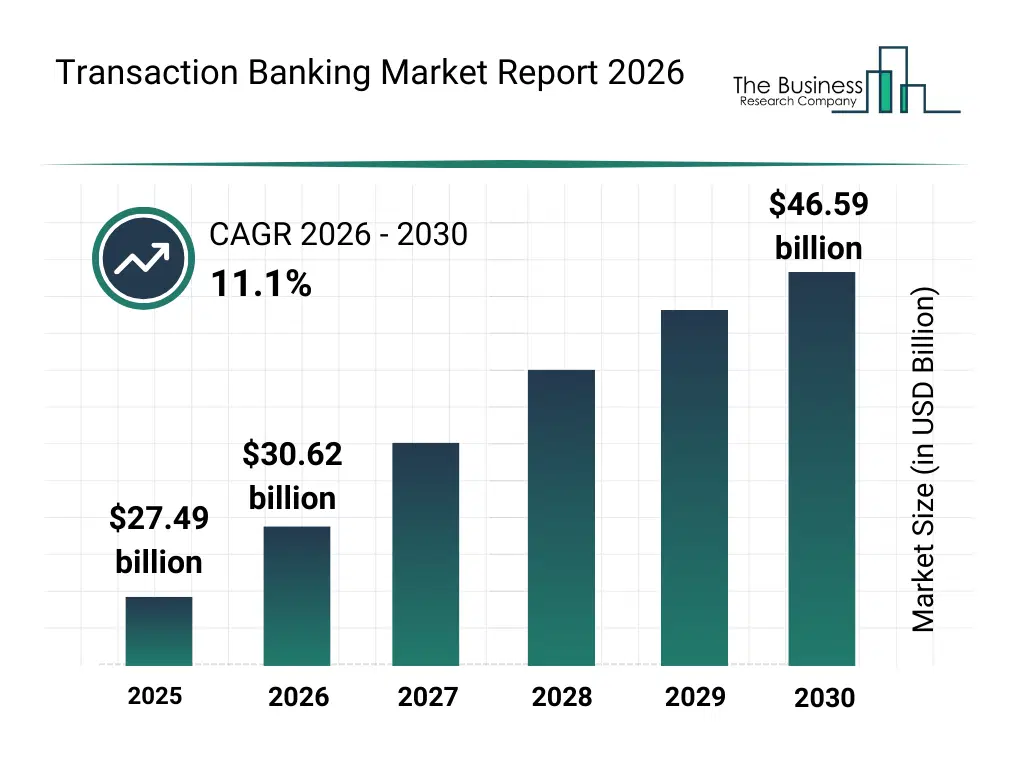
What Is The Transaction Banking Market Size and Share 2026?
The transaction banking market size has grown rapidly in recent years. It will grow from $27.49 billion in 2025 to $30.62 billion in 2026 at a compound annual growth rate (CAGR) of 11.4%. The growth in the historic period can be attributed to expansion of global trade activities, rising corporate demand for efficient cash management, growth of electronic payment systems, increasing banking digitization, wider adoption of treasury management solutions.What Is The Transaction Banking Market Growth Forecast?
The transaction banking market size is expected to see rapid growth in the next few years. It will grow to $46.59 billion in 2030 at a compound annual growth rate (CAGR) of 11.1%. The growth in the forecast period can be attributed to growing adoption of cloud-based transaction platforms, rising demand for instant cross-border payments, expansion of fintech-bank collaborations, increasing focus on automation and straight-through processing, stronger regulatory emphasis on payment security. Major trends in the forecast period include increasing adoption of real-time payment solutions, rising demand for integrated cash and liquidity management, growing use of api-based banking platforms, expansion of cross-border transaction services, enhanced focus on fraud prevention and security.
Global Transaction Banking Market Segmentation
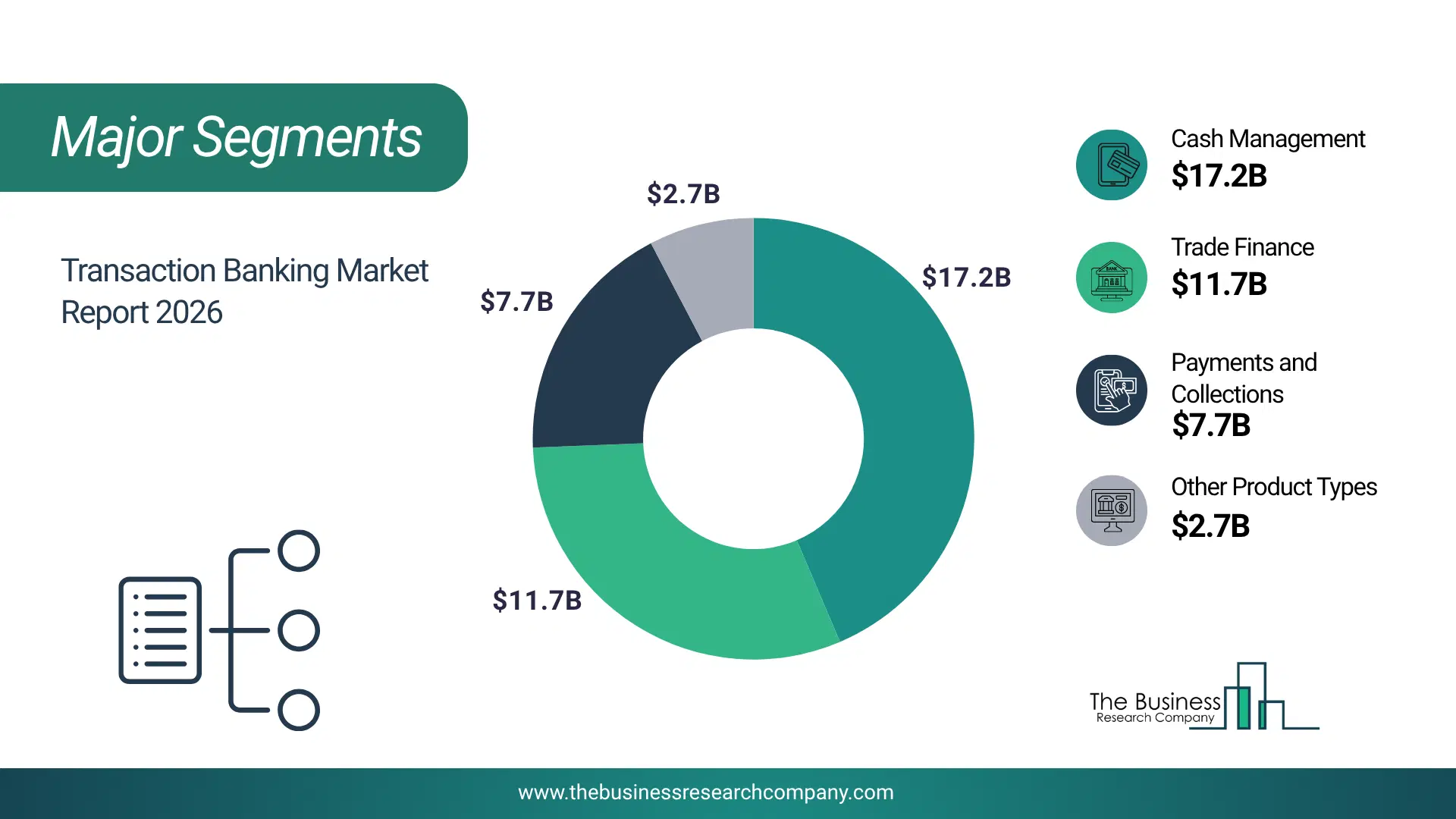
1) By Product Type: Cash Management, Trade Finance, Payments And Collections, Other Product Types 2) By Deployment Type: On-Premise, Cloud-Based 3) By Service Channel: Online, Offline 4) By Application: Corporate, Financial Institutions, Small And Medium-Sized Enterprises (SMEs), Other Applications 5) By End-User: Banking, Financial Services, And Insurance (BFSI), Manufacturing, Retail, Healthcare, Information Technology (IT) And Telecom, Other End Users Subsegments: 1) By Cash Management: Liquidity Management, Account Management, Cash Forecasting, Funds Transfer, Payment Reconciliation, Sweep Solutions, Virtual Accounts 2) By Trade Finance: Letter Of Credit, Bank Guarantee, Export Finance, Import Finance, Documentary Collection, Supply Chain Finance 3) By Payments And Collections: Domestic Payments, International Payments, Electronic Funds Transfer, Bill Payment, Direct Debit, Merchant Services 4) By Other Product Types: Treasury Service, Risk Management, Securities Services, Structured Finance, Factoring The top segments in the transaction banking market will be: • Cash Management will reach $17.19 billion by 2030. • Trade Finance will reach $11.68 billion by 2030. • Payments and Collections will reach $7.62 billion by 2030. • Other Product Types will reach $2.64 billion by 2030.What Is The Driver Of The Transaction Banking Market?
The increasing adoption of digital banking is expected to drive the growth of the transaction banking market going forward. Digital banking refers to the delivery of banking services and products through online platforms, mobile apps, and other digital channels, allowing customers to perform financial transactions anytime and anywhere. The rise in digital banking adoption is due to greater convenience, enhanced security, and the growing use of smartphones and internet services. Digital banking improves financial inclusion by providing easy access to banking services, reducing the need for physical branch visits, and enabling real-time transaction processing. For instance, in September 2025, according to the Open Banking Limited, a UK-based central banking organization, July 2025 marked a significant milestone for open banking, with over 15.16 million individuals and businesses using technology-powered services. Usage also hit a new record, reaching 2.04 billion transactions, an increase of 3.5% compared to June. Therefore, the increasing adoption of digital banking is driving the growth of the transaction banking industry.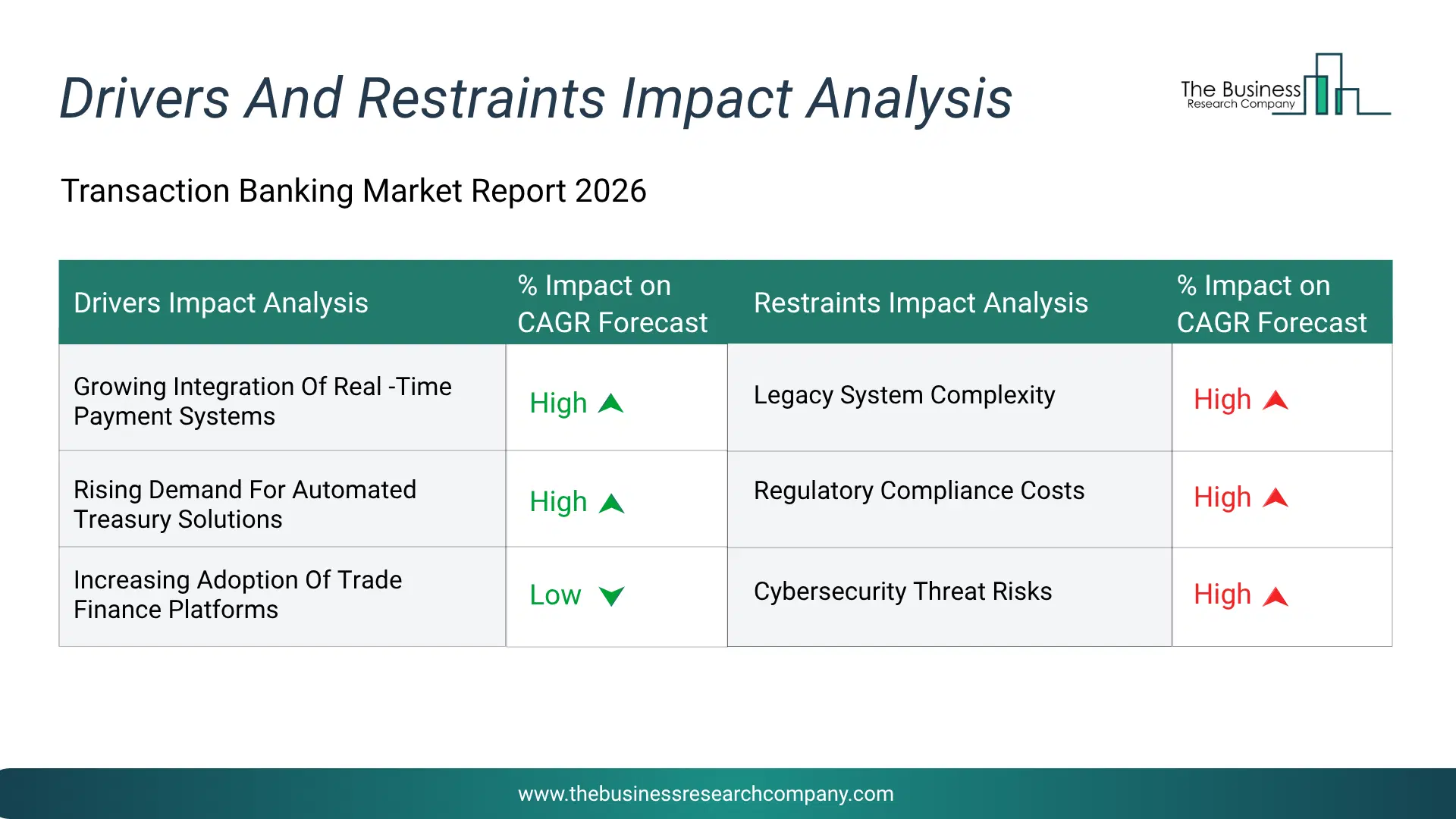
Infographic Chart Showing Key Market Drivers Analysis And Restraints For Transaction Banking Market
The chart presents an impact analysis of key drivers and restraints, quantifying their relative influence on the market's growth rate and helping assess the balance between growth enablers and limiting factors. This chart offers a high-level perspective; the full report contains more detailed insights.
How Will The Drivers Impact Growth In The Global Transaction Banking Market?
• Growing Integration Of Real -Time Payment Systems (High) – During the forecast period, the growing integration of real -time payment systems is expected to become a key growth driver for the transaction banking market by 2030. Financial institutions are increasingly adopting instant payment infrastructures to enable faster, seamless, and secure fund transfers for corporate and retail clients. Real -time payments enhance liquidity management, improve transaction transparency, and support round -the -clock financial operations. Businesses are prioritizing banking partners that offer instant settlement capabilities to optimize cash flow and operational efficiency. Banks are therefore investing in advanced payment rails, apis, and digital platforms to support real -time processing. • Rising Demand For Automated Treasury Solutions (High) – During the forecast period, the rising demand for automated treasury solutions is expected to emerge as a major factor driving the expansion of the transaction banking market by 2030. Corporates are increasingly adopting automation tools to streamline cash management, forecasting, and reconciliation processes. Automated treasury systems provide real-time visibility into financial positions, reduce manual errors, and improve decision-making capabilities. The growing complexity of global operations and multi-currency transactions is further accelerating the need for centralized and automated treasury platforms. Financial institutions are enhancing their offerings with integrated digital solutions to meet these evolving corporate requirements. • Increasing Adoption Of Trade Finance Platforms (Low) – During the forecast period, the increasing adoption of trade finance platforms is expected to act as a key growth catalyst for the transaction banking market by 2030. Digital trade finance solutions are transforming traditional paper-based processes into efficient, transparent, and secure platforms that facilitate cross-border transactions. Businesses are increasingly leveraging these platforms to manage letters of credit, supply chain financing, and export-import documentation more effectively. The integration of technologies such as blockchain and digital documentation is further enhancing trust, reducing fraud risks, and accelerating transaction timelines. As global trade volumes expand and digital transformation accelerates, the demand for modern trade finance platforms is expected to rise steadily.How Will The Restraints Impact Growth In The Global Transaction Banking Market?
• Legacy System Complexity (High) – During the forecast period, the legacy system complexity acts as a major restraint for the transaction banking market by making it difficult for banks to upgrade or integrate new technologies. Outdated it infrastructure slows down the deployment of modern digital banking solutions, increases maintenance costs, and reduces operational efficiency. Complex systems also hinder automation and real-time processing, limiting the ability to offer seamless and innovative services. As a result, overall market growth and the adoption of advanced transaction banking solutions are constrained. • Regulatory Compliance Costs (High) – During the forecast period, the regulatory compliance costs act as a major restraint for the transaction banking market by increasing operational expenses for banks and financial institutions. Compliance with anti-money laundering (aml), know-your-customer (kyc), and other financial regulations requires significant investments in systems, personnel, and reporting mechanisms. These costs slow down the introduction of new products and services and can discourage smaller players from entering the market. Consequently, market expansion and innovation are restricted. • Cybersecurity Threat Risks (High) – During the forecast period, the cybersecurity threat risks act as a major restraint for the transaction banking market by exposing banks and their clients to potential financial losses and data breaches. Increasingly sophisticated cyberattacks require constant monitoring, investment in security infrastructure, and risk management strategies. Fear of breaches can reduce customer trust and adoption of digital transaction banking services. As a result, overall market growth and large-scale digital adoption are significantly constrained.Key Players In The Global Transaction Banking Market
Major companies operating in the transaction banking market are Citibank, JPMorgan Chase, Bank of America, Deutsche Bank, HSBC, Standard Chartered, Goldman Sachs, DBS Bank, UniCredit, ING, UBS, Wells Fargo, Societe Générale, Barclays, MUFG (Mitsubishi UFJ Financial Group), OCBC Bank, Credit Suisse, UBS, ING, Banco Santander, UniCredit, BNY Mellon, Scotiabank, Royal Bank of Canada (RBC), ANZ (Australia & New Zealand Banking Group), HDFC Bank, Kotak Mahindra Bank, Nordea, State Bank of India (SBI), and Maybank.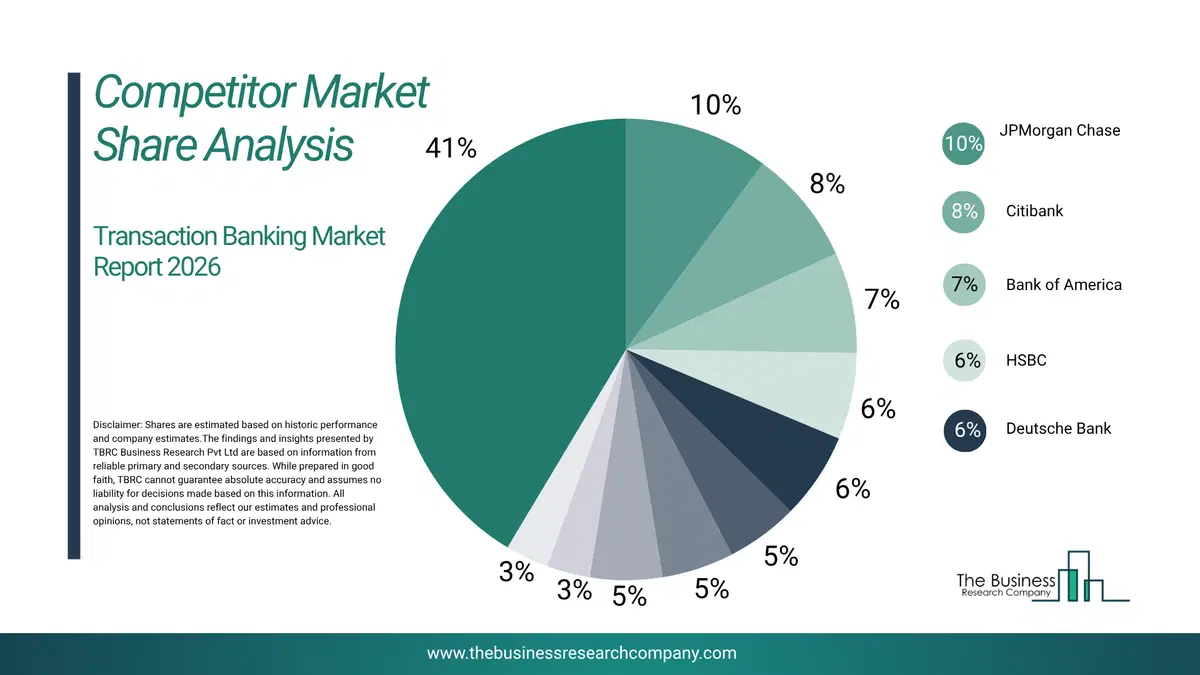
This chart is for illustrative purposes; the full report includes a detailed competitor analysis and comprehensive overview of the top 10 companies in the market.
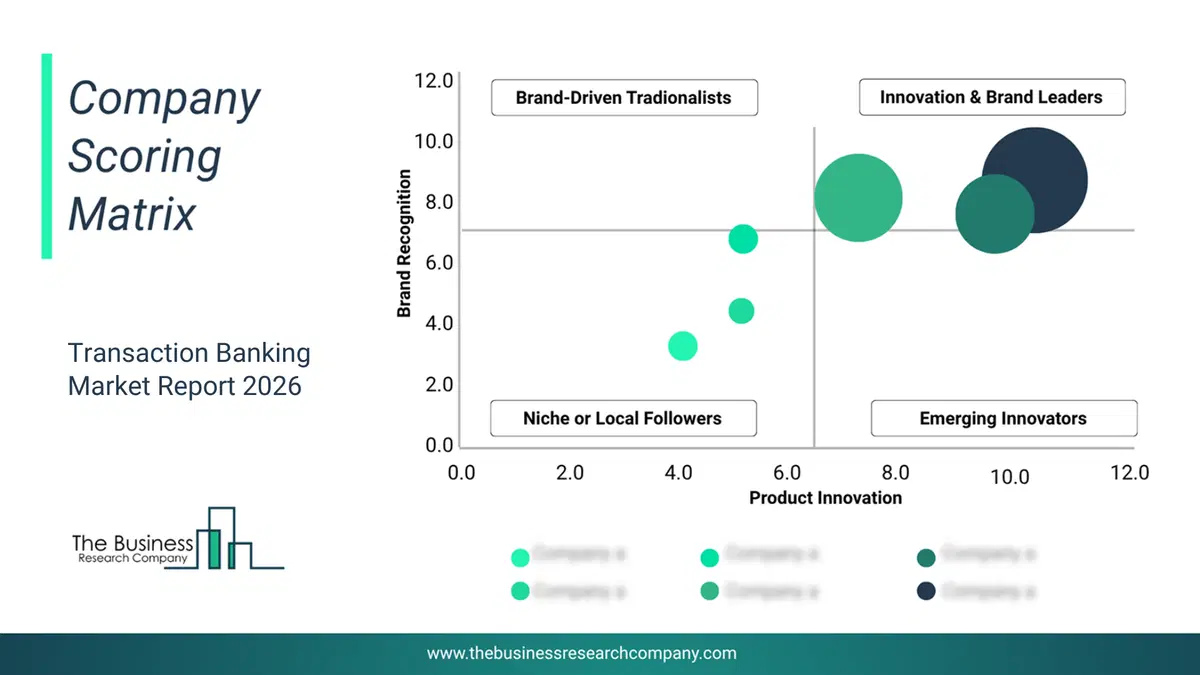
This chart maps companies by product innovation and brand strength, with bubble size indicating relative revenue, helping identify market leaders, challengers, and niche players. This is an illustrative chart; the full report provides a complete and accurate competitive analysis.
Global Transaction Banking Market Trends and Insights
Major companies operating in the transaction banking market are focusing on digital innovation, such as next-generation transaction banking platforms, to deliver real-time cash visibility, faster cross-border and low-cost payments, and integrated liquidity management through API-driven, cloud-native services. Transaction banking platforms refer to integrated digital systems that enable corporations to manage payments, cash, trade finance, and liquidity operations efficiently through real-time, automated, and secure banking services. For instance, in October 2024, Aurionpro Solutions Limited, an India-based technology company, launched iCashpro+, a next-generation transaction banking platform in Saudi Arabia through a multi-million dollar deal with a leading local bank. The platform offers AI-driven automation and personalized digital services designed to improve corporate banking experiences. It supports both conventional and Shariah-compliant banking, providing features like cash flow forecasting, virtual accounts, liquidity management, and receivables management. This launch strengthens Aurionpro’s fintech footprint in the Middle East and helps the bank accelerate its digital transformation for corporate clients.What Are Latest Mergers And Acquisitions In The Transaction Banking Market?
In May 2023, Standard Chartered, a UK-based banking and financial services company, expanded its partnership with Tazapay to power seamless payments for cross border eCommerce. With this partnership, Standard Chartered aims to enhance its digital financial services offerings by providing global marketplaces and merchants with a single API solution for local payments in over 70 markets, facilitating frictionless, cost-effective cross-border transactions. Tazapay is a Singapore-based payments technology company that offers services that function as transaction banking, including cross-border payment processing, global payouts, and virtual account.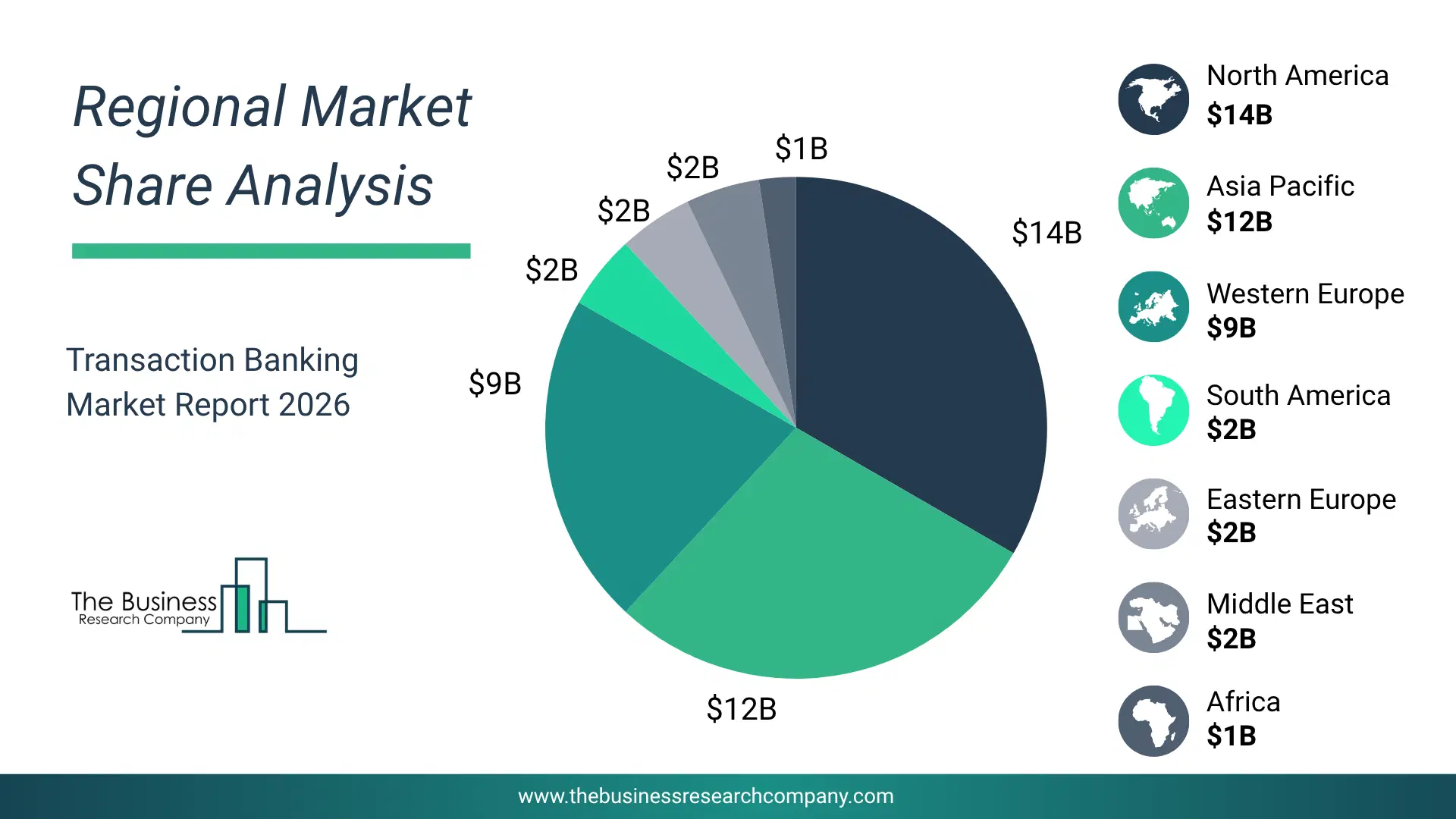
Regional Outlook
North America was the largest region in the transaction banking market in 2025. Asia-Pacific is expected to be the fastest-growing region in the forecast period. The regions covered in this market report are Asia-Pacific, South East Asia, Western Europe, Eastern Europe, North America, South America, Middle East, Africa. The countries covered in this market report are Australia, Brazil, China, France, Germany, India, Indonesia, Japan, Taiwan, Russia, South Korea, UK, USA, Canada, Italy, Spain.What Defines the Transaction Banking Market?
The transaction banking market includes revenues earned by entities through liquidity management, treasury services, foreign exchange services, account services, collections and receivables management, and electronic banking. The market value includes the value of related goods sold by the service provider or included within the service offering. Only goods and services traded between entities or sold to end consumers are included.How is Market Value Defined and Measured?
The market value is defined as the revenues that enterprises gain from the sale of goods and/or services within the specified market and geography through sales, grants, or donations in terms of the currency (in USD unless otherwise specified). The revenues for a specified geography are consumption values that are revenues generated by organizations in the specified geography within the market, irrespective of where they are produced. It does not include revenues from resales along the supply chain, either further along the supply chain or as part of other products.
This chart presents market attractiveness based on a quantitative evaluation of growth, competition, strategic alignment, and risk, offering a clear view of opportunity areas for decision-making. This chart is for illustrative purposes; the full report contains the complete analysis.

This chart highlights the Total Addressable Market (TAM) by estimating the maximum revenue opportunity using an assumption-driven approach, supporting strategic planning and opportunity sizing across markets. The chart is illustrative; the full report provides a more comprehensive analysis.
What Key Data and Analysis Are Included in the Transaction Banking Market Report 2026?
The transaction banking market research report is one of a series of new reports from The Business Research Company that provides market statistics, including Market Report 2026?global market size, regional shares, competitors with the market share, detailed market segments, market trends and opportunities, and any further data you may need to thrive in the transaction banking Market Report 2026? The market research report delivers a complete perspective of everything you need, with an in-depth analysis of the current and future state of the Market Report 2026?Transaction Banking Market Report Forecast Analysis
| Report Attribute | Details |
|---|---|
| Market Size Value In 2026 | $30.62 billion |
| Revenue Forecast In 2030 | $46.59 billion |
| Growth Rate | CAGR of 11.1% from 2026 to 2030 |
| Base Year For Estimation | 2025 |
| Actual Estimates/Historical Data | 2020-2025 |
| Forecast Period | 2026 - 2030 |
| Market Representation | Revenue in USD Billion and CAGR from 2026 to 2030 |
| Segments Covered | Product Type, Deployment Type, Service Channel, Application, End-User |
| Regional Scope | Asia-Pacific, Western Europe, Eastern Europe, North America, South America, Middle East, Africa |
| Country Scope | The countries covered in the report are Australia, Brazil, China, France, Germany, India, ... |
| Key Companies Profiled | Citibank, JPMorgan Chase, Bank of America, Deutsche Bank, HSBC, Standard Chartered, Goldman Sachs, DBS Bank, UniCredit, ING, UBS, Wells Fargo, Societe Générale, Barclays, MUFG (Mitsubishi UFJ Financial Group), OCBC Bank, Credit Suisse, UBS, ING, Banco Santander, UniCredit, BNY Mellon, Scotiabank, Royal Bank of Canada (RBC), ANZ (Australia & New Zealand Banking Group), HDFC Bank, Kotak Mahindra Bank, Nordea, State Bank of India (SBI), and Maybank. |
| Customization Scope | Request for Customization |
| Pricing And Purchase Options | Explore Purchase Options |