
Health Supplement Market Report 2026
Global Outlook – By Type (Vitamins And Minerals, Proteins And Amino Acids, Herbal Supplements, Weight Loss Supplements, Sports Nutrition Supplements, Dietary Supplements), By Form (Pills And Tablets, Powders, Capsules, Liquids, Softgels), By Health Concern (Immune Support, Weight Management, Bone And Joint Health, Digestive Health, Heart Health, Brain Health, Beauty And Skin Care, Energy And Vitality), By Distribution Channel (Online Retail, Supermarkets Or Hypermarkets, Specialty Stores, Pharmacy Or Drug Stores, Direct Selling), By End User (Adults, Senior Citizens, Children, Athletes And Fitness Enthusiasts, Pregnant And Breastfeeding Women) – Market Size, Trends, Strategies, and Forecast to 2030
Health Supplement Market Overview
• Health Supplement market size has reached to $132.79 billion in 2025 • Expected to grow to $195.95 billion in 2030 at a compound annual growth rate (CAGR) of 8% • Growth Driver: Rising Demand For Personalized Nutrition Fueling The Growth Of The Market Due To Increasing Focus On Tailored Health Solutions • Market Trend: Focus On High-Performance Solutions Driving Innovation In The Market • North America was the largest region in 2025 and Asia-Pacific is the fastest growing region.Market Gains By 2030 – Top Opportunities By Segment
Market Gain identifies the most promising market opportunities by highlighting the segments or products expected to generate the highest incremental revenue growth over the next five years.
What Is Covered Under Health Supplement Market?
A health supplement is a product intended to enhance overall well-being by providing essential nutrients. They are often used to maintain nutritional balance, promote physical or mental performance, and support the body's natural processes. They are commonly used by individuals seeking to optimize their daily nutrient intake or support lifestyle-related health goals. The main types of health supplements include vitamins and minerals, proteins and amino acids, herbal supplements, weight loss supplements, sports nutrition supplements, and dietary supplements. Vitamins and minerals are essential nutrients that our bodies need to function properly. It is available in various forms such as pills and tablets, powders, capsules, liquids, and softgels and is used for different health concerns including immune support, weight management, bone and joint health, digestive health, heart health, brain health, beauty and skin care, and energy and vitality. It is distributed through online retail, supermarkets or hypermarkets, specialty stores, pharmacy or drug stores, and direct selling and is used by several end users including adults, senior citizens, children, athletes and fitness enthusiasts, and pregnant and breastfeeding women.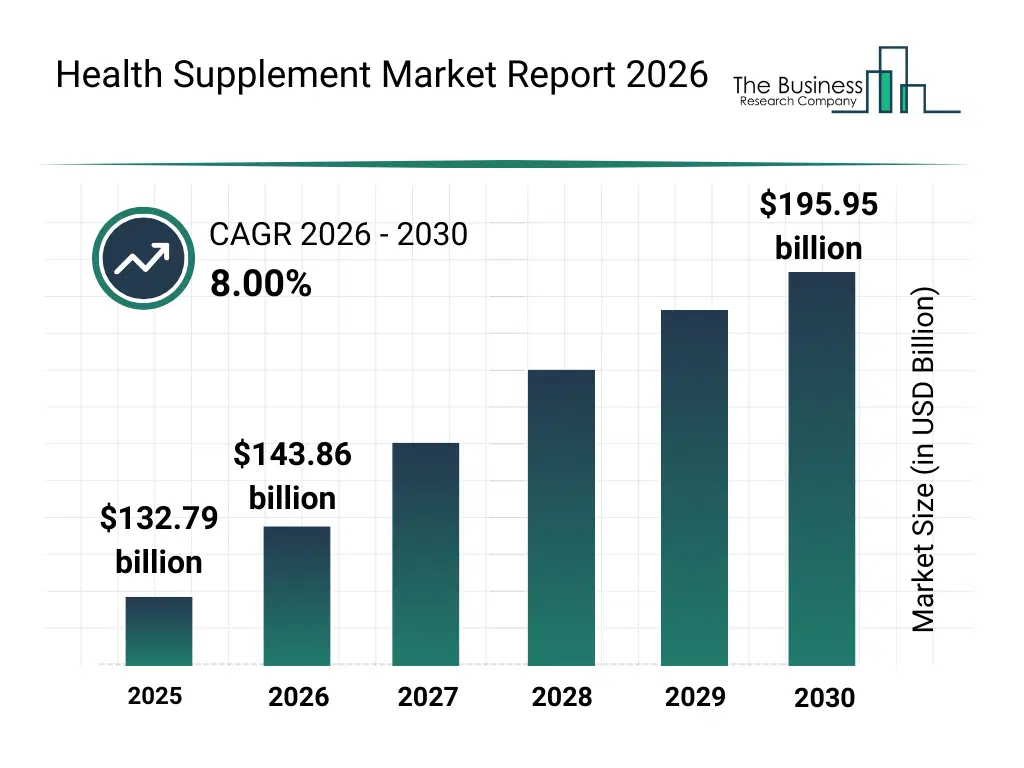
What Is The Health Supplement Market Size and Share 2026?
The health supplement market size has grown strongly in recent years. It will grow from $132.79 billion in 2025 to $143.86 billion in 2026 at a compound annual growth rate (CAGR) of 8.3%. The growth in the historic period can be attributed to lifestyle disease prevalence, vitamin deficiency awareness, fitness culture growth, retail supplement availability, urbanization.What Is The Health Supplement Market Growth Forecast?
The health supplement market size is expected to see strong growth in the next few years. It will grow to $195.95 billion in 2030 at a compound annual growth rate (CAGR) of 8.0%. The growth in the forecast period can be attributed to preventive healthcare focus, personalized nutrition adoption, aging population, e-commerce penetration, clean-label supplement demand. Major trends in the forecast period include rising demand for preventive healthcare supplements, growth of herbal and plant-based supplements, expansion of sports and fitness nutrition, increasing popularity of personalized nutrition, rapid growth of online and direct-to-consumer sales.
Global Health Supplement Market Segmentation
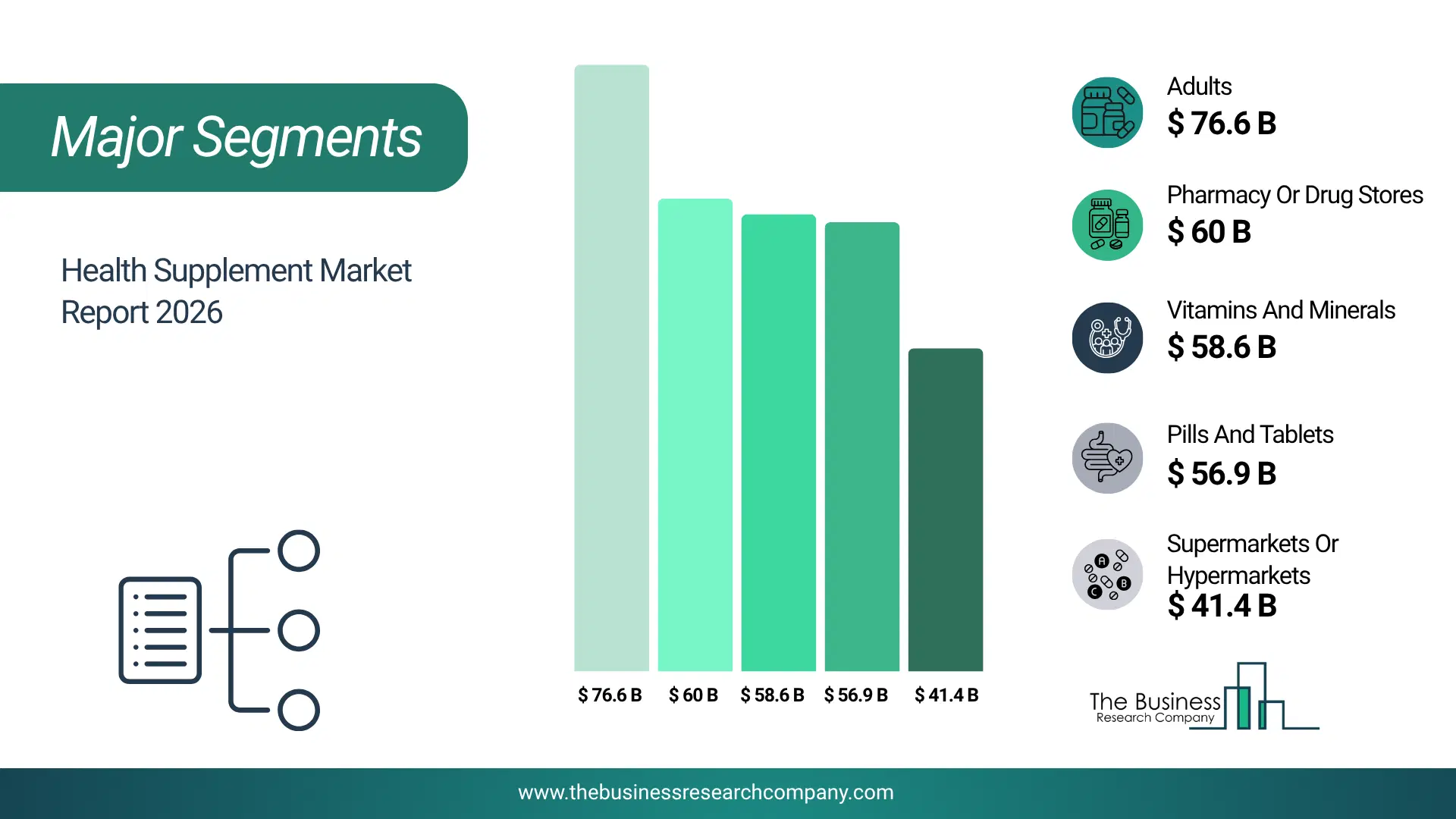
1) By Type: Vitamins And Minerals, Proteins And Amino Acids, Herbal Supplements, Weight Loss Supplements, Sports Nutrition Supplements, Dietary Supplements 2) By Form: Pills And Tablets, Powders, Capsules, Liquids, Softgels 3) By Health Concern: Immune Support, Weight Management, Bone And Joint Health, Digestive Health, Heart Health, Brain Health, Beauty And Skin Care, Energy And Vitality 4) By Distribution Channel: Online Retail, Supermarkets Or Hypermarkets, Specialty Stores, Pharmacy Or Drug Stores, Direct Selling 5) By End User: Adults, Senior Citizens, Children, Athletes And Fitness Enthusiasts, Pregnant And Breastfeeding Women Subsegments: 1) By Vitamins and Minerals: Multivitamins, Single Vitamins, Multiminerals, Single Minerals 2) By Proteins And Amino Acids: Whey Protein, Casein Protein, Soy Protein, Pea Protein, Branched-Chain Amino Acids (BCAAs), Essential Amino Acids (EAAs) 3) By Herbal Supplements: Ginseng, Echinacea, Garlic, Turmeric Or Curcumin, Ashwagandha, Ginkgo Biloba 4) By Weight Loss Supplements: Appetite Suppressants, Fat Burners, Carb Blockers, Thermogenics, Meal Replacement Powders, Green Tea Extract 5) By Sports Nutrition Supplements: Pre-Workout Supplements, Post-Workout Supplements, Creatine, Beta-Alanine, Electrolyte Supplements, Recovery Drinks 6) By Dietary Supplements: Fiber Supplements, Probiotics, Omega-3 Fatty Acids, Antioxidants, Digestive Enzymes, Joint Health Supplements The top segments in the health supplement market will be: • Adults will reach $76661.5 Million by 2030. • Pharmacy Or Drug Stores will reach $60060.48 Million by 2030. • Vitamins And Minerals will reach $58596.51 Million by 2030. • Pills And Tablets will reach $56893.09 Million by 2030. • Supermarkets Or Hypermarkets will reach $41472.34 Million by 2030.What Is The Driver Of The Health Supplement Market?
The rising consumer demand for personalized nutrition is expected to propel the growth of the health supplement market going forward. Personalized nutrition refers to tailoring dietary recommendations and plans to an individual’s unique genetic makeup, lifestyle, health status, and preferences for optimal health outcomes. The rising consumer demand for personalized nutrition is driven by a growing desire for tailored solutions that address individual health goals, dietary needs, and lifestyle choices. Health supplements are crucial in personalized nutrition by filling nutritional gaps and delivering targeted nutrients based on an individual’s unique health profile, dietary habits, and wellness goals. For instance, in June 2024, according to a survey of 4,000 consumers in the US and UK by the Food Institute, a US-based organization, one-third of respondents (27%) intend to increase their spending on health, fitness, and wellness in 2024 compared to 2023, while nearly half (49%) expressed interest in the concept of using food as medicine. Therefore, the rising consumer demand for personalized nutrition is driving the growth of the health supplement industry.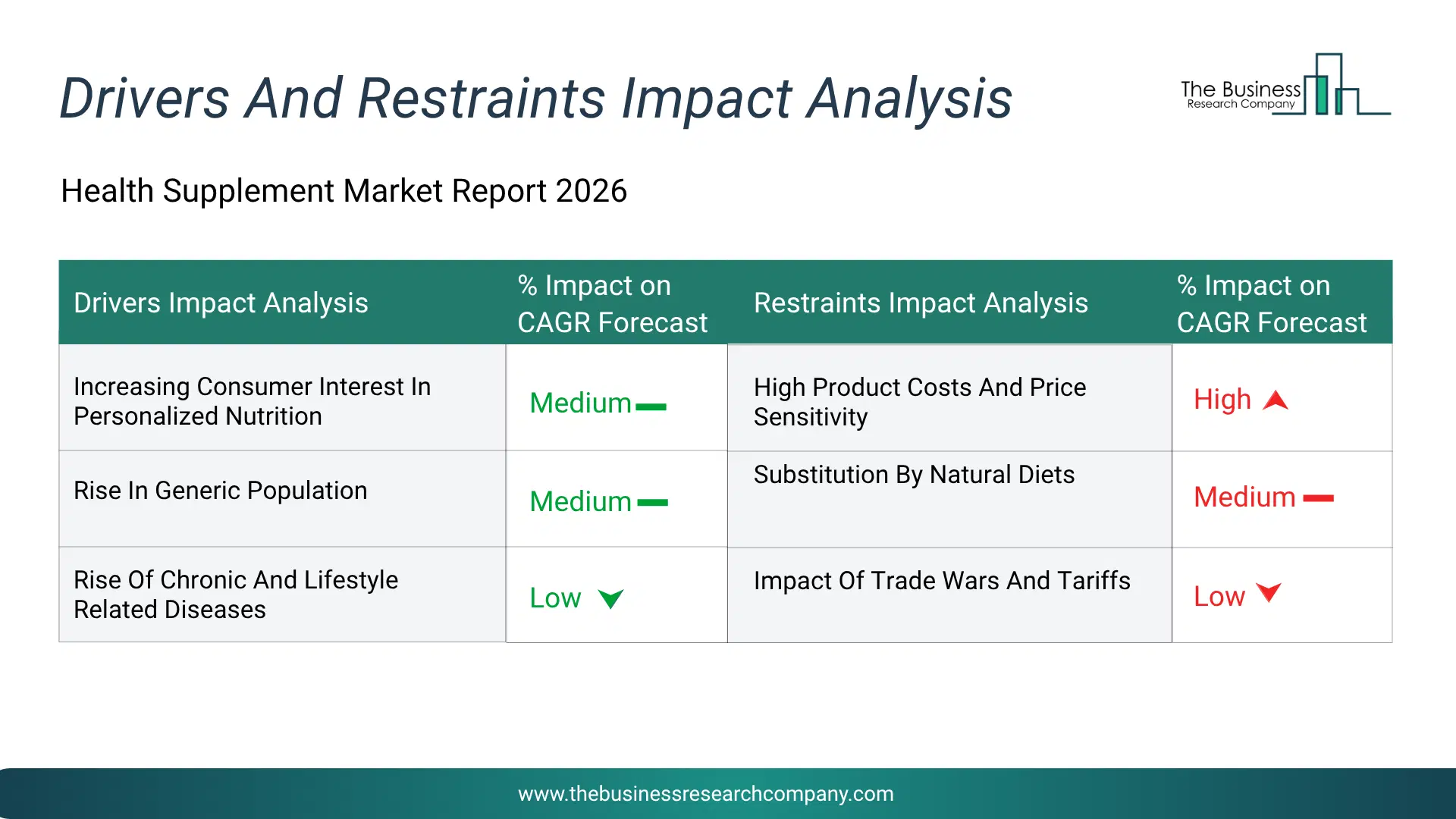
Infographic Chart Showing Key Market Drivers Analysis And Restraints For Health Supplement Market
The chart presents an impact analysis of key drivers and restraints, quantifying their relative influence on the market's growth rate and helping assess the balance between growth enablers and limiting factors. This chart offers a high-level perspective; the full report contains more detailed insights.
How Will The Drivers Impact Growth In The Global Health Supplement Market?
• Increasing Consumer Interest In Personalized Nutrition (Medium) – During the forecast period, the increasing consumer interest in personalized nutrition is expected to be a key driver propelling expansion in the health supplement market. Consumers are moving away from generic, one-size-fits-all supplement offerings toward products that address specific nutrient requirements, wellness priorities, and physiological differences. This shift is driven by a broader desire for more effective, targeted health outcomes and a belief that personalized supplementation can deliver better results than standardized products. As personalization becomes more mainstream, supplement brands are expected to expand customized formulations, flexible dosing options, and lifestyle-specific nutrient blends, increasing consumer engagement and long-term usage. The emphasis on individualized nutrition is also encouraging greater consumer trust and perceived value in supplement products, supporting premiumization and repeat consumption within the market. The increasing consumer interest in personalized nutrition growth contribution during the forecast period in 2025 is 1.6%. • Rise In Generic Population (Medium) – During the forecast period, the expansion of rise in generic population is expected to be a key driver propelling growth in the health supplement market. Older adults typically experience age-related physiological changes that affect nutrient absorption, metabolism, bone density, muscle mass, and immune function, increasing reliance on dietary supplements to support overall health. As life expectancy continues to rise, the emphasis among senior consumers is shifting from disease treatment toward preventive and supportive health strategies, positioning supplements as essential tools for healthy aging. This demographic trend is expected to fuel sustained demand for supplements that support immunity, bone and joint health, cognitive function, digestive health, and energy levels. The expansion of rise in generic population growth contribution during the forecast period in 2025 is 1.0%. • Rise Of Chronic And Lifestyle Related Diseases (Low) – During the forecast period, the rise of chronic and lifestyle related diseases are expected to be a key driver propelling growth in the health supplement market. Modern lifestyles characterized by stress, poor dietary habits, limited physical activity, and irregular routines have contributed to long-term health conditions that require ongoing nutritional support. As individuals become more aware of the role nutrition plays in managing overall health and supporting bodily functions, supplements are increasingly viewed as complementary tools that help maintain balance and improve daily wellness. Consumers are expected to integrate supplements into routine health management practices to support metabolic health, immunity, digestion, cardiovascular function, and stress regulation. The rise of chronic and lifestyle related diseases growth contribution during the forecast period in 2025 is 0.8%. • Growth Of Sports And Fitness Culture (Low) – During the forecast period, the growth in growth of sports and fitness culture is expected to be a key driver propelling growth in the health supplement market. Increasing participation in fitness activities, recreational sports, and structured exercise routines has heightened consumer focus on physical performance, endurance, recovery, and overall body conditioning. Health supplements are becoming integral to fitness lifestyles, supporting nutritional needs associated with active living and regular physical exertion. As fitness culture extends beyond professional athletes to include everyday consumers pursuing strength, stamina, weight management, and general wellness, supplement usage is broadening across age groups and activity levels. The growth in growth of sports and fitness culture growth contribution during the forecast period in 2025 is 0.5%.How Will The Restraints Impact Growth In The Global Health Supplement Market?
• High Product Costs And Price Sensitivity (Medium) – During the forecast period, high product costs and price sensitivity are restricting the growth of the health supplement market. The production of high-quality supplements often involves premium raw materials, specialized processing, stringent quality controls, and compliance with regulatory standards, all of which contribute to elevated manufacturing and distribution costs. These costs are frequently passed on to consumers through higher retail prices, which can limit adoption, particularly in price-conscious markets. While health awareness is rising, many consumers still view supplements as discretionary rather than essential purchases, making them sensitive to price fluctuations. Economic uncertainty and competing household expenses can further reduce willingness to pay for premium or long-term supplementation. Growth affected by the high product costs and price sensitivity during the forecast period in 2025 is -2.0%. • Substitution By Natural Diets (Medium) – During the forecast period, substitution by natural diets is restricting the growth of the health supplement market. Increasing emphasis on whole foods, balanced meals, and nutrient-rich natural diets has led some consumers to believe that dietary needs can be met without supplemental products. This perception is reinforced by growing interest in clean eating, minimally processed foods, and traditional dietary practices, which may reduce reliance on packaged supplements. For certain consumer segments, supplements are viewed as unnecessary or artificial when compared to food-based nutrition solutions. This substitution effect can limit regular supplement usage and reduce repeat purchases, particularly among consumers who prioritize food-first wellness approaches. Growth affected by the substitution by natural diets during the forecast period in 2025 is -1.5%. • Impact Of Trade Wars And Tariffs (Low) – During the forecast period, the impact of trade wars and tariffs is restricting the growth of the health supplement market. Many supplement ingredients, raw materials, and finished products rely on cross-border trade, making the industry vulnerable to changes in trade policies and tariff structures. Increased import duties and trade restrictions can raise sourcing and manufacturing costs, complicate procurement strategies, and reduce supply chain efficiency. These challenges may lead to higher product prices, supply shortages, or delays in product availability, negatively affecting market growth. Trade-related uncertainty also discourages long-term investment and expansion plans, particularly for companies with international operations. As geopolitical tensions and trade barriers persist, their impact is likely to create ongoing headwinds for the global health supplement market. Growth affected by the impact of trade wars and tariffs during the forecast period in 2025 is -0.3%.Key Players In The Global Health Supplement Market
Major companies operating in the health supplement market are Herbalife Nutrition, GNC (General Nutrition Centers), NOW Foods, Solgar Inc., Thorne Research Inc., Myprotein, Nordic Naturals, Gaia Herbs, MegaFood, Ritual, MuscleTech, Alani Nu, Ancient Nutrition, Ghost Lifestyle, Legion Athletics, BSN (Bio-Engineered Supplements and Nutrition), Rule One Proteins, JYM Supplement Science, Dymatize Nutrition, Cellucor (C4)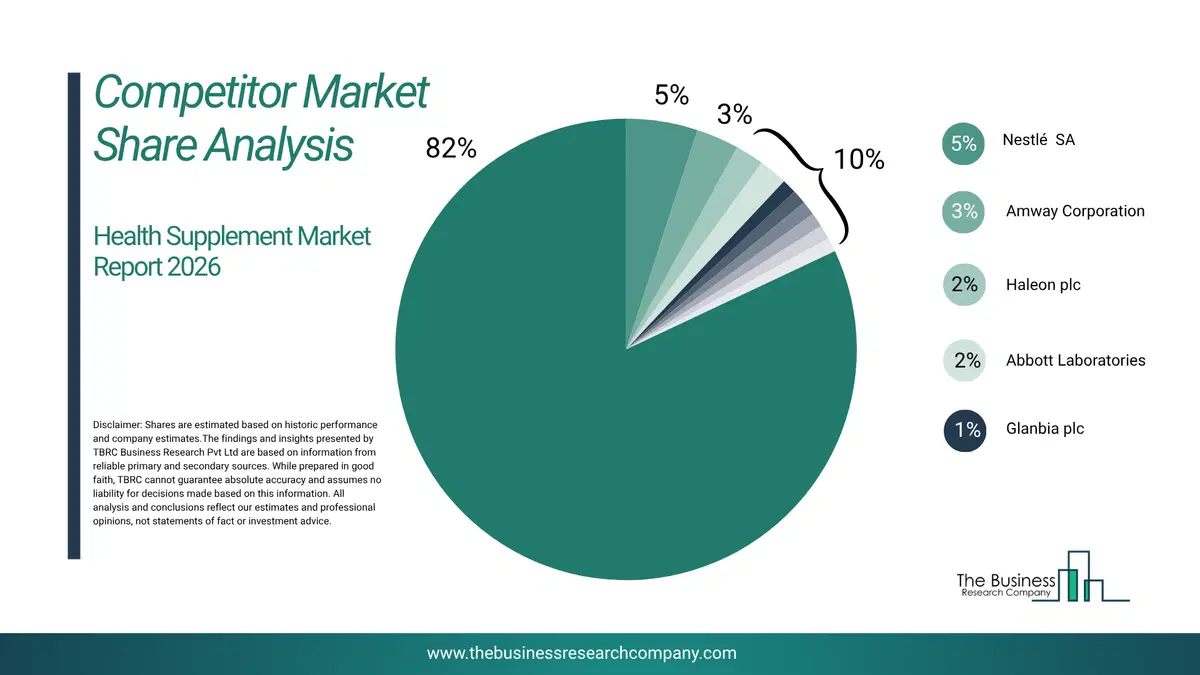
This chart is for illustrative purposes; the full report includes a detailed competitor analysis and comprehensive overview of the top 10 companies in the market.
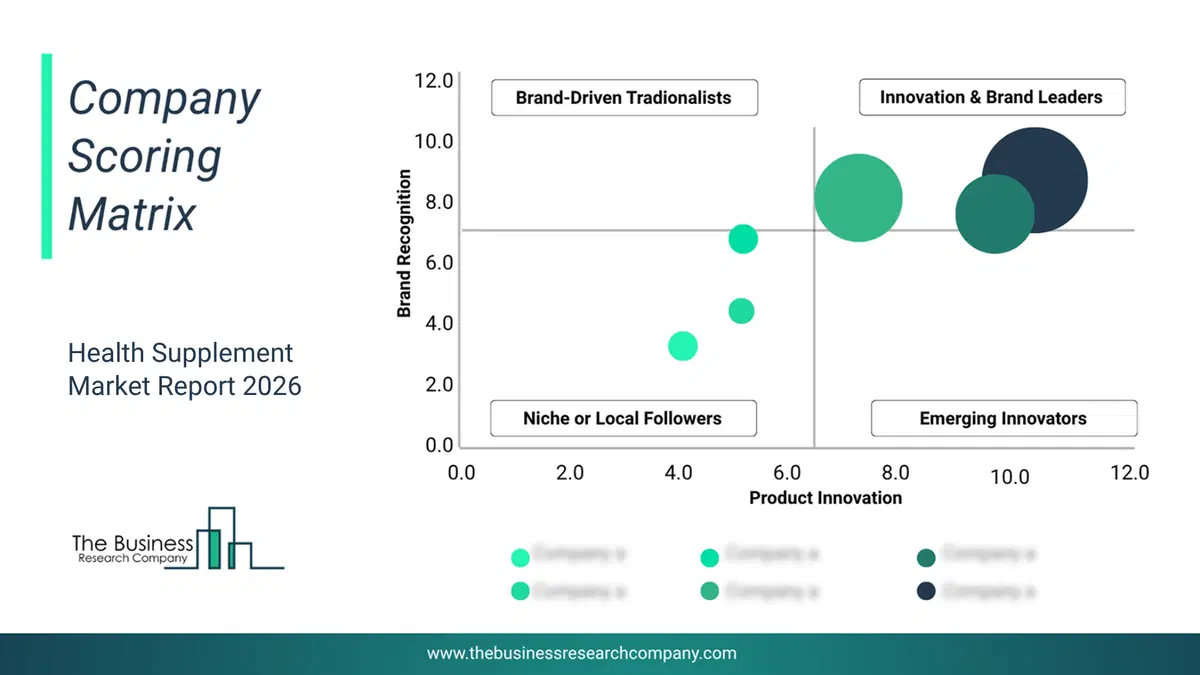
This chart maps companies by product innovation and brand strength, with bubble size indicating relative revenue, helping identify market leaders, challengers, and niche players. This is an illustrative chart; the full report provides a complete and accurate competitive analysis.
Global Health Supplement Market Trends and Insights
Major companies operating in the health supplement market are focusing on developing advanced solutions, such as sports nutrition supplements, to meet the high-performance demands of professional and collegiate athletes. Sports nutrition supplements are products designed to enhance athletic performance, support muscle growth, improve endurance, and aid recovery by providing targeted nutrients such as proteins, amino acids, vitamins, and minerals. For instance, in January 2025, Cizzle Brands Corporation, a Canada-based food products company, launched Spoken Nutrition, a premium line of performance-driven supplements formulated explicitly for elite athletes. Developed by expert nutritionists and coaches and NSF Certified for Sport, the products support cardiovascular, cognitive, muscular, and immune health. Already adopted by several Major League Baseball teams, Spoken Nutrition aims to make elite-quality sports nutrition accessible to athletes at all levels.What Are Latest Mergers And Acquisitions In The Health Supplement Market?
In January 2025, Wellful, Inc., a U.S.-based consumer health & wellness platform, acquired Ancient Nutrition, LLC for an undisclosed amount. With this acquisition, Wellful aims to strengthen its omnichannel presence across the vitamin, mineral, and supplement (VMS) categories and expand distribution into the natural retail channel. Ancient Nutrition, LLC is a U.S.-based nutrition company that specializes in offering superfood-based supplements focused on protein, gut health, and greens.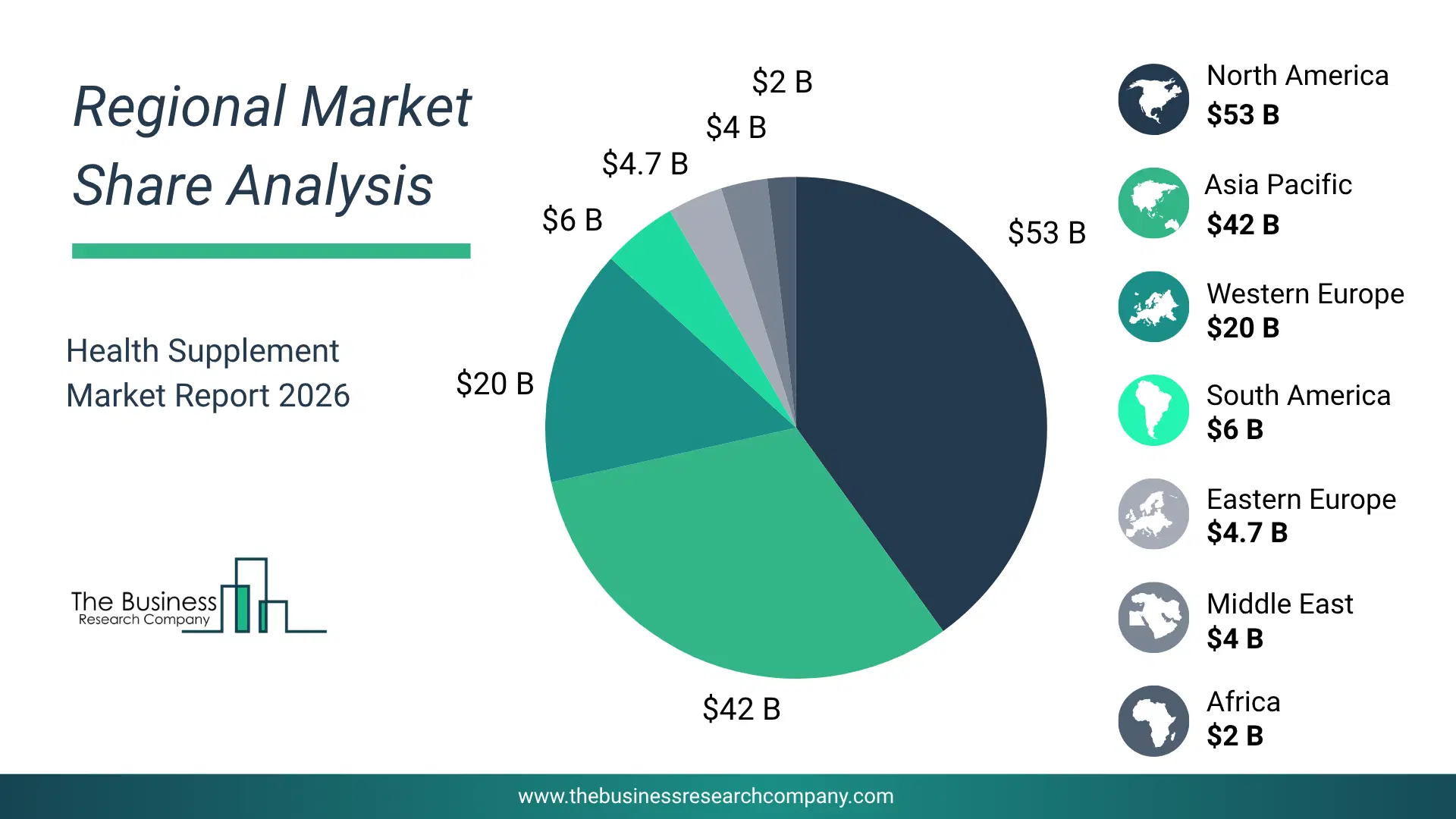
Regional Insights
North America was the largest region in the health supplement market in 2025. Asia-Pacific is expected to be the fastest-growing region in the forecast period. The regions covered in this market report are Asia-Pacific, South East Asia, Western Europe, Eastern Europe, North America, South America, Middle East, Africa. The countries covered in this market report are Australia, Brazil, China, France, Germany, India, Indonesia, Japan, Taiwan, Russia, South Korea, UK, USA, Canada, Italy, Spain.What Defines the Health Supplement Market?
The health supplement market consists of sales of multivitamins, probiotics, digestive enzymes, fiber supplements, and antioxidants. Values in this market are ‘factory gate’ values, that is the value of goods sold by the manufacturers or creators of the goods, whether to other entities (including downstream manufacturers, wholesalers, distributors and retailers) or directly to end customers. The value of goods in this market includes related services sold by the creators of the goods.How is Market Value Defined and Measured?
The market value is defined as the revenues that enterprises gain from the sale of goods and/or services within the specified market and geography through sales, grants, or donations in terms of the currency (in USD unless otherwise specified). The revenues for a specified geography are consumption values that are revenues generated by organizations in the specified geography within the market, irrespective of where they are produced. It does not include revenues from resales along the supply chain, either further along the supply chain or as part of other products.
This chart presents market attractiveness based on a quantitative evaluation of growth, competition, strategic alignment, and risk, offering a clear view of opportunity areas for decision-making. This chart is for illustrative purposes; the full report contains the complete analysis.

This chart highlights the Total Addressable Market (TAM) by estimating the maximum revenue opportunity using an assumption-driven approach, supporting strategic planning and opportunity sizing across markets. The chart is illustrative; the full report provides a more comprehensive analysis.
What Key Data and Analysis Are Included in the Health Supplement Market Report 2026?
The health supplement market research report is one of a series of new reports from The Business Research Company that provides market statistics, including industry global market size, regional shares, competitors with the market share, detailed market segments, market trends and opportunities, and any further data you may need to thrive in the health supplement industry. The market research report delivers a complete perspective of everything you need, with an in-depth analysis of the current and future state of the industry.Health Supplement Market Report Forecast Analysis
| Report Attribute | Details |
|---|---|
| Market Size Value In 2026 | $143.86 billion |
| Revenue Forecast In 2030 | $195.95 billion |
| Growth Rate | CAGR of 8.3% from 2026 to 2030 |
| Base Year For Estimation | 2025 |
| Actual Estimates/Historical Data | 2020-2025 |
| Forecast Period | 2026 - 2030 - 2035 |
| Market Representation | Revenue in USD Billion and CAGR from 2026 to 2030 |
| Segments Covered | Type, Form, Health Concern, Distribution Channel, End User |
| Regional Scope | Asia-Pacific, Western Europe, Eastern Europe, North America, South America, Middle East, Africa |
| Country Scope | The countries covered in the report are Australia, Brazil, China, France, Germany, India, Indonesia, Japan, Taiwan, Russia, South Korea, UK, USA, Canada, Italy, Spain. |
| Key Companies Profiled | Herbalife Nutrition, GNC (General Nutrition Centers), NOW Foods, Solgar Inc., Thorne Research Inc., Myprotein, Nordic Naturals, Gaia Herbs, MegaFood, Ritual, MuscleTech, Alani Nu, Ancient Nutrition, Ghost Lifestyle, Legion Athletics, BSN (Bio-Engineered Supplements and Nutrition), Rule One Proteins, JYM Supplement Science, Dymatize Nutrition, Cellucor (C4) |
| Customization Scope | Request for Customization |
| Pricing And Purchase Options | Explore Purchase Options |